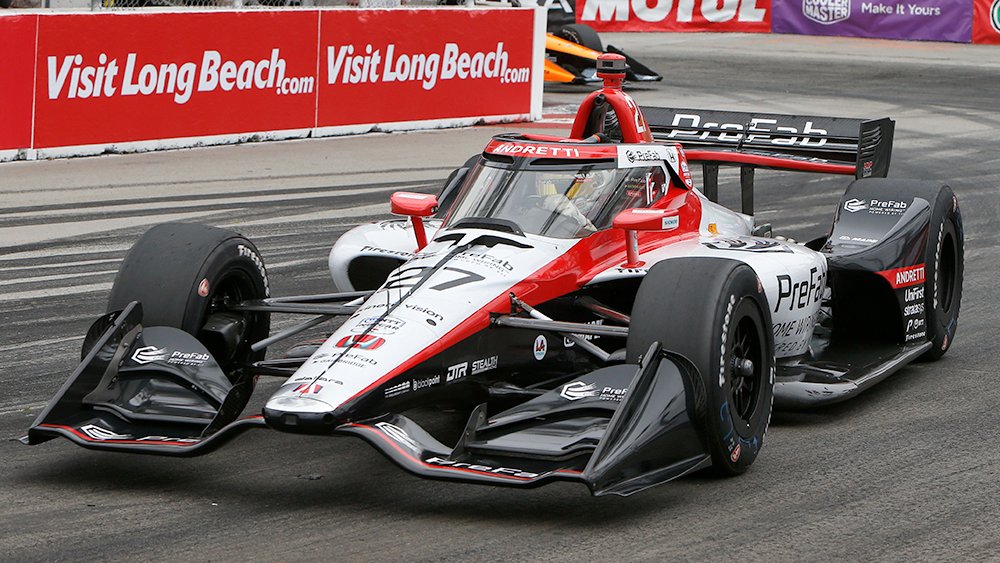
Markham INDYCAR 2026 Preview: Contenders, New Track Guide & Predictions
The inaugural Ontario Honda Dealers Indy brought INDYCAR to a new 2.19-mile, 12-turn street circuit in Markham. With no previous race data, contenders had to lean on adaptability, qualifying, pit timing and street-course form.
Markham was the biggest unknown on the 2026 INDYCAR calendar. Nobody arrived with an old setup notebook, a previous qualifying lap or a proven race-winning fuel number.
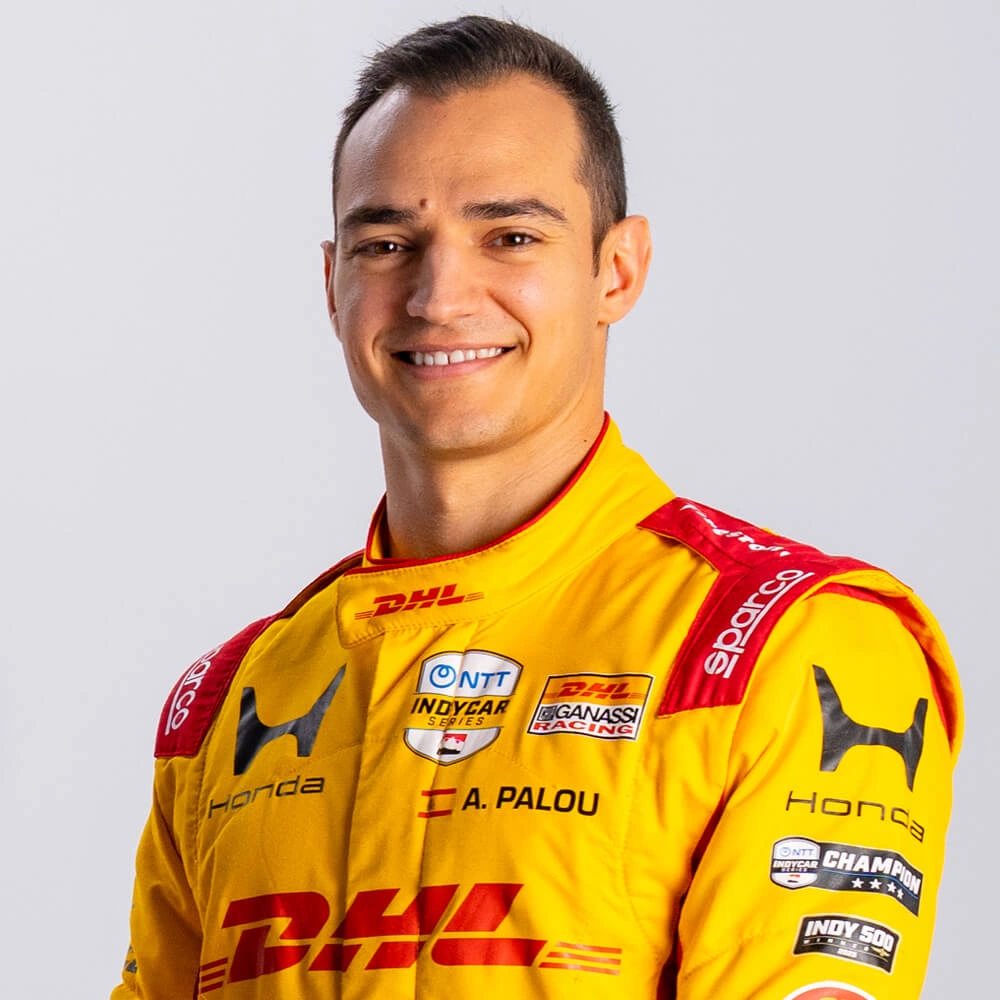
The Ontario Honda Dealers Indy moved from Toronto’s Exhibition Place to a new temporary circuit in Markham Centre. INDYCAR lists the track at 2.19 miles with 12 turns, a double-sided pit lane, long straightaways and technical sectors.
This preview uses verified pre-event data and labels all predictions as editorial analysis rather than results.
Markham INDYCAR 2026 Preview: Who Had the Best Chance to Win?
Alex Palou was the safest all-around favorite, but Kyle Kirkwood was arguably the most natural street-course pick. David Malukas, Christian Lundgaard and Pato O’Ward also entered the late-season run with enough 2026 form to challenge.
Markham was one of the hardest races on the 2026 calendar to forecast because every team arrived without previous race data. Nobody had an old setup notebook, a proven passing map or a reliable tire-degradation model.
That shifted the advantage toward adaptable drivers and teams with strong simulation tools. It also increased the value of clean qualifying because nobody could confidently assume race pace would rescue a poor starting position.
For background on the series, see our INDYCAR racing guide, driver guide and car-racing explainer.
Top Contenders for the Inaugural Markham INDYCAR Race
| Driver | Team | Verified 2026 snapshot | Why Markham fit |
|---|---|---|---|
| Alex Palou | Chip Ganassi Racing | 457 points, 5 wins, 6 poles | Adaptability, fuel saving, race execution |
| David Malukas | Team Penske | 374 points, 2nd in standings snapshot | Strong consistency and improving road-course form |
| Kyle Kirkwood | Andretti Global | 370 points, 1 win | Street-course specialist; won Arlington |
| Christian Lundgaard | Arrow McLaren | 353 points, 2 wins | Previous Toronto street-race winner |
| Pato O’Ward | Arrow McLaren | 336 points, 1 win | Late braking and qualifying speed |
Alex Palou: the benchmark
Palou entered the final stretch with an 83-point lead in the official championship snapshot. His five victories and six poles from 12 starts showed that the lead came from both race execution and one-lap speed.
That made him the safest Markham pick. A new track rewards a driver who can tolerate uncertainty without over-driving the car, and Palou has repeatedly turned imperfect weekends into large points scores.
Chip Ganassi Racing also gives him a strategic advantage. The team is consistently strong on fuel saving, pit timing and adapting to caution periods.
Kyle Kirkwood: the street-course pick
Kirkwood was the driver I would have circled first for a pure street-race prediction. INDYCAR’s own June analysis suggested that Markham and Washington could favor him.
That judgment was supported by results. Kirkwood won the inaugural Arlington street race earlier in 2026, proving he could learn a brand-new urban circuit quickly.
If Markham rewarded confidence near walls and late braking, his profile fit perfectly.
David Malukas: the most improved all-round challenger
Malukas sat second in the standings snapshot with 374 points. INDYCAR’s own analysts highlighted his better road-course performance as a reason he could sustain a title challenge.
That mattered at Markham. A new circuit was not a place for a one-dimensional driver; it required quick adaptation across braking, traction and tire management.
Christian Lundgaard: proven in Ontario street racing
Lundgaard had already won an INDYCAR street race in Ontario, taking Toronto in 2023. Markham was a different track, but the underlying skill set still translated.
He also entered the official snapshot with two 2026 victories, making him more than a nostalgic Toronto pick.
Pato O’Ward: dangerous if qualifying clicked
O’Ward’s biggest strength was his ability to attack a braking zone and generate a fast lap quickly. On a track where overtaking was still unknown, that qualifying ability was especially valuable.
Arrow McLaren also had two front-line threats in O’Ward and Lundgaard, giving the team more useful setup feedback on a circuit with no historical baseline.
Streets of Markham Track Guide
The Streets of Markham is a 2.19-mile, 12-turn temporary street circuit in Markham Centre. INDYCAR says it includes a double-sided pit lane, long straightaways and technically challenging sectors.
The event moved from Toronto’s Exhibition Place because the traditional layout was unavailable for 2026. Markham therefore became a genuinely new circuit rather than a lightly modified replacement.
The race distance was set at 90 laps, equal to 197.1 miles. The new venue also continued INDYCAR’s Ontario history, which dates back to 1986.
Turn 3: likely attack zone
The promoter highlighted Turn 3 as one of the circuit’s highest-intensity viewing areas. Cars approach a 90-degree left-hander after accelerating from Turn 2, which naturally creates a major braking zone.
That kind of corner usually becomes a passing opportunity if the following car can stay close enough through the preceding section.
Technical middle sector
The middle of a street circuit often exposes mechanical balance. Too much understeer pushes the car toward the outside wall; too much rear instability makes the driver hesitate on throttle.
Our handling guide and grip explainer show why those compromises matter.
Double-sided pit lane
Markham’s double-sided pit lane was one of its defining features. INDYCAR had already used similar concepts at newer street events such as Arlington and Detroit.
For teams, the design changes box approach, release traffic and pit-lane sight lines. That makes pit practice more important than it would be at a familiar permanent facility.
Walls, bumps and ride height
A street car setup must absorb bumps without becoming lazy in direction changes. Engineers therefore balance ride compliance against platform control.
Too stiff and the car can skip across rough asphalt. Too soft and the driver loses confidence during braking and quick transitions.
Our downforce explainer gives additional context on why platform control affects aerodynamic performance.
Markham Race Strategy: What Was Most Likely to Decide the Winner?
The strongest pre-race approach was to prioritize track position, flexible fuel windows and yellow-flag awareness. Because the circuit was new, teams lacked historical tire-degradation and caution data, so rigid strategy models carried extra risk.
Qualifying before fuel saving
Fuel strategy is powerful only if the driver has track position to use it. On a new street circuit, starting near the front was the safest way to reduce exposure to contact and traffic.
A driver starting 16th could have great fuel numbers and still lose time behind slower cars.
Early cautions could flip the race
New street courses naturally create more uncertainty. Drivers are learning braking points, wall proximity and restart lines in real time.
That makes an early caution a realistic strategic factor. Teams running long can suddenly gain or lose depending on when pit lane opens.
See our Safety Car guide and flags explainer.
Tire degradation was a genuine unknown
No Markham race existed before 2026, so nobody had a proven tire curve. Street asphalt also varies from block to block, especially where patches, paint and surface repairs change grip.
Drivers needed to learn whether the front tires overheated under braking or whether the rear tires degraded first under traction.
Fuel save versus clean air
Running behind another car can help reduce fuel consumption because the following driver faces less aerodynamic resistance. However, that advantage has to be weighed against hotter tires and less clean air.
The strongest teams were therefore likely to change targets during the race rather than follow one fixed number.
Our pit-stop guide explains the basic strategic tradeoffs.
Why Qualifying Was Especially Important at Markham
INDYCAR updated the Firestone Fast Six format for its remaining 2026 street events, including Markham. The single-car, single-lap element remained in the final round.
That put extra pressure on execution because one lockup or missed apex could decide several grid positions.
No previous pole benchmark
At a familiar venue, teams know the rough lap time needed to advance. Markham had no such history.
Simulator numbers could guide expectations, but real grip levels were unknown until the cars ran.
Track evolution
Street tracks improve as rubber builds. A lap set late in a session can therefore have a natural advantage over an earlier run.
Teams had to balance track evolution against the risk of a yellow flag that could end the session before the final attempt.
Kirkwood’s upside
Kirkwood’s street-course confidence made him particularly dangerous if Andretti found a stable baseline early.
A front-row start would allow him to use his braking strength in clean air instead of spending half the race recovering positions.
Our qualifying explainer and pole-position guide provide more background.
Championship Stakes Entering the Markham Weekend
The official standings snapshot placed Palou first on 457 points. Malukas was second with 374, Kirkwood third on 370, Lundgaard fourth on 353 and O’Ward fifth on 336.
| Pos. | Driver | Points | Gap | Wins |
|---|---|---|---|---|
| 1 | Alex Palou | 457 | — | 5 |
| 2 | David Malukas | 374 | -83 | 0 |
| 3 | Kyle Kirkwood | 370 | -87 | 1 |
| 4 | Christian Lundgaard | 353 | -104 | 2 |
| 5 | Pato O’Ward | 336 | -121 | 1 |
Those gaps shaped the risk level. Palou could accept a podium and still protect his lead. His rivals needed larger points swings.
Palou could play defense
With an 83-point cushion over Malukas in the snapshot, Palou did not need to force marginal moves. Avoiding a DNF was more important than turning third into second at all costs.
Malukas and Kirkwood needed combinations
Small gains were not enough. Their best path was to win or podium while Palou had a low-scoring race.
Lundgaard needed aggression
At more than 100 points behind, Lundgaard had less room for conservative strategy. Markham’s street layout gave him one of the better opportunities to create a big swing.
Our championship scoring guide explains why these late-season swings matter.
Markham INDYCAR 2026 Predictions
The following picks are pre-race analysis based on documented 2026 form, championship position, street-course history and the known Markham layout. They are not presented as actual race results.
Best outright pick: Kyle Kirkwood
Kirkwood was my preferred winner pick because Markham’s defining variable was adaptation to a new street course.
He had already won Arlington, another new 2026 street venue, and INDYCAR’s own analysts identified him as a likely driver to have an edge at Markham.
Safest podium pick: Alex Palou
Palou was the safest choice for a top-three finish. Five wins and six poles in the standings snapshot showed that he was fast in both race and qualifying conditions.
His strategic consistency also reduced the chance of turning a difficult day into a disaster.
Dark horse: Christian Lundgaard
Lundgaard had two 2026 wins and previous Ontario street-race success. That combination made him a stronger pick than his championship gap alone suggested.
Surprise threat: David Malukas
Malukas had become one of the most complete drivers of the season. If Team Penske found the setup window quickly, he had the consistency to turn a top-five car into a podium.
Race-shape prediction: qualifying decides more than pit strategy
Because nobody had reliable passing data, track position looked more valuable than usual.
A front-row starter could control the first stint. A midfield driver had to hope strategy or cautions created an opening.
Race-shape prediction: at least one caution changes the pit sequence
A new street course means unfamiliar braking zones and narrow margins. That made at least one strategically meaningful caution a reasonable expectation.
What Made Markham Different From Toronto?
The Canadian INDYCAR race had been tied to Toronto’s Exhibition Place since 1986. Markham changed much more than the address.
The new venue had a different street grid, a different pit-lane design and no historical racing line.
No reusable circuit memory
Drivers with Toronto experience still carried useful street-racing instincts, but they could not simply reuse braking references or setup targets.
That leveled part of the field because rookies and veterans were all learning the physical track together.
A new fan layout
The promoter placed major grandstands at Pit Lane, Turn 3, Turn 5 and Turn 8. Those locations were selected as high-interest racing points.
Over time, the event will likely develop its own signature overtaking zone and preferred spectator locations.
A five-year platform
The Markham deal was announced as a multi-year arrangement. That matters because temporary events usually improve after the first edition as organizers refine access, barriers, fan flow and track operations.
Five Things to Watch During the Race
1. First-lap aggression
Drivers were likely to attack early before the field spread out. However, two-wide racing was also more uncertain because nobody had previous race experience through the layout.
2. Pit-window timing
A caution before the normal stop window could split the field into different strategies. Teams willing to commit early might gain track position but lose flexibility later.
3. Tire warm-up
Street races often punish drivers who cannot switch on the tires quickly after a restart. The first two laps after a caution can therefore create more passing than a long green-flag run.
4. Front-wing survival
Small contact can damage the front wing and cost downforce. A driver can then lose pace for several laps or need an unscheduled pit stop.
Our crash-analysis guide explains why close street racing creates these incidents.
5. Championship risk tolerance
Palou could afford to back out of a low-percentage move. His rivals had more incentive to attack because finishing behind him did little to close the title gap.
Why a New Street Circuit Can Produce an Unusual Result
Established circuits reward accumulated knowledge. Teams know where the bumps are, which corners punish the rear tires and how much fuel can be saved behind another car. Markham removed much of that certainty.
Simulator work gave engineers a baseline, but real asphalt grip, road crowns, patches and wall proximity still had to be learned during the weekend. Therefore, practice efficiency became a competitive advantage.
Setup convergence is a race against time
Engineers have limited sessions to decide whether the car needs more front grip, more rear stability or a different ride-height compromise. A team that spends too long diagnosing the wrong issue can reach qualifying with an unfinished setup.
That is one reason driver feedback matters so much. The fastest adaptation does not always come from the quickest first run. Clear feedback can lead to a better car by qualifying.
Unknown passing zones change strategy
Before the first race, nobody knows exactly which corner will deliver the highest-percentage overtake. Teams can predict from simulation, but real drafting strength and braking grip determine whether a move is practical.
That uncertainty again favors track position. A front-running car can control the pace while a faster midfield car may remain trapped behind traffic.
Street-circuit confidence compounds quickly
A driver who trusts the car attacks the walls and kerbs more aggressively. That confidence can produce several tenths over a lap, which may be the difference between advancing in qualifying or being eliminated early.
Conversely, one contact with a wall can destroy the session. Markham therefore rewarded drivers who reached the limit without crossing it.
How Team Strength Could Shape the Markham Weekend
Chip Ganassi Racing
Ganassi’s main strength was operational discipline. On a new street circuit, teams need to process setup information quickly and avoid chasing changes that create new problems. Palou’s consistency made that process easier because his feedback usually gives engineers a clear direction.
The team also tends to manage fuel strategy well. If Markham produced a caution-heavy race, that flexibility could become just as important as raw qualifying speed.
Andretti Global
Andretti had a strong reason to arrive confident because Kirkwood had already won on a new street circuit at Arlington. That does not guarantee the same result, but it shows the organization could build a competitive baseline without years of historical data.
If Kirkwood qualified near the front, Andretti could use clean air and track position instead of relying on a risky recovery strategy.
Arrow McLaren
Lundgaard and O’Ward gave Arrow McLaren two different strengths. Lundgaard brought proven street-course patience and tire management, while O’Ward brought aggressive one-lap speed and braking confidence.
With two strong reference drivers, the team could compare setup directions faster than a single-car operation. That is particularly useful at a new venue where every practice run has extra value.
Team Penske
Malukas’s 2026 consistency gave Penske a realistic chance to challenge for a podium even without a clear pre-event street-course advantage. The team’s engineering depth also meant it could react quickly if the circuit evolved differently than simulation predicted.
For Markham, that ability to adapt may have been worth more than a perfect theoretical setup before the cars ever left pit lane.
Markham INDYCAR 2026 Preview FAQs
Conclusion: Markham Rewarded Adaptability More Than History
The inaugural Markham race removed one of the biggest advantages teams normally have: experience. Nobody had an old pole lap, a proven passing map or a reliable tire-degradation curve.
That made adaptability the central theme. Palou entered as the championship benchmark, Kirkwood carried the strongest street-course case, Malukas brought consistency, Lundgaard had proven Ontario street-race pedigree and O’Ward remained a dangerous qualifier.
The Streets of Markham added a distinctive challenge of its own. The 2.19-mile, 12-turn layout combined long acceleration zones, technical sectors and a double-sided pit lane.
My preferred outright pick was Kirkwood. Palou was the safest podium choice, while Lundgaard was the dark horse.
The strongest strategic prediction was that qualifying would matter enormously. On a circuit with no proven overtaking pattern, a driver who started near the front could control the race. A driver buried in traffic needed cautions and pit timing to create an opportunity.
For a brand-new street venue, that was the central test: the team that learned fastest had the best chance to win.