Markham INDYCAR 2026 Strategy Analysis: Track Position, Pit Windows & Cautions
The new Streets of Markham turned strategy into a moving target. With no historical race data, teams had to balance track position, the 2026 two-alternate-tire rule, fuel windows and the risk of a full-course yellow closing pit lane at the wrong moment.
Markham was not a race where teams could copy last year’s winning strategy. The circuit was new, the pit lane was unusual, the tire rule had changed for 2026, and INDYCAR’s caution procedure had also been tightened during the season.
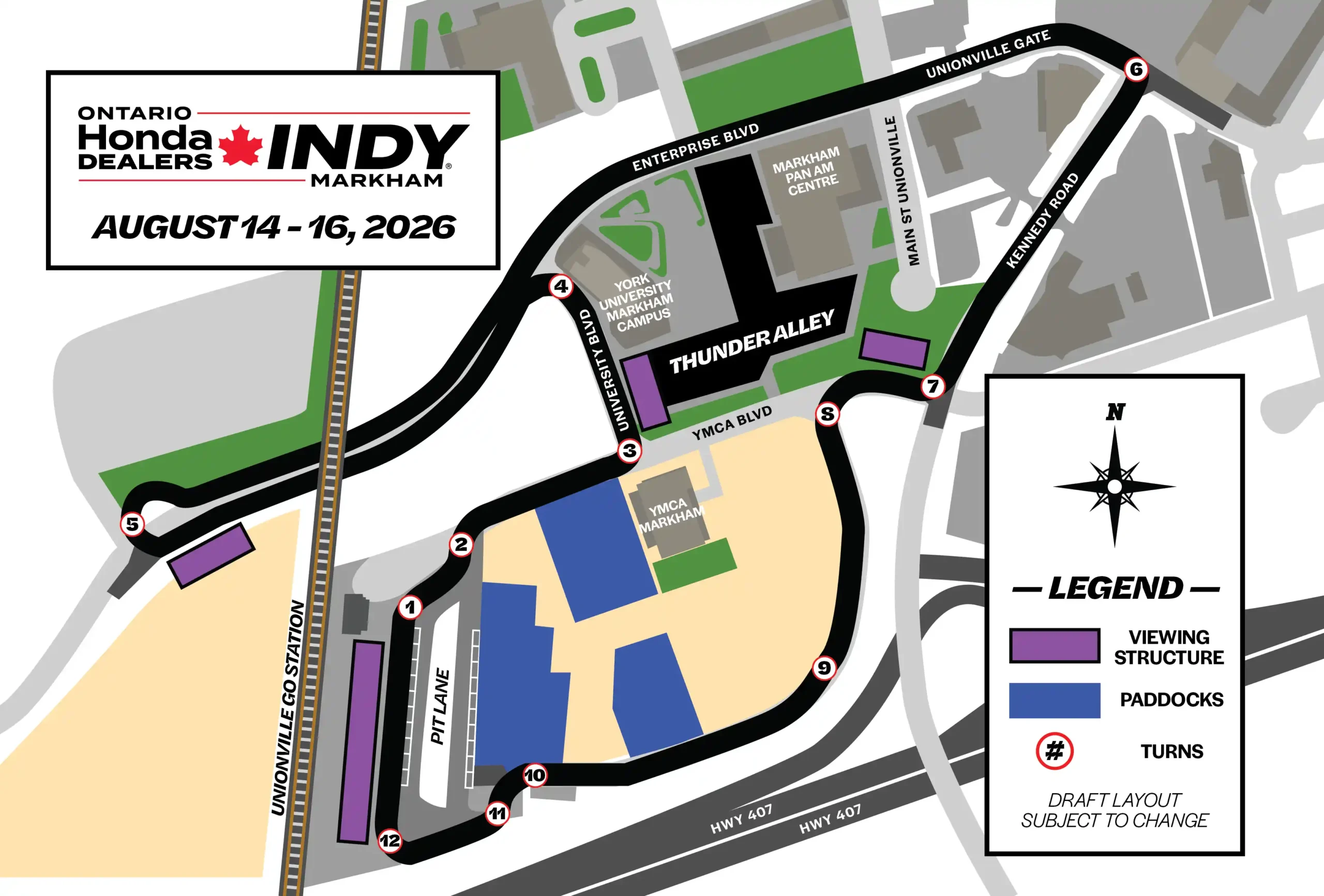
The Streets of Markham measured 2.19 miles with 12 turns and a double-sided pit lane. The race distance was 90 laps, or 197.1 miles. That created several theoretical pit-window options, but no official “best” window existed before teams saw real fuel mileage and tire degradation.
The strongest plan was therefore flexible rather than fixed: qualify near the front, use the mandatory tire sets efficiently, and avoid being caught on track when a full-course yellow shut pit lane.
What Was the Best Strategy for Markham INDYCAR 2026?
The best strategy was to protect track position first, then keep pit windows flexible enough to react to cautions. The 2026 street-course rules required one primary-tire set and two alternate-tire sets, so strategists also had to place the faster but less durable alternates into the race without being trapped on them at the wrong time.
Markham’s newness increased the value of simple strategy. Every extra variable created another chance to be wrong.
Teams needed to learn actual fuel consumption, alternate-tire life and overtaking difficulty while the weekend was already underway. Therefore, committing too early to one rigid two-stop or three-stop plan carried risk.
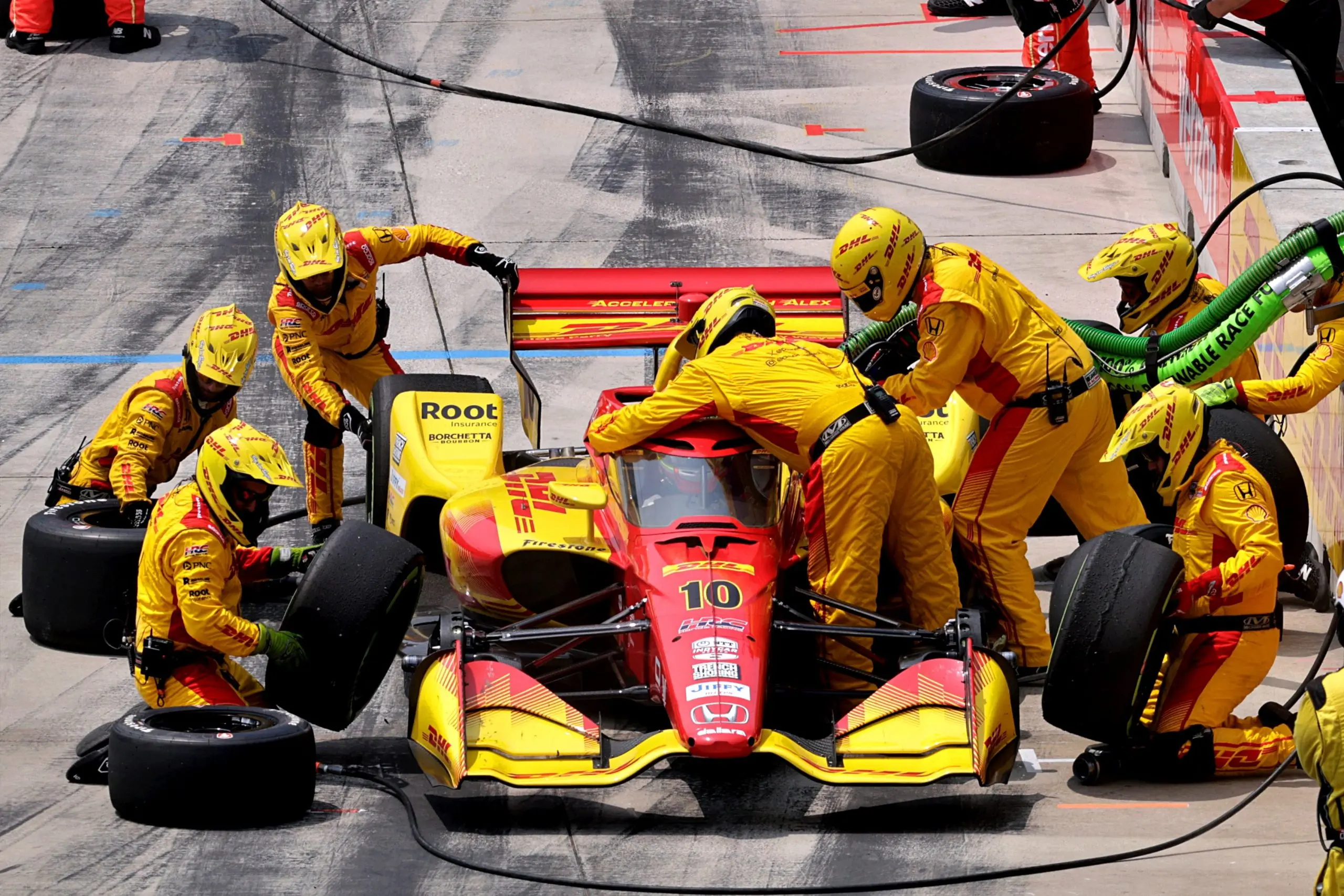
For newcomers, our INDYCAR racing guide explains the series format. Our pit-stop guide covers the basics of fuel, tires and timing.
Why Track Position Mattered So Much at Markham
Markham was a brand-new street circuit with concrete walls, technical sectors and no established passing history. Starting near the front reduced contact risk and gave teams more freedom to choose pit timing instead of reacting to traffic.
Track position is always valuable on a street course, but Markham amplified it. Teams could not rely on years of data showing exactly where passes were most likely.
The promoter highlighted Turn 3, the Turn 5 hairpin and Turn 8 as high-intensity spectator zones. Turn 5 was specifically described as a late-braking and passing area before the long back straight.
That gave strategists an idea of where overtaking might happen. However, simulations cannot fully reveal how easy it is to follow another car through dirty air and changing street grip.
Qualifying changes the pit strategy
A front-row starter can run the preferred pace and create a gap before the first stop. A driver starting 15th may have to spend the same fuel while sitting behind slower traffic.
That matters because a pit strategy only works if the driver can produce the lap time needed before and after the stop.
Our grid-position guide and pole-position explainer show why starting position changes every later decision.
Undercut versus overcut
An undercut means pitting earlier than a nearby rival, then using fresh tires to gain time while the rival stays out.
An overcut does the opposite. The driver remains on track longer and tries to use clean air or stronger old-tire pace to jump the rival after both stops.
Palou’s 2026 St. Petersburg win provided a clear real-world example of an overcut. He stayed out longer than Scott McLaughlin and Marcus Ericsson and gained the effective lead after the cycle.
Markham’s unknown tire behavior made both tools possible. The faster strategy depended on whether new tires gained enough time to offset pit-lane loss.
How the 2026 Firestone Tire Rule Changed Markham Strategy
For every 2026 street-course race, teams were required to use one set of Firestone primary tires and two sets of Firestone alternate tires. Each required set had to satisfy the rule’s completed-lap condition, including a lap that began after green was shown to the race leader.
This was a major change from earlier seasons because the second mandatory alternate set added another period of higher grip and greater degradation to the race.
INDYCAR said the change was designed to increase strategic variation. Firestone also redesigned the 2026 alternate tire to reduce drop-off compared with previous versions.
Alternate tires: faster, but not free speed
The alternate compound usually offers more grip. That can help a driver attack after a restart, complete an undercut or build a gap before stopping.
However, extra grip only matters if the tire remains inside its useful temperature and wear window.
A driver trapped in traffic can overheat the alternate before converting its advantage into positions.
Primary tires: slower, but strategically stable
The primary compound normally gives up some immediate pace in exchange for durability and a wider working window.
That can make it useful for a long final stint, especially when caution risk is high.
At Detroit in 2026, Palou’s team chose the primary tire for the final run while Kirkwood used alternates. The result showed how the primary could become the better closing tire once the alternate’s early advantage faded.
The order of compounds matters
Using the two alternate sets first can leave the primary for the finish. Using a primary early can preserve an alternate for a late restart.
Neither sequence is automatically best. The choice depends on traffic, track temperature and how quickly the alternate degrades.
Our grip guide and handling explainer provide the mechanical context.
What Were the Likely Pit Windows for a 90-Lap Markham Race?
INDYCAR did not publish a fixed pit window for Markham. The race was 90 laps, so a theoretical two-stop race divides into roughly 30-lap stints, while a three-stop race divides into roughly 22–23-lap stints. These are planning models, not official fuel numbers.
| Strategy model | Illustrative windows | Main advantage | Main risk |
|---|---|---|---|
| Two-stop model | Around Laps 28–32 and 58–62 | Less pit-lane time lost | Requires strong fuel mileage and tire life |
| Three-stop model | Around Laps 20–24, 43–47 and 66–70 | More time on fresher tires | Extra stop must be recovered on track |
| Early caution split | Stop before or soon after normal window | Can gain cheap track position | May force longer later stints |
| Late splash scenario | Short final fuel stop if required | Allows aggressive earlier pace | Vulnerable to a badly timed caution |
The key word is illustrative. A real fuel window depends on consumption per lap, caution laps, fuel saving and the amount taken at earlier stops.
A team that saves enough fuel can extend by several laps. A driver fighting hard in traffic may consume more and shorten the window.
When a two-stop model makes sense
A two-stop model is attractive because every pit stop costs track time. If the car can make the required stint length without excessive saving, avoiding a third stop is powerful.
The downside is vulnerability. Long stints can leave a driver on worn tires when a rival on a three-stop plan attacks with fresh rubber.
When a three-stop model makes sense
Three stops can work if fresh-tire pace is strong enough to recover the extra pit-lane loss.
It is also useful for a driver stuck in traffic. Pitting early can create clean air and turn a slow queue into fast laps.
However, a caution immediately after that extra stop can erase the advantage.
Do not confuse equal stint length with the real strategy
Real races are rarely divided perfectly. Teams move windows to avoid traffic, satisfy tire rules and respond to yellow flags.
Therefore, a “Lap 30 and Lap 60” two-stop plan is only a starting equation, not a race script.
How Cautions Could Transform Markham Strategy
A full-course yellow can completely reverse a strategy because pit lane closes when the full-course yellow is called. Cars that stop before the closure can gain track position, while cars that stay out may be forced to wait and then pit after the field has bunched.
This point became especially important in 2026 after INDYCAR changed its officiating process.
Beginning in May, Race Control said it would no longer consider pit windows or the running order before deploying a full-course yellow.
That means teams cannot expect Race Control to delay a yellow simply to let leaders complete pit stops.
The IMS road-course warning
The 2026 Sonsio Grand Prix provided a clear example. Alexander Rossi slowed on track, and several teams reacted while the situation was initially local.
Those teams pitted before the full-course yellow closed pit lane. Palou and Kirkwood stayed out, then lost major track position when they eventually stopped.
That is exactly the kind of scenario that Markham strategists had to respect.
The Detroit example
At Detroit, Palou’s strategist Barry Wanser chose to pit at the end of Lap 63 because he did not want to be caught by a possible caution.
A full-course yellow arrived a few laps later. The early call protected Palou’s track position and helped set up the win.
These 2026 examples show that caution strategy is not theoretical. The timing of one stop can decide the race.
Emergency service in a closed pit
If a car is nearly out of fuel when pit lane is closed, the team may need emergency service and accept the related competitive consequence.
That makes fuel margin important. A strategist wants enough reserve to survive an unexpected yellow without being forced into a penalty-sensitive situation.
Our Safety Car guide and flags guide explain the general caution process.
Fuel Strategy: Why Saving Can Be Faster Than Attacking
Fuel saving looks slow from the outside, but it can create track position.
If a driver extends a stint by two or three laps, the team may gain flexibility around cautions and avoid a late splash.
Lift-and-coast
The driver lifts the throttle before the normal braking point and lets the car slow with aerodynamic and mechanical drag.
This saves fuel and can reduce brake temperature. The cost is lap time.
Using the draft
Following another car can reduce aerodynamic resistance and fuel consumption.
The tradeoff is hotter tires and less clean air.
Our slipstream explainer covers why this works.
Saving while preserving track position
The best fuel save is one the rival cannot exploit. A driver with a small gap behind can reduce consumption without surrendering a position.
A driver under pressure may have to abandon the target and defend.
Why a caution can rescue a marginal fuel number
Yellow-flag laps consume less fuel than racing laps. Therefore, a strategy that looked one or two laps short can suddenly become achievable after a caution.
This is why teams constantly recalculate the number during a street race.
How the Markham Layout Influenced Strategy
The circuit’s 12-turn layout included several sections with different strategic demands.
Turn 3: braking and track position
Turn 3 is a 90-degree left-hander after acceleration from Turn 2. It was expected to become a key attack zone.
A driver exiting the pits into traffic could lose the benefit of fresh tires if immediately trapped before this braking point.
Turn 5 hairpin and the long back straight
The promoter specifically described Turn 5 as a late-braking and passing area before the high-speed back straight.
That means traction out of the hairpin affects both overtaking and fuel use. A driver who spins the rear tires wastes energy and tire life.
Turn 8 and the technical sector
Turn 8 leads toward a sweeping right-hander at Turn 9. Technical sections reward balance rather than simple top speed.
This affects strategy because a car with stronger long-run balance may preserve tires better even if it qualifies slightly slower.
Double-sided pit lane
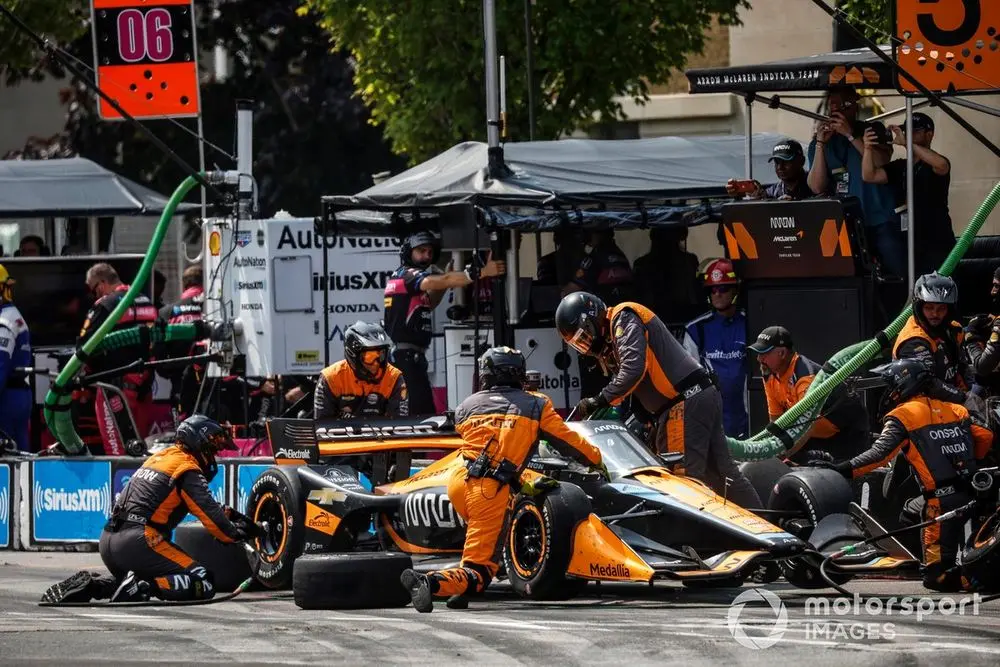
The double-sided pit lane created an additional operational challenge. Teams needed clean entries, accurate box positioning and safe releases.
A slow stop can erase the advantage of a perfect pit window.
Late-Race Strategy: What to Do With 20 Laps Remaining
When to choose the primary for the finish
The primary makes sense when degradation is the main concern and the driver already has track position.
Palou’s Detroit finish showed why. Kirkwood had the faster alternate early, but the primary became stronger later in the run.
When to choose the alternate for the finish
The alternate is attractive when the driver needs to attack immediately after a stop or restart.
It can create a short-term grip advantage before wear catches up.
Restart positioning
A late caution compresses the field and can erase a ten-second lead.
That makes restart tire temperature and defensive placement critical. A leader who misses the launch may lose more than a position before the field spreads out again.
Our grip guide explains why cold tires make restarts difficult.
How Different Starting Positions Change the Plan
Starting P1–P5
The priority is to preserve clean air. These drivers can usually choose their own pit timing instead of reacting to traffic.
An early stop should only be made when the undercut threat is real or a caution risk is developing.
Starting P6–P12
This is the flexible group. A driver can stay with the leaders or gamble on an early stop to create clear track.
The best option depends on whether the car has enough pace to pass after the stop.
Starting outside the top 12
These drivers have more reason to go off sequence.
Running the same strategy as the leaders may simply preserve the original order. An early pit, long fuel save or alternate tire sequence can create a different race.
However, every gamble increases exposure to caution timing.
Five Strategy Mistakes That Could Ruin a Markham Race
1. Pitting one lap too late before a caution
This is the biggest risk. Once the full-course yellow closes pit lane, a leader can fall deep into the order after the field bunches.
2. Using the alternates in traffic
The faster compound is wasted if the driver cannot use the grip to overtake.
3. Fuel saving without a margin behind
A driver who slows too much can invite an attack and lose the track position the strategy was designed to protect.
4. Treating the theoretical window as mandatory
A Lap 30 target is not sacred. Traffic, tire life and cautions can make Lap 27 or Lap 33 better.
5. Forgetting the championship context
A title leader may reject a high-risk strategy that a driver outside the title fight would happily attempt.
Our championship scoring guide explains why risk tolerance changes late in a season.
Markham INDYCAR 2026 Strategy FAQs
Conclusion: Markham Strategy Was About Flexibility, Not a Perfect Formula
The new Streets of Markham did not offer teams the comfort of historical data. That made strategy less about memorizing a known pit window and more about reacting correctly to new information.
Track position was the first priority. A driver near the front could control pace, protect the tires and choose when to stop. A midfield driver had to spend more of the race reacting to traffic.
The 2026 tire rule added another major variable. Every street-course entrant had to use one primary set and two alternate sets, creating more opportunities to attack but also more chances to place the wrong compound into the wrong part of the race.
Cautions were the largest strategic threat. Pit lane closes under a full-course yellow, and INDYCAR’s May 2026 officiating update made clear that Race Control would not delay a yellow to protect pit windows or running order.
That made the Detroit and IMS road-course races important case studies. Palou gained from pitting before a Detroit caution, while he lost track position at Indianapolis after not reacting before pit lane closed.
The theoretical pit windows were useful planning tools, not promises. A two-stop model points toward roughly 30-lap stints, while a three-stop model points toward roughly 22–23-lap stints. Real racing then moves those numbers.
For Markham, the strongest strategist was not the person who predicted every lap before the start. It was the person who could recognize when the original plan was no longer the fastest one.
Sources
- INDYCAR — Streets of Markham circuit, 2.19-mile layout and 90-lap race distance
- INDYCAR — 2026 street-course tire usage requirements
- INDYCAR — pit-lane closure and caution strategy example at the 2026 Sonsio Grand Prix
- INDYCAR — Palou Detroit strategy and primary-versus-alternate finish
- INDYCAR — Markham Firestone Fast Six qualifying format