New Hampshire NASCAR 2026 Strategy Analysis: Track Position and Pit Timing
Loudon is not won by speed alone. The 2026 short-track tire adds more falloff to a circuit where clean air, restart lanes and pit timing can decide whether a fast car controls the race or spends a stage trapped in traffic.
New Hampshire NASCAR strategy in 2026 is built around one central tradeoff: how much track position are you willing to surrender for newer tires? New Hampshire Motor Speedway is flat, narrow in its preferred racing groove and difficult to pass on once the field settles into rhythm. Yet Goodyear has deliberately brought a short-track tire designed to create more grip early in a run and more lap-time falloff later. That gives crew chiefs a real decision instead of an automatic answer.
The Sunday, August 23 Dollar Tree 301 is scheduled for 301 laps, with stage breaks after Laps 70 and 185. Cup teams have 10 total dry-weather tire sets for the weekend: seven new race sets, one qualifying set that transfers to the race and two practice sets. That allocation is large enough to create options but not so generous that teams can put on four new tires at every caution without thinking.
The most useful recent example is the 2025 New Hampshire race. Team Penske dominated the afternoon, with Ryan Blaney and Joey Logano combining to lead 263 of 301 laps. Logano later said his only realistic chance to beat Blaney was through pit road and execution because the No. 12 was simply faster. That is exactly the kind of race Loudon can produce: strategy can create an opportunity, but only if the driver can convert track position into clean, mistake-free laps.
New Hampshire NASCAR 2026 strategy starts with the race format
The Dollar Tree 301 is scheduled for Sunday, August 23 at 3:00 p.m. ET. NASCAR’s official weekend schedule lists Stage 1 ending at Lap 70, Stage 2 at Lap 185 and the finish at Lap 301. The race therefore divides into a short opening stage, a much longer middle segment and a 116-lap final stage. That asymmetry matters because a strategy that works before Lap 70 may not be usable later.
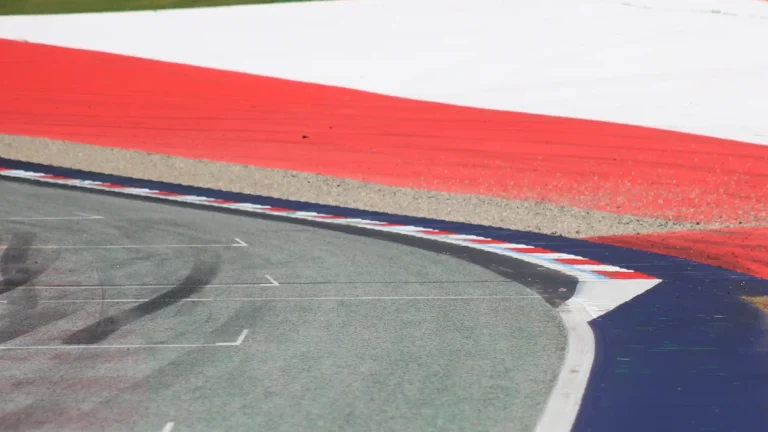
New Hampshire Motor Speedway measures 1.058 miles. Its turns are 65 feet wide with variable banking from two to seven degrees, and official track information lists pit-road speed at 45 mph. Those numbers explain why a green-flag stop is so expensive. A driver must decelerate sharply from racing speed, travel the full length of pit road under a low speed limit, complete service, then accelerate back into traffic. The total time loss can be large enough that the timing of a stop matters as much as the speed of the stop itself.
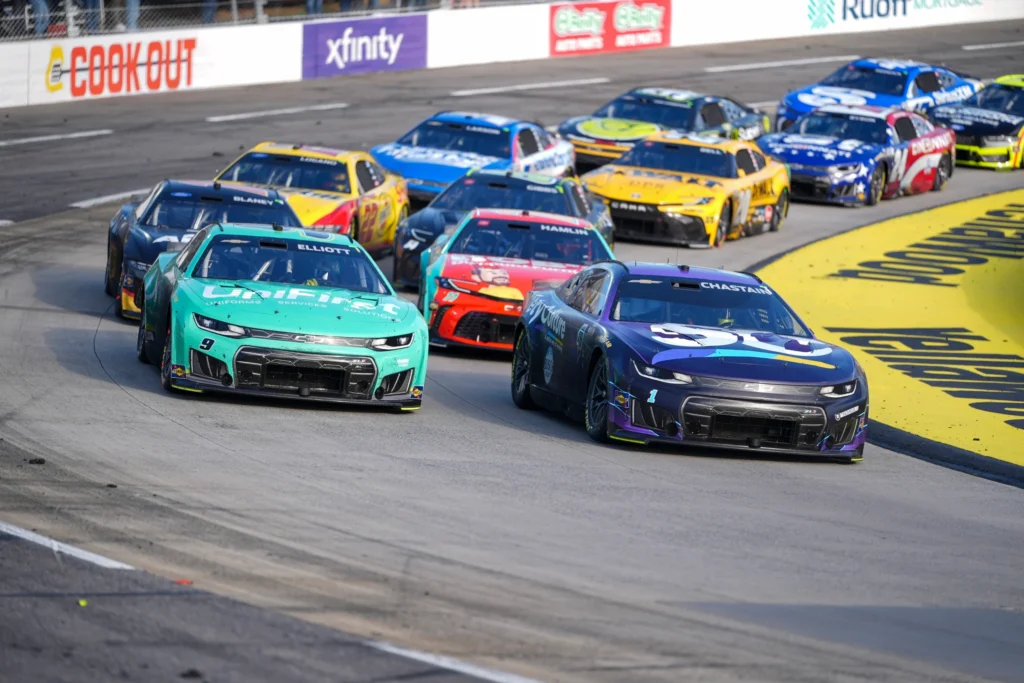
The flat corners create another strategic effect. Clean air matters because a driver can use the exact braking point and preferred line without adapting to dirty air or a slower car. Passing is possible, especially on restarts, but the field tends to stretch once tires equalize. That is why gaining five positions with a two-tire call can sometimes be worth more than owning four fresh tires from 15th.
Every major decision compares two values: tire advantage versus track-position advantage. The 2026 Goodyear package increases the first value. Loudon’s flat layout keeps the second value high. Crew chiefs must judge which side of that equation is stronger at each caution.
Why is track position so important at New Hampshire?
Track position matters at every NASCAR oval, but the cost of losing it changes from track to track. New Hampshire is especially sensitive because the corners are flat and the preferred entry-to-exit path is relatively narrow. When a driver runs in clean air, the car can brake at the ideal point, rotate through the center and return to throttle without reacting to another car. In traffic, every part of that sequence can be compromised.
The biggest penalty often comes at corner entry. A trailing car may have to brake earlier because the car ahead blocks the preferred path. If the driver moves higher to create a passing angle, the car may have less grip and a longer distance to travel. If the driver stays low, the front tires can lose bite in the wake of the car ahead. The result is a familiar Loudon problem: a car can be faster by itself but unable to use that speed while following.
This is why crew chiefs sometimes defend track position even when four tires are technically faster. Suppose a caution falls with 25 laps remaining and the leader has 15-lap-old tires. If most of the top five stay out, a sixth-place car that pits for four tires may restart outside the top 12 after other teams take two tires or stay on track. The fresh rubber creates theoretical lap-time advantage, but the driver must spend several laps passing cars before reaching the leader. By then, the tire advantage may have already narrowed.
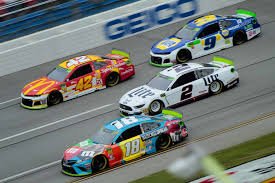
The 2025 race offers a useful real-world reference. Ryan Blaney and Joey Logano had the two strongest Team Penske cars for most of the afternoon. Logano led 147 laps, Blaney led 116, and together they accounted for 263 of 301 laps. After the race, Logano acknowledged that Blaney had the faster car and said the No. 22’s realistic opportunity was to beat him through pit road and race details. That is a clean description of Loudon strategy: if raw speed is close, pit sequence can place one car in control of the lane, the restart and the clean air.

Clean air is not magic, but it changes the driver’s options
“Clean air” is sometimes treated as if it adds horsepower. It does not. The real advantage is freedom. The leading driver can use the entire corner, choose the best braking point and manage tire load without compromising for another car. Behind traffic, the driver may need to run higher, brake earlier or use more steering input. Those changes generate extra heat and can accelerate tire falloff.
That is why the first car off pit road can have an advantage even when two teams perform identical service. The driver who restarts first controls his approach to Turn 1. The second driver may have the outside lane, may have to defend from behind and may spend the first few laps abusing the rear tires to maintain position. A one-position swing on pit road can therefore become a multi-lap strategic swing.
At Loudon, a crew chief is not simply buying fresh tires. He is deciding how many positions he is willing to pay for them.
How the new short-track tire changes New Hampshire strategy
Goodyear confirmed on August 18 that Cup teams will use the same left- and right-side tire compounds raced at Richmond one week earlier. The combination first appeared together in the 2025 Martinsville fall race and is designed to provide stronger initial grip with increased lap-time falloff over a green-flag run. New Hampshire therefore arrives with a tire package teams already understand, but on a different surface and geometry.
That matters because strategy becomes more dynamic when tire speed changes meaningfully with age. With a low-falloff tire, the crew chief usually prioritizes track position because a 20-lap tire deficit may not be large enough to pass cars. With a higher-falloff tire, the fresh-tire car has more speed to attack. The key question is whether the extra speed is sufficient to overcome the time and positions lost during the stop.
Goodyear is also giving Cup teams more practice rubber under NASCAR’s revised 50-minute session format. Each team receives two practice sets, one qualifying set that transfers to the race, and seven new race sets. In total, teams have 10 dry-weather sets. Four wet-weather sets are available if conditions require them. The two practice sets are important because teams can perform a true long-run comparison rather than protect a single set and guess at falloff.
What teams should learn during Saturday practice
- Lap-time falloff: how much slower the car becomes after 10, 20, 30 and 40 laps.
- Front-versus-rear degradation: whether the car loses speed because the nose stops turning or because rear grip disappears on throttle.
- Heat sensitivity: whether tire behavior changes sharply as track temperature rises.
- Line flexibility: whether the car can move up the banking to pass or is locked into one groove.
- Brake balance: whether the driver can keep attacking the entry as the tires age.
The last point is easy to overlook. A worn tire does not only reduce cornering grip. It can change the driver’s confidence under braking. If the front tires lose bite, the driver may begin braking earlier and carrying less speed through the center. If the rear tires fade, the driver may delay throttle on exit. Either problem makes the car vulnerable to a competitor on newer rubber.
Why Richmond data matters
Using the same tire package as Richmond gives every Cup team a current notebook. Engineers can compare temperatures, pressures, wear patterns and long-run speed from one week to the next. However, Richmond’s surface is known for high tire wear, while New Hampshire’s flat geometry changes how the load is applied. A team cannot simply copy a Richmond pit model and expect it to work at Loudon.
The useful transfer is behavioral rather than exact. Teams already know how quickly this compound can produce falloff, how sensitive it is to setup and how much drivers can recover on fresher rubber. They can use that knowledge to build a range of pit scenarios before the race, then adjust the model once Saturday practice shows the actual New Hampshire degradation curve.
Cup teams have seven new sets for the race plus the qualifying set that transfers into the race pool. That gives a maximum of eight race-eligible dry sets after qualifying. A crew chief who spends tires aggressively early can create speed, but may reduce flexibility if the race produces several late cautions.
When should NASCAR drivers pit at New Hampshire?
There is no single pre-race lap that qualifies as the “correct” New Hampshire pit window. The race is structured by stages, cautions and tire life. Crew chiefs build several windows based on fuel range and expected falloff, then react to what the race gives them. The decision changes depending on whether a driver is leading, buried in traffic or trying to leapfrog a rival.
Stage 1: protect information and position
The first stage ends at Lap 70, which is short enough that many teams will avoid unnecessary complexity if the race remains green. Early laps are valuable because they provide the best data on real race-day degradation. Practice happens on Saturday; the race begins Sunday with different rubber, temperature and traffic. A team that pits too early may gain speed but sacrifice the chance to measure how long its first set can remain competitive.
That does not mean everyone automatically stays out until the stage break. A driver who starts deep in the field may short-pit if the tire advantage is large enough to create an undercut. By stopping several laps before the leaders, the car gets fresh tires in clean air and can run faster while competitors remain on worn rubber. When those competitors finally pit, the early stopper may cycle ahead.
The risk is caution timing. If a driver pits under green and a caution comes out before the rest of the field stops, the driver can lose a lap or be trapped behind cars that receive a cheaper yellow-flag stop. At Loudon, that risk is significant because green-flag pit-road time loss is large. Crew chiefs must evaluate not just tire speed, but the probability that the race stays green long enough for the undercut to work.
Stage 2: the first true strategy laboratory
Stage 2 runs from Lap 71 through Lap 185, a 115-lap segment. That length opens more possibilities. If tire falloff is strong, teams may choose to divide the stage with a green-flag stop rather than try to stretch one set. If falloff is moderate and fuel allows a longer run, some may prioritize staying out and protecting track position.
The ideal stop point depends on the “crossover lap” — the moment when the time gained on fresh tires becomes larger than the time lost by pitting early. Engineers estimate this using practice falloff, pit-road loss and traffic. If a new set is half a second per lap faster, an early stop can recover a large deficit quickly. If the advantage is only a tenth or two, surrendering track position may not pay back before the stage ends.
Final stage: strategy becomes opponent-specific
After Lap 185, the final stage runs 116 laps. By then the crew chief knows the true wear rate, the number of sets remaining and the cars that matter. Strategy becomes more targeted. A team running fourth may copy the leader because maintaining the same tire age preserves a chance on restarts. A team running 15th may deliberately do the opposite because matching the leader’s strategy cannot produce enough track position.
Leader under a late caution
If the caution falls with 35–45 laps left and tire falloff is meaningful, four tires may be the safest call if most front-runners pit. But if several cars stay out, the leader must decide whether fresh rubber can realistically pass them before the finish.
10th-place car needs a win
The crew chief can justify a split strategy. Staying out or taking two tires may create the front-row restart needed to lead laps. The risk is being overwhelmed if four-tire cars have a large pace advantage.
Long green run develops
Short-pitting can be powerful because fresh tires run faster while leaders stay out. The stop should be timed late enough to reduce caution exposure but early enough to exploit falloff.
Caution with fewer than 10 laps
Track position usually becomes dominant. A four-tire stop can send a contender too far back, so two tires or staying out may be more attractive unless degradation is extreme.

When can a two-tire stop work at Loudon?
Two-tire stops are attractive when the team wants some grip improvement without paying the full track-position cost of four tires. The stop is quicker, which can move a car several spots ahead of four-tire competitors. At a circuit where passing is difficult, that can be valuable. The problem is balance: changing only one side of the car alters grip distribution and can make the car harder to drive.
The call is strongest when tire age is relatively low. If a caution comes only 10 or 15 laps after the previous stop, four fresh tires may not be dramatically faster than two. In that case, gaining six positions on pit road can be worth more than the small grip difference. The call becomes riskier after a long run because the untouched tires may be too worn to maintain pace.
Two tires also become more attractive when the driver has a car that is difficult to pass with but strong in clean air. The crew chief can use the quicker stop to put that car near the front, then rely on track position to defend. Conversely, a car with excellent passing speed may prefer four tires because the driver can use the grip advantage to work through traffic.
The 2025 New Hampshire race illustrated how four-tire speed can overcome a temporary track-position loss when the car is strong enough. Logano noted that Blaney was able to regain position after taking four tires. That is an important warning against overvaluing pit-road gains. A two-tire call only works if the car can survive the following run.
How cautions change NASCAR pit strategy at New Hampshire
Cautions reduce the time cost of pitting because the field is circulating slowly. That makes fresh tires more affordable and can erase the advantage of a driver who short-pitted under green. They also bunch the field, increasing the value of restart position. Those two effects pull strategy in opposite directions: yellow flags encourage tire changes but make track position even more important at the restart.
Early caution: use it to learn, not panic
If a caution falls in the first 20 laps, most contenders have little reason to abandon their plan unless the tire shows unexpected wear. Teams can inspect the first set, compare temperatures and adjust pressures. A driver with handling trouble may pit for changes, but front-runners often protect position because the tires are still young.
Mid-cycle caution: the hardest call
A caution roughly halfway through a run is more complicated. The tires have enough age that fresh rubber matters, but not enough age to make four tires an automatic choice. This is where crew chiefs split between staying out, taking two and taking four. The result can create mixed tire strategies throughout the field and one of the best passing opportunities of the race.
Late caution: count the cars, not just the laps
The common mistake in simplified strategy analysis is to say “fewer than 20 laps means stay out” or “more than 20 means pit.” Real crew chiefs look at the cars around them. If the first eight cars all pit, the leader can safely pit and preserve position relative to direct rivals. If five cars stay out, the same four-tire stop may restart the leader outside the top 10. The number of opponents choosing each strategy is as important as the lap count.
Stage cautions are predictable but still strategic
The breaks after Laps 70 and 185 give teams planned opportunities for service, but the sequence leading into those breaks matters. A crew chief may short-pit before a stage end if stage points are not important and the goal is to gain position for the next stage. A championship contender may instead stay out to collect points, accepting a worse restart later. In 2026, with the top 16 advancing to The Chase after the regular season, stage points can be strategically significant for drivers around the cutoff.
How fuel strategy interacts with tire strategy
Tire discussion gets most of the attention at New Hampshire because the 2026 compound is designed for falloff, but fuel still defines how long a team can stay on track. Crew chiefs calculate a maximum fuel window, then decide whether tire performance will force a stop before the tank does. If tires fade well before the fuel limit, fuel becomes secondary. If tire falloff is modest, fuel conservation can extend a run and create strategic flexibility.
Saving fuel is not free. A driver can lift earlier before the braking zone, reduce throttle use and draft another car, but those techniques also change lap time and track position. A team leading the race may accept a small pace loss to stretch several extra laps, especially if doing so opens the possibility of one fewer stop. A driver fighting through traffic may not have that luxury.
The most powerful fuel strategy occurs when a late caution brings the field close to the edge of the remaining range. Some teams may believe they can reach the finish with conservation, while others pit for security. The cars that stay out gain track position, but the drivers must hit a fuel number while also defending. At Loudon, where clean air helps but restarts are aggressive, that balance can be difficult.
Weather can also change the calculation. Higher temperatures can increase tire falloff and push teams toward shorter runs even if fuel range is longer. Cooler conditions can preserve tires, making fuel windows more relevant. The crew chief therefore uses Sunday’s actual track temperature rather than assuming Saturday practice degradation will repeat exactly.
Restart strategy can decide the race before the tires matter
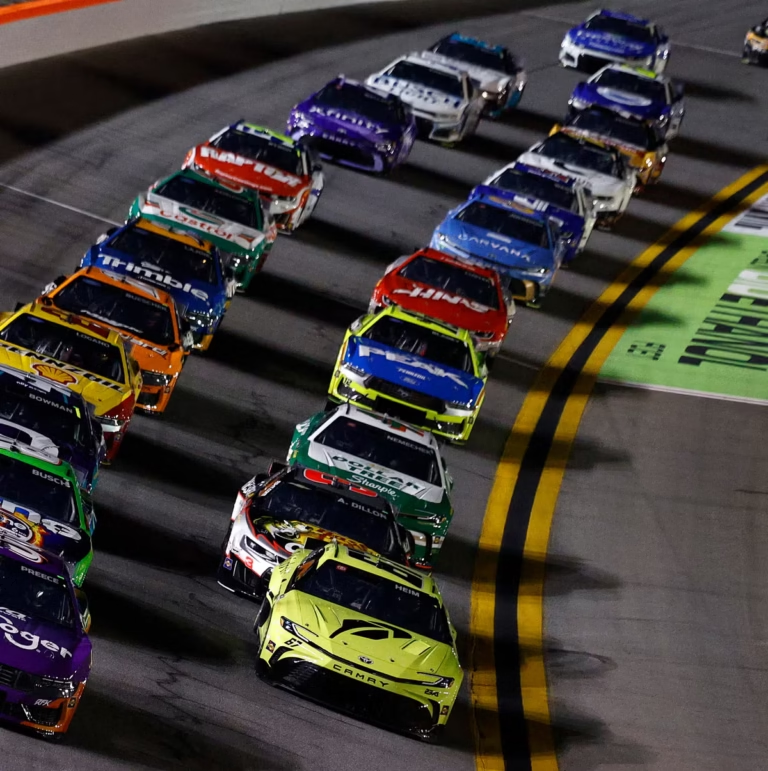
New Hampshire restarts are high leverage because the field is compressed and multiple lanes are temporarily available. A driver who gains three spots in the first two laps may keep them for the next 30. A driver who gets pinned in the wrong lane may lose clean air and spend the entire run trying to recover.
The leader’s control of the restart gives track position an additional value. The front row can dictate the launch and choose how aggressively to defend Turn 1. Behind them, drivers often fan out and use the variable banking to create angles that disappear once the field strings out. This is why teams care so much about coming off pit road in the first two rows.
Why the outside lane can be useful
The outside is not automatically superior, but a driver can use a wider arc to maintain momentum if the car rotates well. The lower lane offers the shortest distance but can become congested. The best lane depends on rubber buildup, restart line choice and the driver’s car balance. Crew chiefs watch earlier restarts to identify which lane is producing net gains.
Why tire differences magnify restart risk
Mixed strategies create mixed acceleration. A car on four fresh tires may launch harder than one on two tires or an older set, but that speed can create contact if the driver reaches a closing gap too quickly. Conversely, the old-tire leader may block aggressively because the first few corners are the best chance to preserve clean air. The 2026 tire package should make those differences more visible if falloff is substantial.
Pit road can win or lose New Hampshire without a strategy mistake
New Hampshire’s official pit-road speed is 45 mph. The strategic plan only works if the driver and crew execute it. A speeding penalty can destroy an undercut. A loose wheel or slow stop can turn a two-tire gamble into a loss. An uncontrolled tire can send a front-running car to the rear. Loudon magnifies those errors because passing back through the field is difficult.
Entry is especially important during green-flag stops. The driver must brake from racing speed and hit the timing line without crossing the limit. Arriving too conservatively costs time; arriving too aggressively risks a penalty. The crew chief can plan the perfect stop lap, but the driver still has to place the car precisely in the box.
Exit matters too. A car leaving pit road on fresh tires may merge near race traffic. If the driver rejoins behind a slower group, the anticipated undercut advantage can disappear. Teams therefore monitor the “pit exit gap” — the traffic the driver is likely to encounter after service — before choosing a green-flag stop.
At New Hampshire, the crew chief can gain five seconds with the right pit window and lose all of it with a slow stop, a pit-road penalty or a bad merge into traffic. Strategy cannot be separated from pit-crew performance.
What is the best final-stage strategy at New Hampshire?
The final stage begins after Lap 185 and runs to Lap 301. The best plan depends on the caution pattern, but the strategic priority becomes clearer: preserve enough tire inventory to react late while avoiding unnecessary track-position losses. A team that reaches Lap 185 with several race-eligible sets remaining has far more flexibility than one that spent tires aggressively in Stage 2.
If the final stage stays green for a long time, the race can become a classic undercut contest. Crew chiefs watch leader lap times and calculate when fresh tires will recover the pit-road deficit. The first contender to stop gains speed immediately, forcing others to respond. Waiting longer provides newer tires later but risks losing too much time before the stop.
If cautions break the final stage into short runs, track position becomes more valuable. Teams may take two tires, stay out or use older rubber if they believe the race will restart with too few laps for four-tire cars to pass. The strategic winner is often the team that recognizes the transition from a “tire race” to a “position race” one caution earlier than everyone else.
Best-case strategy for the leader
Control the race from clean air, mirror the strongest direct rival when the tire advantage is unclear, and avoid giving away the front row unless the fresh-tire delta is large. A leader should not create unnecessary variance when the car already controls the race.
Best-case strategy for a fifth-to-10th-place car
Look for asymmetry. If the leaders take four tires, consider two. If they stay out, consider four if falloff is strong enough. Matching the leader’s call preserves the same gap; doing something different is how a slightly slower car creates a chance to win.
Best-case strategy for a Chase bubble driver
The 2026 championship format rewards points, so a bubble driver may prioritize a secure top-10 finish over a low-percentage gamble for the win. Stage points matter, and avoiding a pit-road mistake can be more valuable than chasing one extra restart row. The decision changes at Daytona one week later, where volatility is much higher.
| Race situation | Likely priority | Possible call | Main risk |
|---|---|---|---|
| Long green run, 50+ laps to go | Exploit tire falloff | Short-pit before rivals | Caution after your stop |
| Caution, 30–40 laps to go | Balance grip and position | Four tires if field pits | Restarting behind stay-outs |
| Caution, 15–25 laps to go | Track position rising | Two tires or selective four | Old-side tire balance |
| Caution, under 10 laps | Front-row restart | Stay out / two tires | Fresh-tire cars attack immediately |
| Bubble driver running 7th | Protect points | Mirror conservative rivals | Losing chance to win |
Five strategy signals to watch during the Dollar Tree 301
1. Ten-lap and 20-lap falloff
If the leaders lose significant lap time after 20 laps, four tires become more powerful and undercuts become more dangerous. If pace stays stable, track position will dominate more of the race.
2. Who can pass after taking four tires?
Fresh-tire speed only matters if drivers can convert it into positions. Watch the first car that pits off-sequence. If that driver slices through traffic, the crew chiefs have proof that tire delta can beat track position. If the car stalls behind slower traffic, staying out gains value.
3. Pit-road gains and losses
Watch which teams consistently gain positions during yellow-flag stops. New Hampshire can become a crew race when the front-running cars are close in pace. A half-second pit advantage can change restart lane and clean-air control.
4. Tire inventory entering the final stage
A team with one more fresh set than its rivals can create an aggressive final-stage option. Conversely, a team that used too many tires early may be forced to stay out under a late caution even when four tires are clearly faster.
5. The first late caution after Lap 240
This is often the pivot point. Crew chiefs must decide whether the remaining distance is long enough for fresh tires to overcome traffic. The first team to correctly judge that threshold can control the final 50 laps.
New Hampshire NASCAR 2026 strategy FAQ
Why is track position important at New Hampshire Motor Speedway?
New Hampshire’s flat 1.058-mile layout makes passing difficult once cars settle into similar lap times. Clean air lets a driver use the preferred braking point and corner line, while traffic can force earlier braking and extra tire load. That means a team may sometimes protect position instead of automatically taking four fresh tires.
What is the best pit strategy for NASCAR at New Hampshire?
There is no fixed best strategy before the race. In 2026, the softer short-track tire is designed to create more lap-time falloff, which increases the value of fresh tires. Crew chiefs must compare that fresh-tire advantage with the positions lost during the stop and react to cautions, traffic and remaining tire inventory.
How many tire sets do Cup teams have at New Hampshire in 2026?
Goodyear is supplying 10 total dry-weather sets per Cup team: seven new sets for the race, one qualifying set that transfers to the race and two sets for practice. Teams also have four wet-weather sets available if needed.
When is the 2026 New Hampshire NASCAR Cup race?
The Dollar Tree 301 is scheduled for Sunday, August 23, 2026 at 3:00 p.m. ET. The race is scheduled for 301 laps, with stage breaks after Laps 70 and 185. USA Network is scheduled to televise the event.
Conclusion: Loudon is a race of controlled tradeoffs
The 2026 New Hampshire NASCAR strategy battle is more interesting than a simple choice between fresh tires and clean air. Goodyear’s short-track package is designed to produce more grip and greater falloff, giving crew chiefs a stronger reason to pit. At the same time, New Hampshire remains a flat circuit where track position, restart lane and pit-road execution can protect a slower car for dozens of laps.
The strongest teams will avoid locking themselves into one philosophy. Early in the race, they will measure falloff and protect information. Through the 115-lap second stage, they will identify the crossover point where new tires repay the cost of a green-flag stop. In the final 116 laps, they will manage tire inventory and react to the cars around them rather than blindly following a predetermined lap number.
The 2025 race showed what happens when speed and execution align. Ryan Blaney and Joey Logano controlled 263 of 301 laps, yet Logano still described pit road and details as his path to beating a faster teammate. That remains the core Loudon lesson. Strategy cannot manufacture speed that does not exist, but it can decide which fast car gets clean air, which driver controls the restart and which crew has the opportunity to win.
For Sunday, the key indicator is simple: watch how quickly the 2026 tire falls off after 20 to 30 laps. If degradation is strong, undercuts and four-tire calls become aggressive weapons. If degradation is modest, the race tilts back toward track position, two-tire gambles and restart control. The winning crew chief will be the one who identifies that balance first — and changes the plan when the balance changes.
Sources
- NASCAR — 2026 Goodyear tire setup and tire allotment for New Hampshire
- NASCAR — Official 2026 New Hampshire Cup weekend schedule and stage lengths
- NASCAR — 2025 New Hampshire race recap and Penske strategy context
- New Hampshire Motor Speedway — Official track dimensions and pit-road speed
Strategy analysis reflects official information available through August 20, 2026. Actual pit windows will depend on Sunday tire falloff, caution timing, fuel range and race conditions.