George Russell Drops a Bombshell in Baku Qualifying: Pole by 0.837 Seconds
The biggest pole margin in Formula 1 since 2023, and the biggest of Russell’s career. We break down the 1:42.526, how he found almost a second on the field, and whether he can turn it into a win with his title rival starting 16th.
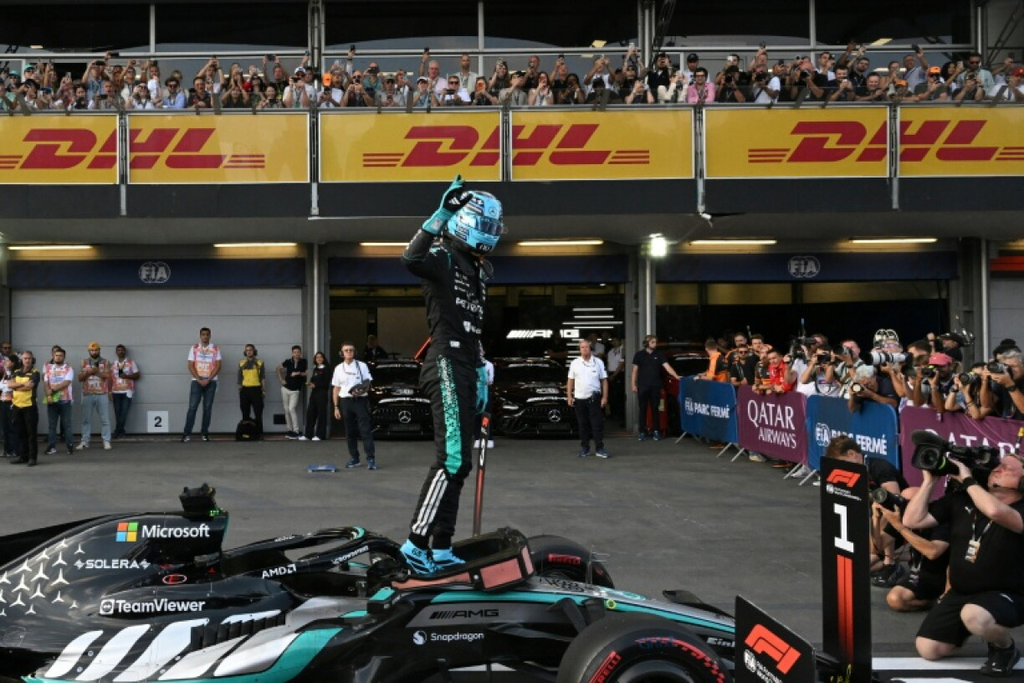
Russell’s Baku Bombshell: Pole by 0.837s
F1’s biggest pole margin since 2023, and the biggest of his career.
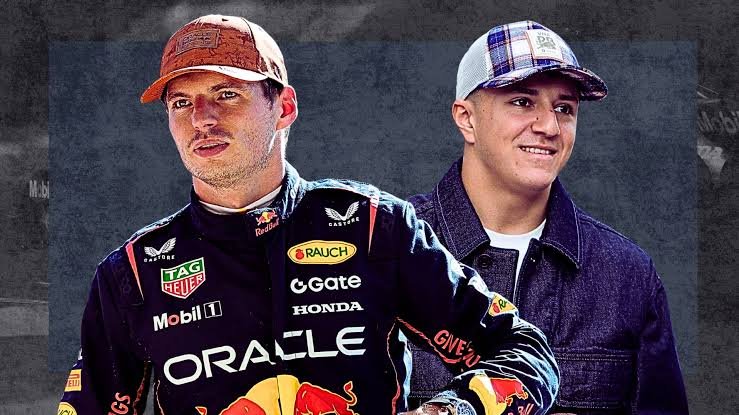
Formula 1 pole positions are usually decided by hundredths of a second. On Friday in Baku, George Russell won it by nearly a whole second. His 1:42.526 put him 0.837 seconds clear of Charles Leclerc, while Oscar Piastri, in third, was only a thousandth of a second behind the Ferrari. It’s the biggest pole margin in F1 since Max Verstappen’s 1.244-second gap at the 2023 Canadian Grand Prix, and the most dominant qualifying lap since the new 2026 power units arrived.
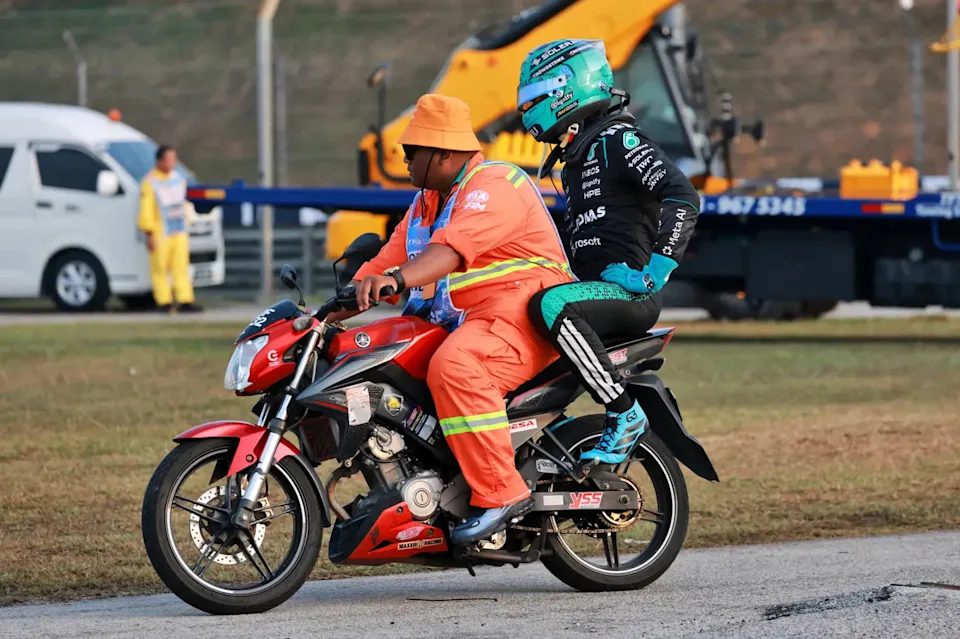
Even Russell was surprised. “I was shocked when I saw the gap,” he said, calling it “probably the biggest margin of my whole career,” including his junior days in F2 and F3. It came on the same afternoon his Mercedes team-mate and title rival, Kimi Antonelli, crashed out in Q1 and dropped to 16th on the grid. Below we look at the lap itself: how it came together, why the gap was so big, and what it sets up for today’s race. For start times and the full grid, see our Azerbaijan Grand Prix race guide.
The Lap: How Russell Built His Pole
Russell’s pole wasn’t one lucky lap. He was quickest in every part of qualifying, starting with a 1:43.615 at the top of Q1 and staying there through Q2. Mercedes had looked fast all weekend: Russell had also topped both Thursday practice sessions. But it was the way his Q3 laps kept getting quicker that turned a normal pole into a demolition.
Russell described the final lap simply: “It was just the perfect lap at the end.” He also explained one small but important detail: “I was in a good gap behind Hadjar.” At Baku, where the 2.2 km flat-out run makes slipstream so powerful, the right gap to the car in front can be worth several tenths on the straight. Getting that tow on the final run, without being close enough to lose downforce in the corners, is a skill in itself. Our explainer on what a slipstream is shows why.
“The lap felt really sweet,” he added. “The car has been feeling great this weekend.”
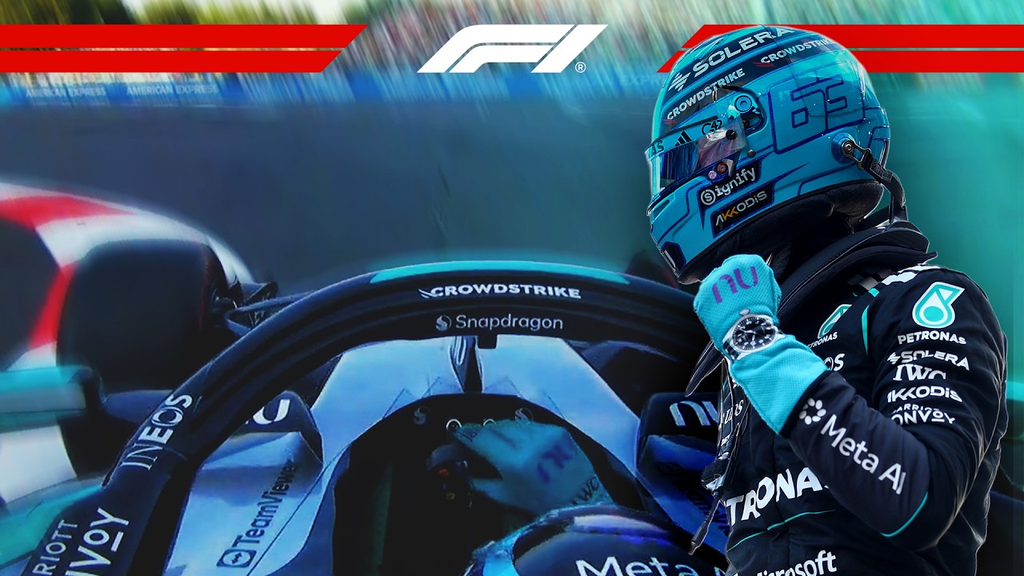
How Big Is 0.837 Seconds?
To see how unusual this is, look at the rest of the top five. Behind Russell, the gaps between the cars were tiny. Leclerc and Piastri were split by a thousandth of a second, and the next three cars were within a few tenths. Russell was on his own.
| Pos | Driver | Team | Time | Gap to pole |
|---|---|---|---|---|
| 1 | George Russell POLE | Mercedes | 1:42.526 | — |
| 2 | Charles Leclerc | Ferrari | 1:43.363 | +0.837 |
| 3 | Oscar Piastri | McLaren | 1:43.364 | +0.838 |
| 4 | Isack Hadjar | Red Bull | 1:43.500 | +0.974 |
| 5 | Lando Norris | McLaren | 1:43.672 | +1.146 |
| 6 | Lewis Hamilton | Ferrari | 1:43.858 | +1.332 |
| 7 | Pierre Gasly | Alpine | 1:44.047 | +1.521 |
| 8 | Max Verstappen | Red Bull | 1:44.081 | +1.555 |
Put another way: the gap from Russell to Leclerc in second is bigger than the gap from Leclerc to Norris in fifth. At most Grands Prix, eight tenths covers the first eight or ten cars. In Baku, it separated first from second.
According to RacingNews365, 0.837s is the largest pole margin in F1 since Max Verstappen took pole by 1.244s at the 2023 Canadian Grand Prix, and the most dominant qualifying performance under the 2026 power unit rules. Russell himself said it was “probably the biggest margin of my whole career, even including F2 and F3 days”.
What makes it even more striking is that it came in a car his team-mate also drives. Mercedes has had the fastest car for much of 2026. That’s why Antonelli leads the championship, and it’s why Russell is the only one close to him. But a margin this big isn’t all about the car. It’s about one driver getting everything right on one lap, on a circuit where the smallest mistake ends in a wall.
Why Was the Gap So Big?
A gap of 0.837 seconds rarely has a single explanation. It’s usually a combination of one driver doing everything right and his rivals each losing a bit. Baku had both.
1. The middle sector
Russell’s 41.785 in the middle sector was the fastest of anyone in qualifying. That’s the tight, twisty part of Baku, past the castle walls and through the old town, where confidence matters most. Parts of the track there were resurfaced, while other sections still have the bumpy old asphalt, so the grip changes from corner to corner. A driver who trusts the car there can gain big chunks of time, and the walls punish anyone who gets it wrong, as Antonelli found out at Turn 1.
2. The tow
As Russell explained, he was “in a good gap behind Hadjar” on the final run. At Baku the slipstream on the 2.2 km straight is huge, and track position on the out-lap can make a real difference. It’s also part of energy management in 2026: with about half of the car’s power coming from the battery, a tow means less drag and less energy used on the straight. We explain all of that in our guide to why 2026 F1 makes Baku even harder.
3. Rivals who couldn’t improve
The fight for second was so tight partly because nobody behind Russell nailed their final lap:
| Driver | What happened on the final run |
|---|---|
| Charles Leclerc | “I managed to put together a good lap on my last run, but the gap to George was quite big.” |
| Oscar Piastri | Took provisional pole before the final runs, then ended up 0.001s behind Leclerc. “Top 3 is excellent,” he said, after McLaren had struggled in practice. |
| Lando Norris | Locked up at Turn 3 on his last Q3 attempt and went into the run-off. The yellow flags he caused also led to Carlos Sainz’s grid penalty. |
| Max Verstappen | Looked quick all weekend but had apparent battery problems and was held up by the Norris yellow flags. He qualified eighth, 1.555s behind. |
Russell acknowledged the Red Bull threat: “I think Max has been very fast this weekend.” Without Verstappen’s problems, the gap might have been smaller, but the middle-sector time suggests Russell would still have been clear.
Most poles are won by a hundredth. Russell won this one by more than the gap between second and fifth.
What It Means for Russell’s Season
Baku is Russell’s fifth pole of 2026, but his first since the Austrian Grand Prix in June. “It’s been a while, so it definitely feels good,” he said. That gap tells the story of his summer. While Antonelli won race after race, including from 19th on the grid at Monza, Russell kept finishing close behind without being able to break the pattern. He arrived in Baku second in the championship with 211 points, 81 behind his team-mate.
| Driver | Points | Gap | Baku grid |
|---|---|---|---|
| Kimi Antonelli LEADER | 292 | — | 16th |
| George Russell | 211 | -81 | 1st |
| Lewis Hamilton | 191 | -101 | 6th |
| Lando Norris | 186 | -106 | 5th |
| Charles Leclerc | 167 | -125 | 2nd |
The pole matters in two ways. The first is practical: starting at the front, while Antonelli starts in the midfield, gives Russell the best chance he’s had in months to take a big bite out of that lead. A win with Antonelli outside the points would cut the gap to 56. The second is about the fight between them. Team-mates in a title fight are always judged against each other, and a pole by almost a second in the same car sends a clear message about who was fastest this weekend.
Mercedes clearly saw it that way. Deputy team principal Bradley Lord called it “an amazing lap from George”, adding that “he topped every segment of qualifying and delivered a dominant lap”. For the full season picture, our Antonelli vs Russell title analysis compares the two rivals in detail.
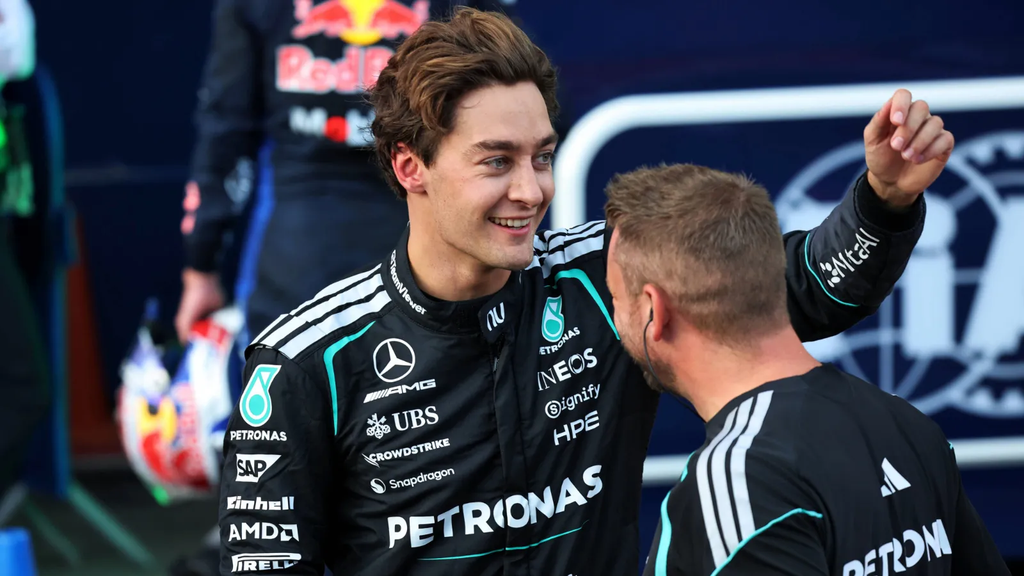
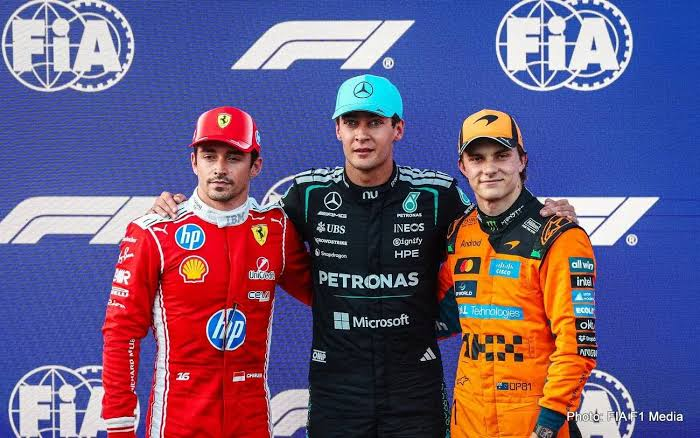
Can Russell Turn Pole Into a Win?
Russell was confident but careful after qualifying. “I think we’re in a great place to go for the win,” he said, before adding the warning every driver gives at this track: “But of course, this is Baku.”
The biggest threat is right behind him. Baku’s long straight means the car in second gets a powerful tow into Turn 1, both at the start and at the end of the first lap. Russell knows it: “Charles is going to be motivated to probably throw one down the inside at Turn 1.” Leclerc took four consecutive poles here between 2021 and 2024, and he knows the circuit as well as anyone.
Then there’s the track itself. F1’s pre-race data gives a 67% chance of a safety car, and a well-timed one can wipe out any lead in seconds. A pole margin of 0.837s means nothing in the race if a safety car bunches up the field on lap 30. Russell’s advantage is pace. His job is to use it early, build a gap before any safety car, and get through Turn 1 without trouble. Our guide to how a safety car works explains the rules.
If he does it, Baku could be the weekend the 2026 title fight comes back to life. If he doesn’t, the most dominant qualifying lap of the season will be remembered as just that: a lap.
Russell’s Baku Pole — FAQ
A lap to remember, and a race to win
Russell’s 1:42.526 is the lap of the season so far: pole by 0.837 seconds, the biggest margin in F1 since 2023, with his title rival starting 16th. It’s the strongest statement he’s made all year.
But as Russell said himself, “this is Baku.” We’ll have the full result and updated standings straight after the chequered flag.