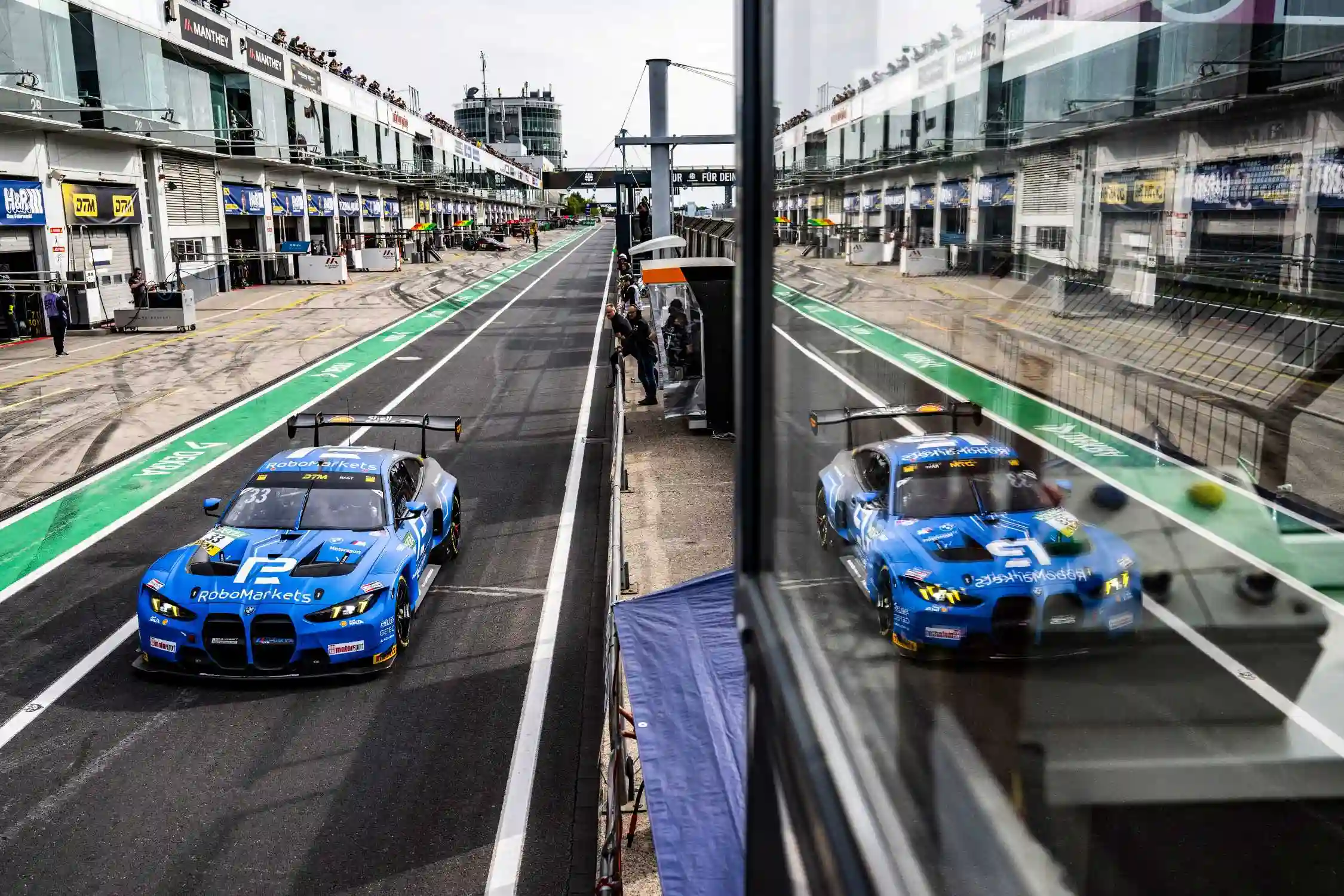
Nürburgring DTM 2026 Practice Results: FP1, FP2 Times & Team Pace Analysis
A data-first look at Friday running, what is verified, what the public result feeds had not yet populated at publication time, and what the 2026 season’s practice trends tell us about qualifying and race pace.
Friday practice is where DTM teams stop guessing and start measuring. At the Nürburgring, that means two sessions to understand a short 3.629-kilometre Sprint track before qualifying turns every tenth into grid position.
There is one important publication note for this report. The official DTM event timetable confirms that FP1 and FP2 formed Friday’s programme on August 14, but the publicly indexed official and major results pages available to this article had not yet populated a complete, cross-checkable Nürburgring 2026 FP1/FP2 classification. Rather than fill a table with guessed names or times, the result fields below remain explicitly marked until a verifiable classification is available.
That does not make Friday meaningless to analyse. We can still use the confirmed event timetable, the Sprint-track characteristics and verified practice data from the previous 2026 rounds to identify the teams that entered Nürburgring with the strongest one-lap and setup trends.
Nürburgring DTM 2026 FP1 and FP2 Results: What Is Verified
At the time this article was checked, the accessible indexed official and major results sources had not yet populated a complete Nürburgring 2026 FP1 classification. The session itself is confirmed on the official DTM timetable, but this report will not attach a driver name or lap time without a result source that can be cross-checked.
The same publication issue applied to FP2: the Friday session is confirmed, but the indexed result pages available during verification did not yet provide a complete, reliable FP2 table. No speculative fastest lap is presented here.
Practice-result articles are especially easy to get wrong when live timing, cached schedule pages and delayed result feeds are mixed together. A result should include a driver, car and lap time from a traceable classification. If that classification is not available, “not yet verifiable” is more useful than a confident-looking false table.
| Session | Date | Official event status | Indexed result status at check | Track |
|---|---|---|---|---|
| Free Practice 1 | Friday, Aug. 14 | Confirmed on DTM event timetable | Classification not populated | Nürburgring Sprint |
| Free Practice 2 | Friday, Aug. 14 | Confirmed on DTM event timetable | Classification not populated | Nürburgring Sprint |
Motorsport-Magazin’s Nürburgring results page confirms the event dates, the 3.629 km circuit length and the Friday practice slots, but its result columns remained blank in the indexed snapshot checked for this article. The official DTM event page also confirms two Friday DTM free-practice sessions. That combination proves the sessions belong to the event without providing enough evidence to publish a lap-time classification.
For readers following the mechanics of the weekend, our qualifying explainer shows how Friday setup work carries into Saturday morning, while the GT3 race car guide explains the basic type of machinery used in modern DTM.
What FP1 and FP2 Are Supposed to Tell Us at Nürburgring
Practice is not a miniature race. Teams run different fuel loads, tyre ages and setup programmes. One car may spend half a session on long-run work while another bolts on a fresh set for a qualifying simulation. Therefore, a single fastest lap is only one part of the picture.
FP1 normally has the strongest setup-development role. Drivers establish braking references, test ride-height and balance changes, and learn how the tyre behaves across the technical AMG Arena. The Nürburgring Sprint track is short enough that a poor corner exit can compromise a large percentage of the lap.
FP2 tends to provide the more useful qualifying clue because teams have already collected one session of data. However, that does not mean the FP2 leader automatically owns pole pace. Track temperature, traffic and tyre timing can create large differences between cars on apparently similar programmes.
Four numbers matter more than the headline P1
The first is the gap between teammates. If two cars from the same team are both near the front, the pace is more likely to be package-related rather than one exceptional lap.
The second is repeatability. A driver who produces five laps within two or three tenths of the best time often has a more raceable car than someone who produces one spectacular lap surrounded by slower running.
The third is tyre warm-up. DTM qualifying rewards cars that can reach peak grip quickly. A car that needs several laps to switch the tyre on may look excellent in a long run but struggle in a short qualifying window.
The fourth is traffic sensitivity. The 3.629 km Nürburgring Sprint lap means cars catch one another frequently. Losing a fast lap to a slower car is not just bad luck; managing that traffic is part of the qualifying challenge. Our race timing guide explains why a few tenths can represent several positions in a compressed field.
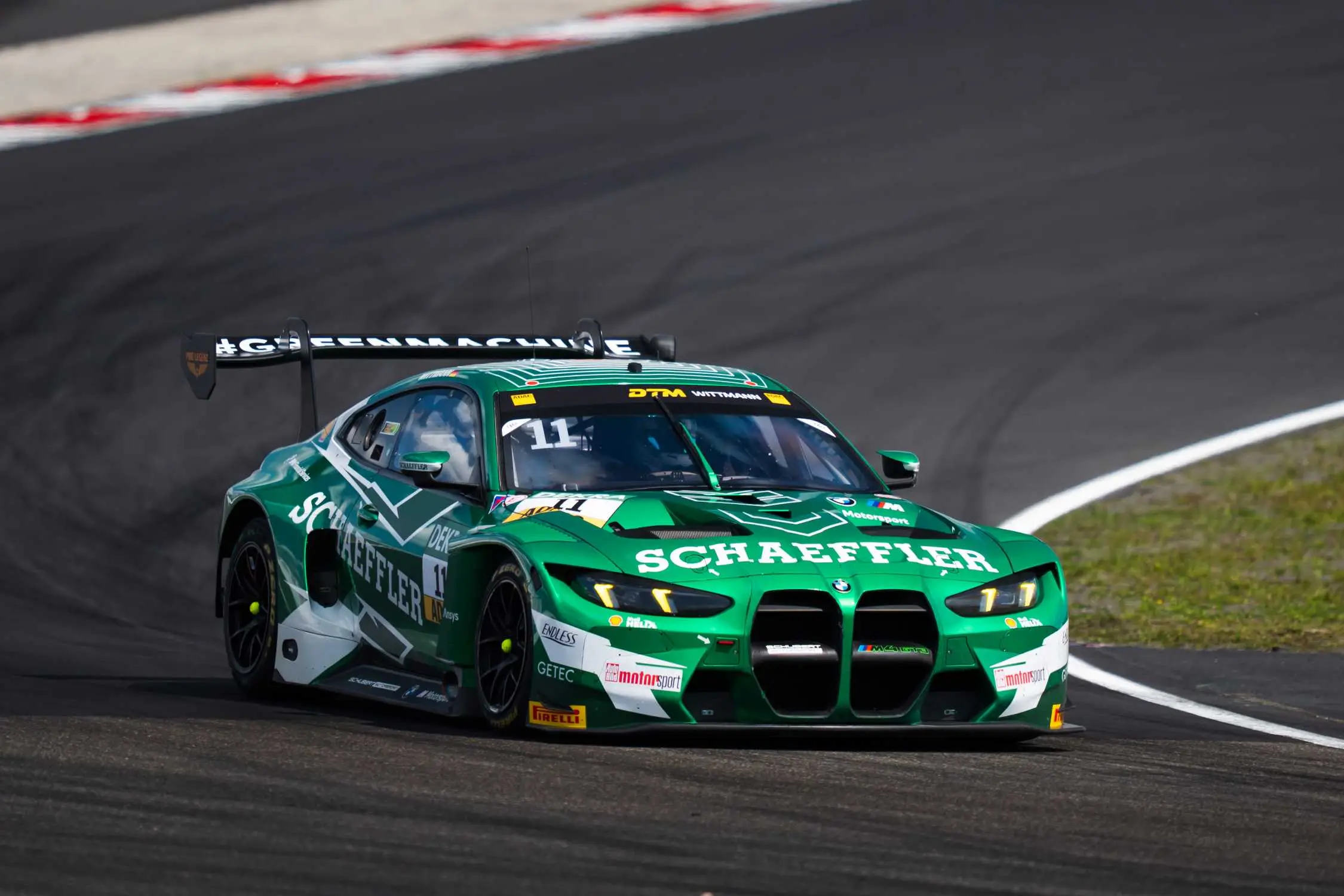
Mercedes-AMG Entered Nürburgring With the Strongest Repeatable Practice Trend
Even without a verified Nürburgring Friday classification, the previous 2026 rounds give Mercedes-AMG a strong baseline. Maro Engel topped the first Norisring practice with a 49.202, while Lucas Auer and Jules Gounon were second and third in the faster FP2 session behind Ben Dörr. At the Lausitzring, Engel set the Friday benchmark at 1:20.408, with Auer only 0.002 seconds behind.
Those results matter because they came at very different circuits. Norisring is short, bumpy and dominated by braking. Lausitzring asks a different set of questions. Mercedes showing Friday pace at both suggests the car can reach a useful setup window quickly.
Maro Engel: the clean benchmark
Engel’s 2026 strength has been consistency. When a championship contender is repeatedly fast on Friday, the value is not only confidence. It lets the team spend less time fixing a fundamental balance problem and more time refining the car for qualifying and race conditions.
At Nürburgring, that matters because the field is likely to be compressed. A car that starts Friday within a few tenths of its optimum setup can focus on smaller details such as kerb use, brake migration and rear-tyre protection.
Lucas Auer and Jules Gounon strengthen the manufacturer picture
Auer’s Norisring FP2 time was only 0.151 behind Ben Dörr, and Gounon was just 0.024 behind Auer. When several Mercedes drivers occupy the same performance band, it gives engineers more confidence that the pace is not a one-car anomaly.
For qualifying predictions, that makes Mercedes the safest manufacturer to keep near the top of the shortlist. It does not guarantee a pole. Porsche, McLaren, Ferrari, Ford and Lamborghini have all shown enough speed during 2026 to overturn Friday expectations.
For a deeper explanation of why different cars can create lap time in different parts of a circuit, see our downforce guide and grip explainer.
Porsche’s Oschersleben Practice Form Made Manthey a Serious Nürburgring Reference
The most important immediate form guide before Nürburgring was Oschersleben. Thomas Preining topped both Friday practice sessions there. His FP2 qualifying simulation produced a 1:22.425, while Manthey teammate Ricardo Feller finished second, only 0.081 seconds back.
That was a strong signal because it combined two things teams want from Friday: outright pace and teammate confirmation. Preining did not simply produce one isolated lap. Both Manthey Porsches sat at the front.
Why Oschersleben matters without being a direct Nürburgring prediction
No two circuits transfer perfectly. Oschersleben setup cannot be copied to the Nürburgring. However, recent practice performance tells us whether a team is understanding its current car, tyre and Balance of Performance window.
Manthey arriving after a Friday where it controlled both sessions means rivals cannot treat Porsche as an outsider. If the Porsche rotated cleanly in the AMG Arena and built tyre temperature quickly, it would have the ingredients needed for a strong qualifying attempt.
The danger is reading too much into one lap. DTM practice can hide fuel-load differences of several tenths. Therefore, the better question is whether Preining and Feller both looked competitive across repeated runs.
Mercedes has the broader multi-round practice record, but Manthey arrived with the sharpest immediate Friday form after Oschersleben. If both Porsches show similar short-run pace at Nürburgring, that is a stronger signal than one headline lap from either car.
BMW, Ferrari, McLaren, Ford, Lamborghini and Aston Martin: What to Watch
BMW: home-circuit familiarity is useful, but evidence must come from the stopwatch
Schubert Motorsport has extensive Nürburgring experience, and BMW’s M4 GT3 Evo has already performed strongly at this venue in recent DTM competition. That gives Marco Wittmann and the BMW group a useful engineering reference.
However, circuit familiarity should not be confused with verified 2026 Friday speed. Without a published FP1/FP2 classification, the correct analysis is to treat BMW as a credible contender rather than declare it fastest.
Our BMW race car guide gives more background on the brand’s competition machinery.
Ferrari: Cairoli has already shown how to turn practice into a statement
At Zandvoort, Matteo Cairoli led Friday in the Emil Frey Ferrari and set a 1:33.803 in FP2. That performance matters because Zandvoort is technically demanding and punishes an unstable car.
Ferrari’s Nürburgring question is tyre timing. If the 296 GT3 can reach its best grip early in a run, Cairoli and Thierry Vermeulen can be dangerous in qualifying even if their long-run work does not produce a headline Friday ranking.
McLaren: Ben Dörr’s Norisring speed is impossible to ignore
Dörr Motorsport produced one of the clearest Friday surprises of the season when Ben Dörr topped Norisring FP2 in 48.793. He beat Auer by 0.151 and Gounon by 0.175.
The Norisring is much shorter than Nürburgring, but both reward braking confidence and a car that can generate tyre grip quickly. That makes McLaren a logical qualifying outsider whenever the track is cool and margins are small.
Ford: Maini showed first-session speed at Lausitzring
Arjun Maini topped Lausitzring FP1 in 1:20.986, just 0.006 ahead of Auer. Although Engel later set the Friday benchmark in the second session, Maini’s morning performance showed that the Mustang GT3 Evo can be competitive immediately.
That quick adaptation matters at Nürburgring because teams only have Friday before qualifying. A car that needs most of FP1 to find balance loses valuable setup time.
Lamborghini and Aston Martin: race threats even when practice is less obvious
Lamborghini’s new Temerario GT3 has already demonstrated 2026 race-winning potential, while Nicki Thiim’s Aston Martin has been a championship factor. Practice can understate both packages if their teams focus heavily on race setup or high-fuel work.
That is why a P8 or P10 in practice should never automatically remove a title contender from the qualifying conversation. Run plan matters. So does the tyre set used for the final attempt.
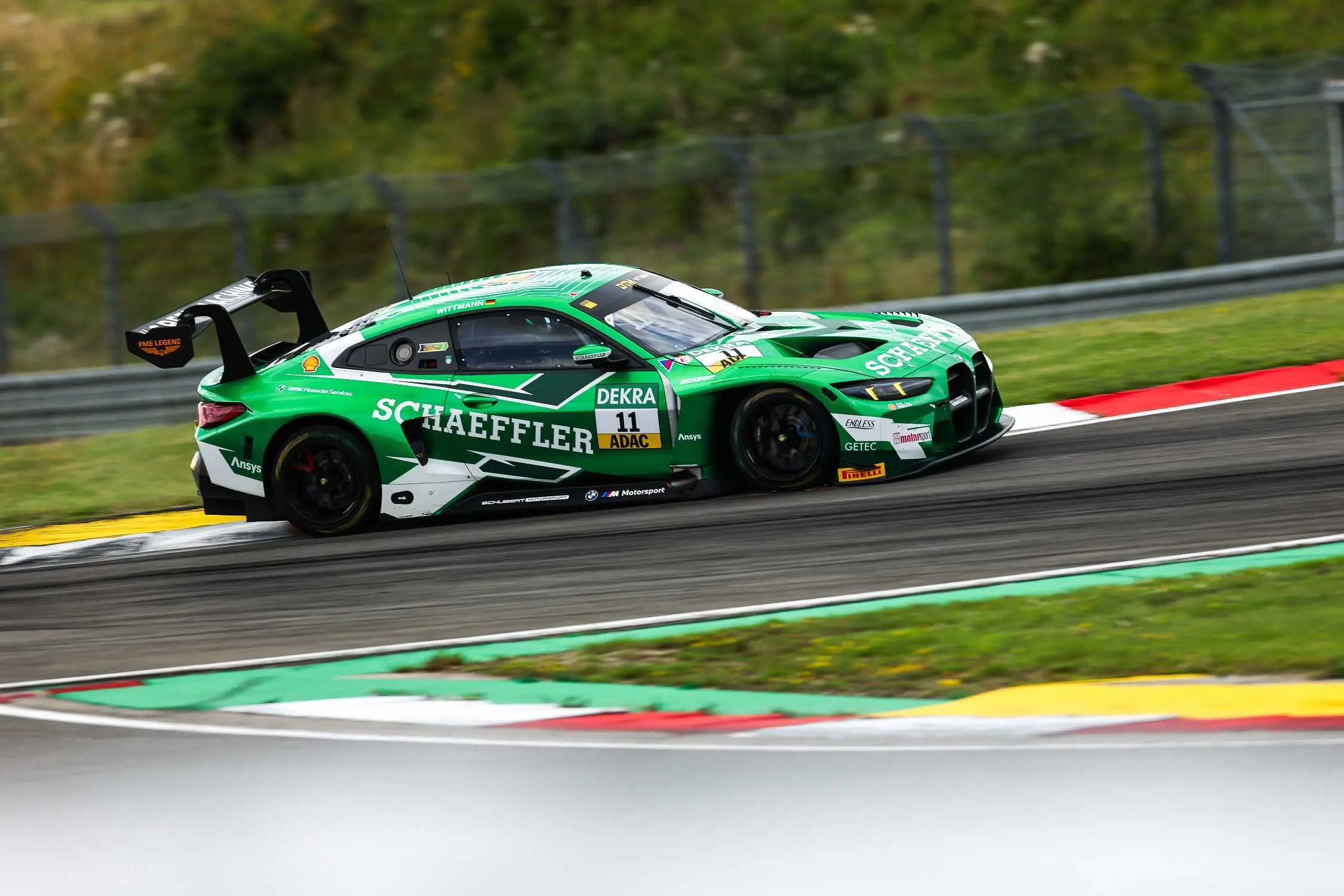
What Practice Can — and Cannot — Predict About Nürburgring Qualifying
Without a verified 2026 Nürburgring FP1/FP2 classification, there is no responsible way to name a Friday-data favorite. Based on verified recent 2026 practice form, Mercedes-AMG and Manthey Porsche have the strongest repeatable evidence, with McLaren, Ferrari and Ford all showing session-topping speed at earlier rounds.
Qualifying is where Friday assumptions are tested. Cars run lower fuel, the tyre preparation becomes more aggressive and drivers take more risk. A practice car that looked calm on a high-fuel run can suddenly jump forward once the qualifying programme begins.
The short Sprint layout makes the timing window especially sensitive. Traffic can ruin a lap. A yellow flag can remove a driver’s best opportunity. Track evolution can also make the final minutes faster than the opening phase.
Watch the second timed lap, not only the first
Some cars peak immediately. Others need another lap to put the tyre into the correct window. If the driver consistently improves on the second push lap, that tells us something about tyre preparation.
This is where practice traces are more useful than the final classification. A team that understands its warm-up profile can release the driver at the correct time and avoid wasting the best tyre phase in traffic.
Teammate gaps become more meaningful in qualifying
Practice allows different run plans. Qualifying usually gives teammates a more comparable objective: produce the fastest lap possible.
Therefore, a manufacturer that looked dominant on Friday can be exposed if only one of its cars remains competitive on Saturday. Conversely, a team that sat around P8 and P10 in practice may suddenly appear on the front two rows.
Readers unfamiliar with how a grid forms can see what grid position means and how pole position works.
How to Read Team Pace Without Overreacting to a Practice Table
A good practice report should separate three different kinds of pace: qualifying pace, race pace and programme pace. They can point in different directions.
Qualifying pace is the easiest to spot because it usually appears as one or two sharp laps on a fresh tyre set. Race pace requires a longer sequence. Programme pace is the broader question: how quickly did the team complete its work without repeated setup resets?
Fuel load can hide several tenths
Teams do not publish exact fuel loads. A car carrying more fuel will naturally lap slower, but it may be gathering much more useful race information.
That means the fastest driver in FP1 is not always the driver with the strongest weekend. The driver in P7 might have completed a stable long run with less tyre drop-off.
Track temperature changes the order
Morning and afternoon sessions can produce different tyre behaviour. A car that struggles to warm the tyre in cooler FP1 conditions may look much stronger later.
The opposite can happen too. A car that switches the tyre on immediately in cool air may overheat the rear axle when the surface temperature rises.
Traffic can make a good car look ordinary
The Nürburgring Sprint track is only 3.629 km. That makes clear-track windows smaller. If a driver catches traffic at the wrong point, the session’s best lap may never appear in the final table.
Therefore, sector times and mini-sectors often reveal more than a headline lap. If a driver has personal-best sectors from different laps, the theoretical pace may be much faster than the official best time.
For basic context on following another car, see our slipstream explainer. For race interruptions that can also affect representative running, see how racing flags work.
Verified 2026 Practice Benchmarks Before Nürburgring
Because the Nürburgring result feed was not fully populated in the accessible sources at the time of publication, the most useful verified comparison is the previous rounds. These are not substitutes for Nürburgring results. They are form indicators.
| Round | Session / benchmark | Fastest driver | Time | What it showed |
|---|---|---|---|---|
| Zandvoort | Friday FP2 benchmark | Matteo Cairoli | 1:33.803 | Ferrari had strong qualifying-style Friday pace. |
| Lausitzring | FP1 | Arjun Maini | 1:20.986 | Ford could switch on quickly early in a weekend. |
| Lausitzring | Friday overall benchmark | Maro Engel | 1:20.408 | Mercedes improved through the day; Auer was only 0.002 back. |
| Norisring | FP1 | Maro Engel | 49.202 | Mercedes started strongly on the shortest circuit. |
| Norisring | FP2 | Ben Dörr | 48.793 | McLaren produced the fastest Friday lap. |
| Oschersleben | FP2 / Friday benchmark | Thomas Preining | 1:22.425 | Manthey Porsche arrived at Nürburgring with immediate form. |
The pattern is the important part: five manufacturers have demonstrated genuine Friday speed during the season. That is why Nürburgring should not be reduced to one favorite before a verified local classification is available.
For a wider view of how practice becomes a race setup, our car racing guide and handling explainer are useful starting points.
Nürburgring DTM 2026 Practice Results FAQs
Conclusion: Friday Pace Matters, but Verified Data Matters More
The Nürburgring DTM 2026 practice story should eventually be simple: FP1 classification, FP2 classification, then an analysis of who looked strongest. At publication time, the first two pieces were not available in a complete, cross-checkable form through the indexed official and major result pages accessible to this article.
That is why no driver has been falsely labelled the FP1 or FP2 winner here. The event itself is verified. The Friday practice sessions are verified. The circuit is verified at 3.629 km. But a result table needs a result source, not an assumption.
The verified form guide still tells us plenty. Mercedes-AMG has produced strong Friday pace at several rounds. Manthey Porsche came directly from an Oschersleben weekend where Preining topped both practices and Feller followed closely. McLaren’s Ben Dörr, Ferrari’s Matteo Cairoli and Ford’s Arjun Maini have also led practice sessions in 2026.
For qualifying, the biggest lesson is to look beyond P1. Teammate pace, tyre warm-up, sector consistency and traffic exposure all matter on a short Nürburgring lap. A single headline time can be misleading; a repeatable pattern is much harder to dismiss.
Once a complete Nürburgring FP1/FP2 classification is published in a verifiable feed, those exact numbers should replace the result-status table. Until then, keeping the distinction between confirmed data and unavailable data is the only responsible way to publish a “practice results” article.