Belgian Grand Prix 2026 Qualifying Results: Pole Position, Full Starting Grid & Key Takeaways
Kimi Antonelli beat Max Verstappen by 0.317 seconds, while five power-unit penalties transformed Sunday’s starting order.
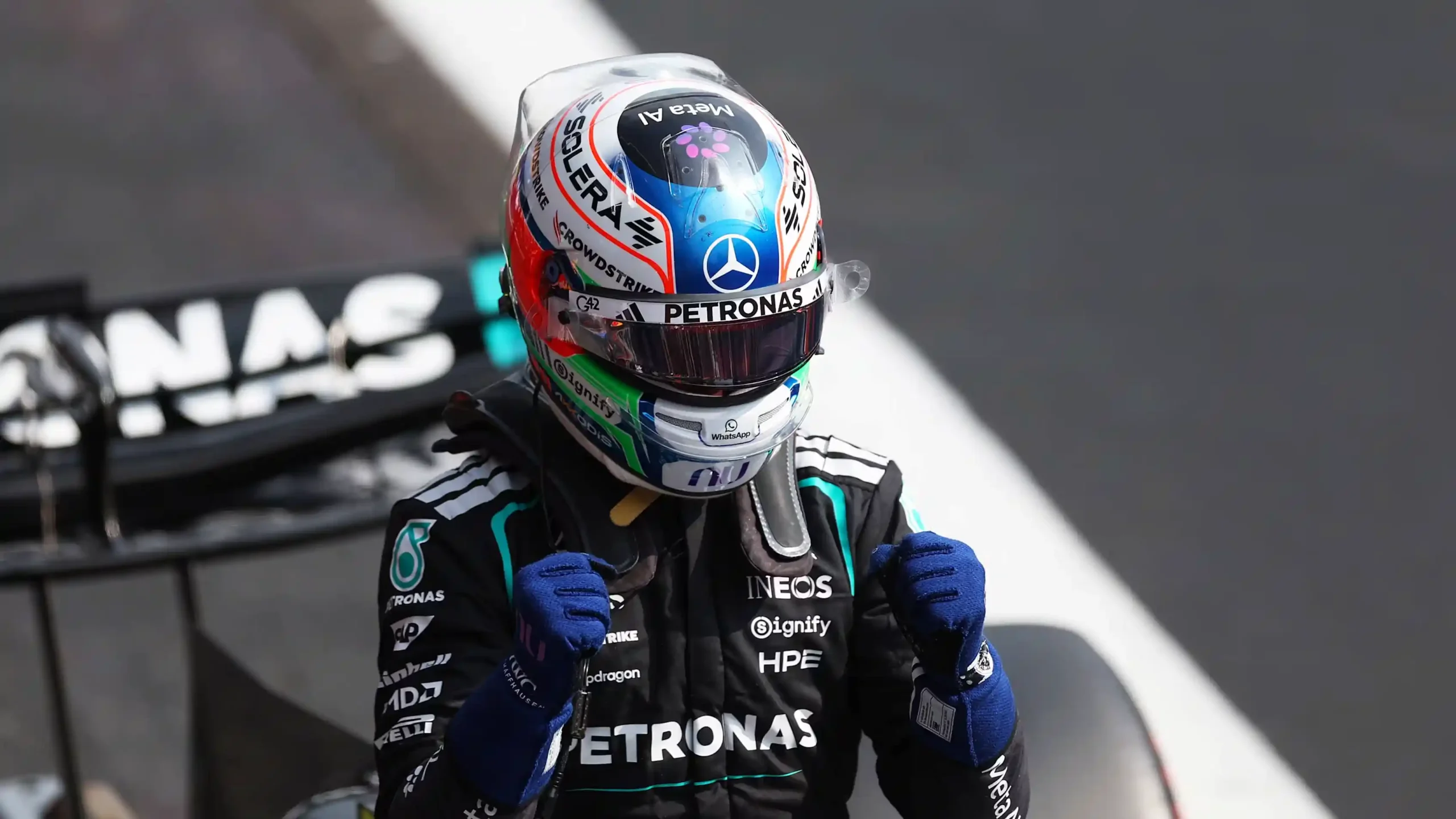
Kimi Antonelli took pole position for the 2026 Belgian Grand Prix with a 1:44.361. The Mercedes driver beat Max Verstappen by 0.317 seconds and secured his sixth pole of the season.
Lando Norris qualified third, but a 10-place power-unit penalty dropped him to 13th. Isack Hadjar, Fernando Alonso, Lance Stroll and Carlos Sainz also received grid penalties. Therefore, the final starting order looked very different from the raw qualifying classification.
Belgian Grand Prix 2026 Qualifying Results: The Essential Story
Antonelli did not dominate every phase. Norris topped Q1, while Antonelli rebuilt his speed during Q2. However, the Mercedes driver produced the decisive lap when the pressure peaked.
Verstappen came closest. Red Bull used Hadjar to provide a tow, but the final attempt became messy. Verstappen met Hadjar at an awkward moment and lost the clean run he needed.
Norris had provisional pole after the first Q3 runs. His 1:44.801 was strong, yet Antonelli found more than four tenths on the final lap. Verstappen also improved and pushed Norris to third.
Russell took fourth, just ahead of both Ferraris. Leclerc beat Hamilton by only 0.002 seconds. Piastri, Lindblad, Bortoleto and Hadjar completed the top 10.
Belgian Grand Prix 2026 Full Qualifying Classification
The table below shows the official session order before grid penalties. It includes every Q1, Q2 and Q3 time from Spa-Francorchamps.
| Pos | No. | Driver | Team | Q1 | Q2 | Q3 | Laps |
|---|---|---|---|---|---|---|---|
| 1 | 12 | Kimi Antonelli | Mercedes | 1:46.304 | 1:45.142 | 1:44.361 | 15 |
| 2 | 3 | Max Verstappen | Red Bull Racing | 1:45.930 | 1:45.589 | 1:44.678 | 12 |
| 3 | 1 | Lando Norris | McLaren | 1:45.865 | 1:45.454 | 1:44.801 | 11 |
| 4 | 63 | George Russell | Mercedes | 1:46.185 | 1:45.689 | 1:44.869 | 18 |
| 5 | 16 | Charles Leclerc | Ferrari | 1:46.278 | 1:45.397 | 1:44.893 | 18 |
| 6 | 44 | Lewis Hamilton | Ferrari | 1:46.124 | 1:45.543 | 1:44.895 | 15 |
| 7 | 81 | Oscar Piastri | McLaren | 1:46.433 | 1:45.671 | 1:45.016 | 17 |
| 8 | 41 | Arvid Lindblad | Racing Bulls | 1:46.191 | 1:45.629 | 1:45.143 | 18 |
| 9 | 5 | Gabriel Bortoleto | Audi | 1:46.609 | 1:46.082 | 1:45.628 | 18 |
| 10 | 6 | Isack Hadjar | Red Bull Racing | 1:46.062 | 1:45.823 | DNF | 13 |
| 11 | 30 | Liam Lawson | Racing Bulls | 1:46.501 | 1:46.120 | — | 12 |
| 12 | 10 | Pierre Gasly | Alpine | 1:46.679 | 1:46.331 | — | 12 |
| 13 | 43 | Franco Colapinto | Alpine | 1:46.795 | 1:46.392 | — | 12 |
| 14 | 27 | Nico Hulkenberg | Audi | 1:46.893 | 1:46.671 | — | 12 |
| 15 | 55 | Carlos Sainz | Williams | 1:47.080 | 1:46.777 | — | 12 |
| 16 | 87 | Oliver Bearman | Haas | 1:47.113 | 1:46.779 | — | 12 |
| 17 | 23 | Alexander Albon | Williams | 1:47.120 | — | — | 6 |
| 18 | 31 | Esteban Ocon | Haas | 1:47.801 | — | — | 6 |
| 19 | 77 | Valtteri Bottas | Cadillac | 1:47.823 | — | — | 8 |
| 20 | 11 | Sergio Perez | Cadillac | 1:47.971 | — | — | 8 |
| 21 | 14 | Fernando Alonso | Aston Martin | 1:50.002 | — | — | 6 |
| 22 | 18 | Lance Stroll | Aston Martin | 1:50.177 | — | — | 8 |
Full Starting Grid for the 2026 Belgian Grand Prix
Antonelli retained pole, with Verstappen alongside him. Russell and Leclerc formed row two. Hamilton and Piastri started from row three.
Lindblad and Bortoleto earned row four after excellent sessions. Lawson and Gasly moved into the top 10 because of penalties ahead.
| Grid | Driver | Team | Qualifying time | Grid note |
|---|---|---|---|---|
| 1 | Kimi Antonelli | Mercedes | 1:44.361 | Pole |
| 2 | Max Verstappen | Red Bull Racing | 1:44.678 | — |
| 3 | George Russell | Mercedes | 1:44.869 | Promoted |
| 4 | Charles Leclerc | Ferrari | 1:44.893 | Promoted |
| 5 | Lewis Hamilton | Ferrari | 1:44.895 | Promoted |
| 6 | Oscar Piastri | McLaren | 1:45.016 | Promoted |
| 7 | Arvid Lindblad | Racing Bulls | 1:45.143 | Promoted |
| 8 | Gabriel Bortoleto | Audi | 1:45.628 | Promoted |
| 9 | Liam Lawson | Racing Bulls | 1:46.120 | Promoted |
| 10 | Pierre Gasly | Alpine | 1:46.331 | Promoted |
| 11 | Franco Colapinto | Alpine | 1:46.392 | Promoted |
| 12 | Nico Hulkenberg | Audi | 1:46.671 | Promoted |
| 13 | Lando Norris | McLaren | 1:44.801 | 10-place penalty |
| 14 | Oliver Bearman | Haas | 1:46.779 | Promoted |
| 15 | Alexander Albon | Williams | 1:47.120 | Promoted |
| 16 | Esteban Ocon | Haas | 1:47.801 | Promoted |
| 17 | Valtteri Bottas | Cadillac | 1:47.823 | Promoted |
| 18 | Sergio Perez | Cadillac | 1:47.971 | Promoted |
| 19 | Lance Stroll | Aston Martin | 1:50.177 | 10-place penalty |
| 20 | Carlos Sainz | Williams | 1:46.777 | 10-place penalty |
| 21 | Isack Hadjar | Red Bull Racing | DNF Q3 | Back of grid |
| 22 | Fernando Alonso | Aston Martin | 1:50.002 | Back of grid |
Q1 Recap: Norris Leads as Six Drivers Drop Out
Spa’s seven-kilometer lap shaped the entire opening segment. Teams waited before sending cars out because one run consumes significant session time. Consequently, traffic built quickly during the final minutes.
Verstappen set the early benchmark at 1:45.930. Lindblad briefly emerged as his closest challenger. However, Norris then produced a 1:45.865 and finished Q1 fastest.
Hadjar also looked comfortable despite knowing a major grid penalty awaited him. Red Bull continued the session because his speed could support Verstappen’s Q3 strategy.
Albon falls below the elimination line
Colapinto escaped the bottom six with a late improvement. His lap pushed Albon into 17th. That result marked Albon’s sixth Q1 elimination in 10 rounds.
Ocon joined him in 18th. The timing was painful because Spa marked the 10th anniversary of Ocon’s Formula 1 debut.
Cadillac and Aston Martin fill the final rows
Bottas beat Perez in the Cadillac contest, but both cars remained outside Q2. Bottas finished 19th, while Perez took 20th.
Alonso and Stroll locked out the final two positions. Aston Martin’s weekend pace had been weak, and both drivers also carried substantial power-unit penalties.
Why Q1 was unusually tense
Spa punishes a poorly timed final run. Drivers need enough track position for a tow, yet traffic can ruin the approach. Therefore, engineers must balance clean air against straight-line assistance.
The long lap also reduces recovery time. A mistake at La Source or Les Combes cannot be repaired with another quick run. Every garage must decide early whether the fuel and tire plan allows a second attack.
Q2 Recap: Antonelli Returns to the Front
Antonelli’s Q1 pace had looked ordinary by his standards. However, he found a clear step in Q2. His 1:45.142 became the fastest lap of the segment.
Leclerc finished second in Q2, while Norris, Hamilton and Verstappen remained close. Lindblad then delivered another excellent lap and placed himself among the leading cars.
Bortoleto knocks Lawson out by 0.038 seconds
The final Q3 place became a direct fight between Bortoleto and Lawson. Bortoleto’s 1:46.082 proved enough. Lawson missed the cut by only 0.038 seconds.
That margin shows how compressed the midfield had become. A small hesitation through Stavelot or the Bus Stop could decide several grid places.
Both Alpines stop in Q2
Gasly finished 12th, while Colapinto took 13th. The pair had progressed together from Q1, yet neither found the extra pace required for Q3.
Even so, both gained positions on the final grid because of penalties. Gasly moved into 10th, while Colapinto started 11th.
Hulkenberg suffers a hydraulic problem
Hulkenberg qualified 14th, but his Audi stopped after the chequered flag. The team identified a hydraulic leak.
The stranded car delayed the start of Q3. It also ended any chance of Hulkenberg improving his position through a final technical check.
Sainz and Bearman miss the top 10
Sainz finished 15th in qualifying. Bearman followed in 16th, only 0.002 seconds slower in Q2.
However, Sainz’s 10-place penalty pushed him far down the final grid. Bearman therefore started ahead despite qualifying behind the Williams.
Q3 Recap: How Antonelli Beat Verstappen to Pole
Hadjar remained part of Q3 despite his back-of-grid penalty. Red Bull’s reason became obvious. The team used him to give Verstappen a tow on the Kemmel Straight.
Verstappen took provisional pole during the first runs. Antonelli then responded, before Norris moved ahead with a 1:44.801.
Gravel at Stavelot briefly interrupted the rhythm. Drivers returned for one final attack, with the track changing quickly as the session approached its finish.
Antonelli produces the lap that mattered
Antonelli began his final lap with enough tire temperature and a clean track position. He completed the lap in 1:44.361. That was 0.440 seconds quicker than Norris’s provisional pole time.
The lap averaged 241.607 km/h. It also became the fastest lap of the entire qualifying session.
Antonelli later explained that conditions changed significantly. He said the team improved lap by lap and finally delivered the pole when it counted.
Verstappen loses time in the tow attempt
Verstappen improved to 1:44.678, but his final approach was not perfect. He encountered Hadjar during the coordinated tow attempt.
The plan offered straight-line help. However, the positioning created a near miss and disrupted the lap. Verstappen therefore finished 0.317 seconds behind Antonelli.
Norris cannot defend provisional pole
Norris’s first Q3 effort had placed McLaren in front. Yet he did not find enough improvement on the final run.
He finished third at 1:44.801. The raw result was strong, but the 10-place power-unit penalty meant he started only 13th.
McLaren’s priority became minimizing the penalty’s damage. Qualifying third achieved that objective, even though pole remained within reach after the first runs.
Russell edges the Ferraris
Russell qualified fourth, only 0.068 seconds behind Norris. He also secured a second Mercedes inside the first two rows of the raw order.
Leclerc followed at 1:44.893. Hamilton was just 0.002 seconds slower. Therefore, Ferrari’s internal qualifying contest could hardly have been closer.
Lindblad and Bortoleto deliver standout laps
Lindblad qualified eighth and later started seventh. The Racing Bulls rookie had been fast in every phase.
Bortoleto placed ninth for Audi. His Q3 appearance also came after he eliminated Lawson by only 0.038 seconds in Q2.
Both performances mattered because Spa rewards confidence through high-speed corners. Neither driver relied only on penalties to reach a strong starting position.
Hadjar records a Q3 DNF
Hadjar did not set a representative Q3 time. His classification showed DNF after four laps in the segment.
Since he already faced a back-of-grid penalty, the result carried limited starting-position damage. His main contribution had been supporting Verstappen’s tow plan.
Key Takeaways from Belgian Grand Prix 2026 Qualifying
Antonelli delivered again
He took his sixth pole of the season and kept Mercedes at the front on Formula 1’s longest lap.
Verstappen stayed close
Red Bull used a tow strategy, but the execution was not clean enough to beat Antonelli.
Norris minimized the penalty
Third in qualifying became 13th on the grid. Still, the strong lap reduced the damage from his grid drop.
Lindblad and Bortoleto shone
Both drivers reached Q3 on merit and gained stronger grid positions after penalties were applied.
Antonelli’s pole was more impressive than the margin suggests
A 0.317-second advantage is significant at Spa. The circuit contains long full-throttle sections, where a tow can compress gaps.
Antonelli still won clearly. Moreover, he did it after Norris held provisional pole. That timing increased the pressure on the final lap.
Mercedes controlled both the front and the strategic picture
Antonelli started first, while Russell started third. Mercedes therefore placed two cars inside the first three positions.
That arrangement offered strategic flexibility. Russell could pressure Verstappen, while Antonelli focused on the race start and clean air.
Verstappen remained the main launch threat
Second place at Spa is dangerous for the pole sitter. The slipstream through Eau Rouge and Raidillon can help the second-place car attack before Les Combes.
Antonelli needed a strong launch and careful energy use. Otherwise, Verstappen could turn pole into a vulnerable position on the opening lap.
Norris faced a recovery race
Norris qualified ahead of Russell, both Ferraris and Piastri. However, the power-unit penalty moved him behind Lawson, Gasly, Colapinto and Hulkenberg.
Spa offers passing opportunities, so 13th was not a disaster. Still, traffic and tire strategy would decide how quickly he could return to the lead group.
Ferrari had almost identical pace
Leclerc and Hamilton were separated by two thousandths. That suggests both drivers extracted nearly the same performance from the SF-26.
However, neither Ferrari threatened pole. The car remained roughly half a second behind Antonelli’s best lap.
Five penalties reshaped the middle and back of the grid
Norris, Hadjar, Alonso, Stroll and Sainz all received penalties linked to power-unit changes. Their movement promoted several midfield drivers.
Lawson moved from 11th in qualifying to ninth on the grid. Gasly rose to 10th, while Colapinto and Hulkenberg gained positions behind them.
Why Spa Qualifying Is Different
Spa-Francorchamps measures 7.004 kilometers. It is the longest circuit on the current Formula 1 calendar.
The lap mixes low-speed traction, long straights and high-speed commitment. Therefore, teams must compromise between downforce and drag.
The tow can help or hurt
A well-timed slipstream can gain significant time on the Kemmel Straight. However, following too closely through Eau Rouge can disturb the car.
Drivers also risk arriving at Les Combes with overheated tires or poor positioning. Red Bull’s Verstappen-Hadjar plan showed both sides of the trade-off.
Track evolution is uneven
Spa’s weather and circuit length create unusual track evolution. One sector may gain grip while another cools.
Antonelli’s comment about changing conditions reflected that challenge. The best driver must read the lap as it develops, not simply repeat a fixed approach.
Grid penalties are especially strategic at Spa
Teams often choose Spa for power-unit changes. Overtaking is easier than at Monaco or Hungary, so the recovery cost can be lower.
Norris, Hadjar and others accepted that trade. Their teams sacrificed starting position to gain fresh components for the remaining season.
Belgian Grand Prix 2026 Qualifying Results FAQ
Who won pole position for the Belgian Grand Prix 2026?
Kimi Antonelli won pole for Mercedes with a 1:44.361. He beat Max Verstappen by 0.317 seconds.
What is the front row for the 2026 Belgian Grand Prix?
Antonelli starts first and Verstappen starts second. George Russell and Charles Leclerc form row two.
Why did Lando Norris start 13th?
Norris qualified third but received a 10-place grid penalty for exceeding his power-unit component allocation.
Who received Belgian GP grid penalties?
Norris, Hadjar, Alonso, Stroll and Sainz received penalties connected to power-unit component changes.
Conclusion: Antonelli’s Final Lap Defined Spa Qualifying
The Belgian Grand Prix 2026 qualifying results delivered a clear winner. Antonelli found the lap when Norris held provisional pole and Verstappen had tow support.
His 1:44.361 secured pole by 0.317 seconds. It also gave Mercedes two cars inside the top three on the final grid.
Verstappen remained the immediate race threat. Russell, Leclerc and Hamilton formed a tightly packed group behind him. Meanwhile, Norris faced a recovery drive from 13th.
The penalties created a second story. Lawson, Gasly, Colapinto and Hulkenberg all gained positions. As a result, Spa’s final grid rewarded both outright qualifying pace and reliability planning.
Antonelli still owned the headline. He handled a changing track, responded to Norris and delivered the fastest lap of the session under maximum pressure.
Sources and Verification
- Formula 1 official Belgian GP qualifying classification
- Formula 1 official Belgian GP starting grid
- FIA Belgian GP qualifying classification
- Formula 1 official qualifying report
Verification note: Q1, Q2 and Q3 times, lap totals and pole speed were checked against Formula 1 and the FIA classification. The final grid and penalty movements were checked against Formula 1’s official Sunday grid.