Why Is Spa-Francorchamps So Famous in F1?
Spa combines a century of history with extreme elevation, high-speed commitment, changing weather and genuine overtaking. Few circuits test so many parts of a Formula 1 car and driver in one lap.
Spa-Francorchamps is famous because it combines Formula 1 history, fast corners, major elevation changes, unpredictable weather and strong overtaking zones. Eau Rouge, Raidillon, Pouhon and Blanchimont create a lap that rewards bravery, precision and an adaptable car.
Spa-Francorchamps feels larger than an ordinary racing circuit.
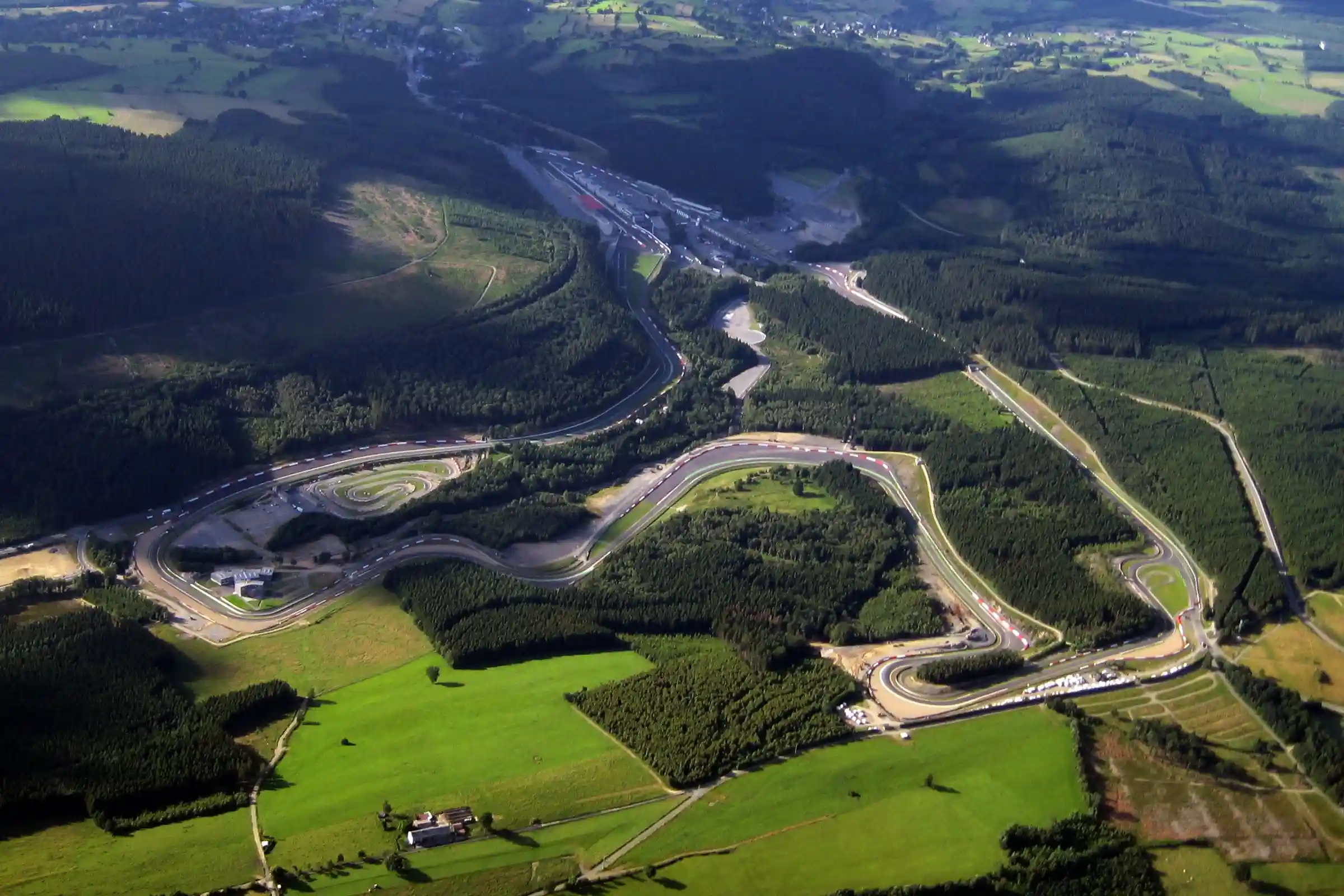
The track disappears into the Ardennes Forest, climbs over ridges and drops into valleys. Drivers often cannot see the next section until the car reaches it.
Moreover, the weather can change between corners. One sector may be wet while another remains dry.
The modern circuit measures 7.004 kilometers. Therefore, it is the longest track on the current Formula 1 calendar.
It contains 19 turns and more than 100 meters of elevation change. A lap blends long straights with high-speed direction changes.
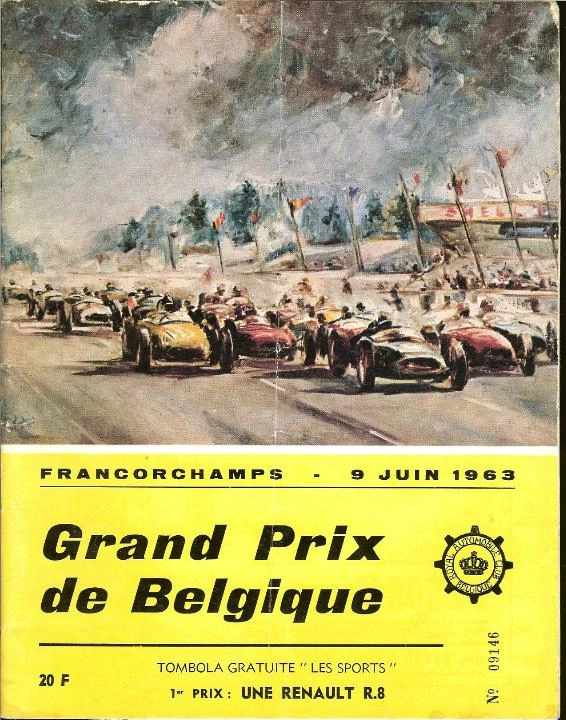
However, Spa’s reputation comes from more than statistics. The venue has hosted racing since 1921 and joined Formula 1’s first World Championship season in 1950.
The original road circuit measured about 14.9 kilometers. It linked Francorchamps, Malmedy and Stavelot using public roads.
That old route was extremely fast and dangerous. The modern layout is shorter, but it preserves the character of the terrain.
Eau Rouge and Raidillon remain the most recognized sequence. Yet Pouhon, Blanchimont and the Kemmel Straight are equally important to lap time.
Spa also creates a rare setup conflict. Teams need straight-line speed in Sectors 1 and 3.
Meanwhile, the middle sector rewards downforce and tire confidence. Engineers cannot maximize both areas at once.
The latest Belgian Grand Prix again showed Spa’s racing value. Kimi Antonelli won the 2026 race ahead of Charles Leclerc and Max Verstappen.
This article explains why Spa-Francorchamps is so famous in F1 through history, layout, weather, setup, strategy, safety and modern racing.
The Short Answer: Spa Tests Everything
Spa tests speed, aerodynamic efficiency, braking, tire management, wet-weather judgment and driver confidence in one lap. Its natural terrain also creates elevation and visibility changes that purpose-built circuits struggle to reproduce.
Many Formula 1 tracks specialize in one type of challenge. Monaco tests precision, while Monza focuses on low drag.
Spa combines several challenges. Consequently, a strong car in one sector may struggle in another.
A Complete Driver’s Circuit
Drivers need commitment through Raidillon and Blanchimont. They also need patience through Bruxelles and the Bus Stop.
Moreover, changing weather demands constant judgment. The grip level can alter before the driver completes the lap.
A Complete Engineering Test
Low drag helps on the Kemmel Straight. However, extra downforce adds time through Pouhon and Fagnes.
Teams must choose where to gain and where to accept a loss. Therefore, setup becomes a strategic decision.
A Complete Racing Venue
La Source creates first-lap action. The Kemmel Straight then gives following cars a genuine passing opportunity.
Meanwhile, weather and Safety Cars can change strategy. Spa rarely relies on one ingredient for excitement.
Spa is famous because no single strength guarantees success. The fastest package must also be stable, efficient, adaptable and trustworthy when conditions change.
How Spa-Francorchamps Became a Historic F1 Circuit
The original road circuit was created in 1921. It used public roads linking Francorchamps, Malmedy and Stavelot. The first Belgian Grand Prix at Spa took place in 1924, and Formula 1 arrived in 1950.
Spa began with a simple idea. Three roads through the Ardennes could form a natural triangle for racing.
Jules de Thier and Henri Langlois van Ophem developed the concept. Baron Joseph de Crawhez also supported the plan.
The First Race Did Not Happen Immediately
The planned 1921 event was canceled because too few cars entered.
However, motorcycle racing followed in 1922. The first 24 Hours of Spa took place in 1924.
Formula 1 Arrived in 1950
Spa was one of seven venues in the first Formula 1 World Championship season.
Juan Manuel Fangio won that Belgian Grand Prix for Alfa Romeo. His teammate Nino Farina finished second.
Why Early Drivers Respected Spa
The original circuit ran between houses, fields and forests. Barriers were limited, while speeds were extremely high.
Therefore, mistakes carried severe consequences. Great drivers built reputations by mastering the changing road.
Why Spa Left the Calendar
By the late 1960s, the old layout had become unacceptable for modern Formula 1 safety standards.
Drivers demanded improvements. The Belgian Grand Prix later moved between Nivelles and Zolder.
Why the Modern Circuit Returned
A shorter permanent section opened in 1979. It connected the strongest parts of the old route with new corners.
Spa returned to Formula 1 in 1983. Apart from a few interruptions, it has remained a championship fixture.
What Happened to the Original Spa Circuit?
The original 14.9-kilometer road course became too fast and dangerous for modern racing. The shorter 1979 layout removed long public-road sections while preserving Eau Rouge, Raidillon, the Kemmel area and Blanchimont.
The old Spa was almost twice the length of the modern track.
It included long sections toward Burnenville, Masta and the original Stavelot corner. Cars spent much of the lap at maximum speed.
The Masta Kink Defined the Old Circuit
Masta was a rapid left-right sequence between buildings. Drivers approached at enormous speed.
The corner demanded accuracy without meaningful runoff. Consequently, it became a symbol of the old track’s danger.
Public Roads Limited Safety Work
Houses, telegraph poles and roadside banks bordered the route.
Modern barriers and wide runoff areas were difficult to install. The circuit could not evolve without major reconstruction.
The Shorter Track Preserved the Character
The current layout still follows natural elevation. It also retains several original sections.
Therefore, modern Spa feels historic without using every old public road.
Why the Old Circuit Still Matters
The original route explains Spa’s reputation for courage. Its stories shaped how later generations viewed the Belgian Grand Prix.
Moreover, the modern circuit’s length feels more dramatic when compared with the old 14.9-kilometer triangle.
Original Spa
- About 14.9 kilometers long
- Built mainly from public roads
- Extremely high average speeds
- Minimal runoff and roadside hazards
- Used by early Formula 1 generations
Modern Spa
- 7.004 kilometers long
- Permanent closed racing facility
- Retains major elevation changes
- Modern barriers, gravel and service roads
- Still the longest current F1 circuit
Why Spa’s Elevation Changes Matter
Spa has an elevation difference of about 102.2 meters between its highest and lowest points. Raidillon alone climbs sharply, while the circuit later descends toward Bruxelles, Pouhon and the lower sectors.
Elevation changes how a Formula 1 car behaves. The road angle alters tire load, braking stability and visibility.
At Spa, those changes happen at racing speed. Therefore, the driver must trust the car before seeing the complete corner.
Compression Loads the Car at Eau Rouge
The car descends from La Source toward Eau Rouge. It then reaches a compression at the bottom of the valley.
Suspension and tires receive a sudden vertical load. Meanwhile, the aerodynamic floor moves closer to the track.
Raidillon Unloads the Car Near the Crest
The car climbs rapidly and reaches a blind crest.
As the road falls away, vertical load reduces. The steering may feel lighter when precision matters most.
Downhill Braking Changes the Balance
Bruxelles arrives after a descent. Gravity increases the braking challenge.
Drivers must slow while the car wants to continue downhill. Therefore, front locking becomes a risk.
Elevation Hides Weather and Traffic
Drivers cannot see every sector from the pits or cockpit.
A rain shower beyond the ridge may remain invisible until the car reaches it. This makes radio information critical.
Why Spa Feels Like a Roller Coaster
The lap repeatedly rises and falls through the forest.
Moreover, high speeds magnify each gradient. The driver experiences the landscape rather than simply driving across it.
Why Eau Rouge and Raidillon Are So Famous
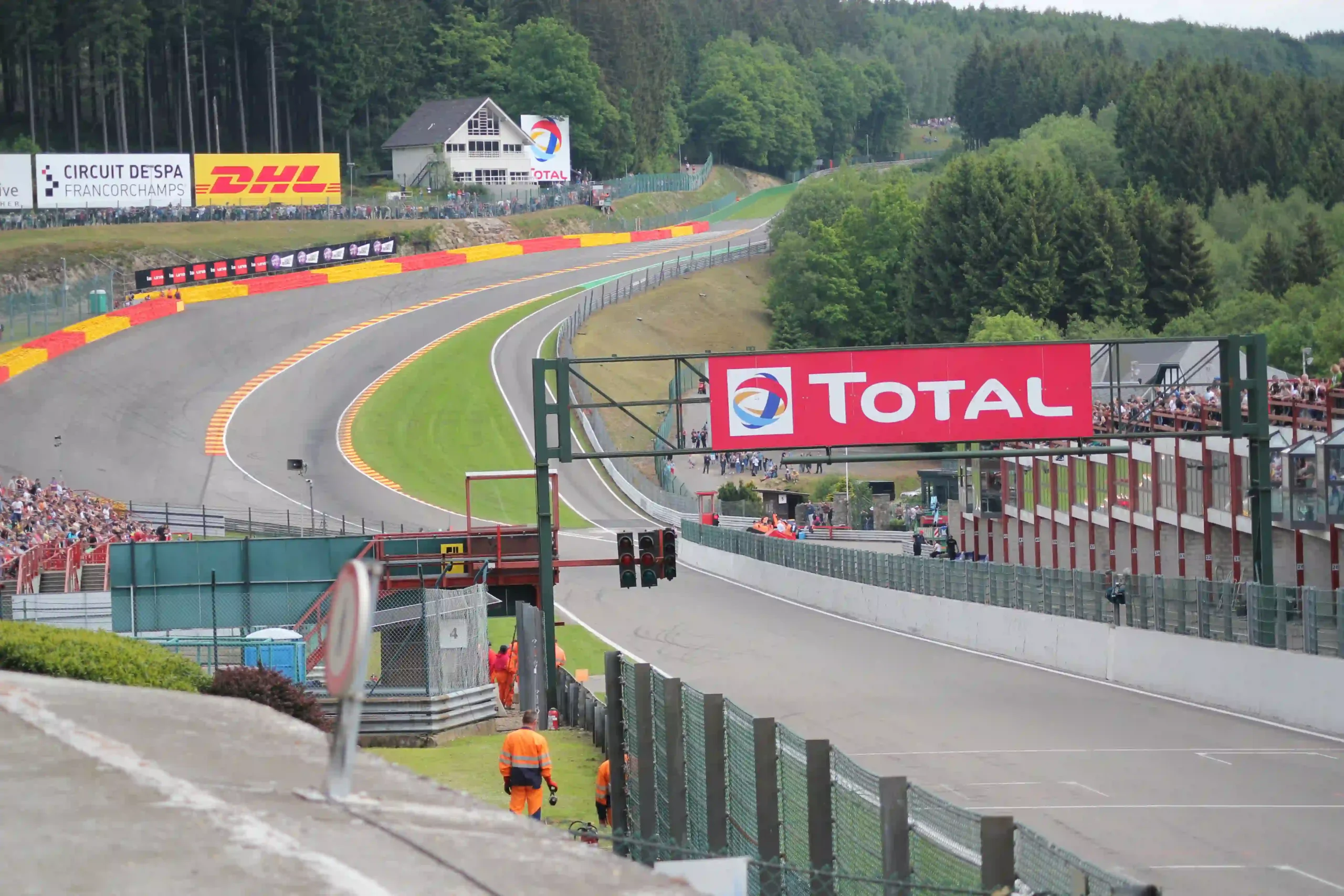
Eau Rouge is the left-hand corner at the bottom of the hill, named after the red-water stream beneath it. Raidillon is the steep right-left climb that follows. The entire sequence is often called Eau Rouge in everyday F1 discussion.
The naming difference matters because the sequence contains several separate direction changes.
Eau Rouge begins the compression. Raidillon carries the car uphill through a right and left bend.
The Climb Reaches a 17 Percent Gradient
The official circuit history describes Raidillon as a 17 percent climb.
The change happens over a short distance. Consequently, the horizon disappears as the driver approaches the crest.
The Exit Determines the Kemmel Straight
A small correction costs speed for the entire Kemmel run.
Therefore, drivers want a clean line and early full throttle. The corner affects both lap time and overtaking defense.
Is Eau Rouge Flat Out in Formula 1?
Modern F1 cars can often take the sequence without lifting in dry qualifying conditions.
However, fuel load, tire condition, wind and traffic change the answer. A corner can be technically flat but still difficult.
Why Flat Out Does Not Mean Easy
The driver must position the car precisely before the blind crest.
Moreover, the wake from another car can reduce downforce. Rain can also appear beyond the driver’s view.
Why the Sequence Is Important for Racing
A driver following closely through Raidillon gains a stronger slipstream on Kemmel.
However, losing front grip in the climb creates a larger gap. The corner therefore decides whether an attack is possible.
Our guides to downforce, aerodynamic angle of attack and grip explain the forces involved.
Why Spa’s Weather Is So Unpredictable
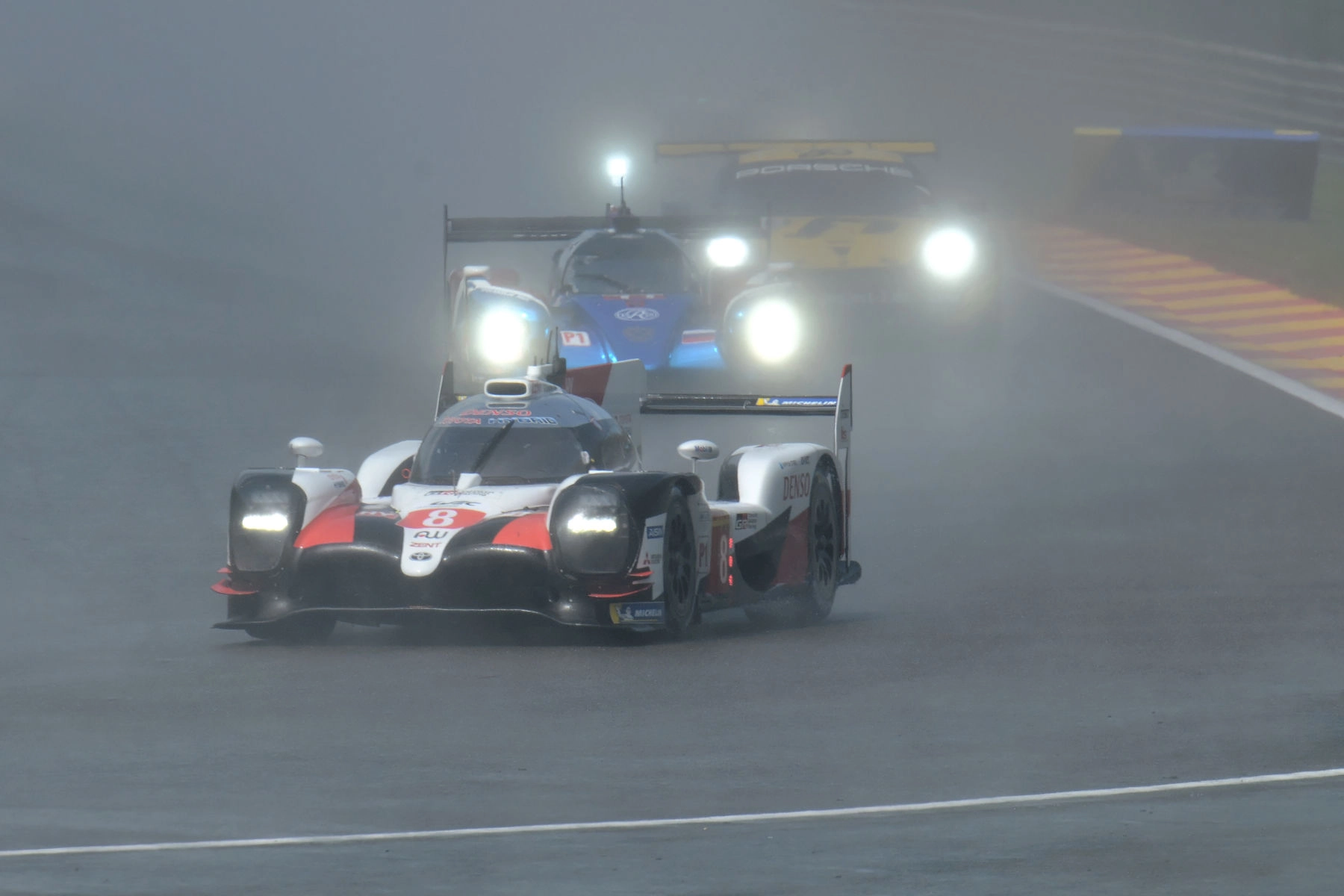
The circuit stretches more than seven kilometers across elevated Ardennes terrain. Localized showers can hit one sector while another remains dry. Trees, valleys, wind and altitude also influence how quickly the surface changes.
Weather uncertainty is one of Spa’s most famous features.
Teams may see sunshine in the pit lane while rain falls near Les Combes or Blanchimont.
The Circuit Covers a Large Area
A seven-kilometer lap crosses several ridges and valleys.
Therefore, one cloud can affect only part of the track. The rain may also move before the next lap.
The Forest Slows Drying
Trees shade sections of asphalt and reduce direct sunlight.
Meanwhile, exposed areas may dry quickly. Drivers then face mixed grip on the same lap.
Temperature Can Fall Rapidly
Cloud cover and wind reduce track temperature.
Consequently, slick tires lose grip even before rain reaches the surface.
Why Tire Choice Becomes Difficult
Intermediate tires overheat on dry sections. Slicks become dangerous on wet corners.
The team must decide which condition costs more time. That decision can determine the race.
Why Driver Feedback Matters
Weather radar shows where rain may fall. However, it cannot measure grip at every corner.
Drivers report standing water, visibility and tire temperature. Therefore, strategy depends on both data and instinct.
The 1963 Grand Prix Became a Weather Legend
Jim Clark won the 1963 race in severe rain.
He built an enormous advantage and lapped nearly the entire field. The drive remains part of Spa folklore.
Spa-Francorchamps Corner Guide
| Section | Character | Why It Matters |
|---|---|---|
| La Source | Slow uphill hairpin | Creates first-lap action and controls the run toward Eau Rouge. |
| Eau Rouge and Raidillon | Fast compression and blind climb | Tests commitment and sets speed for Kemmel. |
| Kemmel Straight | Long uphill acceleration zone | The main slipstream and overtaking section. |
| Les Combes | Heavy-braking right-left-right sequence | Rewards late braking and controlled direction changes. |
| Bruxelles | Long downhill right-hander | Challenges front grip and braking patience. |
| Pouhon | Fast double-left corner | Produces sustained lateral load and exposes weak downforce. |
| Fagnes | Technical right-left sequence | Demands balance, rotation and curb control. |
| Stavelot and Paul Frère | Accelerating right-hand section | Starts the long full-throttle run toward Blanchimont. |
| Blanchimont | Very fast left-hand sweep | Tests confidence while the barriers approach quickly. |
| Bus Stop | Slow final chicane | Creates a late passing chance and shapes main-straight speed. |
Why La Source Is More Important Than It Looks
The hairpin is the slowest corner on the circuit.
However, its exit begins the downhill run toward Eau Rouge. A poor launch can leave the driver vulnerable on Kemmel.
Why Pouhon Is a Driver Favorite
Pouhon is a long double-left taken at high speed.
The car carries sustained lateral load while descending. Consequently, front grip and confidence are essential.
Why Blanchimont Still Demands Respect
Modern Formula 1 cars often take Blanchimont with little or no lift.
Nevertheless, the corner remains fast, narrow and visually intimidating. Traffic or rain changes its difficulty immediately.
Why the Bus Stop Matters
The final chicane ends a long high-speed section.
Drivers can attempt an out-braking move. Moreover, the exit determines acceleration onto the start-finish straight.
Why Spa Requires an Aerodynamic Compromise
Teams usually choose medium downforce. Low drag helps on Kemmel and the final sector, while extra downforce improves Pouhon, Fagnes and the technical middle sector. The ideal choice depends on weather, car efficiency and race strategy.
Spa is one of the hardest setup decisions of the season.
Sectors 1 and 3 reward straight-line speed. Sector 2 rewards aerodynamic load and stability.
Low Downforce Helps Qualifying and Passing on the Straights
Less wing reduces drag. Therefore, the car accelerates faster and defends more effectively on Kemmel.
However, the driver may lose confidence through Pouhon and Blanchimont.
Higher Downforce Protects the Middle Sector
More wing improves turn-in and sustained corner grip.
Yet the car can become vulnerable in a straight-line battle. The setup may produce a fast qualifying lap but a difficult race.
Ride Height Must Handle Compression
Eau Rouge loads the floor as the car compresses.
Engineers need enough clearance to avoid severe bottoming. However, excess ride height reduces aerodynamic efficiency.
Suspension Must Support Both Curbs and Fast Corners
Soft suspension helps over curbs and bumps.
Meanwhile, stiff control supports the aerodynamic platform through fast turns. Teams must find a workable middle ground.
Energy Deployment Shapes the Straights
Spa contains several long acceleration zones.
Therefore, teams cannot waste electrical energy early in the lap. Deployment must remain available for attack and defense.
Usually medium, with teams choosing between sector time and raceability.
Needs enough clearance for Eau Rouge compression without losing floor performance.
Must support fast corners, curbs and changing vertical loads.
Deployment is spread across several long straights and passing zones.
Major stops need cooling, but long straights provide recovery airflow.
Extra wing and softer balance may help when rain becomes likely.
Read more about ERS in Formula 1 and clean and dirty air.
Why Spa Often Produces Good Overtaking
Les Combes after the Kemmel Straight is the main passing zone. La Source and the Bus Stop also create opportunities. Slipstreaming, long acceleration zones and heavy braking allow a following car to convert speed into position.
Spa gives an attacker time to build a speed advantage.
That feature separates it from circuits where the straight ends before the following car draws alongside.
Kemmel Creates the Main Attack
A driver follows through Eau Rouge and Raidillon, then gains slipstream uphill.
The braking zone at Les Combes is wide. Consequently, cars can arrive side by side.
La Source Creates Passing in Both Directions
The hairpin rewards late braking at the start.
Later, a driver may attack the inside or use a better exit to prepare for Kemmel.
The Bus Stop Offers a Late Chance
Drivers approach after the fast Blanchimont section.
A large tire or speed advantage can support an out-braking move. However, contact risk remains high.
Why Slipstreaming Is Strong at Spa
The long straights allow the following car to remain in the wake.
Reduced drag adds speed over several seconds. Our guide to slipstreaming explains the effect.
How Overtake Mode Works in 2026
Overtake Mode replaced DRS for the 2026 Formula 1 season.
At Spa, the detection point sits at Turn 19. Eligible drivers receive the additional deployment profile on the following lap.
The long run toward Eau Rouge and Kemmel gives the system time to influence an attack.
Why Setup Determines Raceability
A high-downforce car may be fast in the middle sector.
However, it can become a target on Kemmel. Therefore, teams consider passing and defense before choosing wing level.
How Spa Loads and Changes the Tires
Spa places several types of stress on the tires.
Compression, high-speed cornering, braking and changing temperature all occur during one long lap.
Eau Rouge Creates Vertical Load
The tire structure absorbs compression at the bottom of the hill.
Meanwhile, steering input and aerodynamic force create additional stress. Pressure and construction limits therefore matter.
Pouhon Creates Sustained Lateral Load
The outside tires remain loaded through the long double-left.
Sliding overheats the surface. Consequently, a weak balance can damage tires quickly.
Long Straights Cool the Tires
High airflow reduces surface temperature.
Therefore, the driver may arrive at the next braking zone with less grip than expected.
Rain Creates Crossover Decisions
Intermediate tires work best on a damp surface.
However, dry sections can overheat them. Slicks remain faster on dry asphalt but become dangerous in standing water.
Why a Long Lap Increases the Cost of a Wrong Choice
A driver cannot return to the pits quickly after choosing the wrong tire.
Seven kilometers of unsuitable conditions can cost a large amount of time. This increases the value of accurate forecasts.
How Strategy Changes at the Belgian Grand Prix
Spa strategy reacts to weather, tire degradation and track position.
The long lap also changes how teams calculate pit windows.
The Undercut Needs a Clear Out-Lap
Fresh tires can gain time through the middle sector.
However, cold rubber may struggle after the pits. Traffic can also remove the advantage.
The Overcut Can Work When Conditions Improve
A driver staying out may use warm tires and a drying line.
Meanwhile, the rival struggles to heat new rubber. Therefore, one extra lap can change position.
Safety Cars Create Large Opportunities
A neutralized field reduces pit-stop time loss.
Moreover, Spa incidents may leave debris across fast sections. Teams must remain ready for sudden intervention.
Red Flags Can Reset Tire Plans
Heavy rain or barrier repairs may stop the race.
The restart then compresses the field and changes available compounds. Our guides to Safety Car rules and red flags explain those procedures.
Why Pit Timing Is Harder on a Long Circuit
Teams receive fewer laps of data during a race.
Weather can also change while a driver completes the in-lap. Therefore, strategy calls age quickly.
Our guides to pit stops and undercuts and overcuts cover the timing battle.
How Spa-Francorchamps Has Improved Safety
Spa has enlarged runoff areas, added gravel traps, moved barriers, improved service roads and resurfaced major sections. The 2022 program included Eau Rouge, Raidillon, La Source, Les Combes and Blanchimont, while further resurfacing and drainage work followed in 2024.
Spa’s reputation includes tragedy. Therefore, modern safety work remains essential to its future.
The circuit must preserve high-speed character without accepting old standards.
The 2022 Program Added Runoff and Gravel
Officials enlarged runoff at several corners. New gravel traps appeared at La Source, Les Combes and Blanchimont.
Raidillon also received wider runoff and relocated barriers. A new grandstand opened above the famous climb.
Why Gravel Returned
Gravel slows cars that leave the track.
It can also prevent drivers from using runoff as normal racing surface. However, gravel may trap a car and create recovery work.
Our guide to gravel traps explains that tradeoff.
Resurfacing Changed Grip
In 2024, the circuit resurfaced about 3.5 kilometers and more than 600 meters of pit lane.
The work covered sections from Blanchimont to Eau Rouge, Kemmel to Bruxelles and Campus to Paul Frère.
Drainage Work Targets Standing Water
Spa’s terrain naturally channels water downhill.
New gutters, grooving and drains improve management. Nevertheless, severe rain can still overwhelm visibility and grip.
Safety Does Not Remove the Challenge
Wider runoff reduces the consequence of some mistakes.
However, drivers still approach blind crests and fast corners at extreme speed. The challenge remains real.
Why Accident Analysis Matters
The FIA investigates major incidents and applies lessons across motorsport.
Barrier design, car structures and race-control procedures continue evolving. Read more about what causes racing crashes.
Why Spa Is Bigger Than Formula 1
Spa’s fame extends beyond the Belgian Grand Prix.
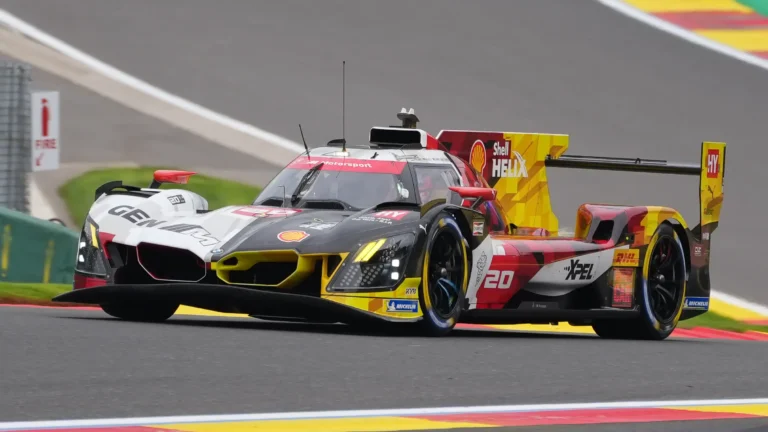
The circuit hosts major endurance, GT, motorcycle and touring-car events.
The 24 Hours of Spa Began in 1924
The endurance race arrived only three years after the circuit’s creation.
Today, it remains one of GT racing’s most important events.
The FIA World Endurance Championship Uses Spa
The 6 Hours of Spa traditionally prepares teams for Le Mans.
The track’s elevation, weather and fast corners test durability before the season’s biggest endurance race.
Different Cars Reveal Different Parts of Spa
Formula 1 highlights aerodynamic speed.
GT and prototype racing show traffic management, tire durability and night or rain performance.
Why Endurance History Strengthens the F1 Reputation
Spa is active throughout the year rather than existing for one weekend.
Consequently, the circuit’s identity belongs to motorsport as a whole. Formula 1 adds to that history instead of creating it alone.
What Happened at the 2026 Belgian Grand Prix?
Kimi Antonelli won the 2026 Belgian Grand Prix for Mercedes. Charles Leclerc finished second for Ferrari, while Max Verstappen completed the podium for Red Bull Racing.
The 2026 Belgian Grand Prix took place on July 19.
Antonelli started from pole after setting a 1:44.361 qualifying lap. He then won the 44-lap race in 1:24:42.479.
The Opening Lap Showed Spa’s Racing Character
Verstappen attacked immediately and passed Antonelli around the Eau Rouge section.
However, Antonelli recovered the lead and controlled the race. The exchange demonstrated how Spa creates attacks before Kemmel.
George Russell Retired After Contact
Russell made contact with Lewis Hamilton and spun into the gravel.
His retirement changed the championship implications and removed one Mercedes from the fight.
Lando Norris Set the Fastest Race Lap
Norris recorded a 1:48.890 on Lap 44.
Nevertheless, the official circuit-guide lap record remained Sergio Perez’s 1:44.701 from 2024.
Why the Result Matters to Spa’s Reputation
The race included a lead change, strategic pressure and high-speed attacks.
Moreover, the podium represented three different teams. Spa again rewarded a complete package rather than one isolated strength.
| 2026 Belgian GP Detail | Result |
|---|---|
| Race winner | Kimi Antonelli, Mercedes |
| Second place | Charles Leclerc, Ferrari |
| Third place | Max Verstappen, Red Bull Racing |
| Pole position | Kimi Antonelli, 1:44.361 |
| Fastest race lap | Lando Norris, 1:48.890 |
| Race distance | 44 laps, 308.052 km |
Why Drivers and Fans Love Spa-Francorchamps
Drivers value circuits that reward skill without relying on artificial complexity.
Spa’s corners follow the land. Therefore, the lap feels natural and connected.
The Driver Can Make a Difference
Confidence through Pouhon or Blanchimont changes lap time.
Moreover, wet-weather judgment can overcome a small car disadvantage.
The Track Creates Recognizable Moments
Fans immediately identify the Raidillon crest, Kemmel Straight and forest setting.
Those images give the Belgian Grand Prix a distinct identity.
The Spectator Experience Covers Several Types of Racing
Grandstands near Eau Rouge show compression, climbing and acceleration.
Pouhon displays sustained corner speed. Les Combes shows braking and overtaking.
The Circuit Connects Generations
Fangio, Clark, Senna, Schumacher, Hamilton and Verstappen all form part of Spa’s story.
Consequently, each modern race is compared with decades of history.
Michael Schumacher’s Record Stands Out
Schumacher holds the record with six Belgian Grand Prix victories.
He also made his Formula 1 debut at Spa in 1991 and secured his first win there in 1992.
Common Myths About Spa-Francorchamps
“Eau Rouge and Raidillon Are the Same Corner”
Not exactly. Eau Rouge is the left bend at the bottom.
Raidillon is the steep climb that follows. However, fans often use Eau Rouge for the full sequence.
“Spa Is Famous Only Because of Rain”
False. Weather adds unpredictability, but the layout is exceptional in dry conditions.
Elevation, corner speed and overtaking would make Spa famous without rain.
“Every Modern F1 Car Takes Raidillon Easily Flat Out”
False. Fuel load, tires, wind, traffic and weather change the required throttle.
Moreover, a flat corner can still demand precise placement and confidence.
“Spa Uses a Pure Low-Downforce Setup”
False. Teams usually select a medium-downforce compromise.
The middle sector punishes cars that remove too much wing.
“The Current Circuit Is the Original Route”
False. The modern layout opened in 1979.
It retains famous sections but removes much of the old 14.9-kilometer public-road triangle.
“Safety Work Has Made Spa Easy”
False. Runoff and barriers reduce risk.
However, elevation, weather, visibility and high speed still create a major challenge.
Why Is Spa-Francorchamps So Famous in F1? FAQs
Why is Spa-Francorchamps so famous in F1?
Spa combines history, elevation, high-speed corners, unpredictable weather and strong overtaking zones. Few tracks test so many driver and car qualities.
What is the difference between Eau Rouge and Raidillon?
Eau Rouge is the left-hand bend at the bottom of the hill. Raidillon is the steep right-left climb that follows.
Is Spa-Francorchamps the longest F1 circuit?
Yes. The modern circuit measures 7.004 kilometers, making it the longest track on the current Formula 1 calendar.
Why is the weather so unpredictable at Spa?
The long circuit crosses elevated Ardennes terrain. Local showers and temperature changes can affect one sector while another remains dry.
Conclusion: Spa Is Famous Because It Still Feels Like an Adventure
Understanding why Spa-Francorchamps is so famous in F1 begins with the landscape.
The circuit climbs, falls and disappears through the Ardennes Forest.
Therefore, every lap feels like a journey rather than a repeated stadium loop.
Its history adds another layer.
The original road circuit opened in 1921 and measured about 14.9 kilometers.
Formula 1 raced there during the first World Championship season in 1950.
The old route became too dangerous as cars grew faster.
However, the shorter 1979 circuit preserved the strongest parts of Spa’s identity.
Eau Rouge and Raidillon remain the visual centerpiece.
The sequence combines compression, a 17 percent climb and a blind crest.
Yet Spa’s reputation does not depend on one corner.
Pouhon creates sustained lateral load. Blanchimont demands high-speed confidence.
La Source, Les Combes and the Bus Stop provide genuine passing opportunities.
The 7.004-kilometer length also matters.
Spa is the longest circuit on the current Formula 1 calendar.
Its 102.2-meter elevation difference affects braking, visibility and tire load.
Weather adds another test.
One sector can be wet while another remains dry.
Consequently, teams must combine radar data with driver feedback.
The setup challenge is equally important.
Low drag helps on Kemmel and the final sector.
More downforce improves Pouhon, Fagnes and the technical middle section.
No team can maximize every part of the lap.
Strategy therefore begins before the car leaves the garage.
Tire choice becomes difficult when the surface changes across seven kilometers.
A wrong decision also costs more because the driver needs a full lap to return.
Safety remains central to Spa’s future.
The circuit has enlarged runoff, installed gravel, moved barriers and improved drainage.
Resurfacing work has also changed grip across major sections.
These updates do not remove Spa’s character.
Instead, they allow modern cars to continue racing on an exceptional landscape.
The 2026 Belgian Grand Prix provided fresh evidence.
Kimi Antonelli won from pole ahead of Charles Leclerc and Max Verstappen.
The race included an opening-lap attack, strategic pressure and three teams on the podium.
Spa also remains bigger than Formula 1.
The 24 Hours of Spa and FIA World Endurance Championship strengthen its global reputation.
Each category reveals a different side of the same circuit.
Drivers love Spa because commitment still changes the lap.
Fans love it because every section looks and feels different.
Engineers respect it because no simple setup solves the whole track.
That combination explains the fame.
Spa-Francorchamps is not celebrated only because it is old.
It remains famous because the circuit continues to demand everything Formula 1 can offer.
Sources and Fact-Checking
This article was checked against official Formula 1, Circuit de Spa-Francorchamps and FIA material available on July 24, 2026.