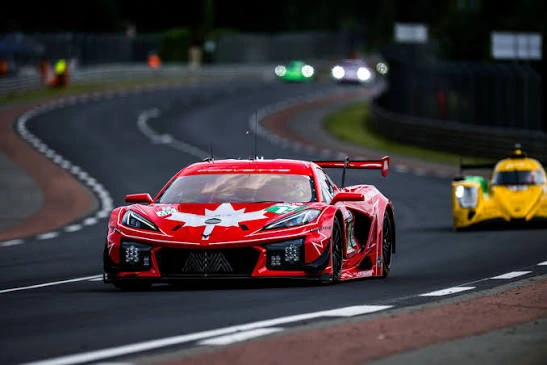
Chevrolet Grand Prix 2026 Strategy Analysis:
How Palou Mastered Detroit’s Chaos
Five full-course yellows, a mandatory alternate tire rule, and five different race leaders — the 2026 Chevrolet Detroit Grand Prix was a strategic chess match. Here’s how Alex Palou and Chip Ganassi Racing solved it.
The 2026 Chevrolet Detroit Grand Prix presented by Lear gave IndyCar fans everything a street circuit race should deliver — barriers grazing the walls, competing tire strategies fighting each other to the flag, and five full-course yellows that reshuffled the order every time it appeared settled. When the dust cleared after 100 laps on the 1.645-mile, nine-turn layout through downtown Detroit, Alex Palou stood alone as winner for the fourth time in eight races this season.
This was not a race won by raw pace alone. Palou led 71 of 100 laps, but the decision that sealed his victory came on lap 63 — a perfectly timed pit stop call by strategist Barry Wanser that positioned him on primary tires just before a caution on lap 66 turned the race on its head. Understanding that single call, and the tire and fuel context surrounding it, is the key to understanding how Chip Ganassi Racing outthought every rival on General Motors’ home ground.
Race Overview — Podium & Key Results
| Pos | Driver | Team | Engine | Key Note |
|---|---|---|---|---|
| 1 | Alex Palou | Chip Ganassi Racing (No. 10) | Honda | Led 71/100 laps |
| 2 | Kyle Kirkwood | Andretti Global (No. 27) | Honda | +3.058s · Led 48 laps |
| 3 | Graham Rahal | Rahal Letterman Lanigan | Honda | Strong recovery |
| 4 | Pato O’Ward | Arrow McLaren (No. 5) | Chevrolet | Top Chevy finisher |
| 5 | Christian Lundgaard | Arrow McLaren (No. 7) | Chevrolet | Consistent pace |
| 6 | Felix Rosenqvist | McLaren / CGR entry | Honda | Strong recovery run |
| 7 | Louis Foster | Andretti / RLL entry | Honda | Career-best finish |
| 8 | Marcus Ericsson | CGR / Andretti entry | Honda | Clean race |
| 9 | Kyffin Simpson | CGR | Honda | Top 10 result |
| 10 | Josef Newgarden | Team Penske (No. 12) | Chevrolet | Recovered from P25 start |
| 25† | Will Power | Team Penske (No. 12) | Chevrolet | Crashed in qualifying |
† Power started P25 (last) after a qualifying crash; Newgarden also started poorly before recovering.
The Detroit Street Circuit: Why Strategy Dominates Here
Detroit’s street circuit is one of the most tactically demanding venues on the IndyCar calendar. The 1.645-mile loop runs along Jefferson Avenue, Bates Street, Atwater Street, St. Antoine, Franklin Street, and Rivard in downtown Detroit, producing a layout where passing is mechanically difficult but strategically achievable every time a caution flag flies.
Turn 7 is the defining corner — a tight, late-braking hairpin-style sequence that rewards commitment and punishes hesitation. Teams tune their cars for maximum traction out of the exit because it feeds directly into the circuit’s longest straight, the 0.7-mile stretch where wheel-to-wheel racing most often occurs under green flag conditions. However, as 2026 demonstrated again, clean-air track position around downtown Detroit is worth far more than outright speed in traffic.
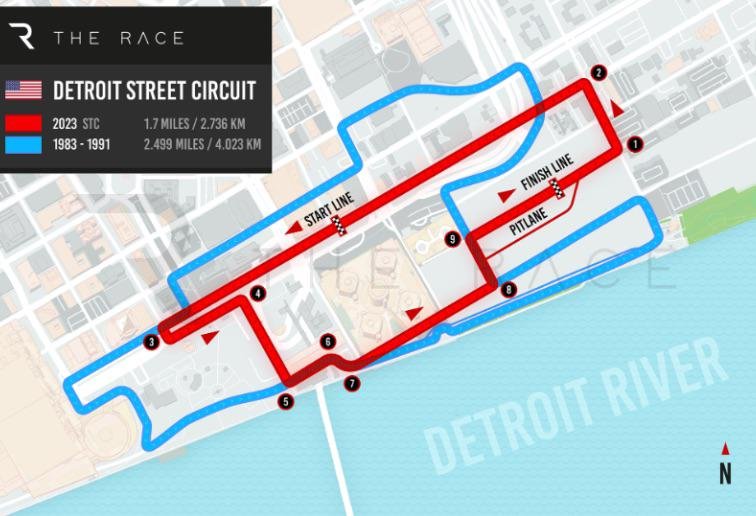
The full race weekend at the Streets of Detroit ran across three sessions, culminating in Sunday’s 100-lap main event. All times are Eastern Time (ET).
Race day coverage began at 12:30 PM ET on FOX and FOX One, with INDYCAR Radio powered by OnlyBulls carrying the full race-day broadcast. The 100-lap distance over 1.645 miles produces a race length of approximately 164 miles — short enough that fuel is rarely a primary limiting factor, but long enough that tire degradation becomes decisive in the closing stint.
Qualifying Analysis: Palou Completes a Remarkable Hat-Trick
Alex Palou’s Detroit qualifying performance deserves to be placed in its proper context before the strategy analysis begins. The four-time NTT IndyCar Series champion won the pole for the Chevrolet Detroit Grand Prix, making it his third consecutive pole across three very different venues — the IMS road course, the IMS oval, and now the Detroit street circuit. No IndyCar driver in the modern era had swept poles across all three May events in the same season.
Palou’s pole lap was the clearest statement possible about where Chip Ganassi Racing’s Honda-powered package sat heading into race day. In Practice 1, Palou and Kirkwood led the combined timesheet. In Practice 2, Kirkwood and Will Power were quickest, with Marcus Armstrong close. Yet when it mattered — in the single-lap elimination pressure of the Fast Six — Palou delivered a lap that no rival could match.
On a nine-turn street circuit with limited overtaking opportunities under green flag conditions, starting from the front eliminates the risk of getting stuck behind a slower car or being forced wide by a rival. Clean air at Detroit is worth approximately 0.8 to 1.2 seconds per lap compared to running in traffic on used tires — enough to dictate pit stop timing and make strategy calls proactively rather than reactively. For Palou, pole meant the race was always his to control rather than chase.
Will Power’s qualifying crash from P25 had a knock-on effect on race strategy that’s easy to underestimate. Penske had showed genuine pace in Practice 2, and a front-row start for Power could have challenged Palou’s opening stint. Instead, both Penske drivers — Power from 25th, Newgarden from a similar mid-pack position — had to run alternate tire strategies simply to make forward progress, turning their race into a recovery operation rather than a championship battle.
Kyle Kirkwood qualified second for Andretti Global, giving him the outside front row and a clear sightline to Turn 1 at the start. He led 48 laps during the race — a significant total that underlines how genuine his pace was. However, as the strategy section below shows, leading laps at Detroit in 2026 proved less important than which laps you were leading, and on which tires.
Tire Strategy: The Alternate Rule That Changed Everything
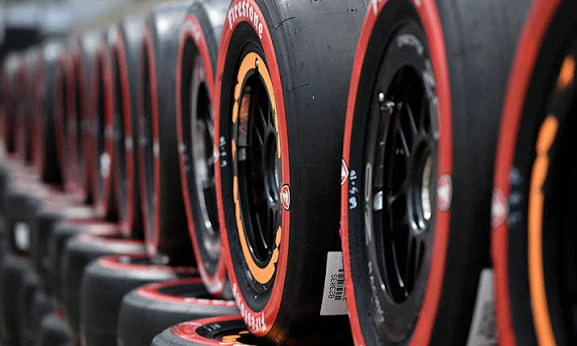
The single most important technical regulation at the 2026 Chevrolet Detroit Grand Prix was the Firestone street circuit mandate: every car had to use at least two sets of Firestone Firehawk alternate tires during the race. This rule exists because the alternate (red sidewall) compound is significantly faster than the primary (black sidewall) across a short stint — but it degrades more rapidly. Without the mandatory minimum, teams could theoretically run primary tires for the entire race distance and simply grind to the flag on pure durability.
The two-set requirement forced every team to use at least two periods of alternate-tire pace within the 100-lap window. How teams structured those two alternate windows around the five full-course yellows and their own pit stop timing produced the dramatically different race outcomes seen across the top ten.
Palou’s winning approach used both mandatory alternate sets in the opening two-thirds of the race, switching to primary tires for his lap 63 pit stop. That left him with fresh, durable primary rubber for the entire closing 37-lap stretch — a window that covered five full-course yellows and multiple restarts. Kirkwood attempted the opposite: saving one alternate set for the final stint in search of a late-race attack, but INDYCAR’s rule requiring him to use it under yellow on lap 69 meant he had newer-but-softer tires against Palou’s primary rubber when both mattered most.
Tire Degradation Characteristics at Detroit
Detroit’s abrasive street tarmac — composed of asphalt surfaces that vary in age and roughness lap by lap — produces a characteristic tire degradation pattern. The Firestone alternate compound produces its maximum grip in the first eight to twelve laps of a stint. After that, the rubber begins to grain on the left-front under braking for Turn 7, and the rear compounds start to blister slightly under the power-down zones on the main straight exit and the Turn 5 sequence.
In contrast, the primary tire takes two to four laps to reach working temperature but holds consistent pace for 25 or more laps once in its performance window. This fundamental characteristic shaped every strategy decision made on race day. Teams running alternate tires could push aggressively but had a tight window before their pace fell away. Teams on primaries could be patient, knowing their tire condition would improve as rivals around them degraded.
| Tire Type | Peak Pace Window | Detroit Life Estimate | Key Characteristic | Best Used |
|---|---|---|---|---|
| Alternate (Red) | Laps 1–12 | ~18–22 laps max | ~0.9s/lap faster early | Attack windows; qualifying laps |
| Primary (Black) | Laps 3–30+ | 30+ laps reliably | Slower early, consistent | Long closing stints; caution mgt |
Understanding this table explains Palou’s win. By lap 63, he had used both mandatory alternate sets. Switching to primary on lap 63 gave him a tire that would reliably last the remaining 37 laps without a further stop. When the lap 66 caution hit — bunching the field and resetting all gaps — Palou was already in clean-air position on his best remaining compound. Kirkwood was not.
Pit Stop Strategy: Barry Wanser’s Lap 63 Masterstroke
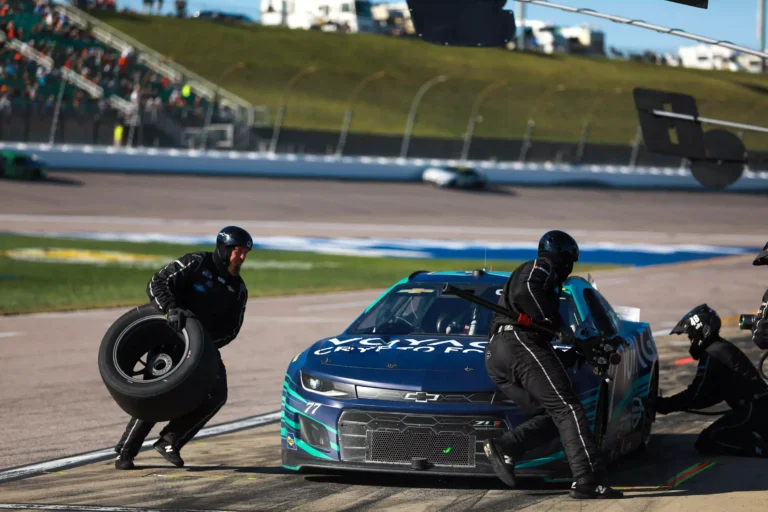
Alex Palou’s race strategist Barry Wanser identified the critical decision of the entire 2026 Chevrolet Detroit Grand Prix when he called Palou into the pit lane on lap 63 for his final stop. At that moment, Palou was not under immediate pressure — he was leading the race and could theoretically have remained on track longer. However, Wanser saw the chess position developing ahead of him and moved first.
“The team did an incredible job once again with the strategy. The pit stops were incredible. Incredible run, incredible start of the year, but it was tough.”
The logic behind the lap 63 call was layered. First, Palou’s alternate tires were in their final performance phase — useful for another four to six laps, but not crisp enough to protect against a fresher-tire attack from Kirkwood. Second, Wanser had been monitoring the mid-race incidents and understood that Detroit’s caution rate was running high enough to suggest another yellow was coming. Third, pitting under green and surrendering track position temporarily was less dangerous than being caught by a caution with stale alternate tires still on, which could force a reactive stop at an undesired point.
The Decisive Lap 66 Caution and Its Aftermath
Three laps after Palou’s final pit stop, the caution Wanser had anticipated arrived. Santino Ferrucci’s AJ Foyt Racing Chevrolet made contact with Rinus VeeKay’s Juncos Hollinger entry in Turn 5, sending VeeKay spinning. The yellow flag on lap 66 froze the race order precisely when Palou had already completed his stop and was running on fresh primary tires in the correct track position ahead of those who had not yet stopped.
Kirkwood, who was leading at that moment, pitted under yellow on lap 69 per the caution rules. Critically, INDYCAR’s regulations for this scenario required him to use an alternate tire set — the rule mandating two alternate sets per race had not yet been satisfied by Kirkwood’s strategy, so his team was forced to bolt on the softer compound rather than the primary rubber Palou was already running. This is the moment the race was decided: Palou on 6-lap-old primary tires; Kirkwood on brand-new alternates that would degrade as the remaining laps played out.
Barry Wanser and Alex Palou’s lap 63 call was the decisive strategic move of the race — anticipating a caution that arrived on lap 66 and positioning Palou on primary tires before it hit. The second-best call of the day came from Andretti Global in running Kirkwood as long as they did on alternates, which got him to the race lead. However, Kirkwood’s forced alternate pit on lap 69 under yellow rules undid that effort. Wanser’s foresight over three laps was the entire difference between winning and finishing second.
| Driver | Final Pit Lap | Compound Used | Context | Outcome |
|---|---|---|---|---|
| Palou | Lap 63 | Primary | Green flag — proactive call | Led from L69 to finish |
| Kirkwood | Lap 69 | Alternate (forced) | Under yellow — mandatory rule | P2 · couldn’t hold Palou |
| Rossi | ~Lap 70 | Primary | Under yellow | P4 region, dropped back |
| Newgarden | Variable | Alternates (attack) | Recovery from P25 | P10 · gained 15 positions |
Caution Strategy: Five Yellows and the Teams That Read Them Best
The 2026 Chevrolet Detroit Grand Prix produced five full-course yellow periods — an above-average count even by street circuit standards. Far from being random disruptions, each caution created a specific strategic fork that teams had to navigate correctly or lose positions they’d spent dozens of laps earning.
The Five Cautions and Their Race Impact
- Caution 1 (Lap 39): The first yellow reshuffled the pit cycle for much of the field. Teams that had extended alternate stints found the window closing faster than expected. Palou’s lead at lap 39 — he led the most laps at that point and had recorded the fastest race lap on lap 8 at 63.0794 seconds — remained intact, but competitors who had hoped to undercut him during a natural green-flag window lost that opportunity.
- Caution 2 (Lap 66): The decisive yellow. Santino Ferrucci’s contact with VeeKay at Turn 5 triggered the caution that rendered Palou’s lap 63 strategy call a masterpiece and forced Kirkwood into the alternate tire on his final stop.
- Caution 3 (Lap 72): The restart saw Palou power away from Alexander Rossi on fresher primaries. Meanwhile, rookie Mick Schumacher missed Turn 5 and nosed into the barriers in his No. 47 ENVE Honda for Rahal Letterman Lanigan, triggering the third yellow while dicing intensely with David Malukas.
- Caution 4 (Lap 80): Santino Ferrucci’s car slowed in Turn 4 with a mechanical problem. This caution came precisely as Kirkwood had pulled to within two car lengths of Palou and was preparing to attack — potentially the only moment in the final stint where the race result could have been different. The yellow neutralised that threat.
- Caution 5 (Lap 93): A final incident with seven laps to go, confirming Palou’s position at the head of the field with fresh enough primary rubber to handle the restart and manage to the flag.
Each yellow collapsed the time gaps between competitors and reset the tactical board. At Detroit, cautions under IndyCar rules allow pit stops, but drivers must use the next mandatory tire requirement. Teams that had completed their mandatory alternate obligations could make reactive calls on any compound. Teams that hadn’t were at the mercy of the rulebook. Palou’s team completed both alternate obligations before the decisive lap 66 yellow — giving them complete freedom in the pit lane when their rivals were constrained.
The Schumacher incident on lap 72 deserves particular attention from a strategy perspective. The rookie was racing extremely aggressively with Malukas for a position worth potentially two championship points. Missing Turn 5’s braking zone — a consequence of the tight alternate-to-primary tire transition on a car not yet in its primary operating window — cost him the race and triggered a yellow that affected everyone behind Palou. It was a vivid illustration of the consequences of incorrect tire temperature management on restarts. For more on how tire strategies work across different racing formats, see our guide on primary and option tires in racing and the explainer on undercut and overcut strategy.
Team-by-Team Analysis: Who Won and Lost Detroit Strategically
Chip Ganassi Racing — A
Flawless. Barry Wanser’s lap 63 call remains the single best strategy decision of the 2026 Detroit race weekend, and Palou’s execution around it was equally assured. Ganassi’s pit crew delivered rapid stops that kept Palou in position to capitalise on the strategy, and the team’s data on tire degradation windows was clearly superior to the competition. The Honda power unit showed strong fuel efficiency, eliminating fuel-saving concerns that might have complicated decision-making.
This was Palou’s 23rd career victory in 106 starts — a 21.7% win rate — and his fourth win in eight 2026 races. Moreover, since the start of the 2025 season, Palou has won 12 of the last 25 races, a 48% win rate that belongs to a different tier of performance than any current competitor. For context on Ganassi’s historical dominance and the broader IndyCar competitive landscape, see our IndyCar racing series overview.
Andretti Global — B+
Kirkwood’s performance was genuinely excellent. He led 48 laps, qualified second, and ran the fastest consistent sector times for much of the middle stint. The team’s strategy was legitimate — keeping Kirkwood on alternates to build track position was a valid plan that worked until the mandatory tire rule on lap 69 forced their hand. The real question is whether Andretti should have attempted Palou’s approach — pitting from the lead under green and trusting primary tire pace in the closing stint. The split-second analysis says yes in hindsight, but the decision looked defensible in real time.
Team Penske — C
Power’s qualifying crash from what should have been a front-running position fundamentally altered Penske’s entire race strategy. Starting 25th in a 100-lap race on a street circuit where overtaking requires cautions and tire advantages, Power had almost no viable path to a championship points haul. The team ran aggressive alternate strategies purely to move forward, which is how Newgarden recovered to P10 — a result that would look fine in isolation but represents a catastrophic missed opportunity given Penske’s practice pace. For reference on how pit stop strategy works in the modern IndyCar era, see our pit stop strategy guide.
Arrow McLaren — B
Pato O’Ward and Christian Lundgaard delivering P4 and P5 — the top two Chevrolet finishers at a GM home event — is the positive storyline here. However, the gap to the Honda-powered top three underlines a performance differential that has appeared consistently in 2026. Arrow McLaren’s pit calls were competent and their tire strategies were clean, but neither O’Ward nor Lundgaard had the outright pace in the race’s first 60 laps to challenge Palou or Kirkwood at the front. The team leaves Detroit with useful points but no meaningful championship momentum — a situation that makes their Mid-Ohio win feel even more isolated by comparison. See our deeper dive into O’Ward’s IndyCar championship situation for the broader context.
Rahal Letterman Lanigan — B
Graham Rahal’s third-place finish is the quiet story of Detroit 2026. RLL ran a textbook strategy — two clean alternate stints, a timed primary switch, and patient racecraft through the multiple restarts. Rahal’s experience on the Detroit street circuit, where he has consistently performed above his car’s theoretical position, showed clearly in the closing 20 laps. Meanwhile, Mick Schumacher’s barrier contact on lap 72 ended what had been an impressively aggressive debut display from the rookie, underlining both his potential and the risk-management gap that all first-season drivers navigate.
Championship Implications After Detroit
The Chevrolet Detroit Grand Prix had significant championship consequences. Alex Palou’s fourth win in eight races confirms that the 2026 IndyCar championship is, at this point in the season, a conversation primarily between Palou and Kirkwood — with everyone else hoping for Palou to have the kind of mechanical failure or incident that has simply not occurred so far this season.
Palou’s fourth win in eight races after Detroit places him in a historically strong championship position. His 48% win rate since the start of the 2025 season is unprecedented in modern IndyCar, and the consistency of his results — he has not finished outside the top eight in 2026 — means rival teams cannot simply wait for him to stumble. Kirkwood remains firmly second and showed the pure pace to challenge at any circuit, but the strategy gap between Andretti and Ganassi was visible at Detroit and will need to close for the championship to genuinely tighten. For live standings, see our IndyCar schedule and standings hub.
| Pos | Driver | Team | Detroit Result | Championship Note |
|---|---|---|---|---|
| 1 | Alex Palou | Chip Ganassi Racing | P1 (Win) | Leading — 4 wins in 8 races |
| 2 | Kyle Kirkwood | Andretti Global | P2 | Closest rival — strategy gap visible |
| 3 | Edoardo Mortara | Mahindra (IndyCar) | Top 10 | Consistent points scorer |
| 4 | Pato O’Ward | Arrow McLaren | P4 | 5th in standings · +103 behind |
| 5+ | Josef Newgarden | Team Penske | P10 (from P25) | Climbing — WWT Raceway win recent |
The next round after Detroit is the Bommarito Automotive Group 500 at World Wide Technology Raceway — a short oval in Madison, Illinois — followed by Road America in Wisconsin. Both circuits demand very different setup philosophies from the street circuit demands of Detroit. However, Ganassi’s all-around strength in 2026 means Palou will be a favourite at both. For the complete race calendar and upcoming round details, see our IndyCar 2026 schedule. For a comparison of how IndyCar’s championship structure differs from Formula 1’s point system, see our IndyCar vs F1 guide.
Frequently Asked Questions
Conclusion: Palou and Ganassi Prove Strategy Wins Detroit
The 2026 Chevrolet Grand Prix delivered everything a street circuit race should — chaos, tire gambles, five yellow flags, and a result that turned on a single three-lap window of strategic foresight. Alex Palou was undeniably fast throughout the weekend, sweeping poles across three May venues and dominating 71 of 100 Detroit laps. However, his fourth victory of the season was secured by his strategist’s ability to see the race ahead rather than react to what was already happening.
Kyle Kirkwood gave everything Andretti Global had and fell 3.058 seconds short. His pace was genuine and his qualifying position earned. However, the mandatory alternate tire rule on lap 69 removed the one strategic variable that might have overcome Palou’s track position advantage. At Detroit in 2026, the rule book was as much an opponent as the driver in the car ahead.
For Chip Ganassi Racing, Detroit confirmed something the rest of the 2026 season has been building toward: this is not just a team with a fast car. It is a team with the strategic intelligence to extract maximum value from that car every single weekend. That combination, in IndyCar, is historically very difficult to stop.