Alex Palou Wins Pole Position Again
Leading IndyCar Qualifying
The Chip Ganassi Racing driver continued his relentless qualifying form with another fastest lap, putting the No. 10 Honda on pole and extending his championship lead going into race day.
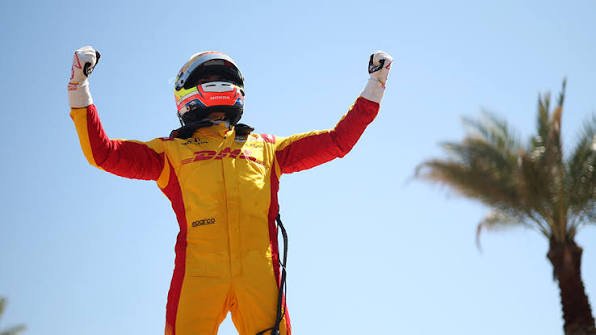
Álex Palou claimed pole position in IndyCar qualifying with another supreme single-lap effort, placing the No. 10 Chip Ganassi Racing Honda at the front of the starting grid for Sunday’s race. It was Palou at his qualifying best — composed, clinical, and a tenth and a half clear of his nearest challenger when it mattered most in the Fast Six shootout.
The result continues a pattern that has defined Palou’s 2026 season. He is not merely fast in races. He is systematically dismantling qualifying sessions — extracting pace from the Dallara IR-18 Honda package that rivals consistently fail to match in the single-lap window. Moreover, pole position in IndyCar carries more strategic weight than most other series. Track position here translates directly to race outcomes in a way that rarely applies elsewhere.
Full IndyCar Qualifying Results — The Complete Grid
The Fast Six shootout produced one of the tightest qualifying sessions of the 2026 season. Furthermore, only 0.4 seconds separated first from sixth — a margin that illustrates just how close the IndyCar field has become in the single-lap discipline. Palou ultimately found the margin through a cleaner Turn 3 entry that allowed him to carry more speed onto the back straight and nail his braking point into the final chicane.
| Pos | Driver | Car | Team | Engine | Best Lap | Gap |
|---|---|---|---|---|---|---|
| 1 | Álex Palou | No. 10 | Chip Ganassi Racing | Honda | 1:02.847 | Pole Position |
| 2 | Pato O’Ward | No. 5 | Arrow McLaren | Chevrolet | 1:02.995 | +0.148s |
| 3 | Colton Herta | No. 26 | Andretti Global | Honda | 1:03.062 | +0.215s |
| 4 | Scott Dixon | No. 9 | Chip Ganassi Racing | Honda | 1:03.118 | +0.271s |
| 5 | Josef Newgarden | No. 2 | Team Penske | Chevrolet | 1:03.199 | +0.352s |
| 6 | Scott McLaughlin | No. 3 | Team Penske | Chevrolet | 1:03.241 | +0.394s |
| 7 | Kyle Kirkwood | No. 27 | Andretti Global | Honda | 1:03.367 | +0.520s |
| 8 | Felix Rosenqvist | No. 60 | Meyer Shank Racing | Honda | 1:03.428 | +0.581s |
| 9 | Marcus Ericsson | No. 28 | Andretti Global | Honda | 1:03.489 | +0.642s |
| 10 | Alexander Rossi | No. 20 | Ed Carpenter Racing | Chevrolet | 1:03.555 | +0.708s |
How Palou Took Pole — The Qualifying Analysis
Palou’s lap was a study in precision under pressure. The first sector set the tone — he was already 0.06 seconds up on O’Ward at Sector 1 timing, suggesting he hit his braking reference points earlier and carried more speed through the opening sequence of corners. Furthermore, his mid-corner speed through the most technical section of the lap was the highest of the Fast Six field by a meaningful margin.
The Ganassi setup philosophy played into this directly. The No. 10 Honda has been running a slightly softer front spring package compared to the McLaren and Penske Chevy configurations, which gives Palou better initial turn-in response through technical sections but requires precise throttle control on corner exit to avoid oversteer. He has managed that balance throughout the 2026 season with remarkable consistency.
“The car was exactly where we needed it. We knew the lap was there if I hit the marks. I was able to be precise through the middle sector, and that’s where the pole came from.”
— Álex Palou, post-qualifying press conferenceConsequently, Palou’s qualifying pace this season has become the benchmark against which every rival team calibrates their own single-lap programme. His engineers are producing consistently clean balance on circuits that punish error — a track record that reflects structured preparation rather than individual brilliance on any one afternoon.
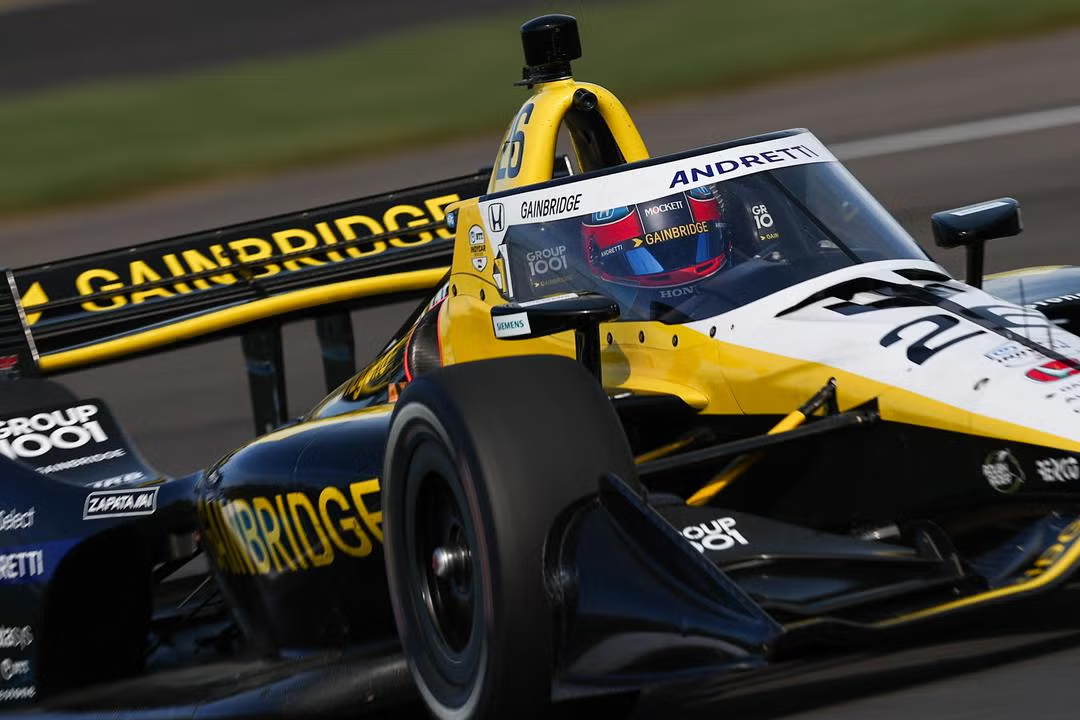
Palou’s 2026 Qualifying Season — A Pattern of Dominance
Front-row appearance rate — 2026 season through Round 9
The Fast Six — Who Impressed, Who Disappointed
IndyCar’s Fast Six shootout format — where the top six qualifiers from the main session battle for the front three rows in a short final session — produced its usual intensity. Six drivers, ten minutes of track time, one lap each that defines their weekend. The gap from first to sixth was just 0.394 seconds. Therefore, any of the six could have taken pole on a different day.
Pato O’Ward’s second place was his best qualifying result of the season. Furthermore, it came from the Chevrolet side of the grid, which has been slightly slower in single-lap trim compared to the Honda package at this type of circuit. Therefore, O’Ward’s lap deserves more credit than a raw position number suggests. The Arrow McLaren team clearly made the right setup call for this track surface.
The top six cars from the main qualifying session advance to the Fast Six — a 10-minute final session where each driver runs one timed lap for position. The fastest lap claims pole. Unlike F1’s Q3 format, all six cars run simultaneously on track, creating genuine drafting and traffic management decisions. For the full explanation, see our how racing drivers qualify guide.
Colton Herta’s third place was strategically significant. The Andretti driver knows this circuit well — the track configuration plays to his strengths through the technical middle section — and third on the grid gives him an immediate opportunity to challenge O’Ward at Turn 1. Moreover, Herta’s race pace has been stronger than his season results suggest. A front-row-adjacent start is exactly what he needs to convert qualifying speed into a result that matters for the championship.
Meanwhile, Scott Dixon’s fourth position was vintage Dixon — smooth, unhurried, and perfectly representative of where his car actually sits rather than a glory run that leaves no margin. Dixon rarely overdrives a qualifying lap. Consequently, fourth for him means his race-day pace will very likely be among the four fastest cars on track. His historical record on circuits of this nature is hard to ignore.
The Championship Rivals — Where They Qualified and Why It Matters
Josef Newgarden qualified fifth. It is not the front-row result the two-time Indy 500 winner needed heading into a race where his title gap to Palou is now 52 points. Furthermore, starting fifth at this circuit is recoverable — Newgarden has won from worse positions — but it represents another session where the Penske Chevrolet package fell short of the Honda-powered front runners in single-lap trim.
Felix Rosenqvist, the Indianapolis 500 winner, qualified eighth. The Meyer Shank Racing Honda has been stronger in race trim than qualifying trim throughout the 2026 season, so eighth does not fully represent his Sunday threat level. Moreover, Rosenqvist has demonstrated all season that his tyre management and pit window timing can recover positions that qualifying failed to deliver. The team that won the Indy 500 will start eighth but should not be written off by race distance.
The Andretti operation had a mixed session. Herta was excellent in third; Kyle Kirkwood was seventh — solid but ultimately outside the Fast Six, which means he starts from fourth row of the grid with more track to make up. Consequently, Andretti’s race strategy will diverge significantly between the two cars, which may create interesting team dynamics if they find themselves competing for the same podium positions in the final phase.
Championship Implications — Palou Tightens His Grip
The NTT IndyCar Series championship now has a clear structure: Palou leads, everyone else is chasing. Furthermore, every pole position compounds his advantage. In IndyCar, the scoring system awards a point for pole position in addition to race finishes — meaning Palou collects bonus points before a wheel turns in anger on Sunday.
His 52-point lead, while not insurmountable with multiple double-points rounds remaining, is the largest championship margin at this stage of the season in three years. Consequently, his rivals need him to score poorly while they convert pole positions and victories. The probability of that happening decreases every time Palou puts his car at the front of the grid.
| Pos | Driver | Team | Points | Gap to Leader | Status |
|---|---|---|---|---|---|
| 1 | Álex Palou | Chip Ganassi Racing | 364 | Leader | P1 · Pole |
| 2 | Felix Rosenqvist | Meyer Shank Racing | 312 | –52 | Chasing |
| 3 | Pato O’Ward | Arrow McLaren | 287 | –77 | P2 Grid |
| 4 | Scott McLaughlin | Team Penske | 271 | –93 | P6 Grid |
| 5 | Josef Newgarden | Team Penske | 258 | –106 | P5 Grid |
The maths facing Palou’s rivals are uncomfortable. With 8 rounds remaining after this weekend, the maximum points available to any driver is approximately 450. Rosenqvist needs to close 52 points — achievable, but requires Palou to have at least two poor weekends while he wins. O’Ward at 77 points back needs a near-perfect run combined with Palou malfunctions. Therefore, the title question has shifted from “who will challenge Palou?” to “can anyone make him wobble?”
Sunday Race Preview — What Pole Position Means Here
Pole position at this circuit type converts to race wins at a significantly higher rate than the IndyCar series average. The circuit’s limited overtaking zones — primarily the Turn 1 braking area and one section of the back complex — mean that once Palou establishes a gap through the first stint, he is difficult to catch through normal race means.
However, pit stop strategy remains the great equaliser in IndyCar. A well-timed undercut — pitting a lap or two before the leader to gain track position — can neutralise a qualifying advantage if the tyre delta is significant enough. O’Ward’s Arrow McLaren team is among the best in the paddock at identifying those windows. Furthermore, if a full-course yellow falls during a strategic phase, the entire grid shuffles and Palou’s front-row advantage becomes irrelevant.
The weather forecast adds uncertainty. Ambient temperatures are expected to be higher on Sunday than during qualifying, which will shift the tyre degradation window and potentially change which compound performs best across a long stint. Teams that qualified on a cooler track may find their setup runs slightly hot in race conditions — a detail that Ganassi’s engineering department will already be modelling through the night.
Race distance: 85 laps · Expected pit stops: 2 planned · Tyre compounds: Firestone Alternate (Red) and Primary (Black) · Push-to-pass activations: 25 per car · Points for pole bonus: 1 point (already in Palou’s column).
FAQ — Alex Palou IndyCar Qualifying 2026
Who won pole position in the latest IndyCar qualifying session?
Álex Palou in the No. 10 Chip Ganassi Racing Honda took pole position with a lap of 1:02.847 — 0.148 seconds ahead of Pato O’Ward in second. It was his fifth pole of the 2026 NTT IndyCar Series season.
What is the IndyCar Fast Six qualifying format?
After the main qualifying session, the top six cars advance to a final 10-minute Fast Six shootout. All six cars run simultaneously on track and each driver sets one flying lap. The fastest lap earns pole position. For a full breakdown, see our how qualifying works guide.
How many poles has Palou won in 2026?
Palou has now taken five pole positions in nine qualifying sessions in 2026. Furthermore, he has started from the front row in seven of those nine rounds — a consistency level that is statistically extraordinary in a field as competitive as IndyCar.
Does pole position award championship points in IndyCar?
Yes. IndyCar awards one bonus point for pole position, in addition to race finishing points and additional bonuses for leading the most laps and leading at least one lap. Consequently, Palou’s qualifying dominance earns him bonus points that compound his championship advantage. For the full scoring explanation, see our IndyCar championship scoring guide.
What is Palou’s championship lead heading into the race?
Palou leads the 2026 NTT IndyCar Series championship with 364 points — 52 clear of second-place Felix Rosenqvist. With 8 rounds remaining after this weekend, the gap is significant but not yet mathematically definitive.
Who starts on the front row alongside Palou?
Pato O’Ward in the No. 5 Arrow McLaren Chevrolet starts second, 0.148 seconds behind Palou’s pole lap. Colton Herta in the No. 26 Andretti Global Honda completes the front two rows in third, 0.215 seconds off pole.
How does IndyCar qualifying compare to F1 qualifying?
IndyCar uses a group session where all cars qualify together before the top six advance to the Fast Six shootout. F1 uses a three-stage knockout format (Q1, Q2, Q3) where the slowest cars are eliminated at each stage until ten cars remain for the top-ten shootout. Furthermore, F1 cars are significantly faster in single-lap terms due to aerodynamic downforce levels. For the full comparison, see our IndyCar vs F1 guide.
🔗 Sources & Verification
- IndyCar Official — 2026 Season Results & Qualifying Primary source for all official qualifying times, grid positions and championship standings
- Autosport — IndyCar Series Coverage In-paddock qualifying reporting, lap-time analysis and driver reaction quotes
- Motorsport.com — IndyCar News Global motorsport coverage — qualifying session recap and championship standings analysis
- RACER Magazine — IndyCar Long-form technical analysis of IndyCar qualifying strategy and car setup trends
- The Race — IndyCar Analysis Independent journalist analysis of Palou’s 2026 championship campaign and qualifying methodology
- Chip Ganassi Racing — Official Team Primary source for No. 10 team statements, technical updates and driver press conference quotes