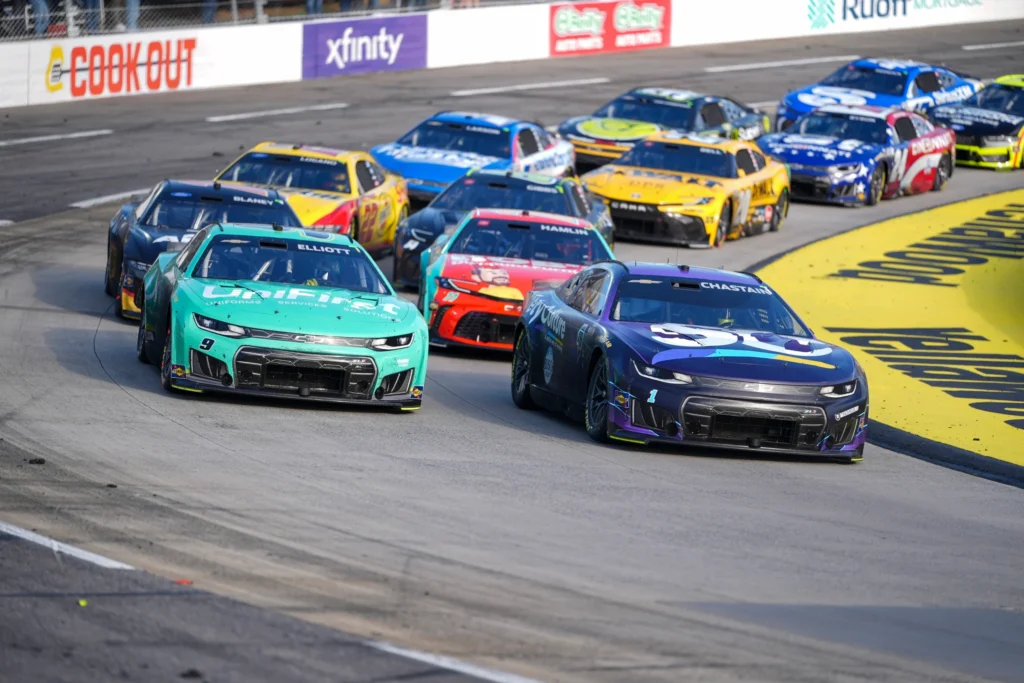
New Hampshire NASCAR 2026 Practice Results
The official Cup practice session is scheduled for Saturday morning. Until the cars run, there is no legitimate 2026 leaderboard—so this page separates confirmed weekend data from results that do not yet exist.
The 2026 NASCAR Cup Series practice results from New Hampshire Motor Speedway are not available yet. The reason is simple: today is Thursday, August 20, and the Cup cars are not scheduled to practice until Saturday, August 22. NASCAR’s official weekend schedule lists Cup practice beginning at 10:30 a.m. ET, followed by qualifying later that morning.
That means any article currently claiming a 2026 New Hampshire practice winner, fastest lap, full leaderboard or 10-lap average would be publishing a result before the session has taken place. This article does not do that. Instead, it gives the confirmed practice format, Goodyear tire information, the most relevant 2025 benchmark and a detailed guide to how the real Saturday data should be interpreted once it exists.
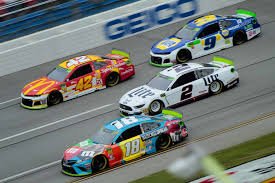
The practice session carries more weight than usual because NASCAR has moved to a longer single-session format at non-superspeedway tracks for the remainder of the season. Goodyear is supplying Cup teams with two practice sets, allowing crews to run meaningful long sequences and compare tire falloff rather than focusing only on a handful of short bursts.
Who was fastest in New Hampshire NASCAR practice 2026?
The NASCAR Cup Series practice session is scheduled for Saturday, August 22 at 10:30 a.m. ET. As of August 20, no official fastest driver, lap time, practice speed or long-run average exists for the 2026 New Hampshire weekend.
This distinction is important for both accuracy and search intent. Fans looking for “New Hampshire NASCAR 2026 Practice Results” naturally want the fastest lap, full leaderboard and long-run speed chart. Those numbers can only be reported after the session. Until then, the correct answer is that the session is still ahead.
NASCAR’s official New Hampshire weekend page confirms the Cup schedule. Practice is listed from 10:30 to 11:30 a.m. ET on Saturday, with qualifying scheduled immediately afterward in the late-morning window. NASCAR’s weekly TV guide lists Cup practice and qualifying coverage beginning at 10:30 a.m. ET on truTV.
The session is two days away. Publishing invented positions would turn a preview into false race reporting. The first legitimate 2026 leaderboard can only be produced after NASCAR records Saturday’s timed laps.
What time is NASCAR practice at New Hampshire in 2026?
NASCAR’s official event credential schedule lists Cup practice from 10:30 a.m. to 11:30 a.m. ET on Saturday, August 22. The practice window is followed by Cup qualifying, while the NASCAR Craftsman Truck Series race begins later in the day at 1:30 p.m. ET.
There is a small formatting distinction worth understanding. The event schedule shows a one-hour block for practice, while Goodyear’s August 18 technical release describes NASCAR’s revised non-superspeedway procedure as a single 50-minute practice session. Those statements are not necessarily contradictory. The official track schedule can reserve a one-hour operational window while the timed practice itself uses the 50-minute format.
| Date | Session | Time (ET) | Coverage | Status |
|---|---|---|---|---|
| Saturday, Aug. 22 | Cup practice | 10:30 a.m. | truTV practice/qualifying window | Upcoming |
| Saturday, Aug. 22 | Cup qualifying | After practice | truTV | Upcoming |
| Saturday, Aug. 22 | Truck race | 1:30 p.m. | FS1 | Upcoming |
| Sunday, Aug. 23 | Dollar Tree 301 | 3:00 p.m. | USA Network | Upcoming |
The practice timing is especially convenient for teams because it runs immediately before qualifying. Engineers can make decisions based on the same morning track conditions and then convert the setup from race-run configuration toward a single-lap qualifying package. The tradeoff is that a team with a mechanical issue late in practice has little recovery time before qualifying begins.
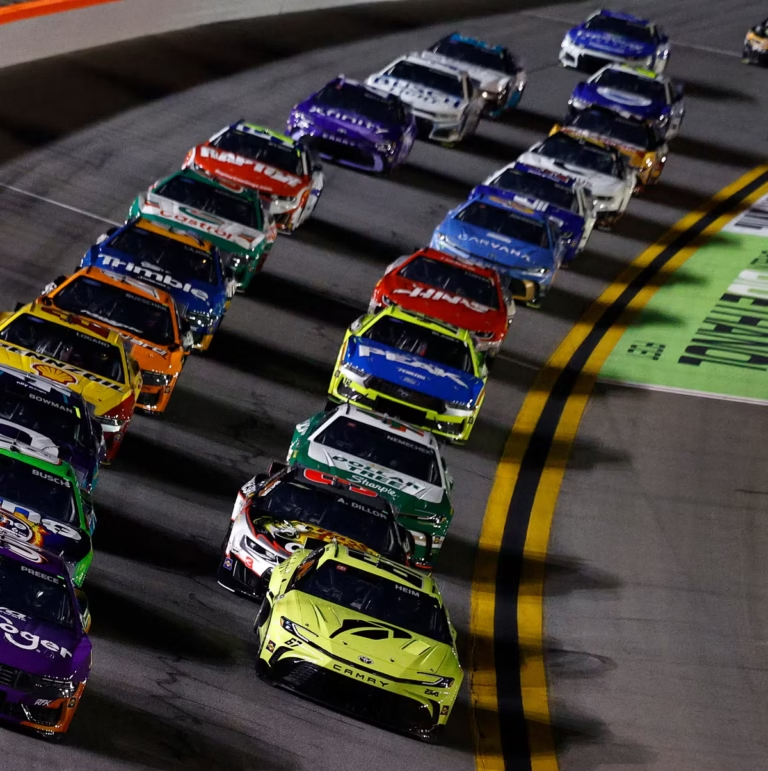
For viewers, the most useful period will probably be the second half of practice. Early runs often establish baseline balance on a relatively green track. Later runs are more likely to show which teams are comfortable enough to stay out for 10, 15, 20 or more consecutive laps. Those longer runs reveal far more about Sunday race pace than one short qualifying simulation.
How long is NASCAR Cup practice at New Hampshire in 2026?
Goodyear says NASCAR is using a single 50-minute practice session for the remainder of the season at non-superspeedway tracks, beginning with this New Hampshire weekend. The change matters because recent Cup practice formats have often provided limited running. Fifty minutes gives teams enough time to test several setup directions, make a garage adjustment and return for another meaningful run.
Goodyear is supporting that format with an extra practice set. Each Cup team receives two sets specifically for practice instead of one. The additional rubber allows teams to use one set for initial balance work and a second for a longer run or a more representative race simulation. It also makes the practice leaderboard more informative because more teams should be able to record enough consecutive laps for useful average-speed comparisons.
What a Cup team typically wants from the session
The opening laps answer basic questions. Does the car turn into Turns 1 and 3? Is the rear secure under heavy braking? Can the driver return to throttle without snapping loose? Is the car stable on the flatter lower groove? Those issues matter immediately at New Hampshire because the circuit offers only two to seven degrees of banking through the corners.
Once the baseline is acceptable, the team wants to understand degradation. A five-lap run can make almost any competitive car look good. A 20-lap run exposes whether the front tires begin sliding, whether the rear loses drive and whether brake balance changes as grip falls away. The crew chief is not simply looking for the fastest average. He is studying the shape of the falloff curve.
A driver who starts at 126.5 mph average pace and falls slowly may be more dangerous on Sunday than a driver who opens at 127.2 mph but loses speed quickly. The first car has a stable long-run platform. The second may be excellent for qualifying but vulnerable once the race settles into a green-flag run.

Why qualifying simulations can distort the leaderboard
A late-session qualifying simulation can place a driver at the top of the one-lap chart even if that car struggled over a long run. Teams may reduce fuel, cool the car and send the driver out on a fresh set for one aggressive lap. That number is useful for predicting qualifying. It is much less reliable for predicting the Dollar Tree 301.
The reverse can also happen. A team focused almost entirely on race setup may finish 12th or 15th on the single-lap leaderboard but lead the 20-lap averages. That is exactly why a proper practice-results article should separate best lap, 10-lap average and longer averages rather than treating one table as the entire story.
The 2026 tire setup will make practice especially important
Goodyear confirmed on August 18 that Cup teams will use the same left- and right-side tire compounds that raced at Richmond the previous weekend. The short-track combination first appeared together in the 2025 Martinsville fall race and was developed to provide increased grip along with greater lap-time falloff across a green-flag run.
New Hampshire is just over one mile long, but Goodyear categorizes it with the short-track package because its low banking and mechanical-grip demands are closer to Richmond and Martinsville than a conventional intermediate oval. The 1.058-mile track requires heavy braking and careful throttle application. More falloff should make the difference between a one-lap hero run and a genuinely strong race car easier to see.
Each Cup team receives 10 total dry-weather sets for the weekend: seven new sets for the race, one qualifying set that transfers to the race and two sets for practice. Four wet-weather sets are also available if needed. The extra practice set exists specifically because the single practice session is longer under the revised format.
Watch the gap between a driver’s best lap and 20-lap average. If that gap is small relative to rivals, the car is preserving speed. If it is large, the setup may be quick initially but hard on tires.
Tire falloff also affects race strategy. If Saturday shows a major difference between fresh and 25-lap-old tires, crew chiefs will be more willing to surrender track position for four tires during Sunday cautions. If the falloff is modest, staying out or taking two tires becomes more attractive because New Hampshire can be difficult to pass on.
Practice therefore does double duty. It ranks the cars, but it also defines the strategic value of the tire. That is one reason the 2026 session deserves careful analysis rather than a simple “fastest driver” headline.
2025 New Hampshire practice results show why long-run speed matters
The most useful historical benchmark comes from the 2025 Cup weekend. William Byron topped Saturday practice with a best speed of 127.834 mph. AJ Allmendinger ranked second at 127.645 mph, Ryan Preece third at 127.483 mph, Riley Herbst fourth at 127.402 mph and Cole Custer fifth at 127.380 mph.
Ryan Blaney was only sixth on the best-lap chart at 127.274 mph. If a viewer looked only at that leaderboard, the No. 12 Ford would have appeared quick but not dominant. The long-run data told a completely different story. NASCAR reported that Blaney had the best 10-, 15-, 20-, 25- and 30-lap averages.
Sunday validated the long-run chart. Blaney won the 301-lap race, led 116 laps and held Josh Berry off by 0.937 seconds at the finish. Teammate Joey Logano later said Blaney was the fastest car in practice and that the No. 22’s realistic chance to beat him had been through pit-road execution and details.
| 2025 practice rank | Driver | Best speed | Long-run note | Race implication |
|---|---|---|---|---|
| 1 | William Byron | 127.834 mph | Fastest single lap | Finished third |
| 2 | AJ Allmendinger | 127.645 mph | Strong short-run speed | Single lap did not define winner |
| 3 | Ryan Preece | 127.483 mph | Strong best lap | Example of short-run pace |
| 4 | Riley Herbst | 127.402 mph | Top-five one-lap speed | Not the key race signal |
| 5 | Cole Custer | 127.380 mph | Top-five one-lap speed | Not the key race signal |
| 6 | Ryan Blaney | 127.274 mph | Best 10/15/20/25/30-lap averages | Won the race |
That pattern is precisely what fans should remember for 2026. The fastest lap will make the headline because it is easy to rank. The long-run averages are more likely to expose the strongest race car. NASCAR’s own Racing Insights model changed its projected winner from Christopher Bell to Blaney after 2025 practice and qualifying were factored in. Blaney then won.
The fastest lap tells you who found the most speed for one moment. The long-run chart tells you who can keep finding speed after the tires begin to fade.
New Hampshire NASCAR 2026 practice leaderboard
Because Saturday practice has not happened, there is no truthful 2026 table to populate with driver positions or speeds yet. The table below therefore shows the categories that matter without inventing numbers.
| Practice metric | 2026 status on Aug. 20 | Why it matters |
|---|---|---|
| Fastest single lap | Pending Saturday session | Best indicator of raw short-run speed |
| Fastest speed | Pending Saturday session | Direct leaderboard headline |
| 10-lap average | Pending Saturday session | First useful race-pace benchmark |
| 15-lap average | Pending Saturday session | Shows early degradation profile |
| 20-lap average | Pending Saturday session | Strong indicator of sustainable pace |
| 25/30-lap averages | Pending Saturday session | Most valuable if enough drivers complete long runs |
A responsible results article should not convert a projected winner, betting favorite or previous-year number into a current practice result. Those are separate categories of information. The only official 2026 data currently available concern the schedule, tire package, session structure and race weekend.
What to watch in New Hampshire NASCAR practice
20-lap average
The strongest early race indicator. A car that stays near the top after 20 consecutive laps is managing tire falloff and mechanical balance.
Brake stability
New Hampshire punishes a car that becomes unstable under deceleration. Drivers need repeatable braking points into both ends of the track.
Center rotation
The front must turn through the flat center without forcing excessive steering input. Poor rotation usually becomes worse as the front tires age.
Rear grip on exit
A loose rear end delays throttle application and hurts speed all the way down the straight. Long runs expose this weakness quickly.
Christopher Bell
Bell deserves immediate attention because New Hampshire has been one of his best Cup tracks. He entered this weekend with two wins and four top-10 finishes in six Loudon starts. If the No. 20 is also near the top of the 20-lap practice chart, history and current speed will point in the same direction.
Ryan Blaney
Blaney is the most obvious long-run benchmark because of 2025. He showed exactly how misleading the best-lap leaderboard can be: sixth in single-lap speed, first across every listed long average, then first on Sunday. If the No. 12 again appears stronger after 15 or 20 laps than on Lap 1, that should be treated as a positive rather than a weakness.
Joey Logano
Logano won Richmond on August 15 and returns to a circuit where he started from pole and led 147 laps in 2025. Practice will show whether that flat-track momentum transfers into Loudon. His short-run position will matter because qualifying follows immediately, but his longer averages will tell us whether the No. 22 can maintain the pace Blaney had last year.
Denny Hamlin
Hamlin owns three Cup victories at New Hampshire and entered the weekend leading the championship standings. He is one of the best reference drivers for judging Toyota race pace. If Hamlin and Bell both run well over long sequences, that would suggest Joe Gibbs Racing has a strong baseline rather than one isolated fast car.
William Byron
Byron was fastest in 2025 practice and finished third in the race. His presence at the top of the single-lap chart therefore was not meaningless; it simply was not as predictive as Blaney’s long-run strength. Byron is a useful example of why both data sets should be read together.

How to interpret NASCAR practice results at New Hampshire
Practice results are not a prediction table by themselves. Several variables affect a driver’s position. Tire age, fuel load, traffic, setup direction and the moment a run was completed can all move a car several positions. The best analysis looks for repeated evidence rather than one impressive number.
Best lap versus average speed
Best lap answers one question: what was the quickest officially timed lap a driver completed? Average charts answer a different question: how fast was that car over a defined sequence of consecutive laps? At New Hampshire, the second question often matters more for the race because Sunday can feature long green-flag stretches.
Not every driver completes the same long run
A 20-lap average table only ranks drivers who completed at least 20 consecutive timed laps under the required conditions. A driver missing from that list is not automatically slow. The team may have chosen short runs, made a garage adjustment or had the sequence interrupted. This is why readers should check both the average ranking and the number of eligible cars.
Track evolution matters
New Hampshire can gain rubber as the session progresses. A late short run may benefit from better track conditions than an early run. Conversely, rising temperature can reduce grip. Comparing raw lap times without noting when they happened can therefore produce a false conclusion.
Traffic changes the picture
A car running alone has clean air and can choose the ideal braking point. A car following another vehicle may lose front grip or have to alter its line. Traffic can slow an average, but it also provides valuable information because Sunday will rarely give every contender 20 uninterrupted laps in clean air.
Qualifying speed is a separate priority
Track position is extremely valuable at Loudon, so a team cannot ignore qualifying setup. The fastest race car starting 25th may spend the first stage fighting traffic. Teams therefore balance the need to learn long-run behavior with the need to prepare a sharp short-run package for qualifying immediately after practice.
How practice results can change the Dollar Tree 301 outlook
Practice can move a driver from secondary contender to favorite because New Hampshire is a setup-sensitive circuit. Historical track record helps identify drivers who understand the venue, but the car still has to work with the current tire and current conditions. Saturday is the first time teams will measure the Richmond-derived 2026 short-track compound on this exact weekend surface.
The most important change would be a repeat of 2025: one driver dominates the longer averages even without topping the best-lap chart. That signal should carry more weight than a flashy one-lap speed. Blaney demonstrated the value of that pattern last year, and NASCAR’s own predictive model adjusted toward him after practice before he won the race.
A second key signal is manufacturer depth. If three Fords occupy the top five in 20-lap average, that suggests a platform advantage. If Bell, Hamlin and another Toyota are clustered near the front, Joe Gibbs Racing may have found the correct setup window. If Byron, Larson and Elliott are consistently strong, Hendrick Motorsports becomes more relevant even if another driver owns the single fastest lap.
The third signal is the size of the tire falloff. A large falloff tells crew chiefs that four fresh tires may be worth giving up track position on Sunday. A smaller falloff strengthens stay-out and two-tire strategies. Practice results therefore influence not just winner predictions but expected race strategy.
If one driver ranks near the top in both single-lap speed and 20-plus-lap averages, that is the strongest all-around practice profile: enough short-run speed to qualify well and enough long-run balance to race from the front.
New Hampshire NASCAR 2026 practice FAQ
Who was fastest in NASCAR New Hampshire practice 2026?
No official 2026 fastest driver exists yet. As of Thursday, August 20, Cup practice is still scheduled for Saturday, August 22 beginning at 10:30 a.m. ET. The leaderboard can only be reported after that session takes place.
What time is NASCAR Cup practice at New Hampshire in 2026?
The official Saturday schedule lists Cup practice beginning at 10:30 a.m. ET at New Hampshire Motor Speedway. Practice and qualifying coverage is scheduled to begin at 10:30 a.m. ET on truTV.
How long is NASCAR practice at New Hampshire in 2026?
The event timetable reserves the 10:30–11:30 a.m. ET window. Goodyear describes the revised NASCAR procedure as a single 50-minute practice session at non-superspeedway tracks. Teams receive two sets of practice tires.
Why do long-run averages matter at New Hampshire?
Long averages show how well a car maintains speed as the tires wear. In 2025, William Byron was fastest on one lap, but Ryan Blaney led NASCAR’s 10-, 15-, 20-, 25- and 30-lap averages and then won the race. That makes sustained practice pace especially important at Loudon.
Conclusion: the real New Hampshire practice results are still ahead
The most important fact about the New Hampshire NASCAR 2026 Practice Results on August 20 is that there are no results yet. Cup practice will not begin until Saturday morning. No driver has officially topped the session, no 2026 fastest lap has been recorded, and no legitimate long-run leaderboard can be published before the cars reach the track.
What is already confirmed gives us a strong framework for interpreting the session. Practice begins at 10:30 a.m. ET. NASCAR is using a longer single-session format at non-superspeedway venues, and Goodyear is supplying two practice sets. The tire combination is the same short-track package used at Richmond and is designed to create stronger initial grip with greater lap-time falloff.
That makes the long-run charts the central data point. The 2025 weekend demonstrated why. Byron topped single-lap speed, while Blaney led every major consecutive-lap average from 10 through 30 laps and then won the race. For 2026, the best practice profile will be the driver who combines competitive one-lap pace with minimal falloff over 20 or more laps.
Until Saturday, any named 2026 practice winner would be speculation presented as a result. The accurate position today is simple: official practice is upcoming, and the real leaderboard will be determined on track at New Hampshire Motor Speedway.
Sources
- NASCAR — Official 2026 New Hampshire Cup weekend schedule
- NASCAR — Goodyear tire setup and revised practice allocation
- NASCAR — 2025 New Hampshire practice and qualifying report
- NASCAR — 2025 New Hampshire race recap
Current-status information is accurate through August 20, 2026. The 2026 Cup practice session is scheduled for August 22, so official practice-result data does not yet exist at publication time.