NHRA Northwest Nationals 2026 Pro Stock Results
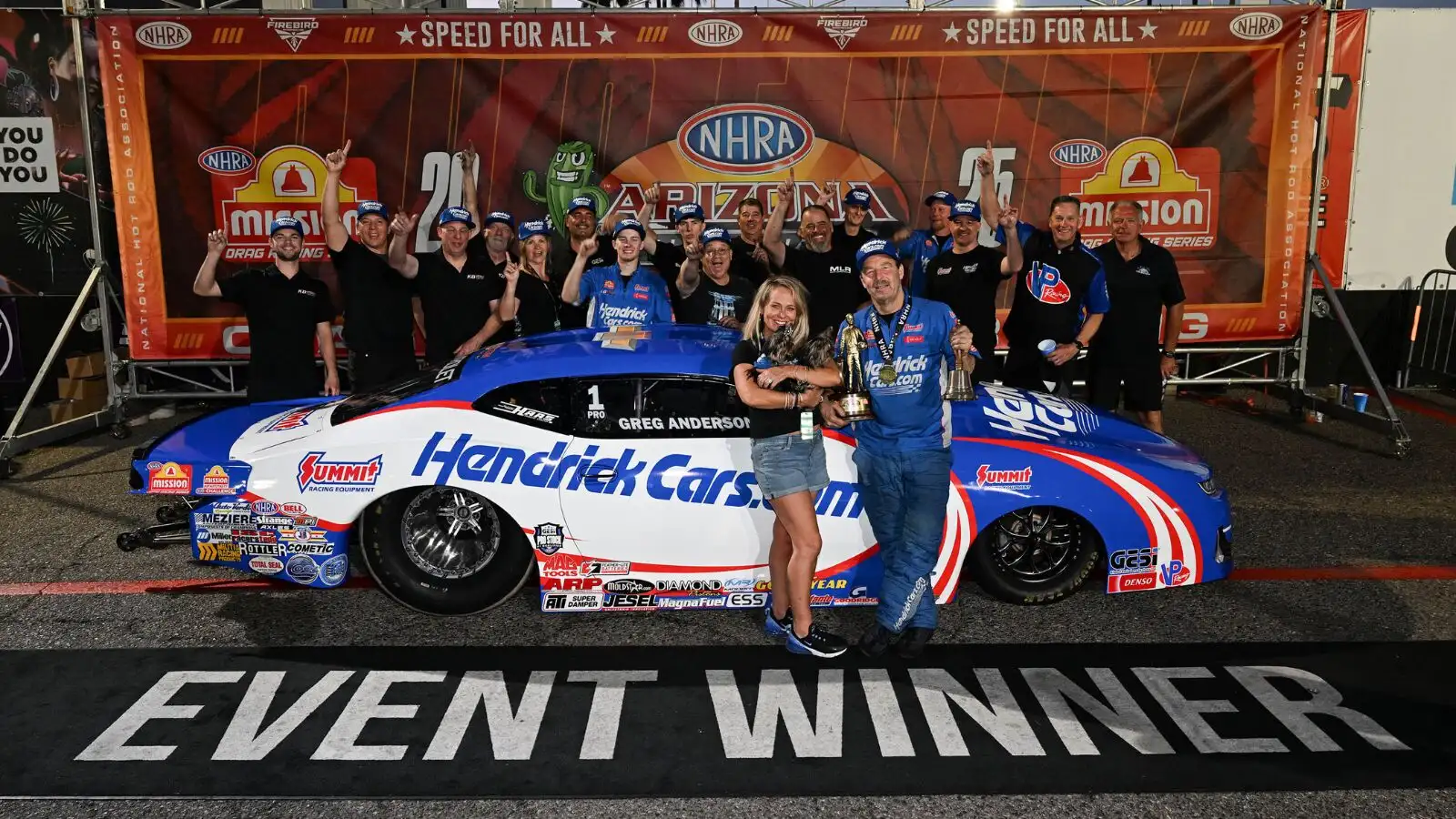
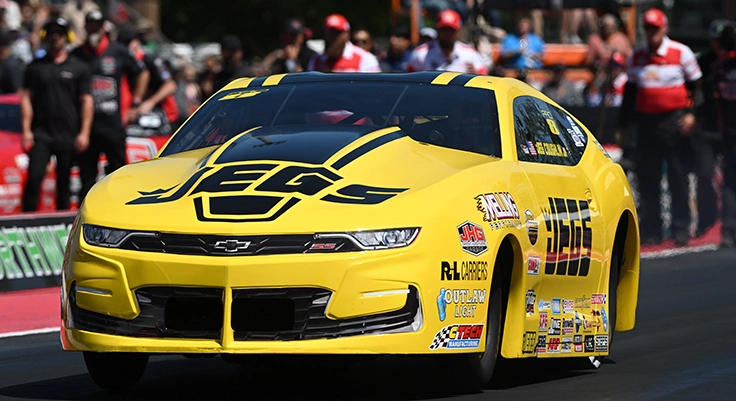
Greg Anderson ended a two-race slump, won his 115th Pro Stock event and moved eight points ahead of Dallas Glenn after Greg Stanfield red-lit in the final.
The NHRA Northwest Nationals 2026 Pro Stock results produced a major turnaround for Greg Anderson. After consecutive first-round losses, the six-time champion won at Pacific Raceways and took the championship lead.
Anderson ran 6.508 seconds at 211.00 mph in the final. Greg Stanfield left .008 second too early, so the all-Greg championship round ended with an immediate foul.
The HendrickCars.com Camaro driver defeated Stephen Bell, Matt Latino and Erica Enders before the final. Meanwhile, Stanfield beat his son Aaron, Cody Anderson and No. 1 qualifier Dallas Glenn.
Greg Anderson won Pro Stock with a 6.508 at 211.00 mph. Greg Stanfield red-lit by .008 second in the final.
Seattle Pro Stock Results at a Glance
| Category | Driver / result | ET / reaction | Speed / note |
|---|---|---|---|
| Winner | Greg Anderson | 6.508 | 211.00 mph |
| Runner-up | Greg Stanfield | Red light | -.008 reaction |
| No. 1 qualifier | Dallas Glenn | 6.470 | 211.89 mph |
| Quickest elimination run | Dallas Glenn | 6.468 | Round 1 |
| Best reaction | Erica Enders | .000 | Quarterfinal |
| Mission Challenge winner | Greg Stanfield | 6.497 | 211.89 mph |
The 37th annual Muckleshoot Casino Resort NHRA Northwest Nationals ran July 24–26 at Pacific Raceways in Kent, Washington. The event was race 12 of 20 in the 2026 Mission Foods NHRA Drag Racing Series.
Glenn qualified first with a 6.470 at 211.89 mph. Anderson matched the elapsed time but ranked second because his speed was lower.
Glenn also made the quickest elimination run. His 6.468 in the first round defeated Mason McGaha and briefly made him the clear Sunday favorite.
Greg Anderson
Won four rounds and returned to the Pro Stock points lead.
Greg Stanfield
Reached a second straight final after winning Sonoma.
Dallas Glenn
Led qualifying and race-day elapsed time before a semifinal loss.
Greg Anderson vs. Greg Stanfield: Final-Round Result
| Driver | Reaction | ET | MPH | Result |
|---|---|---|---|---|
| Greg Anderson | Green light | 6.508 | 211.00 | Winner |
| Greg Stanfield | -.008 | Foul | — | Runner-up |
What Stanfield’s -.008 reaction meant
A negative reaction time means the car moved before the green light. Stanfield crossed the starting-line limit by eight thousandths of a second.
NHRA treats that movement as an immediate foul. Therefore, Anderson became the winner before either car reached the first incremental timer.
Anderson still made a representative run
Anderson completed the quarter-mile in 6.508 seconds at 211.00 mph. The time matched the low-6.50 pace he showed in the quarterfinal.
The run was important because it confirmed the car remained competitive through the entire day. Anderson did not receive an easy path to the final.
The final ended Stanfield’s winning streak
Stanfield entered Seattle after winning Sonoma. He also won Saturday’s Mission Challenge and reached the final with nine consecutive win lights across those events and the bonus race.
The red light prevented a second straight national-event victory. However, the runner-up still strengthened his third-place points position.
The victory restored Anderson’s momentum
Anderson had lost in the first round at Norwalk and Sonoma. That stretch was unusual for a driver who had reached finals throughout the opening half of 2026.
Seattle ended the slump with four win lights. It also moved him ahead of teammate Glenn at the most important point of the regular season.
Greg Anderson defeated Greg Stanfield with a 6.508 at 211.00 mph. Stanfield’s -.008 red light decided the final at the starting line.
Pro Stock Round 1 Results
| Winner | Opponent | RT | ET | MPH | Race note |
|---|---|---|---|---|---|
| Troy Coughlin Jr. | Kenny Delco | .021 | 6.520 | 210.87 | Holeshot win over Delco’s career-best 6.500 |
| Matt Latino | Chris Vang | .030 | 6.487 | 210.08 | Career-best pass; Vang shook the tires |
| Erica Enders | Eric Latino | .028 | 6.503 | 210.28 | Holeshot with identical 6.503 elapsed times |
| Cody Anderson | Shane Tucker | .053 | 6.500 | 210.24 | Tucker suffered severe tire shake |
| Jeg Coughlin Jr. | Matt Hartford | .016 | 6.500 | 210.28 | Holeshot over Hartford’s quicker 6.478 |
| Dallas Glenn | Mason McGaha | .032 | 6.468 | 210.93 | Quickest pass of the opening round |
| Greg Anderson | Stephen Bell | .045 | 6.472 | 210.05 | Anderson’s first round win in three races |
| Greg Stanfield | Aaron Stanfield | .045 | 6.486 | 211.73 | Caught his son after half-track; won by three feet |
Jeg Coughlin Jr. beat a quicker Matt Hartford
Hartford ran 6.478, while Coughlin recorded a slower 6.500. However, Coughlin reacted in .016 second against Hartford’s .064.
That .048-second starting advantage was larger than Hartford’s .022-second elapsed-time advantage. Coughlin won by .0268 second, approximately eight feet.
The result was Coughlin’s second consecutive holeshot win over Hartford. It also removed the driver who entered Seattle third in the standings.
Troy Coughlin Jr. produced another holeshot
Delco made the quickest pass of his career at 6.500. Coughlin’s 6.520 was two hundredths slower.
Still, Coughlin left in .021 second, compared with Delco’s .077. The starting-line advantage created an 11-foot win.
Enders won with identical elapsed times
Enders and Eric Latino both ran 6.503. Enders’ .028 reaction defeated Latino’s .040 and produced a .0124-second margin.
Because the elapsed times were identical, every thousandth came from the Tree. It was Enders’ third holeshot victory of the season.
Glenn reset low ET
Glenn ran 6.468 at 210.93 mph to defeat McGaha. The No. 1 qualifier also gained .017 second at the starting line.
McGaha suffered severe tire shake and pushed in the clutch. Glenn advanced with lane choice over Troy Coughlin Jr.
Greg Anderson earned a needed win light
Bell reacted two thousandths quicker than Anderson. Anderson’s Camaro erased the deficit by roughly 100 feet and won with a 6.472.
The victory ended Anderson’s short first-round drought. It also gave him lane choice against Matt Latino.
Greg Stanfield defeated Aaron Stanfield again
Aaron reacted first, .026 to .045. His father carried the stronger run and passed him after half-track.
Greg’s 6.486 at 211.73 mph defeated Aaron’s 6.513 by .0088 second, approximately three feet. It was the second consecutive weekend the two met in round one.
Matt Latino and Cody Anderson advanced cleanly
Matt Latino ran a career-best 6.487 after Vang shook the tires. Cody Anderson produced a 6.500 while Tucker’s car shook immediately and stopped on the course.
Pro Stock Quarterfinal Results
| Winner | Opponent | RT | ET | MPH | Round detail |
|---|---|---|---|---|---|
| Erica Enders | Jeg Coughlin Jr. | .000 | 11.001 | 83.56 | Jeg red-lit -.052; both cars shook hard |
| Greg Stanfield | Cody Anderson | .009 | 6.497 | 210.60 | Stanfield led throughout and won by nine feet |
| Greg Anderson | Matt Latino | .044 | 6.507 | 209.98 | Latino shook the tires immediately |
| Dallas Glenn | Troy Coughlin Jr. | .040 | 6.485 | 211.36 | Troy red-lit -.023; Glenn was quickest of the round |
Enders recorded a perfect reaction time
Coughlin left .052 second before the green light. Enders reacted with a perfect .000 as both cars went into severe tire shake.
Enders coasted to the finish because the foul had already decided the race. The elapsed time did not represent the car’s normal performance.
Stanfield’s .009 light created control
Stanfield reacted in .009 second against Cody Anderson’s .028. His 6.497 was also quicker than the rookie’s 6.505.
The complete advantage produced a .0277-second win, approximately nine feet. Stanfield advanced with another strong total package.
Anderson advanced after Latino shook
Anderson left first and remained straight down the groove. His 6.507 at 209.98 mph was enough to reach the semifinal.
Latino experienced severe tire shake at the hit and shut off. Consequently, Anderson could manage the run without chasing a qualifying-level number.
Glenn was quickest again
Troy Coughlin Jr. red-lit by .023 second. Glenn still completed a 6.485 at 211.36 mph, the best quarterfinal pass.
The number gave Glenn lane choice over Stanfield. At that moment, the defending event winner still appeared to have the strongest car.
The final four were Anderson, Enders, Glenn and Stanfield. Three were world champions, while Stanfield carried the sport’s hottest round-win streak.
Pro Stock Semifinal Results
| Winner | Opponent | Winner ET | Opponent ET | Race note |
|---|---|---|---|---|
| Greg Anderson | Erica Enders | 6.59 | — | Enders’ Camaro hooked left after launch |
| Greg Stanfield | Dallas Glenn | 6.50 | 6.51 | Stanfield extended his round-win streak and stopped the No. 1 qualifier |
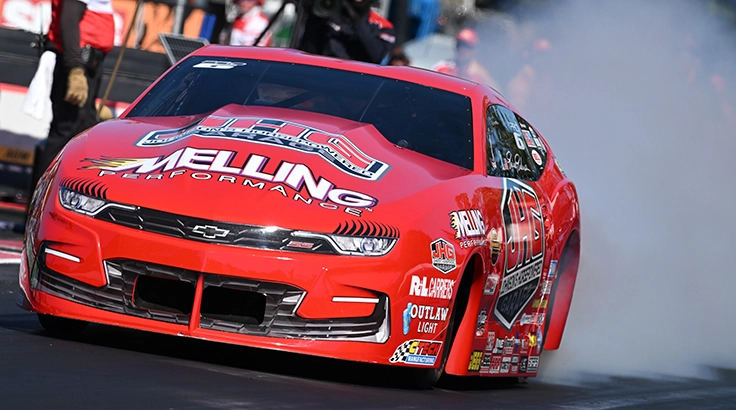
Anderson broke the tie in his rivalry with Enders
The longtime rivals entered their 63rd meeting tied at 31 wins each. Enders’ red Camaro hooked sharply left not far from the starting line.
She gathered the car back, but Anderson was already clear. His 6.59 advanced him to the 197th final of his career.
The win gave Anderson a 32-31 advantage in the head-to-head series. More importantly, it guaranteed a chance to pass Glenn in points.
Stanfield stopped Glenn with a 6.50
Stanfield ran 6.50 to defeat Glenn’s 6.51. The result ended Glenn’s attempt to repeat as Seattle winner.
It also created the all-Greg final. Stanfield entered the championship round with seven straight Sunday round wins and nine straight counting Saturday’s Mission Challenge.
Glenn’s loss opened the championship door
Glenn had the quickest car in round one and the quarterfinal. However, Pro Stock championships reward complete race weekends rather than isolated low elapsed times.
Once Glenn lost, Anderson could take first place by winning the final. The red light completed that championship swing.
Glenn owned Seattle’s quickest numbers. Anderson owned the trophy and the points lead because he was still racing when the final pair staged.
Greg Anderson’s Four-Round Winning Path
| Round | Opponent | RT | ET | MPH | Margin | Key detail |
|---|---|---|---|---|---|---|
| Round 1 | Stephen Bell | .045 | 6.472 | 210.05 | .0402 sec. | Made up Bell’s .002 starting advantage by 100 feet |
| Quarterfinal | Matt Latino | .044 | 6.507 | 209.98 | 0.6035 sec. | Advanced after Latino’s immediate tire shake |
| Semifinal | Erica Enders | — | 6.59 | — | — | Reached career final No. 197 |
| Final | Greg Stanfield | Green | 6.508 | 211.00 | Red light | Stanfield fouled by .008 second |
The opening round removed the pressure
Back-to-back first-round losses had interrupted Anderson’s otherwise strong season. Bell’s slight reaction advantage created another early test.
Anderson’s Camaro quickly made up the difference. The win light restored normal rhythm before the most important rounds.
The team managed changing conditions
Sunday began in cool air with an 83-degree track. Later sunlight changed the available grip and increased track temperature.
Anderson’s numbers moved from 6.472 to 6.507 and then 6.59. The slower times did not signal a disappearing car; they reflected conditions and opponent management.
Win No. 115 extended an unmatched record
Anderson is Pro Stock’s career victory leader. Seattle added win No. 115 and his third trophy of the 2026 season.
It was also his fourth victory at Pacific Raceways. He had entered the weekend tied among the event’s most successful active Pro Stock drivers.
The championship lead was the largest reward
Anderson arrived behind Glenn in the regular-season standings. Winning while Glenn lost in the semifinal reversed the order.
The new margin was only eight points. Still, leading provides control over the remaining qualifying bonus points and elimination-round opportunities.
KB Titan left Seattle first and second
Anderson and Glenn race under the KB Titan Racing structure. Their internal performance rivalry has pushed both teams throughout the year.
Seattle did not create a comfortable lead for either driver. Instead, it reset the contest with two regular-season events remaining.
Pro Stock Qualifying Recap
| Pos. | Driver | ET | MPH | Qualifying note |
|---|---|---|---|---|
| 1 | Dallas Glenn | 6.470 | 211.89 | Won the tie on speed |
| 2 | Greg Anderson | 6.470 | 211.06 | Second on the speed tiebreaker |
| 3 | Matt Hartford | 6.477 | 211.73 | Top non-KB Titan qualifier |
| 4 | Cody Anderson | 6.478 | — | Rookie started in the top half |
| 5 | Greg Stanfield | 6.487 | — | Sonoma winner carried momentum |
| 6 | Eric Latino | 6.497 | — | Qualified in the quick half |
| 7 | Matt Latino | 6.500 | — | Reached the quarterfinals |
| 8 | Troy Coughlin Jr. | 6.503 | — | Won round one on a holeshot |
Glenn made the quickest run in all four qualifying sessions. His best was a 6.470 at 211.89 mph during Saturday’s improved conditions.
Anderson matched the 6.470 in the final session. NHRA broke the tie through speed, placing Glenn first and Anderson second.
Hartford qualified third with a 6.477 at 211.73 mph. Cody Anderson completed the first four with a 6.478.
Why speed settled the tie
Qualifying position first uses elapsed time. When two drivers record identical ETs to the thousandth, speed becomes the tiebreaker.
Glenn’s 211.89 was faster than Anderson’s 211.06. Therefore, the defending event winner earned the $2,000 low-qualifier bonus and the No. 1 ladder position.
The Seattle ladder was unusually deep
Seventeen Pro Stock cars attempted to qualify for 16 positions. The field included championship teams, independent entries and several drivers capable of strong reaction times.
That depth became obvious on Sunday. Hartford and Delco both lost despite making some of the round’s quickest individual runs.
Dallas Glenn qualified No. 1 with a 6.470 at 211.89 mph. Anderson ran the same ET but ranked second on speed.
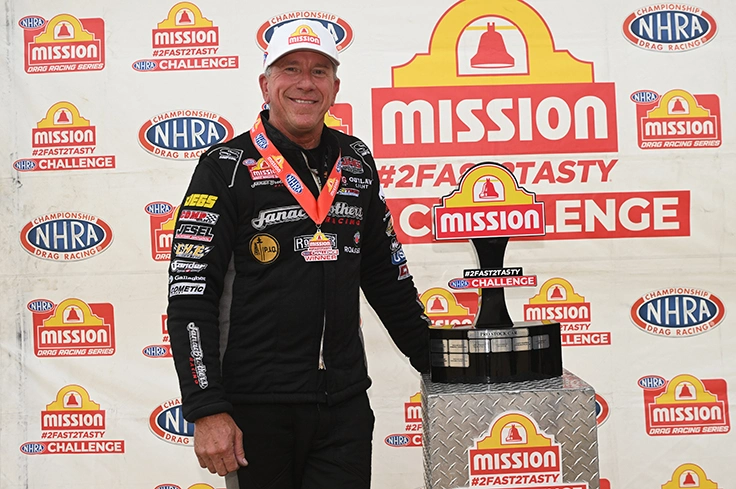
Greg Stanfield Won the Mission Challenge
Four Elite Motorsports entries filled the Pro Stock Mission Challenge semifinals. Stanfield advanced through the rematch structure and met Enders in the final.
He ran 6.497 at 211.89 mph to defeat Enders for the second straight event. The victory added three championship bonus points.
Stanfield described the Saturday race as useful preparation for Sunday. The added pressure forced drivers to attack the Tree rather than treat the run as normal qualifying.
The result extended Stanfield’s Western trip. He won Sonoma, won the Seattle Mission Challenge and then reached Sunday’s final.
Why Reaction Time Defined Seattle Pro Stock
A holeshot measures the complete package
A drag-race result combines reaction time and elapsed time. The quicker car can lose when the other driver leaves early enough.
Coughlin’s victory over Hartford demonstrated that formula. Hartford was .022 second quicker on the track, but Coughlin gained .048 at the start.
Enders’ .000 was legally perfect
A .000 reaction does not mean the driver moved before the light. It means the tire broke the starting beam at the exact legal instant measured by the timing system.
Enders produced that number after Coughlin had already fouled. Although tire shake ruined the run, the reaction remained a notable driver performance.
Negative reactions ended three key races
Jeg Coughlin Jr. fouled by .052 in the quarterfinal. Troy Coughlin Jr. left .023 early against Glenn.
Stanfield’s -.008 came in the final. Each foul produced an automatic loss regardless of what happened afterward.
Small numbers carry large consequences
Eight thousandths is shorter than a normal blink. Yet that difference separated Stanfield from a second consecutive national-event victory.
Pro Stock cars are close enough in performance that drivers must attack the Tree. The margin between an elite light and a foul can become extremely narrow.
Pro Stock Standings after Seattle
| Pos. | Driver | Points | Gap |
|---|---|---|---|
| 1 | Greg Anderson | 1020 | Leader |
| 2 | Dallas Glenn | 1012 | -8 |
| 3 | Greg Stanfield | 862 | -158 |
| 4 | Matt Hartford | 804 | -216 |
| 5 | Erica Enders | 695 | -325 |
| 6 | Matt Latino | 681 | -339 |
| 7 | Aaron Stanfield | 681 | -339 |
| 8 | Jeg Coughlin Jr. | 598 | -422 |
| 9 | Troy Coughlin Jr. | 543 | -477 |
| 10 | Eric Latino | 498 | -522 |
Anderson took the lead by eight points
Anderson left Seattle with 1,020 points. Glenn followed with 1,012.
The gap is smaller than one normal elimination round. Consequently, qualifying bonus points can change the order before Sunday racing begins.
Stanfield strengthened third place
Stanfield’s Mission victory and runner-up result lifted him to 862 points. He finished Seattle 58 points ahead of Hartford.
The cushion was valuable after Hartford’s first-round loss. Stanfield had entered the event chasing that third position.
Enders moved to fifth
Enders began Sunday seventh and advanced two positions. Her quarterfinal win and semifinal appearance raised her total to 695.
She remained 325 behind Anderson, but the result improved her position before points reset for the Countdown.
Matt and Aaron shared 681 points
Matt Latino ranked sixth and Aaron Stanfield seventh with equal totals. NHRA’s position reflects its tiebreak procedures.
Both remained safely within the leading group. However, their Seattle outcomes offered less momentum than the finalists collected.
Greg Anderson led Dallas Glenn by eight points after Seattle. Stanfield was third, followed by Hartford and Enders.
What Decided the Seattle Pro Stock Race
Anderson avoided the mistakes around him
Bell made a strong opening reaction, Latino shook, Enders turned left and Stanfield red-lit. Anderson remained controlled through each pairing.
That does not mean the victory was accidental. His car stayed competitive enough to pressure every opponent into an aggressive decision.
Glenn’s quickest car did not guarantee the win
Glenn led qualifying and produced the quickest run in the first two elimination rounds. Stanfield’s 6.50 then beat him in the semifinal.
The result demonstrates the Pro Stock requirement. A team must combine power, clutch management, shifting and reaction time across four rounds.
Stanfield’s Western Swing remained a major success
The final red light was costly, but it did not erase the previous nine win lights. Stanfield won Sonoma and Seattle’s Saturday bonus race.
His Sunday runner-up also placed him third in points. He left the West Coast as a legitimate championship threat.
Reaction time became more important as cars converged
Hartford, Delco and Kenny’s rivals showed how small performance differences had become. Several cars ran between 6.47 and 6.52 during round one.
With elapsed times packed closely, the first hundredth at the starting line carried greater value. Seattle’s holeshot results were a logical product of that parity.
The championship became an internal KB Titan fight
Anderson and Glenn held the first two positions. Their teams share data, engines and organizational resources, but each driver competes for the same title.
The eight-point margin guarantees that every qualifying session matters. Neither can protect a comfortable advantage through Brainerd and Indianapolis.
Five Pro Stock Takeaways from Pacific Raceways
1. Anderson’s slump ended quickly
Two early losses became a win and the championship lead. Pro Stock momentum can change within one event.
2. Glenn still owns elite speed
The defending champion qualified first and was quickest in the opening rounds. His eight-point deficit does not reflect a slow car.
3. Stanfield is more than a temporary hot streak
Sonoma, the Mission Challenge and the Seattle final formed a sustained run. He also improved to third in points.
4. Enders remains dangerous at the Tree
Her perfect quarterfinal reaction and semifinal appearance showed the six-time champion can gain rounds through driver execution.
5. The regular-season title remains completely open
Eight points separate Anderson and Glenn. One qualifying session can reduce or erase that difference.
NHRA Northwest Nationals 2026 Pro Stock Results FAQ
Conclusion: Anderson Won Seattle and Reclaimed the Pro Stock Lead
The NHRA Northwest Nationals 2026 Pro Stock results completed a major recovery for Greg Anderson. He turned two consecutive opening-round losses into his 115th career victory.
The final ended when Stanfield left .008 second early. Still, Anderson had already defeated Bell, Latino and Enders to earn the opportunity.
Stanfield’s runner-up capped an excellent two-week stretch. He won Sonoma, captured the Seattle Mission Challenge and moved to third in points.
Glenn had the quickest car for much of the weekend. However, his semifinal loss allowed Anderson to take an eight-point championship lead.
Seattle also highlighted the importance of reaction time. Three holeshot stories, a perfect .000 light and several red lights shaped the ladder.
With two regular-season races remaining, Anderson and Glenn are effectively level. The next qualifying bonus or round win can reverse the order again.
Sources & Official References
- NHRA — official Pro Stock first-round timing
- NHRA — official Pro Stock quarterfinal timing
- NHRA — Sunday round-by-round eliminations report
- NHRA — winner report, final result and championship context
Exact first-round and quarterfinal figures come from NHRA timing pages. Semifinal and final figures follow NHRA’s official race reports. The standings reflect NHRA’s post-Seattle unofficial totals.