Knockhill BTCC 2026 Preview: Championship Contenders, Track Guide & Predictions
Ash Sutton arrives in Scotland with a 59-point championship lead, but Knockhill’s 1.27-mile roller-coaster has a history of favoring cars that can attack kerbs, launch out of slow corners and survive close-quarters racing. Here is the pre-event form guide.
Knockhill is where the 2026 BTCC title fight becomes more serious. After 15 races, four-time champion Ashley Sutton holds a clear lead, but Tom Ingram and Dan Cammish are still close enough to turn one difficult weekend into a major points swing.
This preview is framed from the championship position immediately after Thruxton and before the Knockhill competitive sessions. Sutton arrives on 284 points, Ingram on 225 and Cammish on 208. Josh Cook, fresh from a pole and victory at Thruxton, sits fourth on 152.
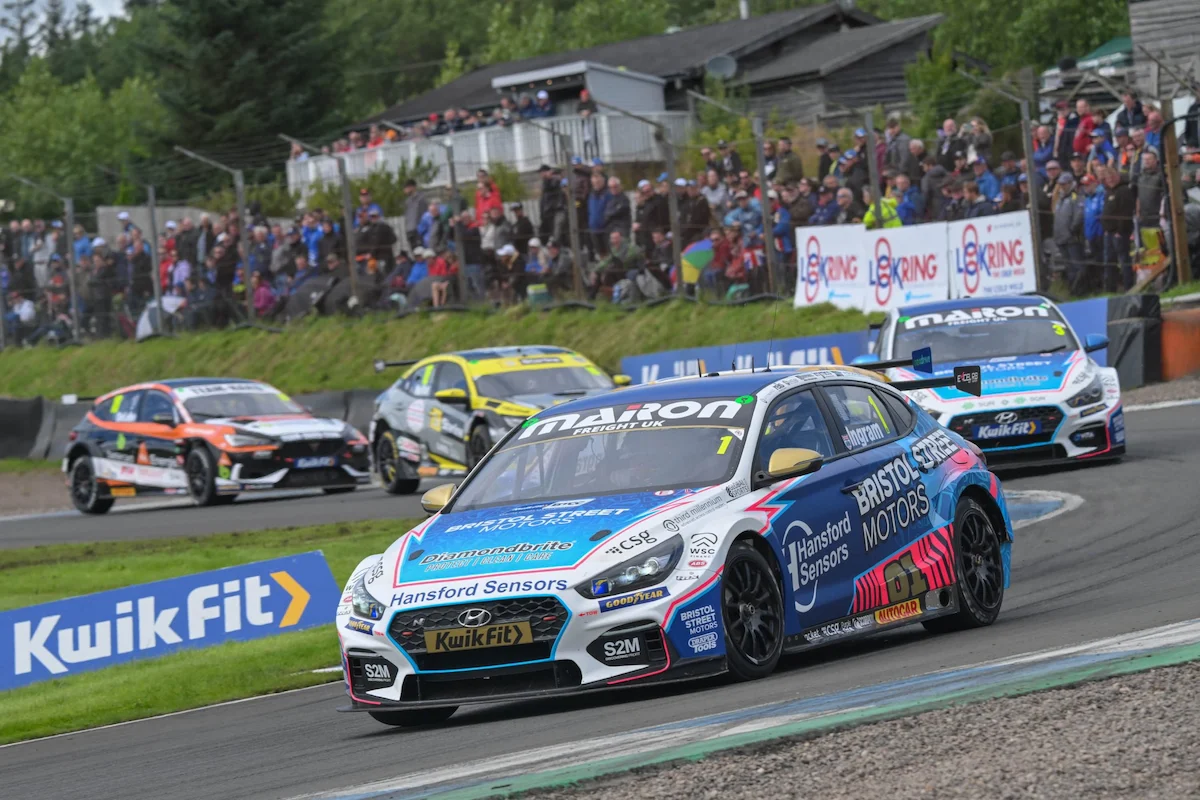
The circuit changes the normal form guide. Knockhill is only 1.27 miles long, has eight corners and is narrow, bumpy and heavily cambered in places. The fastest car on a long circuit is not automatically the easiest car to drive here.
Knockhill BTCC 2026 Preview: The Quick Answer
Ash Sutton is the safest overall favorite because he entered Knockhill leading the championship by 59 points and had already won five races in 2026. Tom Ingram and Dan Cammish are the strongest direct title threats, while the WSR BMWs deserve extra attention because rear-wheel-drive machinery has traditionally worked well at Knockhill. Josh Cook is the form dark horse after a pole and win at Thruxton.
The big unknown is how much Knockhill reshuffles the order. Sutton’s NAPA Ford Focus has been the benchmark over the opening half of the season, but the circuit puts a premium on traction, kerb control and confidence over elevation changes.
That is why the BMW group cannot be ignored. In 2025, WSR machinery locked out the top three in qualifying and Jake Hill won two of the three races. Charles Rainford took pole that weekend. The 2026 WSR line-up is different, but the historical pattern is too strong to dismiss.
For readers who want the basics first, our car racing guide explains race-weekend structure, while the qualifying guide explains why a short circuit makes traffic management so important.
BTCC Championship Standings Entering Knockhill 2026
Ashley Sutton arrived at Knockhill with 284 points. Tom Ingram was second on 225, Dan Cammish third on 208 and Josh Cook fourth on 152. Sutton therefore carried a 59-point advantage into Rounds 16–18.
| Pos. | Driver | Points | Gap to Sutton | Pre-Knockhill outlook |
|---|---|---|---|---|
| 1 | Ashley Sutton | 284 | — | Championship benchmark; can manage risk without becoming conservative. |
| 2 | Tom Ingram | 225 | -59 | Needs to outscore Sutton consistently rather than wait for one huge swing. |
| 3 | Dan Cammish | 208 | -76 | Still a live title threat; strong NAPA package gives him race-winning potential. |
| 4 | Josh Cook | 152 | -132 | Thruxton winner; more realistic weekend spoiler than immediate title favorite. |
| 5 | Ricky Collard | 144 | -140 | Strong consistency keeps him in the front group. |
| 6 | Charles Rainford | 142 | -142 | BMW plus strong 2025 Knockhill history makes him a key outsider. |
| 7 | Mikey Doble | 136 | -148 | Independent leader and a points-scoring threat in mixed-up races. |
| 8 | Daryl De Leon | 124 | -160 | WSR BMW gives him a platform at a track that suited the team in 2025. |
| 9 | Gordon Shedden | 116 | -168 | Scottish home hero with experience that matters around Knockhill. |
| 10 | Daniel Rowbottom | 109 | -175 | Capable of capitalizing if NAPA nails the setup. |
Sutton’s margin is large enough that he does not need to win every race. That is important. A championship leader can sometimes make a better season decision by taking second or third instead of forcing an uncertain pass for victory.
Ingram has the opposite problem. Fifty-nine points is not impossible to recover with half the season remaining, but he needs weekends where he consistently finishes ahead of Sutton. A single victory followed by a low points finish will not be enough.
Cammish is 76 points back, which means he needs both speed and a little help from the championship leader. He has already demonstrated that he can win in 2026, including at Oulton Park.
For the basic title maths, see our championship-scoring explainer.
Championship Contenders and Drivers to Watch
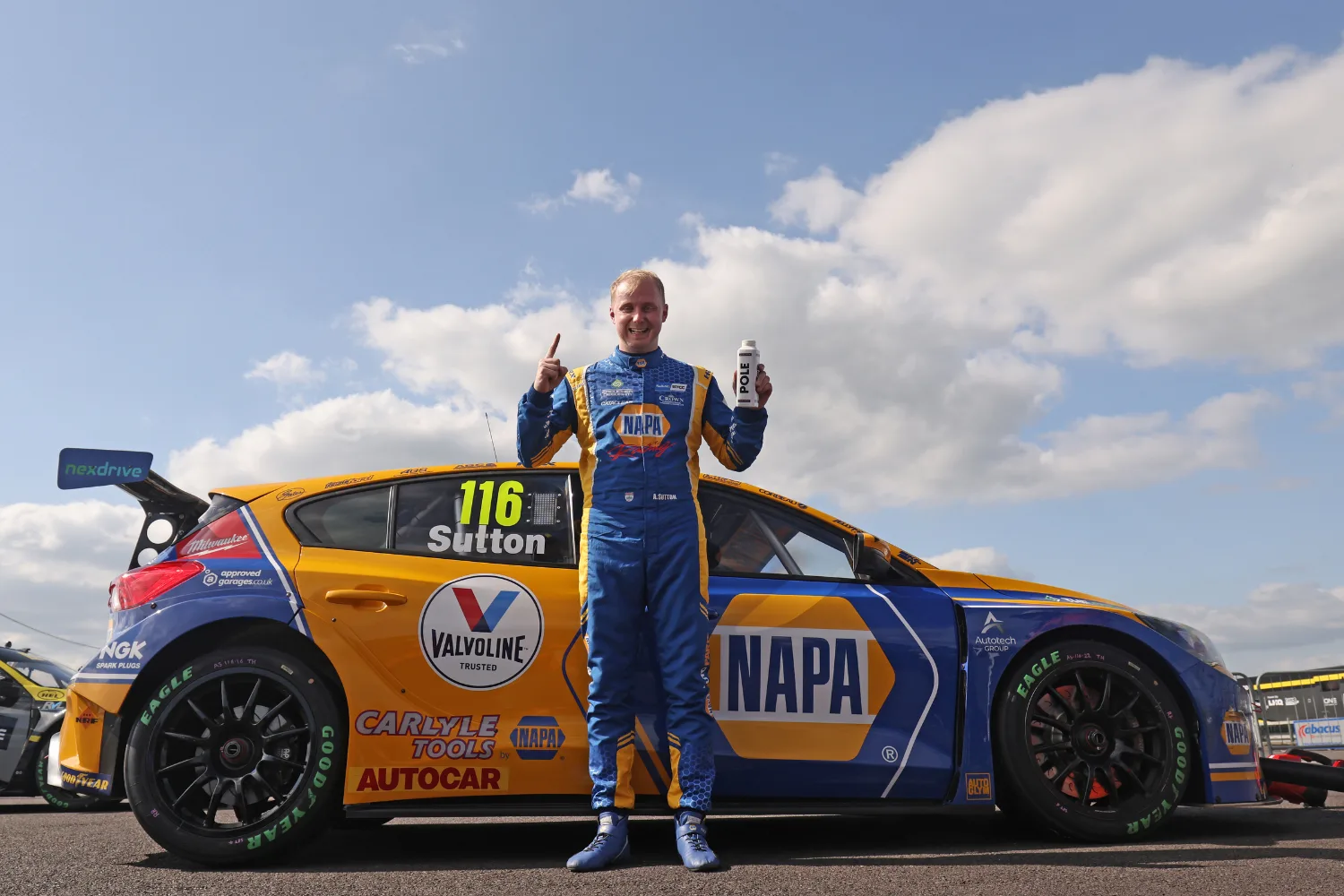
Ash Sutton: the driver everyone has to beat over a full weekend
Sutton’s first-half numbers tell the story. By the summer break he had already taken five wins and nine podiums from 12 races. Thruxton then strengthened his position further, with another victory and two second places helping him reach 284 points.
Knockhill is not a circuit where a championship leader can simply circulate. The lap is too short and the pack too close. Starting a few rows back creates immediate risk because contact at the Hairpin or Chicane can change the weekend.
Sutton’s advantage is adaptability. He has repeatedly recovered from difficult grid positions, and that skill matters at a circuit where qualifying can be disrupted by traffic.
Tom Ingram: strongest direct challenger
Ingram entered Knockhill second after winning at Thruxton and has recent winning history in Scotland. In 2025 he won Race 2 at Knockhill, beating Sutton by more than seven seconds.
The Hyundai was particularly strong once Ingram reached the front. That matters because Knockhill can become a track-position race. If he qualifies in the first two rows, he has a much better chance of controlling tyre use rather than fighting through traffic.
Ingram’s championship target is straightforward: beat Sutton in two or three scoring sessions and cut the gap. Saturday’s new Qualifying Race makes that possible before the three full Sunday races even begin.
Dan Cammish: the third title player
Cammish is not just Sutton’s teammate. He is a championship contender in his own right.
His 2026 Oulton Park victory showed that when the NAPA Ford is in its window, he can control a race from the front. Knockhill therefore creates an interesting team dynamic. NAPA wants maximum points for the team, but Cammish also needs to score heavily enough to keep his own title chances alive.
Josh Cook: the form dark horse
Cook’s Thruxton weekend was one of the strongest individual performances of the season. He secured pole position, won Race 1 and added another podium.
Thruxton and Knockhill could hardly be more different. One is fast and flowing; the other is short, narrow and heavily undulating. That means Cook’s recent form is evidence of driver and team confidence, not proof that the Corolla will automatically dominate in Scotland.
Still, confidence matters. Cook enters Knockhill as the most obvious driver outside the top three who could win and reshape the championship points taken by Sutton, Ingram and Cammish.
Charles Rainford and Daryl De Leon: BMW factor
WSR’s 2025 performance at Knockhill is impossible to ignore. Rainford took pole, the BMW group qualified 1-2-3 and Jake Hill won two races.
Rainford is sixth in the 2026 standings, while De Leon is eighth. Neither arrives as the main title favorite, but both can take points away from the leaders.
Rear-wheel drive traditionally helps at Knockhill because traction out of slow corners is valuable. The exact 2026 performance still depends on setup and the current technical package, but WSR enters with a circuit-specific reason for optimism.
Gordon Shedden and Lewis Gilbert: Scottish interest
Shedden is one of the most experienced drivers in the field and knows Knockhill better than almost anyone. He enters ninth in the standings and carries the home crowd’s attention.
There is also a new Scottish story in Lewis Gilbert. The 22-year-old from Dalry joined WSR for the second half of 2026, made his BTCC debut at Thruxton and immediately moved on to his home event at Knockhill.
Gilbert is still learning touring cars, so expecting a race win would be aggressive. However, the combination of local knowledge, WSR’s recent Knockhill record and a BMW 330i M Sport makes him one of the weekend’s most interesting rookies.
Knockhill Track Guide: Why the Circuit Changes the Form Book
Knockhill is a 1.27-mile, eight-corner circuit in Fife, Scotland. It is narrow, undulating and famous for high kerbs that can launch touring cars onto two wheels. The official qualifying lap record is Rory Butcher’s 50.451 seconds from 2019; the race lap record is Ashley Sutton’s 50.876 from 2020.
Knockhill’s lap is short, but it does not feel simple. The driver is constantly working because the track rises, falls, compresses the car and then asks for another change of direction almost immediately.
Duffus Dip: commitment at the start of the lap
Duffus Dip is one of the defining corners in British racing. The car crests before diving downhill, which changes the load on the tyres and makes the entry feel lighter than a conventional flat corner.
A driver who hesitates loses time all the way through the next sequence. A driver who attacks too hard risks unsettling the rear or missing the line.
The Chicane: kerb control is lap time
Knockhill’s high kerbs are not decoration. BTCC drivers use them aggressively because straightening the chicane shortens the distance and keeps momentum.
The engineering compromise is difficult. A stiff car may respond sharply, but it can bounce badly over the kerbs. A softer car absorbs the impact better but may feel less precise in quick direction changes.
This is where our car-handling guide and grip explainer become relevant. The fastest setup is the one that keeps the tyre loaded consistently through a very uneven lap.
Clarks: exit speed creates the next opportunity
Clarks rewards a clean exit. Getting the car straight early improves acceleration and can create an attacking position later in the lap.
Because the lap is so short, a poor exit has a bigger percentage cost than it would at a circuit twice the length.
The Hairpin: the obvious overtaking zone
The Hairpin is the place where drivers can make the largest braking move. It also creates the greatest contact risk.
BTCC racing allows close body-to-body competition, but a move still has to be controlled. A driver arriving from too far back can lock a front tyre, miss the apex and force both cars wide.
Our slipstream guide explains how a driver can use the tow before committing under braking, while what causes racing crashes covers why late-braking contact happens.
Why traffic is such a problem in qualifying
With a lap around 50 seconds, cars come back around quickly. That makes finding clear space difficult.
A driver can have the pace for pole and still qualify outside the top six because one slower car appears in the wrong place. Teams therefore have to time releases carefully rather than simply send the car out whenever the tyre is ready.
Which BTCC Cars Are Best Suited to Knockhill?
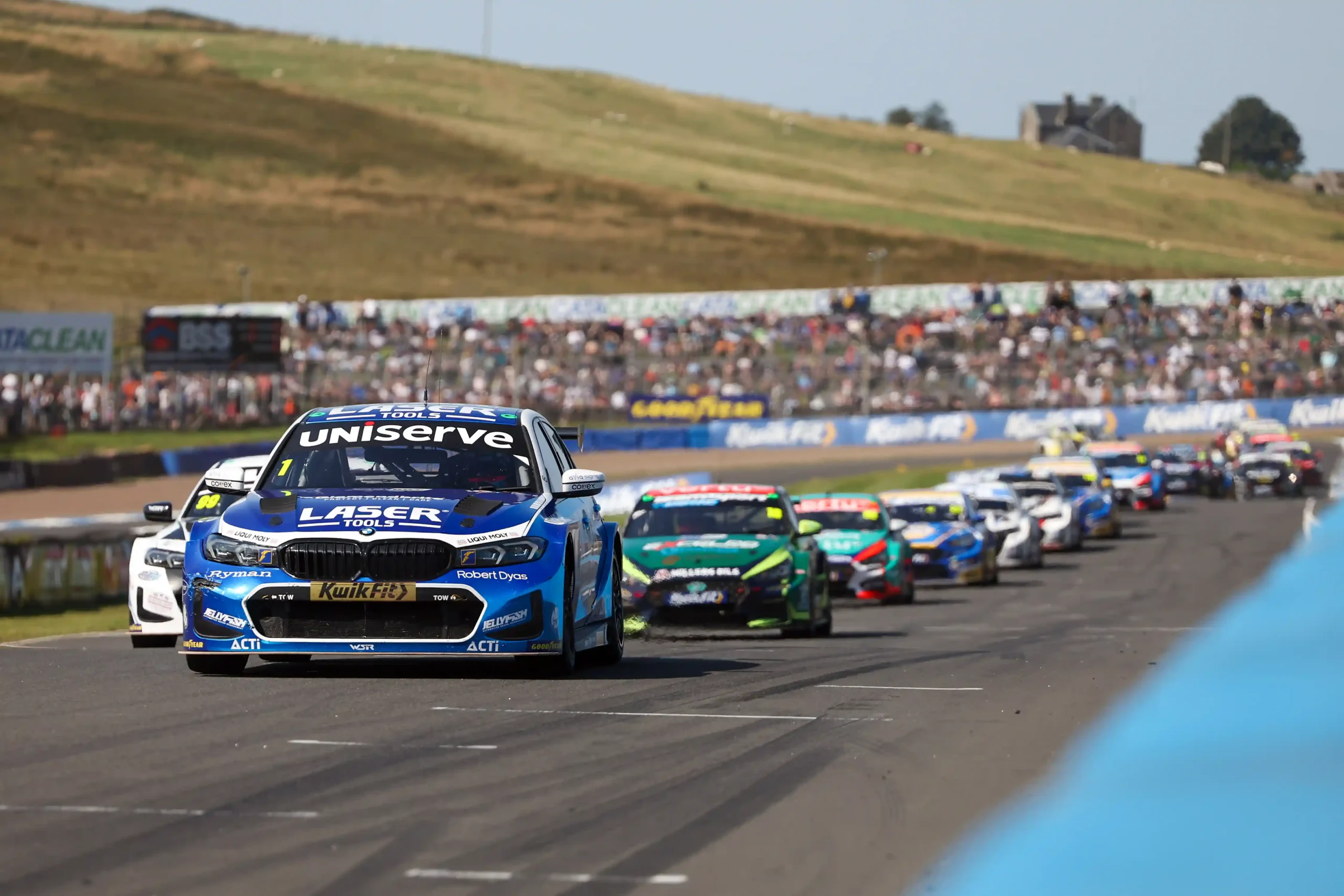
There is no automatic “best car” because the championship’s technical rules are designed to keep different models competitive. However, Knockhill rewards certain characteristics more heavily than most circuits.
Rear-wheel-drive BMW: traction and historical evidence
Rear-wheel drive can help when accelerating out of slower corners because the driven rear tyres gain load as the car accelerates.
Knockhill’s Hairpin and other low-speed exits make that valuable. WSR’s 2025 1-2-3 qualifying performance is the strongest recent evidence that the BMW 330i M Sport can work exceptionally well here.
For more background, see our BMW race car guide and RWD vs FWD vs AWD explainer.
Front-wheel-drive Ford and Hyundai: rotation and braking stability
Sutton and Cammish’s Ford Focus package has been the most consistent combination of 2026. Ingram’s Hyundai has also shown race-winning pace.
Front-wheel-drive cars can be very effective in BTCC because they often have stable braking characteristics and strong front-end response. The challenge is preserving the front tyres while asking them to steer, brake and drive the car.
At Knockhill, a driver who overheats the front axle may struggle late in a race, especially if stuck behind another car and unable to use the ideal line.
Toyota Corolla: Cook’s momentum
Cook proved at Thruxton that Speedworks can produce a car capable of pole and victory. The Knockhill question is whether that balance transfers to a circuit with much more kerb use and low-speed direction change.
If the Corolla rides the kerbs cleanly and gives Cook confidence under braking, he can be a major factor even without title pressure.
Race Strategy: What Can Decide Rounds 16, 17 and 18?
Qualifying position matters more than usual
Knockhill is not impossible for overtaking, but starting near the front reduces exposure to contact and traffic.
That makes Saturday’s qualifying session and Qualifying Race especially important. A small mistake can place a title contender in the middle of a dense pack for Sunday.
The Saturday Qualifying Race adds another points opportunity
New for 2026, BTCC weekends include a short Qualifying Race. At Knockhill it is 17 laps.
It awards drivers’ championship points, so the weekend can begin changing the title gap before Race 1. Sutton can extend his lead on Saturday; Ingram and Cammish can start reducing it.
Tyre choice can create different race shapes
BTCC tyre strategy is not simply about choosing the nominally faster compound. Track temperature, race length and starting position all affect the decision.
A driver on a more durable compound may struggle early but become stronger later. A softer option can create immediate grip, but the driver must manage it across a full 24-lap Sunday race.
Safety Cars compress everything
A short circuit naturally creates a compact field, and a Safety Car makes it even tighter.
That can erase a five-second lead in one lap and turn a controlled race into a sprint. It also increases the importance of restart timing and tyre temperature.
See our Safety Car guide and racing flags explainer for the fundamentals.
Weather can turn Knockhill upside down
Scotland does not need a full wet race to change the order. A light shower can alter braking confidence and tyre temperature enough to punish a setup designed only for dry grip.
The circuit’s elevation and kerbs become more difficult when wet. Drivers also have fewer escape options because the track is narrow.
Knockhill BTCC 2026 Predictions
These are editorial pre-event predictions, not reported results. They are based on the standings after Thruxton, current 2026 form, the 2025 Knockhill performance pattern and the circuit’s technical characteristics.
Prediction 1: Sutton leaves Knockhill still leading the championship
A 59-point margin gives Sutton room to survive one imperfect race. He would need a genuinely poor weekend combined with a major Ingram score to lose the championship lead.
The more realistic question is whether the gap shrinks. Ingram’s recent form and Knockhill history make that possible.
Prediction 2: at least one BMW starts on the front two rows
WSR’s 2025 qualifying dominance is too significant to ignore. Rainford took pole, De Leon was second and another BMW was third.
The 2026 field and performance balance are different, so another lockout is unlikely to be assumed. However, predicting one BMW in the top four is reasonable.
Prediction 3: Ingram wins one of the three Sunday races
Ingram won Race 2 at Knockhill in 2025 and has already won in 2026. His strongest path is a clean qualifying result followed by a race where the Hyundai can use track position.
If he does win, the championship impact depends on where Sutton finishes. A Sutton second place limits the damage; a Sutton finish outside the top ten makes it a serious swing.
Prediction 4: Cook scores another top-five finish
Cook’s Thruxton momentum is difficult to ignore. The Toyota may not be as naturally suited to Knockhill as it was to Thruxton, but Cook is driving with confidence.
A top-five result is more conservative than predicting another win and fits the evidence better.
Prediction 5: the Hairpin decides at least one podium position
Knockhill’s Hairpin is too important to avoid. It is the obvious late-braking overtaking point, and the field arrives there repeatedly over a 24-lap race.
A podium-changing move there could be clean, or it could trigger contact and a stewards’ decision. Either way, expect the Hairpin to matter.
Prediction: Sutton scores the most complete weekend and retains a clear championship lead; Ingram wins one Sunday race; a WSR BMW qualifies inside the top four; and Cammish remains within striking distance of second in the standings. Rainford is the strongest outside pick for a surprise podium or win.
What a Good Knockhill Weekend Looks Like for Each Title Contender
Sutton: avoid the zero
Sutton does not need perfection. His biggest championship risk is a retirement or penalty that turns a manageable weekend into a large points loss.
Three top-five finishes would be a very strong outcome even without a win.
Ingram: reduce the gap by double digits
Ingram needs a weekend that changes the trend, not just one good race. Cutting 10 to 15 points from Sutton’s advantage would make the second half feel much more open.
That requires consistency across Saturday and Sunday.
Cammish: stay attached to Ingram
Cammish is close enough to second that he should think about both Sutton and Ingram. If he beats Ingram across the weekend, he can turn the fight for second into a much tighter contest.
Cook: turn momentum into another statement
Cook is too far behind Sutton to be the immediate title favorite, but another podium weekend would establish him as the most dangerous driver outside the leading NAPA and VERTU groups.
Knockhill BTCC 2026 Preview FAQs
Conclusion: Knockhill Is the First Real Pressure Test of BTCC’s Second Half
Sutton arrives in Scotland with the advantage everyone wants: points in hand. His 284-point total gives him a 59-point cushion over Ingram and 76 over Cammish.
However, Knockhill is exactly the type of circuit where a championship lead can feel less comfortable than it looks. One traffic problem in qualifying can put a front-runner in the midfield. One Hairpin contact can turn a podium into a retirement. One Safety Car can erase a gap built over most of a race.
The WSR BMWs add another layer because the team was exceptional here in 2025. Rainford’s pole and Hill’s double victory are recent evidence that the rear-wheel-drive package can suit the circuit’s traction demands.
Ingram has the strongest direct reason for optimism among Sutton’s title rivals. He won at Knockhill in 2025 and arrives second in the standings. Cammish remains close enough to turn one strong weekend into a much tighter championship picture.
Cook is the form spoiler after Thruxton, while Shedden and newcomer Gilbert give the home crowd Scottish drivers to follow.
Our pre-event call is that Sutton keeps control of the championship, Ingram wins at least one race, and BMW puts at least one car near the front of the grid. The important number on Sunday evening will not simply be who wins Race 3. It will be how much of Sutton’s 59-point advantage remains when the BTCC leaves Fife.