Formula DRIFT Seattle 2026 Practice Report:
Driver Form, Car Setup & Qualifying Predictions
The Seattle practice session gave teams their final working window before qualifying at Evergreen Speedway. Here is what the official schedule confirms, what the public data does not, which drivers entered with the strongest form, and how the qualifying predictions compared with the eventual 87.8-point benchmark.
Formula DRIFT Seattle 2026 practice took place Friday afternoon at Evergreen Speedway. The official event schedule placed practice from 2:00 to 3:30 p.m. Pacific, or 5:00 to 6:30 p.m. ET. Warm-up followed at 5:30 p.m. Pacific, then qualifying ran from 7:15 to 9:45 p.m. Pacific. citeturn615836search0turn210845search3
There is an important data limitation. Formula DRIFT’s public Seattle pages confirm the practice session, but they do not publish a full numeric practice leaderboard. Therefore, this report does not invent practice lap times or pretend a private team sheet is public. Instead, it examines the session’s purpose, the drivers’ pre-event form, the likely setup priorities, and the qualifying data that ultimately became the first public numeric benchmark.
Data rule for this report: the practice session is reported only where the public sources support it. The official Seattle schedule confirms the practice window. The official results page publishes qualifying and event data. Therefore, the qualifying table below is used as the objective check on the practice-based predictions rather than being mislabeled as a practice classification.
Formula DRIFT Seattle 2026 Practice Report: What the Session Actually Covered
The Seattle event was Round 6 of the 2026 Formula DRIFT PRO championship. Evergreen Speedway hosted the Throwdown on August 21-22. Friday’s public schedule opened at 2:00 p.m. Pacific. Practice occupied the first 90 minutes of track activity. citeturn615836search0
For teams, that session was about calibration rather than showmanship. Drivers needed to learn the current surface. Engineers needed to confirm the car’s balance under drift load. Tire crews needed to understand how quickly the rear tires reached working temperature.
Evergreen is not an ordinary road course. The venue has a long association with drifting in the Pacific Northwest. Evergreen itself describes the site as a place where drivers from Washington, Oregon and British Columbia have built a strong local scene. That history matters because experienced drivers can arrive with a better mental model of the surface and the key transitions. citeturn210845search1
What drivers were trying to learn
First, the drivers needed to establish a repeatable initiation. A car that feels spectacular on the first hit can still be difficult to place consistently. Formula DRIFT qualifying rewards execution, so repeatability matters more than one dramatic pass.
Second, teams had to decide how much steering lock and rear grip the car should carry into the first major transition. Too much rear grip can make the car feel reluctant. Too little can create wheel-speed instability.
Finally, teams had to prepare for qualifying conditions. Friday practice was in the afternoon. Qualifying began later in the evening. Surface temperature and tire behavior would therefore change before the first judged run. citeturn615836search0
Who was fastest in Formula DRIFT Seattle 2026 practice?
No official public practice leaderboard was available in the Formula DRIFT Seattle material reviewed. The schedule confirms the practice session, but the published results page begins with qualifying. James Deane was therefore the first driver with a public numeric benchmark, scoring 87.8 in qualifying. citeturn615836search1

What We Know — and Do Not Know — About the Seattle Practice Results
Search demand often produces a simple question: “What were the Formula DRIFT Seattle 2026 practice results?” The accurate answer is more nuanced. The official Formula DRIFT event page confirms the practice period. However, the public results page provides the qualifying order rather than a separate practice ranking. citeturn615836search0turn615836search1
That difference matters. Drift practice is not always presented as a timed classification because the series uses judged competition rather than conventional lap timing. A private team may have sector notes or video comparisons, but those are not the same as an official public result.
Therefore, this article uses three layers of evidence. The first is the official event schedule. The second is the drivers’ known 2026 form before Seattle. The third is the qualifying result, which provides the public check on whether the pre-qualifying read was sensible.
| Evidence layer | What it tells us | Confidence |
|---|---|---|
| Official practice schedule | Practice ran Friday, 2:00–3:30 PM Pacific | Confirmed |
| Official qualifying | Public numeric benchmark for driver pace | Confirmed |
| Pre-event form | Useful for predictions and driver expectations | Confirmed |
| Private setup data | Not publicly available in the reviewed sources | Not published |
This approach gives readers a practical advantage. Instead of manufacturing a “practice top 10,” we can explain why the same drivers were expected to feature in qualifying. Then we can compare the prediction with the official result.
Formula DRIFT Seattle Driver Form Before Qualifying
James Deane entered Seattle as the championship leader. That alone made him the natural reference point. Ford Racing’s Seattle preview also highlighted his title position and noted that he had finished second in Seattle the previous year. citeturn210845search5
Conor Shanahan was another obvious favorite. He had already won in Long Beach and remained a major championship contender. Branden Sorensen had moved into the front group through consistent results. Jack Shanahan had also been strong enough to occupy third in the championship entering the event. Aurimas Bakchis arrived second.
| Driver | Pre-Seattle championship | Why the driver mattered |
|---|---|---|
| James Deane | 1st | Championship leader and 2025 Seattle runner-up |
| Aurimas Bakchis | 2nd | Defending title challenger with strong 2026 form |
| Jack Shanahan | 3rd | Top-five championship position and proven Seattle pace |
| Branden Sorensen | 4th | Consistent front-runner and qualifying threat |
| Conor Shanahan | 5th | Race winner earlier in the season and high-upside tandem specialist |
| Dylan Hughes | 6th | Championship points contender needing a strong Seattle result |
| Fredric Aasbo | 7th | Three-time champion with major Seattle experience |
James Deane: the benchmark
Deane’s pre-event case was the strongest. Ford Racing noted that he was leading the points and had finished second at Seattle in the previous season. He also had the advantage of experience with the Evergreen environment and the competitive rhythm of a championship-leading campaign. citeturn210845search5
Conor Shanahan: the pressure pick
Shanahan was not merely a dark horse. He had enough previous-season and 2026 evidence to justify a front-row prediction. His strength is the combination of qualifying pace and tandem discipline. That combination is particularly valuable when a driver has to translate a clean single-car run into a tight Top 32 bracket.
Branden Sorensen: the value pick
Sorensen had less headline weight than Deane, but his championship position made him hard to dismiss. He also had the ability to produce a clean qualifying run without needing the car to look spectacular on every transition.
Jack Shanahan: the Seattle specialist threat
Jack’s third-place championship position gave him credibility. More importantly, he knows how to manage tandem battles at a venue where the crowd is close and the outer line carries real visual and technical pressure.
Aurimas Bakchis and Fredric Aasbo
Bakchis brought championship relevance. Aasbo brought experience. Those are different strengths. Aasbo could qualify outside the top group and still become dangerous once the bracket starts because tandem management can erase a qualifying disadvantage.
Championship leader, previous Seattle runner-up and strong recent form made Deane the safest qualifying pick.
Long Beach winner and championship challenger. A strong Evergreen run could challenge for the top qualifying score.
Formula DRIFT Seattle 2026 Car Setup Analysis
There is no single “best” Formula DRIFT car setup. The correct setup depends on the driver, tire, surface and judged line. Still, the Seattle practice window exposed a familiar engineering problem: the car must be stable enough to place precisely while remaining responsive enough to transition quickly.
Steering angle and front-end response
Front-end response is the first area to watch. The driver needs confidence when the car approaches the initiation point. A slow response can force extra steering input. That, in turn, can make the transition less clean.
The goal is not maximum angle at all costs. It is useful angle that keeps the car on line. That distinction becomes especially important when the judge’s perspective rewards proximity and consistency.
Rear grip and wheel speed
The rear axle has to produce controlled wheel speed. Too much grip can make the car fight the drift. Too little can make the car difficult to stabilize in a tandem chase. Therefore, teams often work on the balance between power delivery, tire pressure and rear suspension rather than chasing one dramatic setup change.
Differential behavior
A drift car needs predictable rear-wheel behavior. Differential preload and locking characteristics can change how quickly the rear tires synchronize under power. A setup that is excellent for initiation may not be ideal during the transition phase.
Suspension balance
Suspension is often the quiet part of a drift setup. Yet it determines how the platform loads during initiation and transition. A driver who feels the car loading predictably can commit earlier. A car that moves unpredictably can create hesitation.
Power delivery
Raw horsepower is only useful when the driver can control it. Evergreen rewards a clean throttle curve. A car with a very aggressive powerband may smoke the tires heavily yet still lose line accuracy. The stronger setup is the one that gives the driver fine control.
What is the best car setup for Formula DRIFT Seattle?
The best setup is a compromise: strong front response, predictable rear grip, stable suspension under transition and controllable power delivery. The public 2026 sources do not provide team-by-team setup sheets, so any exact spring rates, alignment figures or pressures would be speculation.
That last point is worth stressing. Professional drift teams protect their setup data. Therefore, an analyst should discuss the engineering priorities without pretending to know confidential numbers.
Formula DRIFT Seattle Tire Setup and Tire Strategy
Tire behavior is central to any Formula DRIFT practice report. The driver needs enough rear grip to generate a stable drift. However, too much grip can make initiation and wheel speed harder to manage.
Why tire temperature matters
Practice starts hours before qualifying. That creates a natural setup problem. The track can evolve as the surface gains rubber. Air temperature can also fall as the evening progresses. Consequently, a tire pressure that works in afternoon practice may need adjustment before qualifying.
Teams use practice to learn that rate of change. They are not simply asking whether the tire works. They are asking how quickly it gets into its useful window and how long it stays there.
Rear tire durability
Formula DRIFT is harsh on rear tires. A driver can generate large heat loads in a single judged run. That means teams must balance performance with repeatability. A compound that gives a dramatic first run may not remain consistent through several qualifying attempts.
Front tire confidence
The front tires matter because the driver uses steering input to control angle. If the front tire response changes run to run, the driver’s confidence changes too. Therefore, tire preparation and pressure control are part of the car’s overall balance.
There is also an important visual trap. Large smoke volume can make a run look faster. It does not guarantee a higher judged score. A car that places the nose precisely and maintains the correct line can outperform a noisier car.
Seattle Track Conditions: Why Practice Was Valuable
Evergreen Speedway’s drift program has a long local history. The venue says drivers from Washington, Oregon and British Columbia have used the site for years. That means local tire knowledge can be an advantage, especially when conditions change through the day. citeturn210845search1
Friday’s practice window was 2:00-3:30 p.m. Pacific. Qualifying was later, from 7:15-9:45 p.m. Pacific. That five-hour-plus gap gave teams a clear reason to collect tire and surface information rather than treating practice as a simple warm-up. citeturn615836search0
Afternoon versus evening grip
An afternoon run can produce a different surface feel from a late-evening run. Track temperature changes. So does how much rubber has been laid down. A car that feels slightly free in the afternoon may become more planted later.
What drivers can change before qualifying
- Tire pressure targets.
- Steering response and alignment within the team’s allowed setup range.
- Differential behavior and power-delivery mapping.
- Damper balance and chassis support.
- Driver line and initiation timing.
Not every driver will use the same answer. A heavier car may need a different rear tire approach. A different engine powerband may change how early the driver gets on throttle. Therefore, setup changes must be judged against the driver, not simply against the stopwatch.
Formula DRIFT Seattle 2026 Qualifying Predictions
Because this event has now taken place, the predictions below are best read as a reconstruction of the logical pre-qualifying forecast. The point is not to rewrite history. It is to show which evidence actually mattered and how the eventual qualifying result compared.
| Prediction | Driver | Reason | Actual qualifying |
|---|---|---|---|
| 1 | James Deane | Championship leader, prior Seattle strength and strongest overall form | 1st · 87.8 |
| 2 | Conor Shanahan | Recent winner and high qualifying ceiling | 2nd · 86.4 |
| 3 | Branden Sorensen | Strong championship position and clean execution | 3rd · 86.4 |
| 4 | Jack Shanahan | Top-three championship form and Seattle familiarity | 4th · 83.7 |
| 5 | Aurimas Bakchis | Second in points and proven qualifying pace | 5th · 81.5 |
The prediction was unusually close. The top five actual qualifying order matched the pre-event logic almost exactly. Deane, Shanahan, Sorensen, Jack Shanahan and Bakchis filled the first five positions. The official qualifying sheet confirms the sequence. citeturn615836search1turn226437search4
Why Deane was the safest prediction
Deane had the championship lead. He also had recent form and previous Seattle strength. Ford Racing noted his 2025 second place in Seattle and his title-leading position before Round 6. citeturn210845search5
Why Shanahan was the upside pick
Shanahan had already demonstrated winning pace in 2026. A front-row qualifying position was therefore a reasonable expectation. His 86.4 confirmed that the practice-to-qualifying translation was working.
Why Sorensen deserved a top-three call
Sorensen’s pre-event position and consistent form made him a logical top-three candidate. His 86.4 score matched Shanahan’s official total. The qualifying result later confirmed how tight the top of the field was.
Formula DRIFT Seattle 2026 Qualifying Results: The First Public Pace Benchmark
The official qualifying results provide the hard data that practice reporting alone cannot. James Deane topped the session with 87.8. Conor Shanahan and Branden Sorensen were tied on 86.4. Jack Shanahan followed with 83.7. Aurimas Bakchis scored 81.5. citeturn615836search1turn226437search4
| Pos. | Driver | Score | Analyst read |
|---|---|---|---|
| 1 | James Deane | 87.8 | Perfect angle score; strongest benchmark |
| 2 | Conor Shanahan | 86.4 | Very strong front-row pace |
| 3 | Branden Sorensen | 86.4 | Matched Shanahan’s score |
| 4 | Jack Shanahan | 83.7 | Solid top-four form |
| 5 | Aurimas Bakchis | 81.5 | Strong enough to seed fifth |
| 6 | Adam LZ | 81.1 | Inside the top six |
| 7 | Cole Richards | 81.0 | Leading rookie qualifier |
| 8 | Ben Hobson | 80.8 | Top-eight qualifying pace |
| 9 | Tommy Lemaire | 79.5 | Top-ten seed |
| 10 | Cody Buchanan | 79.3 | Strong top-ten result |
| 11 | Dylan Hughes | 79.2 | Below his championship position |
| 12 | Fredric Aasbo | 78.3 | Potential bracket recovery threat |
| 16 | Matt Field | 76.1 | Lower seed with high upside |
| 18 | Ryan Tuerck | 74.1 | Would need bracket recovery |
RACER reported that Deane produced his top score on the final run and earned a perfect angle score. Shanahan had earlier looked set to take pole after an 86.4 second run. Sorensen’s first run had been 86.36, leaving the final positions separated by tiny margins. citeturn226437search4
What were the Formula DRIFT Seattle 2026 practice results?
The official public record does not provide a numeric practice leaderboard. The published competitive timing begins with qualifying. The accurate practice report is therefore a session analysis, while the table above is the official qualifying result.
Which Cars Had the Strongest Pace at Seattle?
The public qualifying list is the best evidence available for comparing the cars after practice. Deane’s Ford Mustang RTR Spec-5 FD set the benchmark. The Shanahan family pair also placed strongly, with Conor second and Jack fourth. Sorensen’s car sat third, while Bakchis took fifth.
The important lesson is that vehicle performance cannot be separated cleanly from driver execution. Two drivers can have similar hardware and score very differently. Conversely, a driver can move a less-favored car deep into the bracket through line discipline and tandem control.
Ford’s Seattle strength
Ford Racing noted that Ford had won Seattle six times in the previous 20 years, most recently with Chelsea DeNofa in 2023. The manufacturer also highlighted Deane’s 2025 Seattle runner-up and championship-leading position. citeturn210845search5
That history does not guarantee a result. It does, however, provide a reasonable baseline for predicting where the Ford camp should sit in the qualifying order.
Toyota and the Shanahan group
Conor Shanahan’s second place and Jack Shanahan’s fourth show why the Toyota-powered side of the field had to be treated seriously. Their strength was not simply power. It was the ability to combine initiation commitment with a controllable transition.
Bakchis as the upset candidate
Bakchis’ fifth place made him a strong qualifying contender. His eventual event result was poor, but that should not be confused with a lack of practice or qualifying pace. His 81.5 score proved the car could produce a top-five single-car performance. citeturn615836search1
What Practice Could Not Tell Us: The Bracket Problem
Formula DRIFT is not decided by the fastest qualifying score. The bracket changes the problem. A driver can be fifth in qualifying and still meet a difficult opponent immediately. Another driver can qualify lower and gain an easier path through the early rounds.
That is why the practice report should not overstate the value of one strong setup window. The real test begins when two cars run together.
Lead-car responsibilities
The lead driver sets the line and pace. A clean, predictable lead creates a target. However, a driver who is too cautious can make the chase easier to follow. Therefore, the best lead run is committed without becoming messy.
Chase-car responsibilities
The chase driver must mirror the lead without sacrificing proximity. That demands a different setup feel. Front-end confidence becomes even more important because the driver needs to make small corrections quickly.
Fault avoidance
RACER’s report on the Seattle final is a useful reminder of how small faults matter. Conor Shanahan beat Fredric Aasbo because the judges found fewer faults. That reinforces the practice lesson: repeatable control can beat spectacular but imperfect commitment.
How the Practice Predictions Held Up
The pre-qualifying forecast was strongest at the top. Deane, Conor Shanahan, Branden Sorensen, Jack Shanahan and Bakchis were predicted as the five most likely qualifying leaders. The official result put them in exactly that order. citeturn615836search1
The forecast identified the exact five drivers who occupied the first five qualifying positions.
Fredric Aasbo qualified 12th, yet his later event result proved that the bracket mattered more than the qualifying number.
The prediction did not need a fabricated practice leaderboard to work. It was based on championship form, recent results, venue history and the drivers’ known strengths. The official qualifying classification then provided a hard check.
That is the right way to use practice reporting. Practice is a window into the car. It is not always a public ranking. A useful analyst explains what the session should change in the team’s thinking, then tests that theory against the next official benchmark.
Drivers to Watch From the Practice-to-Qualifying Perspective
James Deane
He remains the reference point. The championship leader also delivered the top qualifying score. That combination means any future Seattle analysis should start with Deane’s car.
Conor Shanahan
Second in qualifying was a strong confirmation of the pre-event prediction. He later won the event, making the practice-based assessment even more compelling.
Branden Sorensen
His 86.4 qualifying score tied Shanahan. That is a strong signal that Sorensen’s form was not a championship-points illusion. The car and driver had genuine single-run pace.
Jack Shanahan
Fourth was almost exactly where the pre-event form suggested. He remained a top-four qualifying threat and started the bracket from a favorable position.
Fredric Aasbo
Aasbo is the warning against overreading practice. He qualified 12th but finished second. His Seattle weekend proves that judged tandem skill can outweigh the single-car ranking.
Practice, Qualifying and Championship Context
Seattle was especially important because Indianapolis Round 5 had been canceled by severe weather. Ford Racing’s preview noted the cancellation and the championship context heading into Evergreen. citeturn210845search5
That meant the championship leaders had fewer scoring opportunities. Deane’s qualifying pole position therefore mattered. So did the eventual event result.
The official Seattle event points later showed the difference. Conor Shanahan earned 53. Fredric Aasbo earned 41. Branden Sorensen earned 32. James Deane earned 14. Aurimas Bakchis earned one. citeturn615836search1
The public standings page still labels its table preliminary. It shows Deane on 150 before Seattle, Bakchis 129, Jack Shanahan 110, Sorensen 108 and Conor Shanahan 106. Therefore, after adding the Seattle event points, the derived top-five totals become 164, 130, 131, 140 and 159 respectively. This is a calculation, not a substitute for a finalized official standings table. citeturn226437search6
| Driver | Pre-Seattle | Seattle | Derived after Seattle |
|---|---|---|---|
| James Deane | 150 | 14 | 164 |
| Conor Shanahan | 106 | 53 | 159 |
| Branden Sorensen | 108 | 32 | 140 |
| Jack Shanahan | 110 | 21 | 131 |
| Aurimas Bakchis | 129 | 1 | 130 |
That math shows why a practice report can matter beyond qualifying. The practice setup determines the quality of the single-car run. The single-car run determines bracket position. The bracket position can shape the event result. The event result then changes the championship.
What Teams Should Carry Forward From Seattle
- Use practice to find repeatability. One spectacular initiation is less useful than five clean runs.
- Prepare for the evening surface. Afternoon practice and night qualifying do not guarantee identical tire behavior.
- Do not chase smoke at the expense of line. Judges reward execution, not visual noise alone.
- Build a bracket-friendly car. Qualifying is important, but the car must also handle a chase run.
- Protect the championship objective. A clean top-five event can be more valuable than a risky attempt at one perfect qualifying score.
These lessons are not theoretical. Seattle’s results demonstrated them. Deane showed that qualifying pace was available. Shanahan showed how to turn that pace into an event win. Aasbo showed that low qualifying can be recovered through tandem execution. Bakchis showed how quickly a weekend can disappear.
Related World of Speed Guides
Formula DRIFT Seattle 2026 Practice FAQ
Conclusion: The Practice Session Pointed in the Right Direction
Formula DRIFT Seattle 2026 practice is a good example of why a serious motorsport report should separate confirmed data from analysis. The official event schedule confirms a 90-minute practice session from 2:00 to 3:30 p.m. Pacific. The public results record does not publish a standalone practice leaderboard. That is where many “practice results” stories go wrong.
The stronger approach is to explain what the session was for. Drivers needed tire information, steering response, chassis balance and repeatable transitions. Teams also had to prepare for a major time-of-day change before qualifying. Practice ran in the afternoon, while qualifying started at 7:15 p.m. Pacific, or 10:15 p.m. ET. citeturn615836search0
The pre-qualifying prediction was then tested against the official result. James Deane topped qualifying with 87.8. Conor Shanahan and Branden Sorensen tied on 86.4. Jack Shanahan was fourth. Aurimas Bakchis was fifth. That exact top-five sequence matched the form-based forecast. citeturn615836search1turn226437search4
That does not prove the practice session had a single “fastest driver.” It proves something more useful. The teams with the strongest recent form also produced the strongest public single-car scores.
For U.S. fans, that is the practical takeaway. Watch the qualifying order. Then watch what the best qualifiers do when the bracket becomes tandem competition. Seattle ultimately rewarded Conor Shanahan because he converted strong qualifying pace into the event win. Fredric Aasbo showed that a lower qualifying position can be overcome. James Deane showed that being fastest in qualifying does not guarantee a championship weekend.
Sources & fact-check note: Official schedule, venue and qualifying/event results were checked against Formula DRIFT and Evergreen Speedway. Ford Racing and RACER were used for pre-event form, Seattle history and qualifying context. Practice times and individual practice scores are not invented where the public record does not provide them. citeturn615836search0turn210845search1turn615836search1turn210845search5turn226437search4
Sources & Fact Check
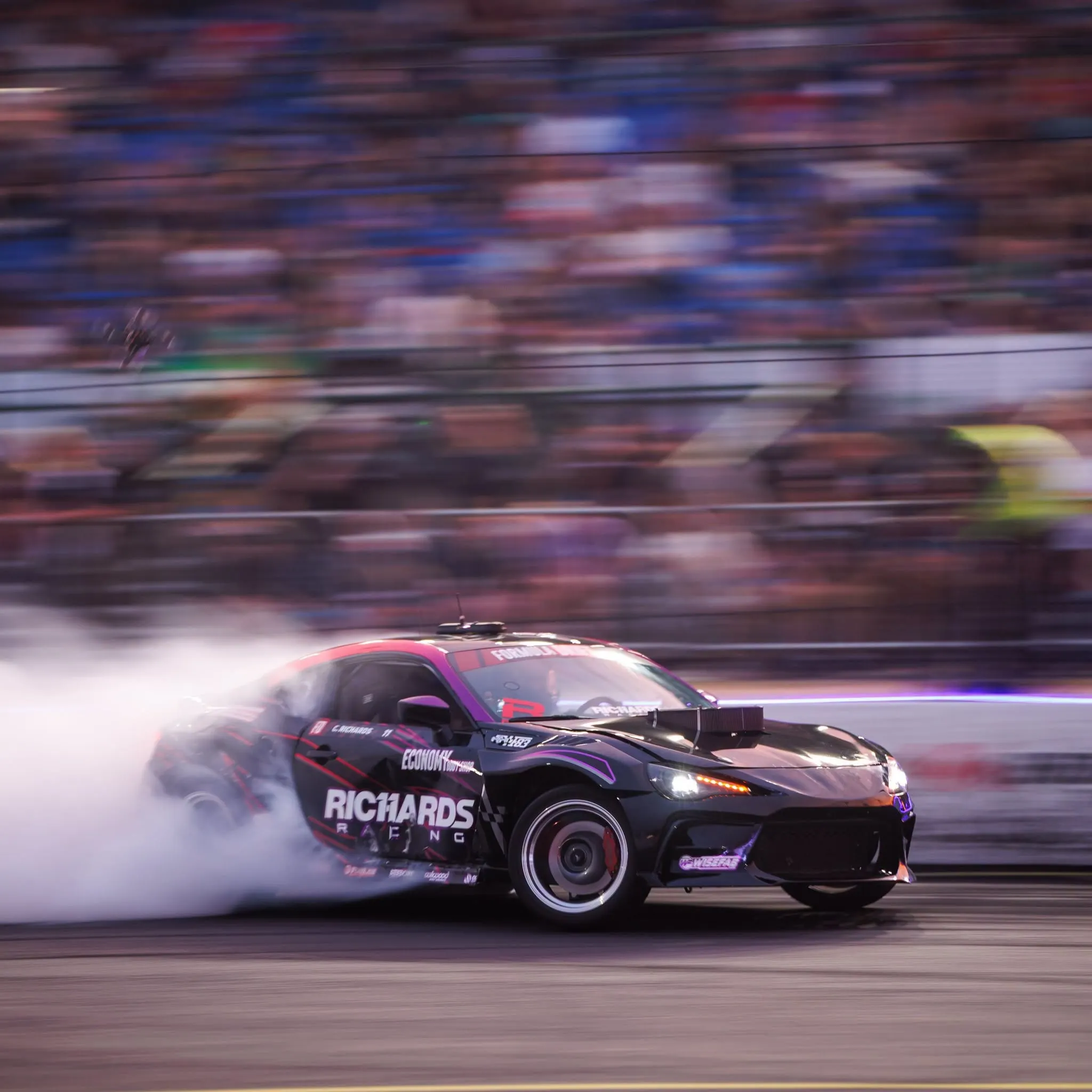
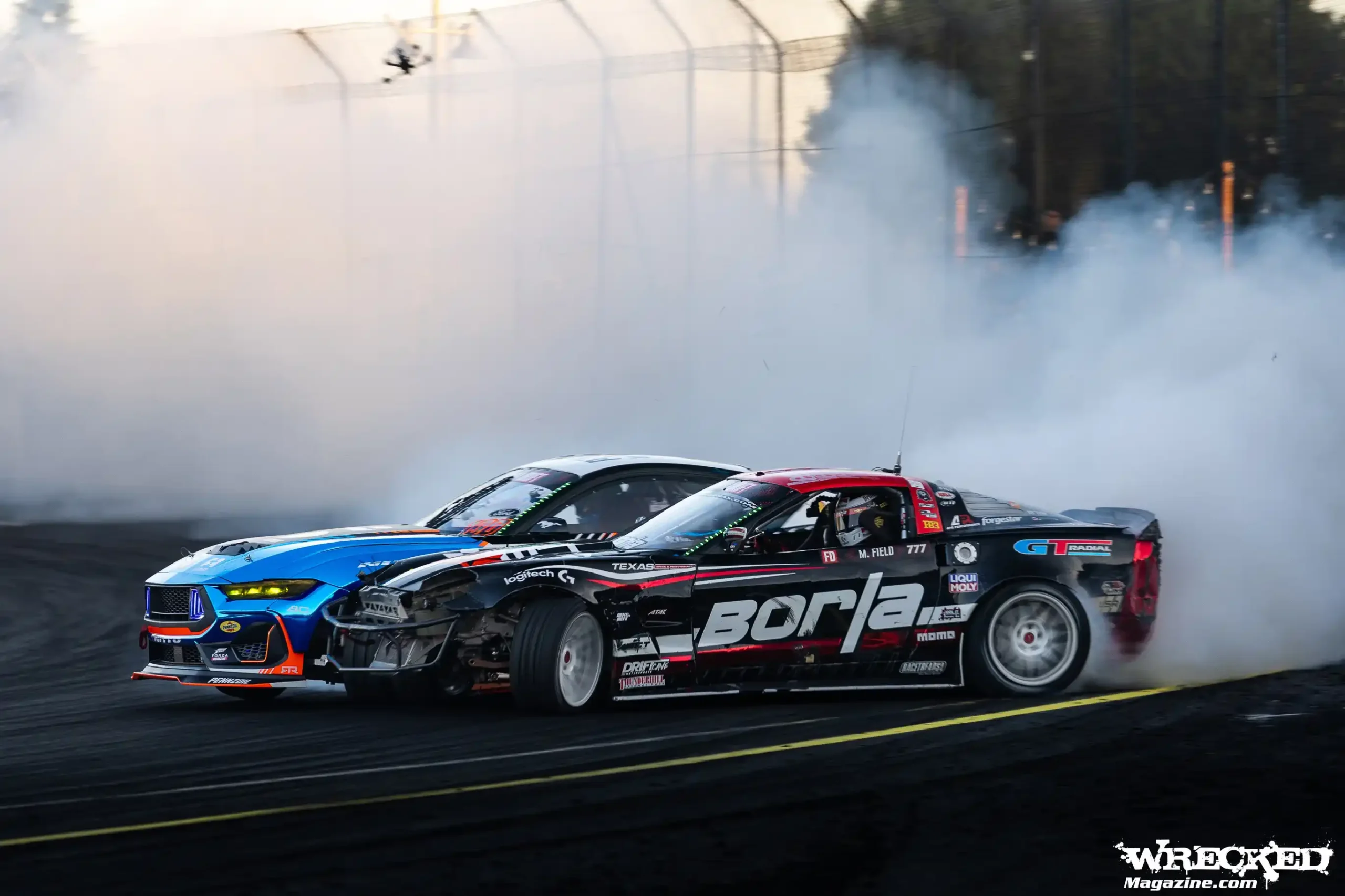
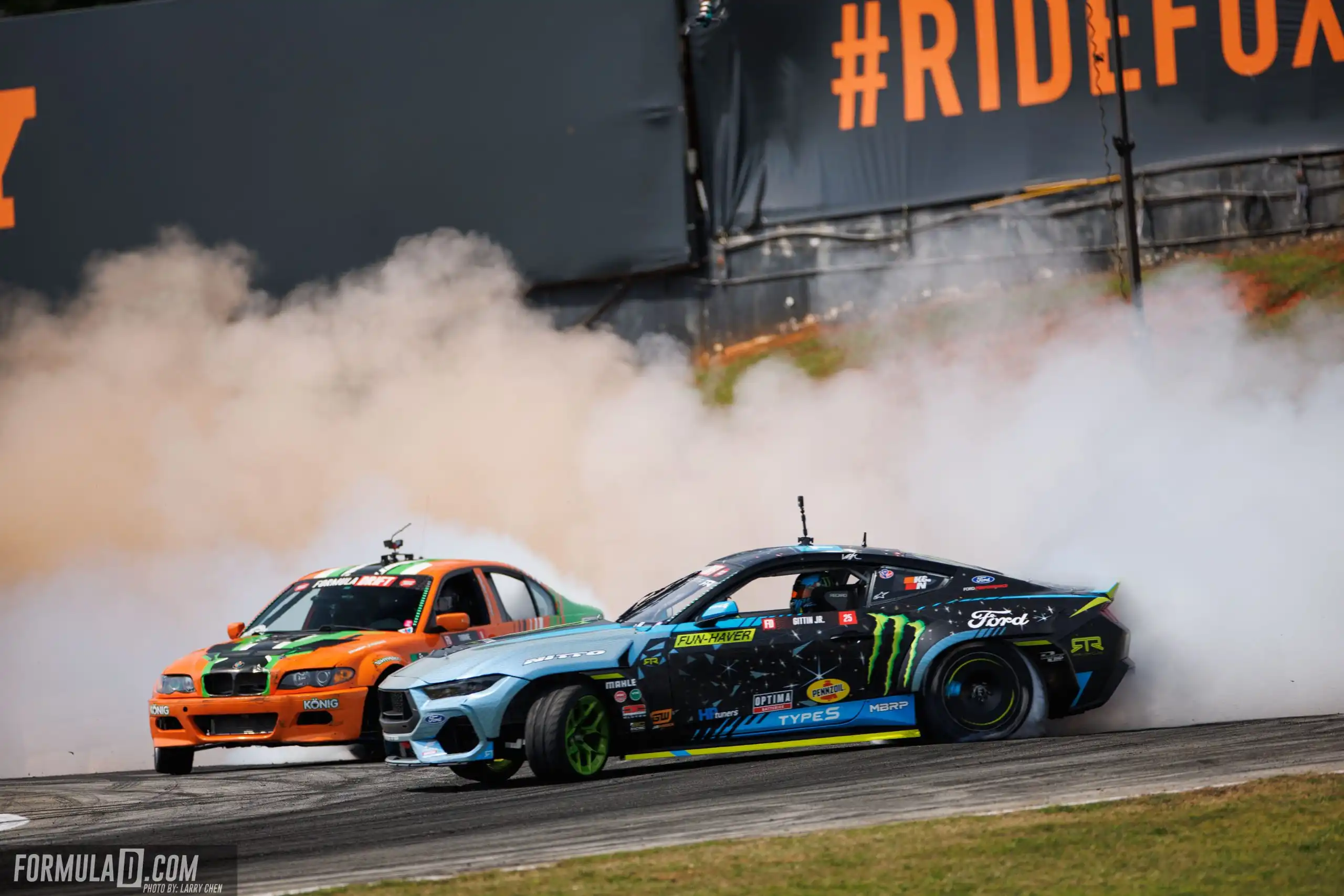
Image note: the three images are historic Formula DRIFT Seattle photographs from Speedhunters, Wrecked Magazine and DrivingLine. They are used for educational venue and technique context, not presented as 2026 practice photographs.