Formula DRIFT Indianapolis 2026 Qualifying Results: Run Scores, Full Order & Top Qualifier
Jack Shanahan claimed the first PRO qualifying victory at Indianapolis Raceway Park with 84.63 points, leading a 29-driver classification shaped by a new course, a revised clipping reference and Formula DRIFT’s UDSM scoring system.
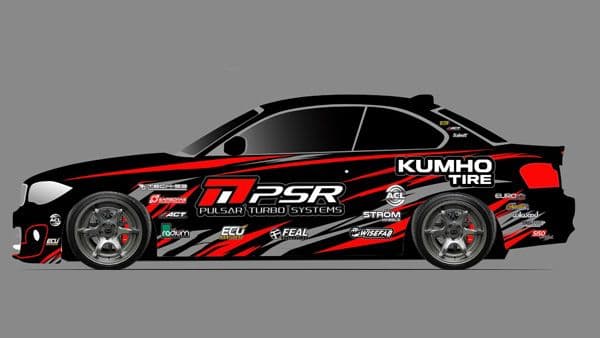
The Formula DRIFT Indianapolis 2026 qualifying results put Jack Shanahan at the top of the order after a decisive second run in the Pulsar Turbos BMW E82.
Shanahan scored 84.63 points and beat Matt Field by 1.08. Aurimas Bakchis placed third, while championship leader James Deane secured fourth. Those four drivers received the strongest qualifying rewards and bye runs into the Top 16 because the Indianapolis field contained 29 classified competitors rather than a complete 32-car bracket.
This report gives the complete official order, the best published score for every classified driver, the championship bonus points and the bracket consequences. It also explains an important limitation: Formula DRIFT gives each PRO driver two solo qualifying attempts, but its public Indianapolis results do not list both attempt scores for the entire field. The numbers below are therefore the official final qualifying scores, not invented run-by-run figures.
Publication status: Qualifying was complete, but Saturday’s PRO main competition had not started when this report was prepared. The article focuses on the settled qualifying classification and does not assign an Indianapolis event winner.
Who Won Formula DRIFT Indianapolis 2026 Qualifying?
Jack Shanahan takes the first FD Indy number-one seedJack Shanahan won Formula DRIFT Indianapolis 2026 qualifying with 84.63 points on his second run. Matt Field qualified second, 1.08 points behind. Aurimas Bakchis placed third with 82.7, and championship leader James Deane completed the top four with 82.53.
Shanahan’s result combined precision with timing. Matt Field had led most of the session in the Borla-backed Corvette, but Shanahan improved on his second attempt and moved ahead at the end. Formula DRIFT described the winning run as a display of precise car placement and real flair.
That description matters because PRO qualifying is not a speed trap or a conventional lap-time contest. The driver must place the car on the prescribed line, carry the requested angle and still show commitment and fluidity. Shanahan did all three well enough to take the four-point qualifying bonus.
The official Formula DRIFT driver page lists his Pulsar Turbos E82 at 900 horsepower with a BMW engine, Kumho tires, Feal suspension and ECU Master control. Several rivals have higher published power figures, but qualifying rewarded usable performance rather than peak output. A driver cannot convert extra horsepower into points when the car misses a zone or needs a visible correction.
winning score
over Matt Field
qualifiers
Top 16 byes
from UDSM line/angle
Jack Shanahan
A second-run improvement delivered accurate placement, style and the number-one seed.
Matt Field
Field recovered from heavy practice contact and remained only 1.08 points from the top.
Aurimas Bakchis
The new BRZ continued its development with another front-row championship result.
Why Shanahan’s second run was decisive
Each PRO driver receives two solo attempts and keeps the higher score. That format gives the first run two possible purposes. A driver can establish a safe number, or attack immediately and leave the second attempt as a recovery. The ideal situation is a valid first score followed by a more aggressive second run.
Shanahan used the opportunity to improve. His final number was not only enough for first; it also placed him 2.1 points ahead of James Deane’s precise fourth-place score. In a tightly grouped top ten, a gain of two points can shift a driver several bracket positions.
Qualifying first also reduced Shanahan’s Saturday workload. With only 29 classified drivers, the top four seeds advanced directly to the Top 16. Fewer competitive runs mean fewer opportunities for contact, mechanical failure or tire-management mistakes. The benefit is larger than the four championship points alone.
Indianapolis did not reward the loudest or most powerful package. It rewarded the driver who most accurately joined line, angle and style on the run that counted.
Formula DRIFT Indianapolis Full Qualifying Order
All 29 classified drivers and their published best scoresThe official Indianapolis classification contains 29 scored drivers. Shanahan led Field, Bakchis and Deane. Jeff Jones was listed 29th with 0.0 after a practice crash prevented him from completing a successful qualifying run. Four additional roster names appeared as TBD and are not counted as classified positions.
The table uses the one-decimal figures displayed on Formula DRIFT’s official results page. The series’ news report supplies more precise numbers for Shanahan, Field, Deane and leading rookie Cole Richards. Those extra decimal places are shown in the analysis, but the order below follows the official results display.
| Pos. | Driver | Best published score | Rounded gap to P1 | Qualifying bonus | Bracket note |
|---|---|---|---|---|---|
| 1 | Jack Shanahan | 84.6 | — | 4 | Top 16 bye |
| 2 | Matt Field | 83.5 | 1.1 | 3 | Top 16 bye |
| 3 | Aurimas Bakchis | 82.7 | 1.9 | 2 | Top 16 bye |
| 4 | James Deane | 82.5 | 2.1 | 1 | Top 16 bye |
| 5 | Chris Forsberg | 82.5 | 2.1 | 1 | Top 32 seed |
| 6 | Tommy Lemaire | 81.7 | 2.9 | 1 | Top 32 seed |
| 7 | Branden Sorensen | 81.6 | 3.0 | 1 | Top 32 seed |
| 8 | Cole Richards | 80.9 | 3.7 | 1 | Leading rookie |
| 9 | Adam LZ | 80.1 | 4.5 | 1 | Top 32 seed |
| 10 | Conor Shanahan | 79.9 | 4.7 | 1 | Top 32 seed |
| 11 | Ryan Tuerck | 79.8 | 4.8 | 1 | Top 32 seed |
| 12 | Ben Hobson | 79.6 | 5.0 | 1 | Top 32 seed |
| 13 | Dylan Hughes | 79.0 | 5.6 | 1 | Top 32 seed |
| 14 | Ken Gushi | 77.6 | 7.0 | 1 | Top 32 seed |
| 15 | Wataru Masuyama | 76.3 | 8.3 | 1 | Top 32 seed |
| 16 | Trenton Beechum | 76.0 | 8.6 | 1 | Top-half seed |
| 17 | Cody Buchanan | 75.8 | 8.8 | 1 | Rookie |
| 18 | Connor O’Sullivan | 75.3 | 9.3 | 1 | Top 32 seed |
| 19 | Rome Charpentier | 75.1 | 9.5 | 1 | Top 32 seed |
| 20 | Fredric Aasbo | 74.3 | 10.3 | 1 | Three-time champion |
| 21 | Daniel Stuke | 71.2 | 13.4 | 1 | Top 32 seed |
| 22 | Dan Burkett | 71.1 | 13.5 | 1 | Top 32 seed |
| 23 | Nate Chen | 70.0 | 14.6 | 1 | Rookie |
| 24 | Andy Hateley | 68.5 | 16.1 | 1 | Top 32 seed |
| 25 | Ryan Litteral | 67.8 | 16.8 | 1 | Driver Liaison |
| 26 | Rudy Hansen | 67.1 | 17.5 | 1 | Top 32 seed |
| 27 | Derek Madison | 61.8 | 22.8 | 1 | Top 32 seed |
| 28 | Jhonnattan Castro | 58.0 | 26.6 | 1 | Top 32 seed |
| 29 | Jeff Jones | 0.0 | 84.6 | 1* | No Saturday start |
The championship-point display on Formula DRIFT’s results page lists one point for Jones in the event-result section, while the official event report states that he did not complete a successful run and would not compete Saturday. The qualifying classification itself remains 29th with 0.0. The asterisk preserves that distinction instead of treating a zero as a normal completed score.
Four names remained listed as TBD
The official results page also displayed Federico Sceriffo, Hiroya Minowa, Diego Higa and Simen Olsen as TBD. Formula DRIFT’s event report explicitly says 29 drivers competed for the Top 32 places. Therefore, those four roster entries are not inserted into the numbered classification and are not assigned scores.
This distinction matters for search results that describe “positions 1 to 33.” The official page contains 33 names, but only 29 have positions and scores. A complete report should show the classified order and explain the TBD entries rather than inventing four finishing places.
Run Scores Explained: What the Published Numbers Mean
Best-score classification, precision and score gapsFormula DRIFT confirms that each PRO driver receives two qualifying runs and keeps the better score. However, the public Indianapolis classification provides one final score for each driver, not a complete first-run and second-run breakdown. Only selected attempt details appear in the official report, including Shanahan’s winning second run.
The phrase “run scores” can create confusion. A driver may complete two attempts, but the results page shows the score used for classification. The unused attempt is not published for every driver. That prevents a full comparison of consistency, improvement and first-run risk across all 29 entrants.
What is public remains useful. The final score shows the strongest judged performance each driver produced. It also determines seed position, qualifying bonus points and the first stage of the competition bracket. In that sense, the displayed number is the most important run score even when the second value is unavailable.
Precise scores versus rounded display scores
Formula DRIFT’s results table rounds to one decimal place. The official qualifying report provides greater precision for selected drivers: Shanahan 84.63, Field 83.55, Deane 82.53 and Richards 80.66. Bakchis is stated as 82.7.
That difference explains why Deane and Forsberg both appear on 82.5 in the displayed table, yet Deane is ranked fourth. The underlying score or tie-breaking procedure placed Deane ahead. It would be misleading to call the two drivers perfectly tied simply because the public table shows the same tenth.
The same issue applies to Richards. His precise 80.66 appears as 80.9 on the results page available at publication. Because the official event report gives 80.66, the two Formula DRIFT pages are not perfectly aligned on that displayed value. The classification position is consistent: Richards is eighth and the leading rookie. This article preserves the official order and notes the published discrepancy instead of silently choosing one source.
The top ten were separated by less than five displayed points
Shanahan’s displayed 84.6 and Conor Shanahan’s 79.9 were separated by 4.7 points. That compression suggests the leading cars reached a broadly similar understanding of the revised course. Differences came from how completely each driver filled the line, sustained angle and presented the run to the judges.
In a conventional race, a small time gap can be created anywhere around the lap. In Formula DRIFT qualifying, a small score gap can come from several judged details. A driver may be slightly shallow in an outside zone, reduce angle during a transition or make a steering correction that weakens style. Each issue can be minor, but the total changes the order.
Readers coming from timed motorsport can compare this with our guides to how race timing works and how racing drivers qualify. Formula DRIFT uses a judged performance rather than a lap time, yet both systems use qualifying to organize competition and reward execution under limited attempts.
Why 0.0 does not describe Jones’ normal ability
Jeff Jones crashed his Nissan 370Z in practice and could not successfully complete a qualifying run. His 0.0 is therefore an event circumstance, not a representative measure of his usual pace. Formula DRIFT noted that every competitor would have advanced if each completed at least one run because there were fewer than 32 drivers.
That made reliability the first threshold. A modest completed run would have placed Jones in the bracket. The crash removed that option and left a blank position opposite Deane in the bracket. It is a sharp example of how practice damage can affect qualifying before judging quality becomes relevant.
For additional context on incident chains, see what causes crashes in motor racing. Drift contact has its own dynamics because the cars travel at high yaw angles, but the basic issues of reaction time, visibility, grip and closing speed still apply.
How Formula DRIFT PRO Qualifying Worked at Indianapolis
Two runs, UDSM measurement and a style scoreEach PRO driver receives two solo qualifying runs and keeps the higher score. Formula DRIFT’s UDSM system can quantify up to 80 percent of the score through line and angle data. The remaining 20 percent is awarded by the three-judge panel for driving style.
Two solo attempts returned for the 2026 season
The PRO drivers voted to return to solo qualifying in 2026. Each driver has two opportunities to produce a best score. For rounds after the opener, the running order is based on the reverse of the current championship standings, placing the leading championship drivers later in the session.
Solo qualifying differs from a tandem battle. The driver does not need to react to another car, but there is nowhere to hide a line error. The course reference is fixed, and the run is compared with the required geometry. A driver may create more smoke or noise than a rival and still score lower if the car does not occupy the correct areas.
The basic purpose resembles other categories: qualifying creates a competition order. Our explainers on grid position and pole position describe timed racing terminology. Formula DRIFT normally calls the winner the top qualifier or number-one seed rather than a pole sitter, but the strategic value is comparable.
UDSM measures line and angle
The Universal Drift Scoring Method comes from Race Data Labs. Formula DRIFT says its telemetry and data system automates the objective parts of a qualifying score. Up to 80 percent can be calculated from line and vehicle angle.
Line describes where the car travels relative to the prescribed course. The judging map includes outside zones and inside clips. The driver should fill the requested zones and pass close to the clips without making the run look forced or disconnected.
Angle describes how far the car is rotated relative to its direction of travel. More angle is not automatically better at every point. The car must carry the desired angle while preserving momentum and following the line. Excess angle can slow the car or make the next transition difficult.
Data does not remove the judges. The three-person panel still awards the style portion. Style covers the human qualities that make a run convincing: commitment, fluidity, speed presentation, throttle use and the absence of visible hesitation.
Scoring is objective and subjective by design
UDSM quantifies line and angle, while judges retain responsibility for style. The combination gives Formula DRIFT a measurable foundation without reducing a high-level drift run to one sensor value.
The Indianapolis clipping-reference change
Practice on the new course produced several incidents, including heavy contact between Adam LZ and Matt Field. Formula DRIFT changed an Outside Zone to an Inside Clip and moved the qualifying schedule one hour later to give both championships more onboarding time.
The change altered what drivers had to target. An Outside Zone emphasizes rear-car placement near the outside of the course. An Inside Clip emphasizes front-car placement near a point. The switch can affect steering timing, throttle commitment and the shape of the transition.
The leading drivers adapted quickly. Field recovered from the practice collision and qualified second. LZ returned to score 80.1 and place ninth. Their results show that the change and the contact did not prevent both teams from producing competitive cars.
Driver-by-Driver Qualifying Analysis
What the first 2026 Indianapolis order revealedMatt Field: second place after a demanding repair
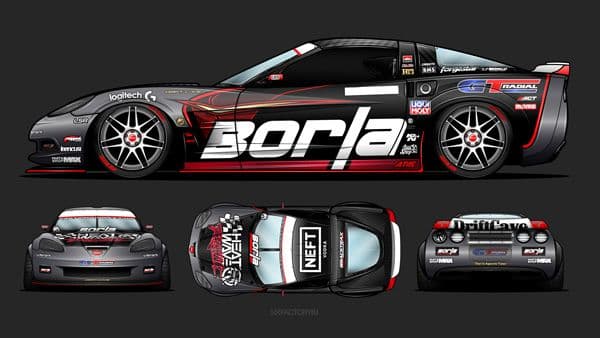
Field’s 83.55 was one of the most impressive results of Thursday. He was involved in the heavy practice collision with LZ, yet his crew returned the Corvette to a condition capable of leading most of qualifying. The result suggests that alignment, steering and suspension checks were completed accurately under time pressure.
His official car profile lists 1,050 horsepower, GT Radial tires, Parts Shop MAX suspension and Link ECU control. That package has more published power than Shanahan’s BMW, but Field’s advantage was only useful because the repaired car remained precise.
Field also helped develop the Indianapolis course as a Driver Liaison. Familiarity with the intended line likely helped, although real asphalt and real tandem traffic introduced conditions that simulator work could not fully reproduce.
Aurimas Bakchis: third in the developing BRZ
Bakchis placed third with 82.7 and collected two championship points. He entered Indianapolis second in the standings, 22 points behind Deane. Qualifying one position ahead of the leader produced a small gain before tandem competition began.
The result also continued the development of his new Subaru BRZ. Formula DRIFT’s official profile lists 900 horsepower, GT Radial tires, Feal Suspension 443 coilovers, a Wisefab angle kit and Haltech control. Bakchis has extensive suspension knowledge, but a new chassis still requires competition mileage.
Third place indicates that the car can deliver accurate solo geometry. The next question is tandem response, where Bakchis must follow another driver’s pace and line through smoke. Qualifying is an encouraging signal, not a complete forecast of battle performance.
James Deane: fourth and strategically secure
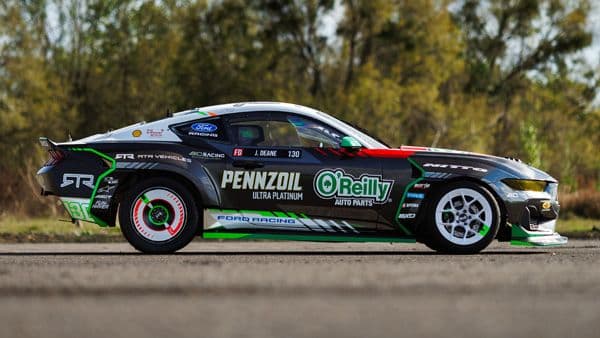
Deane’s precise 82.53 placed him fourth. The number was close to the leaders, and the position earned the final bye. For a championship leader, that is an efficient result: one bonus point, no Top 32 battle and less mechanical exposure.
His Mustang RTR Spec 5-FD is officially listed at 1,249 horsepower with a Ford Racing and Wilkins Racing Engines RY45 V8, Nitto tires, BC Racing custom coilovers and a MoTeC M150. It carries the largest published power figure among the Indianapolis top four.
Deane’s Stafford victory also showed that his eventual main-event form can exceed his qualifying position. He started twelfth there and won. Fourth at Indianapolis gives him a cleaner platform from which to protect the championship lead.
Chris Forsberg and Tommy Lemaire: strong top-six returns
Forsberg’s displayed 82.5 placed him fifth, immediately behind Deane. The three-time champion missed a bye by one position, but the score confirms that the Nissan Z was operating near the front. The car’s official profile lists 1,200 horsepower, Kenda tires, BC Racing coilovers, Wisefab components and MoTeC control.
Lemaire was the standout result outside the established top group. His 81.7 earned sixth and a place ahead of Branden Sorensen, Cole Richards, LZ, Conor Shanahan and Ryan Tuerck. A new venue can reward drivers who accept the required line quickly rather than relying on old track habits.
Branden Sorensen and Cole Richards: championship and rookie value
Sorensen qualified seventh with 81.6. He entered the event third in the championship, with Jack and Conor Shanahan immediately behind. The one qualifying point mattered because the group was already tightly compressed.
Richards was eighth and Formula DRIFT’s leading rookie. The official report lists his score as 80.66, while the results page displayed 80.9. His Toyota GT86 is rated at 750 horsepower. Reaching the top eight with a lower published power figure reinforces the importance of line efficiency and driver confidence.
Adam LZ: ninth after practice contact
LZ’s 80.1 placed him ninth. Like Field, he had to recover from the practice collision. The result put both drivers inside the top nine and showed that each team restored competitive function before qualifying.
LZ’s BMW E36 is a powerful and aggressive package, but Indianapolis required measured commitment. His seed kept him in the upper portion of the order and gave him a manageable first battle against Andy Hateley.
Fredric Aasbo: a difficult twentieth seed
Aasbo’s 74.3 placed the three-time champion twentieth. A low seed does not remove his threat, but it creates a more demanding bracket. He was paired with thirteenth qualifier Dylan Hughes, the top qualifier from Stafford.
This is why qualifying matters even when every completed run advances. A driver can enter the Top 32 with a modest score, but the reward for a stronger run is a more favorable route. The distinction resembles other championships where starting position changes traffic, risk and strategy. See our guide to how racing championships are scored for the broader principle.
Mechanical performance behind the order
The field included BMW, Chevrolet, Subaru, Ford, Nissan and Toyota-based packages with different engine and suspension concepts. Qualifying did not produce a single dominant architecture. BMW took first, Chevrolet second, Subaru third and Ford fourth.
That diversity is one reason drift engineering is so interesting. Power reaches the rear tires through gearing, differential behavior and tire grip. Readers can explore the building blocks in our guides to how car engines work, torque, horsepower and the limited-slip differential.
How Qualifying Set the Indianapolis Top 32 Bracket
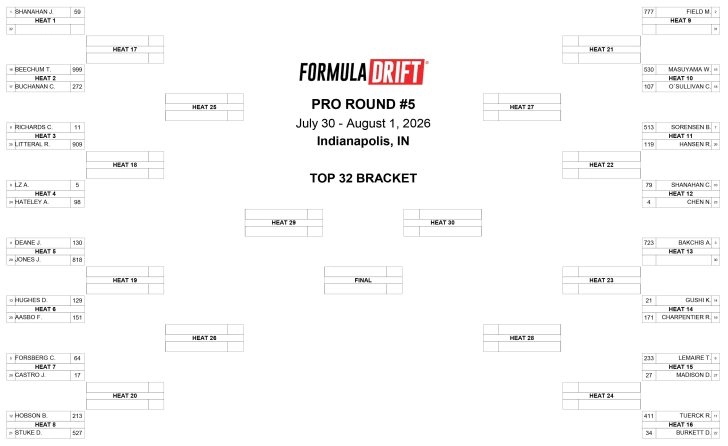
Byes, pairings and the competitive value of each seedOnly 29 drivers recorded classified qualifying positions for a 32-place bracket. That left three empty bracket slots, while Jeff Jones could not start after his practice crash. Formula DRIFT therefore sent the top four qualifiers—Shanahan, Field, Bakchis and Deane—directly into the Top 16.
The top-four bye was the largest practical reward from qualifying. Shanahan, Field, Bakchis and Deane did not need to complete an opening tandem battle. Their cars could remain in the paddock while the rest of the field faced contact, tire use and mechanical stress.
The first-round pairings visible on Formula DRIFT’s published bracket included Trenton Beechum versus Cody Buchanan, Cole Richards versus Ryan Litteral, Adam LZ versus Andy Hateley, Dylan Hughes versus Fredric Aasbo, Chris Forsberg versus Jhonnattan Castro and Ben Hobson versus Daniel Stuke.
The other side included Matt Field’s empty opponent slot, Wataru Masuyama versus Connor O’Sullivan, Branden Sorensen versus Rudy Hansen, Conor Shanahan versus Nate Chen, Aurimas Bakchis’ empty slot, Ken Gushi versus Rome Charpentier, Tommy Lemaire versus Derek Madison and Ryan Tuerck versus Dan Burkett.
Shanahan’s number-one seed
Shanahan’s empty Top 32 position removed the immediate risk of a first battle. When he enters the Top 16, he will face a driver who has already completed a competitive tandem. That opponent may have stronger real-time track information, but Shanahan will have saved tires and mechanical cycles.
Field and Bakchis on the opposite side
Field and Bakchis also received direct passage. Their later potential meeting depends on the evolving bracket, but qualifying placed both high enough to avoid an early collision between leading contenders.
Deane’s championship-protection advantage
Deane’s fourth place is especially valuable because Jones could not start the adjacent bracket position. Formula DRIFT’s published bracket showed Deane opposite Jones’ slot. The bye allows the championship leader to enter the Top 16 without risking a low-reward opening battle.
Why tandem competition can overturn the solo order
Qualifying measures an individual run. Tandem adds another car, smoke, changing pace and responsibility for proximity. A driver who scores lower alone may become a stronger chase driver. A top qualifier may struggle to follow an opponent with unusual speed or deceleration.
The lead driver should run the required line and provide a chaseable pace. The chase driver should imitate angle and line while staying close. Judges must evaluate both runs, which makes the competition more complex than simply repeating a qualifying score.
Qualifying is therefore a probability advantage rather than a guarantee. The top seeds receive better paths and confidence, but battles remain capable of producing upsets. That uncertainty is central to how car racing works across many formats, even though Formula DRIFT decides outcomes through judged tandem runs rather than finishing order.
Qualifying Points and Championship Impact
Small bonuses with meaningful consequencesFormula DRIFT awarded four championship points to Shanahan, three to Field, two to Bakchis and one to every other listed qualifier. The distribution differs from the Round 1 system, where the top three received three, two and one. By Indianapolis, the published event report used the four-three-two-one structure.
Deane entered Indianapolis with a 22-point advantage over Bakchis. Bakchis gained one point on him in qualifying because third paid two and fourth paid one. The gap remained substantial, but every point matters as the championship moves toward Seattle, Las Vegas and the second Long Beach round.
Shanahan’s four points were even more valuable in the fight behind the leading pair. Branden Sorensen, Jack Shanahan and Conor Shanahan were separated by only a few points. Jack’s qualifying victory moved him ahead of Conor and close to Branden in the preliminary standings.
Field collected three points after a difficult opening half of the season. His qualifying result did not immediately return him to title contention, but it demonstrated that the Corvette remained capable of leading a major session.
Auto Cup and Tire Cup signals
The top four represented BMW, Chevrolet, Subaru and Ford, preventing one manufacturer from sweeping the leading bonus positions. The tire picture was also mixed: Kumho won with Shanahan, GT Radial placed Field and Bakchis second and third, and Nitto placed Deane fourth.
Manufacturer and tire championships reward repeated depth as much as one result. The Indianapolis order gave BMW and Kumho the top qualifying headline, while GT Radial placed several cars near the front. A complete Cup assessment requires the main-event result, which was not available at publication.
What the qualifying order said before Saturday
- Best solo form: Jack Shanahan, with the only score above 84.6.
- Strongest repair comeback: Matt Field, second after heavy practice contact.
- Best title-challenger seed: Aurimas Bakchis in third.
- Safest championship outcome: James Deane in fourth with a bye.
- Leading rookie: Cole Richards in eighth.
- Biggest established-name recovery required: Fredric Aasbo from twentieth.
- Only classified non-starter: Jeff Jones with 0.0.
For fans comparing championships, our articles on racing flags, paddle shifters and transmission types offer useful technical context. Formula DRIFT cars are purpose-built, but many core mechanical concepts remain recognizable.
Formula DRIFT Indianapolis Qualifying FAQ
Four direct answers about scores, order and rulesConclusion: Shanahan Converted Precision Into the Best Indianapolis Seed
The first Formula DRIFT Indianapolis qualifying session produced a clear winner and a tightly grouped leading order. Jack Shanahan’s 84.63 combined accurate placement with enough style to beat Matt Field by 1.08 points. Field’s second place was a major recovery after practice contact, while Bakchis and Deane protected their championship interests with third and fourth.
The full classification also showed how important completion was. Twenty-eight drivers recorded positive scores. Jeff Jones remained on 0.0 after practice damage prevented a successful attempt. With only 29 classified competitors, the top four received direct passage into the Top 16.
UDSM gave the order a measurable base through line and angle, while the judges retained the style component. The result was not a horsepower ranking. BMW, Chevrolet, Subaru and Ford occupied the first four positions, showing that different platforms could meet the same scoring target.
The qualifying table is now settled. The main competition still has to determine whether Shanahan can convert the number-one seed into an event win, whether Field’s repaired Corvette remains consistent, and whether Bakchis can reduce Deane’s championship lead through the tandem rounds.
Sources
- Formula DRIFT qualifying report from Indianapolis — precise leading scores, practice notes, UDSM details, bonus points and bye information.
- Formula DRIFT Indianapolis PRO results page — complete 29-position classification, displayed scores and bracket.
- Formula DRIFT Midwest Mayhem event page — official event name, venue, dates and Eastern Time schedule.
- Formula DRIFT Indianapolis course redesign report — new paving, course development and driver-liaison background.
Score-gap calculations use the one-decimal values displayed on the official results page. Selected precise scores come from Formula DRIFT’s session report. Both attempts were not publicly listed for the complete field, so no missing run values have been created.