What Is Halo In F1 Cars? Formula 1 Halo Device Explained
What is Halo in F1 cars? The Halo is a titanium cockpit protection system fitted above and around the driver’s head. It protects F1 drivers from flying debris, wheel contact, rollover loads, and cockpit intrusion. Formula 1 made the Halo mandatory in 2018, and it has since become one of the sport’s most important safety devices.
The F1 Halo looked strange when it arrived. However, serious crashes quickly proved why Formula 1 needed it.
.jpg)
What is Halo in F1 cars is one of the most common beginner questions in modern Formula 1. The answer is simple at first. The Halo is the curved safety structure around the driver’s cockpit.
However, the full story is more interesting. The Halo changed the look of Formula 1, challenged engineers, angered many fans, and then proved its worth in real accidents.
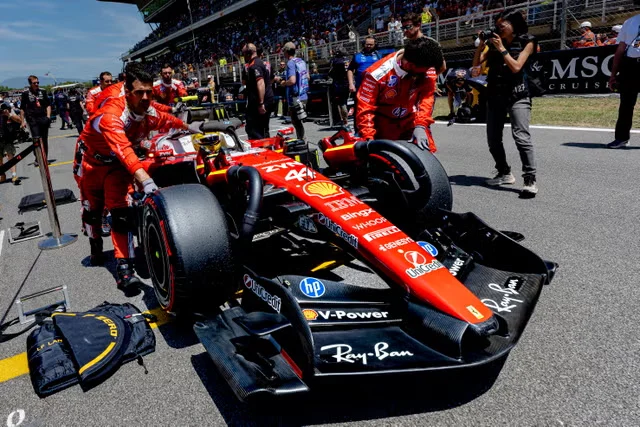
The device sits above the F1 cockpit and bolts into the survival cell. It works with the F1 car monocoque, F1 headrest, HANS device, helmet, belts, and crash structure.
Formula 1’s own safety review calls the Halo one of the most impactful safety developments in the sport’s history. It also lists major incidents where it helped prevent severe injuries, including Lewis Hamilton at Monza and Zhou Guanyu at Silverstone.
What Is The Halo In Formula 1?
The Formula 1 Halo is a three-part cockpit protection structure. It has a central front pillar, a curved upper loop, and rear mounting points.
Its job is to create a protective space around the driver’s helmet. Therefore, if another car, wheel, barrier, or large piece of debris reaches the cockpit area, the Halo can deflect or carry the impact load.
The Halo does not make the car closed-cockpit. F1 remains an open-wheel and open-cockpit category. However, the Halo adds a strong protective frame where older F1 cars had open air.
Race analyst view: The Halo is not there for normal racing. It is there for the one accident no driver wants to imagine.
Why Do F1 Cars Have The Halo?
F1 cars have the Halo because open-cockpit racing exposes the driver’s head. A helmet helps, but it cannot stop a wheel, car, or barrier from reaching the cockpit.
Earlier safety work focused on the survival cell, crash structures, wheel tethers, stronger helmets, and better medical procedures. However, accidents involving cockpit intrusion and head impact showed another risk area.
Formula 1 later studied multiple frontal protection ideas. These included canopies, shields, aeroscreen-style designs, and the Halo. After FIA testing, the Halo became the selected solution.
This is why Halo safety system discussions connect with Kevlar in F1 cars, Nomex in F1, G-force in F1, and motor racing crashes.
What Is The F1 Halo Made Of?
The F1 Halo is made from Grade 5 titanium alloy. Titanium is used because it combines strength, stiffness, heat resistance, and relatively low weight.
The finished device weighs around 7 kg before teams add fairings or permitted aerodynamic covers. That is not much for a road car. However, in Formula 1, 7 kg high on the chassis matters.
FIA production coverage explains that the Halo must withstand 125 kN from above for five seconds and 125 kN from the side. That is roughly equivalent to 12 tonnes of force.
| Halo Feature | Purpose | Why It Matters |
|---|---|---|
| Grade 5 titanium | Strong, light structural material | Survives extreme impact loads |
| Central pillar | Supports the front of the loop | Helps manage frontal cockpit intrusion |
| Rear mounts | Connect Halo to the chassis | Transfers crash forces into the survival cell |
| Aero fairing | Smooths airflow around the device | Helps teams reduce aerodynamic loss |
When Was The Halo Introduced In Formula 1?
The Halo became mandatory in Formula 1 in 2018. Before that, the idea faced serious opposition from fans, teams, and some drivers.
The objections were easy to understand. It changed the car’s appearance. It also moved F1 away from the traditional open-cockpit look.
However, the safety case won. Formula 1’s technical coverage says Mercedes first presented the Halo concept in 2015, and FIA testing helped choose it for 2018 implementation.
That decision now looks like one of F1’s strongest safety calls. The debate did not vanish immediately. Yet real crashes changed the tone very quickly.
.jpg)
Which F1 Crashes Proved The Halo Works?
Several incidents made the F1 Halo impossible to dismiss. At Spa in 2018, Fernando Alonso’s McLaren launched over Charles Leclerc’s Sauber. The Halo took visible contact above Leclerc’s cockpit.
At Bahrain in 2020, Romain Grosjean’s Haas pierced the barrier and split during a huge fireball crash. Grosjean later praised the Halo and said he would not be able to speak without it.
At Monza in 2021, Max Verstappen’s Red Bull rode over Lewis Hamilton’s Mercedes. The Halo helped keep the car and tyre away from Hamilton’s helmet and neck area.
At Silverstone in 2022, Zhou Guanyu’s car flipped upside down and slid across the track. Formula 1 later highlighted the Halo as a major safety factor in that frightening crash.
Does The Halo Affect F1 Performance?
Yes, but teams manage it. The Halo adds weight and changes airflow around the cockpit. It can also influence the car’s centre of gravity because it sits high on the chassis.
However, Formula 1 engineers quickly learned to package it. Teams use permitted aerodynamic fairings around the Halo to manage airflow toward the airbox and rear bodywork.
That links the Halo to F1 bodywork, the airbox, the diffuser, and downforce. In F1, even safety parts become engineering challenges.
Halo Vs Aeroscreen: What Is The Difference?
The Halo is an open titanium structure. The Aeroscreen, used in IndyCar, combines a structural frame with a transparent screen.
The Halo leaves the cockpit open to airflow. Meanwhile, an Aeroscreen offers more enclosed protection from small debris and airflow. However, it adds different cooling, visibility, weight, and ventilation challenges.
Formula 1 tested different concepts before choosing the Halo. Racecar Engineering notes that the FIA looked at Halo, Shield, and Aeroscreen-style ideas before the Halo became the F1 solution.
Does The Halo Reduce Driver Visibility?
The Halo affects the view, but not as much as many fans first expected. The central pillar sits in front of the driver, yet drivers mainly look through corners, mirrors, braking points, and reference marks.
At first, visibility was a major concern. However, drivers adapted quickly. The bigger debate became aesthetics, not race usability.
In practice, drivers now treat the Halo like any other cockpit element. They notice it far less than spectators do.
Final Verdict
The Halo in F1 cars is a titanium cockpit protection system. It protects the driver from impacts that older open-cockpit cars could not manage well.
It was controversial because it changed the look of Formula 1. However, crashes involving Leclerc, Grosjean, Hamilton, and Zhou showed why it belongs on the car.
For beginners, the answer is simple. The Halo protects the driver’s head. For serious fans, the better answer is this: it is a load-bearing safety structure that changed the survival odds in modern Formula 1.
FAQs About Halo In F1 Cars
What is Halo in F1 cars?
The Halo is a titanium cockpit protection structure around the driver’s head. It protects against debris, car contact, and cockpit intrusion.
When was the Halo introduced in Formula 1?
The Halo became mandatory in Formula 1 for the 2018 season.
What is the F1 Halo made of?
The Formula 1 Halo is made from Grade 5 titanium alloy.
How strong is the Halo?
FIA production guidance says the Halo must withstand 125 kN from above and 125 kN from the side for five seconds.
Does the Halo replace HANS or the headrest?
No. The Halo protects the cockpit from outside impacts. HANS and the headrest protect the driver inside the cockpit.