Hungarian Grand Prix 2026 Preview: Championship Contenders, Hungaroring Track Guide & Predictions
Formula 1’s last race before the summer break arrives at the tightest, twistiest circuit on the calendar. Here is everything ahead of round 13 — the title fight, the Hungaroring’s brutal corner sequence, tyre strategy, and our honest predictions.
Hungarian Grand Prix 2026 Preview: Championship Contenders, Hungaroring Track Guide & Predictions
F1’s last race before the summer break — everything ahead of round 13 at the Hungaroring.
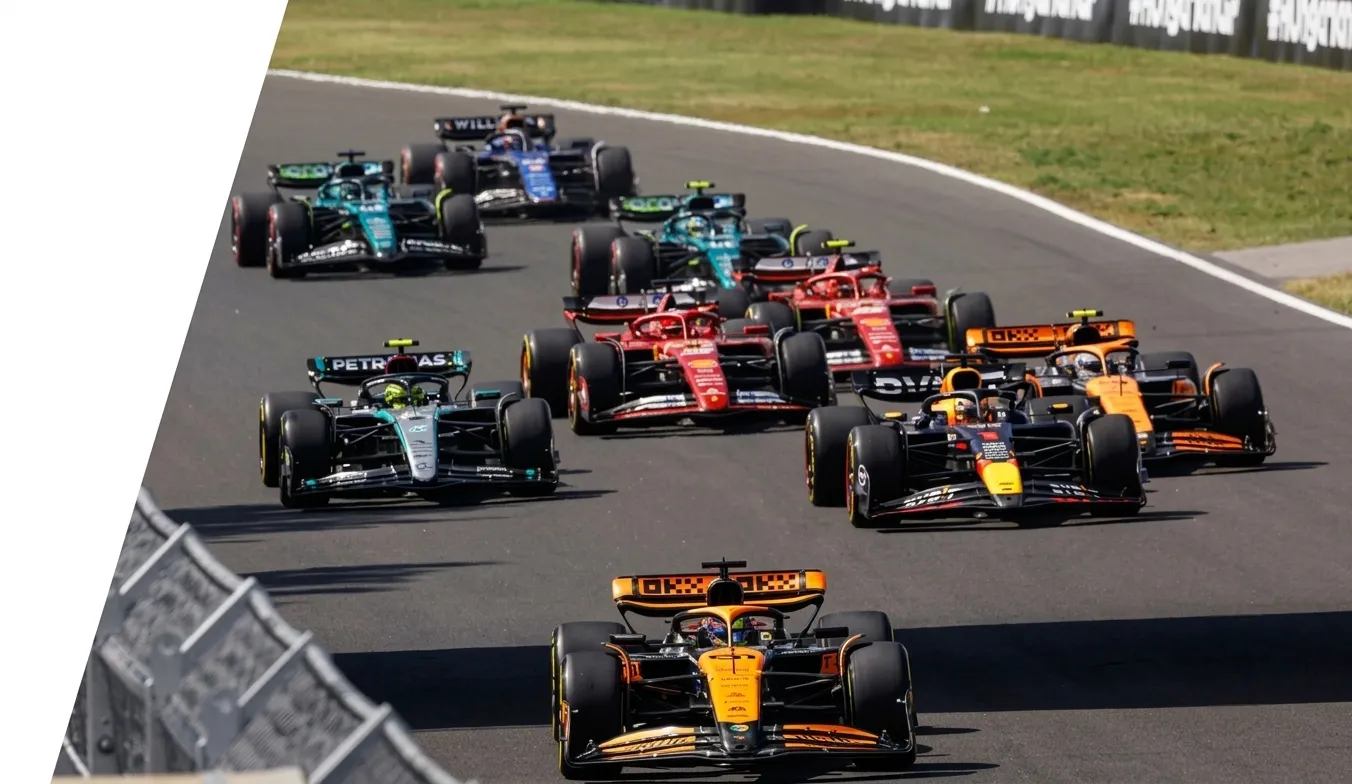
Formula 1 heads to Budapest for the 40th-plus running of the Hungarian Grand Prix, the final round before the summer shutdown and a circuit unlike anything else on the calendar. Often called “Monaco without the walls,” the Hungaroring trades barrier-skimming glamour for a relentless, twisting rhythm that punishes a single mistake and rewards pure car balance over horsepower.
With Kimi Antonelli holding a 40-point lead over teammate George Russell heading into round 13, and Mercedes dominating the Constructors’ standings, Hungary arrives at a pivotal moment in the 2026 season. This preview covers the full weekend schedule, the championship picture, a corner-by-corner breakdown of the Hungaroring, tyre strategy, and our predictions for who walks away with the trophy before the paddock empties for August.
Hungarian Grand Prix 2026 — Quick Overview
The Hungarian Grand Prix returns to the Hungaroring near Mogyoród, just outside Budapest, for round 13 of the 2026 Formula 1 World Championship. The race weekend runs from 24 to 26 July, with the Grand Prix itself on Sunday afternoon. This marks the final race before Formula 1’s mandatory summer break, giving every team extra motivation to leave Hungary with momentum heading into the second half of the season.
The Hungaroring has hosted the race every year since 1986, making it one of the longest-running fixtures on the modern calendar and the first Grand Prix ever held behind the former Iron Curtain. The circuit’s identity has barely changed since a 2003 update extended the main straight — it remains one of the shortest, tightest, and most technically demanding tracks F1 visits all year.
The Hungaroring has just one genuine straight and a dense sequence of medium-speed corners that demands Monaco-levels of downforce. Unlike Monaco’s barrier-lined streets, however, Hungary’s run-off areas are more forgiving — meaning the comparison is about the driving challenge, not the crash risk. Drivers who find rhythm through the middle sector tend to dominate qualifying, which is everything at a track where qualifying position matters more than almost anywhere else on the calendar.
Hungarian GP 2026 Weekend Schedule
The Hungarian GP follows the traditional weekend format — no Sprint race here. That means a full hour of free practice across Friday and Saturday morning before qualifying sets the grid for Sunday. Below is the complete session schedule in Hungaroring local time (CEST, UTC+2).
24 July
24 July
25 July
25 July
26 July
⚠ Always confirm exact session times against the official Formula1.com Hungary race hub, as broadcast schedules are subject to change.
The race distance is 70 laps, covering a total of 306.63 km. Because the Hungaroring is one of the shortest circuits on the calendar at 4.381 km, the lap count is correspondingly high compared to longer venues. Drivers get virtually no breathing room across the lap — fourteen corners packed tightly together mean the physical demand of a Hungarian GP is considerable, even though average speeds are relatively low. For the complete 2026 calendar, see our Formula 1 2026 full schedule.
Championship Standings Heading Into Hungary
The 2026 title fight has become a genuine three-way Mercedes-and-Ferrari story heading into Hungary. Kimi Antonelli still leads comfortably, but George Russell’s victory at the Red Bull Ring cut a chunk out of the gap, and Lewis Hamilton’s resurgence with Ferrari means the championship picture is far from settled as the field heads to Budapest.
| Pos | Driver | Team | Points |
|---|---|---|---|
| 1 | Kimi Antonelli | Mercedes | 171 |
| 2 | George Russell | Mercedes | 131 |
| 3 | Lewis Hamilton | Ferrari | 125 |
| 4 | Oscar Piastri | McLaren | 80 |
| 5 | Lando Norris | McLaren | 79 |
| 6 | Charles Leclerc | Ferrari | 79 |
| 7 | Max Verstappen | Red Bull Racing | 73 |
| 8 | Isack Hadjar | Red Bull Racing | 42 |
| 9 | Pierre Gasly | Alpine | 41 |
| 10 | Liam Lawson | Racing Bulls | 30 |
In the Constructors’ Championship, Mercedes leads with 302 points — a commanding 98-point advantage over Ferrari in second on 204. McLaren sits third under continued pressure from both teams above, while Red Bull Racing occupies fourth on the back of Verstappen’s improving recent form and Hadjar’s consistent points-scoring. For the full updated table, see our Formula 1 2026 standings page.
Antonelli leads by 40 points, but Hungary’s compressed, low-speed layout has historically produced shock results — Jenson Button won here from 14th on the grid in 2006. Nothing about this circuit guarantees the championship leader an easy weekend.
Hungaroring Track Guide — Corner-by-Corner Breakdown
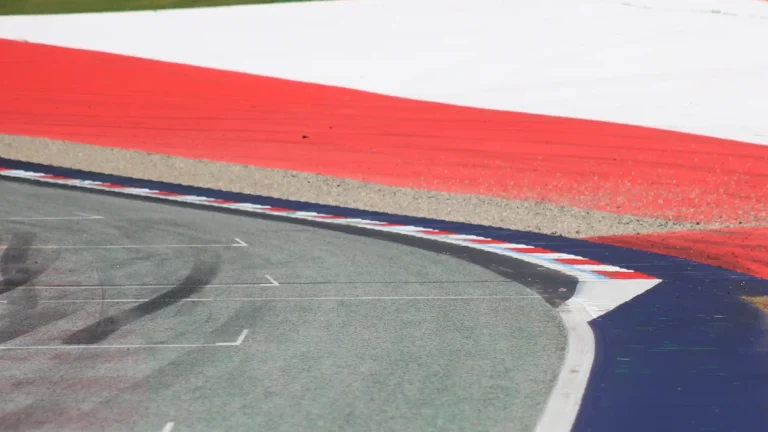
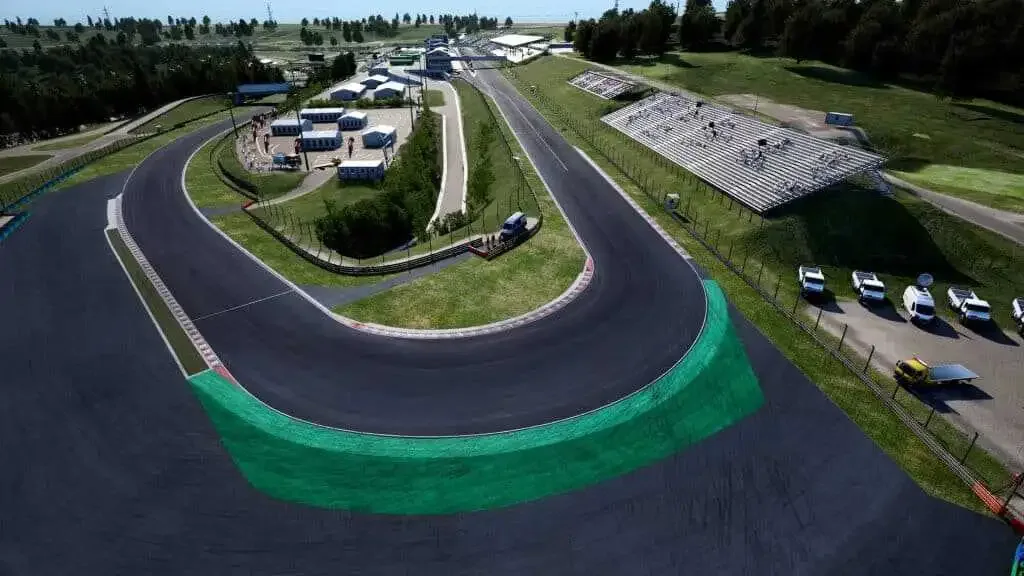
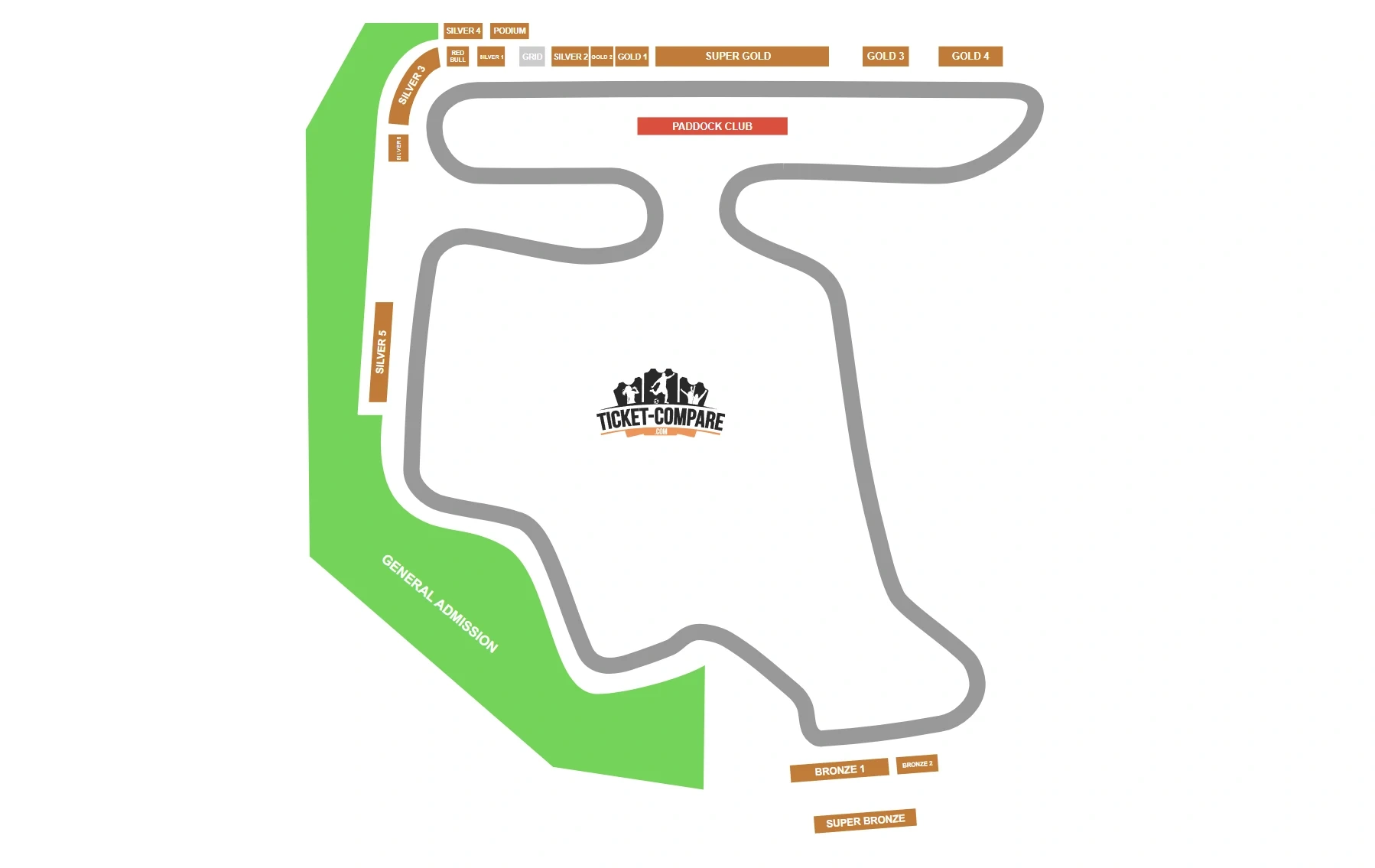
The Hungaroring sits in a natural bowl just outside Budapest, a design choice that gives grandstands around almost the entire circuit a usable view of multiple corners — a rarity in modern Formula 1. The track was built from scratch in under nine months in 1985–86, and aside from a 2003 modification that lengthened the main straight to create a genuine overtaking zone into Turn 1, the layout has remained essentially untouched for four decades.
Why Overtaking Is So Difficult Here
With only one real straight and a relentless sequence of medium-speed corners, the Hungaroring is frequently compared to an oversized go-kart track. Cars rarely build the speed differential needed to complete a clean pass, which means track position won often decided in qualifying rather than on Sunday afternoon. Pirelli’s own race weekend notes describe the main straight into Turn 1 as “the most likely, if not the only, overtaking opportunity” on the entire lap.
Lap Record and Key Stats
The Hungaroring lap record stands at 1:16.627, set by Lewis Hamilton driving for Mercedes during the 2020 Hungarian Grand Prix at an average speed of roughly 205 km/h. Hamilton also holds the all-time qualifying lap record of 1:13.447, set the same weekend. Unsurprisingly, Hamilton dominates the Hungaroring record books more broadly — he holds the record for most wins (8), most pole positions (9), and most podiums (13) at this circuit, a remarkable run that spans both his McLaren and Mercedes careers. Learn more about the best F1 drivers of all time and how their records stack up across different circuits.
Late July in Budapest regularly produces some of the hottest track temperatures of the entire F1 season — Hungary has previously recorded track temperatures as high as 53°C. Combined with the demanding traction zones at the Hungaroring, tyre degradation under extreme heat is a genuine strategic variable that catches teams out almost every year.
DRS Zones at the Hungaroring
The Hungaroring features two DRS zones sharing a single detection point located 5 metres before the final corner. The primary zone runs down the main straight into Turn 1, while a second, shorter zone activates on the short descent between Turns 1 and 2. Understanding how DRS works is particularly important at a circuit like this, where the system represents almost the entirety of the overtaking toolkit available to drivers.
Championship Contenders to Watch in Hungary
The Hungaroring rewards a very specific skill set — patience, rhythm, and a car with strong low-speed mechanical grip rather than outright power. That combination has historically favoured certain drivers and teams more than others, and this year’s contenders bring genuinely contrasting strengths into the weekend.
Beyond the headline names, watch for Isack Hadjar and Pierre Gasly, both showing strong consistency through the midfield this season. Either could capitalise if the front-runners take each other out in the tight opening corners — a real possibility at a circuit notorious for first-lap contact. To follow Max Verstappen’s full career trajectory and recent form, see our when did Verstappen join F1 guide, and for the full grid breakdown, our 2026 F1 drivers page covers every team.
Tyre Strategy and Race Strategy at Hungaroring
Pirelli traditionally brings its softest tyre allocation to Hungary — the C3, C4, and C5 compounds, marked as hard, medium, and soft respectively. Unlike high-energy circuits where braking forces dominate degradation, the Hungaroring’s demands are primarily about traction, especially through the rear axle, as drivers repeatedly accelerate out of slow corners across the lap.
Strategically, most teams favour a one-stop race when track conditions allow it, given the difficulty of overtaking after a pit stop drops a car into traffic. However, extreme heat — a near-annual occurrence in Budapest’s late July climate — frequently forces two-stop strategies as tyre degradation accelerates beyond manageable levels. The most famous example remains 2019, when Mercedes made the bold call to two-stop Lewis Hamilton, allowing him to pass Max Verstappen in the closing laps for a win that looked impossible mid-race.
Because on-track overtaking is so difficult at the Hungaroring, the undercut strategy — pitting before a rival to gain track position on fresher tyres — becomes one of the most powerful tools available to race engineers. Teams monitor rival pit windows obsessively throughout the middle stint, since a well-timed undercut can be worth more than several laps of pure pace.
Setup philosophy at the Hungaroring leans heavily toward maximum downforce — among the highest of the entire season, comparable to Monaco and Singapore. Teams sacrifice straight-line speed almost entirely in exchange for mechanical grip through the endless medium-speed corners. Cars that struggle with low-speed cornering balance elsewhere on the calendar often find Hungary unexpectedly difficult, while cars built around strong rear-end traction tend to over-perform relative to their season average. Our downforce explainer covers the aerodynamic trade-offs teams navigate at circuits like this one in greater depth.
Hungarian GP 2026 Predictions
Predicting a Hungaroring weekend is genuinely difficult precisely because qualifying matters so much more here than at almost any other circuit. Whoever tops Saturday’s session walks into Sunday with a substantial structural advantage, since the chance to overtake into Turn 1 represents close to the only realistic passing opportunity across 70 laps.
Pole favourite: Given Mercedes’ dominant recent form and the team’s historic strength at this circuit (9 Hungaroring victories, the most of any constructor), expect Antonelli or Russell to lead Saturday’s session. However, Lewis Hamilton’s extraordinary individual record here — including the outright qualifying lap record — means writing him out of pole contention would be a mistake, regardless of Ferrari’s current points gap to Mercedes.
Podium prediction: A Mercedes lockout of the front row feels like the most probable outcome based on current form, with Hamilton’s Ferrari and one of the McLaren drivers fighting for the final podium position. However, given the heat-driven tyre unpredictability that has produced surprise results at this circuit before — Button’s 2006 win from 14th remains the standout example — a result outside the obvious favourites would not be a true shock.
Isack Hadjar and Pierre Gasly both arrive in good recent form, and the Hungaroring’s punishing nature has historically produced shock results when front-runners make mistakes in the tight opening sequence. A safety car at the right moment — combined with a bold undercut — could realistically put either driver into podium contention by Sunday afternoon.
Frequently Asked Questions — Hungarian Grand Prix 2026
Conclusion — A Title Fight Heading Into the Break
The Hungaroring rarely produces the most dramatic racing of the season — its tight, twisting layout simply does not allow for it. However, it consistently produces some of the most revealing qualifying sessions and the most strategically intense pit-wall battles, precisely because there is so little room to recover from a mistake once the lights go out.
With Antonelli’s lead trimmed by Russell in Austria and Hamilton’s Ferrari resurgence picking up real momentum, this weekend carries genuine weight. A dominant Mercedes performance would all but settle the championship conversation heading into August. A surprise result — and Hungary has produced plenty of those over the decades — would blow the title fight wide open just as the paddock heads into its summer shutdown. Either way, round 13 deserves your full attention.
What to watch for this weekend
Keep an eye on Saturday’s qualifying above all else — Hungary punishes anyone who fails to extract their car’s maximum potential in that single hour more than almost any other circuit on the calendar. Track temperature will also be worth monitoring; if Budapest delivers its usual late-July heat, expect at least one team to gamble on an aggressive two-stop strategy.
Bookmark our F1 2026 schedule and live standings page to follow every session as the weekend unfolds.
Sources & Further Reading
Race weekend dates, session times, and circuit data verified against the official Formula1.com Hungary race hub. Championship standings sourced from Formula1.com official results. Circuit history, lap records, and corner analysis referenced from F1-Fansite’s Hungaroring circuit guide and Pirelli’s official race weekend technical notes via F1Technical.net. Additional historical statistics cross-checked against Motorsinside’s Hungarian GP key figures report.