Hungarian Grand Prix 2026 Strategy Analysis: Tyre Wear, Track Position & Undercut Chances
F1’s tightest, twistiest circuit turns every Hungarian Grand Prix into a strategic puzzle. Here is the full breakdown of tyre degradation, the undercut window, and why qualifying matters more here than almost anywhere else on the calendar.
Hungarian Grand Prix 2026 Strategy Analysis: Tyre Wear, Track Position & Undercut Chances
Tyre degradation, undercut windows, and why qualifying decides this race more than most.
The Hungaroring favours a one-stop strategy built around Medium and Hard compounds, since its low-speed, high-downforce layout produces relatively gentle tyre wear compared to power circuits. However, with only one realistic overtaking zone into Turn 1, track position is the dominant factor — teams will frequently sacrifice ultimate pace to protect position through the undercut, rather than chase a theoretically faster two-stop plan.
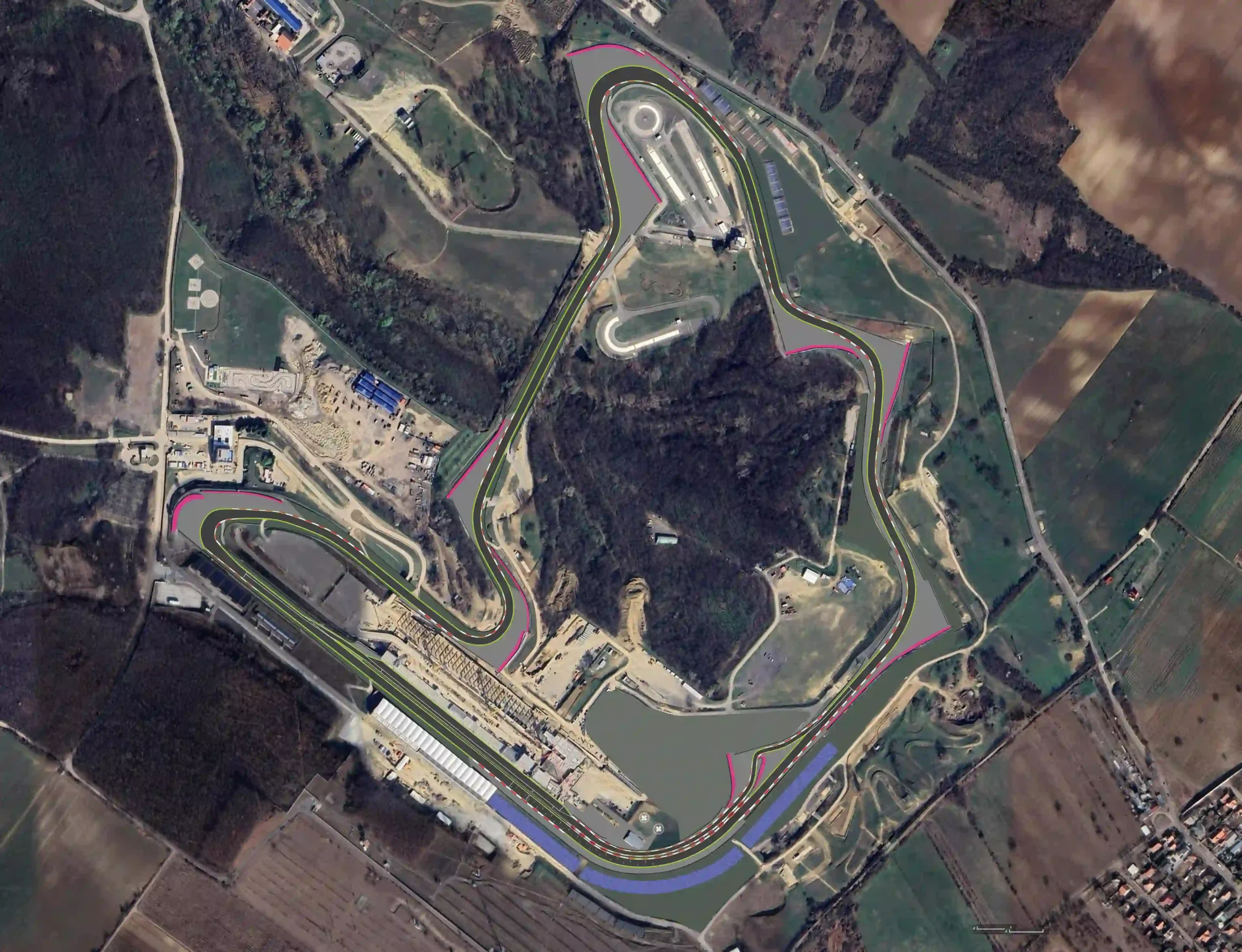
Few circuits punish a bad qualifying lap as severely as the Hungaroring. Often nicknamed “Monaco without the walls,” the 4.381 km track outside Budapest has hosted Formula 1 since 1986 and demands a high-downforce package to cope with its myriad of sharp corners and hairpins. There is essentially one straight worth talking about, which means overtaking is genuinely difficult — and that single fact reshapes every strategic decision teams make across the weekend.
This analysis breaks down exactly how the 2026 Hungarian Grand Prix is likely to play out strategically: how Pirelli’s compounds will degrade across a race distance, why track position outweighs raw pace here more than almost anywhere else on the calendar, when the undercut becomes the dominant tactical weapon, and how a Safety Car can flip the entire pit-window calculation in an instant.
The Hungaroring — Why This Circuit Rewrites the Strategy Playbook
To understand Hungarian Grand Prix strategy, you first need to understand why the Hungaroring behaves so differently from almost every other circuit on the calendar. The lack of straights at the Hungaroring often sees it compared to a karting circuit, and the resemblance is genuinely uncanny. With several series of corners strung together in quick succession, teams opt for Monaco-levels of downforce, with a well-sorted chassis tending to be rewarded over outright horsepower given the short straights on offer.
The 2026 Hungarian Grand Prix is scheduled to take place from 24 to 26 July at the Hungaroring in Budapest, and is set to be round 13 of the 2026 FIA Formula One World Championship. The race weekend follows the traditional format — no sprint race — giving teams a full three-practice-session window to fine-tune their setup before qualifying begins at 16:00 local circuit time on Saturday.
Furthermore, the history at this circuit underlines exactly how much qualifying and track position matter. Lewis Hamilton is the undisputed leader when it comes to Hungarian GP winners, having taken the chequered flag on eight occasions — double the amount achieved by Michael Schumacher at the venue. That dominance from a driver renowned for precision and tyre management, rather than outright aggression, tells its own story about what wins races here. For more on how circuits like this shape strategy more broadly, see our pit stop strategy explainer.
Tyre Wear at the Hungaroring — Compound Behaviour Explained
Tyre degradation at the Hungaroring is governed by two competing forces, and understanding the balance between them is the foundation of every strategic decision teams make. First, the low-speed, high-downforce nature of the circuit means mechanical loading on the tyres is relatively gentle compared to a power circuit like Spa or Silverstone. However, the extreme summer heat in late July creates significant thermal degradation, particularly through the long, continuous-load middle sector.
Consequently, the net effect has historically favoured a one-stop strategy built around the Medium and Hard compounds, with the Soft tyre reserved primarily for qualifying and the opening stint. Moreover, because overtaking is so difficult, teams are reluctant to give up track position for a marginal pace advantage from fresher rubber — unless the degradation data from practice sessions suggests otherwise.
Mechanical wear comes from lateral loading through corners — high at fast circuits, lower at the Hungaroring’s low-speed layout. Thermal degradation comes from sustained heat building in the tyre carcass — high at the Hungaroring due to summer track temperatures and the continuous-load middle sector. Teams that misjudge this balance in practice often find themselves with tyres that “fall off a cliff” in the closing laps of a stint, well before the data predicted.
Tyre Compound Allocation and Stint Length Estimates
| Compound | Colour | Typical Stint Length | Best Use |
|---|---|---|---|
| Soft (C4–C5) | RED | 12–18 laps | Qualifying and short opening stint only |
| Medium (C3) | YELLOW | 22–30 laps | Most common opening stint for race strategy |
| Hard (C1–C2) | WHITE | 35–45 laps | Long second stint to the finish in one-stop plans |
This degradation profile is precisely why tyre compound selection at Hungary tends to be conservative compared to higher-degradation venues. Race engineers will closely monitor Friday and Saturday long-run data to determine whether the 2026 allocation behaves true to historical pattern, or whether the new car generation’s energy recovery demands shift the balance toward an earlier pit window. For a deeper technical breakdown of how compounds are engineered, see our oversteer and understeer explainer, which covers how tyre wear changes a car’s handling balance through a stint.
Why Track Position Decides the Hungarian Grand Prix
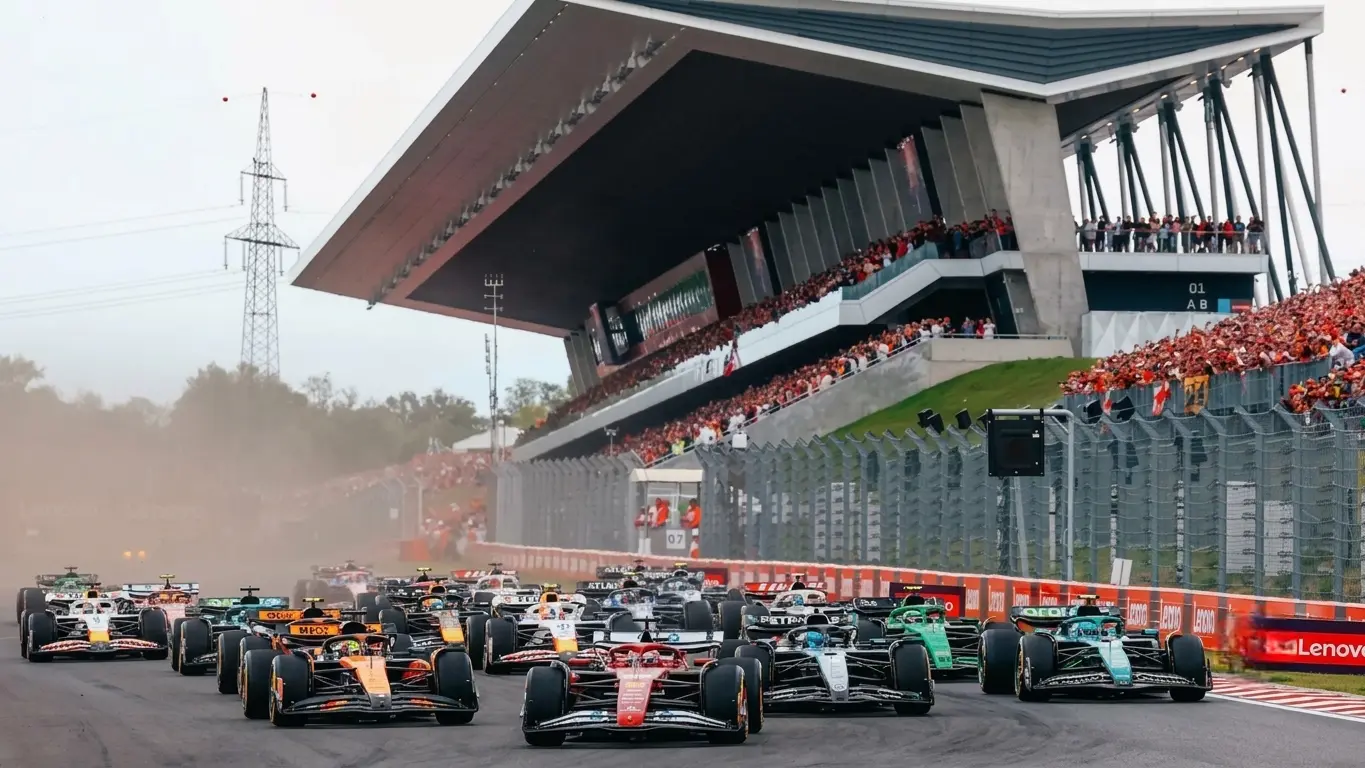
If there is one number that explains the entire Hungarian Grand Prix, it is this: one. That is roughly how many genuine overtaking zones exist around the lap. Every other section of the Hungaroring is either too tight, too technical, or too compromised by dirty air for a clean pass to be realistic without a significant pace deficit from the car ahead.
This single fact inverts the usual strategic calculus seen at higher-overtaking circuits. At a track like Bahrain or Spain, a driver on fresher tyres can often force their way past through pure pace over several laps. At the Hungaroring, however, a driver who qualifies third can spend an entire race stuck directly behind the cars ahead, even with a tyre advantage of ten or more laps — because the dirty air through the middle sector erases any performance edge before the cars reach the one passing zone.
At the Hungaroring, a five-tenths qualifying advantage is often worth more than an entire extra pit stop’s worth of fresh tyres.
Consequently, qualifying becomes disproportionately important here compared to almost any other round of the season. Teams will sacrifice race-trim practice running to chase a perfect qualifying lap, knowing that track position secured on Saturday is genuinely difficult to lose on Sunday — provided tyre management is handled competently. For the full mechanics of how grid positions are determined, see our qualifying format explainer.
Dirty air — the turbulent, low-energy wake left behind a car — disrupts the following car’s downforce, especially through fast and medium-speed corners. The Hungaroring’s flowing middle sector is almost entirely composed of exactly these corner types, meaning a following car loses grip precisely where the Hungaroring demands the most precision. This is why processional races have historically been common here, despite teams’ best strategic efforts to create variation.
Furthermore, the limited DRS effectiveness compounds the problem. With only one zone on the main straight, and that straight being relatively short by F1 standards, the DRS speed advantage is rarely enough on its own to complete a pass — it must be paired with a significant tyre offset or driver error from the car ahead. This is precisely why strategy, not pace, becomes the deciding factor for so many midfield battles at this event.
The Undercut vs the Overcut — Which Wins at Hungary?
Given how difficult on-track passing is, the undercut becomes one of the only reliable ways to gain position at the Hungaroring — and teams know it. The undercut works by pitting a driver earlier than a rival, fitting fresh tyres, and using the immediate performance gain from new rubber to set faster lap times while the rival is still on worn tyres. By the time the rival pits a lap or two later, the undercutting driver has built enough of a gap to emerge ahead.
How the Undercut Plays Out at This Circuit Specifically
The Hungaroring amplifies the undercut’s effectiveness for a simple reason: since drivers cannot easily pass on track, the only way to truly capitalize on a tyre advantage is to convert it into track position via the pits, rather than via a wheel-to-wheel move. Historically, this was demonstrated vividly in 2019, when Mercedes took the bold decision to two-stop Lewis Hamilton, with the Briton going on to pass Max Verstappen in the closing stages for the win — a result built entirely on tyre offset and late-race pace rather than a conventional overtaking move.
Race engineers typically calculate the undercut as effective when the pace differential between old and new tyres exceeds the time lost in the pit lane — roughly 22–23 seconds at most circuits. At Hungary, with overtaking nearly impossible on track, teams will often pull the trigger on an undercut even when the pure numbers are marginal, simply because the alternative — staying out and hoping to pass later — carries an even lower probability of success.
Furthermore, the pit lane itself plays a role in this calculation. Pit lane time loss varies by circuit layout, and at the Hungaroring, the relatively short pit lane combined with a tight pit-entry corner means the undercut window opens and closes quickly. Teams that react a lap too late to a rival’s pit stop often find their undercut attempt nullified before it can be executed. To understand the full mechanics, see our detailed F1 pit stop explainer.
One-Stop vs Two-Stop — Modeling the 2026 Race
Most teams enter the Hungarian Grand Prix weekend planning around a one-stop strategy, transitioning from Medium to Hard tyres around the midpoint of the race. This approach minimizes time lost in the pits and reduces traffic risk — a meaningful factor given how costly it is to lose track position here. However, the one-stop is not without its own challenges, particularly around tyre management in the closing stint.
The Standard One-Stop Plan
A typical one-stop sees a driver start on Medium tyres, run a stint of roughly 25–30 laps, then switch to Hard tyres for the remainder of the race distance. The Hard compound’s lower degradation makes this final stint manageable even under summer heat, provided the driver doesn’t push excessively early in the stint and trigger thermal degradation prematurely.
The Aggressive Two-Stop Plan
A small number of cars — typically those starting outside the top ten or chasing a faster average race pace — may attempt a two-stop strategy. This involves a shorter opening stint, often on Soft tyres, followed by two further stints on Medium or Hard compounds. The theoretical pace advantage from consistently fresher tyres can be significant. However, the additional pit stop adds roughly 20-plus seconds of stationary and in-lane time, and crucially, requires the driver to pass cars on track that a one-stopping rival will not need to overtake at all.
| Strategy | Compound Sequence | Best For | Key Risk |
|---|---|---|---|
| One-Stop | Medium → Hard | Drivers in or near the points, protecting position | Late-stint degradation if mismanaged |
| One-Stop (Alt) | Soft → Hard | Drivers prioritising early track position | Very long final stint on Hard tyres |
| Two-Stop | Soft → Medium → Medium | Cars needing to overtake from poor grid slots | Extra pit-lane time loss; must pass on track |
The smartest teams at the Hungaroring rarely commit to a single rigid plan before the race starts. Instead, they build a flexible framework — a “two-stop shaped like a one-stop” — that allows them to react in real time. If a Safety Car appears at the right moment, a planned two-stop can collapse into a far cheaper one-stop. If track position is threatened, the team can pull forward a planned stop to defend with an undercut.
Safety Car Impact — The Wildcard That Rewrites Every Plan
No strategy discussion is complete without accounting for the Safety Car. At a circuit where overtaking is this difficult, a well-timed caution period is often the single biggest strategic swing factor of the entire race weekend. A Safety Car effectively offers a “free” pit stop — since the field is bunched up and running at reduced speed, the time loss from pitting under caution is dramatically lower than under green-flag conditions.
Therefore, teams that have not yet made their mandatory tyre change will often pit immediately when a Safety Car or Virtual Safety Car is deployed, instantly converting their position relative to rivals who have already stopped. Conversely, a Safety Car that arrives just after a driver has pitted can be deeply frustrating, effectively wasting the time and track position cost of their stop.
Historically, Hungary has produced a moderate Safety Car frequency compared to street circuits, but the combination of high temperatures, tightly packed cars through the middle sector, and a single realistic passing zone means incidents at Turn 1 are not uncommon. Teams build contingency plans into their strategic models specifically for this scenario, ready to convert a chaotic moment into a free strategic advantage. For more detail on how these caution periods are managed, see our racing flags explainer.
Weather and Track Temperature — The Hidden Variable
Late July in Budapest typically brings hot, dry conditions, with track surface temperatures frequently climbing well above 45°C during the race itself. This heat directly compounds the thermal degradation challenge described earlier — tyres that might otherwise hold up well under the circuit’s relatively gentle mechanical loading can begin to overheat and lose performance if a driver pushes too hard, too early, in a stint.
Moreover, sudden summer thunderstorms are not unheard of in the region, and any rain at the Hungaroring creates dramatic strategic complications given how little practice teams typically get in wet conditions at this specific circuit. A wet or mixed-conditions Hungarian Grand Prix would almost certainly produce a far less predictable strategic picture than the dry-weather analysis in this piece, with intermediate and wet tyre choices introducing an entirely different degradation calculation. For more on how conditions affect race planning generally, see our grip and track conditions explainer.
Keep an eye on Friday’s long-run pace data — it tells you more about Sunday’s strategy than any prediction model. Watch which teams run extended Medium-tyre stints in FP2; that is usually the clearest signal of who is building toward a confident one-stop plan versus who is hedging toward a two-stop. For full session timing and how to follow the weekend, see our F1 live stream guide.
Frequently Asked Questions — Hungarian Grand Prix Strategy
The Bottom Line — Strategy at a Track That Punishes Mistakes
The Hungarian Grand Prix rewards precision over aggression, patience over pace, and Saturday performance over Sunday heroics. Every strategic lever discussed in this analysis — tyre compound choice, the undercut window, Safety Car contingencies — exists in service of one overriding truth about the Hungaroring: track position, once secured, is brutally difficult to take away.
Therefore, expect the 2026 race to be decided largely by Saturday’s qualifying session and the opening lap scramble into Turn 1. From there, the team that reads its tyre data most accurately, and reacts fastest to any Safety Car opportunity, will likely walk away with the win — not necessarily the team with the outright fastest car. That is the enduring lesson of Monaco without the walls.
For the latest race weekend build-up, follow our complete 2026 F1 calendar and check live championship standings as the season heads toward its summer break.