NHRA Northwest Nationals 2026 Analysis: Winners, Losers & Championship Impact
Doug Kalitta completed a Western Swing sweep, J.R. Todd converted the Funny Car pole, and Greg Anderson turned Seattle into an eight-point Pro Stock lead. Here is what the results really changed.
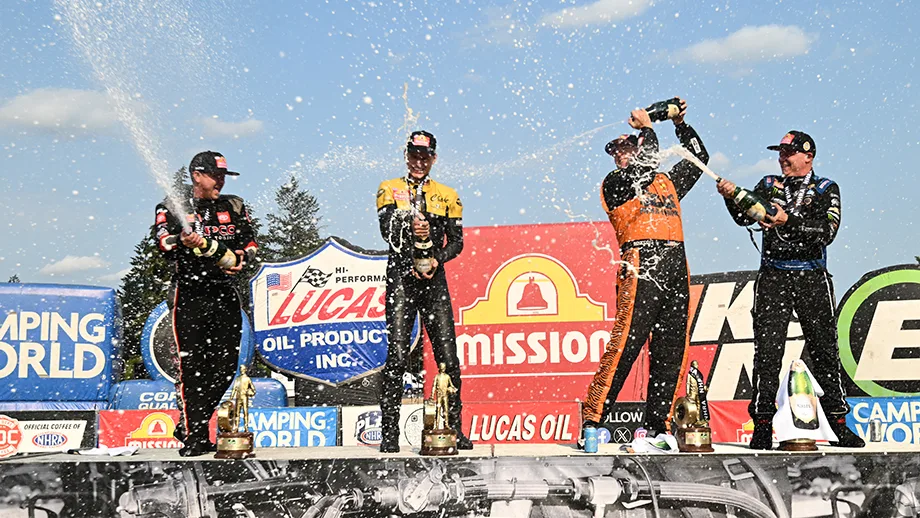
The NHRA Northwest Nationals 2026 analysis begins with a simple result and ends with a much larger championship story. Doug Kalitta, J.R. Todd and Greg Anderson won the three professional trophies at Pacific Raceways, but their victories mattered for different reasons.
Kalitta won a second consecutive race and reduced Shawn Langdon’s Top Fuel lead to five points. Todd delivered a complete No. 1-qualifier-to-winner weekend and moved into the center of the Funny Car title fight. Anderson converted a Seattle victory into the Pro Stock points lead.
The event also exposed the cost of missed opportunities. Langdon lost in round one after a blower-belt problem. Dallas Glenn dominated Pro Stock qualifying but lost in the semifinal. Josh Hart qualified No. 1 in Top Fuel and made the quickest run of Sunday’s opening round, yet did not reach the final.
Kalitta, Todd, Anderson, Kalitta Motorsports and 18-year-old sportsman double winner Ty Gaynor gained the most. Langdon and Glenn lost the most championship leverage, while Hart and defending Funny Car winner Matt Hagan left with speed but no trophy.
Northwest Nationals Results at a Glance
| Class | Winner | Winning ET | MPH | Runner-up | Why it mattered |
|---|---|---|---|---|---|
| Top Fuel | Doug Kalitta | 3.677 | 338.43 | Leah Pruett | Western Swing sweep; 62nd Top Fuel win |
| Funny Car | J.R. Todd | 3.941 | 334.90 | Austin Prock | No. 1 qualifier; first win of 2026 |
| Pro Stock | Greg Anderson | 6.508 | 211.00 | Greg Stanfield | Took the Pro Stock points lead |
Kalitta’s 3.677-second final was the quickest professional winning run of the championship rounds. He defeated Pruett by .0222 second, approximately 11 feet, after leaving first and maintaining a small performance advantage.
Todd defeated back-to-back Funny Car champion Austin Prock. His 3.941 at 334.90 mph completed the first Kalitta Motorsports nitro sweep of the weekend and ended Todd’s early-season win drought.
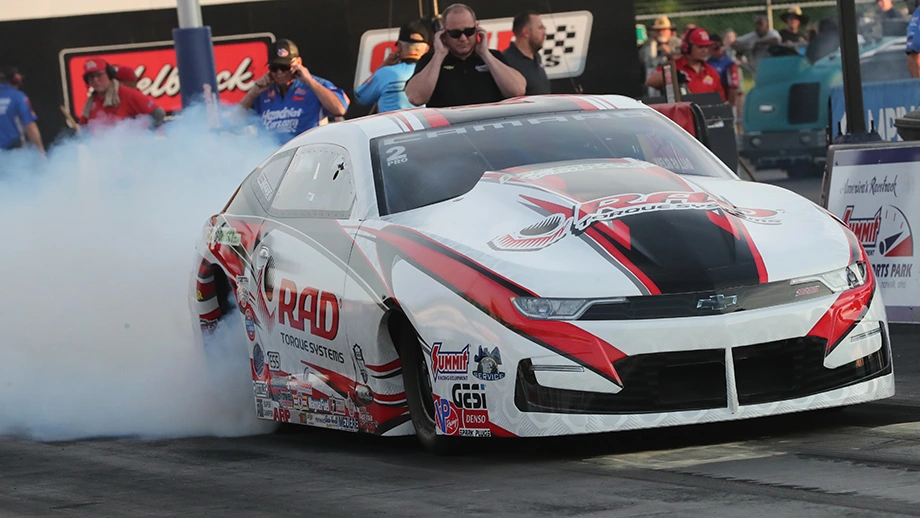
Anderson defeated Greg Stanfield with a 6.508 at 211.00 mph. The victory was more than another Wally: it moved Anderson ahead of teammate Glenn in a championship battle that had been controlled by Glenn for much of the year.
Saturday’s specialty winners and Sunday poles
Antron Brown won Top Fuel, Daniel Wilkerson won Funny Car and Greg Stanfield won Pro Stock.
Josh Hart led Top Fuel, J.R. Todd led Funny Car and Dallas Glenn led Pro Stock.
| Mission class | Winner | ET | MPH |
|---|---|---|---|
| Top Fuel | Antron Brown | 3.730 | 332.59 |
| Funny Car | Daniel Wilkerson | 3.924 | 327.98 |
| Pro Stock | Greg Stanfield | 6.497 | 211.89 |
| Class | No. 1 qualifier | Best ET | Weekend note |
|---|---|---|---|
| Top Fuel | Josh Hart | 3.685 | Second No. 1 of 2026 |
| Funny Car | J.R. Todd | 3.885 | Converted the pole into the event win |
| Pro Stock | Dallas Glenn | 6.470 | Quickest in all four qualifying sessions |
Top Fuel Analysis: Kalitta Turns the Western Swing into a Title Fight
Kalitta arrived in Seattle with momentum from Sonoma, but the opening round turned momentum into immediate championship leverage. He ran 3.669 to defeat Shawn Reed, while points leader Langdon lost to Justin Ashley after the Kalitta Air dragster pitched the blower belt.
That mechanical failure changed the shape of the day. Langdon could no longer defend his lead by matching Kalitta round for round. Every Kalitta win light became a direct points gain.
Kalitta’s path was built on execution, not a perfect day
The reigning champion did not need to own the No. 1 qualifying position. Hart had that distinction and reset low elapsed time with a 3.670 on a first-round bye. Kalitta answered with a slightly quicker 3.669 against a real opponent.
Kalitta later defeated Brown in the semifinal with a 3.72. That run was not the headline number of the weekend, but it demonstrated why the team remains so dangerous. The car did not need to be spectacular in every lane and every condition. It only needed to be clean enough to advance.
The final against Pruett was much closer to the team’s ideal performance. Kalitta left with a .061 reaction time, Pruett followed at .071, and Kalitta’s 3.677 remained ahead of Pruett’s 3.689.
The historical meaning of win No. 62
Seattle gave Kalitta the 62nd Top Fuel victory of his career. That tied three-time champion Larry Dixon for third on the class’s all-time list.
The number also confirmed that Kalitta’s career is no longer defined only by longevity or the championship he finally secured. He is climbing the sport’s historical win table while remaining a current title favorite.
Did Kalitta sweep the Western Swing?
Yes. The shortened 2026 Western Swing consisted of Sonoma and Seattle, and Kalitta won both races. The two-event sweep moved him from a strong second-place contender to only five points behind Langdon.
Langdon left Seattle with 1,107 points. Kalitta left with 1,102. After 12 events, one round could reverse their positions.
Leah Pruett’s runner-up was still valuable
Pruett did not win, but her final-round appearance strengthened her control of third place. She advanced through a field that included the No. 1 qualifier and reached the last pairing with a competitive 3.689.
The 209-point gap to Langdon remained too large for a normal regular-season comeback, but the performance mattered for Countdown preparation. Pruett showed the TSR dragster could run beside the championship leaders in race-day conditions.
Why Josh Hart left as a frustrated winner of qualifying
Hart had the quickest qualifying run and immediately backed up the pace with a 3.670 on his Sunday bye. In pure performance terms, he looked like a potential winner.
That is why the missed opportunity was significant. A No. 1 start reduces first-round risk and provides lane choice, but it does not guarantee the setup will survive every temperature and rubber change.
Funny Car Analysis: Todd Converts the Pole and Joins the Title Pack
Todd’s Seattle weekend was the cleanest professional performance from qualifying through the final. He started first with a 3.885, won four rounds and finished the day with his first victory of the season.
The win mattered because it converted long-standing speed into a complete result. Todd’s DHL Toyota had shown competitive pace earlier in the year, but qualifying promise had not consistently become Sunday trophies.
Why winning from No. 1 was notable
Low qualifiers do not automatically win NHRA national events. Track temperature changes, mechanical failures, driver reactions and opponent improvement all work against the qualifying favorite.
NHRA’s post-race analysis noted that the No. 1 qualifier has historically won fewer than one quarter of eliminator races across a large modern-era sample. Todd therefore completed something that appears more routine than it really is.
The semifinal against Hagan was the decisive race
Todd defeated defending Seattle winner Hagan by only .002 second in the semifinal. That margin was smaller than the gap between many reaction-time readings.
Hagan had a legitimate chance to defend the trophy and close on the points lead. Instead, Todd advanced to the final and took the larger championship gain.
Prock reached the final through driver execution
Prock’s semifinal against Beckman showed the opposite way to win. Beckman ran a quicker 3.918, but Prock’s .046 reaction time beat Beckman’s .076 and produced a holeshot victory with a 3.937.
That starting-line performance placed Prock in the final. Todd then controlled the trophy run with a 3.941 at 334.90 mph.
Funny Car became a five-driver contest
Capps remained the leader with 884 points, but Beckman, Todd, Vandergriff and Hagan all left within 64 points of first place.
Todd moved to third, only 42 points behind Capps. Beckman sat 37 back, Vandergriff 54 back and Hagan 64 back. The difference between first and fifth was just over three rounds.
Todd did not merely end a winless stretch. He inserted himself between Capps and the drivers who had controlled most of the Funny Car conversation.
Who lost the most in Funny Car?
Hagan’s loss was painful because it came by .002 and ended a title defense. Vandergriff also missed a chance to capitalize on his Sonoma win and left Seattle fourth in points.
Capps remained first, yet a 37-point lead is not comfortable in a category where five cars can win on any Sunday. Seattle made the leader more vulnerable without removing him from control.
Pro Stock Analysis: Anderson Wins the Race Glenn Appeared to Control
Glenn looked like the driver to beat for most of the weekend. He qualified No. 1 with a 6.470 and was quickest in all four professional qualifying sessions.
That consistency confirmed the KB Titan car had exceptional raw performance. It did not guarantee the Wally.
Anderson built his day round by round
Anderson opened eliminations with a 6.472 against Stephen Bell. He followed with a 6.507 against Matt Latino.
His semifinal became unusual when Enders’ car turned sharply left shortly after launch. Anderson advanced to the 197th final of his career and met Stanfield.
In the final, Anderson ran 6.508 at 211.00 mph. The win moved him from eight points behind Glenn before Seattle to eight points ahead afterward.
Glenn’s semifinal loss was the weekend’s largest Pro Stock swing
Glenn had the fastest car throughout qualifying and a home-region storyline behind him. A victory could have expanded his championship advantage.
Instead, Stanfield defeated him in the semifinal, approximately 6.50 to 6.51. Anderson then won the final, turning Glenn’s strongest weekend phase into a lost points lead.
Greg Stanfield kept Elite Motorsports in the fight
Stanfield won the Mission #2Fast2Tasty Challenge on Saturday with a 6.497 at 211.89 mph. He then reached Sunday’s final one week after winning Sonoma.
That sequence made him one of Seattle’s biggest winners despite the runner-up result. Elite Motorsports had shown an all-team improvement at Sonoma, and Stanfield backed it up at a track where KB Titan appeared to own the quickest car.
Why reaction time remained critical
The entire 16-car Pro Stock field entered eliminations separated by just over seven hundredths. When performance compresses that tightly, the start becomes part of every crew chief’s strategy.
Hartford’s early elimination illustrated the risk. Jeg Coughlin Jr. beat him on a holeshot despite Hartford making the quicker elapsed-time run.
Anderson left with 1,020 points. Glenn had 1,012. Stanfield remained the leading Elite Motorsports challenger in third with 862.
The Biggest Northwest Nationals Winners
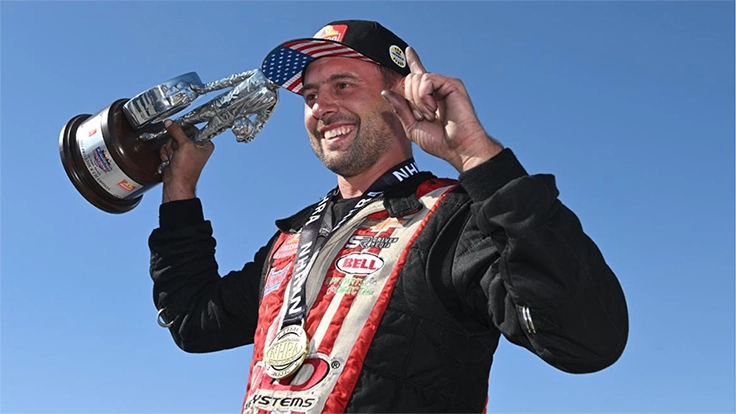
Doug Kalitta
No driver gained more championship leverage. Kalitta won a second straight race, completed the Western Swing sweep, tied Dixon in career wins and reduced an 85-point post-Sonoma gap to five.
J.R. Todd
Todd converted the best qualifying position, beat Hagan in the closest important Funny Car race and entered the top three in points.
Greg Anderson
Anderson won while his closest rival lost in the semifinal. A 16-point relative swing turned an eight-point deficit into an eight-point lead.
Kalitta Motorsports
The organization won both nitro classes. It also left Seattle with Langdon and Kalitta first and second in Top Fuel, plus Todd third in Funny Car.
Greg Stanfield and Elite Motorsports
Stanfield’s Saturday win and Sunday runner-up confirmed Sonoma was not an isolated event. Elite’s quickest threat remained relevant against KB Titan.
Ty Gaynor
At age 18, Gaynor won both Super Stock and Top Dragster. He became the youngest double winner in NHRA history, the 32nd driver to double and the author of the sport’s 48th national-event double.
The Biggest Losers and Missed Opportunities
Shawn Langdon
Langdon’s first-round loss was caused by a blower-belt problem rather than a lack of championship pace. The consequences were still severe. Kalitta used the opening to win four rounds and almost erase the lead.
Dallas Glenn
Glenn’s car was the qualifying benchmark, which made the semifinal loss more expensive. He did not simply miss a trophy; he lost a points lead on a weekend that appeared capable of increasing it.
Josh Hart
Hart qualified first and ran 3.670 on a bye. That level of pace usually creates a strong chance to reach the final. The result did not match the car’s Sunday ceiling.
Matt Hagan
Hagan’s defeat was not a poor performance. It was a painful one. A .002-second semifinal loss ended his title defense and allowed Todd to move ahead of him in points.
Brad Burton
Burton reached two sportsman finals but lost both. Gary Gandee beat him in Stock, and Gaynor beat him in Super Stock. A double runner-up is a major accomplishment, but it is also one of drag racing’s most difficult ways to leave a race.
A missed opportunity is not the same as a bad weekend. Glenn, Hart, Hagan and Burton all demonstrated enough performance to reach late rounds. Their frustration came from how close they were to a much larger result.
Seattle Performance Scorecard
| Driver or team | Category | Grade | Analysis |
|---|---|---|---|
| Doug Kalitta | Winner | A+ | Won Sonoma and Seattle, moved within five points of Langdon and tied Larry Dixon with 62 Top Fuel wins. |
| J.R. Todd | Winner | A+ | Qualified No. 1, won his first race of 2026 and moved to third in the tightly packed Funny Car standings. |
| Greg Anderson | Winner | A+ | Beat Greg Stanfield in the final and left Seattle eight points ahead of Dallas Glenn. |
| Kalitta Motorsports | Team winner | A+ | Swept both nitro trophies and placed its Top Fuel drivers first and second in points. |
| Greg Stanfield | Momentum winner | A | Won the Saturday Mission Challenge, reached the Sunday final and strengthened his third-place standing. |
| Ty Gaynor | Sportsman winner | A+ | Won Super Stock and Top Dragster at age 18, becoming NHRA’s youngest double winner. |
| Shawn Langdon | Missed opportunity | D | A first-round blower-belt failure reduced a comfortable Top Fuel lead to five points. |
| Dallas Glenn | Missed opportunity | C+ | Had the quickest Pro Stock car in all four qualifying sessions but lost in the semifinal and surrendered the lead. |
| Josh Hart | Missed opportunity | B- | Qualified No. 1 and reset low ET early Sunday but did not convert the pace into a final-round appearance. |
| Matt Hagan | Narrow loser | B | The defending winner lost a semifinal to Todd by only .002 second. |
| Brad Burton | Double runner-up | B+ | Reached the Stock and Super Stock finals but left without a trophy. |
The grades combine four factors: final result, performance relative to opportunity, championship movement and historical significance.
That is why Stanfield receives an A despite losing the final, while Glenn receives a C+ despite leading qualifying. Stanfield maximized more of the weekend; Glenn left more championship value unused.
NHRA Championship Standings after Seattle
Top Fuel standings
| Pos. | Driver | Points | Gap |
|---|---|---|---|
| 1 | Shawn Langdon | 1107 | Leader |
| 2 | Doug Kalitta | 1102 | -5 |
| 3 | Leah Pruett | 898 | -209 |
| 4 | Antron Brown | 755 | -352 |
| 5 | Tony Stewart | 700 | -407 |
| 6 | Maddi Gordon | 681 | -426 |
| 7 | Josh Hart | 673 | -434 |
Top Fuel was transformed from a comfortable Langdon lead into a near tie. Brainerd and Indianapolis remained before the Countdown, giving both Kalitta Motorsports drivers a realistic chance at the regular-season championship.
Funny Car standings
| Pos. | Driver | Points | Gap |
|---|---|---|---|
| 1 | Ron Capps | 884 | Leader |
| 2 | Jack Beckman | 847 | -37 |
| 3 | J.R. Todd | 842 | -42 |
| 4 | Jordan Vandergriff | 830 | -54 |
| 5 | Matt Hagan | 820 | -64 |
| 6 | Chad Green | 703 | -181 |
| 7 | Austin Prock | 687 | -197 |
| 8 | Alexis DeJoria | 685 | -199 |
Capps remained first, but the top five sat within 64 points. Todd’s win did not create a two-driver contest; it made the entire leading group more compressed.
Pro Stock standings
| Pos. | Driver | Points | Gap |
|---|---|---|---|
| 1 | Greg Anderson | 1020 | Leader |
| 2 | Dallas Glenn | 1012 | -8 |
| 3 | Greg Stanfield | 862 | -158 |
| 4 | Matt Hartford | 804 | -216 |
| 5 | Erica Enders | 695 | -325 |
| 6 | Matt Latino | 681 | -339 |
| 7 | Aaron Stanfield | 681 | -339 |
| 8 | Jeg Coughlin Jr. | 598 | -422 |
Anderson and Glenn remained the clear regular-season favorites, but Seattle gave Elite Motorsports encouragement. Stanfield’s third-place position and back-to-back final appearances showed the title picture could become more difficult after the points reset.
Sportsman Winners and the Ty Gaynor Double
| Class | Winner | Winning ET | MPH |
|---|---|---|---|
| Top Alcohol Dragster | Shawn Cowie | 5.207 | 277.72 |
| Top Alcohol Funny Car | Doug Gordon | 5.420 | 267.75 |
| Competition Eliminator | Ryan Warter | 8.501 | 153.53 |
| Super Stock | Ty Gaynor | 9.150 | 141.59 |
| Stock Eliminator | Gary Gandee | 14.108 | 91.64 |
| Super Comp | Paul Nero | 8.875 | 180.67 |
| Super Gas | Cooper Chun | 9.889 | 144.07 |
| Super Street | Dana Glenn | 10.938 | 125.80 |
| Top Sportsman | Bryan Warr | 6.758 | 198.76 |
| Top Dragster | Ty Gaynor | 7.203 | 170.45 |
Gaynor’s achievement was the sportsman headline. He won Top Dragster and then defeated Burton in the Super Stock final.
The double required two different forms of discipline. Top Dragster involved a fast, dial-in-based dragster. Super Stock demanded class-racing consistency in a full-bodied car.
Burton’s double runner-up also deserves context. Reaching two finals at one national event is extraordinarily difficult. Losing both does not erase the depth of the weekend, although it created a painful contrast with Gaynor’s two trophies.
Five Championship Takeaways from Seattle
1. Top Fuel became a five-point race
Langdon still led, but Kalitta’s two-race sweep removed almost every point of protection. Their next head-to-head meeting could carry regular-season-title consequences.
2. Kalitta Motorsports became the weekend’s dominant organization
Winning both nitro classes demonstrated breadth. Kalitta Motorsports did not rely on one exceptional car; its Top Fuel and Funny Car operations both delivered.
3. Funny Car had no safe leader
Capps’ 37-point advantage was smaller than two full elimination rounds. Five drivers remained close enough to change the order before the Countdown.
4. Pro Stock pace and Pro Stock results separated
Glenn had the quickest car. Anderson won the race. Stanfield won the Saturday challenge and reached the final. Three different competitors owned different parts of the weekend.
5. Seattle rewarded complete weekends
Todd’s pole-to-win performance, Kalitta’s race-day consistency and Anderson’s points conversion showed that raw speed alone was not enough. The championship value came from finishing the job.
How the Pre-Race Predictions Performed
The pre-race primary selections were Kalitta in Top Fuel, Hagan in Funny Car and Glenn in Pro Stock. Kalitta won, while Hagan and Glenn both reached the semifinals.
The selected dark horses were Hart, Todd and Stanfield. Todd won, Stanfield reached the final and won the Saturday Mission Challenge, and Hart qualified No. 1.
The prediction set therefore identified much of the weekend’s performance group, but the race reinforced an important lesson: the quickest or most historically favored car can still lose one decisive pairing.
NHRA Northwest Nationals 2026 Analysis FAQ
Conclusion: Seattle Turned Three Victories into Three New Championship Stories
The NHRA Northwest Nationals 2026 analysis shows why the winner list alone cannot explain the importance of Pacific Raceways. Kalitta’s victory reduced Top Fuel to five points. Todd’s win compressed Funny Car. Anderson’s trophy changed the Pro Stock leader.
Langdon, Glenn, Hart and Hagan were not slow. Their weekends were defined by how much more they could have gained. That difference between performance and conversion became Seattle’s central theme.
Kalitta Motorsports left as the strongest organization, Stanfield left as Elite’s clearest Pro Stock threat, and Gaynor left with one of the weekend’s most important historical achievements.
With Brainerd and Indianapolis remaining before the Countdown, the regular-season battles were no longer controlled by comfortable margins. Seattle made every upcoming qualifying point and elimination round more valuable.
Sources & Official References
- NHRA — official Northwest Nationals winners and event results
- NHRA — Sunday eliminations news and round-by-round notes
- NHRA — post-Seattle Mission Foods points standings
- NHRA — official Seattle analysis and historical context
Final-round numbers, class winners and standings come from official NHRA result and points pages. Performance grades and winners-versus-missed-opportunities judgments are independent World of Speed analysis.