Knockhill BTCC 2026 Practice Results: Fastest Driver, Full Times & Key Takeaways
The 2026 Knockhill weekend introduced a single 40-minute BTCC Free Practice before qualifying. This report separates what the official timing archive confirms from data that was not exposed in searchable text, then explains what the session means for the rest of the weekend.
Knockhill practice in 2026 is different from the old FP1-and-FP2 format. The BTCC now runs one 40-minute Free Practice session before qualifying, so teams have less time to find a setup on the championship’s shortest, most physical lap.
The official Timing Solutions Ltd. event archive confirms that a dedicated BTCC Free Practice classification was issued for the August 8–9 Knockhill meeting. However, the classification PDF itself was not exposed as searchable text in the indexed sources available during this article’s source check. Because the exact driver order and lap times could not be independently read from that official PDF, this article does not fill the table with guessed numbers.
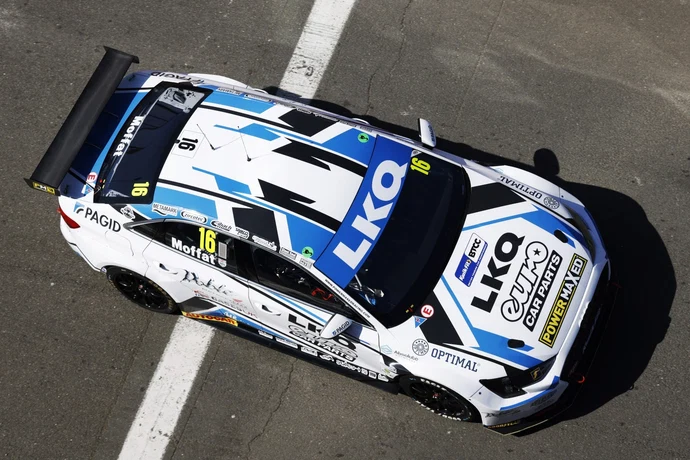
What can be verified is the format, the official timing document’s existence, the 1.2669-mile track length, and the strong 2026 practice form of Power Maxed Racing’s Audi package — including Aiden Moffat’s earlier Oulton Park practice-topping run.
Knockhill BTCC 2026 Practice Results: Official Timing Status
Timing Solutions Ltd. confirms that an official Free Practice classification exists for the 2026 Knockhill BTCC event. The underlying classification PDF was not available as indexed text during this source check, so this article does not attach an unverified name or lap time to P1. The official document remains the source of truth for the exact order.
A practice-results story is only useful if every lap time can be traced to a classification. Search results can easily mix 2025 Knockhill FP1/FP2 data with the new 2026 single-practice format. The official 2026 Timing Solutions page is clearly dated August 8–9 and links a dedicated Free Practice sheet, but its PDF data was not readable through the indexed text feed used here.
| Item | Verified 2026 information | Source status |
|---|---|---|
| Event | British Touring Car Championship Round 6, Knockhill | Official TSL event page |
| Date | August 8–9, 2026 | Official TSL / BTCC |
| Track length | 1.2669 miles in TSL timing; BTCC rounds this to 1.27 miles | Official TSL / BTCC |
| Practice session | One 40-minute Free Practice, Saturday 10:30–11:10 BST | Official BTCC timetable |
| Classification | Dedicated official Free Practice document published | PDF linked by TSL |
| Exact full times | Not reproduced without readable official classification data | No guessing |
The distinction matters because 2025 used two free-practice sessions. In 2025, Tom Ingram led FP1 with 51.087 and Charles Rainford topped FP2 with 50.787. Those are authentic Knockhill times, but they belong to a different season and a different weekend format.
The 2026 championship moved to a single Free Practice session. Using last year’s FP2 order as a 2026 “full classification” would therefore be a serious factual error.
For readers following timing sheets, our race timing guide explains how gaps are calculated, while how laps are counted explains why completed-lap totals can differ across a practice session.
Why There Was Only One BTCC Practice Session at Knockhill in 2026
The format change is one of the biggest details readers need to understand. BTCC’s 2026 calendar announcement describes a new full-weekend programme built around a single 40-minute Free Practice session.
After practice, the field moves into the new qualifying structure and then Saturday’s Qualifying Race. Sunday retains the three familiar full championship races.
What the shorter practice programme changes
Teams have less time to chase a setup. In the older FP1/FP2 format, an engineer could make a larger change between sessions and assess the result later in the day. In 2026, every experiment consumes part of the only 40-minute session.
That makes baseline knowledge much more important. Teams that arrive with a strong simulator correlation and a proven Knockhill setup can move directly into refinement rather than diagnosis.
Drivers also need to reach the limit quickly. There is less room for a slow build-up, especially at a track where confidence over Duffus Dip and the Chicane is worth real lap time.
Our qualifying explainer shows how practice preparation carries into grid-setting, and what grid position means explains why a tenth can become several places at a short venue.
Traffic becomes a larger percentage of the session
Knockhill’s lap is around 50 seconds for a front-running BTCC car in dry conditions. That means the field cycles past the timing line very quickly.
If 20-plus cars are trying to prepare a push lap at the same time, clear space disappears. A driver can have competitive sectors and still finish lower in the classification because the complete lap never comes together.
That is why the final order should be read alongside lap count, sector quality and timing of the best lap — not only the P1 headline.
Aiden Moffat and Power Maxed Racing: Why the Audi Was a Practice Car to Watch
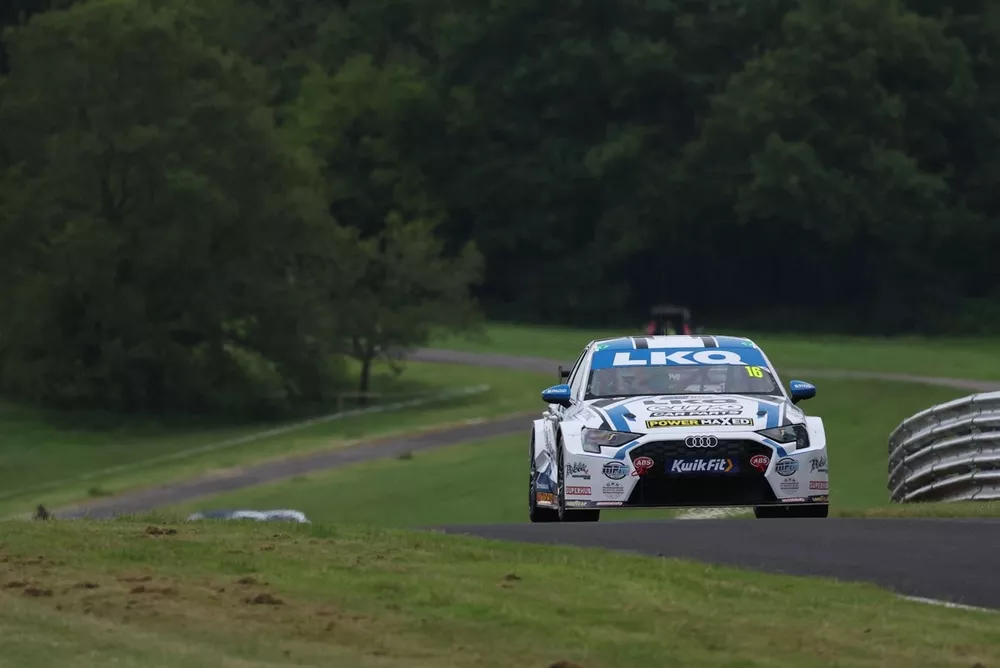
Even without reproducing an unreadable Knockhill classification, Power Maxed Racing entered Scotland with verified practice form.
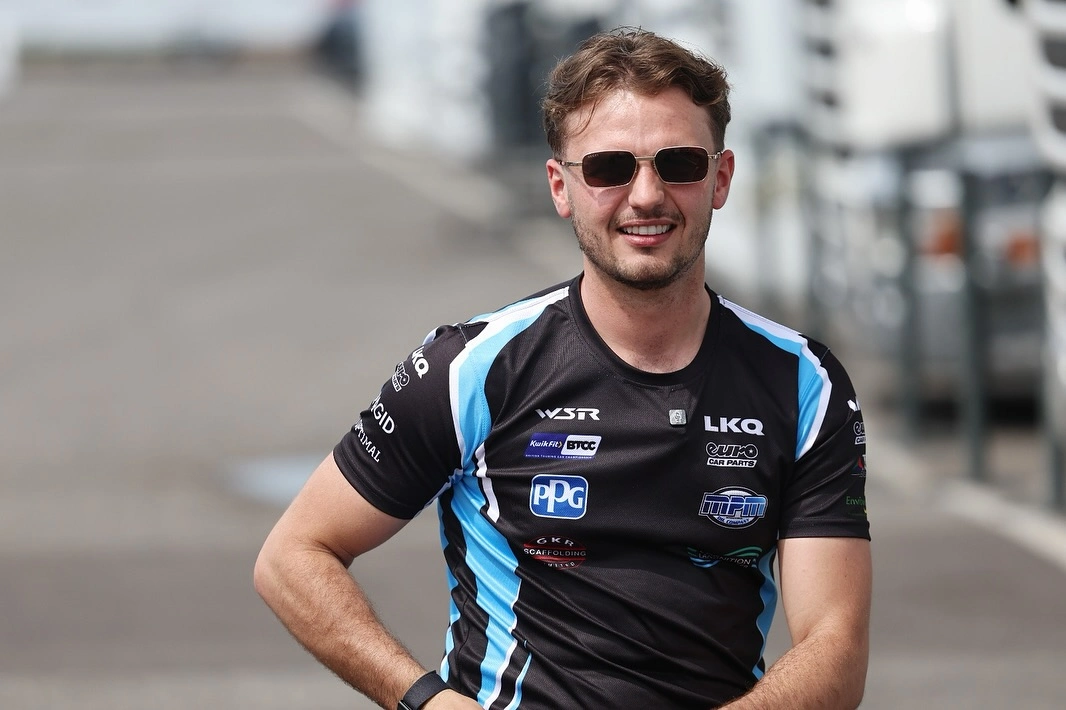
At Oulton Park on June 6, Aiden Moffat topped the sole 40-minute Free Practice in 1:24.213. Tom Chilton was 0.133 behind and Chris Smiley 0.230 back.
Moffat’s teammate Mikey Doble finished fourth, 0.341 from the benchmark, while Dexter Patterson was eighth at 1:24.848, 0.635 off Moffat.
| Oulton Park 2026 FP | Driver | Team | Time | Gap |
|---|---|---|---|---|
| 1 | Aiden Moffat | LKQ Euro Car Parts with Power Maxed Racing | 1:24.213 | — |
| 2 | Tom Chilton | Team VERTU | 1:24.346 | +0.133 |
| 3 | Chris Smiley | Restart Racing | 1:24.443 | +0.230 |
| 4 | Mikey Doble | LKQ Euro Car Parts with Power Maxed Racing | 1:24.554 | +0.341 |
| 8 | Dexter Patterson | Steel Seal with Power Maxed Racing | 1:24.848 | +0.635 |
That Oulton result matters because it was not a one-car anomaly. Three Power Maxed Audis were inside the top eight, and two were inside the top four.
The new Audi A3 Saloon package therefore had evidence of being able to reach a usable setup window quickly — exactly what a single-practice 2026 weekend demands.
Moffat’s experience helps in a compressed session
Moffat has extensive BTCC experience and has driven several front- and rear-wheel-drive packages during his career. That matters when a circuit gives little time for experimentation.
An experienced driver can often identify whether a problem comes from front-axle grip, rear instability, braking or tyre temperature within a few laps. The engineer then has a clearer direction.
Patterson had an extra local storyline
Dexter Patterson is Scottish and returned to Knockhill with Power Maxed Racing’s new Audi programme in 2026. The team had already confirmed him as part of its rebuild before the season.
Local familiarity does not guarantee speed, but it reduces the learning burden. Patterson knows the circuit’s unusual elevation, kerbs and sight lines.
For more on how front-wheel-drive and rear-wheel-drive layouts behave differently, see our FWD vs RWD vs AWD guide.
How Fast Is a Competitive BTCC Practice Lap at Knockhill?
Historical context gives us a safe reference without pretending old data is new data.
The official BTCC circuit page lists Rory Butcher’s 2019 qualifying record at 50.451 seconds and Ashley Sutton’s 2020 race lap record at 50.876.
In 2025 practice, Ingram ran 51.087 in FP1 before Rainford lowered the Friday/Saturday practice benchmark to 50.787 in FP2.
| Reference | Driver | Time | Season | Use |
|---|---|---|---|---|
| Official qualifying lap record | Rory Butcher | 50.451 | 2019 | Absolute official qualifying benchmark |
| Official race lap record | Ashley Sutton | 50.876 | 2020 | Race-condition benchmark |
| Knockhill FP1 | Tom Ingram | 51.087 | 2025 | Recent practice reference only |
| Knockhill FP2 | Charles Rainford | 50.787 | 2025 | Recent practice reference only |
These numbers show how compressed the circuit is. A gap of 0.20 seconds represents only a fraction of the lap, but it can separate multiple cars.
At a longer circuit, a driver may lose two tenths in one sector and recover elsewhere. At Knockhill, there are fewer corners and less total time, so every braking or traction mistake carries more weight.
Our grip guide, handling explainer and downforce guide explain the mechanical reasons behind those tiny gaps.
Key Team Takeaways From the 2026 Practice Context
Power Maxed Racing: one-lap evidence was already there
The team’s Oulton result was one of the clearest early signals of the Audi’s ability to generate a fast practice lap.
At Knockhill, the bigger question is whether that speed translates to qualifying when the field runs a more aggressive tyre preparation programme.
NAPA Racing UK: practice is only the first part of Sutton’s weekend
Ash Sutton entered Knockhill as the championship leader. That changes how we interpret his practice position.
A title leader does not need to “win” practice. The goal is to understand the car, protect tyre sets and arrive at qualifying with a predictable platform.
Dan Cammish faces a similar calculation, although he has more incentive to attack Sutton’s points advantage.
WSR BMW: Knockhill has suited the package before
WSR locked out the top three in 2025 Knockhill qualifying and Jake Hill won two of the three races.
The 2026 line-up and rules are different, so that does not guarantee another BMW-dominated weekend. It does mean engineers have a strong historical setup reference.
Our BMW race car guide gives more context on the brand’s touring-car and racing approach.
What Practice Tells Us Before Knockhill Qualifying
The most useful practice takeaway is not always the fastest time. Teams want answers to four questions before qualifying.
1. Can the tyre switch on in one lap?
Qualifying rewards immediate grip. A car that needs three or four laps to reach the right tyre temperature can lose its best traffic window.
Knockhill makes this worse because a 50-second lap means traffic catches quickly.
2. Is the car stable over the Chicane?
The quickest drivers attack the kerbs. A car that bounces or snaps on landing forces the driver to leave margin.
That can cost a tenth, which is enough to move several grid places.
3. Can the driver rotate the car into the Hairpin?
The Hairpin is slow and heavily loaded under braking. A car that turns cleanly without locking the inside front tyre can carry better exit speed.
That helps both qualifying and overtaking.
4. Did the team find clean air?
A practice lap is not representative if the driver catches traffic in the final sector.
This is why sector timing can be more important than the final best lap. A driver with three personal-best sectors spread across different laps may have a much faster theoretical lap than the classification suggests.
For readers learning qualifying strategy, see how racing drivers qualify and what pole position means.
Why the 2026 Practice Result Matters More Than It Did Before
Under the old format, teams had two practice sessions to recover from a poor first run. The new single-session structure increases the cost of getting the baseline wrong.
That is especially significant because Saturday now includes a Qualifying Race. A bad setup can therefore affect qualifying, the Qualifying Race, and the Race 1 starting position.
One setup mistake can follow a driver into Sunday
If a driver qualifies badly, they start the Qualifying Race in traffic. If they cannot recover, they also start Race 1 from a compromised position.
That creates a chain reaction that did not exist in the same way under the older weekend structure.
See our championship scoring guide for why a difficult Saturday can have a large points effect.
Practice is now more about decision quality
The fastest team is not necessarily the team that completes the most laps. It is the team that learns the right things quickly.
Engineers must decide whether a handling problem is large enough to justify a setup change or small enough that the driver should adapt.
At Knockhill, where the circuit is short and physical, a wrong change can cost more time than the original problem.
What to Watch in the Next Session
Qualifying provides the cleanest answer to the practice questions. Fuel loads are lower, drivers push harder and tyre preparation is more focused.
If a practice front-runner stays near the top in qualifying, the pace looks genuine. If that car drops significantly, the practice time may have benefited from a different run plan or track condition.
Watch the Power Maxed Audi group
Moffat, Doble and Patterson have already shown that the 2026 Audi can produce strong Saturday pace.
If multiple Audis qualify near the front, the evidence becomes package-wide rather than driver-specific.
Watch the championship leaders’ response
Sutton, Ingram and Cammish do not need to dominate practice to be dangerous.
Their qualifying performance will show whether practice was a true representation of pace or simply setup work.
Watch traffic management
Knockhill is one of the easiest circuits on the calendar to lose a lap behind another car.
A team that releases its driver into a clear gap can gain positions without making the car any faster.
For more on close following and passing preparation, see our slipstream explainer and racing flags guide.
Five Practice Details That Matter More Than the Headline P1
A fastest lap is the easiest number to quote, but engineers leave practice looking at a much wider set of information. At Knockhill, five details are especially useful because the lap is short and the 2026 format gives teams only one free-practice window.
Best-lap timing
When the lap was set can reveal how much track evolution helped. A driver who produces a competitive time early in the session may have more underlying pace than a rival who reaches the same number after the circuit has rubbered in and temperatures have improved.
Number of completed laps
Lap count tells us whether the team completed a clean programme. A high number of laps usually means fewer interruptions and more data on tyre behaviour, braking references and balance. A low lap count can leave the driver fast but underprepared for qualifying.
Teammate comparison
One quick car can be a driver-specific result. Two or three cars from the same team near the front is stronger evidence that the setup window is genuinely good. That is why Power Maxed Racing’s earlier Oulton Park performance was notable: Moffat led, Doble was fourth and Patterson eighth.
Consistency across consecutive laps
A single qualifying-style lap matters, but repeated laps within a narrow range tell engineers whether the car remains predictable as tyre temperature changes. This is particularly important at Knockhill because the driver repeatedly attacks large kerbs and heavy braking zones.
Where the time is being made
Sector analysis can separate a car that is strong through high-speed direction changes from one that is gaining time through traction and braking. That becomes useful when predicting qualifying and race performance. A car that looks excellent at the Hairpin may be difficult to pass even if its outright practice ranking is not spectacular.
The practice classification is the headline, not the whole story. At Knockhill, teammate strength, clean lap count, sector consistency and tyre warm-up can be better predictors of qualifying than one isolated fastest lap.
Knockhill BTCC 2026 Practice Results FAQs
Conclusion: The Official Timing Sheet Matters More Than a Fast Headline
The 2026 Knockhill weekend gives teams only one 40-minute Free Practice session. That makes every lap more valuable than it was under the old two-session format.
Timing Solutions Ltd. confirms that the official Free Practice classification exists for the August 8 event, on a 1.2669-mile circuit. The BTCC timetable independently confirms the session ran from 10:30 to 11:10 a.m. BST.
The exact classification PDF, however, was not exposed in searchable text through the source set available for this article. That is why no driver or lap time has been guessed into the P1 position.
The verified context still gives us useful clues. Power Maxed Racing’s Audi package had already demonstrated strong practice speed in 2026, with Aiden Moffat topping Oulton Park in 1:24.213 and Mikey Doble fourth. Dexter Patterson was also inside the top eight.
Knockhill then magnifies every small difference. A lap around 50 seconds means a few tenths can cover a large section of the field. Traffic, tyre warm-up and confidence over the Chicane all become major factors.
The next meaningful comparison is qualifying. That is where teams stop hiding behind run plans and start chasing grid position.
For a permanent results page, the standard should remain simple: use the official classification when it is readable, and never substitute a previous year’s Knockhill table just because it is easier to find.
Sources
- Timing Solutions Ltd. — BTCC Round 6, Knockhill 2026 event timing archive
- BTCC — Knockhill 2026 circuit details and timetable
- BTCC — 2026 single Free Practice weekend format
- BTCC — Oulton Park 2026 Free Practice classification
- MotorSport Vision — Moffat tops Oulton Park 2026 Free Practice
- BTCC — 2025 Knockhill practice results for historical comparison only