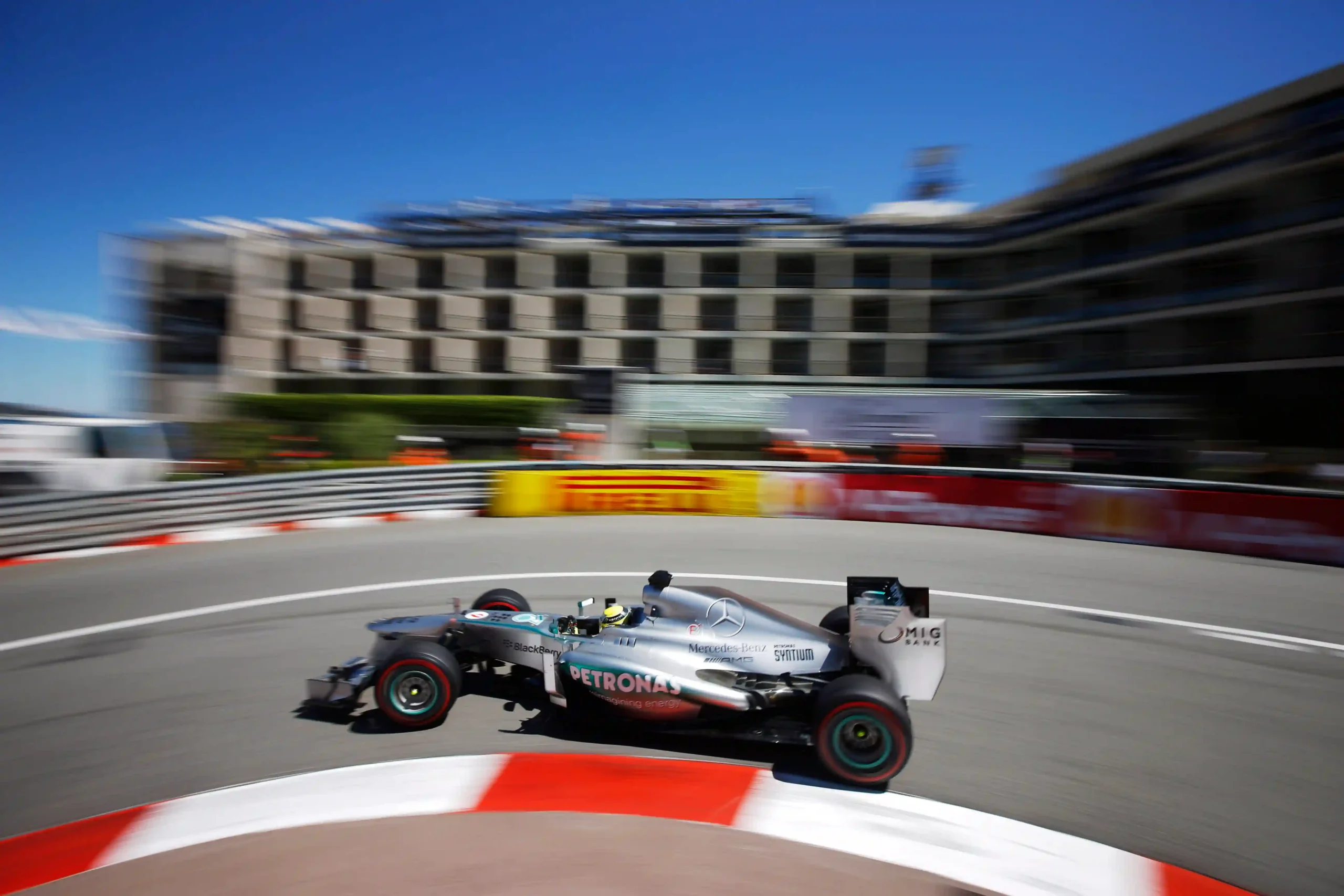
Why Is Monaco So Hard to Overtake?
The narrow roads matter, but they are only the beginning. Car size, braking distance, dirty air, tire behavior and track-position strategy all combine to make Monaco Formula 1’s toughest passing test.
Monaco is difficult to overtake because its streets are narrow, its straights are short and most corners offer one practical racing line. The barriers leave no runoff, while modern F1 cars need a large speed advantage before they can fit alongside safely.
At Monaco, a car can be much faster and still spend an entire race looking at another gearbox.
That situation feels strange in Formula 1. At most circuits, fresh tires and superior pace eventually create a passing opportunity.
Monaco breaks that logic. The attacker needs speed, position and enough road width at the same moment.
The Circuit de Monaco measures only 3.337 kilometers. It contains 19 corners and almost no conventional straight.
Moreover, the barriers define the track edge. Drivers cannot use extra runoff to complete a wide outside move.
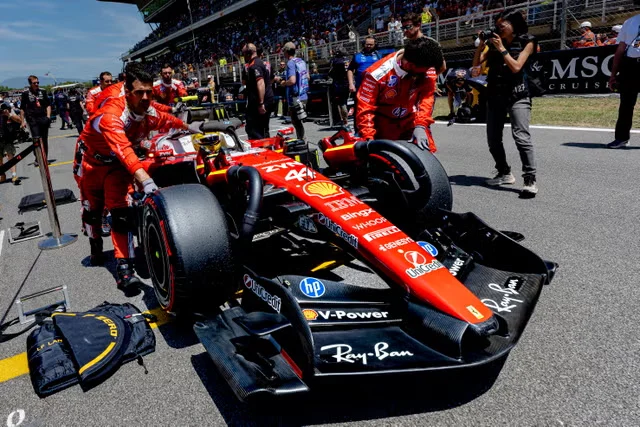
Modern cars add another problem. The 2026 rules reduced car width to 1,900 millimeters and maximum wheelbase to 3,400 millimeters.
Those cars are smaller than the previous generation. However, Monaco remains a road layout created long before modern Formula 1 dimensions.
Dirty air also matters. A following car loses front grip through the corners before the tunnel and final sector.
As a result, the driver often reaches the only serious braking zone too far behind.
Qualifying therefore carries exceptional value. Formula 1 noted that 10 of the previous 12 Monaco races before 2026 were won from the front row.
The 2026 event reinforced that pattern. Pole-sitter Kimi Antonelli controlled a chaotic race and converted pole into victory.
This guide explains every reason why Monaco is so hard to overtake, from geometry and aerodynamics to tires, pit stops and race control.
The Short Answer: Space Disappears Before Speed Matters
The circuit rarely gives an attacker enough space to draw alongside. Short straights limit the speed difference, while tight corners and barriers remove alternative lines. A driver can defend the only usable route and prevent a faster car from converting pace into position.
Every overtake needs three things. The following car must stay close, gain speed and find room beside the defender.
Monaco weakens all three stages. The corners separate the cars, the straights end quickly and the road narrows at the braking point.
Why Pure Lap-Time Advantage Is Not Enough
A driver may be one second faster in clean air. However, that advantage does not arrive in one corner.
It builds across a full lap. Monaco needs the speed difference to appear at one specific braking point.
Therefore, the attacker can remain trapped despite having much better tires or a faster car.
Why Defending Is So Effective
The leading driver does not need to cover several lines. One central or inside position often blocks the road.
Moreover, the defender can sacrifice entry speed and focus on the exit. The attacker then loses the next chance as well.
Monaco turns overtaking into a geometry problem. The attacker does not merely need more speed. The car must reach a narrow piece of road before the defender occupies it.
How Monaco’s Layout Restricts Overtaking
The circuit climbs, falls, twists and changes surface. Yet its most important feature is the lack of open space.
The barriers follow the road closely. Buildings, harbor edges and existing infrastructure define the route.
The Straights Are Not Truly Straight
The start-finish section bends gently and remains short. The run from Portier through the tunnel is faster, but it changes direction.
Consequently, drivers cannot stay fully alongside for long before preparing for the next corner.
The Corners Arrive Too Quickly
There is little time to complete one maneuver before another turn begins.
An attacker may place a front wheel alongside. However, the next corner often favors the defender’s line.
Walls Remove the Escape Route
At a permanent circuit, two cars may use the full track and some runoff while fighting.
At Monaco, the outside line ends at Armco or concrete. A small misjudgment can break suspension.
Camber and Bumps Reduce the Usable Width
The painted track may look wide enough on television. However, not every meter offers equal grip.
Road crown, patches and rubber buildup create a preferred path. Therefore, the usable racing surface is narrower than the physical road.
Are Modern F1 Cars Too Big for Monaco?
Modern F1 cars are large compared with the streets, even after the 2026 reduction to 1.9 meters wide and a maximum 3.4-meter wheelbase. Car size is not the only cause, but it reduces the space available for side-by-side racing and increases the length needed to complete a pass.
The 2026 generation is narrower and shorter than the cars used from 2022 to 2025.
The FIA reduced maximum width by 100 millimeters. Maximum wheelbase dropped by 200 millimeters.
Those changes improve agility. Nevertheless, the car still occupies a large percentage of Monaco’s narrowest sections.
Width Affects Whether Two Cars Fit
Two 1.9-meter cars need 3.8 meters before any safety margin.
Drivers also need room for tire movement, steering angle and small corrections. Therefore, the required width is much greater.
Length Affects the Passing Window
A longer car takes more distance to move fully ahead.
The attacker cannot simply place a front wing beside the defender. The pass must reach a safe overlap before turn-in.
Wheelbase Matters at the Hairpin
The Fairmont Hairpin is so tight that teams use Monaco-specific steering settings.
Even then, drivers crawl through at very low speed. Two cars cannot use normal racing lines there.
Smaller Cars Help, but Geometry Still Wins
A narrower car creates a little more room. However, it does not lengthen the straight or widen the braking zone.
Therefore, the 2026 dimensions reduce one problem without removing Monaco’s core limitation.
Why Monaco Has One Dominant Racing Line
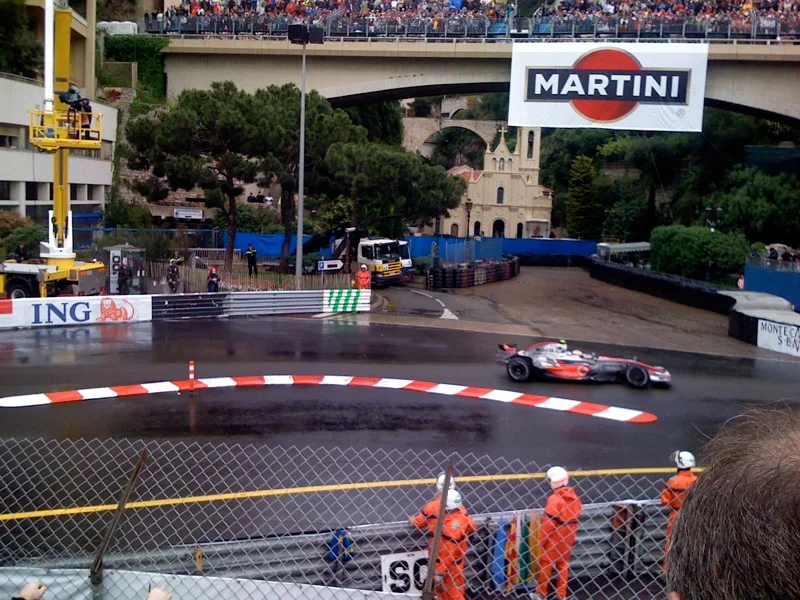
The quickest line follows the cleanest rubbered asphalt and the best corner radius. Off-line areas collect dust and tire debris. Since the barriers sit close, drivers cannot use a wide alternative route without losing grip or risking contact.
Every circuit develops a preferred racing line. Monaco makes the difference between that line and the alternatives unusually large.
The normal line becomes cleaner throughout practice. Rubber also increases grip where every car travels.
The Outside Line Is Dirty
Dust and rubber marbles collect away from the main path.
An attacker braking on that surface can lock a front tire. The barrier then leaves almost no recovery space.
The Inside Line Can Be Too Tight
A driver may claim the inside. However, the tighter radius reduces speed dramatically.
The defender can cut back and regain the position on exit. Consequently, some attempted moves create only temporary overlap.
The Defender Controls the Apex
The leading car can slow early and protect the corner center.
The attacker must either wait or attempt a risky dive. At Monaco, the penalty for misjudging that dive is usually contact.
Our guide to F1 tire marbles explains why the second line loses grip.
How Dirty Air Hurts the Following Car
Dirty air reduces the following car’s front downforce through Monaco’s corners. The driver must slow earlier or leave a gap to protect the tires. That lost distance remains when the cars reach the short straight, so the attacker cannot build enough speed to pass.
Monaco is a low-speed circuit, but aerodynamics still matter.
Front wings and floors need clean airflow. The leading car leaves a turbulent wake behind it.
Understeer Opens the Gap
The following car loses front grip and runs wider. The driver must lift or brake earlier.
As a result, the leader gains several car lengths before the next acceleration zone.
Tire Temperatures Rise in Traffic
Sliding creates heat. Following another car also reduces cooling airflow.
The attacker may have fresher tires but cannot use them fully. Therefore, the expected pace advantage shrinks.
Low-Speed Corners Do Not Eliminate Wake Effects
The aerodynamic penalty is smaller than through a flat-out bend. However, Monaco links many corners together.
A small loss at each turn becomes a large gap by the tunnel exit.
Our guide to clean air and dirty air in F1 explains the wake in detail.
Why Monaco Has So Few Heavy Braking Zones
A good passing zone normally follows a long acceleration section.
The cars then slow sharply for a wide corner. Monaco offers only a limited version of that sequence.
Sainte Dévote Is Too Close to the Start
Turn 1 can produce passes during the opening lap. The standing start creates a larger speed difference.
During normal racing, however, the run from Anthony Noghès is short. The defender can cover the inside easily.
The Nouvelle Chicane Is the Best Opportunity
Cars accelerate through the tunnel before heavy braking.
This creates Monaco’s strongest speed difference. Yet the braking approach bends and the chicane remains narrow.
The attacker must complete most of the move before the first apex. Otherwise, contact becomes likely.
Rascasse Is Too Slow and Awkward
A late dive can work when the defender makes a mistake.
However, the corner is tight and the exit narrows toward Anthony Noghès. A clean side-by-side battle rarely develops.
The Tunnel Is Fast but Not a Normal Passing Zone
The road curves, visibility changes and the walls remain close.
Drivers also prepare for the chicane braking point. Therefore, most attacks use the tunnel to gain speed rather than pass inside it.
Where Can Drivers Overtake at Monaco?
| Location | Passing Potential | Main Advantage | Main Limitation |
|---|---|---|---|
| Sainte Dévote, Turn 1 | Moderate at start; low in normal racing | Heavy braking and a clear inside line | Short approach and narrow uphill exit |
| Fairmont Hairpin | Very low | Extremely slow speed | Almost no room for two modern F1 cars |
| Mirabeau | Low | Downhill braking can force an error | Tight radius and poor exit angle |
| Tunnel | Very low | High speed and slipstream | Curved road, visibility change and close walls |
| Nouvelle Chicane | Highest on the lap | Longest acceleration and strongest braking event | Narrow entry and corner-cutting risk |
| Rascasse | Low | Slow entry can reward a surprise dive | Little exit room and high collision risk |
What Makes the Nouvelle Chicane the Best Spot?
The attacker can use slipstream and electrical deployment through the tunnel.
Moreover, the braking distance is longer than elsewhere on the lap. That gives the driver time to move alongside.
Can Drivers Pass at the Hairpin?
Only in unusual circumstances. A driver may exploit a stopped or badly positioned car.
However, a normal side-by-side pass is almost impossible because both cars need the same road.
Can Rain Create More Overtaking?
Rain creates mistakes and larger pace differences. It can also change the preferred line.
However, wet Monaco becomes more dangerous. Drivers may avoid marginal moves because visibility and grip are poor.
Why Qualifying Is Almost as Important as the Race
Qualifying determines the track position that drivers may keep for most of Sunday. Low tire degradation limits strategic variation, while narrow roads restrict passing. A front-row start therefore gives a driver control over pace, pit timing and clean air.
Formula 1’s 2026 circuit guide reported that 10 of the previous 12 Monaco Grands Prix had been won from the front row.
That statistic explains why teams prioritize Saturday. The car setup often targets one-lap grip rather than broad race flexibility.
Pole Position Controls the First Corner
The run to Sainte Dévote is short. Therefore, the pole-sitter does not need to defend through a long drag race.
A good launch usually protects the lead. The winner can then manage pace and tire life.
Clean Air Protects the Tires
The leader controls temperature without following another car.
Meanwhile, rivals slide in the wake. Their tires may overheat even at a slower pace.
Traffic Can Destroy a Qualifying Lap
Monaco’s short lap places many cars on a small piece of road.
Drivers preparing tires may block a flying lap. Therefore, teams need precise gap management.
One Small Error Has a Large Price
A brushed barrier can puncture a tire or break suspension.
There may be no second chance if a red flag ends the session. This risk creates Monaco’s famous qualifying tension.
Our guides to how F1 qualifying works, pole position and grid position explain the starting-order battle.
Why Tire Advantage Often Fails to Create a Pass
Monaco’s asphalt is smooth, and the circuit mainly loads the tires through traction.
For 2026, Pirelli selected the C3, C4 and C5 compounds. These were the softest three available for that weekend.
Several sections were resurfaced before the race. Even so, Pirelli expected low degradation and a traditional one-stop strategy.
Fresh Tires Need Open Road
A new set can be much faster in clean air. However, the driver may rejoin behind a slower train.
The pace advantage then disappears because no passing route exists.
Low Degradation Strengthens Track Position
Old tires remain usable for many laps. The defender can keep enough exit speed to block attacks.
Therefore, teams delay pit stops and protect position rather than chase theoretical lap time.
Warm-Up Can Favor the Car Staying Out
New tires may need several corners to reach full grip.
The driver on warm tires can push during that period. As a result, the overcut sometimes challenges the normal undercut.
Marbles Make the Passing Line Worse
Rubber debris accumulates beside the racing line.
The attacker needs that exact area for braking and turning. Consequently, the pass becomes harder as the race develops.
Why Track Position Dominates Monaco Strategy
A faster tire only helps when the driver can use its pace. At Monaco, a car rejoining behind traffic may lose more time than the new tires can recover. Teams therefore protect physical position and wait for a safe pit window or neutralization.
Monaco strategy begins with a simple question: where will the car rejoin?
The fastest pit-stop plan can become the worst plan if it places the driver behind a slower rival.
The Undercut Can Win Without an Overtake
A driver pits first and uses fresh tires to gain time.
If the rival stops later and rejoins behind, the position changes in the pits. No on-track pass is needed.
The Overcut Can Work When Warm-Up Is Slow
The driver staying out keeps warm tires and clear air.
Meanwhile, the rival struggles on cold rubber. One strong lap can reverse the expected order.
Safety Cars Reduce Pit-Lane Loss
The field slows during a Safety Car period. Therefore, a stop costs less relative time.
Teams keep strategy flexible because Monaco incidents often require neutralization.
Red Flags Can Reset the Race
A red flag can remove gaps and change tire plans.
Barrier repairs or blocked track sections make stoppages more likely than at open permanent circuits.
Our guides to the undercut and overcut, pit stops and Safety Car rules explain these timing effects.
Did the 2026 Rules Improve Monaco Overtaking?
Overtake Mode can create extra electrical deployment for an eligible following car. However, Monaco’s short straights and narrow braking zones still limit its value. The system can help an attacker close, but it cannot create space beside the defender.
The 2026 regulations introduced smaller cars, active aerodynamics and Overtake Mode.
At most circuits, Straight Mode changes the front and rear wings to reduce drag.
Monaco was the exception. Formula 1 disabled Straight Mode there for safety, so the wings remained in maximum-downforce configuration.
Where Was Overtake Mode Available?
The detection line sat between Turns 16 and 17.
The activation line followed between Turns 18 and 19, leading toward the start-finish section.
A driver needed to remain within one second at detection to gain the extra profile on the next lap.
Why Could It Not Solve the Problem?
The start-finish section is too short for a huge speed difference.
Sainte Dévote also narrows quickly. Therefore, the attacker still needs exceptional positioning.
Why Was Straight Mode Disabled?
The circuit’s short zones and close barriers create little margin during aerodynamic transitions.
Keeping maximum downforce provided consistent grip. Safety therefore outweighed the straight-line benefit.
Did Smaller Cars Make a Visible Difference?
The narrower 2026 cars created slightly more road space. Their shorter wheelbase also improved agility.
However, Monaco still produced a race shaped heavily by grid position, incidents and pit timing.
Our guide to F1 DRS history explains the system that Overtake Mode replaced.
The 2025 Two-Stop Experiment and Why It Ended
No. Formula 1 required at least three tire sets and two pit stops at Monaco in 2025. The experiment was abandoned for 2026, and the normal dry-race rule returned. Drivers only needed to use two slick compounds, allowing the traditional one-stop strategy.
The FIA introduced the special 2025 rule to increase strategic action.
Every driver had to use at least three tire sets. In dry conditions, at least two compounds were required.
Why Did the Rule Sound Promising?
More stops created more pit windows. Teams could undercut, overcut or react to neutralizations.
In theory, that uncertainty would prevent drivers from controlling the race with one long stint.
Why Did It Not Fix Overtaking?
Extra stops changed the order temporarily. However, track geometry still prevented many direct passes.
Teams could also use tactical pace control to build gaps for a teammate.
What Happened in 2026?
The special rule disappeared. Pirelli confirmed that Monaco returned to its classic one-stop format.
The 2026 race still became chaotic through two Safety Cars and a red flag. That action came from incidents and timing rather than a permanent passing solution.
Has Monaco Always Been Difficult to Overtake?
Monaco has always rewarded track position. However, the scale of the problem has changed.
Older cars were narrower and shorter. They also produced less aerodynamic wake.
Nevertheless, the streets were dangerous and narrow even in the earliest races.
The 2003 Race Recorded No Passing Moves
Formula 1’s official Monaco event page highlights the 2003 Grand Prix as a race with zero overtakes.
That result became a symbol of the circuit’s modern passing problem.
Older Cars Could Use Gaps That No Longer Exist
A smaller car required less road and less distance to complete a move.
However, safety standards and racing speeds were also very different. Historical footage should not be treated as a simple design solution.
The Circuit Has Changed, but the City Limits Remain
Barriers, curbs, pit facilities and the harbor area have evolved.
The core route still runs through a dense principality. Major widening would require changing roads and buildings.
Why Historical Monaco Still Matters
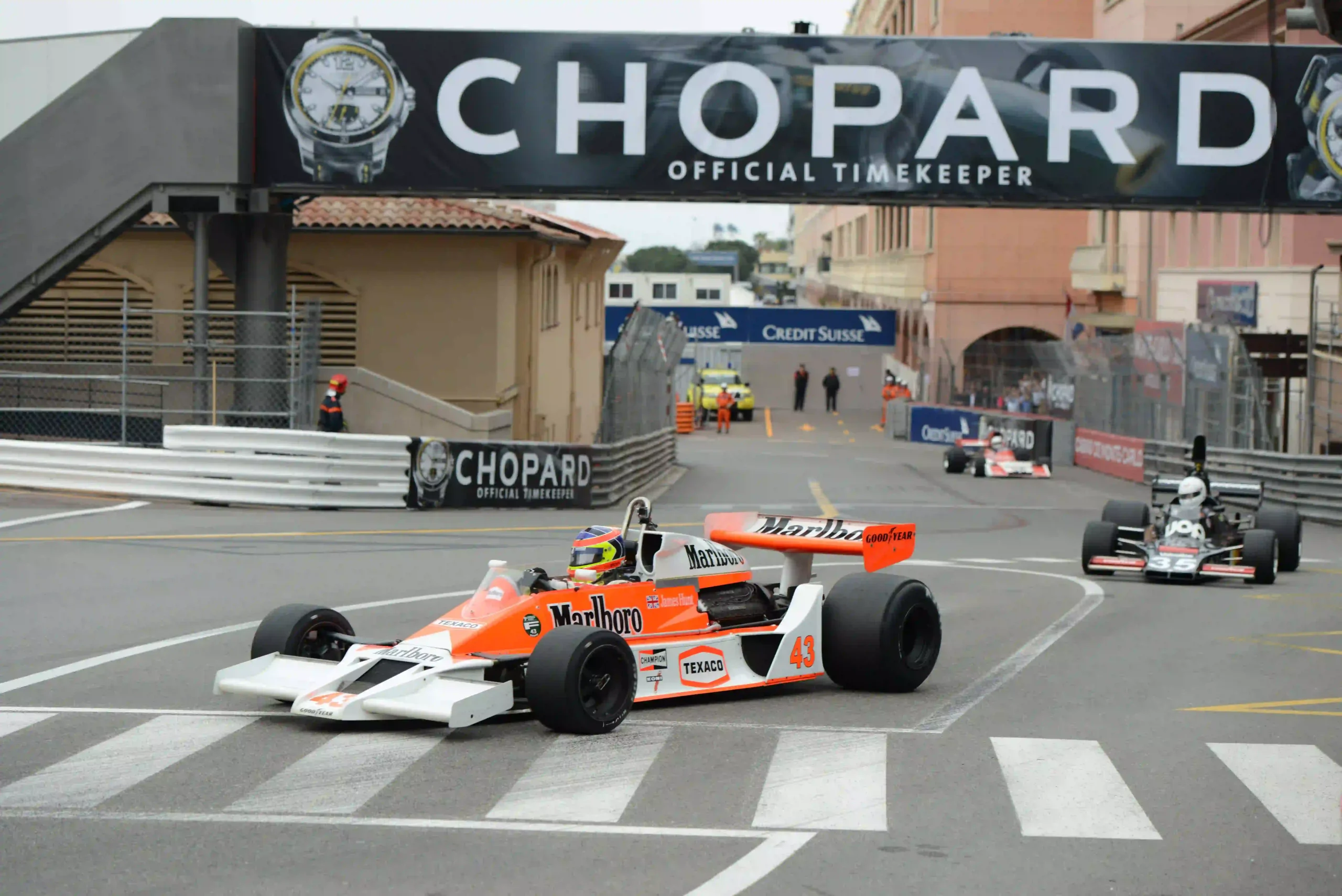
The race first appeared in 1929 and joined the first Formula 1 World Championship season in 1950.
That continuity makes the circuit more than a modern entertainment product. It is part of the championship’s identity.

Could Monaco Be Redesigned for More Overtaking?
Small changes may improve one zone. A complete solution would require major changes to the city.
Could the Nouvelle Chicane Be Widened?
A wider entry might support more side-by-side braking.
However, harbor infrastructure and safety boundaries limit the available space.
Could the Start-Finish Straight Be Extended?
The surrounding roads and buildings control the route.
Changing the final corner or pit complex would be a major civil-engineering project.
Could Smaller Cars Fix Monaco?
Smaller cars would help. They would reduce the road width needed for overlap.
Nevertheless, the straights would remain short and the clean racing line would remain dominant.
Could Softer Tires Create More Strategy?
Higher degradation could force more stops.
However, drivers may simply manage pace to avoid overheating. More tire wear does not guarantee more passes.
Could Overtake Mode Be Stronger?
More electrical power could create a larger speed difference.
Yet an overwhelming advantage may only move the bottleneck to Sainte Dévote. The attacker still needs physical space.
Could the Race Use a Different Format?
Formula 1 tested the mandatory two-stop rule in 2025.
The experiment showed that strategic rules can create movement. However, they cannot replace genuine wheel-to-wheel geometry.
The realistic answer: Monaco can be improved around the edges, but it cannot become a normal overtaking circuit without losing much of the street layout that makes it Monaco.
Why Does Formula 1 Still Race at Monaco?
Monaco remains because of its history, global recognition and unique driving challenge. The race has been part of the World Championship since 1950 and forms motorsport’s Triple Crown with the Indianapolis 500 and Le Mans. Its qualifying spectacle is unlike any other F1 event.
A Formula 1 calendar does not need every track to produce the same race.
Monaco tests precision, confidence and concentration. The driver runs millimeters from barriers for an entire lap.
Qualifying Is a Major Sporting Test
The fastest lap at Monaco demands total commitment.
Drivers cannot build speed slowly through runoff. They must judge grip beside walls.
The Event Connects Modern F1 to Its Past
Monaco appeared in the first World Championship season.
Ayrton Senna’s six victories and five pole positions remain central to the event’s story.
The Setting Is Globally Recognizable
The harbor, tunnel, casino and hillside create a unique television image.
That identity has commercial value. More importantly, it gives Formula 1 a race that no purpose-built circuit can reproduce.
Does Prestige Excuse a Processional Race?
No. Formula 1 should continue studying ways to improve competition.
However, race quality includes more than overtaking count. Pressure, strategy and driver execution also matter.
Common Myths About Monaco Overtaking
“Drivers Never Overtake at Monaco”
False. Passes happen at Sainte Dévote, the Nouvelle Chicane and occasionally elsewhere.
However, the moves require a large advantage, a mistake or unusual circumstances.
“The Tunnel Is the Best Passing Place”
Not by itself. The tunnel helps an attacker gain speed.
The actual move usually happens under braking for the Nouvelle Chicane.
“Dirty Air Does Not Matter at Low Speed”
False. The effect is smaller than at Silverstone, but it repeats across many linked corners.
The cumulative loss can prevent the attack before the tunnel.
“New Tires Guarantee an Overtake”
False. Fresh tires create potential pace, not space.
A driver can remain trapped until the tire advantage disappears.
“The 2026 Smaller Cars Solved Monaco”
False. The dimensions improved agility and created some extra room.
However, the road remained narrow and track position remained decisive.
“More Pit Stops Automatically Improve the Race”
False. The 2025 experiment increased strategy but also encouraged tactical pace control.
Formula 1 abandoned the special rule for 2026.
Why Is Monaco So Hard to Overtake? FAQs
Why is Monaco so hard to overtake?
The streets are narrow, the straights are short and most corners have one practical line. Barriers also remove the space needed to complete a side-by-side move.
What is the best overtaking place at Monaco?
The Nouvelle Chicane after the tunnel is usually the best chance. Sainte Dévote can also produce moves, especially on the opening lap.
Why is qualifying so important at Monaco?
A front-row start protects track position. Low degradation and limited passing then allow the leader to control pace and pit timing.
Did the 2025 Monaco two-stop rule continue in 2026?
No. Formula 1 abandoned the mandatory two-stop experiment and returned to the normal dry-race tire rule for 2026.
Conclusion: Monaco Is a Passing Problem Built Into the Streets
Understanding why Monaco is so hard to overtake requires more than one explanation.
The circuit is narrow. However, width is only the first restriction.
The straights are short, and the corners arrive quickly.
Therefore, an attacker rarely has time to create a large speed difference.
The barriers also remove alternative lines and recovery space.
Drivers cannot run wide and continue the battle. One mistake usually means contact.
Modern car size adds another obstacle.
The 2026 cars are narrower and shorter, but two cars still need more road than Monaco often provides.
Dirty air opens the gap before the passing zone.
Meanwhile, tire heat and understeer reduce the attacker’s advantage.
The Nouvelle Chicane remains the best overtaking opportunity.
Yet even that move requires a strong tunnel exit, extra deployment and precise braking.
Qualifying therefore becomes central to the weekend.
Ten of the 12 Monaco races before 2026 were won from the front row.
The 2026 event continued the pattern when Antonelli converted pole into victory.
Low tire degradation further protects track position.
Fresh tires may create speed, but the driver still needs open road.
The mandatory two-stop experiment of 2025 tried to add strategic movement.
However, Formula 1 abandoned that rule for 2026 and returned to the usual one-stop pattern.
Overtake Mode helps a following car close. It cannot create width at Sainte Dévote.
Straight Mode was also disabled at Monaco for safety.
Small circuit changes may improve one corner. A complete redesign would alter the city and the identity of the race.
That is Monaco’s central contradiction.
It produces limited wheel-to-wheel racing, yet it delivers Formula 1’s most intense qualifying challenge.
The race remains because precision, history and pressure still matter.
Monaco does not test passing like Silverstone or Monza.
Instead, it tests whether a driver can control every centimeter of road for an entire weekend.
Sources and Verification
This article was checked against official FIA and Formula 1 material available on July 23, 2026. This is a static source list and contains no interactive verification feature.