Why Is Suzuka Loved by F1 Drivers?
Suzuka rewards rhythm rather than shortcuts. Its Esses, elevation changes, Spoon Curve and 130R ask a driver to balance speed, precision and courage for an entire lap.
F1 drivers love Suzuka because its corners connect naturally and reward rhythm, confidence and precise car control. The Esses, Degners, Spoon Curve and 130R expose every weakness while giving a committed driver a genuine chance to make a difference.
Suzuka is one of the rare circuits where drivers talk about the lap as a complete experience.
They do not praise only one corner. Instead, they describe a sequence that starts at Turn 1 and rarely stops demanding attention.
The circuit measures 5.807 kilometers. It contains 18 turns and requires 53 race laps.
However, those figures do not explain the affection. Suzuka’s value comes from how every corner affects the next one.
A small mistake in the opening Esses can damage several following turns. Therefore, drivers must build speed without breaking the rhythm.
The circuit also changes direction repeatedly. Left and right corners place balanced loads on the car and the driver.
Moreover, Suzuka rises and falls through natural terrain. Camber, crests and gradients change the available grip.
The figure-eight layout gives the circuit a visual identity unlike any other current Formula 1 venue.
Its crossover bridge is not a decorative feature. It allows the lap to flow without forcing a flat, repetitive shape.
Drivers also respect Suzuka because mistakes carry real costs. Grass and gravel remain close to several fast corners.
Meanwhile, the technical variety tests every part of an F1 car. Teams need front grip, rear stability, braking confidence and efficient downforce.
The Japanese Grand Prix adds history. Suzuka has crowned champions and staged famous battles since joining Formula 1 in 1987.
The latest race added a new chapter. Kimi Antonelli won the 2026 Japanese Grand Prix after recovering from a poor start.
He beat Oscar Piastri and Charles Leclerc while becoming Formula 1’s youngest championship leader.
This article explains why Suzuka is loved by F1 drivers through layout, rhythm, setup, tires, overtaking, weather, history and fan culture.
The Short Answer: Suzuka Rewards the Driver
Suzuka combines high-speed direction changes, elevation, limited runoff and connected corners. A driver gains time through judgment and commitment rather than simply braking later on a long straight.
Modern Formula 1 performance depends heavily on engineering.
However, Suzuka gives drivers visible influence over the lap. The fastest line requires feel, not only data.
The Circuit Has Natural Flow
The corners appear to follow the landscape.
Therefore, the lap feels connected rather than assembled from separate braking zones.
It Rewards Confidence Without Hiding Mistakes
A committed driver can carry speed through the Esses and Spoon.
Yet grass and gravel remain close. Confidence must come with accuracy.
It Tests Several Driving Styles
Turn 1 needs controlled entry speed.
The Esses need rhythm. The Hairpin needs traction, while 130R demands trust at maximum speed.
The Car Cannot Solve Everything
A strong car helps, but imbalance quickly appears.
Understeer ruins the Esses. Rear instability damages Degner and Spoon. Therefore, driver feedback becomes critical.
Suzuka is loved because it creates a conversation between car and driver. The car provides grip, but the driver decides how much of that grip can be linked through the entire lap.
Suzuka Was Designed as a Honda Test Track
Suzuka opened in 1962 as a test circuit for Honda. Company founder Soichiro Honda commissioned Dutch designer John Hugenholtz to create a demanding course for vehicle development.
Suzuka did not begin as a Formula 1 entertainment venue.
Honda wanted a serious proving ground. The circuit therefore needed to expose handling, braking and durability problems.
Soichiro Honda Wanted an Automotive Test
Honda was expanding from motorcycles into cars.
A purpose-built circuit allowed engineers to test performance in controlled conditions. That engineering purpose shaped the layout.
John Hugenholtz Avoided a Simple Oval
The Dutch designer created a long and varied lap.
It included elevation, quick transitions and several corner types. Consequently, one setup weakness could not hide for long.
The Original Plan Was Even More Complex
Early concepts reportedly crossed over themselves more than once.
The final design kept one overpass and underpass. That choice produced the famous figure-eight shape.
Formula 1 Arrived in 1987
Japan first hosted a World Championship Grand Prix at Fuji in 1976.
Suzuka joined the calendar in 1987. Gerhard Berger won the first Formula 1 race at the circuit for Ferrari.
Why the Test-Track Origins Still Matter
Suzuka continues to reveal complete car performance.
Teams cannot focus on one feature. Aerodynamic balance, tire behavior and mechanical grip all appear within one lap.
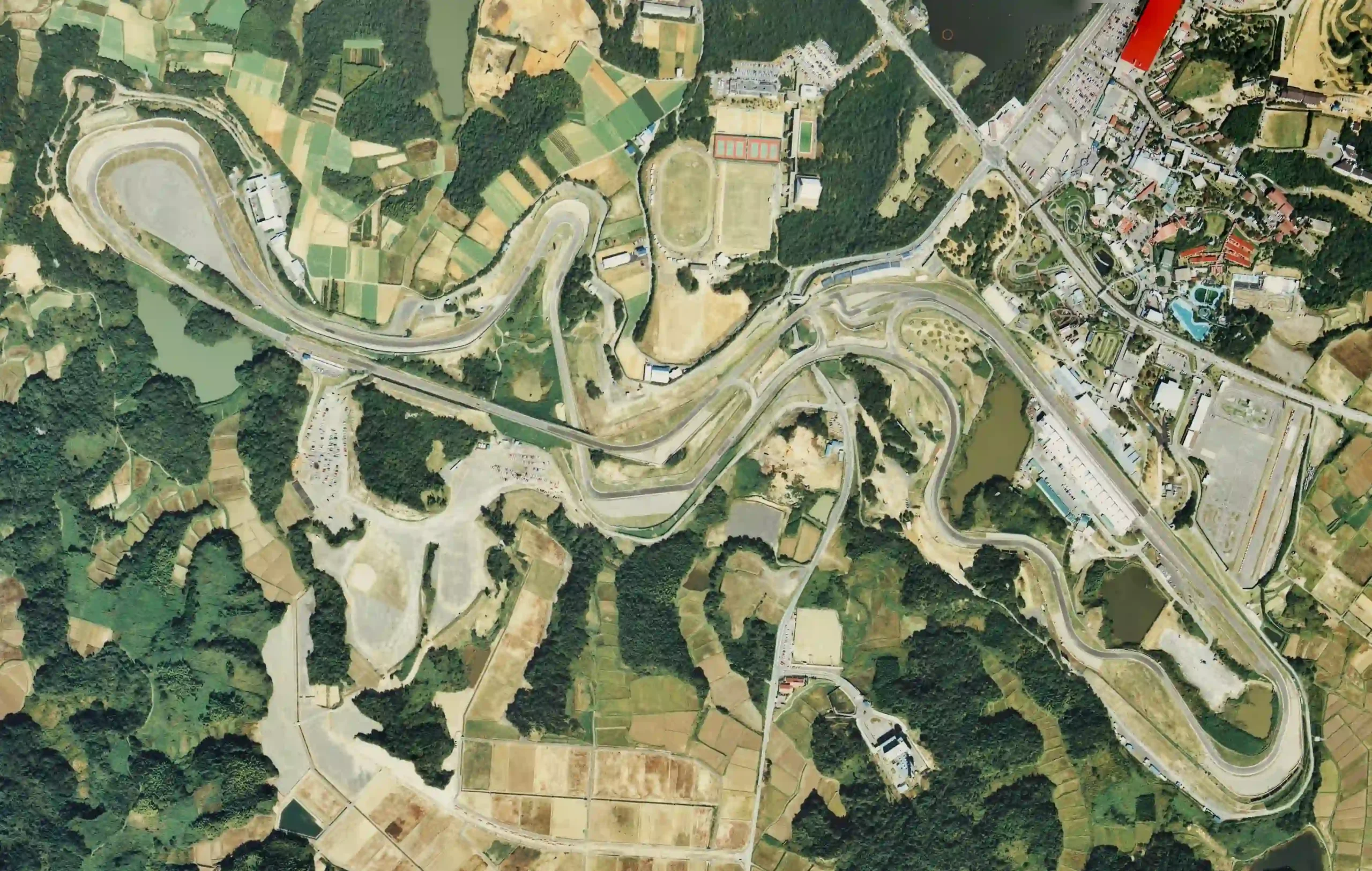
Why Suzuka Is Shaped Like a Figure Eight
Suzuka is the only circuit on the current Formula 1 calendar with a figure-eight layout. The track crosses over itself using a bridge, but the racing surfaces never intersect at the same level.
The figure-eight design is more than a visual curiosity.
It changes the balance of the lap and creates a wider variety of corner directions.
The Crossover Connects East and West
The circuit passes over itself near the middle of the lap.
One section uses a bridge, while the other runs below. Therefore, cars never cross paths.
Left and Right Loads Are Better Balanced
Many circuits favor one direction.
Suzuka distributes major corners across both sides. Tires and neck muscles receive a more balanced workload.
The Shape Supports Natural Terrain
The crossover allows the track to use hills without creating an awkward perimeter.
Consequently, the circuit climbs and descends while maintaining connected corner sequences.
It Creates a Distinct Spectator Experience
Fans can see different sections from elevated viewpoints.
The Ferris wheel and crossover also make Suzuka instantly recognizable from television images.
Why Modern Circuits Rarely Copy It
Bridges increase construction cost and operational complexity.
Modern safety zones also require more land. Suzuka remains difficult to reproduce without flattening its character.
Why Rhythm Matters More at Suzuka
Suzuka is called a driver’s circuit because speed comes from linking corners smoothly. Braking, steering and throttle inputs must prepare the next turn, so a small error can cost time across an entire sequence.
Some tracks divide naturally into separate corners.
At Suzuka, many turns behave like one long movement. Drivers must think several seconds ahead.
Turn 1 Begins Before the Braking Zone
Drivers approach Turn 1 at high speed.
They often begin turning before completing all the braking. The line then tightens into Turn 2.
Turn 2 Sets the Entire First Sector
A poor exit changes the approach to the first S Curve.
Therefore, the opening complex is not finished when Turn 2 ends. Its effect continues uphill.
Each S Curve Changes the Next One
Running wide in one corner places the car incorrectly for the following direction change.
The driver may lose several tenths without one dramatic mistake.
Dunlop Rewards Momentum
The long left-hander climbs toward the top of the first sector.
A driver who keeps the car balanced can carry speed. Too much steering overheats the front tires.
Rhythm Reduces Driver Workload
A well-balanced lap feels calm despite the speed.
However, a missed line creates corrections and tire scrub. The driver then works harder while going slower.
Why the Suzuka Esses Are So Difficult
The Esses are the flowing sequence from Turns 3 through 7. Drivers rapidly change direction while climbing, making front grip, balance and precise positioning essential.
The Esses define Suzuka for many drivers.
They reveal whether the car responds naturally or fights every input.
The First Change of Direction Sets the Pattern
The car arrives after Turn 2 with significant speed.
A late entry may look fast. However, it compromises the following left and right movements.
Front-End Grip Is Essential
The front tires must respond immediately.
Understeer pushes the car wide and delays the next steering input. The lost time then multiplies.
Rear Stability Supports Confidence
A loose rear can rotate the car quickly.
Yet too much movement forces a correction. Drivers need a responsive front without an unpredictable rear.
Elevation Changes the Load
The Esses climb across the hillside.
As the road rises and changes camber, the tire load shifts. Drivers must trust grip they cannot measure visually.
Dirty Air Hurts More Than It Appears
A following car loses front downforce.
That loss creates understeer through several connected corners. Therefore, staying close can damage both time and tires.
Why Drivers Find the Sequence Satisfying
There is no single heroic braking point.
Instead, success comes from repeated precision. A perfect sequence feels fast because the steering never needs a rescue correction.
Our guides to downforce, grip and clean and dirty air explain these forces.
Why the Degner Corners Punish Small Errors
Degner 1 is a fast right-hander with gravel close to the exit. Degner 2 follows quickly and needs heavier braking. Carrying too much speed into the first corner makes the second almost impossible to prepare correctly.
Degner 1 and Degner 2 form a classic Suzuka trap.
The driver wants maximum speed in the first corner. However, that ambition can destroy the second.
Degner 1 Needs Precise Commitment
The corner is fast enough for aerodynamic grip to matter.
Running slightly wide places the outside tires near gravel. A larger error can end the lap immediately.
The Car Must Settle Before Degner 2
Drivers brake soon after the first exit.
If the rear is still moving, the car becomes unstable. Therefore, a smooth first corner creates a faster second one.
Curbs Can Disturb the Platform
Using curb shortens the line.
However, excessive curb movement changes ride height and floor load. The car may bounce toward the gravel.
Why the Section Tests Judgment
The fastest entry is not always the fastest combination.
Drivers must sacrifice a little speed to gain control. That decision separates confidence from overconfidence.
Why Spoon Curve Is One of Formula 1’s Best Corners
Spoon is a long double-apex left-hander with changing radius and elevation. Drivers must balance entry speed, patience and traction because the exit begins the long run toward 130R.
Spoon looks simple from above.
From the cockpit, it changes character while the car remains loaded for several seconds.
The First Apex Encourages Too Much Speed
Drivers approach after a long right-hand section.
An aggressive entry can make the car run wide between the two apexes. The second half then becomes slower.
The Radius Changes
Spoon is not one constant curve.
The driver releases and reapplies steering as the corner opens and tightens. Therefore, throttle timing requires patience.
The Exit Controls a Major Acceleration Zone
A clean second apex allows early power.
The car then accelerates toward 130R. A small slide costs speed for the entire back section.
Front and Rear Tires Need Different Qualities
The front axle must hold the long line.
Meanwhile, the rear tires must accept power on exit. An imbalance appears quickly.
Why Spoon Feels Rewarding
The driver can sense the lap time building.
A balanced car allows progressive throttle and a clean exit. The result continues through the next straight.
Why 130R Still Commands Respect
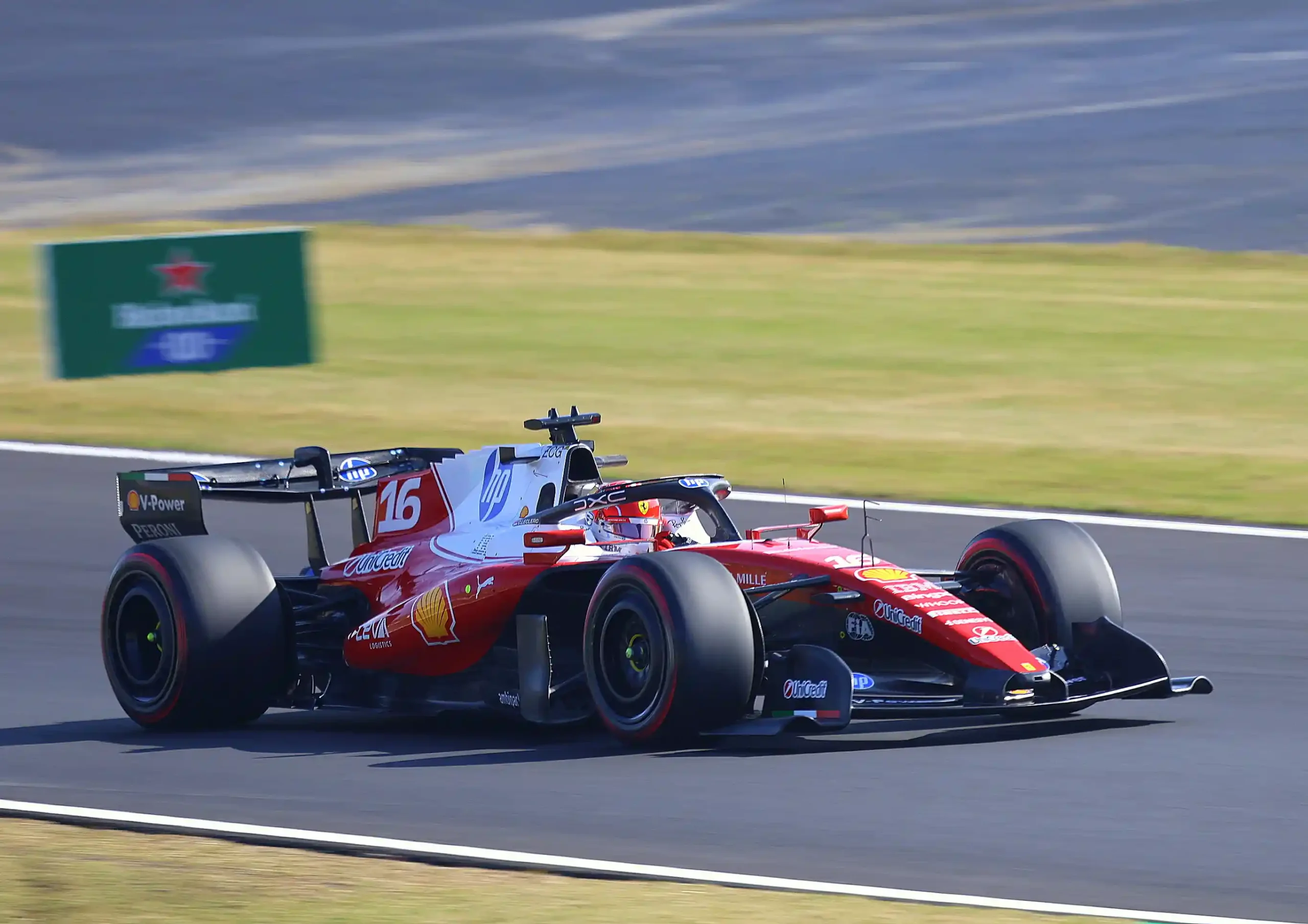
Modern Formula 1 cars normally take 130R flat out in dry conditions. However, wind, tire wear, fuel load, traffic and rain can reduce confidence. The high speed and limited margin still make precise placement essential.
130R is named after its original radius.
The corner has changed over time, but the name and reputation remain.
Flat Out Does Not Mean Easy
A driver may keep the throttle fully open.
However, the car still carries enormous lateral load. A small steering correction creates tire scrub at very high speed.
Wind Can Change the Corner
A crosswind alters the car’s position.
A tailwind reduces aerodynamic load. Therefore, conditions can change the risk without changing the driver’s throttle.
Traffic Reduces Front Grip
Following another car creates disturbed air.
The front wing loses effectiveness. The driver may need a wider line or a small lift.
Rain Makes the Corner Completely Different
Standing water reduces grip and visibility.
Moreover, spray hides the car ahead. Race control may need to intervene before the corner becomes unsafe.
The Chicane Creates a Passing Reward
A driver who follows through 130R can gain slipstream.
The final chicane then provides heavy braking. Commitment through 130R supports the overtaking attempt.
Our guide to slipstreaming explains how the following car gains speed.
Why Turn 1 and the Hairpin Add Technical Variety
Suzuka is not only a high-speed circuit.
Its slower corners prevent teams from building a car for one purpose.
Turn 1 Requires Braking While Turning
The driver enters the long right-hander with speed.
Braking continues as steering load builds. Therefore, front-tire confidence is vital.
Turn 2 Tightens the Line
The second part is slower and more demanding.
A driver who attacks Turn 1 too hard arrives poorly positioned. The exit toward the Esses then suffers.
The Hairpin Requires Rotation
Turn 11 is one of the slowest points on the lap.
The car must rotate without locking the inside front tire. Rear traction then controls the exit.
The Hairpin Can Support Overtaking
A driver may attack under braking.
However, the corner is narrow and the entry is curved. The move requires cooperation and precise positioning.
How F1 Teams Set Up a Car for Suzuka
Teams use a medium-high to high-downforce setup at Suzuka. The fast corners need aerodynamic load, but the back straight and main straight still punish excessive drag.
Suzuka tests overall aerodynamic quality.
A car cannot rely on maximum wing alone. It needs stable and efficient load across changing speeds.
Front-End Response Is the First Priority
The Esses demand immediate turn-in.
Understeer forces the driver to wait. That delay damages several corners rather than one.
Rear Stability Builds Trust
Fast corners require a calm rear axle.
However, excessive stability can create understeer. Engineers must balance rotation with confidence.
The Aerodynamic Platform Must Remain Consistent
Elevation and curbs change ride height.
The floor must keep producing predictable load. Sudden balance shifts make the driver cautious.
Suspension Cannot Be Too Stiff
A stiff platform supports aerodynamics.
Yet curbs and surface changes can bounce the car. Mechanical compliance protects tire contact.
Brake Balance Changes Across the Lap
Turn 1 combines speed and steering.
The Hairpin and chicane need heavier straight-line braking. Drivers may adjust brake balance between sections.
Energy Deployment Still Matters
The back straight and pit straight reward electrical power.
Therefore, teams must deploy energy without running short before an attack or defense.
Medium-high to high, with efficiency needed on the straights.
Essential through Turn 1 and the connected S Curves.
Builds confidence through Degner, Spoon and 130R.
Supports the aero platform while absorbing curbs and surface changes.
Adjusted for turning entries, the Hairpin and final chicane.
Managed for the back straight, overtaking and race defense.
Our guides to wing angle, car handling and G-force explain the setup demands.
Why Suzuka Is Hard on the Tires
Suzuka contains long and fast corners that keep the tires under lateral load. The Esses, Dunlop, Spoon and 130R generate heat and stress, while repeated direction changes load both sides of the car.
Suzuka tests tire construction and tire management.
The load is sustained rather than concentrated in one braking event.
The Esses Generate Repeated Lateral Energy
The tires switch load from left to right.
Each change deforms the carcass and heats the tread. Sliding raises temperatures even faster.
Dunlop Keeps the Outside Tires Loaded
The long left-hander continues uphill.
The driver needs front grip without overheating the tire surface. A wide slide can damage the entire stint.
Spoon Creates a Long Combined Load
The car turns while changing speed and throttle.
Therefore, the front and rear tires work together for several seconds. Poor balance creates both wear and heat.
130R Adds High-Speed Stress
The corner is short compared with Spoon.
However, speed creates major force. Tire condition becomes important late in a long stint.
New Asphalt Can Change Degradation
Large sections were resurfaced across the 2025 and 2026 events.
Fresh asphalt can provide smoother grip and lower degradation. It can also change tire temperature and strategy expectations.
Why One-Stop Strategies Can Still Work
A balanced car avoids sliding.
If degradation remains controlled, track position becomes more valuable than fresh tires. Passing is not easy enough to guarantee recovery.
Why Overtaking at Suzuka Is Difficult but Rewarding
The final chicane is the strongest passing zone. Turn 1 and the Hairpin also offer opportunities. Successful moves usually begin with a strong exit, slipstream and accurate braking rather than a simple straight-line speed advantage.
Suzuka is narrower than many modern circuits.
Moreover, the fastest sections depend on aerodynamic grip. A following car often loses front performance.
The Final Chicane Is the Main Target
Drivers accelerate from Spoon toward 130R.
A close following car gains slipstream before heavy braking. The inside line then becomes available.
Turn 1 Requires a Strong Chicane Exit
The attack begins at the previous corner.
A better launch onto the pit straight builds momentum. However, Turn 1 is long and the outside driver can fight back.
The Hairpin Offers a Surprise Move
The braking zone arrives after the Degners.
A driver can attack the inside, although the curved approach complicates positioning.
Spoon Is Not a Normal Passing Zone
The corner is wide in places.
However, its changing radius makes side-by-side driving difficult. Most drivers prepare an exit rather than force an entry.
Why Dirty Air Hurts the Attack
The following car loses front downforce in the first sector.
Consequently, it may drop back before reaching a passing zone. Drivers often protect tires and attack later.
Overtake Mode in 2026
Overtake Mode replaced DRS under the 2026 regulations.
Eligible following cars receive extra electrical deployment. However, Suzuka still requires the driver to remain close through demanding corners.
How Qualifying Shapes the Japanese Grand Prix
Overtaking is difficult and dirty air damages front grip. Starting near the front gives a driver clean air, protects tire balance and provides greater control over pit strategy.
A Suzuka qualifying lap demands commitment from the first corner.
There is little time to recover after an error.
Track Position Improves Every Sector
Clean air supports the front wing.
The driver can use the natural line through the Esses without protecting overheated tires.
One Mistake Can Ruin Several Corners
A slow first S Curve changes the next three turns.
Therefore, the time loss continues long after the original mistake.
Wind Can Change Between Runs
Suzuka’s open sections feel changing gusts.
A corner that was flat or stable in Q2 may feel different in Q3.
Red Flags Can Remove the Final Attempt
Gravel and limited recovery roads complicate car removal.
Consequently, a crash can stop the session while track conditions are improving.
Our guides to F1 qualifying, pole position and grid position explain the stakes.
How Strategy Works at Suzuka
Japanese Grand Prix strategy depends on degradation, track position and weather.
The circuit can punish an aggressive plan if the driver rejoins in traffic.
The Undercut Can Be Strong
Fresh tires improve the high-speed first sector.
However, the driver must warm them quickly. A slow out-lap removes the advantage.
The Overcut Uses Clean Air
A driver staying out may preserve warm tires.
If the rival rejoins behind traffic, one extra lap can change position.
Traffic Increases Tire Stress
Dirty air causes understeer.
The driver then slides the front tires through the Esses. Consequently, a theoretically faster tire can degrade quickly.
Safety Cars Create Major Swings
A neutralized field reduces pit-lane time loss.
It also removes existing gaps. The leader may lose control of a carefully built race.
Rain Creates Crossover Decisions
Slicks remain faster on a drying line.
Intermediates provide safety in wet sectors. The long lap increases the cost of choosing incorrectly.
Our guides to pit stops, undercut and overcut strategy and Safety Car rules cover those decisions.
Why Weather Makes Suzuka More Difficult
High-speed corners, elevation and standing water make Suzuka demanding in wet conditions. Spray reduces visibility through fast sections, while rivers can cross the racing line when rainfall becomes severe.
Japan’s weather can change quickly during Grand Prix weekends.
Moving the event to spring reduced some autumn typhoon risk. However, rain remains possible.
Water Follows the Elevation
Suzuka rises and falls across the lap.
Heavy rain can flow downhill and create streams across the track. Grip may change within one corner.
Spray Hides the Racing Line
Fast corners generate dense spray behind a car.
The following driver may lose sight of braking references and standing water.
130R Becomes a Serious Visibility Test
The corner is taken at high speed.
A driver needs confidence in grip and the road ahead. Race control may reduce running when visibility becomes unacceptable.
Wind Often Arrives With Rain
Wet tires already provide less grip.
A crosswind then changes the car’s position. Therefore, the driver needs extra margin.
Red Flags Protect Recovery Work
A car stopped in gravel may require machinery.
Officials can suspend the session while marshals work. Our guide to F1 red flags explains the procedure.
Why Gravel Traps Add to Suzuka’s Character
Modern circuits often use large asphalt runoff areas.
Suzuka still places grass and gravel near several fast corners.
Gravel Punishes a Wide Exit
A driver cannot always continue at full speed.
The stones slow the car and may trap it. Therefore, track limits feel physical rather than administrative.
The Consequence Improves Concentration
Drivers know a small error may end qualifying.
That risk makes a clean fast lap more satisfying.
Gravel Can Damage the Car
Stones may enter cooling ducts or strike the floor.
A recovered car can still lose performance. Teams inspect it carefully after an excursion.
Safety and Challenge Must Remain Balanced
Gravel helps slow cars before barriers.
However, circuit designers also need safe recovery routes. Suzuka has evolved while protecting its character.
Read our guide to gravel traps.
Why Suzuka Is Famous for Championship Deciders
Suzuka decided the first five Grands Prix it hosted from 1987 through 1991. Later champions crowned there included Damon Hill in 1996, Mika Häkkinen in 1999, Michael Schumacher in 2000 and 2003, and Sebastian Vettel in 2011.
Suzuka joined the calendar late in the 1987 season.
That position made it a natural championship stage for many years.
1988: Senna Recovered From a Poor Start
Ayrton Senna nearly stalled on the grid.
He fell into the pack, recovered and passed Alain Prost. The victory secured his first world title.
1989: The Chicane Collision
Senna attacked Prost near the final chicane.
The McLarens collided. Senna continued but was later disqualified, which confirmed Prost as champion.
1990: The First-Corner Collision
Senna and Prost arrived as rivals for different teams.
They collided at Turn 1 seconds after the start. The result gave Senna the championship.
1996: Damon Hill Completed the Job
Hill entered the finale against Williams teammate Jacques Villeneuve.
He won the race and secured the Drivers’ Championship.
2000: Schumacher Ended Ferrari’s Wait
Michael Schumacher beat Mika Häkkinen after a tense strategic race.
The victory delivered Ferrari’s first Drivers’ title since 1979.
2003: Eighth Place Was Enough
Schumacher endured a difficult race.
However, he finished eighth and secured his sixth championship.
Why Championship History Adds Pressure
Drivers know the famous incidents before arriving.
The same corners carry decades of memory. Consequently, a normal braking zone can feel historically important.
Why the 2005 Japanese Grand Prix Remains a Driver’s Race
The 2005 event did not decide the championship.
However, it became one of Suzuka’s greatest demonstrations of attacking skill.
Kimi Räikkönen Started 17th
Rain disrupted qualifying and mixed the grid.
Räikkönen then worked through traffic with pace and tire control.
Fernando Alonso Passed Schumacher at 130R
Alonso attacked around the outside of the famous corner.
The move became one of the most celebrated passes of the era.
Räikkönen Won on the Final Lap
He caught Giancarlo Fisichella late in the race.
Räikkönen passed into Turn 1 and completed a victory from 17th.
Why the Race Fits Suzuka
The result came from rhythm, confidence and sustained pressure.
It showed that difficult overtaking does not mean impossible overtaking.
Why Japanese F1 Fans Add to Suzuka’s Appeal
Japanese fans are known for detailed costumes, handmade gifts, deep technical knowledge and respectful support for drivers across the grid. Their enthusiasm creates a distinctive atmosphere throughout the race weekend.
Drivers often mention the fans when discussing Suzuka.
The welcome begins before they reach the circuit and continues after the race.
Support Extends Beyond One Team
Fans celebrate Japanese drivers and Honda-linked teams.
However, they also support competitors from across Formula 1. The atmosphere feels broad rather than hostile.
Costumes Show Deep Knowledge
Spectators recreate helmets, team uniforms and even technical car parts.
Many designs reference older seasons. Therefore, the grandstands become a moving history display.
Fans Stay Through Difficult Weather
Rain and long delays rarely remove the enthusiasm.
Drivers see full grandstands during practice as well as race day.
The Circuit Feels Like a Motorsport Park
Suzuka hosts Formula 1, Super Formula, Super GT and the Suzuka 8 Hours.
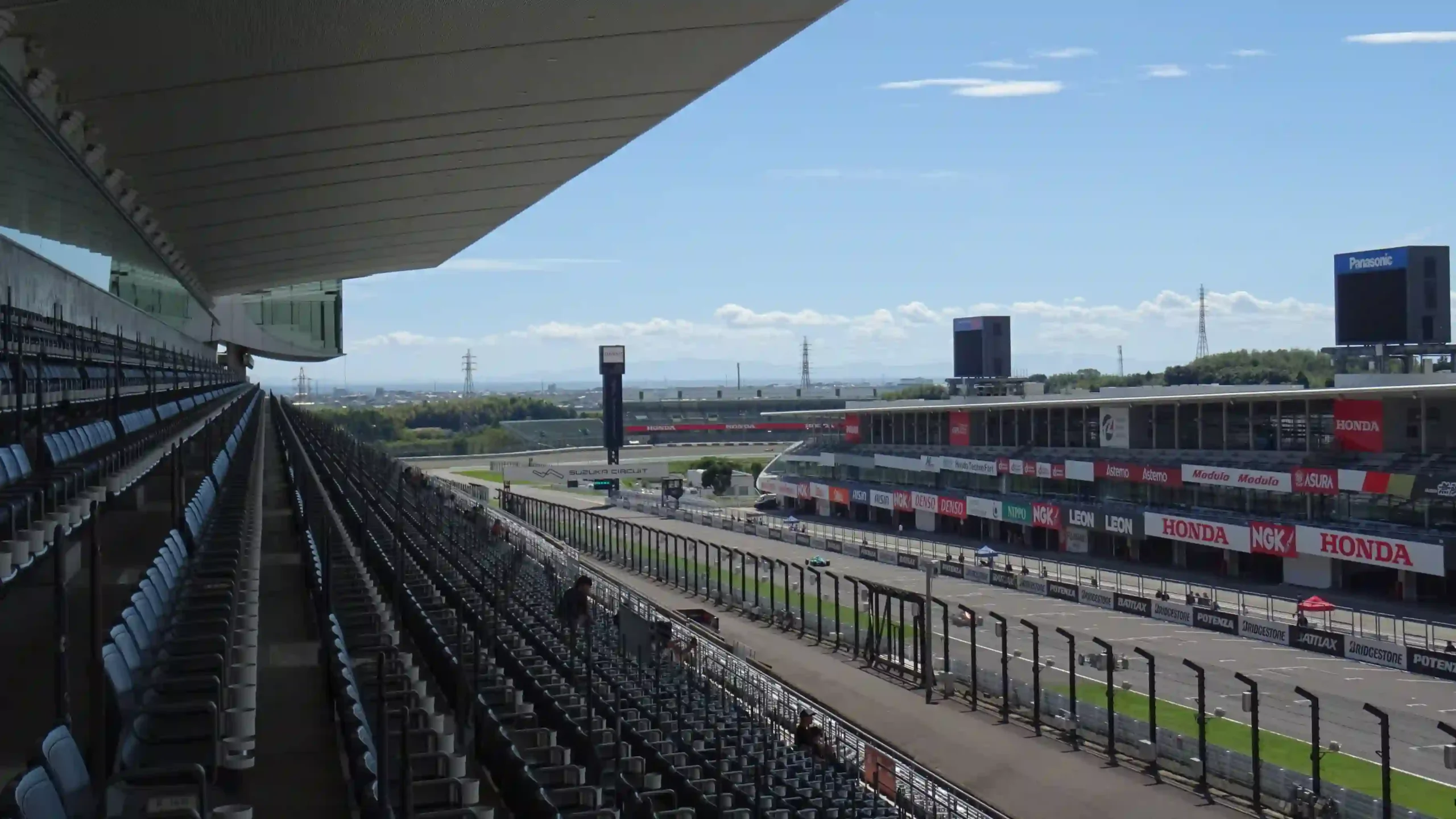
The Ferris wheel and amusement park add a festival atmosphere without hiding the racing purpose.
Honda’s History Matters
Suzuka remains closely connected with Honda.
Japanese fans understand the company’s motorcycle, engine and Formula 1 heritage. That knowledge deepens the home-race emotion.

What Happened at the 2026 Japanese Grand Prix?
Kimi Antonelli won the 2026 Japanese Grand Prix for Mercedes. Oscar Piastri finished second for McLaren, while Charles Leclerc completed the podium for Ferrari.
The latest completed Japanese Grand Prix took place on March 29, 2026.
Antonelli started from pole after setting a 1:28.778 qualifying lap.
Piastri Took the Lead at the Start
The McLaren driver launched strongly into Turn 1.
Meanwhile, Antonelli dropped to sixth. His race then became a recovery drive.
Mercedes Recovered Through Pace
George Russell challenged near the front.
Antonelli also moved back into contention as the first pit-stop phase developed.
Bearman’s Crash Changed the Strategy
Ollie Bearman crashed heavily and triggered a Safety Car on Lap 22.
Antonelli had not yet stopped. Therefore, he pitted under neutralization and returned in the lead.
Antonelli Controlled the Restart
The Mercedes driver protected tire temperature and built a gap.
He won by 13.722 seconds over Piastri. Leclerc finished another 1.548 seconds behind.
The Win Created a Championship Record
Antonelli became Formula 1’s youngest championship leader.
It was also his second consecutive victory after winning in China.
Antonelli Set the Fastest Race Lap
He recorded a 1:32.432 on Lap 49.
The official circuit lap record remained his 1:30.965 from the 2025 race.
| 2026 Japanese GP Detail | Result |
|---|---|
| Race winner | Kimi Antonelli, Mercedes |
| Second place | Oscar Piastri, McLaren |
| Third place | Charles Leclerc, Ferrari |
| Pole position | Kimi Antonelli, 1:28.778 |
| Fastest race lap | Kimi Antonelli, 1:32.432 |
| Race time | 1:28:03.403 |
| Race distance | 53 laps, 307.471 km |
Why the Race Reflected Suzuka’s Character
The opening corners rewarded Piastri’s launch.
However, the result required pace, tire control and Safety Car execution. Suzuka tested both driver and team.
Why Suzuka Remains Secure on the F1 Calendar
Formula 1 extended its agreement with the Japanese Grand Prix through 2029.
The decision reflects Suzuka’s sporting value and strong fan support.
The Circuit Tests New Cars Honestly
High-speed balance appears immediately.
Therefore, teams use Suzuka to judge whether development upgrades really work.
The Venue Has Global Recognition
The Esses, Spoon and 130R are known beyond Japan.
The figure-eight map also makes the circuit visually distinctive.
The Race Connects F1 With Japanese Industry
Japan remains important to global automotive engineering.
Honda’s presence gives Suzuka additional historical depth.
Spring Scheduling Creates a New Atmosphere
The race moved from autumn to spring from 2024.
Cherry blossom season changed the visual identity while supporting better regional scheduling.
Is Suzuka Better Than Spa, Silverstone or Monaco?
Each circuit rewards different strengths.
Drivers often place all four among Formula 1’s essential venues.
Suzuka vs. Spa
Spa offers longer straights, larger elevation and more weather variation.
Suzuka creates tighter rhythm and more rapid direction changes. Both reward confidence and aerodynamic balance.
Suzuka vs. Silverstone
Silverstone has wider high-speed complexes and stronger passing zones.
Suzuka is narrower and links more corner types into one lap. Mistakes often carry a larger immediate cost.
Suzuka vs. Monaco
Monaco demands lower-speed precision beside walls.
Suzuka asks for similar accuracy at far higher speed. Gravel replaces many of Monaco’s barriers.
Why Drivers Avoid Choosing One Favorite
Spa, Suzuka and Silverstone all produce different sensations.
However, Suzuka’s complete rhythm makes it difficult to replace with another circuit.
Common Myths About Suzuka Circuit
“Suzuka Is Loved Only Because It Is Old”
False. History adds prestige, but the driving challenge creates the affection.
The layout still exposes modern car balance and driver confidence.
“130R Is Easy Because It Is Flat Out”
False. Full throttle does not remove lateral load, wind or traffic.
The consequence of a mistake remains serious.
“The Figure Eight Means Cars Cross Each Other”
False. One part of the circuit passes over another on a bridge.
The racing surfaces never intersect at the same height.
“Suzuka Has No Overtaking”
False. Passing is difficult but possible at the chicane, Turn 1 and Hairpin.
Drivers need preparation and commitment rather than a simple speed advantage.
“Maximum Downforce Is Always Best”
False. Extra wing helps the corners but costs speed on the straights.
Teams need efficient medium-high or high downforce.
“The First Sector Is Only About Bravery”
False. Courage helps, but balance and timing matter more.
A driver who attacks without rhythm loses time across several corners.
Why Is Suzuka Loved by F1 Drivers? FAQs
Why is Suzuka loved by F1 drivers?
Its corners flow together and reward rhythm, confidence and precise car control. The circuit also punishes mistakes without relying on artificial complexity.
Why is Suzuka shaped like a figure eight?
The crossover bridge allowed designer John Hugenholtz to use the natural terrain and create a balanced mix of left- and right-hand corners.
Is 130R flat out in a Formula 1 car?
Modern F1 cars normally take it flat in dry conditions. Wind, tire condition, traffic and rain can still change the required commitment.
Why is overtaking difficult at Suzuka?
The circuit is narrow, while dirty air reduces front grip through connected high-speed corners. Passing usually requires careful preparation.
Conclusion: Suzuka Is Loved Because Every Corner Has a Purpose
Understanding why Suzuka is loved by F1 drivers begins with its original purpose.
Honda built the circuit as a serious test track in 1962.
Therefore, the layout was designed to expose weaknesses rather than create easy spectacle.
That purpose remains visible today.
The circuit measures 5.807 kilometers and contains 18 turns.
However, the numbers do not describe the experience.
Suzuka is about how those turns connect.
Turn 1 flows into a tightening second corner.
The exit then controls the opening of the Esses.
Each S Curve changes the next one.
Consequently, a small error can damage an entire sector.
Dunlop continues the sequence uphill.
The two Degners then ask for speed and restraint.
Too much commitment in Degner 1 ruins the preparation for Degner 2.
The Hairpin adds low-speed rotation and traction.
Spoon Curve creates a long and changing load.
Its exit determines speed toward 130R.
Modern cars may take 130R flat out.
Yet wind, traffic and tire condition still demand trust.
The final chicane then converts high speed into a braking challenge.
That variety explains the driver appeal.
No single technique produces a fast lap.
A driver needs bravery, patience, precision and rhythm.
The figure-eight design adds another layer.
Suzuka is the only current Formula 1 circuit with a crossover layout.
The bridge allows the track to use natural hills and balanced corner directions.
It also gives the circuit an identity visible from the air.
Setup remains difficult.
Teams need front response through the Esses.
They need rear stability through Degner, Spoon and 130R.
Medium-high or high downforce supports the corners.
However, excessive drag costs speed on the straights.
The suspension must protect the aerodynamic platform.
It must also keep the tires connected over curbs and surface changes.
Tires face sustained lateral load.
The Esses repeatedly move energy from one side to the other.
Dunlop and Spoon keep the outside tires loaded.
130R adds high-speed force late in the lap.
A balanced car protects the tires.
An unbalanced car slides and loses performance quickly.
Overtaking is difficult but meaningful.
The chicane, Turn 1 and Hairpin provide opportunities.
However, an attacker must remain close through demanding corners.
That requirement makes each pass feel earned.
History strengthens the circuit’s reputation.
Suzuka hosted its first Formula 1 race in 1987.
The first five events all decided the Drivers’ Championship.
Senna and Prost created unforgettable moments in 1988, 1989 and 1990.
Damon Hill, Mika Häkkinen, Michael Schumacher and Sebastian Vettel later secured titles there.
The 2005 race showed a different kind of greatness.
Kimi Räikkönen won from 17th after passing for the lead on the final lap.
Fernando Alonso also produced a famous move at 130R.
Japanese fans complete the experience.
Their knowledge, costumes and respect create a distinctive atmosphere.
Support extends across the grid rather than focusing on one driver.
The Ferris wheel and motorsport park add visual character.
Honda’s history adds emotional depth.
The 2026 Japanese Grand Prix added another modern story.
Kimi Antonelli started from pole but dropped to sixth.
He recovered and benefited from a Safety Car pit stop.
Antonelli then controlled the restart and won by more than 13 seconds.
Oscar Piastri finished second, while Charles Leclerc took third.
The victory made Antonelli Formula 1’s youngest championship leader.
Suzuka therefore remains relevant rather than merely historic.
It still tests the newest cars and the newest generation of drivers.
The circuit does not need walls, gimmicks or endless straight lines.
Its attraction comes from natural movement.
Every corner asks a question.
Every answer prepares the next one.
That is why Suzuka remains one of the circuits F1 drivers love most.
Sources and Fact-Checking
This article was checked against official Formula 1 and Suzuka Circuit material available on July 24, 2026. This is a static source list with no interactive checking feature.