Hungarian Grand Prix 2026 Qualifying Results: Pole Position, Full Starting Grid & Key Takeaways
Lando Norris beat Lewis Hamilton by 0.012 seconds for pole, before penalties reshaped the front rows at the Hungaroring.
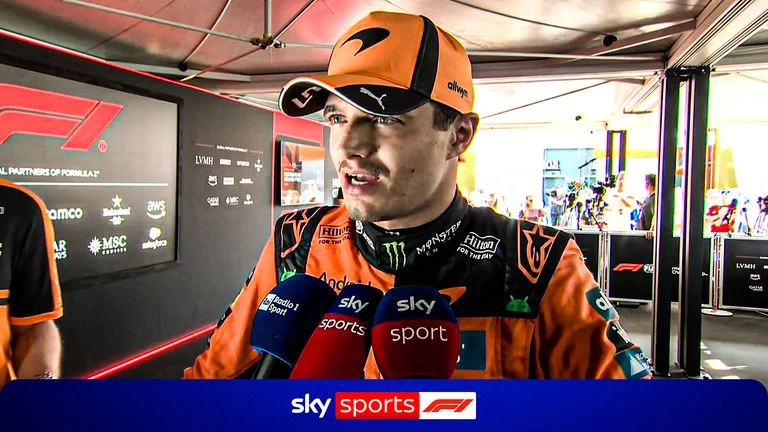
Lando Norris took pole position for the 2026 Hungarian Grand Prix with a 1:17.207, beating Lewis Hamilton by only 0.012 seconds. Hamilton initially qualified second, but a three-place grid penalty dropped him to fifth. Kimi Antonelli also received a three-place penalty, moving him from fourth to seventh on the final starting grid.
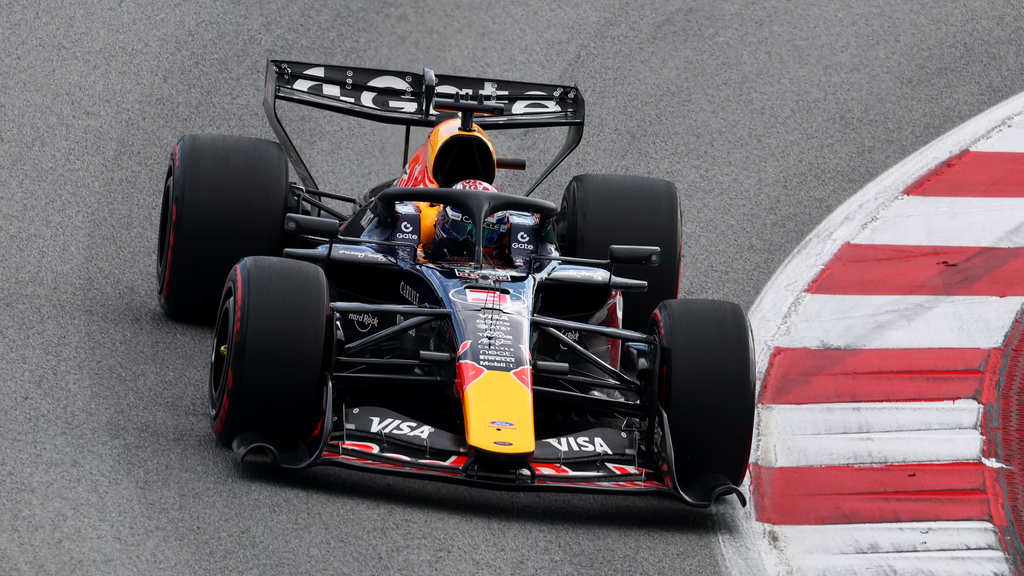
The result gave McLaren the most valuable grid position at one of Formula 1’s hardest overtaking circuits. Charles Leclerc moved onto the front row, while Oscar Piastri rose to third. Max Verstappen gained fourth after a difficult Q3 that included a final-corner spin.
Hungarian Grand Prix 2026 Qualifying Results: The Essential Story
Norris started his final Q3 lap with Hamilton holding provisional pole. The Ferrari driver had led the first runs by roughly one tenth. However, Hamilton made mistakes on his final attempt and failed to improve.
Norris delivered when the track was hardest to read. He crossed the line in 1:17.207, only 0.012 seconds ahead. That margin equals twelve thousandths, which is smaller than a blink.
Leclerc qualified third, 0.238 seconds behind Norris. Antonelli took fourth, while Piastri finished fifth. Verstappen, Russell, Hadjar, Lindblad and Hulkenberg completed the top 10.
The order then changed after the stewards acted. Hamilton received a three-place penalty for impeding Piastri. Antonelli received the same sanction for failing to slow sufficiently under yellow flags. Therefore, Leclerc moved to second, Piastri to third and Verstappen to fourth.
Full Hungarian Grand Prix 2026 Qualifying Classification
The table below shows the official qualifying order before grid penalties. Q1, Q2 and Q3 times are listed separately because the fastest lap from each phase does not always come in Q3.
| Pos | No. | Driver | Team | Q1 | Q2 | Q3 | Laps | Status |
|---|---|---|---|---|---|---|---|---|
| 1 | 1 | Lando Norris | McLaren | 1:18.277 | 1:17.456 | 1:17.207 | 16 | Pole |
| 2 | 44 | Lewis Hamilton | Ferrari | 1:18.730 | 1:17.803 | 1:17.219 | 15 | +0.012 |
| 3 | 16 | Charles Leclerc | Ferrari | 1:18.984 | 1:17.626 | 1:17.445 | 20 | +0.238 |
| 4 | 12 | Kimi Antonelli | Mercedes | 1:18.726 | 1:18.393 | 1:17.479 | 20 | +0.272 |
| 5 | 81 | Oscar Piastri | McLaren | 1:18.891 | 1:17.928 | 1:17.684 | 15 | +0.477 |
| 6 | 3 | Max Verstappen | Red Bull Racing | 1:18.656 | 1:18.249 | 1:17.725 | 18 | +0.518 |
| 7 | 63 | George Russell | Mercedes | 1:18.856 | 1:18.445 | 1:17.760 | 20 | +0.553 |
| 8 | 6 | Isack Hadjar | Red Bull Racing | 1:18.754 | 1:17.872 | 1:17.856 | 14 | +0.649 |
| 9 | 41 | Arvid Lindblad | Racing Bulls | 1:19.233 | 1:18.360 | 1:18.281 | 18 | +1.074 |
| 10 | 27 | Nico Hulkenberg | Audi | 1:18.796 | 1:18.639 | 1:18.686 | 18 | +1.479 |
| 11 | 30 | Liam Lawson | Racing Bulls | 1:19.161 | 1:18.765 | — | 12 | Q2 |
| 12 | 10 | Pierre Gasly | Alpine | 1:19.741 | 1:18.844 | — | 12 | Q2 |
| 13 | 43 | Franco Colapinto | Alpine | 1:19.771 | 1:19.027 | — | 12 | Q2 |
| 14 | 5 | Gabriel Bortoleto | Audi | 1:19.069 | 1:19.105 | — | 11 | Q2 |
| 15 | 31 | Esteban Ocon | Haas | 1:20.010 | 1:19.734 | — | 12 | Q2 |
| 16 | 14 | Fernando Alonso | Aston Martin | 1:20.126 | 1:19.808 | — | 15 | Q2 |
| 17 | 87 | Oliver Bearman | Haas | 1:20.233 | — | — | 6 | Q1 |
| 18 | 55 | Carlos Sainz | Williams | 1:20.621 | — | — | 9 | Q1 |
| 19 | 23 | Alexander Albon | Williams | 1:20.658 | — | — | 9 | Q1 |
| 20 | 18 | Lance Stroll | Aston Martin | 1:20.659 | — | — | 8 | Q1 |
| 21 | 77 | Valtteri Bottas | Cadillac | 1:20.886 | — | — | 10 | Q1 |
| 22 | 11 | Sergio Perez | Cadillac | 1:21.322 | — | — | 9 | Q1 |
Full Starting Grid for the 2026 Hungarian Grand Prix
Norris retained pole. Leclerc joined him on the front row. Piastri and Verstappen formed row two, while Hamilton started fifth beside Russell.
Antonelli fell to seventh after his penalty. Perez was required to start from the pit lane because Cadillac modified his car under parc ferme conditions.
| Grid | Driver | Team | Qualifying time | Grid note |
|---|---|---|---|---|
| 1 | Lando Norris | McLaren | 1:17.207 | — |
| 2 | Charles Leclerc | Ferrari | 1:17.445 | Promoted |
| 3 | Oscar Piastri | McLaren | 1:17.684 | Promoted |
| 4 | Max Verstappen | Red Bull Racing | 1:17.725 | Promoted |
| 5 | Lewis Hamilton | Ferrari | 1:17.219 | 3-place penalty |
| 6 | George Russell | Mercedes | 1:17.760 | Promoted |
| 7 | Kimi Antonelli | Mercedes | 1:17.479 | 3-place penalty |
| 8 | Isack Hadjar | Red Bull Racing | 1:17.856 | — |
| 9 | Arvid Lindblad | Racing Bulls | 1:18.281 | — |
| 10 | Nico Hulkenberg | Audi | 1:18.686 | — |
| 11 | Liam Lawson | Racing Bulls | 1:18.765 | — |
| 12 | Pierre Gasly | Alpine | 1:18.844 | — |
| 13 | Franco Colapinto | Alpine | 1:19.027 | — |
| 14 | Gabriel Bortoleto | Audi | 1:19.105 | — |
| 15 | Esteban Ocon | Haas | 1:19.734 | — |
| 16 | Fernando Alonso | Aston Martin | 1:19.808 | — |
| 17 | Oliver Bearman | Haas | 1:20.233 | — |
| 18 | Carlos Sainz | Williams | 1:20.621 | — |
| 19 | Alexander Albon | Williams | 1:20.658 | — |
| 20 | Lance Stroll | Aston Martin | 1:20.659 | — |
| 21 | Valtteri Bottas | Cadillac | 1:20.886 | — |
| 22 | Sergio Perez | Cadillac | Pit lane | Parc ferme change |
Q1 Recap: Williams, Cadillac and Bearman Eliminated
Q1 immediately showed how close the lower half of the field had become. The first elimination line covered Bearman, Sainz, Albon, Stroll, Bottas and Perez. With 22 cars competing, six drivers were removed at the end of the opening phase.
Bearman missed Q2 with a 1:20.233. Sainz and Albon followed for Williams, separated by only 0.037 seconds. Stroll was one thousandth slower than Albon, while both Cadillacs occupied the final two positions.
Perez’s 1:21.322 left him 22nd. His weekend had already been disrupted by an FP3 stoppage. Moreover, a later parc ferme change forced him to start from the pit lane.
Alonso escaped into Q2
Fernando Alonso progressed in 16th. That result mattered because Aston Martin had struggled throughout the opening half of the season. The upgraded car still lacked front-running pace, but reaching Q2 offered a small sign of progress.
Ocon also survived in 15th. Bortoleto advanced in 14th, while Colapinto and Gasly carried both Alpines through. Lawson completed the group moving forward.
Why Q1 mattered more than usual
The Hungaroring makes recovery difficult. A driver starting on the last three rows can lose an entire first stint behind slower traffic. Therefore, Q1 elimination carried a heavier strategic cost than at a circuit with long straights.
Williams had the clearest disappointment. Neither car escaped Q1. The team had looked uncomfortable in practice, and qualifying confirmed that the car lacked confidence through the linked corners.
Q2 Recap: Alonso Misses Q3 as Lawson Leads the Eliminated Group
Lawson finished 11th with a 1:18.765. He missed Q3 by a narrow margin, but he still placed Racing Bulls close to the top 10. Gasly took 12th, followed by Colapinto, Bortoleto, Ocon and Alonso.
Alonso was the slowest Q2 runner at 1:19.808. Even so, Aston Martin could take encouragement from progressing beyond Q1. The car remained well outside the leading group, yet the direction appeared better.
Both Alpines reached Q2, although neither advanced further. Colapinto recovered after his FP2 crash, while Gasly led the pair. Audi split its cars, with Hulkenberg reaching Q3 and Bortoleto ending 14th.
Hulkenberg delivered Audi’s Q3 appearance
Hulkenberg’s 1:18.639 carried Audi into the top-10 shootout. He had been consistently quick throughout practice. Therefore, his Q3 appearance reflected genuine weekend form rather than a one-lap surprise.
Bortoleto could not match that pace in Q2. His 1:19.105 was slower than his own Q1 time. That pattern often points to tire preparation, traffic or a lap that never fully came together.
Racing Bulls split the elimination line
Lindblad advanced to Q3, while Lawson finished 11th. The result underlined Racing Bulls’ competitive one-lap pace. Lindblad’s performance was especially notable because a power-unit problem had limited his FP3 running.
The team therefore entered Sunday with one car ninth and the other 11th. Lawson also gained free tire choice outside the top 10, which could become strategically useful.
Q3 Recap: How Lando Norris Beat Lewis Hamilton by 0.012 Seconds
Hamilton produced the strongest first run. He went roughly one tenth clear of Norris and appeared set for his first Grand Prix pole since Hungary in 2023. Ferrari had carried strong pace through practice, so the lap was not unexpected.
However, the final runs changed everything. Hamilton went out first among the main pole contenders. He made an error at Turn 1 and never rebuilt the lap. Several rivals also failed to improve as the session became less predictable.
Norris started his final lap last among the serious pole challengers. He found the grip Hamilton could not. The McLaren crossed the line at 1:17.207, beating the Ferrari by 0.012 seconds.
Norris delivered under maximum pressure
Norris had no margin for a correction. One missed apex would have left Hamilton on pole. Instead, he produced the only final run that clearly improved the fight at the top.
The result gave Norris his 17th career pole and his first of the 2026 season. It also ended Mercedes’ run of 10 consecutive Grand Prix poles to begin the year.
McLaren had brought a significant upgrade package. Norris said the car had felt quick from the start of the weekend. Although teams rarely assign an exact lap-time gain to upgrades, the pole provided immediate proof that the package had moved the car forward.
Hamilton lost pole before the penalty arrived
Hamilton’s first Q3 lap was good enough for provisional pole. His final lap was not. He described it as his worst lap of the session, which matched the visible mistakes.
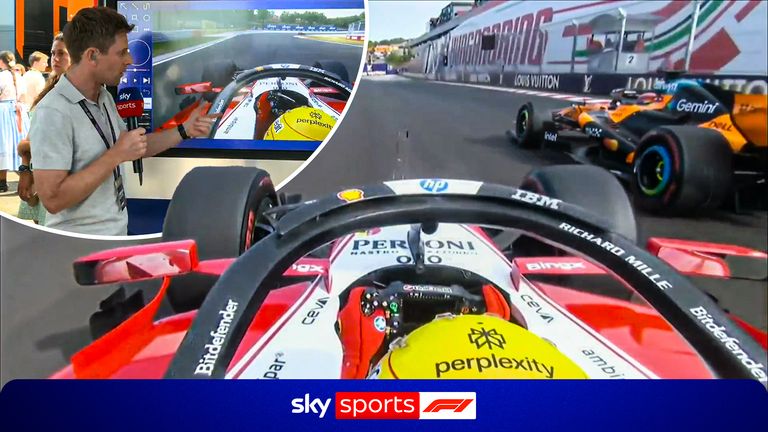
The greater damage came afterward. Hamilton had completed his run and slowed near Turn 1. Piastri approached on a flying lap, but Ferrari did not warn Hamilton early enough.
The stewards ruled that Hamilton unnecessarily impeded Piastri. He received a three-place grid penalty. As a result, the Ferrari dropped from the front row to fifth.
Antonelli’s penalty changed the Mercedes picture
Antonelli qualified fourth with a 1:17.479. That was only 0.272 seconds from pole and confirmed the speed he had shown in FP3.
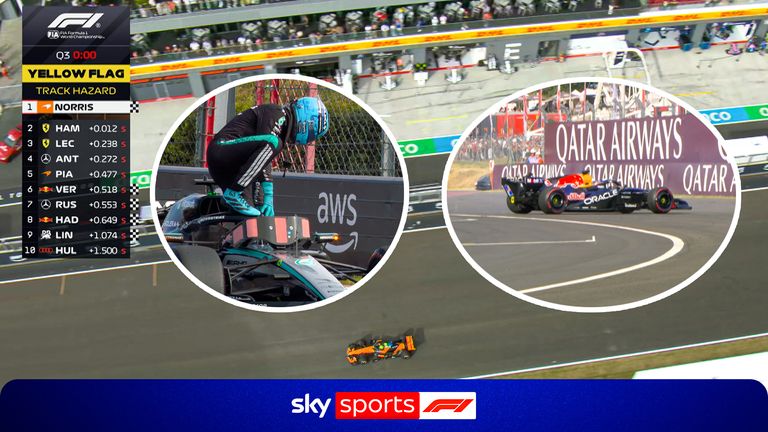
However, Verstappen spun at the final corner and triggered yellow flags. Antonelli was judged not to have slowed sufficiently. The three-place penalty moved him to seventh.
Russell therefore started ahead of his teammate in sixth. His qualifying session also ended with a power-unit failure, although Mercedes could replace the engine without a grid penalty.
Verstappen’s spin cost Red Bull a cleaner final attack
Verstappen qualified sixth before the penalties promoted him to fourth. His 1:17.725 left him 0.518 seconds from Norris.
The final-corner spin ended any chance of a late improvement. It also created the yellow flags connected to Antonelli’s penalty. Red Bull had struggled with balance throughout the weekend, and the spin reflected that narrow operating window.
Hadjar finished eighth. Therefore, both Red Bulls remained inside the top eight, but neither challenged for pole. That was a disappointing return for a team accustomed to fighting at the front.
Key Takeaways from Hungarian Grand Prix 2026 Qualifying
Norris converted the upgrade
McLaren’s new package produced an immediate pole. More importantly, Norris delivered the decisive lap when Hamilton and others failed to improve.
Fast car, damaged grid position
Ferrari had front-row pace. However, Hamilton’s penalty split the cars and left Leclerc as the team’s best-placed starter.
Antonelli quick but penalized
Antonelli confirmed strong one-lap speed. Yet his penalty and Russell’s power-unit failure made this Mercedes’ weakest qualifying weekend of the season.
Promoted without pole pace
Verstappen gained fourth on the grid, but the RB22 never looked comfortable enough to challenge Norris over one lap.
McLaren gained more than pole position
Pole at the Hungaroring has strategic weight. The circuit’s narrow, connected layout makes overtaking difficult. Norris can control the opening phase if he protects the inside into Turn 1.
Piastri’s promotion to third also gave McLaren a second strategic car near the front. That matters because Ferrari and Red Bull may use undercuts to pressure Norris.
Leclerc became the immediate launch threat
Leclerc starts second despite qualifying third. His Ferrari showed excellent pace throughout practice. Therefore, the run to Turn 1 became one of the race’s defining moments.
The distance from the grid to the first corner is long enough for a strong launch to matter. However, dirty air becomes costly after the opening sector. Whoever exits Turn 2 ahead gains an important early advantage.
Hamilton’s penalty reduced his victory probability
Hamilton had the speed to start second. Instead, he began fifth behind Norris, Leclerc, Piastri and Verstappen. That placed four cars between him and clean air.
The Ferrari still looked fast enough to recover. Yet the Hungaroring does not offer easy passing. Therefore, Hamilton needed either a strong start, an undercut or a strategic interruption.
Antonelli’s title position added pressure
Antonelli entered the weekend leading Hamilton by 45 points in the championship. His grid penalty reduced the chance of extending that advantage.
However, Hamilton also received a penalty. Consequently, the title rivals started only two positions apart. The race still offered Hamilton an opportunity to reduce the gap, but not from the front row he had earned on speed.
Midfield opportunities opened behind the top eight
Lindblad’s ninth place continued a strong rookie weekend. Hulkenberg also secured 10th for Audi. Both drivers had a realistic chance of scoring if the front-running strategies created traffic.
Lawson started 11th with free tire choice. That position can be valuable in Hungary. A medium or hard start may allow a longer opening stint while the top 10 pit earlier.
What the Grid Meant for the Race
Norris held the best position, but the front row remained dangerous. Leclerc had Ferrari pace and clean sight of Turn 1. Piastri started directly behind Norris, giving McLaren tactical flexibility.
Verstappen started fourth after qualifying sixth. That promotion offered Red Bull a better race than its raw pace deserved. However, Verstappen still needed improved balance over a full stint.
Hamilton and Russell formed row three. Antonelli and Hadjar formed row four. Therefore, the race contained four major teams inside the first eight positions.
Track position versus tire life
Hungary often rewards the driver who controls traffic. The undercut can be powerful because overtaking on track is difficult. Therefore, the first pit-stop window was likely to become decisive.
Norris could protect the lead by stopping first. However, an early stop would expose him to longer tire management. Leclerc and Piastri could instead extend if their degradation remained stable.
Safety car timing remained the wildcard
A safety car near the natural pit window could erase the advantage of pole. It could also promote midfield drivers on longer first stints.
Nevertheless, the Hungaroring does not always produce repeated interruptions. Teams therefore had to plan for a conventional race while remaining ready for a sudden neutralization.
Hungarian Grand Prix 2026 Qualifying Results FAQ
Who won pole position for the Hungarian Grand Prix 2026?
Lando Norris won pole for McLaren with a 1:17.207. He beat Lewis Hamilton by 0.012 seconds.
What is the front row for the 2026 Hungarian Grand Prix?
Lando Norris starts first and Charles Leclerc starts second. Hamilton originally qualified second but dropped to fifth after a three-place penalty.
Why was Lewis Hamilton penalized after qualifying?
Hamilton received a three-place grid penalty for impeding Oscar Piastri during Q3. The stewards ruled that he unnecessarily blocked the McLaren driver.
Why was Kimi Antonelli penalized after qualifying?
Antonelli received a three-place grid penalty for failing to slow sufficiently under yellow flags. He moved from fourth in qualifying to seventh on the grid.
Conclusion: Norris Earned Pole, but the Penalties Reshaped the Race
The Hungarian Grand Prix 2026 qualifying results delivered one of the smallest pole margins of the season. Norris beat Hamilton by 0.012 seconds and converted McLaren’s upgraded package into the best possible starting position.
However, the final grid told a different story from the qualifying sheet. Hamilton fell from second to fifth. Antonelli dropped from fourth to seventh. As a result, Leclerc joined Norris on the front row, while Piastri and Verstappen moved onto row two.
Norris remained the favorite because track position matters so much in Hungary. Still, Leclerc’s Ferrari pace and Piastri’s strategic position made the race far from settled. Hamilton faced a recovery drive, while Verstappen gained a better starting place than Red Bull’s qualifying speed suggested.
The lasting takeaway is simple. Norris won qualifying on merit. Yet the stewards’ decisions changed the tactical map behind him. That combination created a front grid filled with different cars, different strengths and several credible race strategies.
Sources and Verification
- Formula 1 official qualifying classification
- Formula 1 official final starting grid
- FIA provisional qualifying classification
- Sky Sports F1 qualifying report and penalty analysis
Verification note: Qualifying positions, Q1-Q3 times, lap counts and the final starting grid were checked against Formula 1’s official results pages. The FIA timing sheet was used as a second official source. Penalty explanations were checked against the official grid notes and corroborated by Sky Sports F1.