What Are Marbles in F1 Race? Formula 1 Tire Marbles Explained
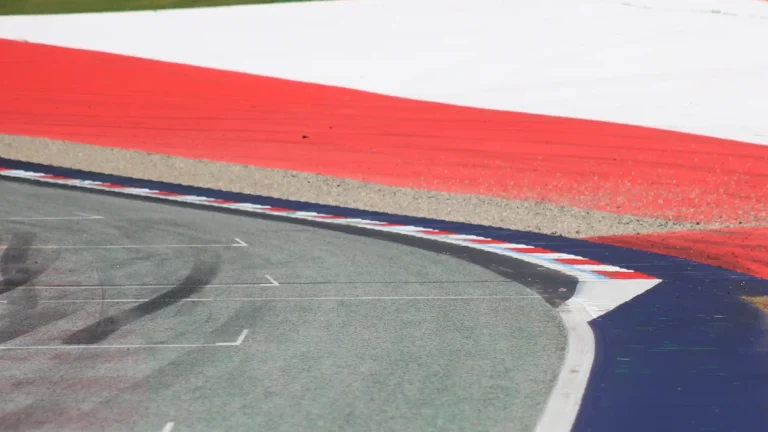
Marbles in F1 are small rubber pieces that come off Formula 1 tires during a race. They collect off the racing line. When a driver runs over them, the tire loses clean contact with the track, grip drops quickly, and the car can slide wide or spin.
F1 marbles look harmless from television. However, to a driver fighting at 300 km/h, they can feel like loose gravel under slick tires.

What are marbles in F1? They are bits of tire rubber that break away from slick Formula 1 tires during running. They usually collect away from the clean racing line, especially near corner exits, outside kerbs, braking zones, and runoff edges.
The name makes sense when you see them close up. The rubber pieces can look like small black balls scattered across the asphalt. However, they do not behave like harmless dust. They sit between the tire and track surface, which immediately reduces grip.
That is why drivers talk about staying out of the marbles. On fresh rubber, a car can attack. On dirty rubber, the same car can suddenly feel nervous, slow, and difficult to place.
What Are Marbles in Formula 1 Racing?
Formula 1 marbles are shredded pieces of tire rubber. They appear because F1 tires are soft, hot, heavily loaded, and pushed through extreme cornering forces. Meanwhile, the car’s downforce presses the tire hard into the asphalt.
During a Grand Prix in F1, the tires slide microscopically through corners. Some rubber sticks to the racing surface. Some rubber tears away and rolls into small debris. That loose debris becomes marbles.
Formula 1’s own glossary describes marbles as rubber pieces shredded from tires that build up off the racing line. It also explains why driving over them can be treacherous.
Why Do Marbles Form in F1?
Marbles form because F1 tires wear. Every braking phase, traction zone, steering input, and correction removes some rubber from the tire. Furthermore, hot tire rubber can tear more aggressively when the driver slides or overheats the compound.
Soft tires can create heavy rubber buildup because they deliver strong grip but wear faster. Harder compounds usually last longer, although track surface, temperature, setup, and driving style still matter. Pirelli’s F1 tire range separates slick compounds by hardness, from maximum durability to maximum softness.
As a result, marbles usually increase as the race develops. The first laps may look clean. Later, the offline parts of the circuit can become covered with loose black rubber.
Why Are Marbles Dangerous in F1?
Marbles are dangerous because they reduce the contact patch. A slick tire needs clean contact with the asphalt to make grip. However, when loose rubber sits underneath it, the tire can skate across the surface.
This can create understeer, oversteer, lock-ups, or poor traction. A driver who runs wide onto marbles may struggle to turn back toward the apex. Therefore, one small mistake can become a larger time loss.
The danger rises during wheel-to-wheel racing. A driver trying an outside move may leave the clean racing line. Meanwhile, the defending car stays on the grippier line. This is one reason overtaking in F1 requires timing, bravery, and track knowledge.
Race analyst view: Marbles punish hesitation. If a driver commits to an offline move, the car must be positioned early and smoothly. A late correction on marbles can end the attack.
Why Is the Racing Line Cleaner Than the Rest of the Track?
The racing line stays cleaner because cars keep using it. Each passing car sweeps, heats, and rubbers that lane. Consequently, the main line gains grip while loose debris gets pushed away from it.
That clean path connects directly with the apex in racing, grip, and car handling. Drivers know where the grip is. They also know where the dirty side begins.
Track evolution adds another layer. Early in a weekend, the circuit can feel dusty or green. Later, more rubber goes down. However, that does not mean the whole track improves evenly. The racing line improves most.

How Do Marbles Affect Race Strategy?
F1 tire marbles affect strategy because they narrow the usable track. On paper, a corner may offer two lines. In reality, the second line may be covered in loose rubber after 40 laps.
This makes overtaking harder. It also changes how drivers plan attacks with DRS in F1, clean air, and overcut and undercut strategy. If the offline pass is dirty, the driver may need a bigger speed advantage before committing.
Marbles also matter during safety car restarts. Tires cool down, pressures change, and the field bunches up. Meanwhile, drivers may be forced into unusual lines. That combination can make the first restart lap messy.
| Track Area | Marbles Level | Driver Risk |
|---|---|---|
| Clean racing line | Low | Best grip and fastest lap time |
| Outside corner exit | High | Understeer, wheelspin, or running wide |
| Heavy braking zone edge | Medium to high | Lock-up risk and poor rotation |
| Post-race cool-down lap | Useful pickup | Drivers collect rubber after the flag |
Formula 1 Marbles vs Tire Pickup
Marbles and tire pickup are linked, but they are not exactly the same thing. Marbles are loose rubber pieces on the track. Tire pickup is what happens when those pieces stick to a tire.
During a race, pickup is usually bad. It can cause vibration and lower grip until the tire cleans itself. However, after the chequered flag, drivers often drive offline to pick up rubber. That added rubber helps offset weight loss from fuel burn, plank wear, tire wear, and fluid loss.
This is why you may see cars weaving over dirty areas after the finish. It looks strange, but it has a purpose. In Formula 1, every gram matters.
Can Marbles Cause Crashes in Formula 1?
Yes, marbles can contribute to crashes. They rarely act alone, though. Usually, they combine with cold tires, late braking, dirty air, driver pressure, worn rubber, or a compromised racing line.
A driver who hits marbles at low speed may only lose a few tenths. However, the same mistake through a fast corner can be serious. The car can wash wide, hit the kerb, lose rear grip, or slide toward gravel.
That connects with gravel traps, flat spots, and what causes crashes in motor racing. Marbles are small, but the consequence can be large.
Final Verdict
Marbles in Formula 1 are not just background debris. They are a live track condition. They change grip, overtaking, tire management, and driver confidence.
The clean racing line tells drivers where the grip is. Meanwhile, the marbles tell them where the danger begins. That is why a driver can be quick for 50 laps, run one meter wide, and suddenly lose the car.
For beginners, the idea is simple. Marbles are loose tire rubber. For serious race fans, they explain why overtaking is hard, why track position matters, and why F1 drivers treat the racing line like gold.
FAQs About Marbles in F1
What are marbles in F1?
Marbles in F1 are small pieces of rubber that come off tires during a session. They collect off the racing line and reduce grip.
Why do marbles form in Formula 1?
They form because tires wear under heat, cornering load, braking, and sliding. Loose rubber then rolls away from the clean racing line.
Are marbles dangerous in F1?
Yes. They can make the car slide because the tire cannot make clean contact with the track surface.
Why do drivers avoid marbles?
Drivers avoid them because marbles lower grip, increase lap time, and can cause understeer, oversteer, or spins.
Why do drivers collect marbles after the race?
After the flag, drivers often pick up rubber to add weight to the tires before post-race checks.