Michelin GT Challenge at VIR 2026: Full Schedule, Race Timetable, TV Coverage & Streaming Guide
The GT-only WeatherTech Championship weekend at Virginia International Raceway is built around two classes, a 3.27-mile road course and one of the most compressed championship fights of the IMSA season.
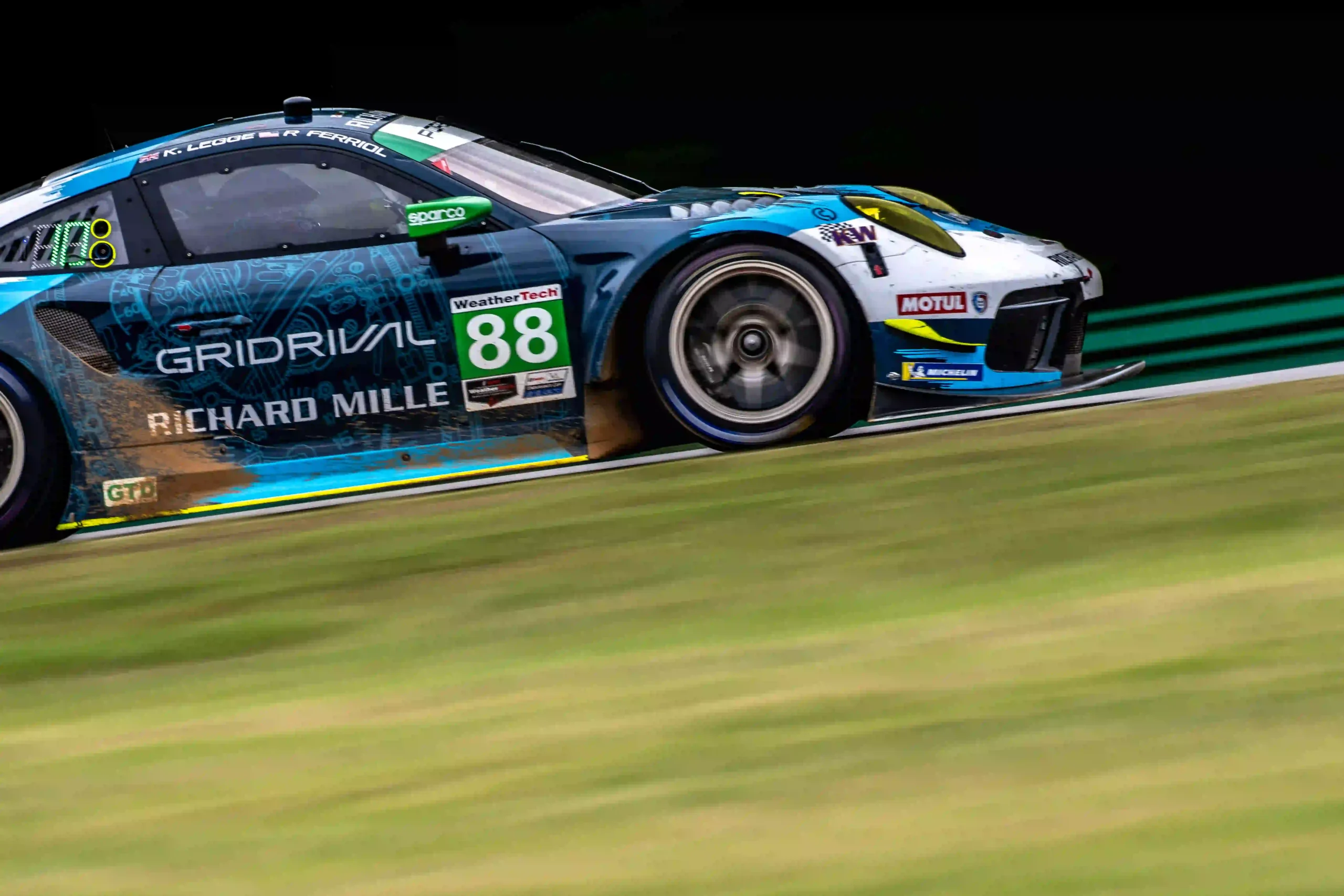
The Michelin GT Challenge at VIR 2026 is the IMSA WeatherTech SportsCar Championship’s GT-only showcase, running August 21–23 at VIRginia International Raceway in Alton, Virginia. The main event is Sunday, August 23. IMSA’s published event schedule lists the 2-hour, 40-minute race from 12:10 p.m. to 2:50 p.m. Eastern Time, while the official NBC and Peacock window runs from noon to 3 p.m. ET.
This page is designed as a single practical guide for U.S. fans: the complete WeatherTech weekend timetable, the television and streaming options, the championship picture, the Friday practice result, the key drivers and teams, and the circuit factors that could decide the race. Times below are Eastern Time unless noted.
The Michelin GT Challenge at VIR runs August 21–23, 2026. WeatherTech Championship practice is Friday at 3:10 p.m. ET and Saturday from 10:30 a.m. to noon, qualifying is Saturday from 4:50 to 5:25 p.m., and the GT-only race is Sunday from 12:10 to 2:50 p.m. ET. NBC and Peacock carry the live Sunday broadcast from noon to 3 p.m. ET.
Michelin GT Challenge at VIR 2026 full schedule and race timetable
IMSA’s official 2026 VIR event page places the Michelin GT Challenge inside a larger three-day weekend that also features the Michelin Pilot Challenge, Mustang Challenge, VP Racing SportsCar Challenge and Mazda MX-5 Cup. The WeatherTech Championship’s GTD PRO and GTD cars, however, are the headline attraction on Sunday.
The important scheduling detail is that practice and qualifying happen on separate days. Friday is the opening WeatherTech session. Saturday supplies the second practice and the Motul Pole Award qualifying session. Sunday is the race. That split matters at VIR because teams have time to adjust ride height, brake balance, tire preparation and long-run setup without needing to turn the whole weekend into a single qualifying sprint.
Friday, August 21 — opening day and WeatherTech practice
| Session | Time (ET) | Series | Notes |
|---|---|---|---|
| Practice 1 | 8:00–8:40 AM | VP Racing SportsCar Challenge | Support-series opener |
| Practice 1 | 8:55–9:25 AM | Mustang Challenge | Support-series session |
| Practice 1 | 9:40–10:20 AM | Mazda MX-5 Cup | Support-series session |
| Practice 1 | 10:40–11:40 AM | Michelin Pilot Challenge | Two-hour support race weekend |
| Practice 2 | 1:05–1:35 PM | VP Racing SportsCar Challenge | Support-series session |
| Practice 2 | 1:45–2:10 PM | Mustang Challenge | Support-series session |
| Practice 2 | 2:25–2:50 PM | Mazda MX-5 Cup | Support-series session |
| Practice 1 | 3:10–4:40 PM | WeatherTech Championship | 90 minutes; GTD PRO + GTD |
| Qualifying | 5:00–5:15 PM | VP Racing SportsCar Challenge | Support-series qualifying |
| Practice 2 | 5:30–6:30 PM | Michelin Pilot Challenge | Support-series practice |
| Qualifying | 6:45–7:00 PM | Mustang Challenge | Support-series qualifying |
Friday’s WeatherTech session already supplied one of the weekend’s first major talking points. Frederic Vervisch set the fastest GTD PRO lap in the No. 65 Ford Mustang GT3 with a 1:46.065, while Frederik Schandorff led GTD in the No. 70 Inception Racing Ferrari 296 GT3 EVO with a 1:46.068. The gap between the two class leaders was only three thousandths of a second.
Saturday, August 22 — WeatherTech practice, qualifying and track position
| Session | Time (ET) | Series | Why it matters |
|---|---|---|---|
| Qualifying | 8:00–8:35 AM | Michelin Pilot Challenge | Support-series qualifying |
| Qualifying | 8:50–9:00 AM | Mazda MX-5 Cup | Support-series qualifying |
| Race 1 of 2 | 9:25–10:10 AM | Mustang Challenge | Support race |
| Practice 2 | 10:30 AM–12:00 PM | WeatherTech Championship | Final long-run preparation |
| Race 1 of 2 | 12:20–1:05 PM | VP Racing SportsCar Challenge | Support race |
| Race | 2:15–4:15 PM | VIRginia Is For Racing Lovers Grand Prix | Michelin Pilot Challenge |
| Qualifying | 4:50–5:25 PM | WeatherTech Championship | Motul Pole Award qualifying |
| Race 1 of 2 | 5:45–6:30 PM | Mazda MX-5 Cup | Support race |
For fans following only the main WeatherTech race, the Saturday sequence is straightforward: practice at 10:30 a.m., then qualifying at 4:50 p.m. The long break between those sessions is useful for teams because VIR rewards a stable car over a single spectacular lap. Engineers can study tire temperatures, compare high-speed balance and decide how much aggression to build into qualifying trim without losing sight of Sunday fuel and tire life.
Sunday, August 23 — race day
| Session | Time (ET) | Series |
|---|---|---|
| Race 2 of 2 | 8:40–9:25 AM | VP Racing SportsCar Challenge |
| Race 2 of 2 | 9:45–10:30 AM | Mustang Challenge |
| Michelin GT Challenge at VIR | 12:10–2:50 PM | IMSA WeatherTech Championship — GTD PRO + GTD |
| Race 2 of 2 | 3:30–4:15 PM | Mazda MX-5 Cup |
The race distance is officially scheduled for 2 hours and 40 minutes. That makes the stopwatch important, but the more interesting feature is the type of track on which those 160 minutes unfold. VIR is fast enough to punish small setup mistakes and technical enough that a car can be excellent in one sector while giving away time in another.
Michelin GT Challenge at VIR 2026 TV coverage and streaming guide
For U.S. viewers, the simplest answer is also the best one: the Michelin GT Challenge at VIR is on NBC and Peacock on Sunday, August 23. IMSA’s official TV schedule lists the NBC and Peacock window from 12:00 p.m. to 3:00 p.m. ET.
IMSA also lists a 12:05 p.m. to 2:50 p.m. ET IMSA.TV/YouTube feed. The official event listing makes clear that, inside the United States, that race stream is restricted to Peacock Premium. International viewers can access the globally available IMSA.TV/YouTube presentation.
NBC
12:00–3:00 PM ET on Sunday, August 23. The network window covers the full scheduled race period and includes the live Michelin GT Challenge broadcast.
Peacock
12:00–3:00 PM ET. Peacock carries the main live presentation, while the IMSA.TV/YouTube listing is designated as Peacock Premium-only for U.S. viewers.
Set a reminder for 12:00 p.m. ET rather than 12:10 p.m. That is the official start of the NBC and Peacock coverage window. The published race session itself begins at 12:10 p.m. ET.
What about qualifying?
IMSA’s event page places WeatherTech Championship qualifying at 4:50–5:25 p.m. ET on Saturday, August 22. The official event page lists IMSA.TV, YouTube and Peacock feeds for WeatherTech qualifying, with the qualifying broadcast shown as globally available through IMSA.TV and YouTube.
That qualifying session is worth watching because the pole winner earns more than a headline. At VIR, track position can determine who enters the first major traffic-free sequences with clean air, and the field lacks the GTP and LMP2 prototypes that normally change the rhythm of a WeatherTech race.
Why the 2026 Michelin GT Challenge at VIR matters
The biggest reason this weekend matters is structural: GTD PRO and GTD are on their own. IMSA’s prototype classes, GTP and LMP2, are on a late-summer break. That leaves a 23-car GT field, with 10 GTD PRO entries and 13 GTD entries, according to the official event listing.
That smaller grid changes the race from the ground up. In a normal multi-class event, GT drivers spend the race calculating when a faster prototype will arrive, how much time they can lose while letting it through and whether a passing situation will create a yellow flag. At VIR, the GT drivers can focus much more heavily on their own class rivals.
IMSA’s preview described the event as a rare chance for the GT classes to concentrate almost exclusively on the competition ahead. The benefit is not simply less traffic. It is more predictable strategy: a team can commit to a pace target without constantly changing the calculation because an LMDh or LMP2 car is closing at a much higher speed.
GTD PRO: a 15-point championship gap
Entering the weekend, Connor De Phillippi and Neil Verhagen lead the GTD PRO standings in the No. 1 Paul Miller Racing BMW M4 GT3 EVO. IMSA lists Tommy Milner and Nicky Catsburg in the No. 4 Corvette Racing by Pratt Miller Motorsports Corvette Z06 GT3.R only 15 points behind.
Nick Tandy and Harry King are another six points back in the No. 77 AO Racing Porsche 911 GT3 R (992). Christopher Mies and Frederic Vervisch, who went fastest in Friday practice, are 99 points behind the leaders. Ben Barnicoat and Jack Hawksworth are 113 points back in the No. 14 Vasser Sullivan Lexus RC F GT3.
In other words, Friday’s fastest car also belongs to a title contender. Vervisch’s lap of 1:46.065 was not an isolated practice statistic; it came from a driver pairing that IMSA identifies as being inside the championship conversation. That makes Ford’s pace worth tracking through Saturday qualifying and Sunday long runs.
GTD: Barrichello leads, but the gap is fragile
GTD is even more compressed. Dudu Barrichello leads the class in the No. 27 Heart of Racing Team Aston Martin Vantage GT3 EVO, but Russell Ward and Philip Ellis are only 24 points behind in the No. 57 Winward Racing Mercedes-AMG GT3.
Behind them are Robby Foley and Patrick Gallagher in the No. 96 Turner Motorsport BMW M4 GT3 EVO, 26 points off the lead, followed by Aaron Telitz and Benjamin Pedersen in the No. 12 Vasser Sullivan Lexus RC F GT3, 45 points behind. IMSA therefore enters VIR with the top four GTD entries covered by just 45 points.
The pressure is heightened by momentum. Ward and Ellis won the last two rounds at Canadian Tire Motorsport Park and Road America, and IMSA reported that they cut Barrichello’s advantage dramatically in the process. Barrichello’s Road America result was also hurt by a post-race time penalty that dropped the No. 27 from a fifth-place finishing position on the road to 15th.
Friday’s first practice already produced drama
The opening WeatherTech practice was not quiet for the championship leader. After 12 minutes, Verhagen went off at Turn 14, the entry to VIR’s famous Roller Coaster. The No. 1 BMW clipped a guardrail with its left front and then stopped in a tire barrier.
The positive side of the story is that Verhagen was unhurt and the Paul Miller Racing crew repaired the car in time for him to return with 13 minutes left in the 90-minute session. The downside is significant: IMSA reported that the No. 1 car will lose its fastest qualifying lap on Saturday because of the incident.
That is exactly the kind of small weekend penalty that matters in a 10-race championship. The car does not have to be damaged beyond repair for the team to lose championship leverage. Losing a qualifying lap can force the lineup deeper into the class field, increase tire risk on the opening stint and expose the leaders to early traffic.
VIR track analysis: why Virginia International Raceway changes the race
IMSA uses the Full Course configuration at 3.27 miles with 17 corners for the Michelin GT Challenge. The circuit is not a typical stop-start road course. It flows, climbs and drops, and several sections reward confidence more than brute braking performance.
The corner names tell part of the story: Oak Tree, Rollercoaster, Snake, Hog Pen and NASCAR Bend are among the features that define the lap. The track’s elevation changes also make the car’s platform behavior important. A GT3 car that feels stable at high speed can carry momentum through the fast sections, while a car that is nervous over crests may force the driver to lift more than the stopwatch allows.
VIR is one of those tracks where a driver can make a road course look easy from the outside while working exceptionally hard inside the cockpit.
Why the GT-only field is strategically important
IMSA’s recent preview noted that the absence of prototypes should reduce the number of variables GT crews normally manage. That is especially important at VIR because the circuit already generates a long list of setup compromises.
Without prototypes, the leaders can spend more of the race working their own tire and fuel targets. However, the smaller field does not remove uncertainty. It can instead magnify driver-to-driver differences because there are fewer cars to create random interruptions.
That helps explain why long-run pace matters so much here. If a team has a car that is slightly slower over one lap but kinder to its Michelin tires, the advantage can appear after several dozen laps. Conversely, a driver who overworks the front tires in pursuit of early track position may create a handling problem that costs more later than the position gained at the start.
Expect the first pit cycle to matter
A two-hour, 40-minute sprint is long enough to force serious pit strategy without being a traditional endurance race. Teams will balance fuel range, tire degradation and caution probability. VIR’s recent history suggests that clean running is a reasonable expectation, although nothing in sports car racing makes a caution impossible.
IMSA noted that VIR has been one of the cleanest tracks on the modern GTD PRO calendar. The 2017 race ran caution-free, while the 2018, 2021, 2022 and 2024 races had only one caution each. The 2025 race was the outlier, with five full-course cautions and more than an hour behind the Safety Car.
The practical lesson is simple: teams cannot build a strategy that assumes a yellow will save them. A clean race rewards pace, pit execution and tire management more heavily.
What Friday practice tells us about Sunday
Practice is not a qualifying session, but Friday’s results still reveal useful information. The No. 65 Ford Mustang GT3 led GTD PRO with a 1:46.065, and the sister No. 64 Ford ran second in class at 1:46.250. The No. 1 BMW was third at 1:46.315 despite Verhagen’s off-track excursion.
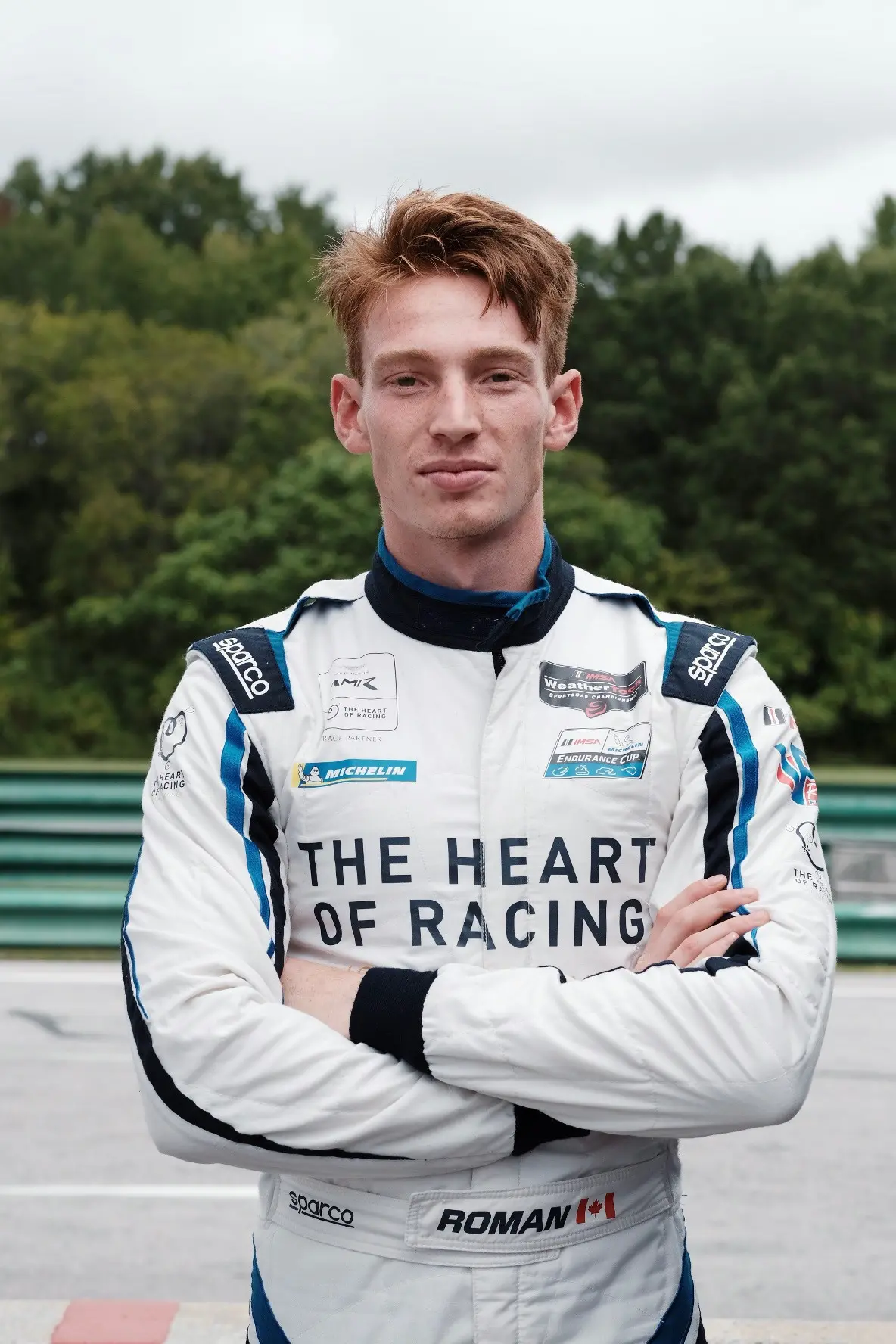
In GTD, Schandorff’s No. 70 Ferrari was fastest at 1:46.068, followed by Tom Gamble’s No. 27 Heart of Racing Aston Martin at 1:46.181. Winward’s No. 57 Mercedes was fourth fastest in the class.
Three observations stand out. First, the gaps were extremely small. Second, the front of both classes was populated by cars with championship relevance. Third, Friday’s track conditions were not identical to what the teams will see on Sunday; IMSA reported a brief weather delay in the morning, afternoon temperatures in the low 80s, and a Sunday forecast in the mid-80s.
Therefore, the most useful question is not simply who was fastest on Friday. It is who looked consistent over multiple runs and who can preserve pace when fuel loads and tire temperatures change. That answer will become clearer after Saturday’s second practice and qualifying.
Drivers and teams to watch at VIR
| Class | Car | Driver pairing | Why it matters |
|---|---|---|---|
| GTD PRO | No. 1 BMW M4 GT3 EVO | Connor De Phillippi / Neil Verhagen | Championship leaders; Friday incident creates qualifying complication. |
| GTD PRO | No. 4 Corvette Z06 GT3.R | Tommy Milner / Nicky Catsburg | Second in points and only 15 back. |
| GTD PRO | No. 77 Porsche 911 GT3 R | Nick Tandy / Harry King | Six points farther back; Tandy is a three-time former VIR winner. |
| GTD PRO | No. 65 Mustang GT3 | Christopher Mies / Frederic Vervisch | Friday practice leader with a 1:46.065. |
| GTD | No. 27 Aston Martin Vantage GT3 EVO | Dudu Barrichello / Heart of Racing lineup | GTD championship leader by 24 points. |
| GTD | No. 57 Mercedes-AMG GT3 | Russell Ward / Philip Ellis | Back-to-back winners entering VIR; two prior VIR wins together. |
| GTD | No. 96 BMW M4 GT3 EVO | Robby Foley / Patrick Gallagher | Third in points and 26 behind the lead. |
| GTD | No. 12 Lexus RC F GT3 | Aaron Telitz / Benjamin Pedersen | Fourth and still inside the realistic title fight. |
Frederic Vervisch and Ford: early pace
Vervisch’s Friday benchmark matters because Ford’s two Mustang GT3s ran first and second in GTD PRO. The driver said the car was in a good window and that cooler temperatures suited it better than a prior test in hotter conditions. He and Mies arrive 99 points behind the leaders, so a strong VIR weekend is essential if the pair is to remain in the broader title picture.
Russell Ward and Philip Ellis: the momentum team
Ward and Ellis bring one of the strongest recent stretches into Virginia. IMSA reported that they won at Canadian Tire Motorsport Park and Road America, and they have also won at VIR in 2022 and 2025. Their No. 57 Mercedes-AMG GT3 is therefore not simply a championship contender; it is a team with recent evidence that the track suits its package.
Nick Tandy: the VIR specialist with history
Tandy has won at VIR three times, in 2015, 2019 and 2021, according to IMSA’s weekend preview. He returns with AO Racing’s No. 77 Porsche and Harry King, and the pair sits only 21 points behind the championship-leading BMW after seven of 10 races.
That history is relevant because VIR rewards a driver’s confidence through high-speed transitions. Experience does not guarantee a win, but it can reduce the number of small mistakes a driver makes while searching for the final tenths.
GTD PRO vs. GTD: what is different in 2026?
Both classes use cars built to the FIA GT3 technical standard. The major distinction is sporting and competitive structure. GTD PRO generally features greater factory involvement and manufacturer-affiliated drivers, while GTD is the customer-focused category with a different driver classification mix.
IMSA also changed how the classes are organized on track. Since 2025, GTD PRO and GTD have split starting lineups, and the GTD PRO field is separated ahead of GTD during full-course caution reorder procedures. For VIR, that structure makes the GT-only format easier to follow because fans can track each championship fight without prototype traffic splitting the field.
Race strategy: what could decide the Michelin GT Challenge at VIR?
For a 2-hour, 40-minute GT race, the basic strategic framework is straightforward: maximize clean-lap pace, hit the fuel window, protect the tires and execute the pit stop without creating a penalty. The hard part is timing those decisions around the track’s fast nature.
Fuel strategy will be important. Teams do not want to pit earlier than necessary if the car is running efficiently and the track is green. Yet stretching too far can turn a fast driver into a driver managing fuel rather than chasing position.
Tire performance is the second major variable. At VIR, the long loaded corners and fast transitions put continuous energy into the tires. A setup that looks excellent over one lap can lose its advantage if the front axle begins to wash out late in a stint.
Track position is the third variable. Qualifying is not everything at VIR, as Philip Ellis noted in IMSA’s Friday report, but a clean start still gives a driver fewer compromises. The No. 57 Mercedes started high in 2025 and dropped back early before recovering to win. That is a useful reminder that position is not destiny, but it changes how easy the race is to manage.
Safety cars and cautions: prepare for both extremes
VIR’s historical pattern suggests that a green-flag-heavy race is plausible. However, the 2025 event showed the opposite can happen. Five full-course cautions and more than an hour under the Safety Car meant that a strategy designed for uninterrupted green running would have been badly exposed.
The best teams therefore avoid building a plan that depends entirely on a caution. They choose pit windows that leave enough flexibility to react. In a GT-only field, that flexibility can be even more valuable because the field is compact and a single yellow can compress the gaps dramatically.
VIR history: why this race has a distinct identity
Virginia International Raceway opened in the 1950s and became a major American road-racing venue with a reputation for speed and elevation change. The track later experienced a revival and developed into the multi-configuration facility that now hosts modern IMSA competition.
The historic connection is more than scenery. VIR’s character is rooted in the same basic challenge that defined early road racing there: drivers must trust the car at speed while managing a sequence of corners that constantly changes the demands on the chassis.
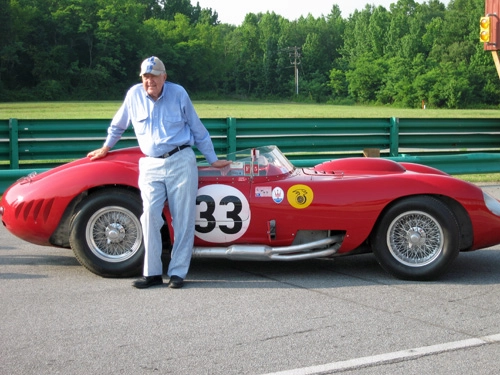
Carroll Shelby’s connection to VIR is part of that history. A 2007 photograph preserved through Wikimedia Commons shows Shelby beside a Maserati at the track, and the image’s historical description notes that Shelby won the opening weekend’s feature race at VIR in 1957. That places modern IMSA racing in a much longer American road-racing story.
What fans should watch from green flag to checkered flag
- The opening laps: Watch which cars can maintain their qualifying order without overheating tires or losing momentum in traffic.
- The first pit window: A well-timed stop can create track position before a class rival has clean air again.
- The GTD PRO title fight: The BMW, Corvette and Porsche championship contenders are separated by very little.
- The GTD fight: Barrichello, Ward/Ellis, Foley/Gallagher and Telitz/Pedersen are packed inside 45 points.
- Long-run pace: Friday speed is informative, but Saturday practice and Sunday stint pace will be more revealing.
- Race control discipline: IMSA officials expect a clean GT race, and the No. 1 BMW already carries a qualifying consequence from Friday’s incident.
- Weather and track temperature: IMSA’s Friday report pointed to cooler conditions helping Ford, while Sunday was forecast to be warmer.
How the 2026 VIR weekend fits into the IMSA season
The Michelin GT Challenge at VIR is a pivotal late-summer event. It follows Road America and precedes the TireRack.com Battle on the Bricks at Indianapolis Motor Speedway in September. That makes VIR one of the last opportunities for championship contenders to create separation before the closing run of the WeatherTech season.
For GTD PRO, the margin at the front is narrow enough that a single retirement or penalty can reorder the title chase. GTD is similarly unforgiving because four pairs remain closely grouped.
The weekend also illustrates how different a road-racing championship can look from one round to the next. Road America is long, fast and multi-class. VIR removes prototypes and makes the GT classes the entire show. That change should give fans a cleaner view of how GT3 cars perform when they are not sharing the circuit with the championship’s fastest prototypes.
For U.S. viewers, the safest plan is to open NBC or Peacock at 12:00 p.m. ET on Sunday. The official race session begins at 12:10 p.m., but the broadcast window starts 10 minutes earlier.
Related World of Speed IMSA and motorsport coverage
For readers following the wider 2026 season, these related guides and analysis pieces provide useful context on recent IMSA rounds, race strategy, and the wider motorsport calendar.
Michelin GT Challenge at VIR 2026 FAQ
When is the Michelin GT Challenge at VIR 2026?
The Michelin GT Challenge at VIR is scheduled for Sunday, August 23, 2026 at VIRginia International Raceway in Alton, Virginia. The official event schedule lists the race from 12:10 p.m. to 2:50 p.m. ET, while NBC and Peacock coverage starts at noon ET.
What time does the Michelin GT Challenge at VIR 2026 start?
The race session itself starts at 12:10 p.m. ET on Sunday, August 23. NBC and Peacock are scheduled to begin their live coverage at 12:00 p.m. ET and continue through 3:00 p.m. ET.
Where can I watch the Michelin GT Challenge at VIR 2026?
U.S. viewers can watch on NBC and Peacock. IMSA also lists an IMSA.TV and YouTube race feed from 12:05 p.m. to 2:50 p.m. ET, with the official event page noting that the race stream is restricted in the United States to Peacock Premium.
Who leads the GTD and GTD PRO championships entering VIR?
Connor De Phillippi and Neil Verhagen lead GTD PRO by 15 points over Tommy Milner and Nicky Catsburg. In GTD, Dudu Barrichello leads Russell Ward and Philip Ellis by 24 points, while the top four GTD pairings are separated by 45 points.
Conclusion: why the Michelin GT Challenge at VIR 2026 is worth watching
The Michelin GT Challenge at VIR 2026 is more than another item on the IMSA calendar. It is the one WeatherTech Championship round in which the GTD PRO and GTD classes get the circuit to themselves, and the championship timing could hardly be tighter.
GTD PRO arrives with a 15-point lead for De Phillippi and Verhagen but several serious challengers within striking distance. GTD is even closer, with Barrichello holding only a 24-point advantage over the defending champions Ward and Ellis and 45 points covering the top four.
Friday already showed how quickly the story can change. Vervisch led practice, Schandorff was virtually tied in GTD, and the championship-leading BMW suffered an incident that carries a qualifying consequence. Those are exactly the details that turn a schedule article into a race analysis.
For fans at home, the broadcast plan is simple: NBC and Peacock from noon ET on Sunday, August 23, with the race itself scheduled for 12:10 p.m. to 2:50 p.m. ET. For fans at VIR, the weekend offers a fuller experience, including support races, paddock activity and the distinctive atmosphere of one of America’s most respected road courses.
Most importantly, the race should reveal which GT3 packages have the complete formula at VIR: one-lap speed, stable balance, Michelin tire control, disciplined pit work and the ability to stay out of trouble when the championship pressure rises.
Sources & references
The schedule, broadcast information, championship figures and current weekend news in this article are based on official IMSA and VIR information available on August 22, 2026.
- IMSA — 2026 VIRginia International Raceway event page
Official event dates, session timetable, entry counts, race time and broadcast listing. - IMSA — WeatherTech TV & Streaming Schedule
Official NBC, Peacock, IMSA.TV and YouTube race coverage details. - IMSA — Fast Fred Friday for Michelin GT Challenge at VIR Practice
Friday practice results, Vervisch and Schandorff pace, Verhagen incident and weather notes. - IMSA — What to Watch for: Michelin GT Challenge at VIR
Championship context, VIR history, class outlook and official viewing information. - Virginia International Raceway — 2026 Weekend Fan Guide
Venue information and official weekend fan details. - IMSA — 2026 Provisional Schedule and Sporting Regulations: VIR
Official event schedule document released for the 2026 VIR weekend.