Road America IMSA 2026 Strategy Analysis: Fuel, Tyres, Pit Stops & Caution Periods
A class-by-class look at the first six-hour Motul SportsCar Endurance Grand Prix, including official tire allocations, projected fuel windows, driver-time rules, pit-lane procedures, multiclass traffic and the caution timing that can decide the race.
Road America IMSA 2026 strategy analysis begins with a major format change. The Motul SportsCar Endurance Grand Prix is now a six-hour race. The longer distance moves fuel management, driver rotation and caution timing to the center of the weekend.
The race starts Sunday, August 2, at 10:40 a.m. local time. That is 11:40 a.m. ET. GTP, LMP2, GTD PRO and GTD will compete together on the 4.048-mile, 14-turn circuit.
This analysis uses IMSA’s July 16 provisional schedule and supplementary regulations. Official allocations and rules are separated from editorial projections. Fuel-stint ranges can still move through Balance of Performance, weather, driving style and Race Control decisions.
Road America IMSA 2026 Strategy: The Quick Answer
What will decide Road America IMSA 2026?
Fuel-window flexibility, front-tire preservation, clean pit execution and the timing of full-course cautions should decide the six-hour Road America race. Teams must also manage multiclass traffic. The winning strategy will probably keep enough fuel and fresh tire performance available for a final green-flag run after the last caution.
The six-hour distance changes the value of every early decision. In the former short race, a team could defend track position and react late. In 2026, the race includes several complete fuel cycles and more driver changes.
Therefore, the first pit stop is unlikely to decide the result by itself. It will set the shape of the middle race. A team that pits early can escape traffic, while a later stop may create a shorter final fill.
Road America also punishes weak tire balance. IMSA has described the circuit as notorious for tire wear. The sustained Carousel places a heavy load on the front axle, while hard acceleration from Turns 5, 8 and 14 can expose rear degradation.
However, the largest strategic swing may come from Race Control. A yellow seven minutes after a green-flag stop transformed the 2025 GTP race. BMW had already completed its final service and jumped to the front when rivals stopped under caution.
The best plan will not be one fixed sequence. It will be a decision tree. Engineers must prepare for green running, an early caution, a late caution and a final fuel-saving finish.
Road America rewards the team that can change plans without losing the logic behind its original plan.
World of Speed strategy deskWhy the New Six-Hour Format Changes Road America Strategy
Is Road America a six-hour IMSA race in 2026?
Yes. The 2026 Motul SportsCar Endurance Grand Prix runs for six hours on Sunday, August 2. It includes GTP, LMP2, GTD PRO and GTD. The expanded format creates more fuel cycles, more driver rotation and greater freedom to use off-sequence pit strategies.
IMSA expanded the headline Road America race from its previous 2-hour, 40-minute format. The new duration more than doubles the amount of strategic work. It also joins the Michelin Endurance Cup schedule.
In a shorter race, losing 20 seconds can end a victory challenge. Over six hours, the same loss can be recovered through a better fuel cycle or a well-timed caution. Reliability also becomes more important because every component faces a longer duty cycle.
The Race Has Three Distinct Phases
The opening phase should focus on survival and data. Drivers need to learn the real fuel number, tire drop and traffic pattern. Aggressive contact in the first hour creates little strategic value.
Meanwhile, the middle phase will determine flexibility. Teams may split strategies between sister cars, extend one stint and stop the other early. That separation protects the organization against an unexpected caution.
The final phase begins when the last two fuel windows become clear. At that point, teams decide whether to save fuel, short-fill or attack on a fresh set. The closing driver also becomes central.
Time Matters More Than a Fixed Lap Count
The race is timed, so strategy calculations use minutes rather than a guaranteed number of laps. Fast green running raises the lap total. Several cautions reduce it.
Consequently, teams constantly update the projected finish lap. A caution with 70 minutes left may bring the final stop into range. The same caution with 90 minutes left may still require a splash.
Endurance Cup Points Add Another Layer
The six-hour round carries endurance importance beyond the overall race result. Teams must consider championship points while selecting risk. A damaged car that finishes can still protect a season.
That reality may create different calls within one class. A title contender may accept second place. A team outside the championship fight can gamble on a late stop and fresh tires.
For more background, World of Speed explains how racing championships are scored and how laps are counted in timed races.
Road America Track Demands: Where Strategy Meets Lap Time
Why is Road America difficult for endurance teams?
Road America combines long straights, heavy braking zones, elevation changes and high-speed corners. Its 4.048-mile lap creates a substantial green-flag pit loss. The Carousel loads the front tires, while Turns 5 and 12 reward braking stability. Traffic timing can change several seconds on one lap.
The circuit is one of North America’s longest permanent road courses. Its lap length increases the penalty for missing a pit window. A car that passes pit entry may need more than two minutes before it receives service.
Road America also creates large speed differences. GTP cars close rapidly on GTD traffic along the long straights. However, passing through the Carousel or Kink adds risk.
Turn 1 and Turn 5: Braking Performance Creates Strategy Value
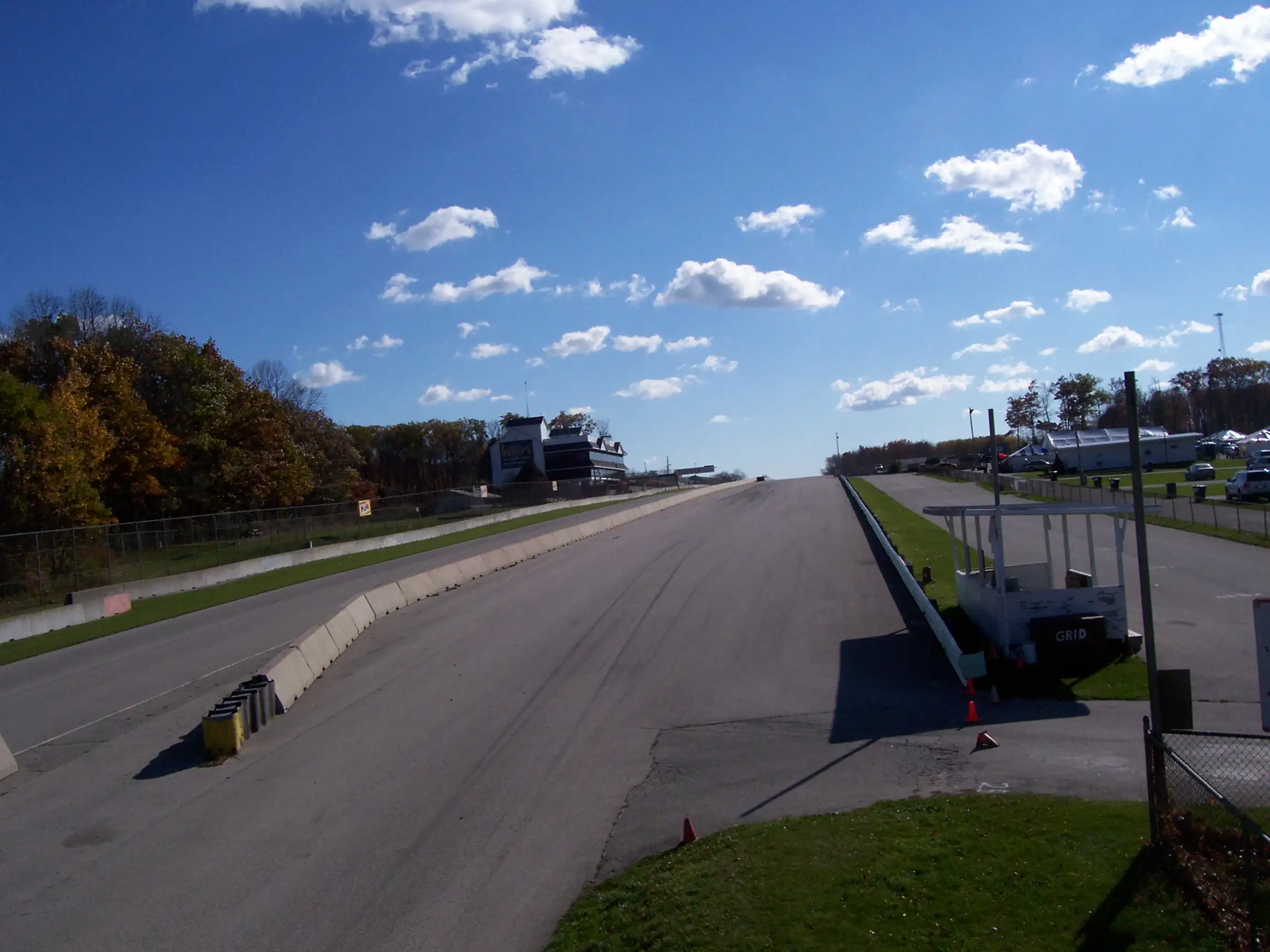
Turn 1 follows the uphill front straight. A driver who protects fuel through the approach can still defend with strong braking. However, a lockup can damage the tire for an entire stint.
Turn 5 offers the clearest passing zone. It also follows a long full-throttle section. Prototype drivers often use this area to clear GT traffic, while GT drivers must judge closing speed carefully.
The Carousel: The Front-Tire Test
The Carousel forms Turns 9 and 10. It places sustained lateral energy into the front tires. Small understeer early in a stint can become a serious late-stint limitation.
Therefore, teams may trade some qualifying rotation for race stability. A car that is slightly slower on new tires may become much stronger after 35 minutes.
The Kink: Traffic Risk Without a Clear Strategic Reward
The Kink is fast and narrow. Passing a slower class there can save time, but contact can destroy the race. Most winning drivers will accept a small delay instead of forcing an uncertain gap.
That patience also protects tires. Sudden steering corrections create temperature and scrub. Over six hours, repeated small slides become meaningful degradation.
Canada Corner and Turn 14: The Final Overtaking Sequence
Canada Corner, or Turn 12, is another heavy stop. A prototype can complete a clean traffic pass here. GT class battles may also be decided under braking.
Turn 14 controls the run uphill to the finish. Rear traction is critical. A driver who saves the rear tires through the middle stint can attack more effectively during the final 20 minutes.
World of Speed’s guides to downforce, grip and slipstreaming explain the forces behind these trade-offs.
Road America IMSA 2026 Fuel Strategy and Pit Windows
How many fuel stops will IMSA teams make at Road America?
IMSA does not publish a fixed stop count. A clean six-hour race should place most cars in a broad range of six to eight fuel-service stops, depending on class, approved energy or fuel limits, caution laps and short-fill choices. Late yellows can reduce or increase the final number.
Fuel strategy starts with one warning: class rules and Balance of Performance control usable energy. Teams do not all carry the same practical race range. The numbers also change through traffic and yellow-flag running.
Therefore, the table below is an editorial planning model. It is not an IMSA rule sheet. Race engineers will use live telemetry and official technical limits.
| Class | Likely green planning window | Broad stop range | Main fuel variable | Status |
|---|---|---|---|---|
| GTP | About 45–55 minutes | 6–8 services | Virtual energy use, traffic and hybrid deployment | Analysis |
| LMP2 | About 45–55 minutes | 6–8 services | Green pace, drafting and Bronze-driver phase | Analysis |
| GTD PRO | About 50–65 minutes | 5–7 services | Manufacturer fuel use, BoP and tire decision | Analysis |
| GTD | About 50–65 minutes | 5–7 services | Driver-time plan, fuel saving and class cautions | Analysis |
These ranges are strategic estimates for scenario planning. Official energy limits, BoP, entry data and race conditions determine the real windows.
Why the First Green-Flag Stop Matters
The first stop creates the race’s initial split. An early stopper receives clean air and can undercut a car trapped in traffic. However, it may require a longer final fill.
A later stopper keeps options open. If a caution appears, the car may reach pit entry with more fuel remaining. Yet it also risks losing time on worn tires.
Lift and Coast Can Move the Final Stop
Drivers save fuel by lifting before braking and allowing the car to coast. They can also short-shift or reduce throttle demand in traffic. The goal is not simply lower consumption.
Instead, the team wants to cross a strategic threshold. Saving one or two laps may turn a full stop into a short fill. It may also eliminate a late splash.
Short Fill Versus Full Tank
A short fill reduces stationary time. It is most valuable when the race can be finished with a known amount of energy. However, a later caution can make the earlier time saving irrelevant.
A full fill offers flexibility. The car can stay out through a longer green run. It can also use the next caution to top off without urgent fuel pressure.
The Last Two Stops Will Decide the Race Shape
With roughly two hours left, strategists will calculate the earliest possible final stop. A team that reaches that window can respond to any caution. A car outside the window may need another service.
The final stop then becomes a trade. Fresh tires add pace, but fuel-only service saves time. A leader with healthy tires may stay on the same set. A chasing car may choose four new tires and attack.
The key number is not average fuel use alone. It is the minimum fuel needed to reach the finish after accounting for projected green laps, likely caution laps and a safe reserve.
Michelin Tire Allocation and Road America Degradation
Why is Road America hard on tires?
Road America combines long braking zones, fast direction changes and the sustained Carousel. IMSA has described the 4.048-mile circuit as notorious for tire wear and different front-versus-rear degradation. The Carousel is especially demanding on front tires, so setup and driving style affect late-stint pace.
IMSA’s supplementary regulations establish the event allocation. GTP and LMP2 receive ten dry sets for the event, with seven sets assigned to qualifying and the race. GTD PRO and GTD receive nine event sets.
GTP uses the Michelin hard 261C/462C specification. LMP2 uses 857E/858E. The GT categories use the Michelin Pilot Sport Pro GT H1+ family.
| Class | Event dry allocation | Qualifying/race allocation | 2026 specification | Minimum drive time |
|---|---|---|---|---|
| GTP | 10 sets | 7 sets | Hard 261C/462C | 30 minutes |
| LMP2 | 10 sets | 7 sets | 857E/858E | 1 hour 30 minutes |
| GTD PRO | 9 sets | Event allocation applies | Pilot Sport Pro GT H1+ | 30 minutes |
| GTD | 9 sets | Event allocation applies | Pilot Sport Pro GT H1+ | 1 hour 30 minutes |
Official allocation and driver-time data are taken from the July 16 Road America supplementary regulations.
Can Teams Double Stint Tires?
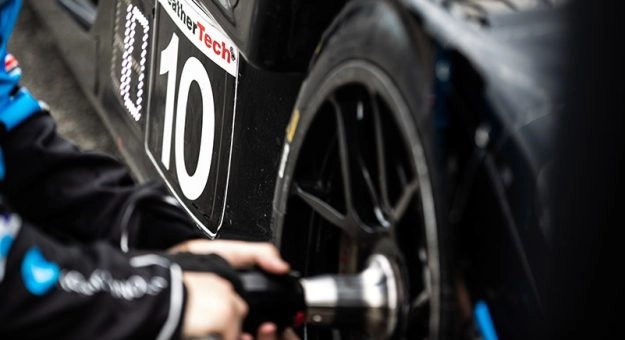
Yes, but the decision depends on remaining life and track temperature. A double stint saves service time and protects the limited allocation. It can also leave the driver exposed after a restart.
Road America makes that calculation difficult because front and rear wear can diverge. A car may retain rear traction while losing front response through the Carousel. The opposite can occur in a GT car that spins the rear tires from slow exits.
Fresh Tires Versus Track Position
Fresh tires provide the strongest advantage immediately after a caution. However, pit lane can reorder the class. A leader may keep used tires to retain first place.
The chasing team then faces a clear question. Can the new-tire pace overcome the traffic created by restarting behind several cars? At Road America, long straights help the attack, but the Kink and Carousel limit safe passing.
Two Tires or Four?
A two-tire call can shorten service and correct one end of the car. Yet it may create balance problems. New tires on one axle can change rotation and traction dramatically.
Therefore, four tires remain the safer long-run choice. Two tires become more attractive during a short final sprint when track position carries greater value.
Wet-Tire Allocation and Weather Flexibility
The Road America regulations set maximum wet allocations of nine sets for GTP and LMP2. GTD PRO and GTD may use up to six wet sets.
That allowance does not predict rain. Wisconsin summer weather can change quickly, but a reliable forecast belongs in race-week coverage. Teams will still prepare crossover pressures and wet setup options.
The word “tyres” may appear in international search results, but the U.S. paddock normally uses “tires.” The strategic meaning remains the same: protect the set until the lap-time drop costs more than a pit stop.
Road America Pit-Stop Strategy and IMSA Service Rules
How do IMSA pit stops work at Road America?
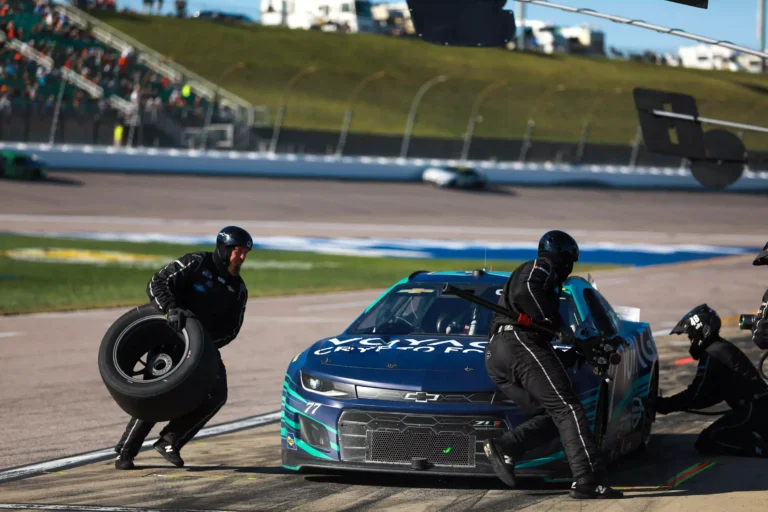
Cars must respect the 60 km/h pit-lane speed limit. IMSA allows a maximum of four people over the pit wall for service roles. Refueling must occur inside the assigned pit box with approved equipment and a fire-extinguisher attendant. Driver changes, tires and routine service must follow the sporting regulations.
Road America’s long lap increases the cost of a missed call. Once a driver passes pit entry, the team must wait another full lap. That delay may decide whether the car stops before or after a caution.
Pit entry also follows a fast final sector. Drivers must slow cleanly without crossing the speed threshold. A penalty can erase every gain from an aggressive strategy.
Four People Over the Wall
IMSA’s 2026 rules limit service to four people over the wall, including refueling, air-jack and tire roles. Teams choreograph every movement around that restriction.
A driver change adds complexity. Belts, radio connection, seat inserts and drink systems must be handled quickly. However, speed never excuses an unsafe release or incomplete restraint.
Refueling Rules Shape Service Order
Refueling must take place in the pit box with the approved autonomous supply tank. A crew member must attend the required fire extinguisher. The system uses a deadman valve.
Teams cannot perform work beneath the car during refueling. Therefore, any inspection under the floor or diffuser must wait. This restriction can extend a stop after contact.
Green-Flag Stop Versus Caution Stop
A green-flag stop costs track time because rivals continue at racing speed. However, it may deliver clean air and avoid a crowded pit lane.
A caution stop reduces relative time loss, but it creates congestion. Multiple cars can arrive together. Sister cars may need to stack or delay one entry.
Undercut and Overcut at Road America
The undercut uses fresh tires and clean air to pass a rival during the pit cycle. It works when tire drop is large. Road America’s degradation makes it credible.
The overcut extends the stint. It works when the leading car still has pace or when traffic slows the early stopper. It also keeps the car on track for a possible caution.
Five Pit-Stop Errors That Can End the Race
Speeding on entry or exit
The 60 km/h limit applies through the controlled lane. A small excess can trigger a costly penalty.
Unsafe release
A car released into another competitor can receive a penalty and create contact in the narrow lane.
Fuel-equipment mistake
A poor hose connection or valve problem can waste time and create a serious safety risk.
Driver-time miscalculation
LMP2 and GTD lineups must satisfy the 1-hour, 30-minute minimum requirement at this event.
Wrong tire choice
A rushed two-tire or no-tire call can leave the car unstable through the high-speed middle sector.
World of Speed provides broader background on how racing pit stops work, why teams double stack cars and why pit-lane time loss matters. The series rules differ, but the strategic principles remain useful.
Full-Course Cautions: The Largest Road America Strategy Variable
How do full-course cautions change IMSA strategy?
A full-course caution closes pit lane at the initial announcement, slows fuel use and compresses class gaps. Race Control then manages the pass-around and class-specific pit sequence. Cars that stopped just before the caution can gain track position, while leaders caught on the wrong side of the cycle may lose it.
A full-course caution is not simply a safety car period. It is a structured sequence. The field slows, pits initially close and Race Control gathers the cars behind the safety car.
The pass-around can then help eligible cars regain track position relative to their class. Pit lane reopens in stages during a standard caution. Prototype and GT groups receive their service opportunities through the official sequence.
Why Stopping Before the Yellow Can Win the Race
A car that pits under green accepts the immediate time loss. If a caution follows, rivals must stop after the field has slowed and reorganized. The early stopper can cycle ahead.
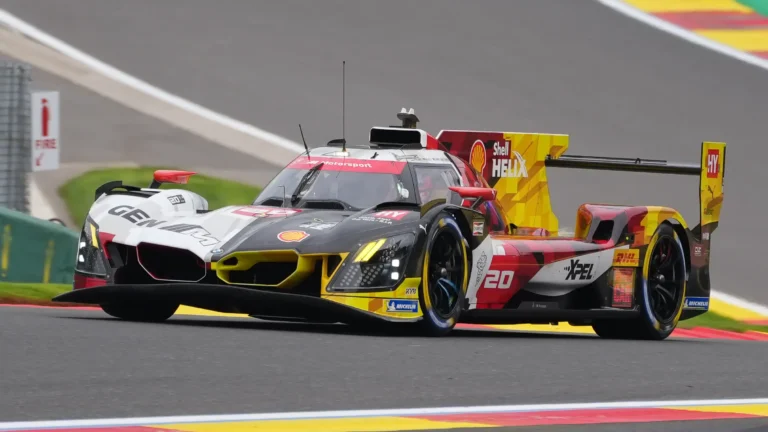
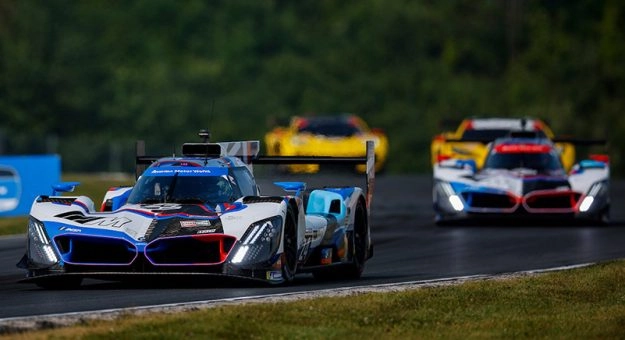
That is exactly what shaped the 2025 GTP race. BMW stopped both cars with roughly one hour remaining. The fifth caution appeared about seven minutes later.
Other GTP contenders pitted during the caution. The BMWs moved to the front and controlled the final 21-lap green run. The strategy produced a 1-2 finish.
Short Full-Course Caution Versus Standard Procedure
IMSA can use a shorter caution procedure in defined circumstances. During that process, pit lane can remain closed through the pass-around and restart preparation. Teams cannot assume every yellow creates a normal stop opportunity.
Emergency service remains tightly controlled. Taking more than permitted emergency service can produce a serious penalty. Therefore, the strategist must listen to Race Control rather than rely on a generic yellow-flag expectation.
Cautions Save Fuel but Cool Tires
Reduced speed lowers fuel consumption. A caution can add several laps to the projected range. That benefit may eliminate a splash-and-go.
However, the tires cool during the neutralized period. Pressure and surface temperature fall. The restart then becomes risky, especially through Turn 1 and Turn 5.
Late Caution: Take Tires or Keep Position?
A late caution creates the weekend’s hardest call. Staying out protects track position. Pitting provides grip for the restart.
The correct answer depends on remaining tire life and passing ability. A GTP car with top speed may recover on fresh tires. A GTD car trapped behind several class rivals may not.
Race Control instructions always take priority. Pit-lane status, pass-around eligibility and class sequencing can change through the official procedure. Teams must react to the live message, not a pre-race assumption.
World of Speed explains racing flags and the general role of a safety car. IMSA’s detailed full-course caution process remains series-specific.
Class-by-Class Road America Strategy
GTP: Energy, Tire Life and Manufacturer Split Strategies
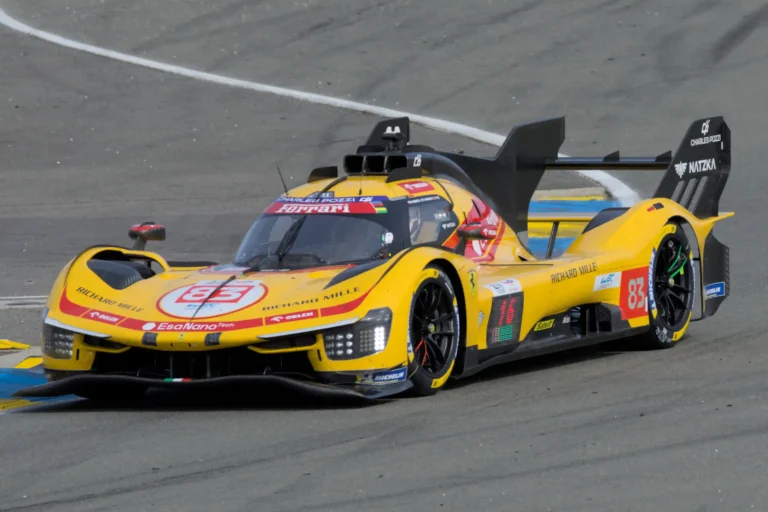
GTP strategy combines fuel with measured energy use. Hybrid deployment and regenerative braking affect the energy profile, although drivers still need conventional fuel-saving techniques.
Road America’s long straights reward efficient bodywork and clean acceleration. Meanwhile, heavy braking offers strong regeneration opportunities. Manufacturers will balance top speed against stability through the Carousel and Kink.
Sister-car splits should appear early. One car may extend the first stint, while the other stops before traffic. That approach protects the team against a caution near the pit window.
The maximum drive time for every class is four hours. Therefore, GTP teams can use two- or three-driver rotations while keeping the fastest closer available for the end.
LMP2: Bronze-Driver Timing Can Control the Entire Race
LMP2 qualifying is reserved for the Bronze driver at Road America. The class also carries a 1-hour, 30-minute minimum drive time for the relevant lineup requirements.
Most teams will complete much of that obligation early. However, an early caution can reduce green-lap opportunities. The team must track official driving time carefully.
Running the Bronze driver through a quiet middle stint can protect the closer. Yet traffic becomes difficult when GTP leaders and GT class packs arrive together.
The fastest professional driver should usually finish. Still, fuel position may force an earlier final change. A driver-time plan must remain flexible enough to survive cautions.
GTD PRO: Pure Pace With Fuel-Saving Potential
GTD PRO lineups do not carry the same amateur-driver obligation. Their 30-minute minimum allows teams to prioritize pace and tire feel.
The 2025 race provided a useful fuel case study. A leading Porsche attempted a long final fuel run but needed a late stop. BMW had enough range and took the class win.
That example matters more in 2026. A six-hour race creates several chances to offset the final stop. Teams may save fuel early so they can attack later.
GTD: Driver Ratings, Minimum Time and Caution Exposure
GTD combines professional speed with Pro-Am requirements. The class has a 1-hour, 30-minute minimum drive-time figure in the Road America regulations. That obligation affects the opening strategy.
A team may start its Bronze-rated driver and complete most of the requirement early. However, a crowded opening stint can increase contact risk. Starting a professional may improve track position but delay the mandatory phase.
Cautions can help by reducing pressure during the amateur stint. They can also trap the team if the planned driver change arrives while pits are closed.
Control the energy window
GTP and LMP2 teams need enough range to react before or after the final caution. Clean laps in traffic create the undercut.
Protect tire balance
GTD PRO and GTD cars must keep front response through the Carousel while retaining rear traction from Turns 5 and 14.
Multiclass Traffic: The Hidden Road America Pit Window
Can multiclass traffic decide Road America IMSA 2026?
Yes. Road America’s long straights create high closing speeds, while the Carousel and Kink limit safe passing. A prototype can gain or lose several seconds during one traffic cycle. Teams may pit early to escape a GT pack, while GT leaders must avoid losing time during prototype waves.
Traffic is not random. Strategists model where faster cars will catch each group. The calculation uses average lap time, current gaps and class density.
A clean lap before a stop can create the same effect as an undercut. Conversely, catching a GT pack through the Carousel can erase a fresh-tire advantage.
Turn 5 Is the Preferred Passing Point
The long run to Turn 5 gives prototypes time to complete a pass before braking. GT drivers can hold a predictable line. That cooperation reduces time loss for both cars.
However, two class battles may reach the corner together. The fastest car must avoid assuming the GT leader will surrender the apex.
The Kink Requires Patience
The closing speed may tempt a prototype into a narrow gap. Yet the consequence of contact is severe. A small delay is usually cheaper than bodywork damage.
Teams will remind drivers that six hours creates another opportunity. The Kink should not become a first-hour gamble.
Restarts Create the Most Intense Traffic
A caution compresses each class. After the restart, GTP cars begin lapping GT traffic sooner than they would under spread-out green running.
At the same time, tires remain cold. Braking distances increase and grip changes quickly. The first two laps after a restart may decide more positions than the previous hour.
Readers can use World of Speed’s race-timing guide and GT3 diagram to understand the gaps and car architecture involved.
Weather Scenarios: Heat, Rain and the Tire Crossover
A race-week forecast is not reliable several weeks in advance. Therefore, this analysis does not assign a rain percentage. Wisconsin summer conditions still require a complete wet plan.
Hot asphalt increases tire energy and can accelerate degradation. It may also raise cockpit and brake temperatures. Teams may protect the car during the middle afternoon.
Rain changes the fuel equation because lap times rise and throttle demand falls. A wet period can extend range. However, caution laps or a red flag may change the race clock more dramatically.
The Slick-to-Wet Decision
Road America is too long for a simple visual judgment from pit lane. One sector may be wet while another remains dry. Teams use radar, marshal reports and driver feedback.
An early wet-tire stop can gain minutes if the rain arrives fully. The same call destroys track position if the shower misses the circuit.
Drying Track Strategy
GT cars may warm slick tires differently from prototypes. Therefore, the crossover point can vary by class. A GTP car can generate downforce and heat quickly, while a GTD car may need more cautious opening laps.
Traffic also helps dry the line. The fastest class may find grip first, but slower cars still encounter wet patches off line during overtakes.
Use the official IMSA schedule and a current local forecast before publication day. Lightning, heavy rain or standing water can alter the timetable and create red-flag procedures.
Road America IMSA 2026 Schedule and U.S. Viewing Times
When is the Road America IMSA 2026 race?
The six-hour Motul SportsCar Endurance Grand Prix starts Sunday, August 2, at 10:40 a.m. local Central Daylight Time. That is 11:40 a.m. ET. The scheduled finish is 4:40 p.m. local, or 5:40 p.m. ET. Peacock coverage begins at 11:30 a.m. ET.
| WeatherTech session | Date | Road America local | Eastern Time | Status |
|---|---|---|---|---|
| Practice 1 — All classes | Fri, July 31 | 11:25 a.m.–12:55 p.m. CDT | 12:25–1:55 p.m. ET | Provisional official |
| Practice 2 — Bronze drivers only | Sat, Aug. 1 | 9:50–10:05 a.m. CDT | 10:50–11:05 a.m. ET | Provisional official |
| Practice 2 — All classes | Sat, Aug. 1 | 10:05–11:35 a.m. CDT | 11:05 a.m.–12:35 p.m. ET | Provisional official |
| GTD Qualifying | Sat, Aug. 1 | 3:25–3:40 p.m. CDT | 4:25–4:40 p.m. ET | Provisional official |
| GTD PRO Qualifying | Sat, Aug. 1 | 3:45–4:00 p.m. CDT | 4:45–5:00 p.m. ET | Provisional official |
| LMP2 Qualifying — Bronze only | Sat, Aug. 1 | 4:05–4:20 p.m. CDT | 5:05–5:20 p.m. ET | Provisional official |
| GTP Qualifying | Sat, Aug. 1 | 4:25–4:40 p.m. CDT | 5:25–5:40 p.m. ET | Provisional official |
| Six-Hour Race | Sun, Aug. 2 | 10:40 a.m.–4:40 p.m. CDT | 11:40 a.m.–5:40 p.m. ET | Provisional official |
Peacock lists its main race window from 11:30 a.m. to 6:00 p.m. ET. IMSA also lists international streaming through IMSA.TV and YouTube, while U.S. live access is restricted to Peacock Premium.
The detailed schedule remains provisional. Teams and viewers should check the official event page before the first session. Weather and operational changes can move the timetable.
Road America IMSA 2026 Strategic Predictions
Prediction 1: At Least One Class Will Be Decided by a Pre-Caution Stop
The 2025 GTP race showed the value clearly. Six hours creates more pit cycles and more chances for the same pattern. A team that stops just before the right caution can gain several positions.
Prediction 2: Most Winning Cars Will Use at Least One Double Tire Stint
The allocation encourages tire management. Teams need enough sets for qualifying and the closing phase. Therefore, a successful double stint should appear in each class.
However, the winning GT car may use more conservative tire changes than the winning GTP car. Vehicle weight, ABS behavior and traffic create different degradation patterns.
Prediction 3: The Final Green Run Will Exceed 20 Minutes
Road America often produces cautions, but the final result may still require a sustained sprint. Teams should keep their strongest driver and a useful tire set for that possibility.
Prediction 4: LMP2 Driver-Time Planning Will Create a Surprise Contender
A team that completes the Bronze obligation cleanly can hand the car to its professional closer at the ideal moment. A rival caught by caution timing may lose that advantage.
Prediction 5: Fuel Saving Will Decide GTD PRO
The 2025 class finish already demonstrated the risk of stretching too far. In 2026, the longer format gives teams more opportunities to build a fuel advantage before the last stop.
Stop before the final yellow
A pre-caution service can convert a midfield car into the class leader when the pit sequence begins.
Front drop in the Carousel
Understeer can damage lap time and make a late restart difficult on a double-stinted set.
Driver-time miscalculation
A fast car cannot keep the result if its LMP2 or GTD lineup misses the mandatory minimum.
Road America IMSA 2026 Strategy FAQ
Conclusion: Road America’s First Six-Hour IMSA Race Rewards Flexible Thinking
The Road America IMSA 2026 Strategy Analysis points toward a race built around adaptation. The six-hour format creates enough time for early plans to fail and recover.
Fuel strategy will establish the basic pit windows. However, cautions will decide whether those windows remain useful. A car that stops minutes before a yellow may receive the largest advantage of the day.
Tire management is equally important. Road America’s Carousel loads the front axle for a long period. A car that protects front grip can remain competitive on a double stint.
Pit execution must stay clean. The 60 km/h lane, four-person service limit and detailed refueling procedure leave little room for error.
GTP teams will balance energy use, hybrid deployment and track position. LMP2 teams must add Bronze-driver timing. GTD PRO can focus more directly on pace, while GTD must satisfy its driver-time structure.
Traffic will create hidden gains and losses. One clean lap before a stop may be worth more than an aggressive pass through the Kink.
Weather remains the major unknown. Heat can accelerate degradation, while rain changes fuel use and tire crossover decisions.
The likely winning approach is not a conservative plan or an aggressive plan. It is a flexible plan with clear triggers. Teams need one response for green running, another for an early yellow and a third for the final hour.
The 2025 BMW victory provided the clearest lesson. Pit timing can matter more than raw pace when a caution arrives moments later. The 2026 six-hour distance creates several chances for that scenario to return.
Expect the final hour to become a race between fuel range, tire life and restart position. The team that controls all three should leave Road America with the first six-hour victory.
Sources & Verification
Race dates, times, circuit data, tire allocations, driver-time requirements and pit rules were checked against official IMSA material available on July 21, 2026. Projected fuel windows and stop counts are clearly labeled editorial analysis.
- IMSA — official 2026 Road America event page, broadcast schedule and six-hour race time
- IMSA — July 16 provisional schedule and Road America supplementary regulations
- IMSA — official 2026 rules and regulations, including pit and full-course caution procedures
- IMSA — 2025 BMW Road America victory report and late-caution strategy precedent