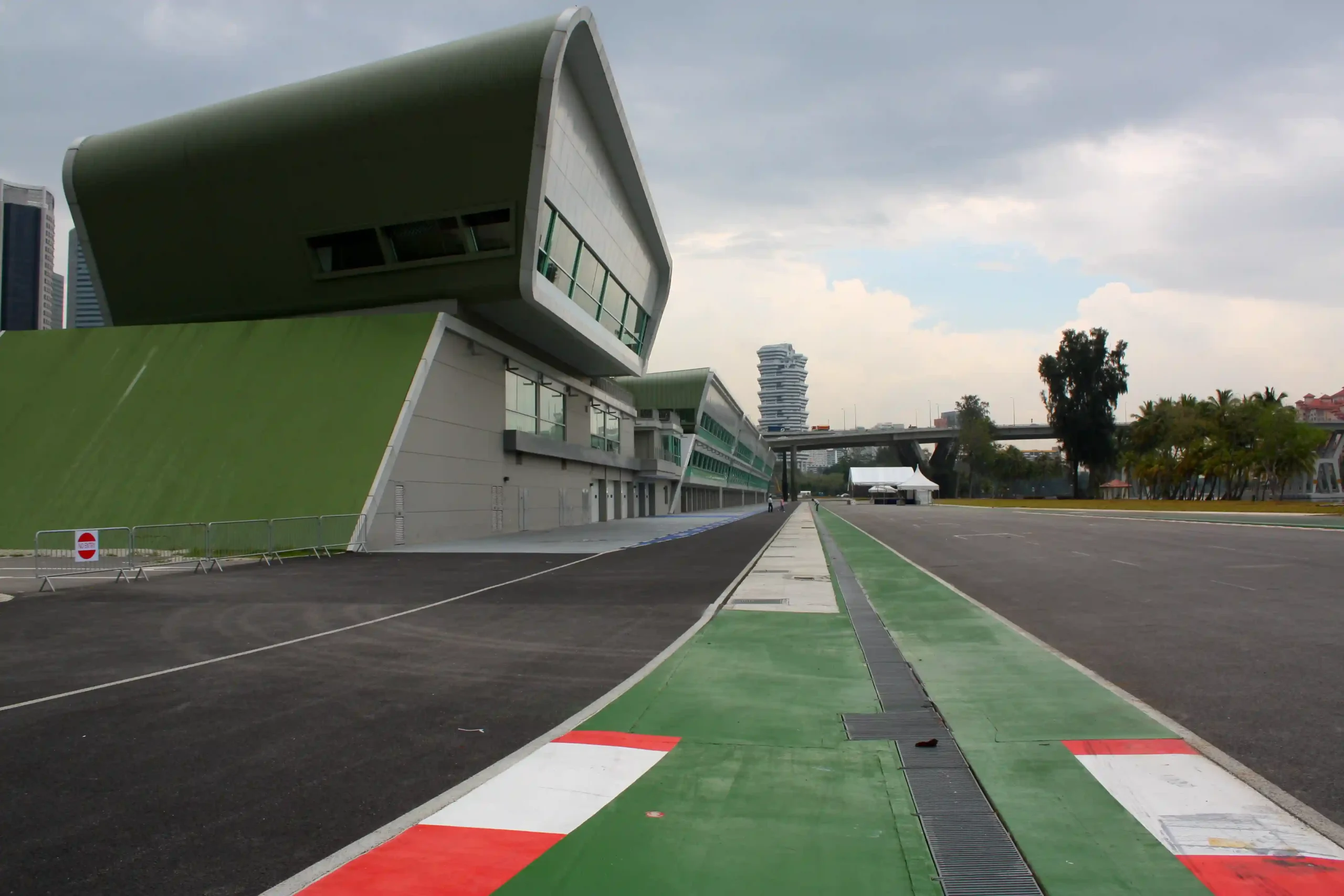
Why Do F1 Drivers Lose Time in the Pit Lane?
Why a two-second tire change can cost more than 20 seconds, how teams calculate pit loss, and when a Safety Car turns the same stop into a race-winning opportunity.
Drivers lose time because an F1 stop includes much more than the stationary tire change. They must brake before pit entry, travel through the lane at the speed limit, stop accurately, wait for service and a safe release, then accelerate back onto the track. Those phases create the total F1 pit lane time loss.
The television stopwatch may show 2.2 seconds. The race timing screen may show the driver has lost 20 seconds.
Both numbers can be correct. One measures the stationary tire change. The other measures the full cost of leaving the racing line and returning to speed.
Most of the loss occurs while the car is moving. The driver brakes earlier than on a normal lap and then travels at 80 km/h, or 49.7 mph, through the controlled zone.
In addition, a crew can hold the car for traffic. The out-lap may also begin on cold tires behind slower rivals.
Consequently, a brilliant pit crew cannot erase every part of the stop. The circuit layout, speed limit, Safety Car status and traffic pattern matter just as much.
Official Formula 1 data illustrates the range. The estimated 2026 loss was 18.25 seconds in Canada, 18.5 seconds at Spa and 23.75 seconds at Suzuka. Those figures included a 2.5-second stationary stop.
This guide breaks the loss into each component. It also explains how teams recover that time through fresh tires, an undercut, clean air or a discounted stop.
What Is Pit Lane Time Loss in F1?
Pit lane time loss is the difference between completing a normal racing lap and completing a lap with a pit stop. It includes slower pit entry, limited-speed travel, stationary service, release time, pit exit acceleration and sometimes the early out-lap effect.
The phrase “pit stop time” can describe several different measurements. That is why fans sometimes compare numbers that do not measure the same event.
Stationary time begins when the car stops in the pit box. It ends when the car moves again.
Pit lane transit time begins when the car crosses the speed-limit line. It normally ends at the exit line.
Total pit loss is broader. It compares the driver’s race progress with the progress expected without stopping.
Therefore, strategy engineers focus on total loss. A 1.9-second wheel change is valuable, but it may not save a poor entry or a delayed release.
Formula 1 introduced the Pitlane Performance insight to separate these phases. The system looks beyond stationary time and highlights where the driver or team gained and lost time.
Stationary Pit-Stop Time
- Starts when the car becomes stationary
- Usually covers the four-wheel change
- May include wing adjustment or repairs
- Used for fastest-pit-stop awards
- Does not show the full strategic loss
Total Pit Lane Loss
- Includes entry deceleration
- Includes limited-speed lane travel
- Adds stationary service and release
- Includes exit acceleration
- Determines where the car rejoins
Our guide to what an F1 pit stop is explains the basic procedure. This article focuses on the time account behind it.
Why Does a Two-Second F1 Pit Stop Cost Over 20 Seconds?
The two-second figure only measures the stationary wheel change. The driver may spend another 16 to 22 seconds braking, traveling at the pit speed limit and accelerating away. A release delay, long lane or slow out-lap can increase the total further.
Imagine a car approaching pit entry at racing speed. On a normal lap, it would continue toward the next braking zone.
Instead, the driver leaves the racing line and begins slowing for the pit lane. That deceleration starts the time loss before the official speed line.
The car then travels through the lane at no more than the published limit. The 2026 standard is 80 km/h, although the Race Director can reduce it.
Meanwhile, cars on track may be traveling three or four times faster. They continue gaining distance while the pitting driver passes the garages.
The tire change adds about two seconds in a clean stop. Afterward, the car must merge safely and accelerate from low speed.
The process can easily total 20 seconds. At Suzuka in 2026, the official estimate was 23.75 seconds, including 2.5 seconds stationary.
At Spa, the official 2026 estimate was only 18.5 seconds. The difference came from the pit entry, lane geometry and rejoining arrangement, not a radically faster crew.
Important: A “two-second stop” describes crew service. A “20-second pit loss” describes the race-position cost. They answer different questions.
What Is Included in Total F1 Pit Stop Time?
- The deviation from the normal racing line.
- Braking before the pit lane speed-limit line.
- Travel through the controlled pit lane.
- The stationary tire change or repair.
- Any hold for traffic or an unsafe-release risk.
- Acceleration from the pit box and through pit exit.
- Any immediate loss from cold tires or traffic.
Teams may define the final item differently in internal models. Some stop the calculation at pit exit, while others track the car until it returns to representative lap pace.
However, the strategic purpose remains the same. The pit wall needs to know which rivals will pass and where the car will rejoin.
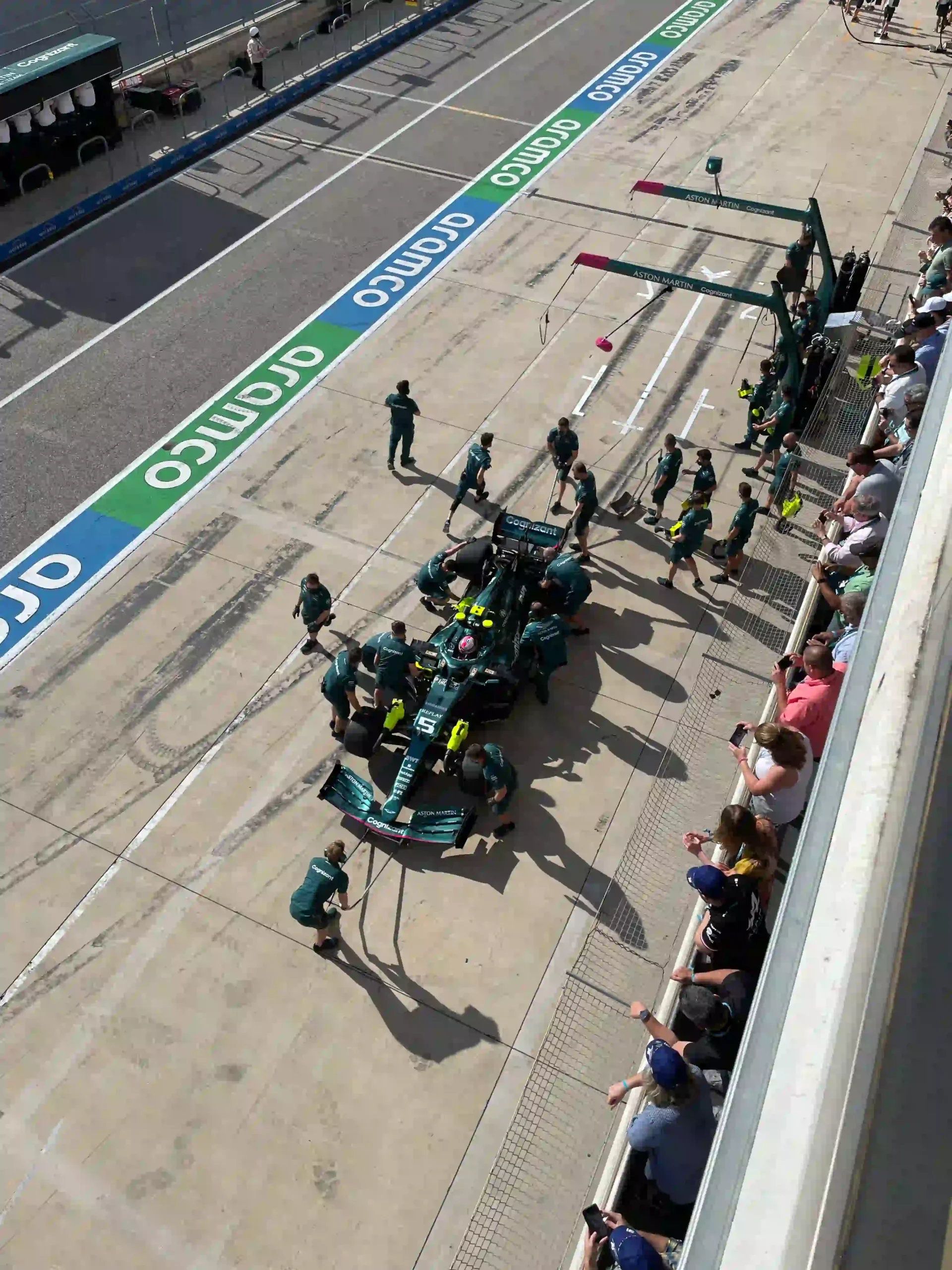
How Is F1 Pit Lane Time Loss Calculated?
Teams compare the predicted time for a normal lap with the predicted time for a lap containing a stop. They add pit-entry loss, limited-speed transit, stationary service, release delay and pit-exit loss. The model then predicts the car’s rejoining position and traffic.
The basic concept is simple. The detail is not.
A strategist first estimates how quickly the car would complete the relevant section at racing speed. Fuel load, tire age and track conditions affect that number.
Next, the model estimates the pit route. The driver leaves the normal line, brakes, crosses the speed line and reaches the team’s box.
The team then adds an assumed stationary time. Official Formula 1 circuit guides often use 2.5 seconds for their published loss estimate.
After the stop, the model adds release and exit time. It also checks the position of every rival approaching the pit exit.
Consequently, the calculation is dynamic. The headline circuit loss may be 20 seconds, but the live prediction can move with traffic and tire condition.
A Practical Pit-Loss Formula
A useful simplified expression is:
Total pit loss = entry loss + pit-lane transit + stationary time + release delay + exit loss.
Entry loss compares the pit-entry route with the normal racing route. A shortcut inside the final corner can reduce this component.
Transit loss depends mainly on lane length and speed limit. A long lane at 60 km/h is much more expensive than a short lane at 80 km/h.
Stationary time depends on crew execution and required work. A normal tire stop may take two to three seconds.
Release delay depends on traffic. The car may sit ready while another driver passes in the fast lane.
Exit loss reflects acceleration and the path back to the circuit. Some exits feed directly onto a straight, while others include bends and narrow merges.
Does Pit Stop Time Include Pit Entry and Pit Exit?
It depends on the statistic. A broadcast “pit stop” graphic often shows only stationary time.
By contrast, a strategy graphic labeled pit loss or pit delta includes entry, lane transit and exit. Fans should check the label before comparing numbers.
The DHL Fastest Pit Stop award measures the stationary service. It rewards the crew, not the driver’s entire journey.
Meanwhile, strategy teams care about the full loss because that decides track position.
Stationary time tells you how well the mechanics worked. Total pit loss tells you whether the race strategy worked. A team can win the first measure and lose the second.
How Much Time Does an F1 Pit Stop Cost at Different Tracks?
At many 2026 circuits, an ordinary green-flag stop was estimated to cost about 18 to 24 seconds, including a 2.5-second stationary service. Canada was 18.25 seconds, Spa 18.5, Monaco 19.92, Barcelona 22.96 and Suzuka 23.75.
The official figures vary because no two pit lanes are identical. The entry can cut a corner, follow a long straight or require early braking.
Moreover, the controlled section differs in length. Pit exit may also shorten or lengthen the route compared with a normal lap.
The table below uses official Formula 1 “Need to Know” figures published for the 2026 season.
| 2026 Grand Prix | Official Pit-Stop Loss | Stationary Assumption | Strategic Reading |
|---|---|---|---|
| Canadian GP | 18.25 seconds | 2.5 seconds | One of the lower losses among published 2026 figures |
| Belgian GP | 18.5 seconds | Not separately stated on the page | Short loss despite Spa being the longest circuit |
| Miami GP | 18.76 seconds | 2.5 seconds | Relatively low cost can expand strategic options |
| Australian GP | 19.30 seconds | 2.5 seconds | Moderate loss; neutralizations can make stopping attractive |
| Monaco GP | 19.92 seconds | 2.5 seconds | Track position remains critical despite the published figure |
| British GP | 20.0 seconds | 2.5 seconds | Close to the modern calendar’s common benchmark |
| Austrian GP | 20.02 seconds | 2.5 seconds | A second stop needs tire pace or a neutralization |
| Barcelona-Catalunya GP | 22.96 seconds | 2.5 seconds | Higher loss makes track position and tire life important |
| Chinese GP | 23.67 seconds | 2.5 seconds | A costly stop can favor longer stints |
| Japanese GP | 23.75 seconds | 2.5 seconds | Highest figure in this published 2026 sample |
The difference between Canada and Japan is 5.5 seconds. That gap is larger than two clean tire changes.
Therefore, a two-stop plan that works in Montreal may be unattractive at Suzuka. Tire degradation must repay each additional stop.
The figures are planning estimates rather than universal constants. A driver can lose more after a slow stop, traffic or a poor out-lap.
Likewise, an excellent entry and release can beat the standard model. Teams continually update the live number during the race.
Which F1 Track Has the Longest Pit Stop Loss?
The answer can change by season, layout and speed-limit decision. It should not be treated as a permanent record.
Within the official 2026 figures listed above, Suzuka was highest at 23.75 seconds. Shanghai followed at 23.67 seconds.
Historic strategy guides have shown even larger values. Formula 1 estimated nearly 30 seconds at Imola in 2022 and 28 seconds in Singapore that year.
However, circuit configurations and operational assumptions evolve. The current event guide is the best source for a specific weekend.
Why Spa Can Have a Low Loss Despite Its Long Lap
Spa is the longest circuit on the current calendar, but lap length does not directly equal pit loss. The relevant question is how the pit route compares with the normal route.
The pit entry and exit can remove part of the racing distance. Consequently, the car may avoid a section that rivals must complete.
That shortcut offsets some low-speed travel. Formula 1’s official 2026 figure was 18.5 seconds.
This is why teams model geometry rather than judging from pit-lane appearance alone.
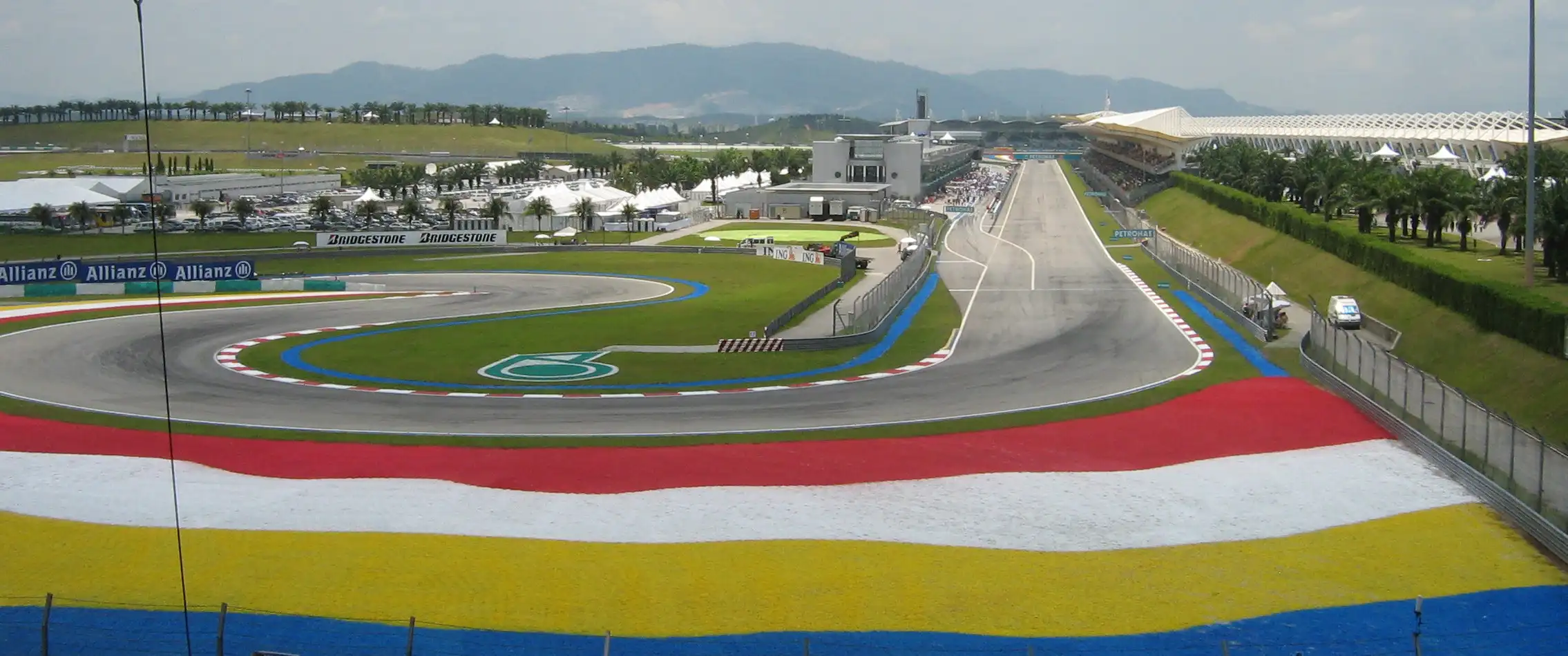
How Pit Entry Creates Time Loss
The car must already be at or below the pit speed limit when it crosses the official line. Drivers therefore leave the racing line and brake before entering the controlled zone. Braking too early wastes time, while braking too late can cause speeding or a lock-up.
Pit entry begins before the speed-limit line. The driver first moves away from the normal racing path.
That alternative path may have less grip. It may also contain painted lines, dust or rubber debris.
The driver then brakes from racing speed to the legal pit speed. Fuel load, tire wear and brake temperature affect the stopping distance.
A precise entry can gain several tenths. Drivers practice it during free practice because those tenths matter in an undercut battle.
However, there is a hard boundary. Crossing the timing line above the limit can produce a race penalty.
Therefore, teams select a reference that is aggressive but repeatable. A spectacular one-off entry is less useful than consistent legality.
Can a Driver Gain Time at Pit Entry?
Yes. The driver can brake later, carry speed on the approach and reach the legal target exactly at the line.
The gain occurs before the controlled zone. Inside the lane, every car faces the same maximum.
Some entries also cut the final corner. That route can reduce the distance compared with a normal lap.
Nevertheless, attacking too hard can lock a tire or miss the lane. A mistake may cost far more than the intended gain.
What Happens if a Driver Misses the Pit Box?
Stopping too long or too short forces mechanics to reposition. Wheel guns and jacks are arranged around fixed marks.
A small error can add tenths. A large error can turn a two-second service into a five-second stop.
The driver cannot reverse under power in the pit lane under the 2026 sporting rules. Mechanics may need to move equipment or push the car where permitted.
Consequently, stopping accuracy is part of pit-lane performance. The crew’s stopwatch begins with the driver’s approach.
How the Pit Lane Speed Limit Causes Time Loss
The car travels at only 80 km/h, or a lower event-specific limit, while rivals remain at racing speed. Even a short controlled section therefore creates a large gap. The longer the lane, the greater the transit loss before the tire change is considered.
The 2026 FIA regulations set an 80 km/h standard for the whole competition. The Race Director may amend it for safety.
At 80 km/h, the car covers about 22.2 meters per second. At 250 km/h, it covers about 69.4 meters per second.
That difference explains the loss. While the pitting car travels 400 meters, a rival at racing speed can cover much more ground.
The pit limiter prevents the car from accelerating beyond its programmed target. However, it does not brake the car before entry.
Our detailed guide to delta time in F1 explains how teams compare these progress rates.
Why a Lower Limit Changes Strategy
A reduced speed increases the time spent inside the controlled zone. The effect repeats on every stop.
Suppose the controlled distance is 400 meters. At 80 km/h, ideal transit takes 18 seconds.
At 60 km/h, the same distance takes 24 seconds. That six-second increase can make a second stop unattractive.
Therefore, a speed-limit decision can alter tire strategy. It is not merely a safety notice.
Does the Pit Limiter Remove Driver Skill?
No. The driver must brake to the correct speed and activate the system at the right moment.
Activating too early wastes time. Activating too late risks speeding.
The driver must also hold a clean line through the lane and stop accurately. Finally, the driver must react to the release signal.
Thus, the limiter controls maximum power, but the driver controls the complete sequence.
How Much Time Does the Stationary Pit Stop Add?
A clean tire change usually adds about two to three stationary seconds. A slow wheel gun, stuck nut, poor stop position or equipment problem can add several more. Every extra stationary second normally becomes an extra second of race loss before traffic effects.
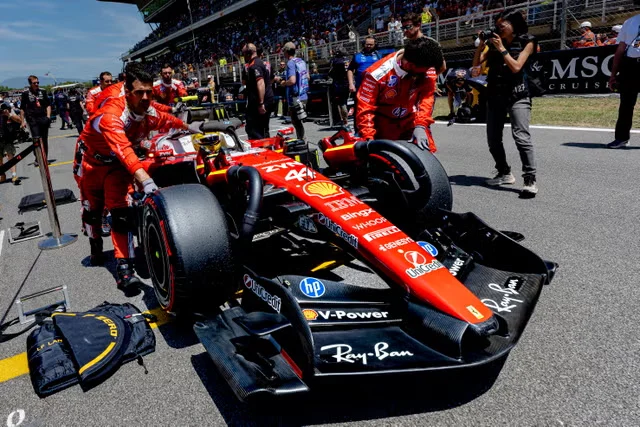
The stationary phase is the most visible part of the stop. More than 20 crew members coordinate around one car.
Four tires must come off and four tires must go on. Front and rear jacks lift the car, while stabilizers control movement.
The crew can complete a clean stop in less than two seconds. Formula 1’s official glossary notes that sub-two-second tire changes are possible.
However, published circuit-loss figures often assume 2.5 seconds. That is a sensible planning value rather than a record attempt.
Teams value consistency. A reliable sequence of 2.3-second stops can be strategically better than chasing 1.8 seconds and risking a failure.
How Much Does a Stuck Wheel Nut Cost?
There is no fixed amount. A wheel-gun operator may recover in one second, or the problem may require another gun and several attempts.
The car cannot leave until every wheel is secure. Therefore, the crew should hold the release even if the delay destroys track position.
A cross-threaded nut can be particularly difficult. Torque may rise before the nut reaches the correct position.
Modern systems monitor the wheel-gun sequence. Still, the operator must recognize an abnormal fit and stop the release.
How Much Time Does a Front-Wing Change Add?
A full nose replacement adds far more than a normal tire service. Mechanics must release the damaged assembly and fit another one.
The exact time depends on damage and alignment. A clean change may add several seconds, while broken mounting points can take longer.
Teams may also make a small flap adjustment during a normal stop. That usually adds little when planned correctly.
However, unexpected repairs disrupt crew choreography. They also create a queue if a teammate arrives for a double stack.
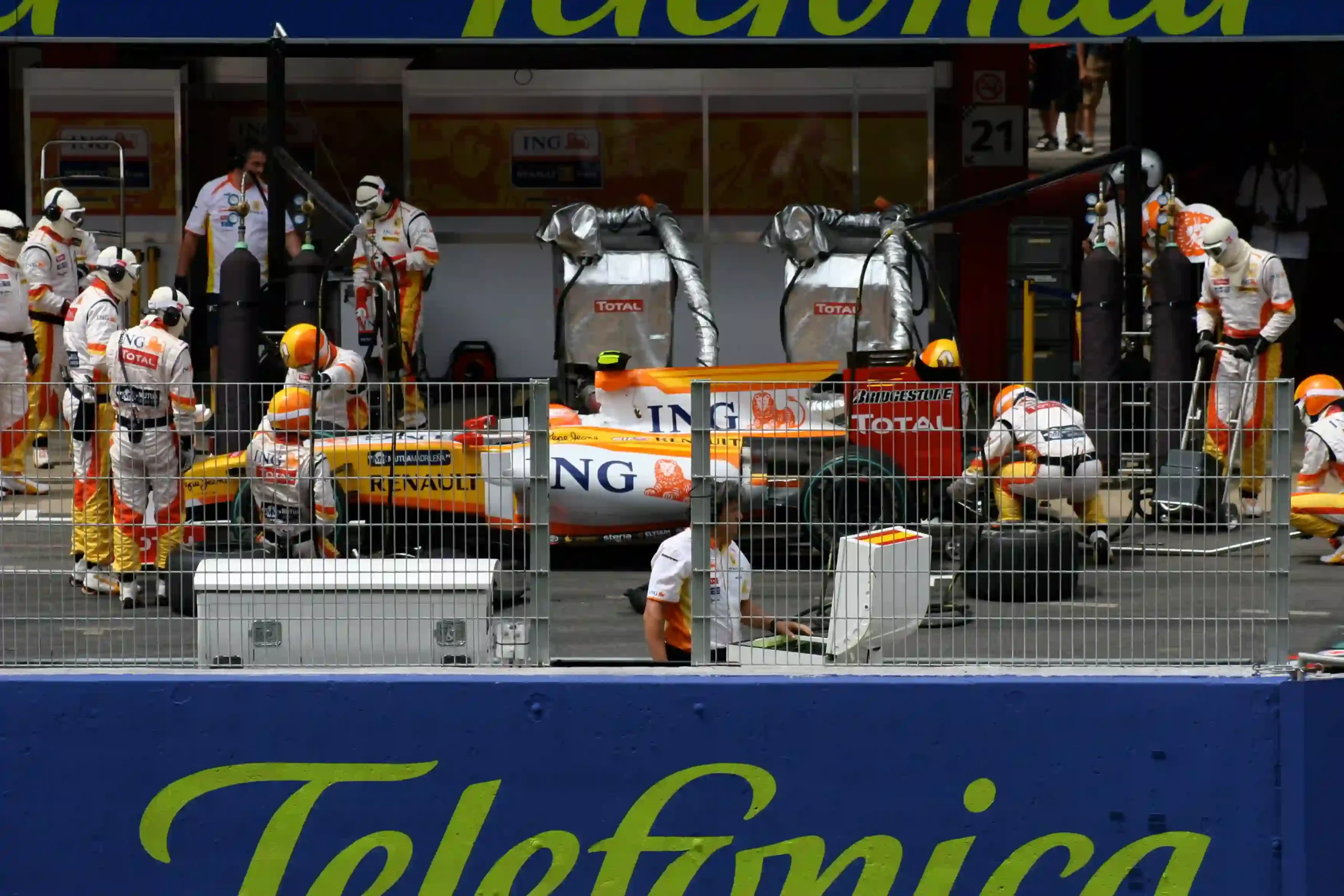
Why a Safe Release Can Add Time
The car may be mechanically ready while another driver approaches in the fast lane. The release controller must hold it until a safe gap appears. That delay adds directly to total pit loss, but releasing early can cause contact, a time penalty or a more serious sanction.
The tire change ends when all four corners are secure. The stop does not end until the car can leave safely.
A traffic observer watches the fast lane. If another car has entered the danger window, the release light remains red.
This hold may last less than a second. During a busy Safety Car stop, it can last much longer.
The delay frustrates drivers because the car is ready. However, a five-second penalty would be worse than a cautious hold.
Moreover, contact can damage both cars. The team therefore protects safety and race time by waiting.
Our guide to drive-through penalties explains how serious pit-lane offences can create another full transit loss.
Why Total Pit Lane Time Matters More Than Fastest Stop
A crew can record the fastest stationary stop and still lose time overall. The driver may enter slowly or wait for traffic.
Conversely, a 2.8-second service may produce an excellent total stop if entry and release are clean.
This is why Formula 1 developed Pitlane Performance graphics. They separate crew service from the full lane journey.
For strategy, the fastest complete stop is the one that returns the car to the track earliest and safely.
How Pit Lane Traffic and Double Stacking Add Time
Traffic can delay the car before the box, hold it after service or trap it behind a slower driver at pit exit. During a Safety Car, many cars stop together, so a mechanically quick stop can still produce a poor total pit-lane time.
F1 pit lanes are busiest when stopping is strategically cheapest. A Safety Car may send most of the field into the lane together.
Cars can queue behind active pit boxes. They can also run side by side while one driver leaves a stopping position.
Each team models the traffic window before calling its driver. However, another team’s slow stop can change the situation after the call.
A driver may also reach pit exit behind a slower car. Overtaking inside the lane is limited by space and safety.
Consequently, the car can lose time even after a fast release. The rival ahead controls the pace until a safe passing opportunity appears.
How Does Double Stacking Increase Pit Lane Time Loss?
Double stacking means both teammates stop on the same lap. The first car uses the shared pit box, while the second follows.
If their spacing is ideal, the first car leaves as the second arrives. The second driver then loses little additional time.
If the cars arrive together, the second driver waits behind the box. That delay includes stopping, moving forward and then receiving service.
A slow first stop makes the queue worse. A front-wing change can ruin the second driver’s race.
Therefore, the team compares the queue with the cost of leaving the second car on track. In rain, the queue may still be the better choice.
Why Does the Second Driver Lose More?
The first driver receives the box immediately. The second inherits every delay from the first stop.
In addition, mechanics must clear used tires and position the second set. Wheel guns and jack operators also reset.
The waiting car may block another team or face traffic when it finally leaves. As a result, its loss can exceed the teammate’s by several seconds.
That does not automatically make the strategy wrong. Staying out on unsuitable tires may cost much more.
Why F1 Drivers Can Keep Losing Time After Pit Exit
Fresh tires are not always at their ideal temperature when the car leaves the pits. The driver must warm the surface and internal structure while managing traffic. Cold tires, a cautious pit-exit merge and dirty air can therefore extend the practical pit loss beyond the exit line.
The official pit loss often ends when the car rejoins. The strategic effect can continue for the rest of the out-lap.
Fresh rubber offers more potential grip, but the tire must reach its operating window. Cold tires can slide and overheat their surface.
The driver therefore builds load carefully. Aggressive steering may damage the new set before it becomes fully effective.
Traffic creates another problem. A faster driver may exit behind a slower car on worn tires.
Dirty air reduces front-end grip through corners. Consequently, the fresh-tire advantage can disappear before the driver gets a passing chance.
Why Pit Exit Position Matters
Teams do not choose a stop only by tire life. They also look for a gap in the field.
A clean-air gap lets the driver use the new tire immediately. A crowded rejoin can waste the tire’s strongest laps.
The pit wall tracks every rival’s location and expected lap time. Software predicts the exact group around the exit.
However, the prediction can change while the driver is in the lane. A battle on track may slow several cars and close the intended gap.
Why Cold Tires Can Defeat an Undercut
An undercut relies on a fast out-lap. The pitting driver uses fresh tires to jump a rival who stays out.
If the new tire warms slowly, the old tire may remain faster for one lap. The undercut then weakens or fails.
Track temperature and compound choice are critical. A hard tire on a cool circuit may need more preparation.
Meanwhile, a soft tire can switch on quickly but may not last. Strategy balances immediate recovery against stint length.
Why Is a Safety Car Pit Stop Cheaper?
Cars on track must slow behind the Safety Car, while the pitting driver still travels at the normal pit limit. Because rivals cover less distance during the stop, the relative loss can fall sharply. A Virtual Safety Car creates a similar discount through mandatory delta times.
A green-flag stop compares pit-lane speed with full racing speed. A Safety Car changes the second half of that comparison.
Cars on track slow and gather behind the Safety Car. The pitting car still loses time, but rivals no longer gain distance at maximum pace.
Formula 1 strategy guides have shown dramatic reductions. At Suzuka in 2022, the estimated loss fell from just over 22 seconds to about 10 under a Safety Car or VSC.
In Canada that year, Formula 1 estimated a stop below 10 seconds under neutralization instead of more than 17 seconds in green conditions.
Therefore, teams often extend a stint while hoping for a neutralization. The gamble can produce a large position gain.
Why Is a Virtual Safety Car Stop Cheaper?
A VSC does not gather the field physically. Every driver must remain above a minimum time delta around the circuit.
That still reduces track speed. Consequently, a car in the pit lane loses less relative time.
The size of the discount depends on where the driver is when the VSC begins. The system also depends on the pit entry and exit delta rules.
A well-timed VSC can transform a race. A driver who stopped seconds earlier may lose heavily to a rival who waits.
2026 Barcelona: Hamilton’s Cheap Final Stop
The 2026 Barcelona-Catalunya Grand Prix provided a current example. Lewis Hamilton ran a three-stop strategy and was closing on Mercedes.
A late VSC handed him a discounted final stop. He emerged in the lead and then won by nearly 20 seconds.
Mercedes had chosen two stops. The neutralization changed the relative cost of Hamilton’s extra visit.
That result shows why a pit strategy cannot be judged only by the number of stops. Timing can matter more than count.
Is a Safety Car Pit Stop Free?
No. The car still brakes, travels through the lane and completes service. It normally loses some time to cars already in the queue.
The phrase “free stop” is shorthand. It usually means the driver can stop without losing a position or with a very small relative cost.
Traffic may still create a queue. A closed pit entry can also prevent the stop entirely.
Therefore, strategists prefer “cheap” or “discounted” stop. Those terms describe the advantage more accurately.
Does a Red Flag Make Pit Stops Free?
A red flag stops the race and brings cars to the pit lane. If regulations permit tire changes during the suspension, the normal green-flag loss can disappear.
However, this is not a normal racing pit stop. The field’s order and restart procedure are controlled by Race Control.
Drivers who stopped shortly before the red flag may feel disadvantaged. Rivals can sometimes change tires during the suspension without giving up track position.
Rules can change by season and event procedure. Teams therefore follow the current sporting regulations and Race Director instructions.
How Fresh Tires Recover F1 Pit Lane Time Loss
A stop is worthwhile when the expected gain from fresh tires, repairs or a strategic position exceeds the pit delta. Teams compare tire degradation, remaining laps, traffic and passing difficulty. A 20-second stop can pay back quickly if new tires are one second per lap faster.
Teams accept pit loss because tires do not maintain constant performance. Grip falls through wear, heat cycles and surface damage.
A fresh tire may gain several tenths or more per lap. Over a long stint, that advantage can repay the stop.
The simplest calculation divides pit loss by expected lap-time gain. A 20-second loss with a one-second advantage needs roughly 20 laps to recover.
However, race strategy is not that simple. Traffic can reduce the gain, while an undercut can create immediate track position.
How an Undercut Overcomes Pit Loss
The undercut attacks a rival’s track position. The chasing driver stops first and uses fresh tires on the out-lap.
The rival stays out on worn tires. If the time difference is large enough, the first driver moves ahead when the rival stops.
Both drivers pay a pit delta. The undercut works because one driver pays it earlier and then gains lap time.
A strong pit entry, clean service and fast out-lap make the move more powerful.
How an Overcut Can Work
The overcut keeps the driver on track longer. It works when the old tire remains competitive or the new tire warms slowly.
Clean air can also help. The driver staying out may produce fast laps while the rival rejoins in traffic.
A later Safety Car offers another route. The extended driver may receive a discounted stop.
Our undercut and overcut guide covers both mechanisms in detail.
Why Teams Sometimes Avoid a Faster Tire
A faster compound is not automatically the best choice. The extra stop required to use it may cost more than its lap-time gain.
Suppose a soft tire gains half a second per lap but requires another 20-second stop. The team needs about 40 effective laps to recover the loss.
Traffic and degradation can make the required recovery even larger. Therefore, a slower one-stop strategy may win.
The pit delta acts like an entry fee. The tire must generate enough performance to pay it back.
Real F1 Pit Lane Time Loss Examples and Strategy Lessons
Verified data gives the concept practical meaning. The following cases show how circuit design, neutralizations and regulation changes affect strategy.
| Event or Decision | Verified Detail | Effect on Pit Loss | Strategic Lesson |
|---|---|---|---|
| 2026 Belgian GP | Official pit-stop loss: 18.5 seconds | Relatively low green-flag cost | Long circuit length does not guarantee a long pit delta |
| 2026 Japanese GP | Official loss: 23.75 seconds including 2.5s stationary | More than five seconds above Canada | Extra stops need a stronger tire advantage |
| 2026 Barcelona GP | VSC handed Hamilton a cheap final stop | Reduced the cost of his third stop | Neutralization timing can overturn the planned strategy |
| 2025 Dutch GP | Pit speed limit increased from 60 to 80 km/h | Reduced pit-lane transit time | Officials used pit loss to encourage more strategic variety |
| 2022 Singapore GP | Official estimated green-flag loss: 28 seconds | Made a second stop especially expensive | Long, slow pit lanes favor fewer stops |
| 2022 Suzuka strategy guide | Loss dropped from just over 22s to about 10s under SC/VSC | Neutralization roughly halved the cost | Extending a stint can create a major opportunity |
2025 Zandvoort: Changing the Speed Limit to Change Strategy
Formula 1 and the FIA wanted to increase the chance of two-stop racing at the 2025 Dutch Grand Prix.
One measure raised the pit lane limit from 60 to 80 km/h. Formula 1 said the change reduced the time needed for a stop.
The published pit loss was 23 seconds. Without the faster lane, the strategic cost would have been higher.
This decision proves that pit loss can shape the sporting product. Officials can influence strategy without changing tire compounds alone.
Why Singapore Has Historically Punished Extra Stops
Formula 1 estimated a 28-second loss for the 2022 Singapore Grand Prix. The low speed and long lane made pitting costly.
A second stop therefore needed a large tire advantage. Teams preferred track position unless conditions changed.
Street-circuit traffic made recovery harder. Even a fast car could become trapped behind a slower rival.
Consequently, the high pit delta reinforced conservative strategy.
Why the Latest Official Figure Still Needs Context
Formula 1’s pre-event number assumes a representative stop. It does not guarantee every driver will lose exactly that amount.
A driver entering behind traffic can lose more. A Safety Car can cut the relative loss dramatically.
Weather, tire warm-up and release timing also matter. Therefore, the published number is a baseline rather than a final result.
How Much Time Does a Drive-Through Penalty Cost?
A drive-through requires the car to travel through the pit lane without stopping. The driver still pays entry, transit and exit loss.
The exact cost changes by circuit. It is usually close to the total pit delta minus the stationary tire-change time.
For a circuit with a 20-second loss including 2.5 seconds stopped, a simplified drive-through estimate might be around 17.5 seconds.
However, braking, traffic and the precise penalty procedure can alter the real figure.
A stop-and-go costs even more. The driver completes the same transit and must stop for the prescribed time without receiving service.
Therefore, pit-lane penalties use the lane itself as part of the punishment.
Why Drivers Lose Positions Even After a Fast Pit Stop
Rivals remain on track while the pitting car gives up roughly 18 to 24 seconds at many circuits. They may pass before the car exits. A fast stop limits the damage, but strategy timing, traffic and tire warm-up decide whether the driver regains those positions.
Track position changes during a pit cycle. A leader may exit in sixth because five drivers have not stopped.
That does not mean the leader has permanently lost five places. The classification becomes clear after the other drivers complete their stops.
However, traffic can turn temporary loss into real loss. The pitting driver may spend several laps behind cars on a different strategy.
Those laps reduce the value of fresh tires. They may also allow the original rival to build a larger gap.
This is why teams search for a pit window. The window is a gap large enough to rejoin without damaging traffic.
Our guide to grid position in racing explains how official position differs from net strategic position.
Common F1 Pit Lane Time Loss Misunderstandings
“The Pit Stop Only Costs Two Seconds”
No. Two seconds is the stationary service. Total loss often reaches 18 to 24 seconds.
“The Fastest Crew Always Produces the Fastest Complete Stop”
No. Entry, release, traffic and exit can outweigh a few tenths in the box.
“A Safety Car Stop Is Completely Free”
No. It is discounted because rivals are slower. The car still travels through the lane and receives service.
“A Longer Circuit Must Have a Longer Pit Delta”
No. Spa’s official 2026 loss was only 18.5 seconds despite being the calendar’s longest circuit.
“Fresh Tires Are Immediately Faster”
Not always. Cold tires may require careful warm-up, especially on cool tracks or harder compounds.
“Every Driver Loses the Published Pit-Stop Time”
No. The figure is an estimate. Live traffic, service quality and race status change the actual loss.
F1 Pit Lane Time Loss FAQs
Why does a two-second F1 pit stop cost over 20 seconds?
The driver also loses time braking for entry, traveling at the pit speed limit, waiting for release and accelerating at pit exit. Those moving phases create most of the total loss.
How is F1 pit lane time loss calculated?
Teams compare a normal lap with a lap containing a stop. They add entry loss, limited-speed transit, stationary service, release delay and exit acceleration.
Why is a Safety Car pit stop cheaper?
Cars on track must slow, so they gain less distance on the pitting driver. The stop still costs time, but the relative loss can be roughly halved at some circuits.
Why do F1 drivers lose positions after pitting?
Rivals continue racing while the car spends about 18 to 24 seconds completing the stop. Traffic, cold tires and strategy timing can make those lost positions harder to recover.
Conclusion: The Two-Second Stop Is Only One Part of the Loss
F1 pit lane time loss begins before the car reaches its mechanics. The driver leaves the racing line and brakes for the speed-limit boundary.
The car then travels through the lane at controlled speed. That transit creates most of the gap to rivals on track.
The stationary tire change may take two seconds. However, a poor stop position, stuck nut or front-wing repair can add much more.
After service, the car may wait for a safe release. Pit traffic and double stacking can increase the delay again.
The loss can continue after pit exit. Cold tires, dirty air and slower traffic may weaken the out-lap.
Official 2026 data showed how much circuit layout matters. Canada was estimated at 18.25 seconds, Spa at 18.5 and Suzuka at 23.75.
A Safety Car or VSC changes the calculation. Rivals slow on track, so the same pit visit becomes much cheaper.
Hamilton’s 2026 Barcelona victory showed that effect clearly. A late VSC discounted his final stop and changed the lead battle.
Teams therefore do not chase the fastest stationary time alone. They optimize the complete journey from pit entry to competitive out-lap pace.
The stopwatch beside the pit box tells one story. The race-position model tells the story that decides the result.
Sources and Verification
This article was checked against official FIA and Formula 1 material available on July 19, 2026. Circuit estimates can change with layouts, speed limits and event instructions.