Markham INDYCAR 2026 Practice Results: Qualifying Pace and Long Runs
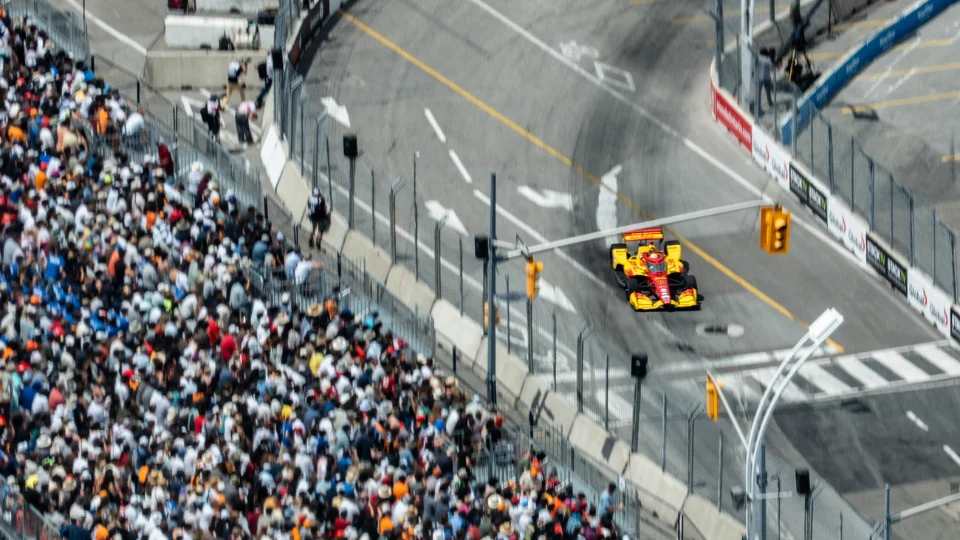
Markham’s first INDYCAR weekend did not begin normally. Friday running was cancelled, Saturday became a compressed learning session, and the clearest one-lap benchmark eventually came from Louis Foster’s breakthrough pole.
The biggest practice story at Markham was not a stopwatch number. It was the loss of an entire day of running at a circuit nobody had raced before.
Friday’s planned opening practice was cancelled because the new Streets of Markham venue was not fully ready from a safety-preparation standpoint, including unfinished tire-barrier work. That left teams with far less real-world data than expected before qualifying.
The full Saturday practice classification was not exposed in the official indexed source set available for this report, so this article does not invent a fastest-practice name or lap time. Instead, it separates confirmed session facts from the strongest verified qualifying and long-run clues that emerged once the cars finally ran.
What Were the Markham INDYCAR 2026 Practice Results?
Friday Practice 1 did not take place. The opening day of on-track running was cancelled while final circuit-safety work was completed. Saturday therefore became the first meaningful opportunity for teams to learn the new 2.19-mile circuit. The complete official Saturday practice classification was not exposed in searchable indexed text when this article was prepared, so no unofficial times are presented as facts.
| Session / signal | Verified status | What it tells us |
|---|---|---|
| Friday Practice 1 | Cancelled | No classification; teams lost the planned opening track-learning session. |
| Saturday practice | Running resumed | Critical setup and track-learning time before qualifying; complete indexed classification unavailable in the source set used here. |
| Fast 12 qualifying | Alex Palou fastest before wall contact | Ganassi had genuine one-lap pace despite the compressed weekend. |
| Fast Six / pole | Louis Foster P1 | RLL converted speed into the strongest verified qualifying benchmark. |
| Front row | Christian Lundgaard P2 | Arrow McLaren also found strong qualifying pace on the new surface. |
The official Markham event page lists Practice 1, Practice 2 and qualifying result links, but the searchable source interface did not expose the complete Saturday practice rows at publication time. Reusing another event’s times or guessing from qualifying would create a false result. The analysis below therefore uses only verifiable session facts and pace signals.
This distinction is important for SEO results pages. Search engines often return similarly titled practice pages from other 2026 INDYCAR rounds, and those numbers can look plausible if copied without checking the event.
For help reading official timing sheets, see our race timing guide and lap-counting explainer.
Why Markham Practice Was More Important Than a Normal Street-Course Session
Markham was already a difficult weekend before Friday was cancelled. The Streets of Markham was completely new to the championship, so teams had no previous race setup, tire-degradation curve or proven braking references.
INDYCAR’s 2026 road-and-street-course practice format gives all cars an opening 40-minute segment before the field is split into two 12-minute groups. The split format is designed to improve track availability and reduce traffic.
At Markham, however, the loss of Friday running increased the value of every Saturday lap.
There was no old setup notebook
At Long Beach, Detroit or St. Petersburg, engineers arrive with years of data. They know the rough ride-height range, typical tire pressures and where the car needs to be strongest.
At Markham, simulator work provided only a starting point. Real asphalt can differ from simulation in grip, bumps, road crown and surface patches.
That means the first proper runs are partly about validating whether the model was right.
Drivers had to learn braking references quickly
A street circuit rewards precision. The difference between a competitive braking point and wall contact can be only a few feet.
Drivers normally build confidence gradually. Losing Friday meant fewer laps to establish that margin before qualifying.
Our qualifying guide explains how practice preparation feeds directly into grid-setting.
Traffic became even more costly
When practice time is compressed, a driver cannot afford to lose several representative laps behind slower traffic.
Teams therefore had to manage release gaps carefully, particularly when drivers switched from setup runs to qualifying simulations.
This is also where slipstream effects can complicate analysis: a fast lap with a tow may not represent true solo qualifying speed.
What Did Markham Practice Reveal About Qualifying Pace?
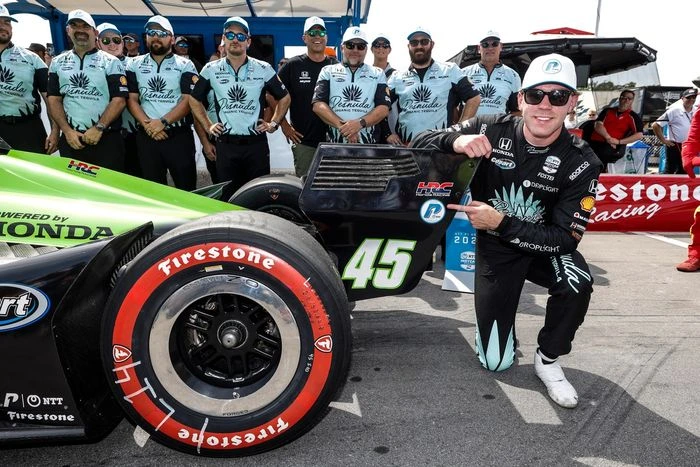
Louis Foster delivered the strongest verified qualifying result, earning his first INDYCAR pole and beating Christian Lundgaard by more than four tenths. Alex Palou had been fastest in the Fast 12 before touching the wall approaching Turn 10, which prevented him from fighting for pole.
Those results tell us more than a generic practice headline because qualifying forces teams to reveal their strongest low-fuel one-lap package.
Louis Foster and RLL: the clearest one-lap winner
Foster’s pole was significant for two reasons. First, it came at a new circuit where adaptation mattered. Second, he found enough margin to beat Lundgaard by more than 0.4 seconds in the final fight.
That is a meaningful gap in a modern INDYCAR qualifying session.
Foster’s result also matched his broader reputation for qualifying speed. His rookie campaign had already shown that he could produce fast laps even when race results did not always follow.
Christian Lundgaard: strong Arrow McLaren baseline
Lundgaard took the other front-row position. That indicated Arrow McLaren had also found a strong mechanical platform for the new circuit.
A street-course front row usually requires confidence under braking and predictable rear traction.
Lundgaard’s previous Toronto street-race win also made the result less surprising. The circuit was different, but the driving demands were familiar.
Alex Palou: pace without the final result
Palou was fastest in the Fast 12 before his contact with the wall.
That is exactly why analysts should separate pace from classification. A driver can have the speed to challenge for pole and still start far lower because of one mistake.
The contact caused a red flag and prevented Palou from reaching the final pole fight. His initial classification was 12th before a later grid adjustment moved him to 11th.
For more on why one error can reshape the grid, see our grid-position guide and pole-position explainer.
David Malukas and Kyle Kirkwood
Malukas qualified seventh, keeping Team Penske within striking distance of the front group.
Kirkwood, one of the strongest pre-event street-course picks, qualified 16th. That was a reminder that a new circuit can punish a driver even when the broader form profile looks favorable.
Qualifying pace is not simply a season-long ranking. It is a combination of car balance, tire preparation, traffic and driver execution on that specific day.
Which Driver Had the Best Long-Run Pace at Markham?
No trustworthy public stint-average dataset was available from the compressed Markham practice running, so naming one driver as the definitive long-run leader would be speculation. A valid long-run comparison needs multiple consecutive laps on known tire compounds and comparable fuel loads, not each driver’s single fastest practice lap.
This is one of the most common mistakes in practice analysis. The timing screen naturally highlights the quickest lap, but that number is usually a qualifying-style run.
Race pace is a different question.
What counts as a real long run?
A useful long run is normally a sequence of laps completed without a pit stop, red flag or heavy traffic interruption.
Analysts then remove obvious outliers such as cooldown laps, traffic laps and mistakes.
The remaining average gives a better picture of sustainable pace.
Fuel load changes the picture
A car with more fuel is heavier and slower.
Two drivers can therefore run identical lap times while actually having very different underlying pace if one is carrying much more fuel.
Because teams do not publish exact fuel loads during practice, long-run rankings always contain some uncertainty.
Tire compound matters
Firestone primary and alternate tires have different grip and degradation characteristics.
A short alternate run can look spectacular but may not survive a long race stint at the same pace.
A slightly slower primary run may be more valuable if the lap times remain stable.
Our grip guide and car-handling explainer cover why tire condition changes lap time.
Traffic distorts long-run averages
A driver stuck behind another car may lose time that has nothing to do with tire degradation.
On a street circuit, dirty air can also reduce front grip through faster corners.
Our downforce guide explains how aerodynamic load changes when a car follows closely.
Team-by-Team Pace Analysis After Markham Practice and Qualifying
Rahal Letterman Lanigan Racing
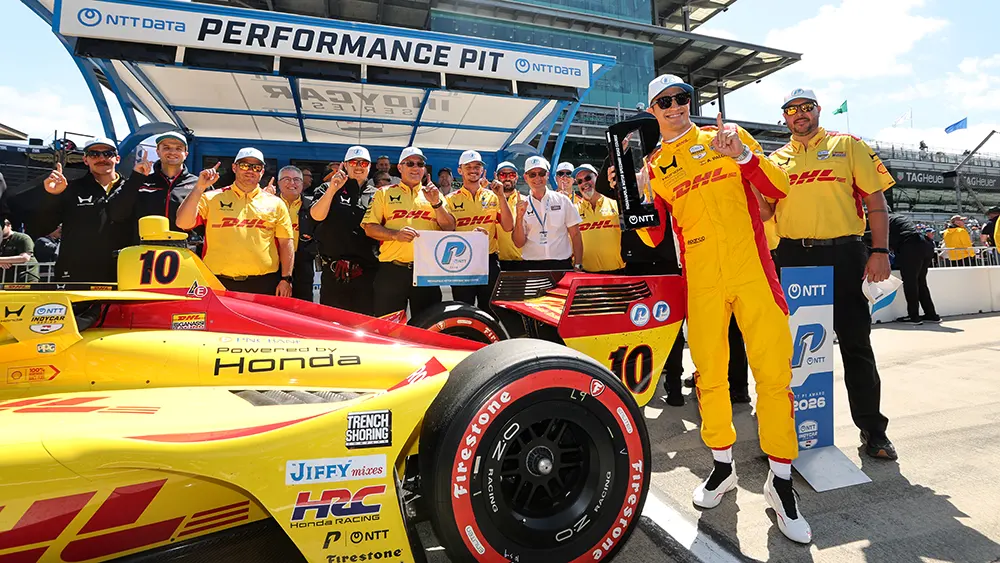
Foster’s pole made RLL the clearest winner of the one-lap comparison.
That does not automatically mean RLL had the best long-run car. Pole tells us the package could generate peak tire grip and give Foster enough confidence to attack.
On a new circuit, that is still a major achievement.
Arrow McLaren
Lundgaard’s second place showed the team had a strong qualifying package.
Arrow McLaren also had multiple cars to compare during the compressed practice program, which helps engineers separate driver-specific feedback from car-wide behavior.
That matters when there is little time to test major setup changes.
Chip Ganassi Racing
Palou’s Fast 12 benchmark suggested Ganassi was closer to pole pace than his final grid result showed.
The mistake at Turn 10 changed the classification, but it did not erase the underlying speed.
That is an important analytical distinction. Results show execution; sector pace and earlier rounds show potential.
For more context on Palou’s qualifying strength, see our Alex Palou qualifying coverage.
Team Penske
Malukas in seventh put Penske just outside the Fast Six.
That is close enough that small changes in tire preparation or track evolution could have shifted the result.
For long-run analysis, Penske’s real question was whether the car could maintain balance once tire temperatures rose over several laps.
Andretti Global
Kirkwood’s 16th-place qualifying result was one of the more surprising outcomes given his recent street-course record.
It reinforced how quickly a new track can overturn expectations.
A car that feels strong over a long sequence may still struggle to switch on the tire for one qualifying lap, and the reverse is also possible.
Biggest Takeaways and Surprises From Markham Practice
1. Losing Friday changed the entire weekend
The cancellation removed the first opportunity to test the new surface under realistic conditions.
Teams had to compress setup work, qualifying simulations and race-run learning into Saturday.
2. Foster converted adaptation into pole
The most impressive verified pace signal was Foster’s ability to build confidence quickly enough to take pole.
On a new circuit, that says as much about preparation and driver feedback as raw speed.
3. Palou remained quick even when the result looked poor
His Fast 12 pace showed why a final classification should not be read without context.
He had the speed to progress before a small wall contact changed the session.
4. Long-run rankings remained less certain than one-lap rankings
The compressed schedule reduced the amount of clean, comparable race-run data.
That makes any definitive “best long-run driver” claim weaker than the qualifying evidence.
5. A brand-new track rewarded setup confidence
Drivers who trusted the rear of the car under braking could push closer to the walls.
Those who lacked confidence had to leave margin, and margin costs time.
Our crash analysis guide explains why narrow street circuits punish small errors more severely.
How to Read Practice Pace Without Being Misled
Practice analysis is useful only when the lap context is understood.
Look at when the best lap was set
Street tracks evolve quickly as rubber builds. A lap set late in a session can benefit from a better surface.
That does not mean the earlier driver was slower in equal conditions.
Compare teammates
Multiple quick cars from one team provide stronger evidence than one standout lap.
If both cars improve together, the setup direction is probably working.
Separate qualifying simulations from race runs
A qualifying simulation usually involves low fuel and a carefully prepared tire.
A race run often starts slower because the car is heavier.
Comparing those two directly creates false conclusions.
Watch lap-to-lap drop-off
The first lap of a long run is not enough.
If the driver loses three or four tenths every lap, the headline time may hide poor tire life.
If the pace remains consistent, a slightly slower best lap can actually represent a stronger race car.
Check whether traffic affected the lap
Street circuits make passing in practice difficult because drivers are often running different programs.
A qualifying car catching a fuel-heavy long-run car can lose the entire lap.
This is why our timing guide emphasizes context rather than reading only the top line.
What Practice Suggested About Race Strategy
The limited running increased strategic uncertainty.
Teams had less information about tire degradation, fuel saving and how difficult it would be to pass.
Track position became more valuable
With uncertain passing zones, qualifying near the front was the safest way to control the opening stint.
Foster and Lundgaard therefore gained more than simply a good starting place. They gained strategic freedom.
See our pit-stop strategy guide.
Long-run uncertainty increased caution sensitivity
When teams do not know exactly how far a tire can be pushed, a yellow flag can make an aggressive strategy suddenly viable.
That is especially relevant on a street course where incidents are more likely than at a wide permanent road course.
Our Safety Car guide and flags guide explain the effect of neutralization.
The warmup became unusually valuable
Sunday warmup was not simply a final systems check.
After the lost Friday, teams could still use those laps to confirm race balance, tire temperatures and fuel-heavy handling.
That made warmup data more important than on a normal weekend.
Qualifying Pace vs. Long-Run Pace: The Markham Lesson
Markham offered a clear example of why these two concepts should not be mixed.
Foster’s pole is hard evidence of peak one-lap performance. Palou’s Fast 12 speed is evidence of potential one-lap performance before an error.
Neither automatically proves which car was best over 20 consecutive race laps.
Qualifying rewards peak grip
The driver needs the tire at its best, the fuel load low and the track clear.
One perfect lap can determine the entire grid.
Long runs reward balance
The car has to remain predictable as fuel burns off and the tires lose grip.
A setup that is nervous but fast for one lap can become exhausting over a full stint.
Race pace adds strategy
Race pace includes fuel saving, traffic, pit timing and caution periods.
That is why the fastest practice car does not always win.
For a broader explanation, see how car racing works and how racing championships are scored.
Markham INDYCAR 2026 Practice FAQs
Conclusion: Foster Won the One-Lap Battle, but Markham Practice Was About Adaptation
The first Markham INDYCAR weekend did not give teams the clean practice program they expected.
Friday’s cancellation removed the opening session at a circuit nobody had raced before. That increased the pressure on Saturday and made every clear lap more valuable.
The strongest verified one-lap signal came from Louis Foster. He took pole and beat Christian Lundgaard by more than four tenths, giving Rahal Letterman Lanigan Racing the clearest qualifying victory of the weekend.
Palou’s result needed more context. He was fastest in the Fast 12 before touching the wall, so his lower grid position did not reflect a lack of pace.
Long-run analysis was less certain. Without a complete public stint-average dataset, naming one driver as the definitive race-run leader would go beyond the available evidence.
That uncertainty is itself part of the Markham story. Teams entered the race with less data than they would normally have after a full street-course weekend.
The main lesson is simple: practice results are not just a leaderboard. At a new circuit, the more important questions are how quickly a driver learned the track, how stable the car remained over consecutive laps and whether the team converted that information into qualifying performance.
At Markham, Foster converted it best when the stopwatch mattered most.
Sources
- INDYCAR — Markham event page, circuit details and session schedule
- Ontario Honda Dealers Indy — published weekend schedule
- INDYCAR — 2026 road/street practice format update
- AS — Friday Markham running cancelled amid final circuit preparation
- AS — Markham qualifying: Foster pole, Lundgaard second, Palou Fast 12 pace and wall contact