Brickyard 400 2026 Practice Analysis: Passing Difficulty and Race Pace
Christopher Bell owned the fastest lap, Toyota owned the front of the speed chart, and Kyle Larson supplied the strongest long-run benchmark. The bigger Indianapolis lesson was that raw pace only mattered if a driver could keep it in traffic.
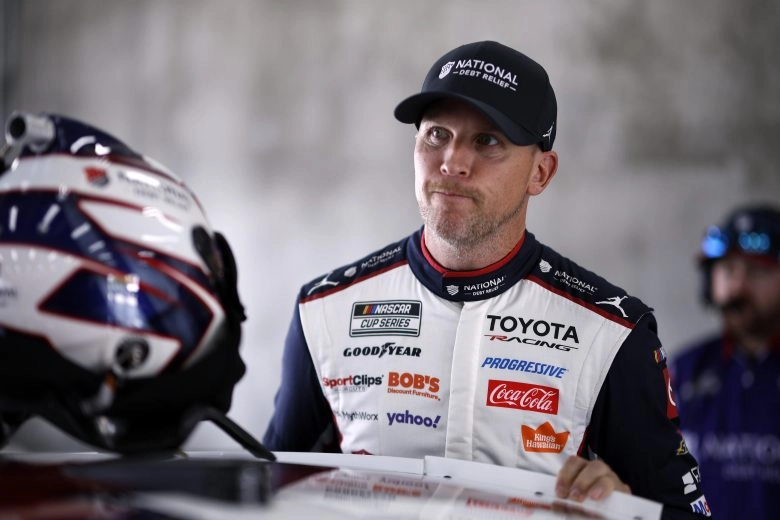
The Brickyard 400 2026 practice analysis starts with a simple headline: Christopher Bell was quickest over one lap, but Kyle Larson supplied the clearest long-run signal. Bell took the top spot with a 49.043-second lap at 183.512 mph. Meanwhile, Larson ranked sixth on single-lap speed yet led the reported 10-lap averages at 180.485 mph.
Those two numbers explain why Indianapolis practice had to be read in layers. The first layer was outright speed. The second was repeatability over a run. The third was whether a fast car could remain usable behind another car, because the 2.5-mile oval rewards clean air and punishes small losses at corner entry and exit.
Toyota swept the first five positions in the 50-minute session. John Hunter Nemechek followed Bell at 183.180 mph, then Ty Gibbs, Erik Jones and Denny Hamlin. Larson led Chevrolet in sixth, while Ryan Blaney was the best Ford in ninth. NASCAR and Indianapolis Motor Speedway both reported the Toyota sweep after Friday running.
What did Brickyard 400 practice reveal?
Practice showed two different forms of speed. Bell and Toyota controlled the headline single-lap chart, while Larson, Gibbs, Byron and Buescher rose to the front of the 10-lap averages. That suggested the race would reward cars that combined straight-line efficiency with stable corner balance over repeated laps.
Full Brickyard 400 Practice Top 10
The official speed chart was unusually concentrated at the front. The top eight were separated by only 0.242 second, and the first five positions belonged to Toyota. That is a tiny spread on a 2.5-mile lap, so traffic, track position and pit sequencing were always likely to amplify small differences in race conditions.
| Pos. | Driver | Car | Make | Best Lap | Best Speed | Laps |
|---|---|---|---|---|---|---|
| 1 | Christopher Bell | #20 | Toyota | 49.043 | 183.512 | 27 |
| 2 | John Hunter Nemechek | #42 | Toyota | 49.132 | 183.180 | 28 |
| 3 | Ty Gibbs | #54 | Toyota | 49.153 | 183.102 | 30 |
| 4 | Erik Jones | #43 | Toyota | 49.226 | 182.830 | 27 |
| 5 | Denny Hamlin | #11 | Toyota | 49.262 | 182.697 | 26 |
| 6 | Kyle Larson | #5 | Chevrolet | 49.279 | 182.634 | 36 |
| 7 | Carson Hocevar | #77 | Chevrolet | 49.281 | 182.626 | 30 |
| 8 | Tyler Reddick | #45 | Toyota | 49.285 | 182.611 | 26 |
| 9 | Ryan Blaney | #12 | Ford | 49.308 | 182.526 | 24 |
| 10 | Daniel Suárez | #7 | Chevrolet | 49.384 | 182.245 | 32 |
Bell’s advantage over Nemechek was 0.089 second. Gibbs sat another 0.021 second back, and Larson’s sixth-place lap was only 0.236 second from Bell. Therefore, practice did not show one runaway car. It showed several cars operating inside the same narrow performance window.
Christopher Bell Set the Benchmark, but the Number Needed Context
Bell’s 49.043-second lap was the fastest completed during Friday practice. He ran 27 laps, enough to evaluate more than a single qualifying-style burst. Still, the Indianapolis challenge is that a clean lap can look much better than a race lap spent following another car through the flat corners.
Bell’s speed mattered because it confirmed Joe Gibbs Racing arrived with a strong aerodynamic platform. Hamlin was fifth and Gibbs third. That gave JGR three cars inside the top five, while Legacy Motor Club placed Nemechek second and Jones fourth.
However, Bell himself had reason to stay cautious about reading too much into Friday. Practice success is not automatically race success. Tire phase, air temperature, rubber buildup, traffic and strategic positioning can shift the competitive order before the green flag.
Toyota Swept the Top Five: What That Really Meant
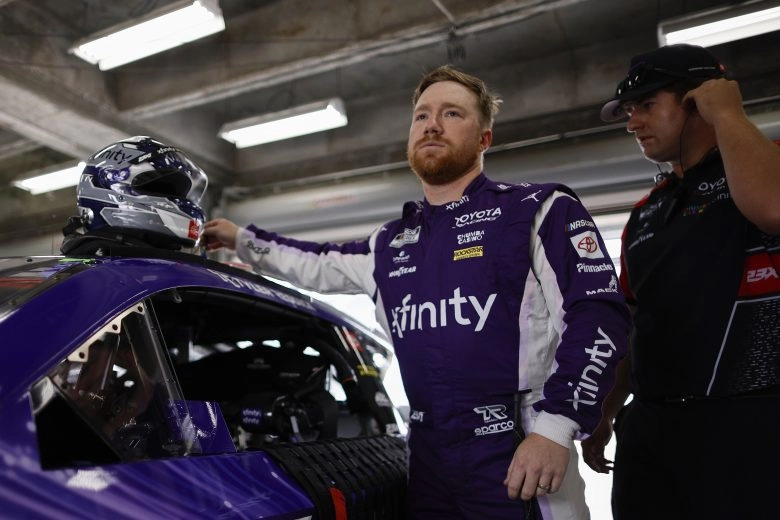
Toyota’s 1-2-3-4-5 sweep was the loudest manufacturer statement of Friday. Bell, Nemechek, Gibbs, Jones and Hamlin represented two organizations, not one. That detail mattered because it suggested the speed was broader than a single setup direction inside one team.
Joe Gibbs Racing brought the outright leader, third place and fifth place. Legacy Motor Club added second and fourth. NASCAR’s crew-chief preview later highlighted Legacy’s speed and pointed to the similarities between Indianapolis and Pocono, another flat, high-speed 2.5-mile track where that organization had been competitive.
Yet the 10-lap table made the picture less one-sided. Larson led the longer-run average. Byron was third and Buescher fourth. In other words, Toyota owned the first headline, but Chevrolet and Ford had enough sustained pace to complicate the race.
10-Lap Averages: The Stronger Race-Pace Signal
Single-lap speed answers one question: how fast can the car go at its best? A 10-lap average asks a more useful race question: how much speed remains after the driver repeatedly loads the tires, brakes, and aero platform through the same corners?
Reported 10-lap averages placed Larson first at 180.485 mph, Gibbs second at 180.359 mph and Byron third at 180.136 mph. Buescher was fourth at 180.128 mph. Hamlin completed the top five at 179.837 mph.
| Pos. | Driver | Make | 10-Lap Avg. Speed |
|---|---|---|---|
| 1 | Kyle Larson | Chevrolet | 180.485 |
| 2 | Ty Gibbs | Toyota | 180.359 |
| 3 | William Byron | Chevrolet | 180.136 |
| 4 | Chris Buescher | Ford | 180.128 |
| 5 | Denny Hamlin | Toyota | 179.837 |
| 6 | Ryan Blaney | Ford | 179.556 |
| 7 | Alex Bowman | Chevrolet | 179.388 |
| 8 | Ross Chastain | Chevrolet | 179.309 |
| 9 | Erik Jones | Toyota | 179.288 |
| 10 | Carson Hocevar | Chevrolet | 179.169 |
This table changes the practice interpretation. Larson was not the fastest driver for one lap, but he was the strongest over a measured sequence. Gibbs combined third-place single-lap speed with second-place 10-lap pace, making his Friday profile particularly complete.
Hamlin also appeared in both groups. He ranked fifth on the headline speed chart and fifth in the 10-lap averages. That type of balance often matters more than an isolated purple-sector-style lap at a track where a driver can spend long stretches managing traffic and aero balance.
Who had the best race pace in Brickyard practice?
Kyle Larson posted the fastest reported 10-lap average at 180.485 mph. Ty Gibbs followed at 180.359 mph, with William Byron at 180.136 mph and Chris Buescher at 180.128 mph. Bell led the single-lap chart, so the practice session produced different leaders for peak speed and sustained pace.
Why Passing Is So Difficult at Indianapolis
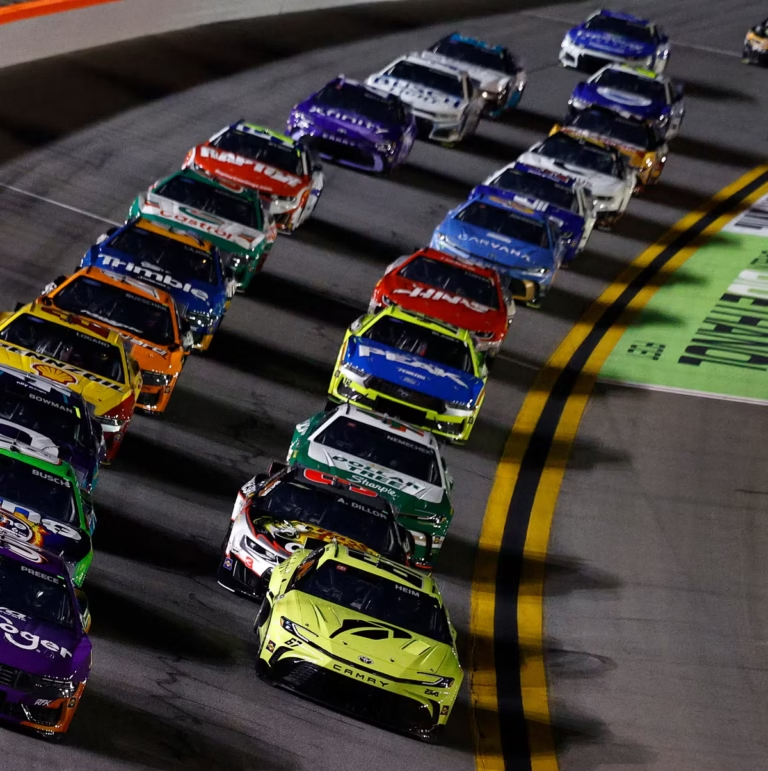
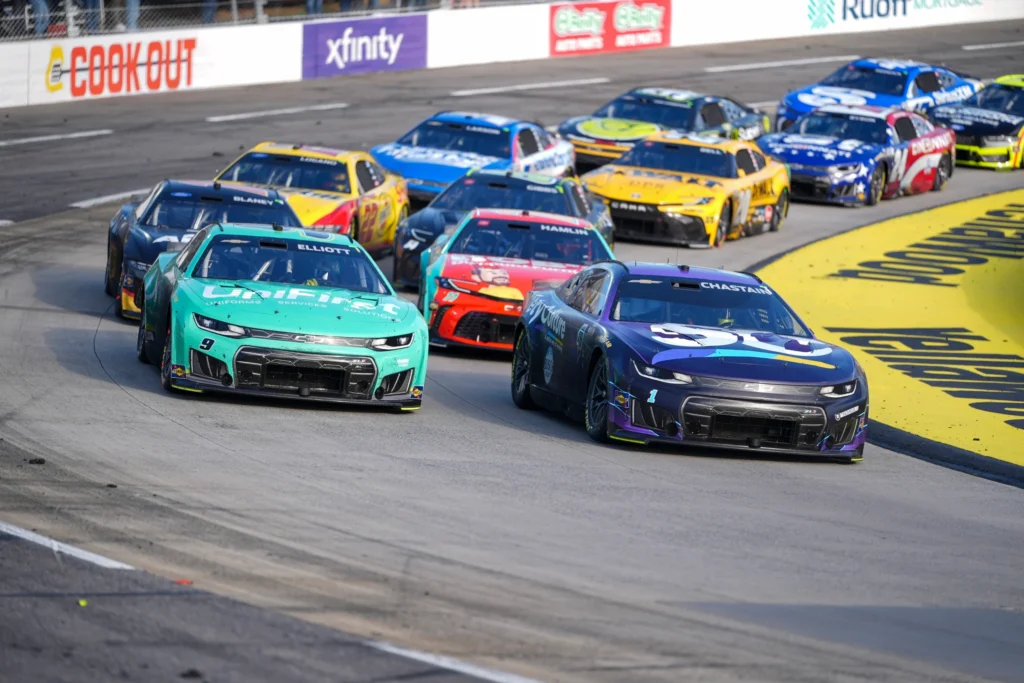
Indianapolis Motor Speedway is enormous, but the racing line can feel narrow in a stock car. The straights invite a draft and create closing speed. Then the corners demand precision because they are fast, relatively flat and unforgiving when a car loses front grip.
The following car reaches corner entry in disturbed air. That reduces aerodynamic load on the front of the car and can create understeer. A driver who loses the nose must lift earlier or wait longer before returning to throttle. Either response damages exit speed onto the next long straight.
That is the cruel Indianapolis cycle. The car behind needs a strong exit to complete the pass, yet the aero wake can make that strong exit harder to create. Consequently, clean air is valuable even when two cars have similar underlying pace.
The race later reinforced the practice lesson. Christopher Bell closed on Corey Heim during the final run, but Heim could use the turbulent wake behind his Toyota as part of the defense. Bell needed the leader to make a meaningful mistake because simply being close was not enough to guarantee a clean passing opportunity.
Passing equation, in practical terms
Draft on the straight + braking overlap + front grip in the corner + clean exit must all line up. Miss one part and the pass usually stalls. That is why a driver can be faster over a run yet remain trapped behind a slightly slower car.
Turn 1 Is the Obvious Passing Zone — and the Biggest Trap
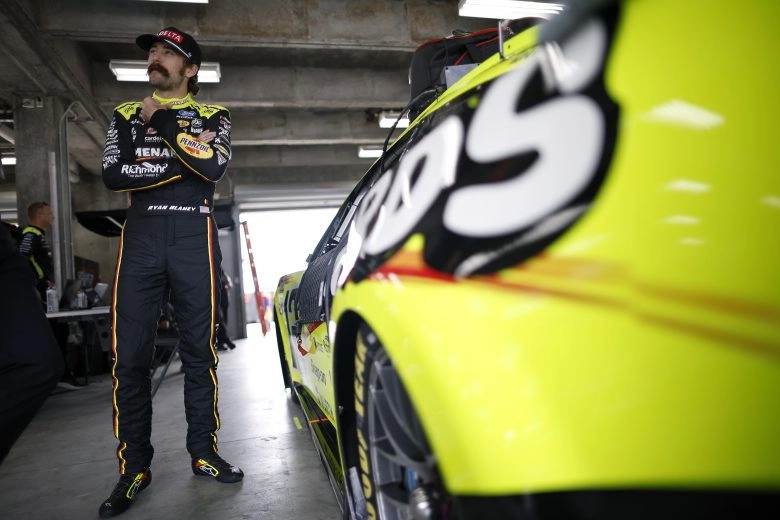
The frontstretch gives a pursuing driver the longest setup for a conventional pass. A tow can reduce the gap, and a late-braking attempt into Turn 1 can establish overlap. However, the corner does not offer generous banking to rescue an ambitious entry.
That makes Turn 1 both opportunity and risk. Bubba Wallace scraped the outside wall there during practice and had to go to the garage for right-side repairs. He returned with about 20 minutes remaining and ended the session 20th on the speed chart.
Wallace’s contact was a reminder that Indianapolis rewards tiny margins. A driver searching for one extra lane width or one extra fraction of throttle can quickly use up the available road. Therefore, race traffic increases the challenge because drivers must judge both their own grip and the line of the car beside them.
Clean Air, Dirty Air and the Practice-to-Race Translation
A clean practice lap allows the front tires to work with relatively undisturbed airflow. In traffic, the same setup may feel tighter. Teams therefore had to use Friday not only to chase lap time but to understand how sensitive each car became when it approached another car.
This is why crew chiefs talked about balancing straightaway speed, downforce and handling. More downforce can make the car more secure in a corner. More drag can make it harder to attack on the straight. Trimming drag helps top speed, but too much trimming can leave the car short of grip when it enters disturbed air.
Legacy Motor Club crew chief Justin Alexander described the task as finding the correct lift-to-drag sweet spot. His point captured the entire Indianapolis setup problem: a car needs enough efficiency to accelerate down the long straights and enough aerodynamic support to stay planted through the corners.
The Setup Compromise: Straight-Line Speed vs. Corner Grip
Low Drag
Helps terminal speed and makes drafting attacks stronger. However, an overly trimmed car can become nervous or tight when it loses clean air.
More Downforce
Supports entry and mid-corner grip. The cost is additional drag, which can reduce the closing rate on the long straights.
Balanced Platform
The race-friendly target. Teams wanted predictable corner behavior without giving away enough straight-line speed to make passing impossible.
Friday’s long session mattered because teams had enough time for repeated setup changes. NASCAR gave Cup teams 50 minutes and three sets of Goodyear tires for practice. That was a much richer data set than a brief shakedown where one run can dominate the entire impression.
The New Goodyear Right-Side Tire Added Another Variable
Goodyear debuted a new right-side Cup tire at Indianapolis for 2026 while retaining a left-side specification already familiar from other intermediate tracks. The combination followed an Indianapolis test involving Ross Chastain, Ryan Preece and John Hunter Nemechek.
Goodyear’s stated objective included building a tire that could create meaningful falloff if a driver abused the equipment. Ryan Blaney noted before the weekend that tire falloff can reward drivers who manage a run rather than attacking every lap at maximum load.
Practice therefore gave teams a first public race-weekend look at heat, wear and balance with the new right-side construction. Larson’s strong 10-lap average suggested the No. 5 could sustain pace. Gibbs also looked strong over multiple laps. Meanwhile, Preece suffered a left-rear tire issue with roughly 22 minutes remaining, adding another item for teams to study.
Practice Incidents: Wallace, Cindric and Preece
Bubba Wallace — Turn 1 wall contact
The defending Brickyard winner scraped the outside wall early. His 23XI Racing crew repaired right-side damage, and Wallace returned to finish 20th on the practice chart.
Austin Cindric — electrical trouble
The No. 2 Team Penske Ford lost power and spent time in the garage. Cindric returned, then went back to the garage with another apparent electrical problem near the end.
Ryan Preece — left-rear tire down
Preece slowed after the left-rear went down with around 22 minutes left. The incident came during a weekend when Goodyear had introduced a new right-side tire, although NASCAR reported Preece’s problem on the left rear.
These incidents did not stop the session. The broader practice remained valuable because teams continued accumulating laps and comparing balance changes without a long red-flag interruption.
Kyle Larson: The Most Important Non-Toyota Practice Story
Larson’s sixth-place single lap was strong enough on its own. The more important figure was his 36 completed laps, the most among the official top 10, paired with the fastest reported 10-lap average. That combination suggested the Hendrick Motorsports Chevrolet was being evaluated as a race car, not merely a qualifying car.
Larson also had recent Indianapolis proof. He won the 2024 Brickyard 400 after the Cup Series returned to the oval. That history did not guarantee another victory, but it gave his team a relevant baseline for what a competitive Next Gen package should feel like over a long Indianapolis run.
In the race, Larson’s day ended after a left-rear tire failure and crash near the end of Stage 1. That result does not invalidate the practice pace. It demonstrates the difference between having speed and surviving the operational risks of 400 miles.
Ty Gibbs: The Most Complete Toyota Practice Profile
Bell was first on one-lap speed, but Gibbs arguably had the most balanced Toyota data. He ranked third on the speed chart at 183.102 mph and second in the 10-lap averages at 180.359 mph. That is exactly the combination teams seek when the race requires both restarts and sustained green-flag pace.
Gibbs later showed that the practice strength was real by leading 46 laps in the Brickyard 400 and winning Stage 1. He did not win the race, but his Sunday performance validated Friday’s suggestion that the No. 54 had genuine race pace.
Denny Hamlin and Erik Jones: Speed That Carried Across Runs
Hamlin ended practice fifth at 182.697 mph and ranked fifth in the 10-lap averages. That consistency made him one of the clearest contenders from the Friday data. He later led 14 laps and spent late portions of the race in position to fight for the victory.
Jones was fourth on the single-lap chart and ninth in the 10-lap averages. His performance also reinforced Legacy Motor Club’s recent strength on flat, high-speed layouts. Nemechek’s second-place single lap made the organization’s Friday pace impossible to dismiss.
Corey Heim: Practice Did Not Predict the Winner
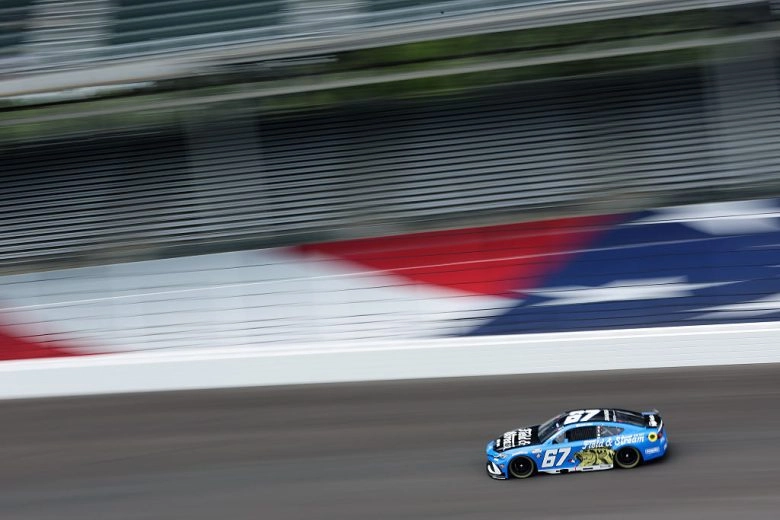
One of the most useful lessons from the session came from the eventual winner. Corey Heim was outside the headline top 10 in practice, yet he won the Brickyard 400 two days later. That gap between Friday ranking and Sunday outcome is exactly why race pace analysis cannot stop at a single leaderboard.
Heim’s victory depended on more than the fastest setup. Strategy, pit timing, restarts, clean-air management and execution all mattered. Over the final 34-lap green run, he managed the aerodynamic wake behind his car while Bell and Joey Logano tried to close.
Therefore, practice identified competitive platforms, not a guaranteed finishing order. Indianapolis magnifies that distinction because passing is difficult enough for strategy to alter the value of raw lap time.
What Practice Got Right About the Race
Toyota Strength
Toyota swept the practice top five. On Sunday, Heim won in a Toyota, Bell finished second, Briscoe fourth and Hamlin fifth.
Track Position
The race repeatedly rewarded cars that controlled clean air. The final restart moved Heim into the lead, and passing him under green proved extremely difficult.
Long-Run Importance
The final 34 laps ran under green. That placed a premium on maintaining balance and minimizing mistakes over a sustained run rather than producing one perfect lap.
What Practice Could Not Tell Us
Practice could not forecast the exact caution pattern. It could not predict Larson’s tire failure, the later incidents, or the fuel and pit-road decisions that reshuffled track position. It also could not perfectly reproduce race-day temperatures and the changing balance as rubber accumulated.
Most importantly, practice could not simulate every traffic condition. Drivers can follow another car during a session, but the density of a 39-car race field creates far more complex aero interactions. A car that looks neutral in a controlled practice run may become tight when several cars stack up ahead.
Why the Practice Analysis Matters Beyond One Race
Indianapolis offers a useful case study in modern NASCAR analysis. Raw speed is visible and easy to rank. Race pace requires context. Passing difficulty requires even more context because the fastest car does not always control where it runs on the track.
A better reading process starts with single-lap speed, then checks long-run averages, lap count, manufacturer clustering, incidents and technical comments. Finally, it asks how the track rewards or punishes those strengths. At Indianapolis, the answer repeatedly comes back to aerodynamic efficiency, clean air and execution.
Why did practice make track position look so important?
The front of the field was tightly packed on outright speed, which meant small aerodynamic and traffic effects could decide whether a car completed a pass. With only 0.242 second separating first through eighth in practice, a driver often needed clean air, a restart opportunity or a pit-cycle advantage to convert similar pace into track position.
Five Practice Takeaways for Race-Pace Analysis
- Bell owned the fastest lap. His 183.512 mph benchmark established Toyota as the Friday reference.
- Larson owned the strongest 10-lap average. His 180.485 mph figure made the No. 5 the clearest sustained-pace benchmark.
- Toyota had depth. JGR and Legacy Motor Club combined to sweep the top five, proving the speed was not isolated to one team.
- Passing difficulty increased the value of clean air. Similar lap times meant track position could matter more than a tiny underlying pace advantage.
- Practice was informative, not predictive. Heim won despite not topping Friday, proving strategy and execution remained decisive.
Related World of Speed Reading
Frequently Asked Questions
Who was fastest in 2026 Brickyard 400 practice?
Christopher Bell was fastest in Friday practice at Indianapolis Motor Speedway. His No. 20 Joe Gibbs Racing Toyota ran 49.043 seconds at 183.512 mph during the 50-minute session.
Who had the best 10-lap race pace in Brickyard practice?
Kyle Larson posted the quickest reported 10-lap average at 180.485 mph. Ty Gibbs was next at 180.359 mph, followed by William Byron at 180.136 mph and Chris Buescher at 180.128 mph.
Why is passing difficult at Indianapolis Motor Speedway?
Indianapolis combines long straights with fast, relatively flat corners. Drivers need a clean corner entry and strong exit, while aerodynamic wake reduces front grip in traffic. That makes track position, clean air and restart execution especially valuable.
What did the new Goodyear tire change for the 2026 Brickyard 400?
Goodyear introduced a new right-side Cup tire for Indianapolis while keeping an established left-side specification. Teams had three practice sets, giving them enough running to evaluate grip, heat and falloff before qualifying and the 400-mile race.
Conclusion
The 2026 Brickyard practice session delivered a useful split-screen picture. Christopher Bell and Toyota supplied the peak speed, while Kyle Larson supplied the strongest 10-lap average. Gibbs, Hamlin, Byron, Buescher and others showed enough sustained pace to keep the competitive window wide.
The more important lesson was structural. Indianapolis does not reward speed in isolation. The car must be efficient on the straights, stable through the flat corners, manageable in traffic and capable of protecting tire performance over a run. Even then, a driver still needs track position.
That is why the Brickyard 400 2026 practice analysis points directly to passing difficulty and race pace. Bell’s 183.512 mph lap was the headline, but the eventual race confirmed the deeper message. Clean air, long-run balance and execution could turn a car that was merely competitive on Friday into the car everyone had to chase on Sunday.