North Wilkesboro NASCAR 2026 Preview: Short-Track Favorites & Predictions
Christopher Bell brought the best long-run practice pace, Ryan Blaney inherited the pole, and Denny Hamlin led NASCAR’s official projection for a historic 450-lap points race.
This North Wilkesboro NASCAR 2026 preview is built from the information available after Saturday practice, inspection and the rain-canceled qualifying session. It treats the Window World 450 as a pre-race event and does not use the eventual race result to reshape the predictions.
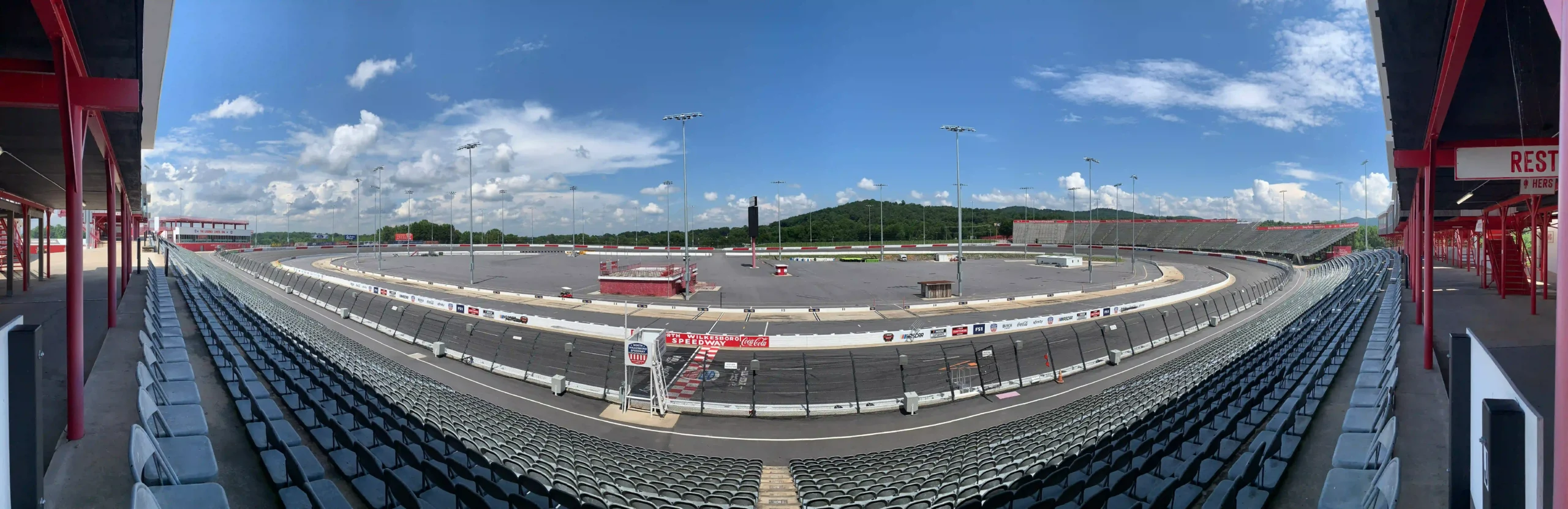
The Cup Series returned for North Wilkesboro Speedway’s first points-paying race since 1996. The 450-lap distance was far longer than the three All-Star exhibitions held after the track’s revival.
Bell entered Sunday as the strongest practice-based favorite. He led the session at 123.477 mph and topped every measured average from 10 through 30 laps. However, Hamlin, Blaney, Larson, Byron and Logano each offered a different path to victory.
Christopher Bell was the editorial pick. He started third, led overall practice and controlled the major long-run averages. Hamlin and Blaney completed the predicted top three.
Window World 450 Race Details
| Item | Official information | Why it mattered |
|---|---|---|
| Race | Window World 450 | First points-paying Cup race at the track since 1996 |
| Date and time | Sunday, July 19, 2026 · 7 p.m. ET | Night conditions followed a very hot afternoon |
| Television | TNT Sports, truTV and HBO Max | National U.S. coverage |
| Radio | PRN and SiriusXM NASCAR Radio | Flag-to-flag audio coverage |
| Distance | 450 laps · 281.25 miles | A full marathon rather than an All-Star sprint |
| Stages | 80 · 265 · 450 | The 185-lap second stage created a long strategic middle |
| Race tires | Eight new sets, plus transferred qualifying set | Tire use had to cover a long event with expected falloff |
| Wet-weather tires | Four sets available | Rain affected Saturday, keeping weather procedures relevant |
The start time placed the race in a changing temperature window. Teams expected the surface to lose heat as the event moved deeper under the lights.
That transition could help a car that felt slightly tight or loose during the first stage. It could also punish a crew chief who adjusted too aggressively for early conditions.
The stage layout was unusual. Stage 1 ended at Lap 80, but Stage 2 stretched to Lap 265. Consequently, the middle portion required more than simple caution-to-caution sprint strategy.
The race purse was listed at $11,233,037. That figure reflected the event’s return as a full points race rather than a limited-field exhibition.
Ten total dry tire sets were available for the weekend. One was assigned to practice, one was intended for qualifying and transferred to the race, and eight were new race sets.
This article reflects the official lineup and practice information available Saturday night before the Window World 450.
Why the 2026 North Wilkesboro Race Was Historic
North Wilkesboro Speedway was one of NASCAR’s foundational venues. The Cup Series raced there from the sport’s earliest years through September 1996.
Jeff Gordon won that final points race, leading 207 of 400 laps. The track then disappeared from the Cup schedule for nearly three decades.
Its modern revival began with the 2023 All-Star Race. North Wilkesboro hosted the exhibition again in 2024 and 2025 before receiving a full points date for 2026.
The distinction was important. An All-Star field is shorter, carries no regular-season points and uses a compact format. The Window World 450 brought 37 cars, stage points, playoff pressure and a record 450-lap distance.
Jeff Gordon won
The four-time champion led more than half the race.
Three All-Star events
The exhibitions proved the renovated facility could support Cup racing.
Points and stages
The historic oval regained a regular Cup Series date.
The track still rewards old-school skills
The modern car is radically different from its 1996 predecessor. Yet the racing problem remains familiar: protect the tires, rotate the center and keep the nose alive in traffic.
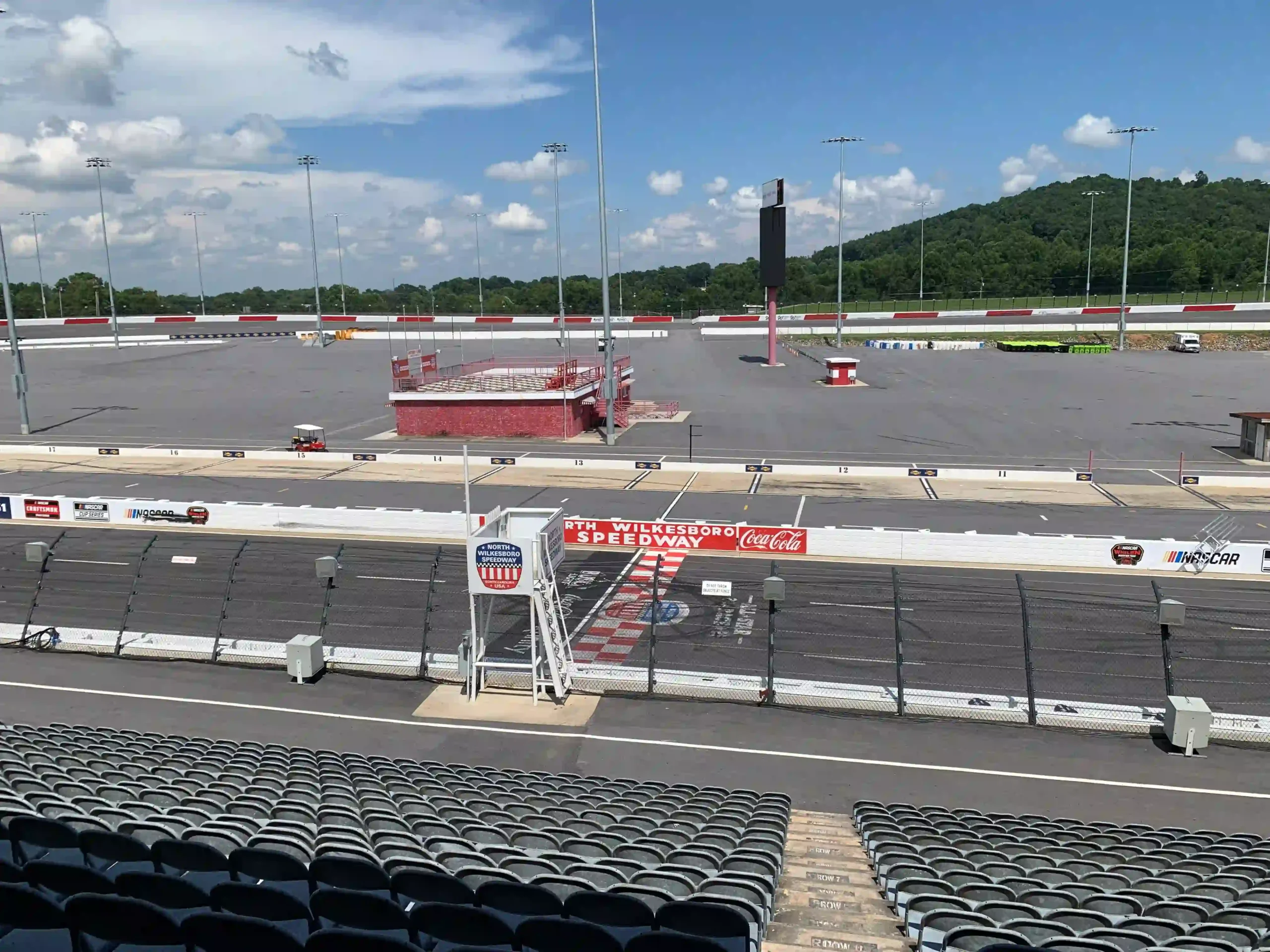
North Wilkesboro’s shape places different demands on each end of the car. Drivers cannot solve the track with one corner entry or one throttle trace.
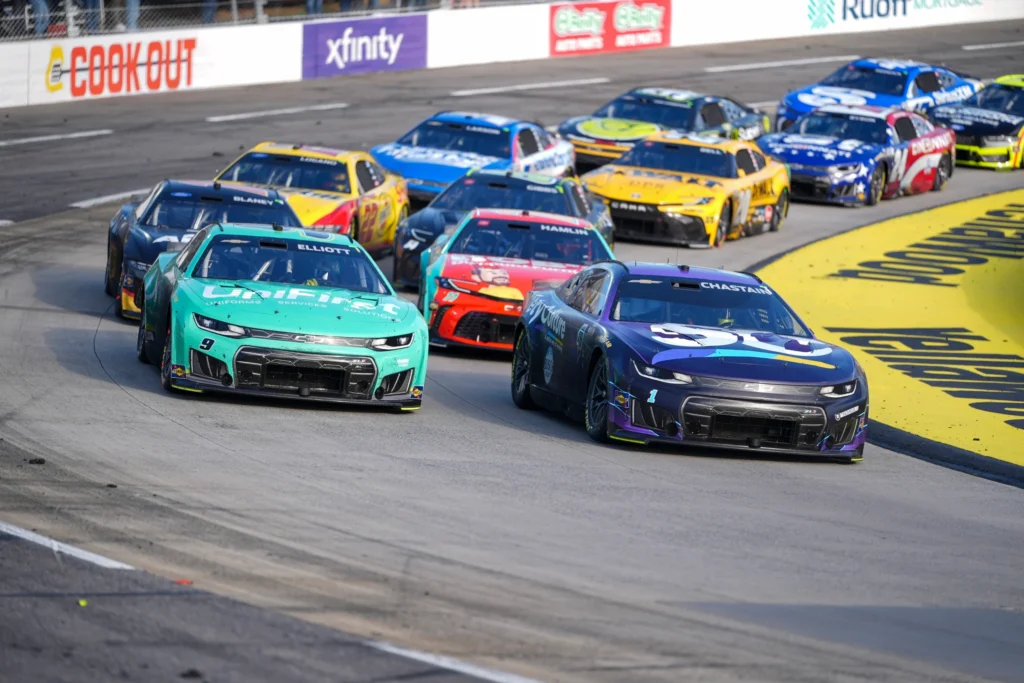
That mismatch encourages passing attempts when one driver protects the exit and another attacks the entry. It also creates side-by-side racing that can last several corners.
Track position still matters because the lap is so short. A leader can reach traffic quickly, while a mid-pack car may lose valuable time behind two side-by-side competitors.
The race’s return also restored a traditional championship pressure point. North Wilkesboro often influenced title battles during its first era, and the 2026 date arrived with six regular-season races remaining.
North Wilkesboro Starting Lineup
Saturday storms washed out Cup qualifying. NASCAR then set the lineup through its rule-book procedure.
Blaney inherited the pole after winning the previous race at EchoPark Speedway. Gibbs joined him on the front row, while Bell started directly behind them in third.
| Start | Car | Driver | Team / make | Pre-race note |
|---|---|---|---|---|
| 1 | 12 | Ryan Blaney | Team Penske Ford | Pole set by NASCAR rule book |
| 2 | 54 | Ty Gibbs | Joe Gibbs Racing Toyota | Front row |
| 3 | 20 | Christopher Bell | Joe Gibbs Racing Toyota | Practice leader |
| 4 | 77 | Carson Hocevar | Spire Motorsports Chevrolet | Prime early track position |
| 5 | 45 | Tyler Reddick | 23XI Racing Toyota | Second in points entering weekend |
| 6 | 43 | Erik Jones | Legacy Motor Club Toyota | Held final Chase position |
| 7 | 11 | Denny Hamlin | Joe Gibbs Racing Toyota | Racing Insights projected winner |
| 8 | 97 | Shane van Gisbergen | Trackhouse Racing Chevrolet | Recent oval momentum |
| 9 | 17 | Chris Buescher | RFK Racing Ford | Strong starting position |
| 10 | 9 | Chase Elliott | Hendrick Motorsports Chevrolet | In-Season Challenge semifinalist |
| 11 | 22 | Joey Logano | Team Penske Ford | 2024 All-Star winner |
| 12 | 3 | Austin Dillon | Richard Childress Racing Chevrolet | Short-track upside |
| 13 | 1 | Ross Chastain | Trackhouse Racing Chevrolet | Rear start and pass-through penalty |
| 14 | 2 | Austin Cindric | Team Penske Ford | Mid-pack launch |
| 15 | 24 | William Byron | Hendrick Motorsports Chevrolet | Fourth in official projection |
| 16 | 71 | Michael McDowell | Spire Motorsports Chevrolet | Strategy value |
| 17 | 7 | Daniel Suárez | Spire Motorsports Chevrolet | January test experience |
| 18 | 34 | Todd Gilliland | Front Row Motorsports Ford | In-Season Challenge semifinalist |
| 19 | 42 | John Hunter Nemechek | Legacy Motor Club Toyota | Needs clean Stage 1 |
| 20 | 41 | Cole Custer | Haas Factory Team Ford | Long-run opportunity |
Blaney’s pole created a clean-air advantage
North Wilkesboro makes track position valuable because the field reaches traffic quickly. Starting first allowed Blaney to control the initial lane choice and avoid early mid-pack contact.
However, pole position did not guarantee long-run control. Bell’s practice averages suggested the No. 20 Toyota could pressure the No. 12 after tire wear developed.
Larson became the major comeback candidate
Larson started 27th despite showing competitive long-run pace. Therefore, he had one of the largest differences between expected speed and grid position.
That made Larson attractive for fantasy formats that reward place differential. It also reduced his chances of earning early stage points.
The No. 5 needed a clean opening 80 laps. Contact or an untimely caution could trap Larson deeper in traffic, while a steady advance would preserve a realistic winning route.
Chastain faced the hardest opening sequence
Chastain was listed 13th, but three failed inspection attempts required a rear-of-field start and an opening pass-through penalty.
His five-lap average was the best in practice. Even so, losing a lap at the beginning of a short-track race transformed him from a contender into a recovery story.
A quick caution could help Chastain regain contact with the lead lap. A long green run would make the penalty far more expensive.
Practice Speeds Changed the Favorite List
| Rank | Driver | Best speed | Practice takeaway |
|---|---|---|---|
| 1 | Christopher Bell | 123.477 mph | Led 10-, 15-, 20-, 25- and 30-lap averages |
| 2 | Denny Hamlin | 123.382 mph | Fast single-lap speed and seventh start |
| 3 | Ross Chastain | 123.065 mph | Led five-lap average; penalty changed outlook |
| 4 | William Byron | 122.816 mph | Strong speed from 15th starting position |
| 5 | Chase Elliott | 122.809 mph | Top-five practice speed, starts 10th |
| 6 | Ty Gibbs | 122.803 mph | Starts outside front row |
| 7 | Kyle Larson | 122.762 mph | Long-run threat from 27th |
| 8 | Josh Berry | 122.749 mph | Short-track specialist starting 28th |
| 9 | Joey Logano | 122.622 mph | Starts 11th with playoff urgency |
| 10 | Chris Buescher | 122.522 mph | Starts ninth with track-position value |
Bell had the strongest complete profile
Bell led the overall board at 123.477 mph. More importantly, he ranked first across the 10-, 15-, 20-, 25- and 30-lap averages.
That pattern matters more than one quick lap in a 450-lap race. It suggests the car maintained balance as the tire aged and the fuel load changed.
Bell also carried recent track evidence. He won the 2025 All-Star Race, so the practice performance was not an isolated result at an unfamiliar venue.
Hamlin combined speed with manageable track position
Hamlin was second overall at 123.382 mph and started seventh. He did not need a risky early strategy to reach the leaders.
NASCAR’s Racing Insights projection placed him first. The combination of projection, experience and practice speed made Hamlin the safest alternative to Bell.
Hamlin entered as the points leader, 24 ahead of Reddick. That position allowed the No. 11 team to pursue stage points without treating the night as a must-win gamble.
Larson’s speed created a strategic dilemma
Larson ran seventh overall and stayed close to Bell on longer averages. Yet the No. 5 started 27th because qualifying was canceled.
Hendrick Motorsports could chase stage points through an aggressive early move. Alternatively, the team could protect the car and build position over the full distance.
The second option looked safer. The event’s 450 laps offered time to recover, while early contact could remove the long-run advantage before it mattered.
Logano’s practice supported his playoff urgency
Logano ranked ninth in practice and started 11th. He entered the race eight points below Jones for the final Chase position.
The 2024 All-Star winner already understood the track’s restart rhythm. As a result, his profile looked stronger than a normal mid-pack playoff-bubble entry.
Bell was not merely fastest for one lap. He was fastest after the tires had been worked, which is the strongest pre-race signal available at a 450-lap short track.
North Wilkesboro Short-Track Favorites
| Driver | Car | Starting spot | Strongest evidence | Prediction tier |
|---|---|---|---|---|
| Christopher Bell | No. 20 Toyota | Starts 3rd | Practice leader and best long-run averages | Primary winner pick |
| Denny Hamlin | No. 11 Toyota | Starts 7th | Official Racing Insights projected winner | Top-three |
| Ryan Blaney | No. 12 Ford | Starts 1st | Pole, recent winner and short-track strength | Top-three |
| Kyle Larson | No. 5 Chevrolet | Starts 27th | Close to Bell on long-run pace | Top-five upside |
| William Byron | No. 24 Chevrolet | Starts 15th | Fourth in practice and projection | Top-five upside |
| Joey Logano | No. 22 Ford | Starts 11th | 2024 All-Star winner; playoff urgency | Top-10 / win upside |
1. Christopher Bell — the long-run favorite
Bell won the 2025 All-Star Race at North Wilkesboro. The 2026 practice data then showed that his track-specific strength had carried into the points-race weekend.
He also started third. Therefore, the No. 20 could collect early stage points without spending the opening stint fighting through traffic.
The main risk was restart aggression. Bell needed to balance winning the first 20 laps of a run against protecting the car for the final 20.
2. Denny Hamlin — the projection favorite
Racing Insights selected Hamlin as the projected winner. He entered as the points leader and had a 24-point advantage over Reddick.
Hamlin started seventh and ranked second in practice. That profile offered less volatility than Larson’s recovery assignment or Chastain’s penalty.
His best route was a patient first stage, followed by control of the middle stage through clean pit work.
3. Ryan Blaney — the pole and momentum favorite
Blaney arrived after winning at EchoPark and leading 171 laps. The rule-book lineup then placed him first.
He also carried six short-track victories and faced Bell in the In-Season Challenge semifinal. The battle gave both drivers an added reason to protect track position.
Blaney’s concern was Bell’s longer-run practice pace. The No. 12 needed short-run speed and mistake-free stops to keep the Toyota behind.
4. Kyle Larson — the high-ceiling recovery pick
Larson’s 27th starting position created risk, but his long-run pace kept him among the serious favorites.
He had run well in each North Wilkesboro All-Star appearance. His ability to move the car across different lanes could become more useful as rubber built.
The first 80 laps were crucial. A clean climb into the top 15 would preserve a realistic path to the win.
5. William Byron — the balanced Hendrick option
Byron was fourth in practice and fourth in the official projection. He started 15th, a manageable position for a full-distance race.
Unlike Larson, he did not need to pass half the field before the first stage ended. Unlike Bell, he carried less expectation and could let strategy create the opportunity.
6. Joey Logano — the pressure pick
Logano won the 2024 All-Star Race from the pole and entered with six straight short-track top 10s.
He also had urgent playoff motivation. A strong points night could move him ahead of Jones, while a victory would remove the bubble calculation.
Window World 450 Predictions
NASCAR Racing Insights
The official projection ranked Hamlin first, followed by Blaney, Bell, Byron and Larson.
Practice-led selection
Bell’s full long-run profile and third-place start outweighed Hamlin’s model edge.
Official projected top 15
| Projected finish | Driver |
|---|---|
| 1 | Denny Hamlin |
| 2 | Ryan Blaney |
| 3 | Christopher Bell |
| 4 | William Byron |
| 5 | Kyle Larson |
| 6 | Joey Logano |
| 7 | Chase Elliott |
| 8 | Ty Gibbs |
| 9 | Tyler Reddick |
| 10 | Chase Briscoe |
| 11 | Chris Buescher |
| 12 | Carson Hocevar |
| 13 | Ross Chastain |
| 14 | Austin Cindric |
| 15 | Alex Bowman |
World of Speed predicted top 10
| Predicted finish | Driver | Role | Reason |
|---|---|---|---|
| 1 | Christopher Bell | Winner pick | Best long-run practice profile; starts third |
| 2 | Denny Hamlin | Top-three pick | Official model favorite; starts seventh |
| 3 | Ryan Blaney | Top-three pick | Pole position and recent momentum |
| 4 | Kyle Larson | Comeback pick | Strong long-run pace, but starts 27th |
| 5 | William Byron | Top-five pick | Fourth in practice and official projection |
| 6 | Joey Logano | Value contender | 2024 All-Star winner; strong short-track trend |
| 7 | Ty Gibbs | Track-position pick | Front-row start and recent consistency |
| 8 | Chase Elliott | Steady top-10 pick | Starts 10th; solid track history |
| 9 | Chris Buescher | Quiet value | Starts ninth and avoids major position deficit |
| 10 | Chase Briscoe | Place-differential pick | Officially projected 10th from 30th |
Why Bell edged Hamlin in the final pick
Hamlin owned the strongest model result. However, Bell led every major long-run average during the only Cup practice.
That difference matters at North Wilkesboro because the race was longer than any modern Cup event held at the revived track. The winning car needed to repeat speed across multiple tire cycles.
Bell also began four positions ahead of Hamlin. Therefore, he had a better chance to control Stage 1 and select favorable pit sequencing.
Why Blaney remained in the top three
The pole offered immediate control. Blaney could choose the preferred lane, manage pace and avoid the mid-pack restarts most likely to damage the softer nose.
His recent EchoPark victory also demonstrated strong execution under pressure. Even without Bell’s long-run numbers, the No. 12 had enough advantages to remain a podium pick.
Why Larson stayed fourth despite starting 27th
Larson’s placement was a ceiling prediction rather than a safe prediction. Passing 20 cars at a tight short track always introduces contact risk.
Still, his pace suggested a top-five car. Over 450 laps, a well-timed caution and clean pit stops could erase much of the starting deficit.
Why the prediction did not simply copy the official model
Racing Insights offered the strongest broad statistical baseline. Practice supplied the newest track-specific evidence.
The editorial forecast combined both. Hamlin remained second because the model, practice and starting position all supported him, while Bell moved to first because of the unusually complete long-run data.
Christopher Bell over Denny Hamlin and Ryan Blaney. The pick is based on verified Saturday practice pace, starting position and recent North Wilkesboro performance. It is analysis, not a guaranteed result.
North Wilkesboro Sleepers and Value Drivers
| Driver | Start | Sleeper case |
|---|---|---|
| Chase Briscoe | 30th | Official projection placed him 10th, creating major place-differential potential. |
| Ryan Preece | 21st | Short-track background and three top 10s in the previous six short-track races. |
| Josh Berry | 28th | Eighth in practice and comfortable in traffic-heavy short-track races. |
| Carson Hocevar | 4th | Excellent starting position can convert into early stage points and clean air. |
| Chris Buescher | 9th | Balanced choice with manageable track position and RFK short-track form. |
Briscoe offered the largest clean place-differential case
Briscoe started 30th but ranked 10th in the official projection. That 20-position gap was the clearest fantasy value among drivers without a known opening penalty.
The concern was Stage 1. An early caution could trap the No. 19 in traffic before the car’s longer-run pace became useful.
Preece fit the track better than his summer form
Preece had endured a difficult summer. Nevertheless, his short-track background and Bowman Gray victory made North Wilkesboro a logical rebound venue.
Starting 21st gave him enough runway for place differential without creating Larson-level traffic exposure.
Berry’s practice speed supported an aggressive value pick
Berry ranked eighth in practice. He started 28th, which separated him from the clean-air drivers but created substantial upside.
His short-track experience should help in brake management and side-by-side traffic. The challenge was earning track position before pit strategy became defensive.
Hocevar was a sleeper hiding near the front
Hocevar started fourth. That position allowed him to collect stage points even without a top-five long-run car.
The No. 77 needed to avoid overusing the front bumper. A damaged nose or radiator would erase the advantage quickly.
Buescher offered quiet lineup stability
Buescher began ninth and ranked 10th in practice. He lacked Bell’s headline pace, but he also avoided the large recovery burden facing Larson, Berry and Briscoe.
A clean top-10 run would make him valuable in conservative fantasy builds and driver matchups.
What Would Decide the North Wilkesboro Race?
Long-run mechanical grip
The mid-July heat reduced available grip during the day. Although the race began in the evening, the track would not instantly become cool.
Teams needed rear grip without creating a car that pushed the right-front tire. Too much front security could make passing impossible, while too much rotation could destroy rear drive.
Mechanical grip mattered more than an aerodynamic solution because the speeds were lower and the corners were compact. Drivers needed the tires to stay underneath the car during long throttle transitions.
Tire use across 450 laps
Goodyear brought a familiar short-track package used at Martinsville. The right-side tire had also appeared at Bowman Gray and Phoenix.
Familiarity reduced setup uncertainty. However, North Wilkesboro’s surface, temperature and 450-lap distance created a different tire-life problem.
Eight new race sets encouraged regular changes, but not every caution automatically justified a stop. Crew chiefs had to compare tire value with lost track position.
A late caution after a short run could split the field. Leaders might protect position, while a driver outside the top 10 could use fresh tires to attack.
The 185-lap second stage
Stage 2 ran from Lap 81 through Lap 265. That length created a strategic center to the race.
Green-flag stops were possible if cautions stayed limited. A yellow near the middle of the cycle could split the field between teams protecting position and teams buying fresh tires.
Because Stage 2 awarded points only at its end, teams had room to use an off-sequence stop. The danger was losing a lap before the strategy cycled.
Restart lane choice
North Wilkesboro’s compact layout compresses the field. The preferred restart lane can change as rubber and temperature alter the racing groove.
Drivers who understood the evolving launch zone could gain multiple positions before the field became single file. That made late-stage lane choice as valuable as raw lap time.
The pole gave Blaney first control of that decision. Bell and Gibbs needed to learn the lane behavior quickly before the leaders established a pattern.
The softer front bumper
NASCAR introduced a less-rigid front-bumper configuration for the short-track event. The change removed some foam and bracing.
The goal was to discourage drivers from using the nose without consequence. Hard contact could damage bodywork or threaten the front-mounted radiator.
That risk favored experienced short-track drivers who can move a competitor with measured contact. A desperate hit in a restart stack-up could end the race for both cars.
Drivers also had to protect the nose during accordion effects. A harmless-looking stack-up could close the radiator opening or bend bodywork onto a tire.
Pit-road execution
A full 37-car field filled the pit road more completely than the All-Star events. Entry congestion and tight stall spacing increased the chance of blocked boxes.
A two-second pit loss could return a contender into dense traffic. Therefore, teams needed speed and awareness, not only a fast four-tire stop.
Blaney’s pole gave Team Penske favorable pit selection. That advantage could protect the No. 12 during the first scheduled stop and reduce the chance of being boxed in.
In-Season Challenge Semifinals
North Wilkesboro also served as Round 4 of NASCAR’s In-Season Challenge. Only four drivers remained in the bracket.
Blaney faced Bell in the featured matchup. Both carried strong short-track records, while Bell owned the 2025 All-Star victory and Blaney held the 2026 pole.
Elliott faced Gilliland on the other side. Elliott had finished eighth or better in each of the three modern All-Star visits, while Gilliland entered as the tournament underdog.
The bracket added a second layer to normal race strategy. A driver could advance without winning the race, but only by finishing ahead of the head-to-head opponent.
Blaney vs. Bell
Pole position against the best long-run practice car.
Elliott vs. Gilliland
Proven North Wilkesboro consistency against the bracket’s surprise survivor.
Our bracket selections were Bell and Elliott. Bell’s practice advantage was difficult to ignore, while Elliott’s starting position and track record reduced his risk.
Blaney versus Bell could also affect the race win. Neither driver could afford to surrender track position to the other, even when a conservative strategy might help the broader points race.
North Wilkesboro Fantasy NASCAR Picks
Christopher Bell
Starts third with the best long-run practice profile.
Ryan Blaney
The pole creates the cleanest Stage 1 dominator route.
Kyle Larson
Starts 27th with top-five upside if traffic stays clean.
Best dominator combination
Bell and Blaney formed the most logical two-driver dominator pairing. Blaney could lead early from the pole, while Bell carried the stronger long-run profile.
Hamlin was the safer alternative when salary or roster construction made the Bell–Blaney pairing difficult.
Best place-differential choices
Larson, Briscoe and Berry offered the largest clean gains. Larson had the highest ceiling, while Briscoe’s official projection made him the clearest model-based value.
Chastain should be treated differently. His raw speed was strong, but the pass-through penalty created the risk of losing a lap immediately.
Best balanced choices
Logano, Buescher and Elliott started between ninth and 11th. Each could score stage points without carrying the premium cost or volatility of the front-row drivers.
Logano offered the highest winning ceiling of that group. Buescher offered the lowest-risk top-10 path, while Elliott carried the In-Season Challenge incentive.
Drivers to approach carefully
Chastain was the obvious risk because of the penalty. Deep starters without demonstrated practice pace also carried limited value on a track where passing could become difficult.
Hocevar offered the opposite concern. He started fourth, so a solid 12th-place finish could still produce negative place differential despite a respectable race.
Build around one early track-position driver and one long-run driver. Then use two or three recovery candidates rather than filling the lineup with deep starters.
Five Pre-Race Takeaways
1. Bell owned the strongest practice evidence
No other driver matched his control of both single-lap and extended averages. That made him the most complete data-based winner selection.
2. Blaney owned the first strategic advantage
The pole reduced his traffic exposure and gave Team Penske control of the initial lane choice. It also improved pit-stall selection.
3. Hamlin remained the model favorite
Racing Insights ranked him first, and his second-place practice speed supported that forecast. He was the safest top-three choice.
4. Larson was the race’s major recovery variable
His long-run pace suggested a contender, but 27th place created contact and stage-point risk. His first stage would shape the rest of the race.
5. The softer nose could change short-track aggression
Drivers still needed the bumper, but a hard hit carried more potential for race-ending damage. Precision mattered more than repeated force.
North Wilkesboro NASCAR 2026 Preview FAQ
Conclusion: Bell Was the Best Practice Pick, but Hamlin and Blaney Were Close
The North Wilkesboro NASCAR 2026 preview pointed to a three-driver center of gravity. Bell carried the strongest long-run data, Hamlin led the official projection and Blaney controlled the start from the pole.
Larson and Byron gave Hendrick Motorsports two different routes. Larson needed a recovery drive from 27th, while Byron could build from 15th with less early risk.
Logano was the most convincing veteran value. His 2024 All-Star victory, short-track top-10 streak and playoff pressure created a credible winning case.
The 450-lap distance made this race different from every modern North Wilkesboro Cup event. Tire management, pit-road execution and changing night conditions mattered more than one explosive restart.
Our final predicted podium was Bell, Hamlin and Blaney. Bell earned the top choice because the No. 20 Toyota maintained speed deeper into every measured practice run.
Most importantly, the Window World 450 completed the track’s return from abandoned landmark to full Cup Series points venue. The old short-track questions survived: who could save the tires, protect the nose and make the final pass?
Sources & Official References
- NASCAR — official Window World 450 race details and historical preview
- NASCAR — official 37-car starting lineup and inspection note
- NASCAR — practice speeds, long-run averages and pole report
- NASCAR Racing Insights — official projected finishing order
Prediction sections are editorial analysis based on the cited pre-race data. Track photographs are from Wikimedia Commons files in the North Wilkesboro Speedway category and retain their respective Creative Commons licenses.