Richmond NASCAR 2026 Practice Results:
Fastest Drivers and Full Speeds
Daniel Suárez topped Friday’s Cup Series practice at Richmond Raceway with a 117.961 mph lap. Here is the complete 37-driver speed chart, lap times, 10-lap averages and the drivers who looked strongest on long runs.
Richmond NASCAR 2026 Practice Results:
Fastest Drivers and Full Speeds
Daniel Suárez led Friday practice at 117.961 mph.
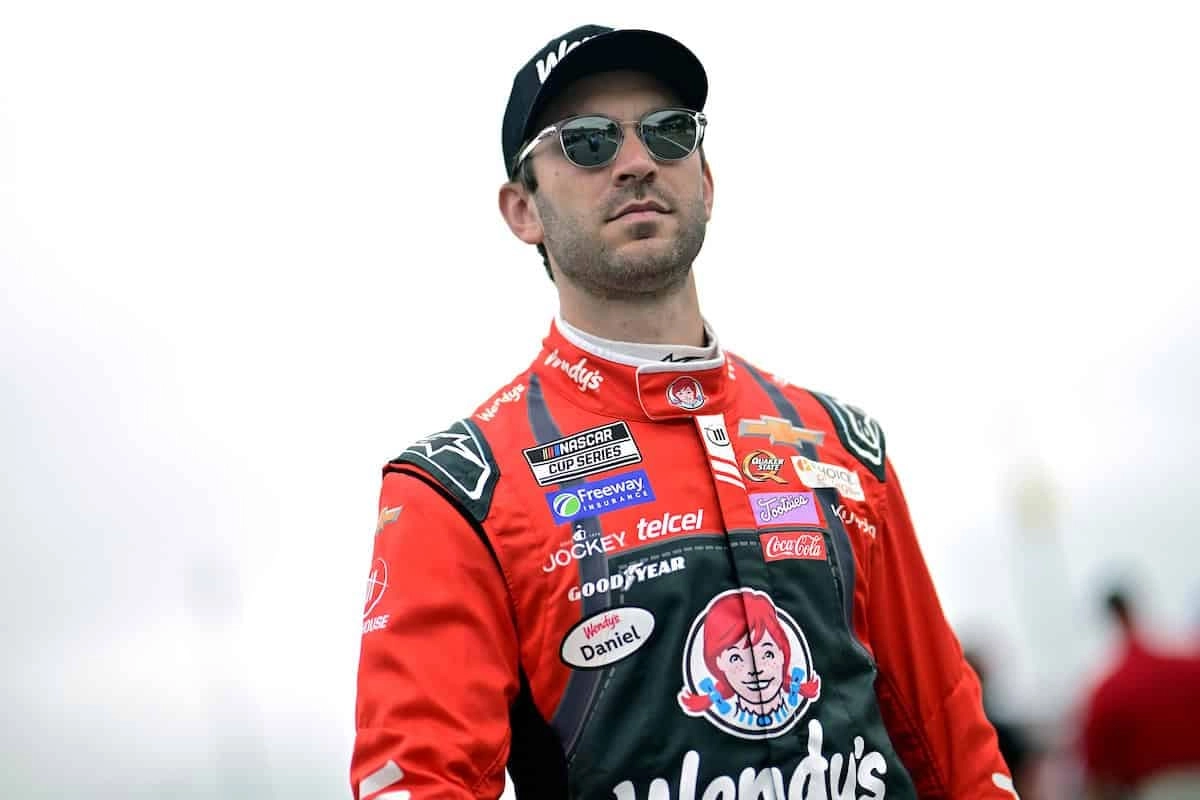
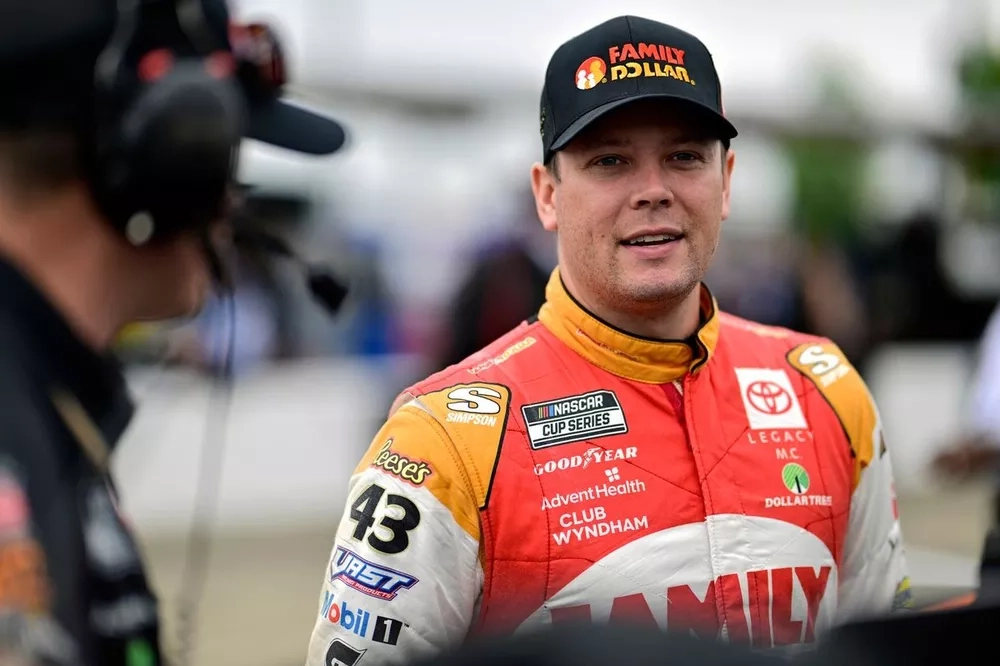
Daniel Suárez was fastest in Richmond NASCAR 2026 practice, turning a 22.889-second lap at 117.961 mph around the 0.75-mile Richmond Raceway. Erik Jones was only 0.001 seconds slower, with Austin Cindric, Riley Herbst and Alex Bowman completing the top five.
The most important practice detail was not the outright speed chart. Cindric had the best 10- and 20-lap averages, Kyle Larson topped the 15-lap average, and Ryan Blaney led both the 25- and 30-lap average categories. That split suggested the fastest qualifying-style lap and the best race setup were not necessarily the same thing.
What Are the Richmond NASCAR 2026 Practice Results?
Daniel Suárez was fastest in Richmond NASCAR practice 2026. The Spire Motorsports driver ran 22.889 seconds at 117.961 mph, just 0.001 seconds quicker than Erik Jones. Austin Cindric was third, Riley Herbst fourth and Alex Bowman fifth.
The Richmond NASCAR 2026 practice results were unusually tight at the sharp end. Suárez and Jones were separated by one thousandth of a second, while Cindric was only 0.016 seconds off the pace. The top five all ran within 0.069 seconds of the fastest lap.
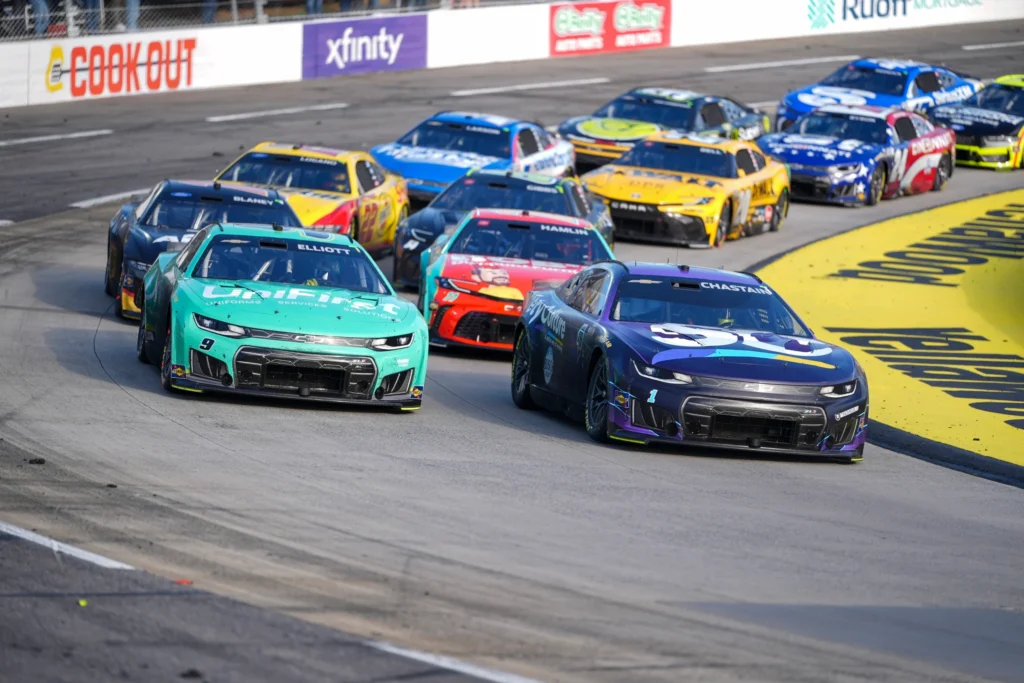
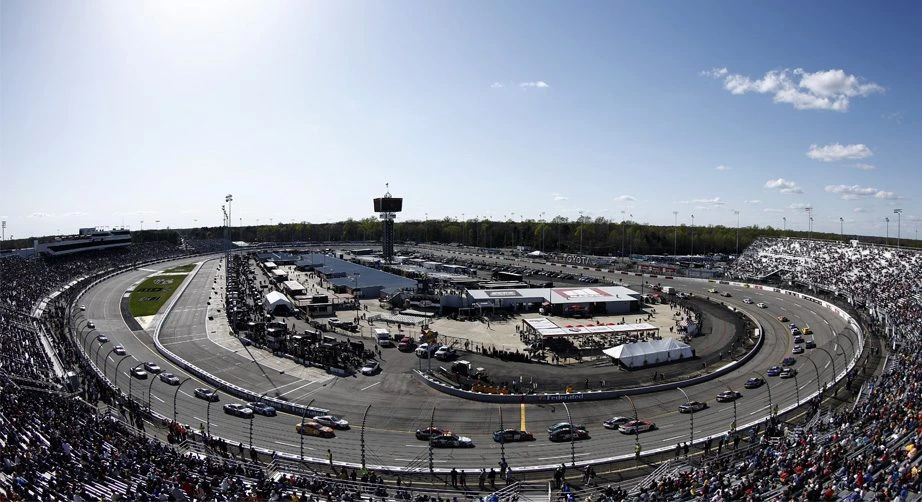
That tightness matters because Richmond is a 0.75-mile short track. A tenth of a second can be the difference between clear air and traffic, especially when a driver is trying to maintain momentum through Turns 1 and 2 and rotate the car through Turns 3 and 4.
NASCAR’s official practice recap also showed that the single-lap order did not perfectly match the long-run order. Cindric led the 10- and 20-lap averages. Larson was fastest over 15 laps, while Blaney paced the 25- and 30-lap averages. In other words, Suárez had the best headline lap, but several title contenders looked better over a sustained run.
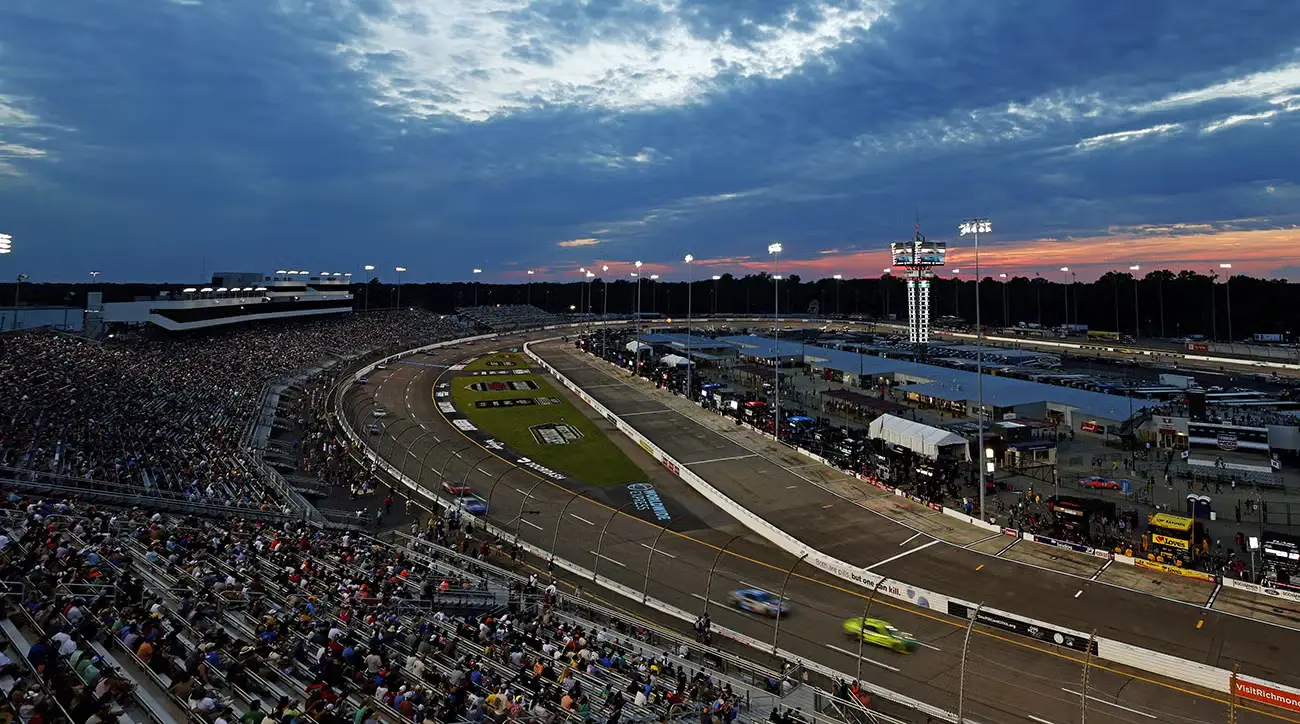
Fastest three in Richmond practice
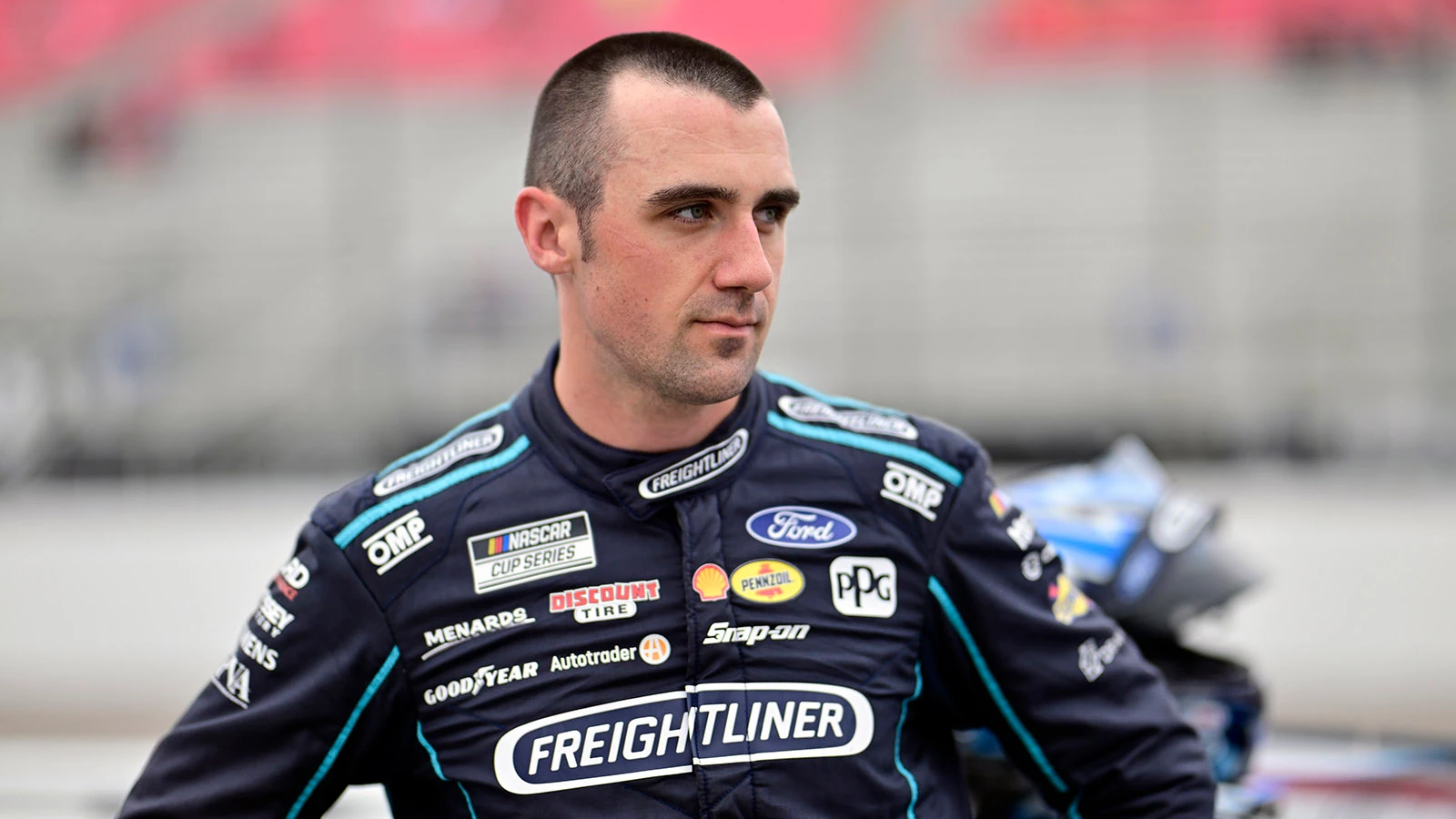
Cindric may be the driver to watch beyond the headline speed chart. He was third overall, then backed that up with the best 10- and 20-lap averages. That combination suggests a car capable of staying competitive after the tires begin to fall away.
Full Richmond NASCAR 2026 Practice Speeds
Here is the full Richmond NASCAR practice leaderboard 2026. The chart uses each driver’s best practice lap and the corresponding average speed reported by NASCAR and independent timing databases.
| Pos | Driver | Car | Make | Best Lap | Best Speed | Laps | Status |
|---|---|---|---|---|---|---|---|
| 1 | Daniel Suárez | #7 | Chevrolet | 22.889s | 117.961 | 45 | P1 |
| 2 | Erik Jones | #43 | Toyota | 22.890s | 117.955 | 44 | TOP 5 |
| 3 | Austin Cindric | #2 | Ford | 22.905s | 117.878 | 45 | TOP 5 |
| 4 | Riley Herbst | #35 | Toyota | 22.938s | 117.709 | 51 | TOP 5 |
| 5 | Alex Bowman | #48 | Chevrolet | 22.958s | 117.606 | 26 | TOP 5 |
| 6 | Denny Hamlin | #11 | Toyota | 22.967s | 117.560 | 58 | PRACTICE |
| 7 | Ty Dillon | #10 | Chevrolet | 22.970s | 117.545 | 27 | PRACTICE |
| 8 | Tyler Reddick | #45 | Toyota | 22.972s | 117.534 | 37 | PRACTICE |
| 9 | Brad Keselowski | #6 | Ford | 22.976s | 117.514 | 40 | PRACTICE |
| 10 | Josh Berry | #21 | Ford | 23.000s | 117.391 | 36 | PRACTICE |
| 11 | Austin Hill | #33 | Chevrolet | 23.004s | 117.371 | 42 | PRACTICE |
| 12 | Michael McDowell | #71 | Chevrolet | 23.005s | 117.366 | 49 | PRACTICE |
| 13 | Carson Hocevar | #77 | Chevrolet | 23.027s | 117.254 | 35 | PRACTICE |
| 14 | AJ Allmendinger | #16 | Chevrolet | 23.063s | 117.071 | 38 | PRACTICE |
| 15 | Kyle Larson | #5 | Chevrolet | 23.073s | 117.020 | 48 | PRACTICE |
| 16 | Bubba Wallace | #23 | Toyota | 23.073s | 117.020 | 57 | PRACTICE |
| 17 | Ross Chastain | #1 | Chevrolet | 23.116s | 116.802 | 50 | PRACTICE |
| 18 | William Byron | #24 | Chevrolet | 23.124s | 116.762 | 51 | PRACTICE |
| 19 | Connor Zilisch | #88 | Chevrolet | 23.133s | 116.716 | 54 | PRACTICE |
| 20 | Ty Gibbs | #54 | Toyota | 23.159s | 116.585 | 44 | PRACTICE |
| 21 | Joey Logano | #22 | Ford | 23.164s | 116.560 | 55 | PRACTICE |
| 22 | Shane van Gisbergen | #97 | Chevrolet | 23.172s | 116.520 | 46 | PRACTICE |
| 23 | Chris Buescher | #17 | Ford | 23.174s | 116.510 | 45 | PRACTICE |
| 24 | Chase Briscoe | #19 | Toyota | 23.189s | 116.435 | 57 | PRACTICE |
| 25 | Zane Smith | #38 | Ford | 23.189s | 116.435 | 39 | PRACTICE |
| 26 | Ryan Blaney | #12 | Ford | 23.198s | 116.389 | 58 | PRACTICE |
| 27 | Ricky Stenhouse Jr. | #47 | Chevrolet | 23.232s | 116.219 | 36 | PRACTICE |
| 28 | Cole Custer | #41 | Chevrolet | 23.247s | 116.144 | 39 | PRACTICE |
| 29 | Ryan Preece | #60 | Ford | 23.299s | 115.885 | 51 | PRACTICE |
| 30 | John Hunter Nemechek | #42 | Toyota | 23.304s | 115.860 | 40 | PRACTICE |
| 31 | Austin Dillon | #3 | Chevrolet | 23.391s | 115.429 | 45 | PRACTICE |
| 32 | Chase Elliott | #9 | Chevrolet | 23.409s | 115.340 | 57 | PRACTICE |
| 33 | Todd Gilliland | #34 | Ford | 23.521s | 114.791 | 23 | PRACTICE |
| 34 | Christopher Bell | #20 | Toyota | 23.567s | 114.567 | 44 | PRACTICE |
| 35 | Noah Gragson | #4 | Ford | 23.636s | 114.233 | 28 | PRACTICE |
| 36 | Josh Bilicki | #66 | Ford | 23.784s | 113.522 | 24 | PRACTICE |
| 37 | Cody Ware | #51 | Chevrolet | 23.784s | 113.522 | 4 | PRACTICE |
Official Cup practice: Friday, Aug. 14, 2026. Group 1 and Group 2 received 25 minutes each. Best lap speeds are based on the 0.75-mile Richmond Raceway layout.
Which Drivers Had the Best Long-Run Practice Speed?
Practice becomes more useful when the single fastest lap is separated from the long-run numbers. At Richmond, the car has to repeat the same braking and rotation demands lap after lap. A driver who produces one quick lap can look excellent on the headline chart and still lack the balance needed for a 400-lap race.
Austin Cindric had the fastest 10-lap average at 115.035 mph. Kyle Larson was second at 114.995 mph, followed by Michael McDowell at 114.987 mph. Cindric also led the 20-lap category, while Larson led the 15-lap category and Ryan Blaney paced both the 25- and 30-lap categories.
| Rank | Driver | 10-Lap Average |
|---|---|---|
| 1 | Austin Cindric | 115.035 mph |
| 2 | Kyle Larson | 114.995 mph |
| 3 | Michael McDowell | 114.987 mph |
| 4 | Alex Bowman | 114.934 mph |
| 5 | Riley Herbst | 114.906 mph |
| 6 | Erik Jones | 114.867 mph |
| 7 | Brad Keselowski | 114.866 mph |
| 8 | Tyler Reddick | 114.862 mph |
| 9 | Shane van Gisbergen | 114.777 mph |
| 10 | Ty Dillon | 114.674 mph |
| 11 | Daniel Suárez | 114.566 mph |
| 12 | Austin Hill | 114.313 mph |
| 13 | Carson Hocevar | 114.251 mph |
| 14 | Ryan Blaney | 114.221 mph |
| 15 | Connor Zilisch | 114.131 mph |
| 16 | Ross Chastain | 114.122 mph |
| 17 | Ricky Stenhouse Jr. | 114.022 mph |
| 18 | Josh Berry | 114.013 mph |
| 19 | Joey Logano | 113.985 mph |
| 20 | AJ Allmendinger | 113.918 mph |
| 21 | William Byron | 113.868 mph |
| 22 | Denny Hamlin | 113.845 mph |
| 23 | Zane Smith | 113.738 mph |
| 24 | Chase Briscoe | 113.533 mph |
| 25 | Bubba Wallace | 113.524 mph |
| 26 | John Hunter Nemechek | 113.506 mph |
| 27 | Chase Elliott | 113.399 mph |
| 28 | Cole Custer | 113.393 mph |
| 29 | Chris Buescher | 113.088 mph |
| 30 | Ryan Preece | 113.061 mph |
| 31 | Noah Gragson | 112.951 mph |
| 32 | Austin Dillon | 112.687 mph |
| 33 | Todd Gilliland | 112.632 mph |
| 34 | Christopher Bell | 112.524 mph |
| 35 | Josh Bilicki | 111.825 mph |
| 36 | Ty Gibbs | 110.404 mph |
When Richmond practice is viewed through 10- to 30-lap averages, the picture shifts toward Cindric, Larson and Blaney. That does not erase Suárez’s pace. It shows that several teams were building race setups rather than chasing only the single fastest lap.
Why the Richmond Practice Speeds Were So Close
Richmond is only three-quarters of a mile, but that does not make practice simple. It makes every fraction more important. The field spends a larger share of each lap in corners than it would at a superspeedway, so the car’s mechanical balance has a direct effect on speed.
The best drivers are trying to solve several problems at once. The car has to brake consistently, rotate in the center, stay hooked up on corner exit and preserve enough rear grip to remain fast after several laps. On an older short-track surface, those demands can move quickly as rubber builds and the tires heat cycle.
The 0.75-mile layout rewards balance, not just horsepower
A short oval can make engine performance look important, but Richmond is fundamentally a handling track. A driver gains more from a car that can get back to the throttle early than one that merely produces a high terminal speed. That is why the practice leaderboard often separates into two types of strength: qualifying-style lap speed and race-run consistency.
The same principle appears in NASCAR’s tire management. A car that uses the rear tires aggressively can look fast for two or three laps and then fall away. A driver who can preserve the tire while maintaining a clean exit becomes increasingly dangerous over a long green-flag run.
That is why the 10-, 15-, 20-, 25- and 30-lap average categories deserve their own analysis rather than being treated as minor statistics.
Richmond NASCAR Practice 2026 Analysis: Who Looked Best?
Daniel Suárez: fastest headline lap
Suárez’s 117.961 mph lap came on his second lap on track, and NASCAR confirmed that it topped the entire field. The margin was tiny, but the No. 7 Chevrolet was the clear answer to the basic practice question: who was fastest?
Suárez’s practice advantage was useful because the field was split into two groups. Every driver had only 25 minutes to find speed, so producing the quickest lap early created room for the team to continue working on longer runs and setup changes.
Erik Jones: almost perfect on the stopwatch
Jones missed the top spot by one thousandth of a second. That is close enough to make the two practice laps effectively indistinguishable from a race-performance perspective. The difference is smaller than many normal timing variations between laps.
For Legacy Motor Club, the result was encouraging because Jones also completed 44 laps, giving the team substantial data while staying near the front of the speed chart.
Austin Cindric: the long-run benchmark
Cindric may have produced the most useful practice session for a race team. He ranked third on the one-lap chart, then posted the fastest 10- and 20-lap averages. That combination is usually more interesting to a crew chief than a single fast lap.
The 10-lap average was 115.035 mph. That was nearly a full mile per hour slower than his peak lap, but it is still a strong sustained pace around a short oval. Cindric also completed 45 laps, giving the team enough data to understand how the car behaved over repeated runs.
Denny Hamlin: championship leader with speed
Hamlin was sixth fastest at 117.560 mph. He was not the practice leader, but the result was reassuring given that Richmond was one of the final regular-season races and Hamlin entered the weekend chasing the No. 1 Chase seed.
Ryan Blaney: 26th on one lap, strongest over 25 and 30
Blaney’s practice session is the clearest warning against reading the leaderboard too literally. He ranked 26th on best-lap speed at 116.389 mph, yet NASCAR reported that he led both the 25- and 30-lap average categories.
That is a major distinction. It means the No. 12 Ford may not have been chasing the single fastest qualifying lap. Instead, Penske appeared to be focusing on the kind of stability that becomes valuable when the race reaches the final 100 laps.
What practice said about the leading teams
Team Penske had mixed headline speed but strong long-run indicators. Cindric was third overall and first on the 10- and 20-lap averages, while Blaney was fastest over the 25- and 30-lap windows. That is a strong signal for race trim.
Hendrick Motorsports had a similarly interesting split. Bowman was fifth overall, Larson 15th, and Byron 18th, but Larson’s best 15-lap average made his car more interesting than the raw position suggested.
Joe Gibbs Racing put Hamlin sixth and Herbst’s 23XI Toyota fourth, while Christopher Bell was only 34th. The spread shows why practice data has to be interpreted by program rather than by badge alone.
Incidents That Shaped Richmond Practice
Cody Ware spins in Group 1
Cody Ware was one of two drivers who lost control in Turns 3 and 4 during Group 1 practice. His spin came during a session in which teams were trying to maximize a limited 25-minute window.
The problem with a practice spin is not simply the loss of a few seconds. The car loses track time precisely when engineers are trying to compare changes. It can also force the crew to inspect the car before the driver returns to the track.
Tyler Reddick also spins, but avoids the wall
Reddick got loose in Turn 4 and spun near the end of his group session. He did not hit anything. That made the incident a setback rather than a mechanical crisis, and he still finished eighth on the overall speed chart at 117.534 mph.
Group 2 completes a clean session
NASCAR reported no incidents in Group 2. That gave several top-10 drivers a cleaner window to work through their programs. Hamlin, Cindric, Jones and Keselowski were able to accumulate substantial lap counts, helping their long-run data become more meaningful.
What the Richmond Practice Results Meant for the Race
Practice produced a clear headline and a less obvious strategic story. Suárez was fastest over one lap. Cindric, Larson and Blaney showed stronger long-run signals. That made Richmond one of those weekends where the practice chart needed context before anyone could sensibly project the race.
The later qualifying result added another layer. Ryan Blaney went on to win the Busch Light Pole Award with a 22.225-second lap at 121.485 mph, while Chase Briscoe and Josh Berry followed. The qualifying lap was much faster than the practice benchmark because qualifying cars were optimized for a one-lap attack.
That gap explains why practice speed should not be confused with qualifying speed. The practice session was about finding race balance. Qualifying was about extracting maximum grip and the smallest possible lap time from a fresh run.
The race itself later demonstrated the same principle. Suárez led practice but did not convert it into a win. Joey Logano won the Cook Out 400. That does not invalidate the practice data. It shows that a practice leaderboard measures one narrow slice of performance before qualifying, pit strategy, cautions and race degradation enter the equation.
Practice is most valuable when it identifies patterns. Cindric’s long-run strength was real. Blaney’s 25- and 30-lap pace was real. Suárez’s single-lap speed was real. The race then tested which of those strengths could survive 400 laps.
For readers who want to understand why NASCAR race setups evolve through the weekend, World of Speed’s guides to how car racing works, how race timing works, how pit stops work, handling a short-oval track car, and downforce are useful background reads.
What Fans Should Take Away From Richmond Practice
The main lesson from Richmond practice is that the fastest driver on the chart is not automatically the driver with the best race car. Modern NASCAR practice programs are built around multiple objectives. Teams may search for one-lap speed, test long-run balance, compare tire falloff and prepare for different restart scenarios within the same 25-minute session.
That is why Cindric’s 10- and 20-lap averages deserve almost as much attention as Suárez’s headline lap. It is also why Blaney’s 25- and 30-lap pace remained relevant even though the No. 12 Ford was only 26th on outright practice speed.
The three most important practice questions for Richmond were simple: who could produce the fastest one-lap speed, who could hold speed over a long run, and which teams had enough consistency to survive changing tires and traffic?
Suárez answered the first. Cindric and Larson answered the second. Blaney answered the third most clearly when the average window stretched past 25 laps.
That is the value of a detailed Richmond NASCAR 2026 Practice Results article. It gives the reader more than a list of lap times. It shows which numbers are relevant to qualifying, which ones point toward race pace and which ones should be treated carefully.
Frequently Asked Questions
Final Takeaway: Richmond NASCAR 2026 Practice Results
The Richmond NASCAR 2026 Practice Results produced a clear headline: Daniel Suárez was fastest at 117.961 mph. But the more useful story came from the long-run data, where Austin Cindric, Kyle Larson and Ryan Blaney showed evidence of stronger race-oriented pace.
Suárez’s 22.889-second lap put him ahead of Erik Jones by just one thousandth, while Cindric sat only 0.016 seconds from the top. The narrow gaps showed how competitive the Richmond field was before qualifying.
The long-run numbers changed the picture. Cindric had the best 10- and 20-lap averages. Larson led the 15-lap category. Blaney led both the 25- and 30-lap windows. Those figures mattered because Richmond’s 0.75-mile layout places enormous importance on tire preservation and a car that remains stable as a run develops.
Practice also gave teams a warning about the track’s unforgiving corners. Cody Ware and Tyler Reddick spun in Group 1, while Group 2 completed its session without incident. With only 25 minutes per group, every clean lap was valuable.
In the end, practice did what it was supposed to do: reveal strengths, weaknesses and setup directions. Suárez owned the fastest lap. Cindric owned the most convincing short-run average. Blaney owned the longer windows. The final race result then showed why no single practice number can predict 400 laps.
Sources & Verification
Practice speed and long-run figures were cross-checked against official NASCAR reporting and independent timing databases for the August 14, 2026 Cup Series session at Richmond Raceway.
- NASCAR — Richmond qualifying recap and official practice recap
- NASCAR — Richmond live leaderboard / practice speeds
- RACER — Suárez paces Cup Series practice at Richmond
- Motorsport.com — Official Richmond 2026 practice results
- RotoBaller — Richmond practice speeds and lap averages