NHRA Northwest Nationals 2026 Preview: Contenders, Track Guide & Predictions
The pre-Seattle title picture, Pacific Raceways records, class-by-class favorites, dark horses, tuning variables and independent winner picks built from information available before qualifying began.
The NHRA Northwest Nationals 2026 preview began with three very different championship stories. Shawn Langdon carried a substantial Top Fuel points lead. Funny Car leader Ron Capps faced a fast-closing Jordan Vandergriff. Dallas Glenn and Greg Anderson were separated by only 21 points in Pro Stock.
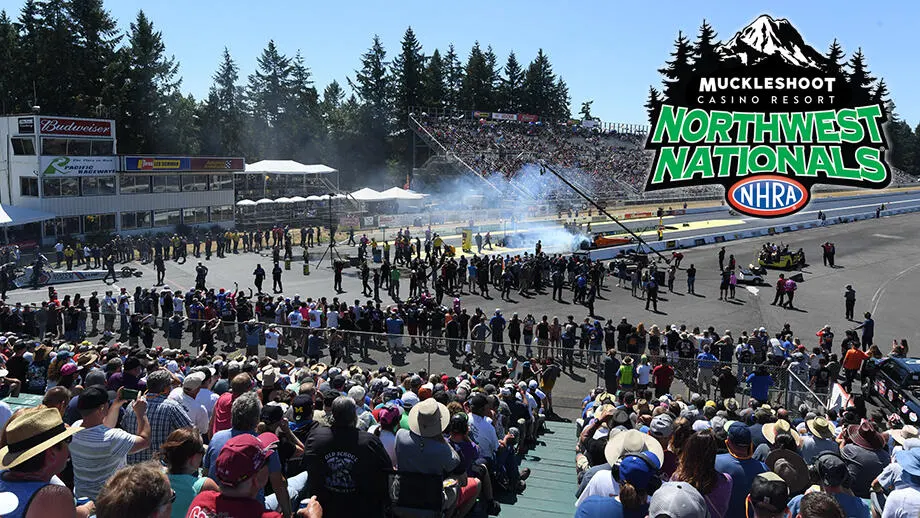
The 37th annual Muckleshoot Casino Resort NHRA Northwest Nationals took place at Pacific Raceways in Kent, Washington. It was the 12th event of the 20-race Mission Foods NHRA Drag Racing Series and the second race of the shortened 2026 Western Swing.
The contender rankings and predictions are based on information available before professional qualifying started on July 24. The completed Seattle result was not used to select the picks.
Langdon and Kalitta led the Top Fuel conversation. Capps, Hagan and Vandergriff formed the strongest Funny Car group. Glenn and Anderson remained the clear Pro Stock benchmarks, with Greg Stanfield carrying the strongest momentum from Sonoma.
Northwest Nationals Preview at a Glance
Seattle arrived immediately after a dramatic Sonoma weekend. Kalitta won Top Fuel and reduced Langdon’s advantage. Vandergriff won Funny Car and jumped to second in points. Greg Stanfield won Pro Stock and showed that Elite Motorsports had closed part of the gap to KB Titan Racing.
Those results made Pacific Raceways more than another regular-season stop. It became a test of whether Sonoma momentum could travel north and whether the season leaders could respond before the break leading into Brainerd.
The schedule also returned to two professional qualifying sessions Friday and two Saturday. Every team had four planned attempts rather than the one-Friday, three-Saturday arrangement used in 2025.
The professional field featured Top Fuel, Funny Car and Pro Stock. Pro Stock Motorcycle was not part of the Seattle national-event lineup.
Langdon, Hagan and Glenn entered as the defending winners. Schumacher, Capps and Anderson held the most active-driver Seattle victories in their respective classes.
Langdon vs. Kalitta
The Kalitta Motorsports teammates had separated themselves from much of the field.
Capps vs. Vandergriff
The points leader met the category’s newest two-time winner.
Glenn vs. Anderson
The teammates entered Seattle inside roughly one elimination round.
Pacific Raceways Track Guide
Pacific Raceways is located at 31001 144th Avenue SE in Kent, roughly 30 minutes from downtown Seattle. NHRA lists the facility at 280 feet above sea level.
Low physical elevation can help engine performance because the air begins from a favorable baseline. However, corrected altitude matters more than the number printed in the track guide. Temperature, humidity and barometric pressure determine how much oxygen the engine receives on a particular run.
What makes Pacific Raceways fast?
Cooler, dense Pacific Northwest air can support strong horsepower. When the track temperature is manageable, nitro crew chiefs can apply more clutch and fuel without immediately overpowering the rear tires.
Pro Stock also benefits from dense air. The naturally aspirated 500-cubic-inch engines cannot use a supercharger to replace lost oxygen, so favorable atmospheric conditions have a direct effect on power.
Why the starting line still decides the weekend
Low elevation does not guarantee a record. The first 60 feet determine whether the car can convert available power into acceleration.
Top Fuel and Funny Car crews need the clutch application to match the grip level. Too much early power produces tire smoke. Too little sacrifices elapsed time before the car reaches half-track.
Lane choice and changing grip
Lane preference can change during a national event. A lane that looks stronger Friday may receive different rubber, cleanup and temperature exposure by Sunday.
Teams therefore study more than their own time slips. They watch where other cars move, when tire shake begins and how the groove reacts after long sportsman sessions.
Pacific Raceways can reward horsepower, but only after the crew chief earns the right to use it in the first second of the run.
Pacific Raceways Track Records and Defending Winners
| Record | Benchmark | Driver | Date |
|---|---|---|---|
| Top Fuel ET | 3.628 sec. | Doug Kalitta | July 2025 |
| Top Fuel speed | 341.85 mph | Brittany Force | July 2025 |
| Funny Car ET | 3.832 sec. | Del Worsham | August 2016 |
| Funny Car speed | 338.51 mph | Bob Tasca III | July 2024 |
| Pro Stock ET | 6.446 sec. | Dallas Glenn | July 2025 |
| Pro Stock speed | 213.40 mph | Mason McGaha | August 2015 |
Kalitta’s 3.628 was only five thousandths slower than the official Top Fuel national ET record entering Seattle. Force’s 341.85-mph track speed showed that Pacific Raceways could support genuine record-class finish-line performance.
Glenn’s 6.446 Pro Stock record was especially important because it was also his career-best elapsed time. The number gave the local driver a concrete setup reference from the previous year.
| Class | 2025 winner | Defending status | Most active wins |
|---|---|---|---|
| Top Fuel | Shawn Langdon | 2025 defending winner | Tony Schumacher — 5 active-driver wins |
| Funny Car | Matt Hagan | 2025 defending winner | Ron Capps — 3 active-driver wins |
| Pro Stock | Dallas Glenn | 2025 defending winner | Greg Anderson — 3 active-driver wins |
Schumacher’s five Top Fuel victories made him the active historical leader even though his 2026 program was not running at the same championship level as Langdon and Kalitta.
Capps and Anderson each had three Seattle wins. Those totals mattered because both drivers also entered the weekend as championship leaders or near-leaders.
Top Fuel Contenders: Langdon and Kalitta Set the Standard
| Pos. | Driver | Points | Gap | Pre-Seattle case |
|---|---|---|---|---|
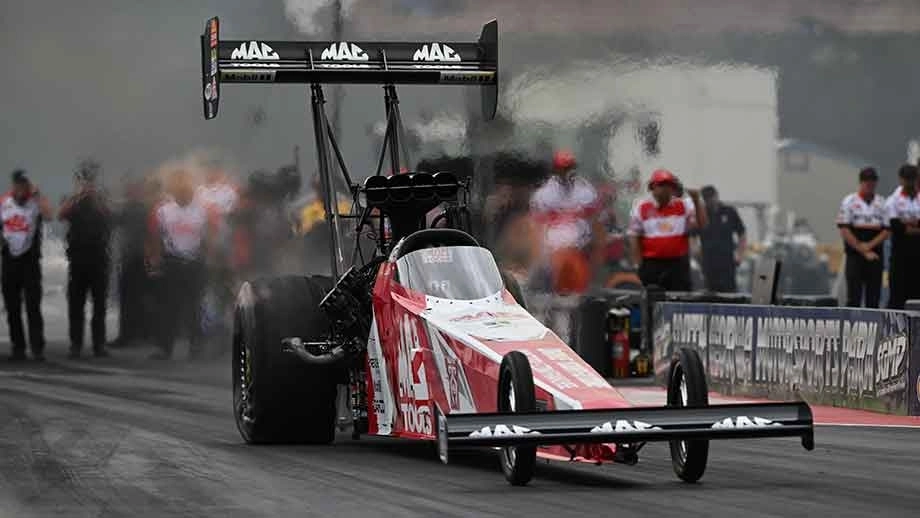
| 1 | Shawn Langdon | 1069 | Leader | Four 2026 wins; defending Seattle winner |
| 2 | Doug Kalitta | 984 | -85 | Sonoma winner; reigning champion; Seattle ET record holder |
| 3 | Leah Pruett | 803 | -266 | Multiple 2026 wins and consistent late-round pace |
| 4 | Antron Brown | 680 | -389 | Three-time champion and strong hot-track racer |
| 5 | Tony Stewart | 648 | -421 | Race winner with improving TSR package |
| 6 | Maddi Gordon | 648 | -421 | Rookie winner and emerging upset threat |
| 7 | Josh Hart | 592 | -477 | Gainesville winner with qualifying upside |
| 8 | Billy Torrence | 559 | -510 | Experienced part-time threat |
Shawn Langdon: the season-long benchmark
Langdon entered Seattle with four 2026 victories and an 85-point championship lead. He was also the defending Northwest Nationals winner.
His strongest argument was consistency. Kalitta Motorsports repeatedly placed Langdon in the late rounds and gave him a stable car across very different surfaces.
The concern was momentum. Kalitta had won Sonoma, while Langdon exited in the second round. An 85-point advantage remained significant, but another early loss could make the regular-season title much tighter.
Doug Kalitta: the primary winner pick
Kalitta arrived as the reigning world champion and the most recent Top Fuel winner. His seven Sonoma victories showed how effectively his team could manage the Western Swing.
The Pacific Raceways ET record strengthened the case. A team that had already run 3.628 at the venue possessed both historical data and confidence.
Kalitta was the World of Speed primary Top Fuel pick. The prediction did not assume he would be quickest every session. It assumed the team had the deepest combination of qualifying ceiling and Sunday recovery.
Leah Pruett: the strongest challenger outside Kalitta Motorsports
Pruett sat third in points. Her return season had already produced victories and a reliable TSR dragster.
Her route to the trophy required matching the Kalitta cars in qualifying and avoiding small reaction-time losses. The performance ceiling was clearly high enough.
Antron Brown and Tony Stewart
Brown remained one of the field’s most complete race-day drivers. Hotter or less predictable conditions generally increased his value because the Matco team understood how to win without having the quickest car.
Stewart had already won during 2026 and continued developing as a Top Fuel driver. His Seattle case depended on early-session stability and keeping the car inside a competitive qualifying window.
Maddi Gordon and Josh Hart
Gordon’s rookie victory changed how rivals viewed the Ron Capps Motorsports dragster. She was no longer only a future prospect; she was a legitimate current threat.
Hart was the preferred dark horse. His Gainesville win showed the Speedmaster car could dominate when it found the correct setup. Pacific Raceways offered enough performance potential to create another breakthrough weekend.
Winner pick: Doug Kalitta. Best alternative: Shawn Langdon. Dark horse: Josh Hart. The strongest evidence was Kalitta’s Sonoma victory, championship pedigree and existing Seattle ET record.
Funny Car Contenders: The Deepest Field of the Weekend
| Driver | Contender type | Pre-Seattle evidence |
|---|---|---|
| Ron Capps | Championship benchmark | Points leader after Sonoma; three-time world champion; three Seattle wins |
| Jordan Vandergriff | Momentum favorite | Second in points, 74 behind Capps; two 2026 wins; Sonoma winner |
| Matt Hagan | Historical favorite | Defending Seattle winner; two Pacific Raceways victories; four-time champion |
| Austin Prock | High-ceiling contender | Back-to-back champion with national-record-level speed |
| Jack Beckman | Technical contender | Past world champion and 2009 Seattle winner |
| J.R. Todd | Dark-horse contender | Past champion with strong qualifying pace throughout 2026 |
| Chad Green | Upset threat | Multiple 2026 highlights and a proven hot-track package |
| Daniel Wilkerson | Momentum dark horse | Sonoma runner-up entering Seattle |
Ron Capps: championship control
Capps remained the points leader after Sonoma. His advantage over Vandergriff had fallen to 74 points, but he still owned the best season-long position.
Three active-driver Seattle victories made him the category’s strongest historical winner. His NAPA team also had the ability to recover from difficult qualifying sessions.
Capps was the safest championship pick, but not the primary Seattle winner pick. The category had too many high-ceiling alternatives.
Matt Hagan: the historical winner pick
Hagan had won Seattle in 2025 and had two Pacific Raceways victories. He also entered as a four-time world champion with one of the sport’s most experienced nitro organizations.
His greatest advantage was the combination of proven track history and a car capable of making fast passes in both warm and cool conditions.
Hagan became the primary Funny Car prediction. The choice was based on repeatability rather than the assumption that the defending winner must automatically repeat.
Jordan Vandergriff: the momentum alternative
Vandergriff arrived from his second win of the season at Sonoma. He had qualified No. 1 there and made the quickest Funny Car run of the year at that point.
He also moved to second in points. The 74-point deficit meant a Seattle victory could apply meaningful pressure to Capps before Brainerd and Indianapolis.
The question was whether the rookie could reproduce the complete Sonoma weekend immediately. The performance evidence said yes; the experience sample remained smaller than Hagan’s or Capps’.
Austin Prock and Jack Beckman
Prock entered as the back-to-back champion. His 2026 results had been less dominant, but the car’s raw performance ceiling remained among the highest in the class.
Beckman brought a past Seattle victory and an experienced John Force Racing crew. He was a strong qualifying and semifinal candidate.
J.R. Todd, Chad Green and Daniel Wilkerson
Todd was the selected dark horse. His qualifying pace during 2026 often exceeded his final Sunday results, suggesting a breakthrough remained possible.
Green had already established himself as a serious contender. Wilkerson entered directly after a Sonoma runner-up and represented another driver capable of converting momentum into a first win.
Winner pick: Matt Hagan. Best alternative: Jordan Vandergriff. Dark horse: J.R. Todd. Capps remained the championship benchmark, but Hagan’s defending-win history gave him the narrow event edge.
Pro Stock Contenders: Glenn and Anderson Lead a Team War
| Pos. | Driver | Points | Gap | Pre-Seattle case |
|---|---|---|---|---|
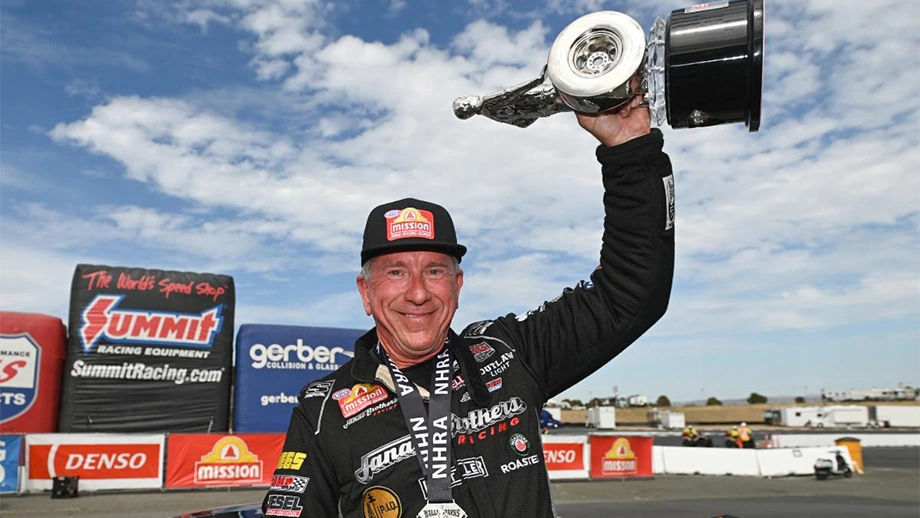
| 1 | Dallas Glenn | 922 | Leader | Defending Seattle winner; Washington native; track ET record |
| 2 | Greg Anderson | 901 | -21 | Six-time champion and three-time Seattle winner |
| 3 | Greg Stanfield | 765 | -157 | Sonoma winner; tied for third entering Seattle |
| 4 | Matt Hartford | 765 | -157 | Three victories during the 2026 season |
| 5 | Aaron Stanfield | 649 | -273 | Two wins and strong Elite Motorsports pace |
| 6 | Matt Latino | 627 | -295 | Consistent top-half challenger |
| 7 | Erica Enders | 623 | -299 | Six-time champion; Sonoma runner-up |
| 8 | Jeg Coughlin Jr. | 542 | -380 | Five-time champion and reaction-time specialist |
Dallas Glenn: local favorite and primary pick
Glenn grew up in Covington, Washington, only a short distance from Pacific Raceways. He entered as the defending Seattle winner, reigning world champion and points leader.
The 6.446 track record gave him the strongest venue-specific qualifying evidence in Pro Stock. It also remained his career-best elapsed time.
Glenn was the primary winner and No. 1 qualifier pick. Home-race pressure can create distractions, but his 2025 victory showed he could manage the attention.
Greg Anderson: only 21 points behind
Anderson was close enough to take the points lead with one strong weekend. He also had three Seattle victories, tying him for the active Pro Stock lead at the track.
His experience made him the safest alternative to Glenn. If qualifying produced a clean KB Titan ladder, the two teammates could control opposite halves of the bracket.
Greg Stanfield and Matt Hartford
Stanfield and Hartford were tied for third at 765 points. Their cases were very different.
Hartford brought three 2026 victories and clear race-winning speed. Stanfield brought the freshest momentum after winning Sonoma and helping Elite place all four cars in the semifinals.
Stanfield was the selected dark horse because his recent performance suggested Elite had found a setup capable of challenging KB Titan across changing air conditions.
Erica Enders and Aaron Stanfield
Enders reached the Sonoma final and remained one of the class’s best pressure drivers. A difficult first half did not remove the six-time champion from any serious contender list.
Aaron Stanfield had already won twice in 2026. He added another strong reaction-time threat to Elite’s improving performance package.
Why Pro Stock could be decided by reaction time
The class routinely compresses multiple drivers inside a few hundredths. When elapsed times converge, a .020 reaction-time advantage can decide a round before the cars reach half-track.
Pacific Raceways also offered the possibility of very quick runs. A stable surface could reduce the number of tire-shake races and place even more weight on the driver.
Winner pick: Dallas Glenn. Best alternative: Greg Anderson. Dark horse: Greg Stanfield. Glenn combined the points lead, home-track knowledge, defending victory and track record.
Northwest Nationals Dark Horses and Upset Picks
Top Fuel: Josh Hart
Hart had already won the Gatornationals. That result showed the team’s ceiling even though the following races had been less consistent.
A low-elevation track can help a team with aggressive qualifying potential. If Hart entered Sunday in the top half, the Speedmaster dragster had semifinal or final-round upside.
Funny Car: J.R. Todd
Todd’s season contained repeated signs of speed without the matching winner total. That profile often creates value in a prediction article because the underlying pace can turn into a complete weekend quickly.
His Kalitta Motorsports teammates also supplied a deep technical organization. The Seattle event offered a realistic opportunity to convert qualifying strength into Sunday results.
Pro Stock: Greg Stanfield
Calling the most recent winner a dark horse may appear unusual. However, the points and historical favorites still placed Glenn and Anderson ahead of him.
Stanfield’s Sonoma performance made him the most credible upset pick. Elite Motorsports had shown both speed and ladder depth.
Additional long shots worth watching
Gordon’s rookie win made her a genuine Top Fuel threat. Green and Wilkerson had enough Funny Car performance to reach a final. Enders remained capable of turning a mid-pack qualifying position into four round wins.
Josh Hart
Proven winner with a high qualifying ceiling.
J.R. Todd
Strong underlying pace and championship-level team depth.
Greg Stanfield
Fresh Sonoma winner with an improving Elite package.
Qualifying and Race-Day Strategy
Friday required two usable baselines
Both Friday sessions took place before the early-evening sunset. Teams could not assume a dramatic night-session temperature drop would solve an opening problem.
The ideal plan was to make a complete Q1 pass and use Q2 to add power. A team without a Friday number still had Saturday, but the pressure would increase.
Saturday passes carried two objectives
Q3 and Q4 also contained the Mission #2Fast2Tasty Challenge. The selected semifinal rematches from Sonoma raced for bonus money and points while also trying to improve their qualifying positions.
A crew chief therefore had to balance aggression with the need to win the pairing. A tire-smoking pass could lose both the bonus race and a chance at lane choice.
Why qualifying position mattered differently by class
Top Fuel and Funny Car teams value lane choice, but they can often recover from a lower position if the car is consistent. Nitro racing includes more mechanical variation and tire-smoke opportunities.
Pro Stock is usually less forgiving. A lower qualifying position can create an immediate first-round matchup against a championship favorite, and the elapsed-time gaps may be tiny.
Reaction time versus raw pace
Sonoma’s Pro Stock final had just demonstrated the value of reaction time. Stanfield defeated Enders on a holeshot despite running one thousandth slower.
That lesson applied to Seattle. A record-capable track does not remove the driver from the equation; it can make the starting-line difference more important because the cars run closer together.
| Date | Session | Pacific Time | Eastern Time |
|---|---|---|---|
| Friday, July 24 | Pro Stock Q1 | 2:00 p.m. PT | 5:00 p.m. ET |
| Friday, July 24 | Funny Car and Top Fuel Q1 | 2:30 p.m. PT | 5:30 p.m. ET |
| Friday, July 24 | Pro Stock Q2 | 4:30 p.m. PT | 7:30 p.m. ET |
| Friday, July 24 | Funny Car and Top Fuel Q2 | 5:00 p.m. PT | 8:00 p.m. ET |
| Saturday, July 25 | Top Fuel Q3 / Mission Challenge | 12:00 p.m. PT | 3:00 p.m. ET |
| Saturday, July 25 | Funny Car Q3 / Mission Challenge | 12:30 p.m. PT | 3:30 p.m. ET |
| Saturday, July 25 | Pro Stock Q3 / Mission Challenge | 1:00 p.m. PT | 4:00 p.m. ET |
| Saturday, July 25 | Top Fuel Q4 / Mission final | 2:30 p.m. PT | 5:30 p.m. ET |
| Saturday, July 25 | Funny Car Q4 / Mission final | 3:00 p.m. PT | 6:00 p.m. ET |
| Saturday, July 25 | Pro Stock Q4 / Mission final | 3:30 p.m. PT | 6:30 p.m. ET |
| Sunday, July 26 | Mission Foods eliminations | 10:00 a.m. PT | 1:00 p.m. ET |
World of Speed Northwest Nationals Predictions
The predictions below were made from the pre-event evidence. They were not reverse-engineered from the completed race.
| Prediction | Primary pick | Alternative | Dark horse | Reasoning |
|---|---|---|---|---|
| Top Fuel winner | Doug Kalitta | Shawn Langdon | Josh Hart | Kalitta combined Sonoma momentum, the 2025 Seattle ET record and championship-level race-day depth. |
| Funny Car winner | Matt Hagan | Jordan Vandergriff | J.R. Todd | Hagan brought the strongest blend of defending-winner history, points position and proven Pacific Raceways performance. |
| Pro Stock winner | Dallas Glenn | Greg Anderson | Greg Stanfield | Glenn entered as the points leader, defending winner, local favorite and track-record holder. |
| Top Fuel No. 1 | Doug Kalitta | Shawn Langdon | Leah Pruett | Kalitta’s 3.628 track record made him the natural low-ET pick if conditions tightened. |
| Funny Car No. 1 | Matt Hagan | Austin Prock | Jack Beckman | Hagan’s crew entered Seattle with strong season-long recognition and a proven ability to manage changing surfaces. |
| Pro Stock No. 1 | Dallas Glenn | Greg Anderson | Matt Hartford | Glenn’s 6.446 track record was the clearest qualifying benchmark in any class. |
Top Fuel winner: Doug Kalitta
Kalitta had the clearest multi-factor case. He was the reigning champion, the Sonoma winner and the Seattle ET record holder.
Langdon remained a nearly equal choice because of his four wins and points lead. The prediction favored Kalitta only because his recent momentum and venue ceiling aligned at the same time.
Funny Car winner: Matt Hagan
Hagan’s case relied on Seattle history and proven race-day experience. He was the defending winner and had won twice at the track.
Vandergriff was the aggressive alternative after Sonoma. Capps remained the points-based safety choice, while Todd supplied the best upset value.
Pro Stock winner: Dallas Glenn
No contender matched Glenn’s complete Seattle profile. He was the hometown driver, defending winner, points leader and track-record holder.
Anderson was only 21 points behind and had three track victories, making the prediction far from certain. Stanfield’s Sonoma win created a credible Elite Motorsports challenge.
Five broader weekend predictions
- At least one professional track ET record would be seriously threatened if Saturday produced cool, stable conditions.
- Kalitta Motorsports would place both Top Fuel cars in the top half of the field.
- Funny Car would produce the widest difference between the Friday leader and the final Saturday No. 1 qualifier.
- The Pro Stock points lead could change hands because Glenn and Anderson entered only 21 points apart.
- One dark-horse driver would reach a professional final after qualifying outside the top four.
Kalitta, Hagan and Glenn were the primary event picks. Langdon, Vandergriff and Anderson were the strongest alternatives. Hart, Todd and Stanfield were the selected dark horses.
Championship Stakes Before the Countdown
Top Fuel
Langdon’s 85-point lead remained healthy, but Kalitta had cut into it at Sonoma. A win by Kalitta combined with an early Langdon exit could reduce the fight to only a few rounds.
Pruett needed a major weekend to rejoin the regular-season title discussion. Brown, Stewart and Gordon were more focused on building momentum and Countdown positioning.
Funny Car
Vandergriff’s Sonoma victory turned a comfortable Capps lead into a more active contest. Hagan, Beckman, Todd and Prock ensured that points could move in several directions.
Funny Car had the deepest credible winner list. That depth increased the chance that one contender could eliminate another early.
Pro Stock
Glenn and Anderson had separated themselves from most of the field, but only 21 points separated them from each other. Seattle could reverse their order with one additional round win.
Stanfield and Hartford were tied for third. Both needed victories rather than small gains to become serious regular-season title challengers.
NHRA Northwest Nationals 2026 Preview FAQ
Conclusion: Pacific Raceways Offered No Easy Favorite
The NHRA Northwest Nationals 2026 preview produced clear favorite groups but no guaranteed winners. Langdon had the strongest Top Fuel season, while Kalitta brought the best combination of recent form and track history.
Capps led Funny Car, Hagan defended the event title and Vandergriff arrived as the newest winner. Any of the three could justify a primary prediction, and several additional champions remained close behind.
Glenn had the most complete Pro Stock case. Anderson’s 21-point deficit and three Seattle victories prevented the home favorite from becoming an obvious choice. Stanfield’s Sonoma result added an improving Elite Motorsports operation to the battle.
The final pre-race selections were Kalitta, Hagan and Glenn. The dark-horse choices were Hart, Todd and Stanfield. Each pick followed pre-qualifying evidence rather than the completed outcome.
Sources & Official References
- NHRA — official pre-event Northwest Nationals overview and contender list
- NHRA — official Top Fuel standings after Sonoma
- NHRA — official Pro Stock standings after Sonoma
- NHRA — Sonoma winners and pre-Seattle championship gaps
- NHRA — official track records, defending winners and active victory leaders
- NHRA — Pacific Raceways address, elevation and event categories
Facts, records and pre-event standings come from official NHRA material. Winner selections, dark-horse rankings and strategic conclusions are independent World of Speed analysis made from the pre-race evidence.