Rally del Paraguay 2026 Strategy Analysis:
Road Order, Tyres and Changing Grip
Paraguay’s red-clay gravel looks fast on a map. Behind the wheel, it is a constantly moving target. Road sweeping, polished clay, deepening ruts, sharp rocks and sudden rain can turn a strong stage plan into a survival exercise within minutes.
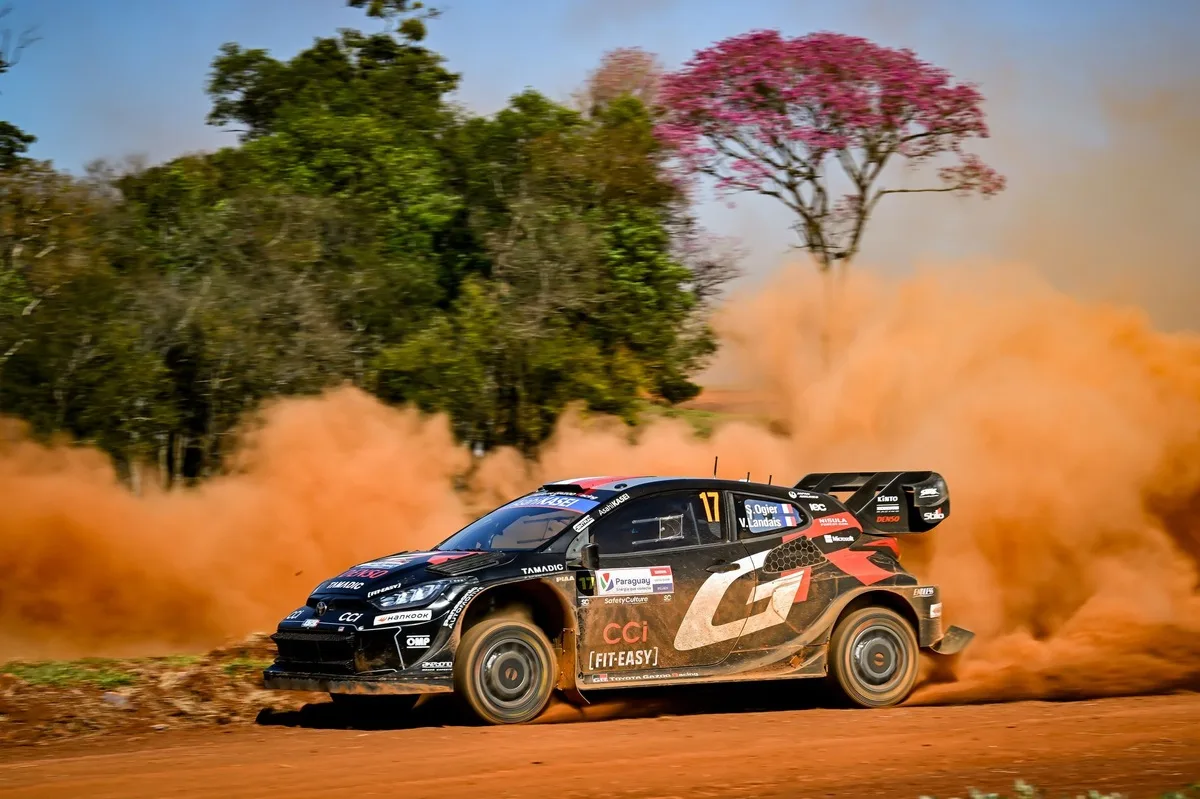
Rally del Paraguay 2026 strategy analysis: the second WRC edition of Paraguay is built around 22 gravel stages and 358.99 kilometres of competition. The rally is based in Encarnación, near the Argentine border, and the official WRC description highlights smooth red-earth roads, high-speed sections, technical areas, deepening ruts and sudden surface changes.
The strategic problem is straightforward to describe and difficult to solve: the fastest line is not always the line with the most grip. Elfyn Evans will open the road as championship leader, while his Toyota teammates Sami Pajari, Takamoto Katsuta, Oliver Solberg and Sébastien Ogier occupy the other top five championship positions. Toyota enters Paraguay with a 174-point manufacturers’ advantage over Hyundai.
Why Rally del Paraguay Is a Strategy Problem, Not Just a Speed Test
Paraguay’s WRC character is unusually easy to misunderstand. From the outside, the roads can look broad, fast and relatively simple. Elfyn Evans said the first edition proved otherwise. Toyota’s 2026 preview quotes Evans describing the stages as more difficult than they looked on paper, with polished clay and changing grip levels making the rally much harder than expected. He also remembers rain on the final morning creating a near-total loss of grip.
That makes the Rally del Paraguay 2026 road order question central to the weekend. Evans starts first on the road, which means he has the least swept surface ahead of the cars following him. In dry gravel, that can be a genuine disadvantage because later runners find a cleaner, harder racing line.
But Paraguay is not a simple “go later and win” rally. The surface includes sharp rocks and bumps, and the road can deteriorate enough that the later cars trade road-cleaning advantage for puncture and suspension risk. Once rain enters the equation, road order can flip again because the loose surface becomes sticky, polished clay loses grip and the benefit of running later becomes much less predictable.
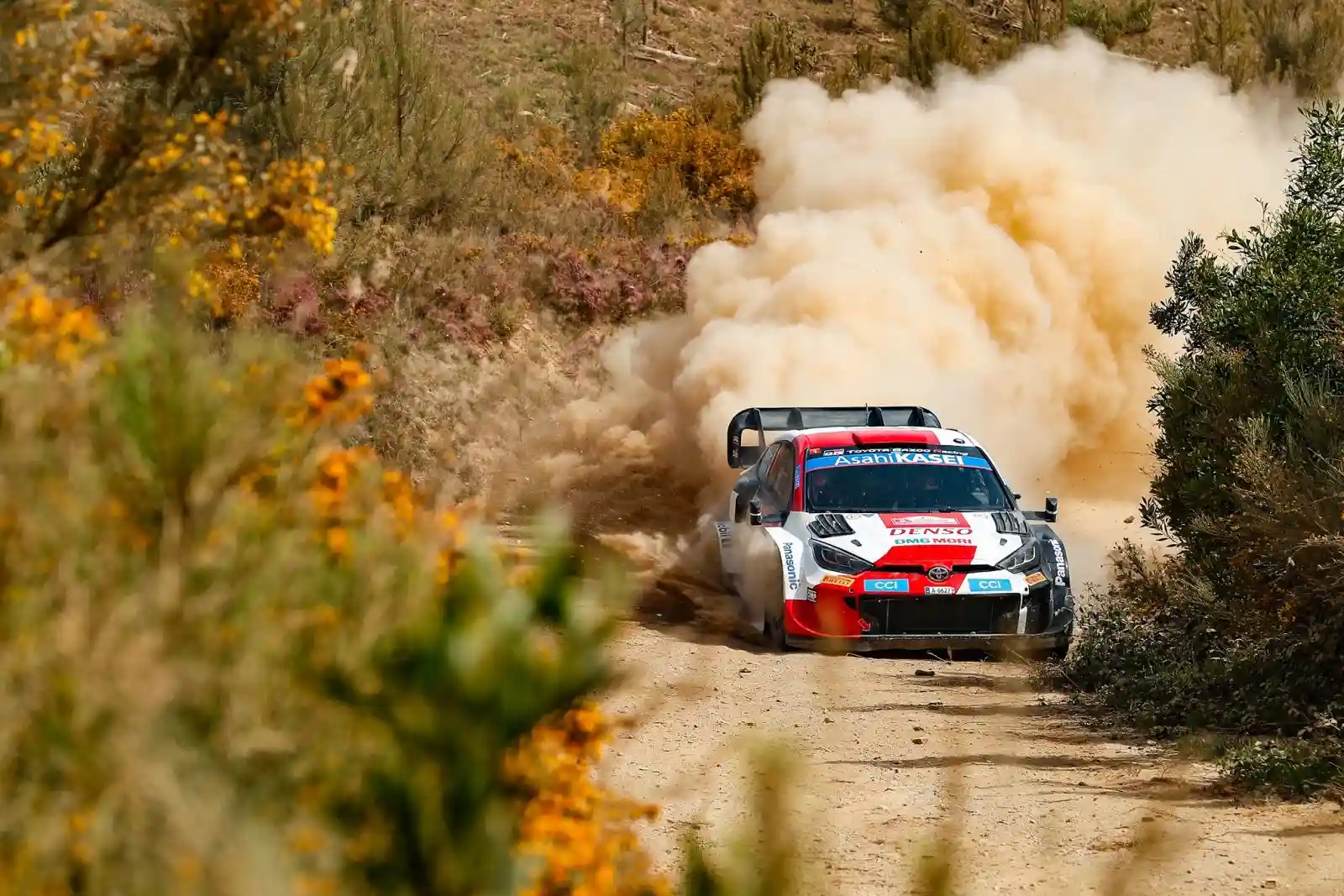
WRC’s official event guide says the soft gravel can cut up quickly on second passes, creating deep ruts, while fine dust can reduce visibility in dry weather and rain can rapidly change the grip level. That means the optimal strategy can change from one loop to the next.
2026 is a bigger event than 2025
The first WRC Paraguay rally ran 19 stages and roughly 335 kilometres. The 2026 event grows to 22 stages and 358.99 kilometres. The official local organizer has described the second edition as the longest competitive rally on the 2026 WRC calendar, while WRC’s event page confirms the 22-stage, 358.99-kilometre format.
Extra distance changes strategy because there are more chances for a puncture, more tire wear, more variation in road conditions and more opportunities for the championship standings to move. A crew cannot assume that a small Friday deficit can simply be recovered later without paying a reliability price.
The 2025 winner already showed how unpredictable Paraguay can be
Sébastien Ogier won the inaugural WRC Rally del Paraguay after a difficult rally that included a puncture and major position changes. Pirelli’s account of the event makes clear that the surface and tire performance were central to the result, with crews dealing with incidents and changing weather while using the soft Scorpion as the main gravel choice.
Ogier’s victory is strategically relevant because it was not simply a pole-to-flag performance. The rally rewarded the ability to recover, preserve tires and stay in the fight when the road did not behave as expected.
How Road Order Affects Rally del Paraguay 2026
Road order is one of the oldest strategic arguments in rallying, but Paraguay gives the issue a particularly visible form. A car opens the road, sweeps loose gravel and creates a more compact racing line for those behind. If the weather stays dry, the later cars can have substantially better surface conditions.
Elfyn Evans has the clearest disadvantage because he is championship leader and opens the road. Toyota’s preview confirms his expectation that the first road position can become less harmful if rain arrives, but he also warns that rain can turn the rally into a lottery when grip becomes extremely low.
Car 1: Sweep the Loose
The first runner clears loose gravel but pays for it through lower peak grip in dry conditions. Brake zones can be especially costly.
Cars 2–5: Prime Window
These crews often benefit from a cleaner line while avoiding the deepest dust and the extreme road-cleaning disadvantage.
Later Runners: Risk/Reward
Later cars can find cleaner grip, but they may also face more loose stones, ruts and brake-zone damage after the leaders have cut the road.
Rain Changes the Equation
Once the surface becomes wet, the advantage of running later can shrink or disappear because the clay can become extremely slippery.
What road sweeping actually costs
On loose gravel, the car at the front is constantly moving material away from the ideal trajectory. The tire finds less compacted dirt, so acceleration and braking are less efficient. The driver may need to use a slightly different line to locate grip, which can make the car feel vague compared with a later runner.
The time loss is not uniform. A long straight may be almost unaffected because the car is at high speed on a relatively simple surface. The greater penalty can arrive at a braking zone where the loose material gives the tire less confidence. That makes Paraguay particularly challenging because the stages combine long fast sections with junctions and technical sequences.
Why later is not always better
Later road position has a hidden cost: the cars ahead are also changing the road. The surface may become more compacted and faster, but the edges can break away, stones can move into the line and ruts can become deeper. The driver is trading one type of risk for another.
That is why a smart crew chief does not tell the driver to “attack because you’re running later.” The correct instruction is to use the better surface without taking the extra risk that comes with a damaged road.
The best road position depends on weather
In a dry rally, the middle of the priority order is normally attractive. In rain, the order can change dramatically. If the surface is already polished and then receives water, the clay can become extremely low-grip. Evans experienced that in 2025 and expects weather to remain an important variable in 2026.
This is why weather monitoring has to be linked directly to road-order analysis. The forecast alone is not enough. Engineers need to know where the rain is falling, how quickly the road drains and whether the next loop will have a different tire or setup requirement.
Road order and championship strategy
Evans can use his championship lead to make the road-order problem less dangerous. He does not need to win every stage. If he gives up a few seconds to the later runners but finishes the first loop cleanly, he can focus on scoring solid points as the road becomes more favorable.
Pajari has the opposite incentive. He is 30 points behind Evans and has just won Estonia and Finland. If his road position gives him a grip advantage, his temptation will be to capitalize on it immediately. The danger is spending too much of that advantage before the surface and tire state are understood.
Why Ogier’s position is strategically attractive
Sébastien Ogier is one of the most dangerous drivers in Paraguay precisely because he is not the championship leader. He can exploit a favorable starting position, build the rally at his own pace and attack the final day without needing to protect a narrow title lead.
His 2025 victory also gives him unique knowledge of how the road evolves. That does not guarantee a repeat, but it reduces the learning curve that affected teams during Paraguay’s debut.
For a dry loop, the middle priority positions are the strategic sweet spot. If rain arrives, that advantage can vanish. The fastest crew will be the one that knows when to stop treating road order as a fixed advantage and start treating it as a changing condition.
Rally del Paraguay 2026 Tyre Strategy
The tire story begins with a useful distinction: the 2026 Pirelli competition allocation must be taken from the event’s official sporting documentation and weekend tire bulletin. It would be wrong to invent a fixed 2026 compound count before those documents are final.
What is verified is the precedent. At the 2025 Rally del Paraguay, Pirelli reported that the soft Scorpion was the clear tyre choice across the rally, including the longest Sunday stages and changing weather. The company described it as the compromise that gave crews the best combination of grip and performance.
That does not mean every 2026 stage should automatically be attacked with the same tire. The longer 358.99-kilometre route and the known presence of sharp rocks make tire conservation just as important as peak grip.
Why soft gravel tyres were so effective in 2025
Soft gravel tires work because they can generate grip on lower-adhesion surfaces. Paraguay’s compacted red clay can become deceptively slippery when the loose top layer is removed. A tire that can deform into the remaining texture gives the driver confidence on corner entry and traction on exit.
The problem is that soft construction also has to survive sharp rocks and high-speed load changes. That creates the central tire-management question: how much grip can the crew spend before the tire loses its structural margin?
Puncture risk changes tyre strategy
The 2025 rally proved that punctures are not a theoretical concern. Ogier and other crews suffered tire-related problems, and Pirelli’s race report documented multiple incidents.
A driver therefore has to protect the tire in the same way a Formula 1 driver protects brakes: by recognizing the places where unnecessary risk adds no meaningful stage time. Cutting a corner aggressively over a sharp rock may save a tenth. Losing a minute to a puncture can erase an entire morning.
| Tyre strategy | Potential benefit | Main risk | Best use |
|---|---|---|---|
| Fresh soft tyre | Maximum low-grip traction | Damage if road is rocky | Fast first passes / decisive stages |
| Used soft tyre | Known balance and saved fresh stock | Less peak grip | Conservative links or repeat stages |
| Hard option | Potential durability on abrasive clean roads | Lower grip on polished clay | Only when conditions justify it |
| Spare preservation | Protection against puncture | Less freedom in tyre choice | Rock-heavy long stages |
Tyre choice and road order cannot be separated
Road order changes the tire problem. A front-running car sweeping loose material may use its tire differently from a later car that spends the stage on a compacted line. The later runner can load the tire harder in corners, while the first car may slide more and generate heat without gaining the same grip.
That means the “best tyre strategy” depends on where the car starts. A compound that is perfect for the fifth car might be too fragile for the first car because the driver needs extra steering input and throttle correction.
How weather changes the tire call
Rain is the big variable. Toyota’s Evans said the 2025 rain created almost no grip. That means the strategy is not merely “take more aggressive tires.” In extremely low-grip conditions, the driver may prefer a setup and tire approach that provides predictability rather than absolute performance.
Rain can also wash loose gravel from the line and expose a different surface underneath. The crew therefore needs live feedback from the driver rather than relying solely on the morning setup. The tire that was ideal in a dry reconnaissance environment may become wrong within one stage.
Tyre management on the longest Friday loop
Friday is the longest day, with two loops of four stages totalling 153.78 competitive kilometres. Toyota’s preview explicitly describes it as the longest day of competition. That makes tire inventory particularly valuable.
Using a fresh soft tire for every short stage would be tempting but strategically wasteful if the same performance can be achieved with a tire that retains enough grip for the next loop. Crews need to think in terms of the entire day, not individual stage wins.
Changing Grip Is the Biggest Tactical Variable in Paraguay
Changing grip sounds like a vague rallying phrase until you understand what it does to a modern Rally1 car. A braking point can move by several car lengths. The driver’s throttle application changes. The car’s yaw response becomes less predictable. The tire temperatures stop following the normal pattern. The pace note remains the same, but the road underneath it is no longer the same.
WRC identifies this as one of Paraguay’s defining characteristics. The soft gravel can cut up quickly, especially on second passes, while sudden surface changes can catch a driver who misjudges braking or his chosen line.
First pass versus second pass
The first car creates a baseline. The second pass becomes a new stage. The line can be cleaner, but the braking zones may contain ruts, and the road edge can be less supportive after dozens of cars have used it.
A strong second-pass driver does not simply copy the first-pass line. The crew uses recce notes and live stage feedback to identify where the surface changed. This is one area where experienced drivers can gain time without driving at a visibly higher intensity.
The polished-clay effect
Evans’ description of polished clay is particularly important. When many cars run over the same line, friction can polish the surface. The clay becomes smoother and potentially more slippery. That creates a paradox: the line looks “better” because loose gravel has disappeared, but the tire may have less mechanical bite.
That is why the ideal line is not always the cleanest line. A driver may deliberately place the car slightly wider to find a rougher section that provides more grip, especially under braking.
Sharp rocks and puncture management
Paraguay’s road surface also includes sharp stones and rocks. Toyota’s official preview specifically warns that these features are tough on tires, while Pirelli’s 2025 report documents the importance of the soft Scorpion compound and the incidents that occurred.
For the driver, puncture avoidance is a line-selection problem. The fastest-looking line may contain a rock. The safer line may cost two tenths but preserve the tire. Over a 20-kilometre stage, that trade can be worthwhile if the alternative is a puncture.
Dust and visibility
Fine dust can hang in the air in dry conditions, according to WRC’s official event description. That matters more for later runners because the road-order advantage can be undermined if a car catches another crew in its dust cloud.
The ideal gap therefore becomes part of the stage strategy. If the timing interval is too short, a faster car can run into visibility problems. If it is too long, the driver may lose some benefit from momentum against the target ahead. Race control and event timing normally manage these gaps, but the crew still has to respond if visibility is worse than expected.
Rain and the low-grip lottery
Rain is the variable that can erase the normal road-order hierarchy. The polished clay can become extremely slick, and the surface can lose grip far faster than a driver expects from a simple wet-gravel model.
Evans’ 2025 memory is clear: the final-morning rain created almost no grip. That experience is valuable for Toyota because it gives the engineering group a reference for wet-road balance. But a new rainfall pattern can still create a different race.
How drivers should adapt their pace notes
The pace note itself cannot tell the tire what to do. A “six left, tightening” instruction has the same words whether the clay is polished or covered in loose gravel. The driver therefore adapts around the note: earlier braking, less initial steering input, more careful throttle application or a different line around the exit.
This is one of the clearest reasons rally strategy cannot be reduced to a spreadsheet. The numbers can identify the risk, but the driver has to translate that risk into a different line at 160 km/h.
Do not chase the grip you had one kilometre ago. Read the road you have now. In Paraguay, the stage can change faster than the timing screen can explain it.
Stage Strategy: How the Three Rally Days Should Be Approached
Friday — protect the rally while learning the road
Friday contains two loops of four stages and totals 153.78 competitive kilometres. That makes it the most important day for tire conservation and mechanical sympathy.
The first priority is not the lead. It is learning how the actual road compares with the recce. Once drivers have a reliable sense of where the gravel is loose and where the clay is polished, they can begin pushing more confidently.
For Evans, Friday is about minimizing the road-opening penalty. For Pajari, it is about turning a favorable road position into a genuine advantage without damaging tires. For Ogier, it is about using experience to stay close to the front and force the championship contenders to carry the risk.
Saturday — exploit the road evolution
Saturday contains another two loops of four tests before a new super special in Encarnación. By this point, the road condition is much easier to predict.
Drivers should therefore become more aggressive with their line selection. If the first pass revealed a particular braking bump or rut, the second pass is the opportunity to use that knowledge. The danger is assuming that the road will evolve in a perfectly predictable direction.
Saturday is also the day when the championship standings can change significantly. A driver who arrives 20 seconds behind on Friday may be able to recover if the road becomes more compact and the road-order disadvantage shrinks.
Sunday — protect the result, then attack
Sunday has five stages and the Super Sunday/Power Stage component creates an interesting strategic choice. A driver near the podium must decide whether to protect his overall position or attack for bonus points.
For Evans, a controlled Sunday can be worth more than an unnecessary Power Stage risk. For Pajari or Ogier, attacking may make more sense because the upside is a larger points swing. Team strategy therefore has to account for both overall position and championship mathematics.
| Day | Competitive structure | Primary strategy | Biggest risk |
|---|---|---|---|
| Friday | 2 loops × 4 stages · 153.78 km | Learn road + protect tires | Road-opening loss / puncture |
| Saturday | 2 loops × 4 stages + super special | Use road evolution | Deep ruts / overdriving |
| Sunday | 5 stages + final scoring | Convert position into points | Late attack / weather |
Championship Strategy at Rally del Paraguay 2026
| Pos. | Driver | Team | Points | Gap | Paraguay strategy |
|---|---|---|---|---|---|
| 1 | Elfyn Evans | Toyota | 201 | — | Control damage |
| 2 | Sami Pajari | Toyota | 171 | -30 | Attack the road-order window |
| 3 | Takamoto Katsuta | Toyota | 160 | -41 | Clean rebound |
| 4 | Oliver Solberg | Toyota | 156 | -45 | Build Finland momentum |
| 5 | Sébastien Ogier | Toyota | 139 | -62 | Attack for win |
| 6 | Adrien Fourmaux | Hyundai | 129 | -72 | Challenge Toyota |
| 7 | Thierry Neuville | Hyundai | 125 | -76 | Maximize manufacturer points |
Toyota enters Paraguay with 514 manufacturers’ points versus Hyundai’s 340, a lead of 174. Toyota says it can secure a sixth straight manufacturers’ title if it extends the advantage by at least six points in Paraguay.
Why the manufacturers’ title changes road strategy
Normally, each driver is pursuing his own rally result. At Paraguay, Toyota has a second objective. The team can use the strength of its five-car Rally1 lineup to distribute risk. Evans can manage the championship, Pajari can attack, Katsuta can focus on a clean points finish, Solberg can chase another podium and Ogier can go for the victory.
That is not a formal team-order scenario. It is simply the strategic flexibility created by having five cars in the top five of the drivers’ standings. Every clean finish adds to Toyota’s manufacturer total.
Evans versus Pajari: the central battle
Evans leads by 30 points, but Pajari has momentum. Back-to-back wins in Estonia and Finland demonstrate that the younger driver can sustain pace over very different gravel rallies.
The danger for Pajari is that he has fewer reasons to settle. If Evans is fifth and Pajari is second, the gap shrinks. If Pajari wins, the title fight becomes much tighter entering Chile. That creates pressure to attack even when the road conditions are telling him to conserve.
Ogier’s championship role
Ogier is the strategic spoiler. He can take points away from Evans and Pajari without needing to restructure the championship around a full-season campaign. His fifth-place championship position is less important than his ability to win the rally itself.
That is exactly why Ogier is a dangerous road-order problem. If the fifth Toyota is the fastest car on the stage, the championship leader cannot simply let him disappear up the road without responding.
Mechanical and Setup Strategy for Paraguay’s Rough Gravel
Paraguay’s strategy does not stop at tires. Toyota’s official preview highlights large jumps, depressions and sharp stones. Those features place vertical and lateral loads into the car that can turn a small setup mistake into a retirement.
Suspension travel versus high-speed stability
A Rally1 car needs enough suspension travel to absorb landings without upsetting the platform. Too soft and the car can become vague in high-speed changes of direction. Too stiff and it can skip over bumps, reducing tire contact and increasing puncture risk.
Ride height and road damage
Ground clearance matters when the road contains deep ruts. A driver can choose a slightly different line, but the car still needs enough clearance to avoid hard impacts. Engineers are therefore balancing aerodynamic and mechanical performance against the physical reality of the road.
Brake temperature and loose surface behavior
Loose gravel changes braking efficiency. The surface has less grip, so the driver cannot simply apply the same brake pressure used on compacted sections. This makes brake pedal confidence a function of road condition, not just car setup.
Cooling and dust
Dust affects visibility, but it also matters mechanically. The team needs reliable airflow while the car is running at high speed through dry conditions. Engineers monitor temperatures closely because a rally car can accumulate mud and dust in places where a circuit car would not.
In Paraguay, the fastest setup is only useful if the car reaches the finish. With 358.99 competitive kilometres, the setup target should be predictable performance over the whole weekend rather than one spectacular stage.
Rally del Paraguay 2026 Schedule for U.S. Viewers
The official WRC event runs from August 27–30, 2026. WRC says every stage is live and available on demand via Rally.TV, including onboard cameras and expert analysis. Because stage start times can shift within the long rally itinerary, U.S. viewers should use the live WRC timetable for the exact ET conversion.
| Rally phase | Date | U.S. Eastern Time | Strategic story |
|---|---|---|---|
| Ceremonial start | Thu. Aug. 27 | Check live WRC timetable | Road order and rally atmosphere |
| Friday | Aug. 28 | Morning–afternoon ET | Longest day, 153.78 km |
| Saturday | Aug. 29 | Morning–afternoon ET | Ruts and second-pass grip |
| Sunday | Aug. 30 | Morning–early afternoon ET | Championship points and Power Stage |
The rally’s opening day is the longest competition day, while Saturday includes two loops of four stages and a new super special in Encarnación. Five stages close the rally on Sunday.
Five Strategic Questions That Could Decide Paraguay
1. Can Evans limit the road-opening loss?
If Evans is within striking distance after Friday’s first loop, his championship position may become an advantage rather than a weakness. If he loses too much time, Toyota may have to manage the risk differently.
2. Will Pajari attack the road-order window?
Two wins in a row create pressure to continue winning. The better tactical choice may be to take a large but controlled lead rather than chase every stage record. Paraguay’s red clay can punish overdriving.
3. Can Ogier repeat his 2025 tire management?
Ogier’s 2025 win proved that a puncture or setback does not have to end the weekend. His strongest strategic weapon is experience: he can decide when a stage requires maximum commitment and when a cleaner line is worth more.
4. How much will the second pass change?
If the road becomes dramatically rutted, the second-pass times can differ from the first pass by much more than expected. That changes tire wear, suspension settings and the value of the road position.
5. Does rain create a new rally?
Yes. Toyota’s Evans has already described last year’s wet final morning as a near-total grip loss. A similar weather event in 2026 could reduce the importance of pure road position and make car control the dominant factor.
Watch the gap between the first and fifth priority cars on identical stage passes. If the gap changes sharply between first and second pass, the surface is evolving fast enough to make road order a primary strategy variable for the entire rally.
What “Good Strategy” Looks Like in a Paraguay Rally Car
A good strategy in Paraguay is not a single tire call or a clever road-order trick. It is a sequence of small decisions that preserve the driver’s options.
The crew starts with reconnaissance. It then builds a tire plan. The engineer adjusts the plan after the shakedown. The driver changes the approach when the gravel is different from the recce. After the first loop, the team looks at tire wear, stage splits and onboard comments. After service, the plan changes again.
The best WRC teams are therefore constantly recalculating. They do not decide on Thursday night that Friday will be an aggressive day and then follow the script regardless of what the road says. They modify the strategy as the stage tells them what it is becoming.
Stage time is not the only number
Engineers look at the stage time, but they also look at tire temperature, tire wear, split-time shape and driver comments. If a car is fast because the driver is using the rear tire aggressively, the stage time may look excellent while the underlying strategy is poor for the next three stages.
This is particularly important in a longer rally. One excellent stage can be worth less than ten consistent ones if it creates a puncture or consumes the tires needed for Saturday.
Why the navigator becomes a strategic weapon
Changing grip makes the co-driver’s pace notes even more valuable. The driver needs to trust the note while adapting the braking and line to the surface. A small hesitation can cost time, but a blind commitment to an old line can cost much more.
That is why experienced crews have an advantage in Paraguay. The rally rewards communication between the seat and the pit wall just as much as raw car speed.
Rally del Paraguay 2026 Strategy Verdict
Ogier is the strongest strategy pick because he combines prior Paraguay experience, a proven ability to manage tires and a championship position that allows him to attack rather than protect a narrow lead. Pajari is the fastest momentum pick, while Evans is the safest championship pick.
The most likely winner will not necessarily be the driver who wins the most stages. Paraguay should reward the crew that spends the least amount of time fighting problems.
Ogier’s 2025 victory is the strongest evidence available. He recovered from tire trouble and still won the inaugural rally, while the wider field struggled with punctures, changing grip and weather.
Pajari is the obvious alternative because he arrives with consecutive victories in Estonia and Finland. His current form cannot be ignored, especially because Toyota’s latest preview confirms he is now Evans’ nearest championship challenger.
Evans remains the championship benchmark. His strategy should be built around minimizing the road-opening disadvantage without allowing Pajari or Ogier to build an unrecoverable lead. If he leaves Paraguay with a podium or top-four result and his major rivals have not scored a huge swing, he has done the job he needs to do.
That is the central point of the Rally del Paraguay 2026 strategy analysis. The rally will not be won by treating road order, tyres and grip as separate subjects. They are connected. Road order determines the surface. The surface changes the tire load. Tire load changes the driver’s line. The line changes stage time. And stage time changes the championship strategy.
Paraguay is therefore an event where the smartest driver is often the one who changes his mind first.
Frequently Asked Questions
Conclusion: Paraguay Will Reward the Driver Who Reads the Road Best
The real battle is not against the stopwatch
Rally del Paraguay 2026 is a test of adaptation. The official WRC route is 22 stages and 358.99 kilometres, and the roads combine fast red-earth gravel with technical sections, deepening ruts and sudden changes in surface condition.
For Elfyn Evans, the strategic problem starts before he reaches the first junction. As the championship leader, he opens the road and pays the cleaning penalty on dry gravel. Yet if rain arrives, his position can suddenly become less harmful, and he has the advantage of having the road first in conditions that may become worse for everyone behind him. Toyota’s own preview captures that contradiction.
Pajari arrives with momentum after two wins. Ogier arrives with the best Paraguay history and a 2025 victory. Solberg arrives after a breakthrough second place in Finland. Katsuta arrives needing a clean reset. Hyundai’s Fourmaux, Neuville and Paddon need to interrupt Toyota’s control of the championship.
The tire story is equally clear. Pirelli’s 2025 analysis showed the soft Scorpion was the common answer in Paraguay, but the 2026 route is longer and the road remains capable of exposing sharp rocks. Tire preservation therefore has to be treated as a stage-by-stage resource, not a single compound decision.
Final strategic verdict: Sébastien Ogier is the best all-around race-strategy pick, Sami Pajari is the momentum threat, and Elfyn Evans remains the driver with the most valuable thing in rallying — control of the championship points. Expect road order to matter on Friday, changing grip to dominate Saturday and championship pressure to shape every decision on Sunday.
In Paraguay, the fastest route is often the route the road will allow you to take. The driver who understands that before everyone else will have the biggest advantage.
Related Motorsport Reading
Sources & Data Notes
This is a pre-race 2026 strategy analysis prepared on August 22, 2026. Route facts and event characteristics are based primarily on the official WRC event page and Toyota Gazoo Racing’s 2026 Paraguay preview. The tyre discussion uses Pirelli’s 2025 Rally del Paraguay report as the most relevant recent race precedent and does not present it as a substitute for the final 2026 tyre bulletin.
- WRC — ueno Rally del Paraguay 2026 official event page
- Toyota Gazoo Racing — 2026 Rally del Paraguay preview
- Rally del Paraguay — 2026 entry list and 60-crew field
- Rally del Paraguay — official 2026 route and launch announcement
- Pirelli Motorsport — 2025 Paraguay tyre and race report
- WRC — Sébastien Ogier wins the inaugural Rally del Paraguay
- Motorsport.com — 2025 Paraguay race report
- FIA — 2026 World Rally Championship standings
The article contains three real motorsport images sourced from editorial motorsport coverage. Image rights remain with their original publishers; confirm the applicable license before commercial republication.