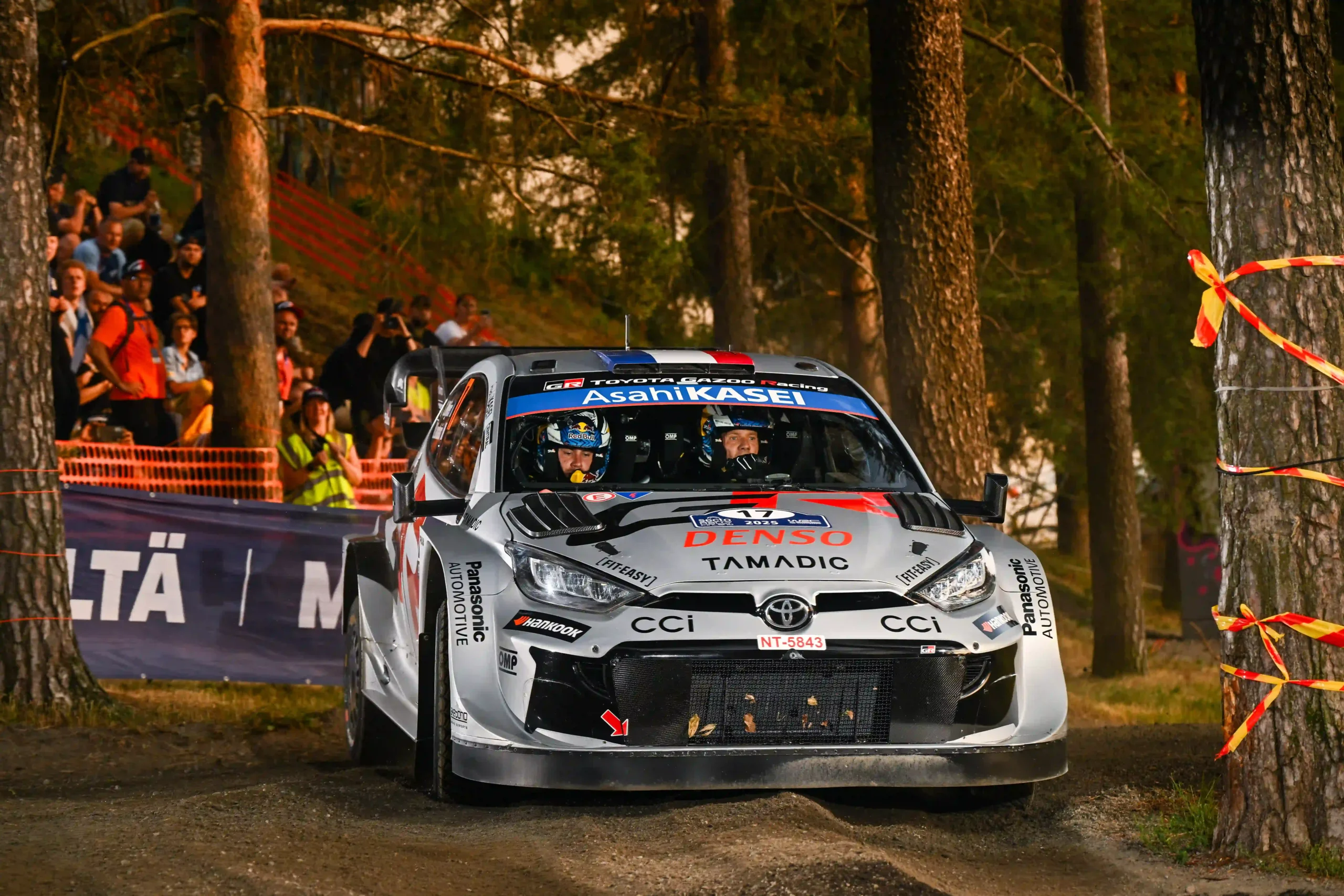
Rally Finland 2026 Predictions: Overall Winner, Podium & Class Favorites
A pre-event form guide built from the championship picture entering Jyväskylä: our overall winner, top-three picks, Rally1 outsiders, WRC2 favorites and Junior WRC call.
Rally Finland 2026 predictions are unusually difficult because the strongest team arrived with five realistic winners, while Hyundai brought a much better road position and fresh fast-gravel confidence. Toyota’s Elfyn Evans led the championship, but Sami Pajari had just won Rally Estonia and Oliver Solberg had finished second there.
This guide treats Finland as it looked before the first competitive stage. It does not use the eventual Rally Finland result to manufacture a perfect forecast after the fact. Instead, the picks are based on form through Rally Estonia, Finland history, road order, local knowledge, team strength and class-specific evidence available before the event.
The competitive forecast is frozen at the pre-event picture after Rally Estonia. Later Rally Finland results are intentionally excluded from the selection logic. That makes the article useful as a genuine record of what the field looked like before the start.
Who Will Win Rally Finland 2026?
Our pre-event pick to win Rally Finland 2026 is Elfyn Evans. He entered Jyväskylä leading the WRC standings on 177 points and had already won Rally Finland twice, in 2021 and 2023. Sami Pajari and Oliver Solberg are our next two choices after finishing first and second on the similarly fast gravel roads of Rally Estonia.
Evans is not the fashionable choice if the forecast is built only around the previous rally. Pajari had the headline result in Estonia, while Solberg had the cleaner points weekend among Toyota’s young high-speed specialists. However, Finland punishes a prediction model that overreacts to one event.
The Welshman entered the round with the strongest blend of championship management, proven Finland speed and recent winning form. He had won in Sweden and Japan during 2026, and his two previous Finland victories matter because this is one of the calendar’s most specialized tests. The fastest driver is not always the driver who survives the repeated crests, compressions, blind landings and changing grip with the least time loss.
There is one major weakness in the Evans case. As championship leader, he faces an earlier road position than his Hyundai rivals. On dry loose gravel, cleaning can cost grip. The effect in Finland is not always as severe as on slower, rougher gravel rallies, yet it remains a factor when margins between the Rally1 cars can be measured in tenths.
Even so, Evans has enough evidence behind him to remain the first choice. His pace can be matched by several drivers, but his profile contains fewer unknowns. For a prediction rather than a wish list, that difference is important.
Predicted Rally Finland 2026 Podium
This top three deliberately leans toward Toyota because the team arrived with five drivers occupying the top five positions in the championship. More importantly, every one of those five had already won a WRC round in 2026. That is an extraordinary concentration of form inside one manufacturer.
Pajari is the hardest driver to place. His Estonia victory moved him to third in the standings and confirmed that his high-speed pace was no longer theoretical. Finland also gives him the emotional lift of a home event, yet that same pressure can become a burden when thousands of fans expect another win immediately.
Solberg sits third in our forecast because the route should reward exactly what he does best. He is aggressive but natural on flowing gravel, and he arrived after a controlled second place in Estonia. His earlier WRC2 success in Finland also removes a major experience concern.
Ogier misses the predicted podium by very little. A two-time Rally Finland winner with nine world titles can never be treated as an outsider. However, his Estonia return to that style of road was not as sharp as Pajari or Solberg, and our prediction gives a slight momentum advantage to the younger pair.
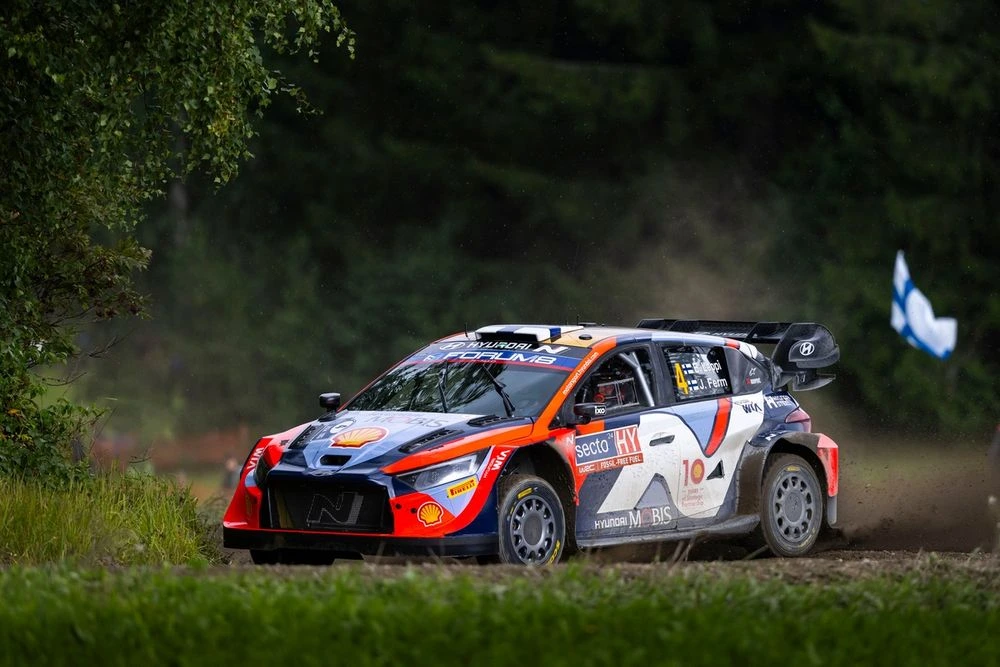
Rally1 Favorites Ranked: Who Can Break the Podium?
Elfyn Evans: the reference pick
Evans came into Finland with 177 championship points, 25 more than Takamoto Katsuta. The numbers matter, but Finland history matters more. His victories in 2021 and 2023 prove he can convert speed into a complete weekend on these roads.
His biggest tactical problem is road position. A dry Friday can force the early cars to expose fresher gravel for those behind. Therefore, Evans may need to accept a measured opening loop rather than chase stage wins that demand too much risk.
Sami Pajari: the momentum pick
Pajari won Rally Estonia immediately before Finland and moved to 144 points, third in the championship. That result changed his status. He was no longer merely the exciting local prospect; he had demonstrated that he could manage Rally1 pressure over a complete fast-gravel event.
Finland should suit him even more naturally. He knows the rhythm, the surface and the mental demands of committing over blind crests. The concern is whether the emotion of a home rally encourages one unnecessary push when a safe second-fastest time would be enough.
Oliver Solberg: the high-speed specialist
Solberg reached Finland after finishing second in Estonia and sat fifth in the standings on 130 points. He had also already won the Monte Carlo opener in 2026, which showed that his Rally1 campaign was capable of both speed and result conversion.
Finland’s flowing geometry fits his instincts. The car must be placed accurately before the crest rather than after it, because the next corner can arrive before the suspension has fully settled. Solberg’s natural commitment makes him dangerous whenever the confidence loop is positive.
Sébastien Ogier: never outside the winning conversation
Ogier had 139 points before Finland despite a selective programme earlier in the season. He also owned Rally Finland victories from 2013 and 2024. That combination makes any ranking below fourth feel aggressive.
The case against him is only relative. Pajari and Solberg arrived with better immediate fast-gravel momentum, while Evans carried the stronger championship position and historical consistency. If conditions became mixed or the rally demanded strategic restraint, Ogier’s value would rise sharply.
Takamoto Katsuta: second-home advantage
Katsuta entered Finland second in the championship on 152 points. He learned much of his rally craft in Jyväskylä through Toyota’s development programme, so the event has always carried a second-home feel. He had also finished third in Finland in 2023 and second in 2025.
Those results make him a genuine podium candidate. However, our model places him just outside the top three because Estonia exposed more outright pace from Pajari and Solberg. Katsuta’s best route to the podium is consistency while others make small mistakes at full commitment.
Adrien Fourmaux: best Hyundai podium bet
Fourmaux is our highest-rated Hyundai driver. He finished third in Estonia, his second podium of the 2026 season, and entered Finland tied with Thierry Neuville on 111 points. Hyundai had also shown enough fast-gravel pace in Estonia to make a Toyota sweep far from automatic.
Road position strengthens his case. Hyundai expected its crews to run behind the five Toyota championship leaders on the first full day. If the surface remained dry, that could mean cleaner lines and slightly better grip. A strong opening Friday could place Fourmaux inside the podium fight before Toyota’s road-position disadvantage fades.
Thierry Neuville and Esapekka Lappi: different paths to the same target
Neuville had already won in Portugal during 2026 and carried enough experience to punish any mistake ahead. His Finland record is less dominant than some Toyota rivals, but he is the kind of driver who can turn changing weather into an opportunity.
Lappi is the emotional Hyundai wildcard. He won Rally Finland in 2017 and returned on home soil with Enni Mälkönen. Missing the previous year’s event reduced the advantage of memory, yet the new 2026 stages also reduced the familiarity gap for everyone else.
Mārtiņš Sesks: the dark horse
M-Sport’s most interesting upside pick is Mārtiņš Sesks. His speed on fast Baltic-style gravel is established, and Finland rewards drivers who trust the car at high speed. The challenge is sustaining Toyota and Hyundai pace across all 316.04 competitive kilometres rather than producing isolated headline stage times.
A podium would still require problems for several factory rivals. Nevertheless, Sesks is the driver outside Toyota and Hyundai most likely to make the top teams uncomfortable if the Puma is in its setup window.
What Decides the Winner at Rally Finland?
Rally Finland is often described as the WRC’s fastest event, but speed alone is a poor predictor. Average stage speeds regularly exceed 120 km/h. That means a small pace-note error can become a large time loss before the driver has enough road to correct it.
The 2026 route also changed more than half of the competitive distance compared with the previous year. Sydänmaa and Hoho were new, while familiar stages such as Laukaa, Päijälä and Västilä were reversed or revised. Therefore, local knowledge remained valuable without turning the event into a memory test.
Road order and weather can reverse each other. Dry loose gravel usually helps later starters because early cars clean the line. Persistent rain can instead favor earlier cars before the road surface deteriorates, while hidden stones increase puncture risk for everyone.
Friday road position
The championship leaders begin with the least favorable dry-road position. Evans, Katsuta, Pajari, Ogier and Solberg therefore face the possibility of creating a cleaner line for Hyundai. If Friday stays dry and stable, Fourmaux and Neuville could gain tenths without driving beyond their natural limit.
However, Finland’s roads are generally hard and high-grip beneath the loose top layer. The cleaning penalty is meaningful but not always decisive. A driver who sacrifices too much pace while worrying about road position can lose more than the surface ever cost.
Jumps and landing control
The dramatic photographs show cars flying, yet the important part is the landing. A car that lands slightly crossed can lose the braking platform for the next corner. Therefore, suspension control and driver discipline often matter more than maximum jump distance.
The 30.02 km Himos-Jämsä finale
Sunday contains two runs of Himos-Jämsä, each 30.02 km, with the second pass serving as the Power Stage. That creates a final-day scenario where a small lead may not be comfortable. Sixty competitive kilometres on Sunday is enough to change the overall classification even before bonus points are considered.
For our prediction, this favors drivers with proven rally management rather than pure sprint speed. Evans and Ogier score well here. Pajari and Solberg have enough pace to build margins, but they may need to balance that against the temptation to win every split.
Rally Finland WRC2 Predictions
Roope Korhonen is our WRC2 winner pick. He entered Finland as the championship leader and had won WRC2 on these roads in 2025, beating Jari-Matti Latvala by only 1.1 seconds. Teemu Suninen is the closest challenger after winning WRC2 in Portugal and finishing on the Estonia podium.
The WRC2 field is arguably harder to predict than Rally1. Twenty-nine crews were eligible for WRC2 points inside a 33-car RC2 field. Finland also attracts local drivers who know the road character in a way that is difficult to quantify from championship points alone.
Roope Korhonen
Championship leader, defending Finland WRC2 winner and comfortable on fast Finnish gravel. His 2025 win over Latvala by 1.1 seconds is exactly the kind of pressure result that matters in this class.
Teemu Suninen
Portugal winner in the Toyota GR Yaris Rally2 and an experienced top-level driver. He combines local understanding with the ability to manage a long rally rather than simply chase stage wins.
Nikolay Gryazin
A strong high-speed gravel profile and a Lancia package that had already shown class-winning capability. Robert Virves and Léo Rossel are close enough that this final place has the lowest confidence of our WRC2 podium.
Why Korhonen gets the edge
Korhonen does not need an imaginative case. He arrived as the WRC2 points leader, and he had already converted Finland pressure into a class win one year earlier. That previous result was not comfortable either, which increases its predictive value.
He also finished second to Suninen in Portugal and remained central to the title picture through the season. On a home rally where confidence in the braking points and crest profiles is essential, Korhonen offers the cleanest combination of speed, familiarity and current championship form.
Suninen is the experienced counter-pick
Suninen’s Portugal victory was his eighth WRC2 win and his first in a Toyota GR Yaris Rally2. He also set seven fastest WRC2 stage times there. That evidence matters because it shows he can both manage an event and produce decisive speed when needed.
If Korhonen becomes conservative because of the championship, Suninen is the obvious driver to attack. He has enough top-level experience to treat the first loop as information rather than a panic point if the setup is not perfect.
Latvala can distort the class without scoring WRC2 points
Jari-Matti Latvala is a major complication for anyone reading the raw RC2 classification. The Toyota team principal entered in a GR Yaris Rally2, but he was not registered for WRC2 points. He can still take stage times and finish ahead of registered crews.
That means the first Rally2 car on the road or in the overall result may not necessarily be the WRC2 winner. Readers should separate RC2 road position from WRC2 eligibility when judging the final class outcome.
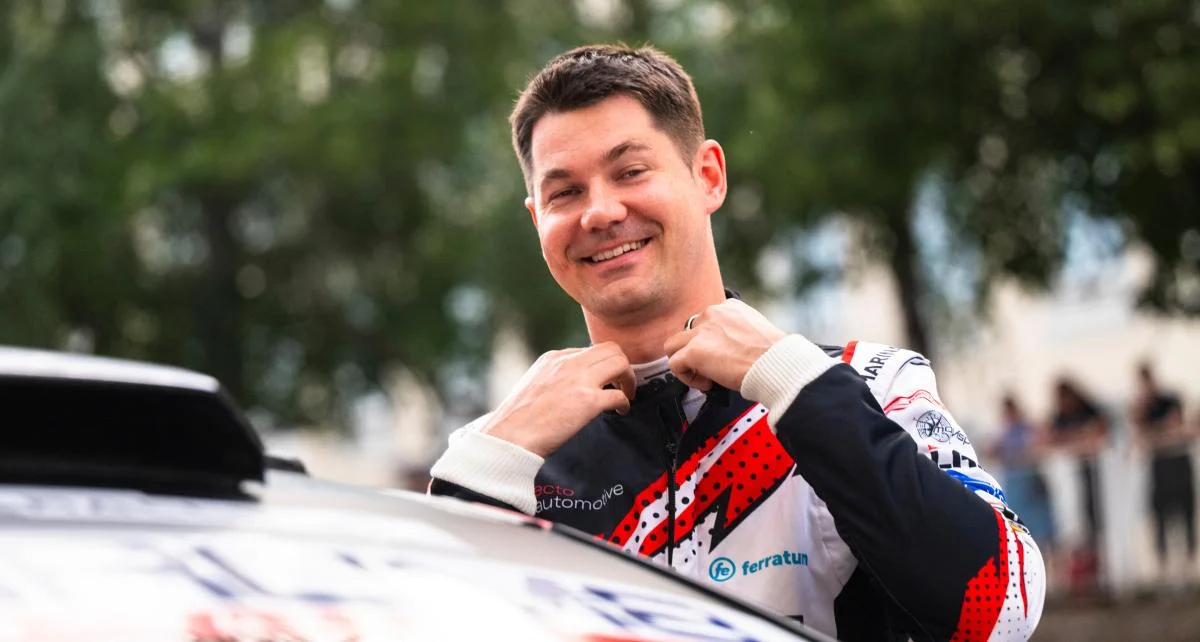
Junior WRC Rally Finland Prediction
Junior WRC arrived in Finland with only two points separating championship leader Calle Carlberg from Ali Türkkan. Carlberg had 76 points, Türkkan 74. Gil Membrado sat third on 44, while Finnish driver Leevi Lassila held fourth on 41.
That gap makes this prediction less secure than our Rally1 or WRC2 choices. Carlberg had shown the stronger stage-winning ceiling across the season, yet Türkkan had won in Croatia and Portugal. One driver carried more raw pace evidence; the other carried more recent conversion.
Why Carlberg remains our narrow favorite
Carlberg’s championship lead survived a difficult Portugal because he had already accumulated stage-win points. That detail matters. It suggests his ceiling across individual tests remained extremely high even when the final result did not go his way.
Finland’s fast commitment rewards a driver who can generate time repeatedly rather than wait for others to fail. Therefore, Carlberg gets the smallest possible edge. Türkkan’s ability to convert pressure into back-to-back victories keeps the gap between them almost negligible.
Leevi Lassila is the local wildcard
Lassila entered the round fourth in the Junior standings. On paper, that makes him an outsider. In Finland, however, local drivers can close a performance gap because the road rhythm is unusually specific.
He is not our title-race favorite, but he is a reasonable podium pick. If Carlberg and Türkkan push each other beyond the safe margin, Lassila is well placed to benefit without needing an unrealistic pace jump.
Five Reasons These Predictions Could Be Wrong
- Weather can reverse road-order logic. Dry conditions generally help later starters. Rain can reduce that advantage or even reward the earlier cars.
- Punctures are difficult to model. High speed means a hidden stone can turn a tiny line error into a large time loss.
- New and reversed stages reduce memory advantages. More than half of the competitive distance changed from 2025.
- Toyota’s five-driver strength creates internal volatility. A driver ranked fifth in our model is still capable of winning outright.
- The Sunday finale is long enough to change everything. Two 30.02 km Himos-Jämsä runs create real late-rally exposure.
That is why the article avoids fake precision. A 7.9/10 rating does not mean a 79 percent chance of winning. It simply means the driver scores strongly across the factors that mattered before the event.
The broader takeaway is that Toyota should start as the manufacturer favorite, but Hyundai has a realistic route into the podium through road position and improved Estonia pace. WRC2 is even less predictable because of the enormous depth of Finnish Rally2 talent.
More Rally & Motorsport Reading
Rally Finland 2026 Predictions FAQ
Conclusion: Our Final Rally Finland 2026 Picks
Our final overall call is Elfyn Evans to win Rally Finland 2026, with Sami Pajari second and Oliver Solberg third. Evans gets the edge because his two previous Finland victories reduce uncertainty, while Pajari and Solberg arrive with the best immediate fast-gravel momentum after their one-two finish in Estonia.
Adrien Fourmaux is the driver most likely to break the Toyota podium. Hyundai’s Estonia progress and later Friday road position give him a credible tactical route into the top three. Ogier and Katsuta remain too strong to label as outsiders, which is exactly why the overall prediction is less comfortable than the simple championship table suggests.
In WRC2, Roope Korhonen is our favorite ahead of Teemu Suninen, with Nikolay Gryazin narrowly taking the third pick. Junior WRC is closer still: Calle Carlberg gets the smallest edge over Ali Türkkan, while Leevi Lassila is the local podium wildcard.
Finland rarely rewards certainty. The road is too fast, the margins are too small and the consequences of one missed note are too large. That is also what makes it one of the best rallies to predict before the cars leave Harju: almost every major argument has a credible counter-argument.
Sources
This prediction guide uses the pre-event championship and entry picture available before Rally Finland started.