Rally Estonia 2026 Results: Winner, Podium & Full Final Classification
Sami Pajari led from the opening stage to the finish, delivered 12 stage wins and became the 83rd different winner in World Rally Championship history. Here is the complete 46-crew classification and the analysis behind a breakthrough result.
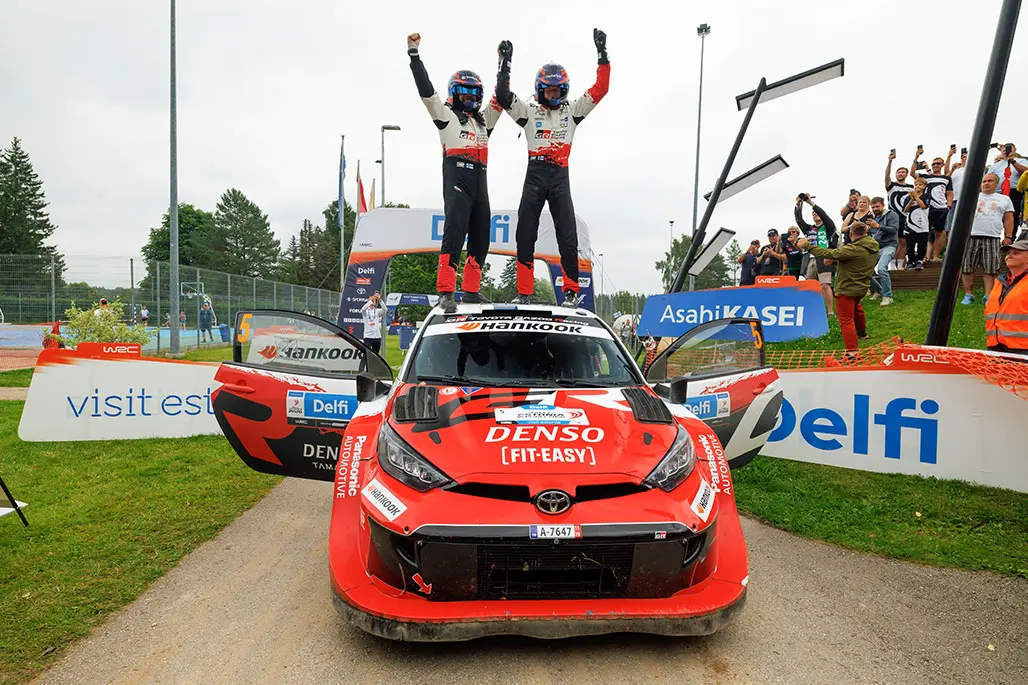
The Rally Estonia 2026 results confirmed the biggest victory of Sami Pajari’s career. Pajari and co-driver Marko Salminen won the ninth round of the FIA World Rally Championship in a Toyota GR Yaris Rally1, completing 18 high-speed gravel stages in 2 hours 31 minutes 16.5 seconds.
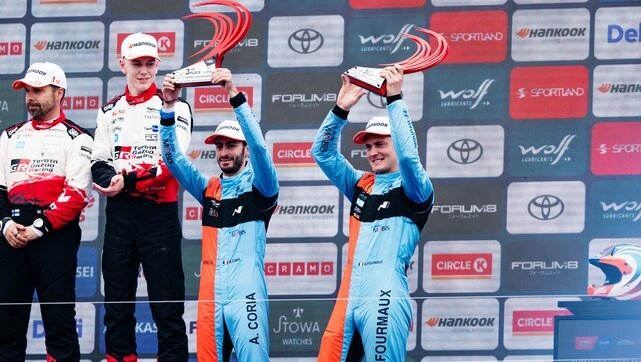
Oliver Solberg and Elliott Edmondson finished second, 19.5 seconds behind, to secure a Toyota one-two. Adrien Fourmaux and Alexandre Coria earned third for Hyundai after defeating team-mates Thierry Neuville and Martijn Wydaeghe in a close final-day fight. Home crew Robert Virves and Jakko Viilo won WRC2 and finished 10th overall.
Sami Pajari and Marko Salminen won Rally Estonia 2026. They led from the first competitive stage to the finish, won 12 of the rally’s 18 stages and beat Oliver Solberg by 19.5 seconds. It was Pajari’s first overall WRC victory and made him the championship’s 83rd different rally winner.
Rally Estonia 2026 Results at a Glance
Rally Estonia rewarded commitment more than caution. Its broad forest roads, flat crests and long sequences of fast corners asked drivers to trust their pace notes at speeds where a small hesitation could cost several tenths. The 2026 route contained 18 stages and 301.80 competitive kilometers, or roughly 187.5 stage miles, based around Tartu.
Friday packed shakedown and seven stages into the same day. Saturday was the longest leg, with nine tests covering 149.6 kilometers. Sunday consisted of two runs over the 24.39-kilometer Kääriku stage, with the second pass serving as the Wolf Power Stage. Warm and dusty conditions shaped the first two days before overnight rain changed the grip for the final leg.
Sami Pajari and Marko Salminen won for Toyota. Oliver Solberg and Elliott Edmondson finished second, 19.5 seconds behind, while Hyundai’s Adrien Fourmaux and Alexandre Coria took third at +53.8. Fourmaux defeated team-mate Thierry Neuville by 5.9 seconds for the final podium position.
Why Sami Pajari Won Rally Estonia 2026
Pajari’s first WRC win was not produced by a late gamble, a rival’s retirement or a fortunate road order on one decisive stage. It was a front-running performance built from the opening kilometers. He won every stage on Friday, left the first leg with a 14.7-second lead over Solberg and never surrendered first place.
The shape of the victory matters. Rally Estonia is one of the calendar’s clearest tests of high-speed confidence. Drivers spend long periods at full or near-full throttle, approaching blind crests while the car is light and the road changes direction immediately beyond the summit. A driver who does not trust the car loses speed before the crest. A driver who commits without accurate notes risks a large accident. Pajari found the narrow line between those extremes.
A car he did not need to chase
Toyota reported that Pajari was satisfied with the GR Yaris Rally1 after shakedown and did not request a major setup change. That detail helps explain the consistency of his weekend. Instead of spending the early stages diagnosing balance or searching for rear stability, he could concentrate on line choice, braking references and maintaining momentum through Estonia’s flowing corners.
His pace was especially convincing because it survived changes in surface condition. Friday’s dry roads produced a clear cleaning effect, rewarding later starters with a line swept of loose gravel. Saturday brought longer mileage and road evolution. Sunday’s rain reduced the relevance of the dry-weather reference points. Pajari remained composed in all three versions of the rally.
Twelve stage wins and a nine-stage streak
Pajari won 12 of the 18 stages. Nine of those fastest times came consecutively across Friday and Saturday morning, a run that turned an early lead into control of the rally. Solberg finally stopped the streak, but Pajari answered rather than retreating into protection mode. By the end of Saturday, his advantage had grown to 25.0 seconds.
That response was one of the weekend’s most important moments. A new leader can become cautious when a rival begins to take time back. Pajari instead protected the qualities that created the lead: clean braking, early throttle and minimal steering correction. He did not need to win every remaining stage, but he continued to drive at a level that prevented Solberg from creating sustained pressure.
Pajari’s result was dominant because he controlled the rally’s rhythm. He was fast enough to build the gap, calm enough to manage it and precise enough to avoid giving his rivals the opening they needed.
A breakthrough with championship weight
The win made Pajari the 83rd different driver to win a round of the World Rally Championship. It also arrived after five podium finishes in the first eight rallies of 2026, showing that Estonia was the conversion of an established trend rather than an isolated surprise. At 24, and in only his second full-time Rally1 season, he moved from promising contender to proven winner.
Pajari scored 28 championship points in Estonia: 25 for the overall win and three from Sunday. His season total rose to 144, placing him third in the drivers’ standings and 33 points behind leader Elfyn Evans after round nine. With five rallies remaining at that point, the victory gave his title campaign real mathematical and sporting credibility.
Rally Estonia 2026 Podium Analysis
Oliver Solberg: second overall and maximum Sunday points
Solberg was Pajari’s only realistic rival for the victory once the rally settled. He ended Friday 14.7 seconds behind, remained second throughout Saturday and reached the final morning 25.0 seconds from the lead. The gap was large enough to protect Pajari but small enough to force the leader to remain alert.
Solberg’s strongest contribution came on Sunday. He won the first run over Kääriku and then topped the Power Stage in 11:11.9. That gave him the maximum five Super Sunday points and five Power Stage points, adding 27 points to his championship total when combined with the 17 points for second overall.
Second place therefore carried more value than a conventional runner-up finish. Solberg reduced the sporting damage of missing the victory by extracting every available bonus point. He also returned to the podium after a run of results that had not always reflected his speed, and he moved to 130 championship points.
Adrien Fourmaux: a podium earned under direct pressure
Fourmaux’s third place was decided inside the Hyundai team. He and Neuville were separated by only 1.9 seconds after Saturday. The first Sunday pass over Kääriku became the decisive test. Fourmaux produced a committed run, beat Neuville by 7.9 seconds and increased his cushion to more than nine seconds before the Power Stage.
That gave Fourmaux enough room to prioritize the podium on the final stage. He did not need to match Neuville’s bonus-point attack; he needed to keep the car on the road and preserve the overall position. The French crew finished 5.9 seconds ahead of their team-mates and earned their second podium of the 2026 season.
The result also showed recovery. Fourmaux hit an anti-cut device and suffered a slow puncture on Saturday, problems that could have removed him from the podium fight. He stayed within range, improved the car for Sunday’s first pass and delivered when the position was directly threatened.
Thierry Neuville: speed returned, but too late for third
Neuville finished fourth at +59.7, only 5.9 seconds behind Fourmaux. Hyundai had struggled to find the desired balance earlier in the rally, but setup changes improved Neuville’s confidence during Saturday. He closed on third place and entered Sunday with a genuine chance to pass his team-mate.
An issue on the first Kääriku run disrupted that challenge. Neuville answered by finishing second on the Power Stage, 2.224 seconds behind Solberg, and collected four bonus points. He and Fourmaux left Estonia tied on 111 championship points, although Fourmaux held the better rally result on the weekend.
Toyota’s front-end strength
Toyota placed two cars in the first two positions and four in the top six. The GR Yaris Rally1 combined the stability needed for high-speed commitment with enough range to perform in dry, dusty and damp conditions.
Hyundai’s recovery
Hyundai did not have the pace to challenge Pajari, but Fourmaux and Neuville converted improving speed into third and fourth. Lappi’s eighth place completed a reliable three-car finish.
How the 2026 Rally Estonia Results Developed
Pajari opened with the fastest time on Raanitsa and repeated that pattern throughout the day. Solberg settled into second, Fourmaux held third and Neuville remained close enough to maintain pressure. Evans, running first on the loose road as championship leader, swept gravel from the line and ended Friday ninth, 49.8 seconds behind.
Saturday contained nine stages and almost 150 competitive kilometers. Solberg ended Pajari’s run of consecutive stage wins, yet the leader responded and increased his advantage to 25.0 seconds. Fourmaux and Neuville moved into a close battle for third, while Evans recovered from ninth to sixth as his road position improved.
Overnight rain created a different surface for the two long Kääriku stages. Solberg attacked for Sunday points and won both tests. Pajari accepted a controlled loss of 5.5 seconds across the final day and protected the overall victory. Fourmaux’s first-pass push secured third, while Neuville, Evans, Ogier and Katsuta fought for Power Stage points.
Road order shaped Evans’ rally
Elfyn Evans entered Estonia as the championship leader and therefore started first among the Rally1 cars on Friday. On dry gravel, the first car removes loose stones and creates a cleaner, faster line for those behind. Evans could match the leaders’ underlying speed in sections, but he paid for the surface condition across complete stages.
He ended the opening leg ninth and 49.8 seconds behind Pajari. Saturday’s later position helped him recover to sixth, but by then the podium was too far away. His final result of +2:01.0 tells only part of the story. Evans finished second in the Super Sunday classification and third on the Power Stage, scoring 15 points in total and increasing his championship lead to 25 points over Katsuta.
Ogier’s measured return to Estonia
Sébastien Ogier finished fifth on his first Rally Estonia start since 2021. He was never fully comfortable enough to match Pajari and Solberg on the fastest sections, yet he remained clear of the midfield and collected useful points. His fifth-place time was 1:32.9 behind the winner and 28.1 seconds ahead of Evans.
Ogier’s performance showed the cost of even a small confidence deficit on this type of road. A driver can be technically clean and still lose several tenths per kilometer by lifting slightly earlier before a blind crest or taking an extra correction through a long corner. Fifth was not the result of a major error; it was the cumulative effect of missing the final level of commitment.
Katsuta’s pace disappeared after tyre damage
Takamoto Katsuta had run sixth on Friday before tyre damage forced him to stop on the penultimate stage of the leg. After restarting, he opened the road for the field and could not recover a representative overall position. He finished 21st, 13:23.6 behind Pajari, but took fifth on the Power Stage for one bonus point.
The contrast between Katsuta’s early pace and final classification is a reminder that rally results combine speed with continuity. A single tyre problem can remove a driver from the overall fight and then create a second penalty through road order on the following day.
Mārtiņš Sesks carried a 20-second penalty after an off in shakedown and later lost time with front-right tyre damage on SS9. Jon Armstrong damaged a tyre in a heavy landing on SS1. Joshua McErlean retired on Saturday morning with an exhaust issue, restarted Sunday and was classified 43rd. Katsuta’s Friday tyre damage dropped him from the top-six fight to 21st.
Full Rally Estonia 2026 Final Classification
The table below follows the FIA’s final official classification. Total time includes any listed penalty. The gap column is measured from Pajari’s winning time of 2:31:16.5. Rally1, Rally2, Rally3 and Rally4 crews are marked with separate class colors to make the mixed overall order easier to read.
| Pos. | Car | Driver / Co-driver | Vehicle / Class | Total time | Gap | Penalty |
|---|---|---|---|---|---|---|
| 1 | #5 | Sami PajariMarko Salminen · FIN | Toyota GR Yaris Rally1 Rally1 | 2:31:16.5 | — | — |
| 2 | #99 | Oliver SolbergElliott Edmondson · SWE | Toyota GR Yaris Rally1 Rally1 | 2:31:36.0 | +19.5s | — |
| 3 | #16 | Adrien FourmauxAlexandre Coria · FRA | Hyundai i20 N Rally1 Rally1 | 2:32:10.3 | +53.8s | — |
| 4 | #11 | Thierry NeuvilleMartijn Wydaeghe · BEL | Hyundai i20 N Rally1 Rally1 | 2:32:16.2 | +59.7s | — |
| 5 | #1 | Sébastien OgierVincent Landais · FRA | Toyota GR Yaris Rally1 Rally1 | 2:32:49.4 | +1:32.9 | — |
| 6 | #33 | Elfyn EvansScott Martin · GBR | Toyota GR Yaris Rally1 Rally1 | 2:33:17.5 | +2:01.0 | — |
| 7 | #22 | Mārtiņš SesksRenārs Francis · LAT | Ford Puma Rally1 Rally1 | 2:33:51.8 | +2:35.3 | 20.0s |
| 8 | #4 | Esapekka LappiEnni Mälkönen · FIN | Hyundai i20 N Rally1 Rally1 | 2:34:18.8 | +3:02.3 | — |
| 9 | #95 | Jon ArmstrongShane Byrne · IRL | Ford Puma Rally1 Rally1 | 2:34:44.5 | +3:28.0 | — |
| 10 | #23 | Robert VirvesJakko Viilo · EST | Škoda Fabia RS Rally2 Rally2 | 2:39:49.6 | +8:33.1 | — |
| 11 | #21 | Teemu SuninenJanni Hussi · FIN | Toyota GR Yaris Rally2 Rally2 | 2:39:57.2 | +8:40.7 | — |
| 12 | #20 | Roope KorhonenAnssi Viinikka · FIN | Toyota GR Yaris Rally2 Rally2 | 2:39:58.4 | +8:41.9 | — |
| 13 | #25 | Emil LindholmGabriel Morales · FIN/BRA | Škoda Fabia RS Rally2 Rally2 | 2:40:40.9 | +9:24.4 | — |
| 14 | #31 | Mille JohanssonJohan Grönvall · SWE | Škoda Fabia RS Rally2 Rally2 | 2:41:38.0 | +10:21.5 | — |
| 15 | #38 | Patrick EnokSilver Simm · EST | Škoda Fabia RS Rally2 Rally2 | 2:41:52.0 | +10:35.5 | — |
| 16 | #40 | Karl Martin VolverAnnika Sõna · EST | Toyota GR Yaris Rally2 Rally2 | 2:42:01.0 | +10:44.5 | — |
| 17 | #28 | Lauri JoonaAntti Linnaketo · FIN | Škoda Fabia RS Rally2 Rally2 | 2:42:01.1 | +10:44.6 | — |
| 18 | #35 | Romet JürgensonSiim Oja · EST | Ford Fiesta Rally2 Rally2 | 2:42:03.5 | +10:47.0 | — |
| 19 | #41 | Joosep Ralf NõgeneAleks Lesk · EST | Toyota GR Yaris Rally2 Rally2 | 2:42:20.5 | +11:04.0 | — |
| 20 | #26 | Gus GreensmithJonas Andersson · GBR | Toyota GR Yaris Rally2 Rally2 | 2:42:32.1 | +11:15.6 | — |
| 21 | #18 | Takamoto KatsutaAaron Johnston · JPN | Toyota GR Yaris Rally1 Rally1 | 2:44:40.1 | +13:23.6 | — |
| 22 | #43 | Takumi MatsushitaPekka Kelander · JPN/FIN | Toyota GR Yaris Rally2 Rally2 | 2:44:42.2 | +13:25.7 | — |
| 23 | #59 | Urmo AavaSilver Kütt · EST | Toyota GR Yaris Rally2 Rally2 | 2:45:23.7 | +14:07.2 | — |
| 24 | #44 | Shotaro GotoJussi Lindberg · JPN/FIN | Toyota GR Yaris Rally2 Rally2 | 2:45:54.0 | +14:37.5 | — |
| 25 | #32 | Giovanni TrentinPietro Elia Ometto · ITA | Škoda Fabia RS Rally2 Rally2 | 2:46:29.5 | +15:13.0 | — |
| 26 | #24 | Fau ZaldivarMarcelo Der Ohannesian · PAR/ITA | Škoda Fabia RS Rally2 Rally2 | 2:47:58.4 | +16:41.9 | 20.0s |
| 27 | #42 | Tuukka KauppinenSebastian Virtanen · FIN | Toyota GR Yaris Rally2 Rally2 | 2:49:15.1 | +17:58.6 | — |
| 28 | #30 | Arthur PelamourguesBastien Pouget · FRA | Hyundai i20 N Rally2 Rally2 | 2:51:38.1 | +20:21.6 | 20.0s |
| 29 | #50 | Tymek AbramowskiJakub Wróbel · POL | Ford Fiesta Rally3 Rally3 | 2:52:35.5 | +21:19.0 | — |
| 30 | #57 | Nicolas OttoHugo Magalhães · GER | Ford Fiesta Rally3 Rally3 | 3:00:33.0 | +29:16.5 | — |
| 31 | #29 | Yuki YamamotoJames Fulton · JPN/IRL | Toyota GR Yaris Rally2 Rally2 | 3:02:35.1 | +31:18.6 | — |
| 32 | #61 | Luca HoelblingFederico Fiorini · ITA | Škoda Fabia RS Rally2 Rally2 | 3:02:43.7 | +31:27.2 | — |
| 33 | #34 | Bernhard ten BrinkeTom Woodburn · NED/GBR | Toyota GR Yaris Rally2 Rally2 | 3:03:09.0 | +31:52.5 | — |
| 34 | #45 | Johannes KeferböckIlka Minor · AUT | Toyota GR Yaris Rally2 Rally2 | 3:06:31.9 | +35:15.4 | — |
| 35 | #64 | Travis PärsAllar Heina · EST | Peugeot 208 Rally4 Rally4 | 3:08:41.7 | +37:25.2 | — |
| 36 | #60 | Isak HatanmaaDitte Kammersgaard · FIN/DEN | Ford Fiesta Rally3 Rally3 | 3:11:10.7 | +39:54.2 | 2:00.0 |
| 37 | #58 | André MartínezMatias Aranguren · PER | Ford Fiesta Rally3 Rally3 | 3:13:43.6 | +42:27.1 | 30.0s |
| 38 | #46 | Ugur SoyluMehmet Yalçin · TUR | Škoda Fabia RS Rally2 Rally2 | 3:21:38.0 | +50:21.5 | — |
| 39 | #27 | Jan SolansRodrigo Sanjuán · ESP | Škoda Fabia RS Rally2 Rally2 | 3:32:21.6 | +1:01:05.1 | — |
| 40 | #63 | Mika KarppanenKati Pereläinen · FIN | Renault Clio Rally3 Rally3 | 3:32:33.6 | +1:01:17.1 | 5:30.0 |
| 41 | #51 | Nataniel BruunPablo Olmos · BOL | Ford Fiesta Rally3 Rally3 | 3:39:26.3 | +1:08:09.8 | — |
| 42 | #49 | Kanta YanaguidaJuho Koski-Lammi · JPN/FIN | Renault Clio Rally3 Rally3 | 3:42:37.5 | +1:11:21.0 | — |
| 43 | #55 | Joshua McErleanEoin Treacy · IRL | Ford Puma Rally1 Rally1 | 3:53:11.5 | +1:21:55.0 | — |
| 44 | #53 | Kerem KazazCorentin Silvestre · TUR/FRA | Ford Fiesta Rally3 Rally3 | 4:06:52.4 | +1:35:35.9 | — |
| 45 | #62 | Esmar-Arnold UntArro Vahtra · EST | Ford Fiesta Rally3 Rally3 | 4:13:16.0 | +1:41:59.5 | 1:10.0 |
| 46 | #54 | Jarkko NikaraTomiya Maekawa · FIN/JPN | Renault Clio Rally3 Rally3 | 4:22:32.6 | +1:51:16.1 | — |
Classification note: The FIA listed 46 crews in the final official classification. A penalty is already included in each crew’s total time. “—” means no separate time penalty was shown in the final table.
Rally Estonia 2026 WRC2 Results
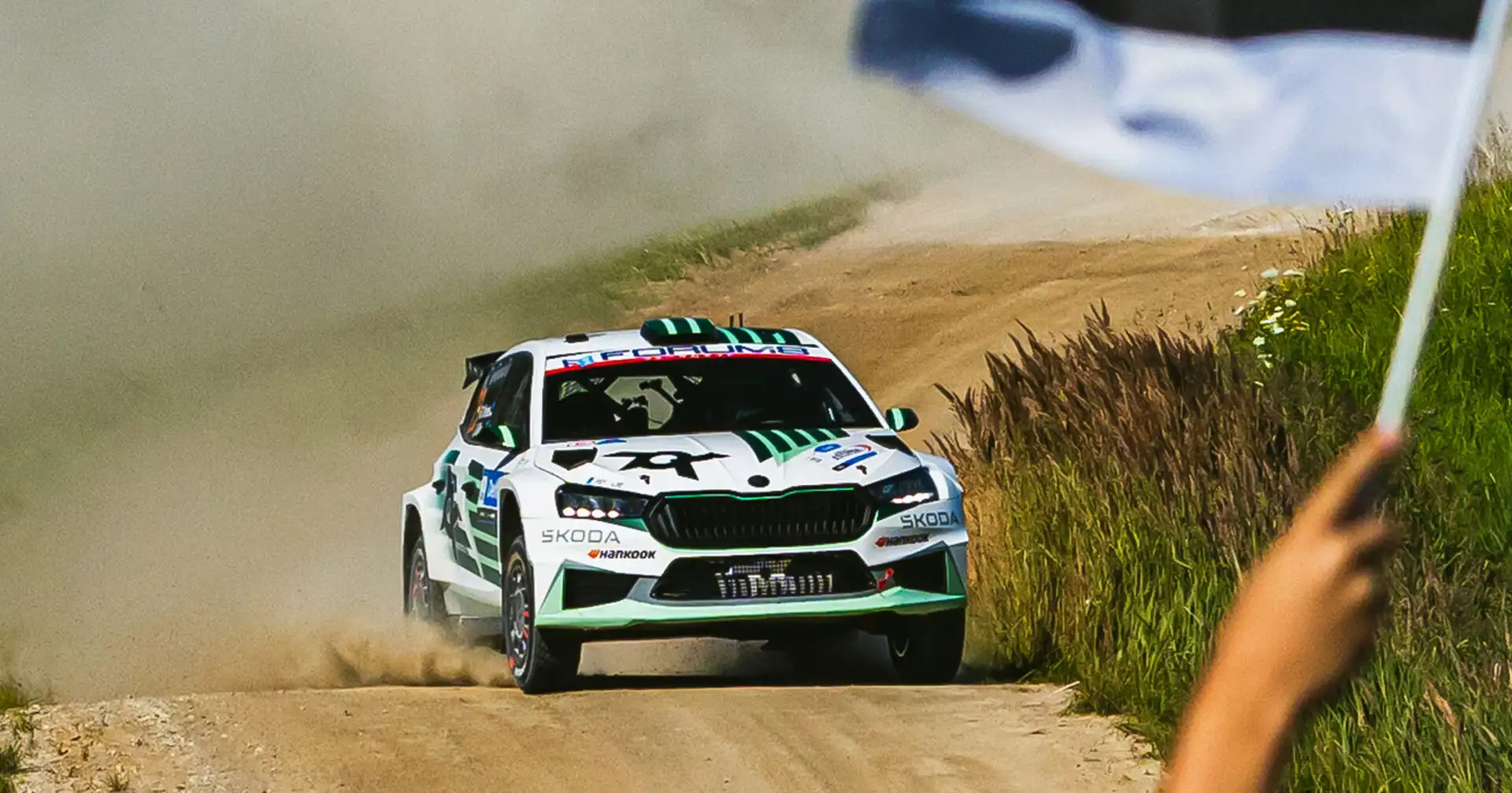
Robert Virves and Jakko Viilo delivered one of the closest and most popular class victories of the weekend. The Estonian crew won WRC2 in a Škoda Fabia RS Rally2 with a total time of 2:39:49.6, placing 10th in the overall Rally Estonia classification.
Teemu Suninen and Janni Hussi finished second in a Toyota GR Yaris Rally2, only 7.6 seconds behind. Roope Korhonen and Anssi Viinikka were third, a further 1.2 seconds back. After more than 300 competitive kilometers, the first three WRC2 crews were separated by just 8.8 seconds.
Virves led from the second stage
Mikko Heikkilä set the initial WRC2 benchmark, but Virves took the class lead on the second stage and remained in front to the finish. The competition stayed compressed throughout Friday: after roughly 100 stage kilometers, the top six WRC2 crews were separated by only around 10 seconds.
Virves ended Friday 2.5 seconds ahead and expanded the margin to 10.1 seconds by the end of Saturday. The final morning still required control because two long stages left enough distance for the order to change. He protected the lead despite pressure from two Toyota crews and secured his third WRC2 victory from three nominated starts in 2026.
It was also Virves and Viilo’s second consecutive WRC2 home victory. Their result moved them to second in the WRC2 standings with 75 points, four behind Korhonen, while their average speed across the 18 stages was reported at 113.3 km/h.
WRC2 podium
1. Robert Virves / Jakko Viilo — 2:39:49.6
2. Teemu Suninen / Janni Hussi — +7.6s
3. Roope Korhonen / Anssi Viinikka — +8.8s
Class drama
Mikko Heikkilä retired Sunday after a heavy landing broke a shock absorber. Jan Solans rolled on SS3 and eventually appeared far down the final classification after returning.
WRC3 and lower-class result
Tymek Abramowski and Jakub Wróbel were the leading Rally3 crew in 29th overall with a time of 2:52:35.5. Nicolas Otto and Hugo Magalhães finished next among the RC3 cars. Travis Pärs and Allar Heina brought the Peugeot 208 Rally4 home 35th overall and were the only RC4 crew in the final classification.
Power Stage, Bonus Points and Championship Impact
Rally Estonia 2026 Power Stage results
The final 24.39-kilometer Kääriku test rewarded Solberg’s decision to attack after the overall victory had moved out of realistic reach. He stopped the clock at 11:11.9 and took the five Power Stage points. Neuville finished second, 2.224 seconds slower, while Evans was third at +2.484.
Ogier placed fourth at +2.885 and Katsuta took fifth at +4.096. Pajari was sixth on the stage, 5.101 seconds behind Solberg. That was an entirely acceptable trade for a driver protecting a 25-second overnight lead on damp roads.
Oliver Solberg won the Rally Estonia 2026 Power Stage. He completed the 24.39-kilometer Kääriku 2 stage in 11:11.9. Thierry Neuville was second, Elfyn Evans third, Sébastien Ogier fourth and Takamoto Katsuta fifth.
Drivers’ standings after Rally Estonia
Evans remained the championship leader with 177 points. Although sixth overall was below his normal target, his bonus-point recovery increased the gap to second-placed Katsuta from 22 points before the rally to 25 afterward.
| Pos. | Driver | Points | Estonia outcome |
|---|---|---|---|
| 1 | Elfyn Evans | 177 | 6th overall; 2nd Super Sunday; 3rd Power Stage |
| 2 | Takamoto Katsuta | 152 | 21st overall; 5th Power Stage |
| 3 | Sami Pajari | 144 | Winner; 28 points scored |
| 4 | Sébastien Ogier | 139 | 5th overall; Sunday bonus points |
| 5 | Oliver Solberg | 130 | 2nd overall; maximum Sunday points |
| 6 | Thierry Neuville | 111 | 4th overall; 2nd Power Stage |
| 7 | Adrien Fourmaux | 111 | 3rd overall; 1 Super Sunday point |
Pajari’s rise to third changed the tone of the championship. He left Estonia only eight points behind Katsuta and five ahead of Ogier. Solberg remained within 47 points of Evans after taking 27 points from the weekend. Toyota therefore had five drivers inside the top five of the standings, separated by 47 points.
Manufacturers’ standings after round nine
Toyota Gazoo Racing World Rally Team led the manufacturers’ championship with 464 points. Hyundai Shell Mobis World Rally Team held second on 308, Toyota Gazoo Racing WRT2 had 157 and M-Sport Ford stood on 116. Toyota’s main team advantage over Hyundai was 156 points.
The one-two finish explains only part of that lead. Toyota’s 2026 strength came from depth: all five of its current Rally1 drivers had won at least one rally during the season by the end of Estonia. Pajari’s victory added another scorer capable of converting car performance into maximum points.
What the Rally Estonia 2026 Results Really Mean
Pajari is no longer only a future prospect
Before Estonia, Pajari’s five podiums showed consistency and development. After Estonia, there was evidence that he could control a WRC rally from the front. Leading creates a different pressure from chasing. The driver receives the split times, knows every rival is targeting the gap and must judge how much risk remains necessary. Pajari answered those demands without a visible collapse in pace.
That distinction matters for the rest of his career. A podium can come from surviving a difficult event or benefiting from problems ahead. Estonia required Pajari to set the standard, absorb Solberg’s attacks and finish the job. The first victory often changes how a driver approaches the next opportunity because the process is no longer theoretical.
Solberg showed title-level damage limitation
Solberg did not have the speed to beat Pajari over the full rally, but he prevented second place from becoming a passive result. Maximum points on Sunday meant he scored only one fewer championship point than the winner across the weekend. That is exactly how a title contender keeps a difficult event from becoming a large deficit.
His performance also gave Toyota a glimpse of its next-generation rivalry. Pajari and Solberg were both 24, both had won their first WRC rallies in Estonia, and both occupied the first two steps of the 2026 podium. Their methods were different: Pajari dominated the main classification, while Solberg attacked the bonus system on Sunday.
Hyundai found a useful baseline for Finland
Fourmaux’s third and Neuville’s fourth did not threaten Toyota’s one-two, but Hyundai’s improvement during the weekend offered a practical direction before Rally Finland. Estonia and Finland are not identical. Finland generally contains more pronounced jumps and harder road surfaces, but both require stability at speed, confidence over crests and accurate response during rapid direction changes.
Hyundai’s challenge was to arrive in Finland with the balance improvements available from the first stage rather than discovering them during the rally. Fourmaux’s Sunday pace showed the car could compete for a podium. Neuville’s Power Stage time showed there was still single-stage speed when the setup and confidence aligned.
M-Sport’s result hid flashes of competitiveness
Sesks finished seventh despite a 20-second penalty and tyre damage. Without that penalty, his raw total would still have left him seventh, but the gap to Evans would have been smaller and the fight around sixth more immediate. Armstrong finished ninth after early tyre damage, while McErlean’s exhaust problem forced a restart and removed him from a representative overall result.
The Puma Rally1 did not match Toyota across the full weekend, yet Sesks and Armstrong kept M-Sport cars inside the top nine. The task for future fast-gravel rallies was to convert those sections of pace into cleaner, uninterrupted weekends.
Rally Estonia did not simply produce a new winner. It showed that Pajari could lead under pressure, that Solberg understood the value of Sunday points, that Evans could protect a championship lead from a difficult road position, and that Hyundai had a workable high-speed gravel platform even without winning pace.
Frequently Asked Questions
Conclusion: Rally Estonia 2026 Belonged to Sami Pajari
The Rally Estonia 2026 results recorded more than a first victory. They documented the moment Sami Pajari proved he could control a top-level rally from the front. He won every stage on Friday, resisted Solberg on Saturday, adapted to rain on Sunday and reached the finish with a 19.5-second advantage.
Solberg’s second place and maximum Sunday score made the Toyota one-two even stronger. Fourmaux earned third through a direct final-day fight with Neuville, Virves delivered a close home WRC2 win, and Evans protected his championship lead despite the road-sweeping disadvantage that shaped his Friday.
For fans reviewing the full Rally Estonia 2026 final classification, the most important number is not only Pajari’s winning time of 2:31:16.5. It is the combination of 12 stage wins, 18 completed tests and zero decisive mistakes. That was the foundation of a breakthrough win with lasting championship significance.
Sources
- FIA — Rally Estonia 2026 final official classification
- WRC — Pajari proves perfect for breakthrough WRC victory
- Toyota Gazoo Racing — Rally Estonia Day 3 team report
- Hyundai Motorsport — Rally Estonia 2026 review
- FIA — 2026 World Rally Championship standings
- Škoda Motorsport — Robert Virves WRC2 victory report
- Hyundai Motorsport — Rally Estonia route and event data
Results and championship standings reflect the official classification published after Rally Estonia on July 19, 2026. All times and penalties in the full table follow the FIA classification.