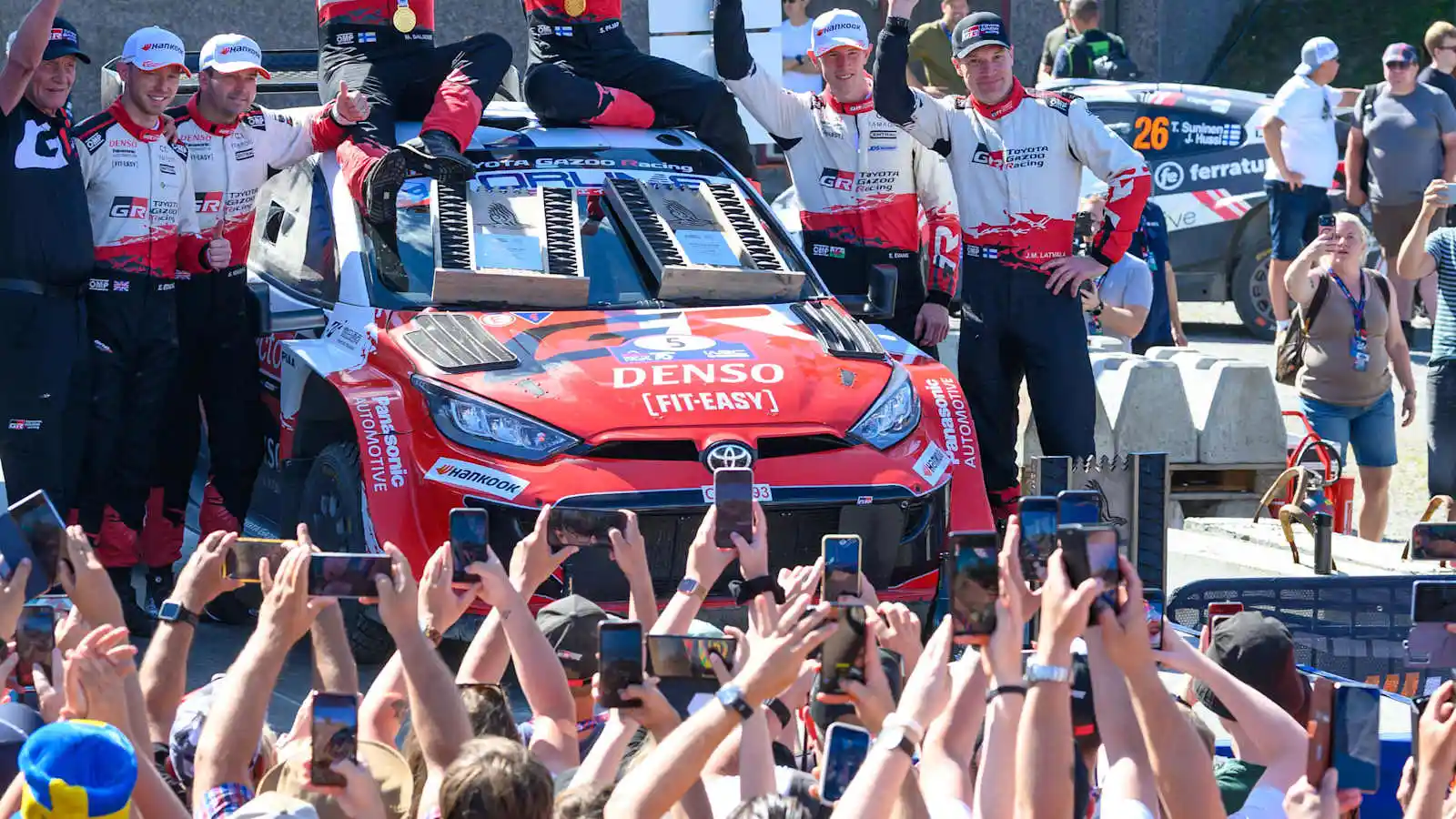
Rally Finland 2026 Preview: Championship Contenders, Route Guide & Predictions
The pre-start title picture, Toyota-versus-Hyundai battle, 20-stage route, road-position pressure and our no-hindsight prediction for the 75th Secto Rally Finland.
Rally Finland 2026 arrived at exactly the right moment for the WRC title fight. After nine rounds, Elfyn Evans led the drivers’ championship, but Toyota’s advantage was not built around one driver. Its five Rally1 crews occupied the first five places in the standings before the start in Jyväskylä.
That made the event more than a home rally for Toyota Gazoo Racing. It was a high-speed internal championship fight, with Hyundai trying to exploit later Friday road positions and the momentum Adrien Fourmaux carried from Rally Estonia.
This article is an archival pre-event preview. The contender rankings and predictions below are built from the standings, entry list, route information and team statements available before shakedown. They have not been rewritten using the final Rally Finland result.
Before shakedown, Rally Finland was a Toyota-heavy championship showdown on the WRC’s fastest gravel roads. Elfyn Evans led the standings by 25 points, Toyota held the top five driver positions, and Hyundai hoped its later road order plus improved Estonia pace would disrupt the home team.
Rally Finland 2026 Championship Picture
The championship arrived in Central Finland unusually compressed behind the leader. Evans had 177 points, while Takamoto Katsuta sat second on 152. Fresh Rally Estonia winner Sami Pajari had climbed to 144, Sébastien Ogier held 139 despite a selective campaign, and Oliver Solberg was fifth on 130.
That meant just 47 points covered Toyota’s five drivers. More importantly, every one of those five had already won a WRC round in 2026. The usual distinction between a championship leader and a supporting cast did not apply here. Toyota had five credible Finland winners with five different incentives.
| Pos | Driver | Points before Finland | Finland angle |
|---|---|---|---|
| 1 | Elfyn Evans | 177 | Two-time Finland winner; title leader but first-road exposure |
| 2 | Takamoto Katsuta | 152 | Two Finland podiums and deep Jyväskylä experience |
| 3 | Sami Pajari | 144 | Home driver arriving directly after maiden WRC win in Estonia |
| 4 | Sébastien Ogier | 139 | Two-time Finland winner; proven at reading changing grip |
| 5 | Oliver Solberg | 130 | Estonia runner-up with a style naturally suited to fast gravel |
| 6 | Thierry Neuville | 111 | Hyundai lead threat; later road position than Toyota quintet |
| 7 | Adrien Fourmaux | 111 | Estonia podium and confidence in Hyundai’s fast-gravel progress |
The title calculation made Finland especially uncomfortable for Evans. He had a useful 25-point cushion, yet a rally this fast can turn a small mistake into a zero very quickly. A conservative drive could protect the lead, but backing off too much would allow four Toyota team-mates to cut into it at once.
For context on how points shape a season, our guide to how racing championships are scored explains why a single high-variance weekend can change the balance of a title race.
Who Were the Main Rally Finland 2026 Contenders?
The simplest answer was Toyota’s entire five-car group, but that would miss the differences between them. Finland rewards commitment, yet it also punishes overconfidence. The best candidate is not automatically the driver willing to carry the most speed over a crest. It is the one who can repeat that commitment with clean landings and exact pace notes for four days.
Elfyn Evans: championship leader with a proven Finland record
Evans entered as the points leader and as one of the few non-Finnish drivers to have won Rally Finland more than once. His victories in 2021 and 2023 mattered because they showed that his precision-based style can work on roads often associated with Scandinavian instinct and local familiarity.
However, the championship lead also created a Friday problem. In dry conditions, the earliest cars can clear loose gravel from the ideal line. Evans therefore risked doing some of the cleaning work for the contenders behind him. Hyundai openly identified its sixth-to-eighth starting positions as potentially advantageous.
Evans’ strongest route to victory was not to chase a spectacular opening split. It was to stay close enough through the first pass, then use cleaner repeat runs and Saturday’s more stable conditions to build pressure. His title position made patience a weapon.
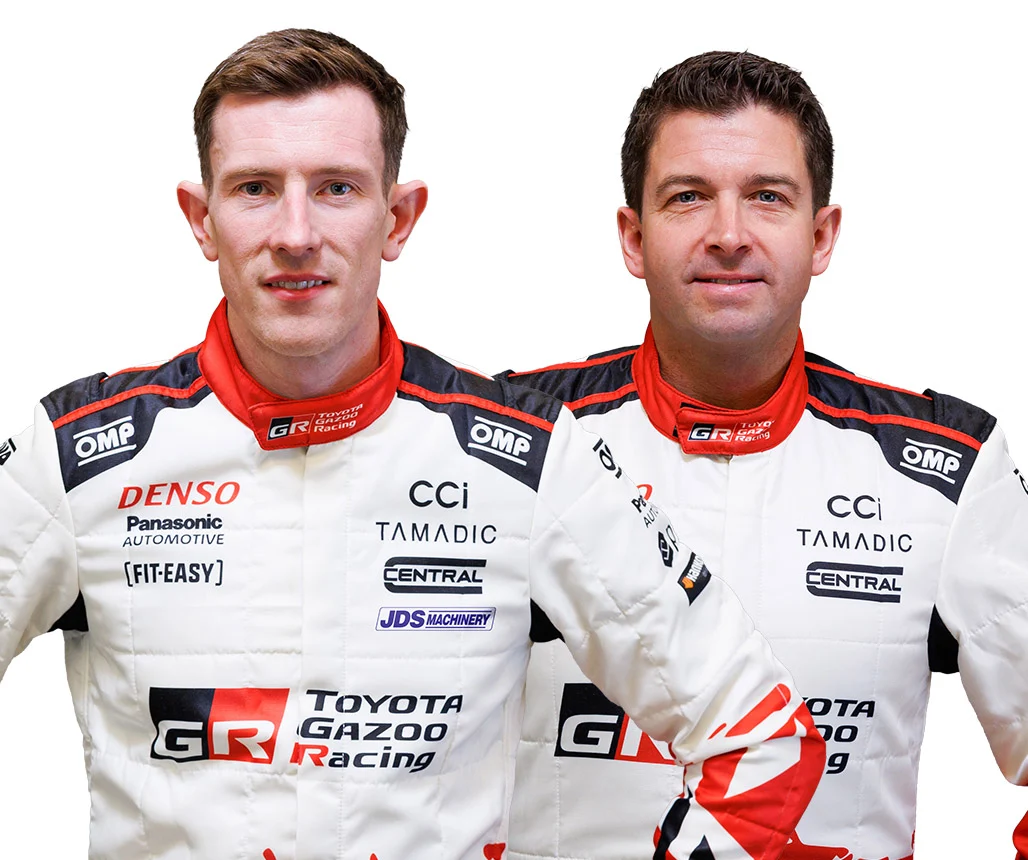
Takamoto Katsuta: the second-home factor
Katsuta’s connection to Jyväskylä runs much deeper than a normal away event. He moved to Finland during his development with Toyota’s challenge programme and learned much of his rally craft on Finnish roads. His third place in 2023 and second in 2025 proved that this was not merely sentimental familiarity.
At 25 points behind Evans before the start, Katsuta also had a championship reason to attack. Yet the temptation to force the issue is especially dangerous in Finland. His best weekends usually come when the speed is flowing naturally rather than being manufactured corner by corner.
Sami Pajari: the hottest driver entering the home rally
Pajari’s timing could hardly have been better. He arrived in Finland immediately after taking his first WRC victory at Rally Estonia, another event built around commitment on rapid gravel. That result lifted him to third in the championship and transformed the home-rally conversation.
Toyota’s own preview acknowledged that expectations would rise after Estonia. The crucial question was whether Pajari could treat those expectations as background noise. Finland’s home crowd can provide energy, but it can also turn every split into a referendum on whether a local driver should win.
From a pure form perspective, Pajari deserved Tier 1 status. He had recent winning pace, a competitive car, local knowledge and a route that rewarded the same high-speed confidence seen in Estonia.
Sébastien Ogier: experience versus a late co-driver change
Ogier brought two Rally Finland victories, including the 2024 event, plus the ability to win without relying on one specific road characteristic. He was also still firmly in the championship fight despite not contesting every round in the same way as a conventional full-season campaign.
The complication was preparation continuity. Vincent Landais withdrew for personal reasons shortly before the event, leading to a one-off return for Julien Ingrassia. Ogier and Ingrassia had won eight world titles together, so this was hardly an inexperienced pairing. Still, Finland’s pace-note precision is so exact that even a legendary partnership returning after years apart represented an extra variable.
That did not remove Ogier from the win conversation. It simply lowered the margin for small communication differences during recce and early stages.
Oliver Solberg: perhaps the purest fast-gravel fit
Solberg entered fifth in the championship after finishing second to Pajari in Estonia. Toyota specifically highlighted his previous WRC2 success in Finland and his confidence on fast, flowing roads. Compared with Evans, he also started farther back in the championship order, which could be useful if the surface stayed dry.
His challenge was converting speed into a complete weekend. Finland can seduce a driver into proving pace on every crest. Solberg’s best path was to let the rhythm come to him, keep the car underneath him and use his natural commitment only where the notes and road shape supported it.
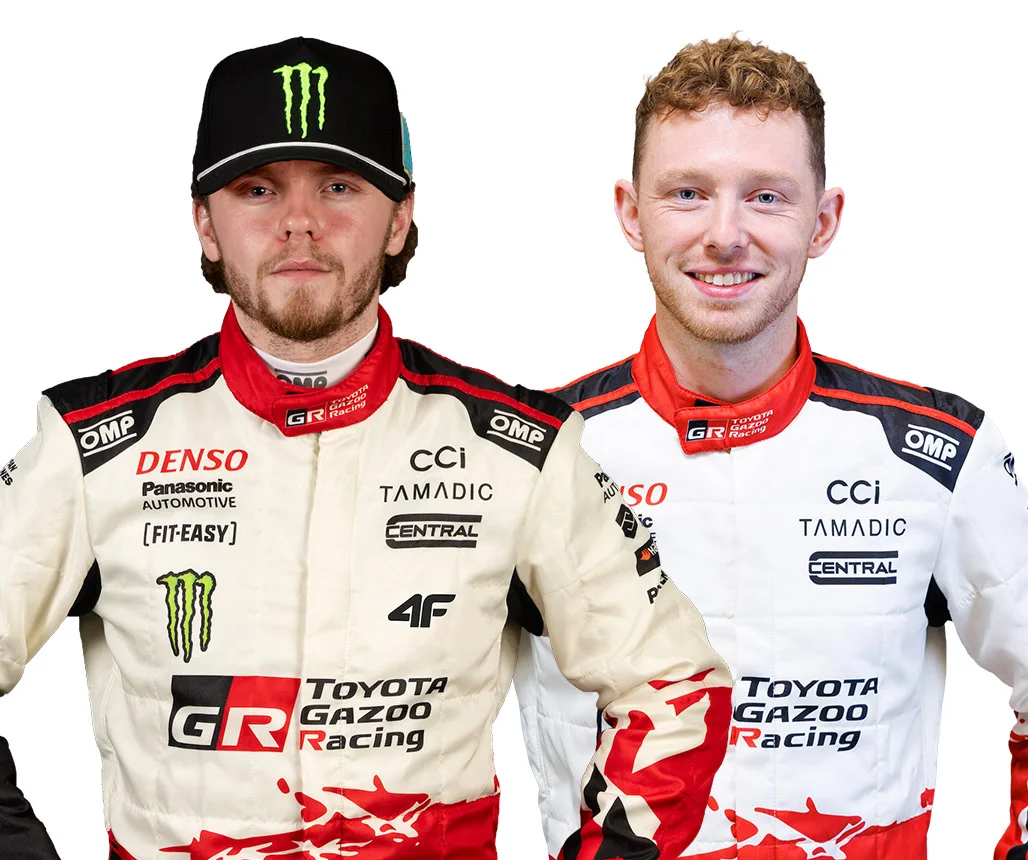
Hyundai: Neuville, Fourmaux and Lappi had a real tactical opening
Hyundai’s pre-event tone was more confident than its championship position suggested. Fourmaux had just finished on the podium in Estonia, while the team believed recent engineering work had improved the i20 N Rally1 across different gravel conditions. Sporting director Andrew Wheatley also pointed directly to road position.
Thierry Neuville and Fourmaux sat level on 111 points before Finland. Neither could afford to think only about damage limitation. If Toyota’s first cars swept a dry road, Hyundai needed to convert the cleaner line into stage wins early enough to make the home team react.
Esapekka Lappi added a different kind of threat. The Finn won Rally Finland in 2017, and although he had missed the event the year before, his local understanding remained valuable. The two new stages also reduced the memory advantage of full-time crews, giving Lappi a slightly cleaner competitive reset.
M-Sport’s upset route
M-Sport entered three Puma Rally1 cars for Josh McErlean, Jon Armstrong and Mārtiņš Sesks. On paper they were outside the primary title fight, but Finland can reward a driver who starts later on the road, commits immediately and avoids the small errors that catch more established rivals.
A podium required several pieces to fall together. A win needed even more. Still, Sesks in particular had the kind of high-speed commitment that made him worth tracking on stage splits rather than dismissing from the start.
Rally Finland 2026 Route Guide
The 75th-anniversary route mixed familiar names with enough change to prevent crews from relying on old notes. WRC’s stage guide said more than half of the competitive distance differed from 2025. Two stages—Sydänmaa and Hoho—were new, while Laukaa, Päijälä and Västilä were reversed or substantially revised.
That mattered for predictions. Experience still carried enormous value in Finland, but route changes redistributed some of that advantage. A driver who knew the region could understand how Finnish roads breathe over crests and cambers, yet still had to build fresh notes for sections that no longer matched the previous year.
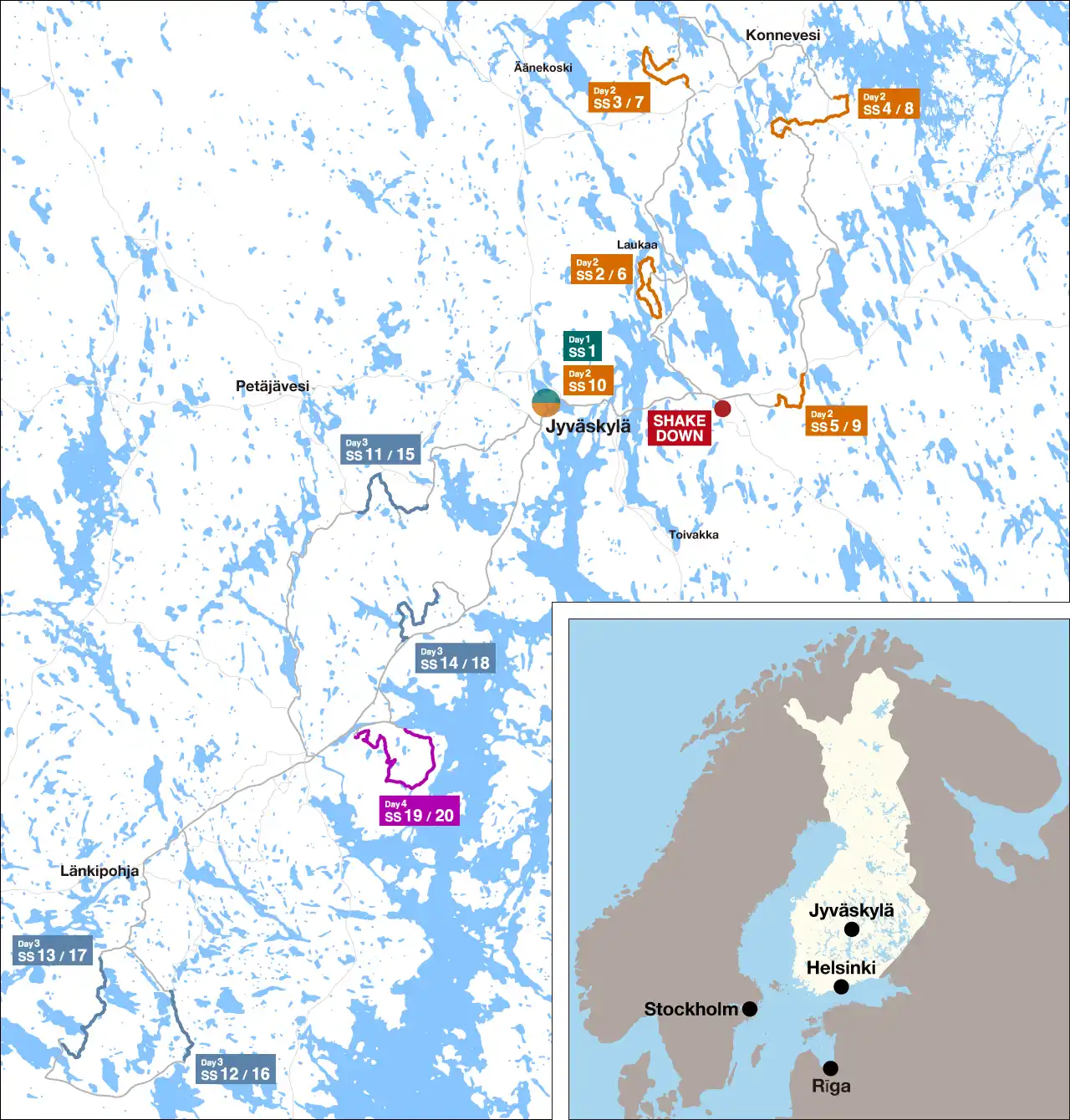
Thursday: Ruuhimäki and Harju set two very different tests
Ruuhimäki served only as shakedown in 2026. It remained useful because its jumps and quick crests let crews check high-speed balance, landing stability and steering response before competition began. Shakedown times never tell the whole story, but the shape of the car over jumps can reveal whether the setup window is close.
Harju then opened the rally on Thursday evening. The mixed gravel-and-tarmac super special runs through a city park and repeatedly breaks the flowing rhythm that defines the forest stages. It is short, yet it can punish a driver who treats it as a warm-up.
Friday: reversed Laukaa plus two new stages
Friday was where the road-order debate became real. Laukaa returned in reverse, changing how drivers approached familiar corners. Saarikas kept a more recognizable shape, but Sydänmaa and Hoho forced every leading crew to lean heavily on recce quality.
Sydänmaa combined pieces of older tests with a new middle section. WRC described a mixture of flowing forest road, ditches, junctions, long straights and a wider finish. Hoho was shorter but more rhythm-sensitive, moving from fast medium-width road into narrow forest before changing character again.
Friday was the day most likely to amplify road position. If it stayed dry, Evans and the early Toyota cars could face loose gravel while Solberg, Neuville, Fourmaux and Lappi reached a cleaner racing line. If rain arrived, that advantage could shrink or even reverse.
Saturday: Parkkola, Päijälä, Västilä and Leustu
Saturday combined speed with more technical transitions. Parkkola retained much of its 2025 character but added distance at the finish. Päijälä was shortened and reversed, bypassing part of the classic road and producing a different sequence of cambers and elevation changes.
Västilä also ran in the opposite direction to 2025, while Leustu stayed unchanged. Leustu’s major jumps and quick approach sections made it the sort of stage where a clean landing can be worth more than an extra fraction of entry speed.
This is also where the general principles in our guide to what causes crashes in motor racing become particularly relevant. In Finland, a small placement error is magnified by speed, crests and limited sight lines.
Sunday: Himos-Jämsä was not a normal sprint
The final day used only one stage name, but it was a serious one. Himos-Jämsä measured 30.02 km and ran twice, with the second pass serving as the Wolf Power Stage. That made Sunday less of a short bonus-points dash than many modern WRC finales.
The stage mixed wide, fast roads, forest sections, crests and narrower pieces before descending to the finish at Himos. A driver carrying a small overnight lead could not simply nurse the car. Sixty competitive kilometres still remained, and the repeated route gave rivals a chance to learn from the first pass.
| Leg | Key stages | Main challenge | Prediction relevance |
|---|---|---|---|
| Thursday | Ruuhimäki SD, Harju | Setup check + mixed-surface precision | Useful form signal, low total distance |
| Friday | Laukaa, Saarikas, Sydänmaa, Hoho, Harju | Road cleaning, new notes, repeated loops | Could create the first real time gaps |
| Saturday | Parkkola, Päijälä, Västilä, Leustu | High-speed rhythm with technical transitions | Best day to separate sustainable pace from one-loop speed |
| Sunday | Himos-Jämsä ×2 | Two 30.02 km runs, final Power Stage pressure | Large enough to overturn a small overnight lead |
What Would Decide Rally Finland 2026?
1. Friday road cleaning
Hyundai openly identified starting sixth, seventh and eighth as a potential advantage if the roads stayed dry. Loose gravel can sit above the harder, grippier base. Early cars sweep that material aside, which can leave later crews with a more defined line.
That did not guarantee Hyundai an advantage on every stage. Surface composition changes, traffic cuts can expose stones, and weather can transform the road within minutes. Still, it was the clearest structural reason to believe Toyota might not control the rally immediately despite its driver depth.
2. Pace notes over blind crests
WRC describes Finland as a place where average speeds routinely exceed 120 km/h. At that pace, the driver often commits before seeing the full corner. The co-driver’s wording must therefore communicate not only direction and severity, but how the road changes over the crest and where the car should land.
The late Ogier-Ingrassia reunion was fascinating for precisely this reason. Their shared history removed questions about trust, but the modern Rally1 car and current note system still demanded rapid re-synchronisation.
3. Landing quality, not just jump distance
The spectacular airborne photographs can make Finland look like a competition for the biggest jump. It is not. A long jump that lands the car slightly sideways can cost more time than a shorter, cleaner trajectory that keeps the chassis stable for the next corner.
Teams therefore need suspension control without making the car reluctant to change direction. For readers who want the broader aerodynamic context, our downforce explainer covers why stability changes as speed, pitch and ride height move together.
4. Weather could flip the road-order logic
Dry Finland usually increases the road-cleaning conversation. Persistent rain changes it. Early cars can sometimes find a cleaner, less damaged surface, while later crews face ruts, pulled-out stones or standing water in braking zones.
Hyundai’s own preview highlighted this uncertainty. That is why any serious prediction had to carry a weather caveat rather than simply ranking drivers by championship position.
5. Championship pressure was different for each Toyota driver
Evans needed to balance victory ambition against a 25-point lead. Katsuta had a clear chance to reduce that gap. Pajari was trying to prove Estonia was not a one-off breakthrough. Ogier could attack with the confidence of a multiple champion, while Solberg had less title burden and one of the best starting positions among the Toyota five.
Those incentives affect risk. Motorsport strategy is not only tyres and setup; it is also deciding which corners deserve 100 percent commitment. Our broader car racing explainer covers how competitive decisions change with event format and championship context.
Finland rewards confidence, but not blind aggression. The winning driver usually looks spectacular because the notes, setup and rhythm are working together—not because every crest is taken with maximum risk.
Toyota vs Hyundai: Who Had the Stronger Package?
Toyota had the stronger pre-event case. Its team base sits only a few kilometres from the Jyväskylä service park, it had won seven of the eight Rally Finland editions it had contested, and its five current drivers occupied the top five places in the championship.
The 2025 result made that dominance even harder to ignore: Toyota swept the top five positions. That kind of depth matters because a single puncture or mistake does not end the manufacturer’s winning chance when four other cars can still fight at the front.
Hyundai’s argument was narrower but credible. Fourmaux’s Estonia podium showed the car could operate near the front on fast gravel. Neuville remained one of the championship’s most experienced high-speed drivers, and Lappi brought home-event knowledge plus a previous Finland win.
Most importantly, Hyundai expected to start behind Toyota’s five championship leaders. In a dry first leg, that could create a cleaner line. The task was converting that theoretical advantage into enough time before Toyota’s setup depth and local testing mileage came into play.
Depth
Five Rally1 drivers in the championship top five, all already winners in 2026.
Friday road order
Sixth, seventh and eighth on the road offered a potential dry-gravel grip advantage.
Weather
Rain could erase or reverse the expected road-cleaning benefit within one loop.
Why Rally Finland Is Different
Rally Finland was first run in 1951 and became part of the WRC when the championship launched in 1973. Its old “1000 Lakes Rally” identity remains part of the event’s mythology, but the modern challenge is more technical than the nickname suggests.
The roads are often smooth and remarkably grippy for gravel. That encourages speeds that can feel closer to circuit racing than a rough rally. Yet the car is still moving over crests, cambers and loose surfaces, so the consequences of an incorrect note or landing remain severe.
Historically, Finnish drivers dominated because they grew up understanding that rhythm. International drivers have steadily broken that pattern. Evans and Ogier entered 2026 as two-time winners, proving that methodical preparation can compensate for not being raised on Finnish roads.
For more background on the sport’s control systems and timing, see our guides to racing flags and race timing. Rallying uses a different competitive format from circuit racing, but both depend on exact timing and clear control procedures.
Rally Finland 2026 Predictions
These picks are intentionally based on the pre-start standings, Estonia form, Rally Finland history, route changes, road order and team previews. The final 2026 Rally Finland classification was not used to adjust the ranking.
Winner prediction: Sami Pajari
Pajari was our narrow pre-event winner pick because the form curve was difficult to ignore. He had just won Rally Estonia, was competing at home and had already shown that his speed could survive a complete fast-gravel rally rather than only a handful of stages.
The risk was expectation. He started third in the championship order, so he did not have Solberg’s exact road-position benefit, and a home crowd could push a young driver toward unnecessary commitment. Still, the combination of recent victory, Toyota performance and local familiarity made him the most balanced pick.
Podium prediction
Dark horse: Esapekka Lappi
Lappi was not a championship contender in the same sense as the top Toyota drivers, but the home-event logic was strong. He had won Rally Finland before, understood how to commit over the crests, and started late enough to benefit if the road cleaned.
The concern was recent seat time. Missing the previous edition meant his memory advantage was less complete than the full-time crews. The new stages partly offset that problem because everybody had fresh notes to build.
Manufacturer prediction: Toyota
Toyota was the clear manufacturer pick. Even if one or two cars hit trouble, the team still had enough depth to keep multiple drivers in the victory fight. Hyundai’s best route was to use Friday road position to create an early lead and then force Toyota into chase mode.
The prediction was therefore Toyota to win the rally, with Hyundai capable of putting at least one car on the podium. The biggest upset scenario was a dry Friday in which the later-running Hyundais gained enough time that Toyota’s home advantage became a recovery exercise.
Five things we expected to define the rally
- How much time Evans lost—or did not lose—while opening the road on Friday.
- Whether Pajari could carry Estonia confidence without overdriving at home.
- How quickly Ogier and Ingrassia re-established competitive pace-note rhythm.
- Whether Hyundai’s Estonia progress translated to Finland’s higher-grip gravel.
- How much the 30.02 km Himos-Jämsä double run changed the Sunday risk calculation.
Rally Finland 2026 FAQ
Conclusion
A five-way Toyota fight with a genuine Hyundai tactical threat
Rally Finland 2026 was set up as one of the season’s most revealing tests. Evans had the points lead, but Katsuta, Pajari, Ogier and Solberg all had credible reasons to believe they could beat him on Toyota’s home roads.
Hyundai did not need to match Toyota’s depth to change the rally. It needed Neuville, Fourmaux or Lappi to exploit the later road order, carry Estonia’s pace into the first forest loop and make Toyota chase.
The route added enough uncertainty to keep experience from becoming automatic. New Sydänmaa and Hoho, reversed classics and the long Himos-Jämsä finale meant every contender still had to earn the rhythm from scratch.
Our pre-event call was Pajari for the win, Solberg and Ogier to complete the podium, Fourmaux as the leading Hyundai threat and Toyota as the manufacturer favorite. Whether a forecast lands or misses, that framework shows what mattered before the first competitive kilometre: form, road order, precise notes and the confidence to commit without crossing Finland’s very narrow limit.