Nürburgring DTM 2026: Full Schedule, Race Timetable, TV Coverage & Streaming Guide
Everything you need for DTM races 11 and 12: session times in Germany, ET and UK time, TV and streaming options, the Sprint track, support races and the key details that make this one of the most important weekends of the 2026 title run.
The 2026 DTM season reaches the Nürburgring from August 14–16 for races 11 and 12, the sixth of eight race weekends and the point where the championship begins to move from summer form into title pressure.
The official DTM calendar places the Nürburgring immediately after Oschersleben and before the Sachsenring and Hockenheim finale. That makes this more than another double-header. Every qualifying point, every pit-stop execution and every position gained on the short Sprint course now has a direct effect on the run to the championship.
This guide is built for viewers first. The schedule below is presented with a U.S. focus, especially Eastern Time, while also keeping German local time and UK time visible so there is no need to convert sessions manually.
When Is the Nürburgring DTM 2026?
The Nürburgring DTM 2026 weekend runs from Friday, August 14 through Sunday, August 16, 2026. DTM practice takes place Friday, Race 1 is Saturday and Race 2 is Sunday. The event is round six of eight and contains championship races 11 and 12.
DTM itself describes the Nürburgring as the event that “heralds the business end” of the 2026 title race. That wording fits the calendar. After this weekend, only the Sachsenring in September and Hockenheim in October remain. A driver who leaves the Eifel region with a poor pair of results has very little season left in which to recover.
The championship is also in a different competitive era from the old silhouette-car DTM many longtime fans remember. Modern DTM is built around GT3 machinery, which makes traffic, tyre management and pit timing central parts of the spectacle. If you need a basic primer on the category of car, our GT3 race car guide explains the layout and hardware. For the broader race structure, see how car racing works.
Germany is on Central European Summer Time (CEST) during this weekend. Eastern Time in the U.S. is six hours behind CEST, and British Summer Time is one hour behind CEST. The ET conversions in this article use that August daylight-saving difference.
DTM Nürburgring 2026 Full Schedule and Race Timetable
The first DTM session is Friday practice. The headline sessions are Saturday Race 1 and Sunday Race 2, both scheduled for 1:30 p.m. local German time / 7:30 a.m. ET / 12:30 p.m. BST. Qualifying takes place in the morning before each race.
The most useful way to follow a DTM weekend is to separate the championship sessions from the full event programme. The paddock stays busy almost all day, but a television viewer mainly needs six DTM windows: two practice sessions, two qualifying sessions and two races.
| Day | DTM Session | Germany (CEST) | U.S. Eastern (ET) | UK (BST) |
|---|---|---|---|---|
| Friday, Aug. 14 | Free Practice 1 | 10:40 AM | 4:40 AM | 9:40 AM |
| Friday, Aug. 14 | Free Practice 2 | 3:35 PM | 9:35 AM | 2:35 PM |
| Saturday, Aug. 15 | Qualifying 1 | 9:35 AM | 3:35 AM | 8:35 AM |
| Saturday, Aug. 15 | Race 1 | 1:30 PM | 7:30 AM | 12:30 PM |
| Sunday, Aug. 16 | Qualifying 2 | 9:00 AM | 3:00 AM | 8:00 AM |
| Sunday, Aug. 16 | Race 2 | 1:30 PM | 7:30 AM | 12:30 PM |
The local-time timetable above follows the 2026 Nürburgring DTM schedule published by German motorsport calendar coverage and matches the standard 1:30 p.m. DTM race start used through most of the season. The official DTM event page confirms the August 14–16 dates, the two-race structure and the detailed event programme. Because DTM’s website may display timetable data in a visitor-dependent time zone, this article keeps the German local times explicit and shows the conversion separately.
Friday: practice is more important than it looks
Friday does not award championship points, but it gives the teams their first real answer about balance, tyre behavior and traffic on the 3.629-kilometre Sprint track. A short lap compresses the field. That means a tenth of a second can move a driver several grid positions, and a setup that feels only slightly wrong can become a qualifying problem the next morning.
Practice is also the best session for viewers who want to understand the weekend rather than simply watch the races. Watch where cars struggle to rotate into slower corners and which drivers can get on the throttle early without forcing the rear tyre to slide. Those small details usually matter more on Saturday and Sunday than a headline top speed figure. Our downforce explainer and slipstream guide give useful background for reading those differences.
Saturday: qualifying sets up Race 1
DTM qualifying is short enough that there is little room for a bad run plan. Drivers need tyre temperature, clear track and a lap without traffic. The Nürburgring Sprint layout increases that pressure because cars return to the same sections quickly. If a driver catches a slower car at the wrong point, the lap can disappear before it really begins.
Qualifying position matters because the sprint-format race does not give teams a long endurance window in which to repair a poor starting spot. Drivers can still move forward through race pace, pit work and incidents, but clean air at the front is valuable. For a simple explanation of why starting order matters, see our grid position guide and pole position explainer.
Sunday: reset and do it again
One of the best parts of the DTM format is that Sunday is not simply a continuation of Saturday. The field qualifies again. That gives teams and drivers a second chance to correct a bad Saturday setup or recover from an incident. It also means Saturday’s winner cannot simply protect a grid advantage earned one day earlier.
From a championship perspective, that reset creates volatility. A driver can score heavily in Race 1 and then start deep in the field on Sunday after one difficult qualifying session. Conversely, a Saturday disappointment can be followed immediately by a pole-position run and a major Sunday points haul. That is why the Nürburgring weekend must be treated as two separate competitive stories inside one three-day event.
How to Watch Nürburgring DTM 2026 on TV and Live Stream
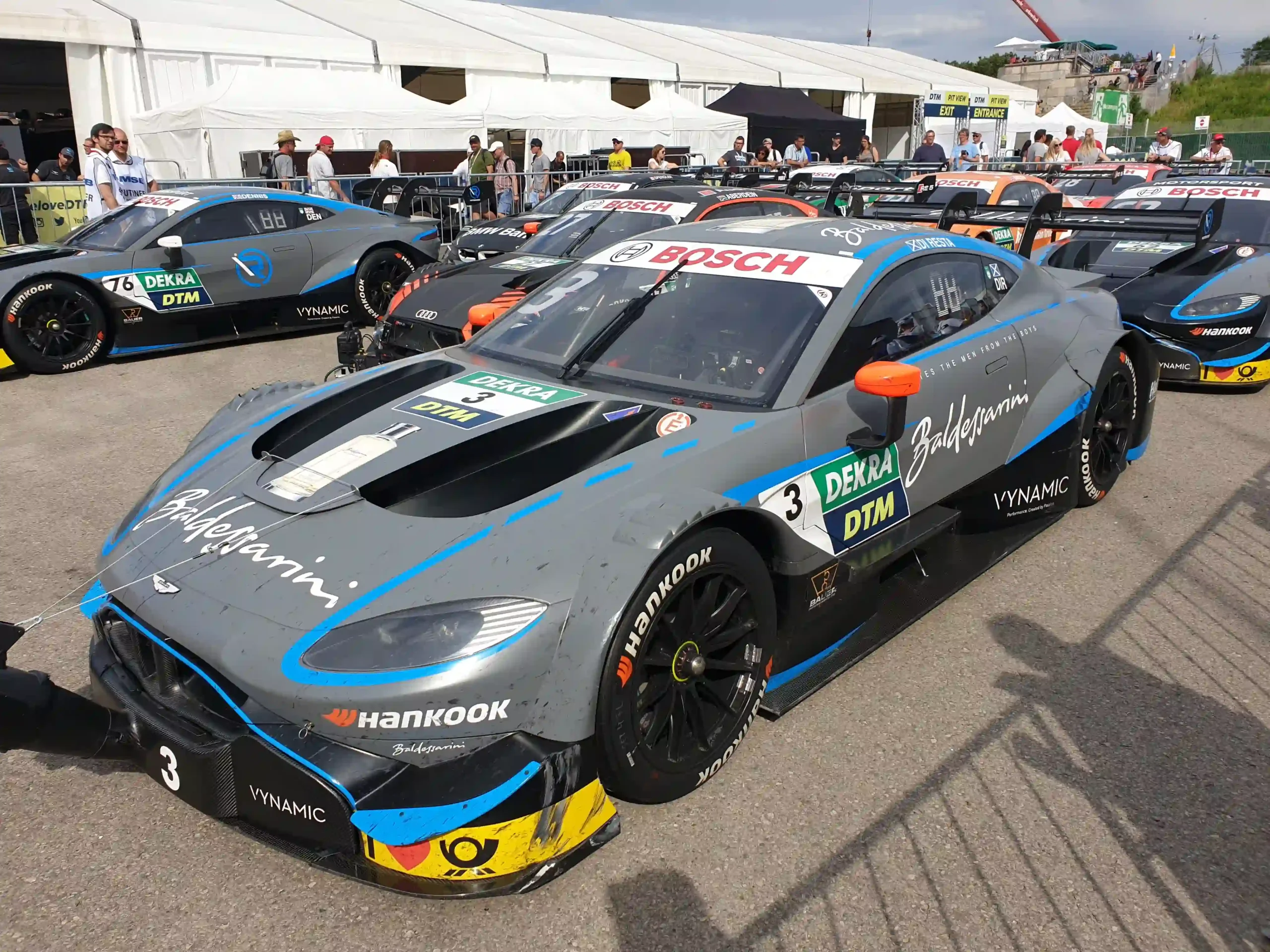
In Germany, ProSieben is DTM’s free-to-air television home for the races. Joyn streams DTM coverage and carries the Fan-TV stream on race weekends, while ran.de carries practice, qualifying and races. The official DTM YouTube channel provides English-commentary coverage where territorial rights allow.
| Platform | Coverage | Main audience / note |
|---|---|---|
| ProSieben | Live DTM races | Germany; primary free-to-air TV partner |
| Joyn | Live race coverage and Fan-TV stream | Germany; digital viewing through ProSiebenSat.1 ecosystem |
| ran.de | Practice, qualifying and races | German online sports coverage |
| DTM YouTube | Practice, qualifying and races with English commentary | Availability varies by territory because of media rights |
| n-tv | “PS – DTM Compact” highlights magazine | Post-race highlights and behind-the-scenes content |
DTM’s official Nürburgring event page lists ProSieben, Joyn, ran.de, n-tv and the DTM YouTube channel among the viewing options. A separate 2025 partnership announcement confirms that ProSieben remains the live TV home of DTM into 2026, while Joyn carries DTM sessions and adds the Fan-TV stream at race weekends.
Can U.S. viewers watch DTM Nürburgring 2026 on YouTube?
The official DTM YouTube channel is the first place many international viewers should check because DTM explicitly promotes English-commentary streams there. However, motorsport rights are territorial. A stream that is visible in one country may be blocked in another if a local broadcaster owns exclusive rights. For that reason, the most accurate wording is that DTM YouTube is an official international option where rights permit, not a promise that every session is unlocked in every country.
For a U.S. audience, the practical advantage is the timing. The two races are scheduled for 7:30 a.m. ET, early but still manageable compared with many European qualifying sessions. Saturday qualifying is at 3:35 a.m. ET and Sunday qualifying at 3:00 a.m. ET, so viewers who do not want an overnight wake-up may prefer to watch qualifying on replay and join live for the race.
If you only watch the essential sessions, prioritize Race 1 at 7:30 a.m. ET Saturday and Race 2 at 7:30 a.m. ET Sunday. If you want the full competitive picture, add the qualifying replays before each race because the starting grid is set fresh each morning.
What channel is DTM Nürburgring 2026 on in Germany?
ProSieben is the key free-to-air answer. DTM and ProSiebenSat.1 extended their partnership ahead of the 2026 season, and DTM’s event page again lists ProSieben as the exclusive live television broadcaster in Germany. Digital viewers also have Joyn and ran.de.
That combination matters because the broadcast ecosystem is wider than a single race telecast. ran.de and Joyn cover sessions that may not sit on the main television channel, while n-tv’s DTM magazine provides a compact highlights product after the weekend. Viewers who want every competitive lap should use the digital platforms; viewers who mainly want the two headline races can center their plan on ProSieben.
Nürburgring Sprint Track: What the DTM Uses in 2026
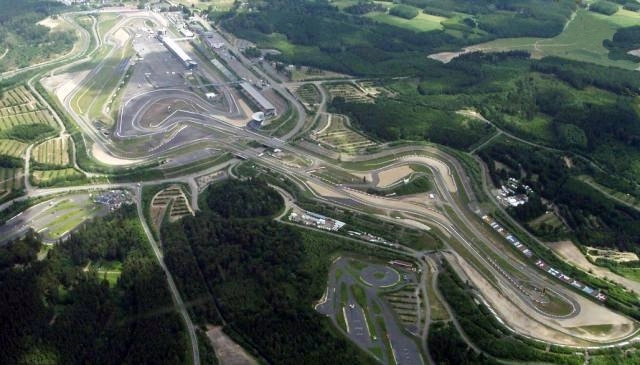
The 2026 DTM event uses the Nürburgring Sprint track. ADAC lists the circuit at 3.629 km. It is a compact layout designed to produce short lap times, heavy traffic and repeated braking-and-acceleration cycles rather than the long-distance rhythm associated with the Nordschleife.
The Nürburgring name can be confusing because it can refer to several configurations and, in wider motorsport culture, is often used as shorthand for the Nordschleife. DTM is not racing a full lap of the Nordschleife during this weekend. The championship uses the much shorter Sprint configuration of the modern Grand Prix complex.
That difference changes how to watch the race. On a 3.629-km lap, the field circulates quickly, so traffic comes back into play sooner. Pit-stop timing also has a sharper positional effect because the gaps between cars can be small. A driver losing two or three seconds in the wrong phase of the race can return to the track in a completely different traffic group.
Why the short lap increases qualifying pressure
A shorter circuit naturally compresses absolute lap-time gaps. Imagine two cars separated by two tenths on a long five-kilometre track. On a shorter Sprint lap, the same basic performance difference may appear even smaller. That makes track position, tyre preparation and clean execution especially important.
It also makes yellow flags and traffic more disruptive. When a qualifying lap is only a little over a minute, there are fewer long recovery sections where a driver can build a gap. If someone slows in the wrong place, multiple cars can arrive almost together. Our guide to racing flags explains why one incident can immediately change a session.
Why Race 1 and Race 2 can look different
Weather in the Eifel can shift quickly, and even without rain the track can feel different from morning qualifying to the afternoon race. Temperature changes affect grip and tyre pressure. A car that rotates beautifully in a cool qualifying session can become more difficult once the surface heats up. The reverse can also happen: a car that looks nervous in the morning may settle into a much stronger race balance.
That is one reason DTM viewers should resist treating qualifying order as a guaranteed finishing order. The race adds starts, pit work, tyre management, safety interruptions and traffic. A front-row driver begins with the best track position, but the race can still be turned by a slower pit release or a badly timed caution. Our pit-stop guide and Safety Car explainer cover those mechanisms in detail.
| Track fact | Nürburgring DTM 2026 | Why it matters |
|---|---|---|
| Configuration | Nürburgring Sprint track | Short, compact lap with frequent traffic interaction |
| Length | 3.629 km | Small time gaps can translate into several grid positions |
| Location | Nürburg, Germany | Eifel weather can change the grip picture quickly |
| Weekend position | Round 6 of 8 | Only Sachsenring and Hockenheim remain afterward |
| Championship races | 11 and 12 of 16 | Major points swing possible across two separate races |
How the DTM Nürburgring Weekend Works
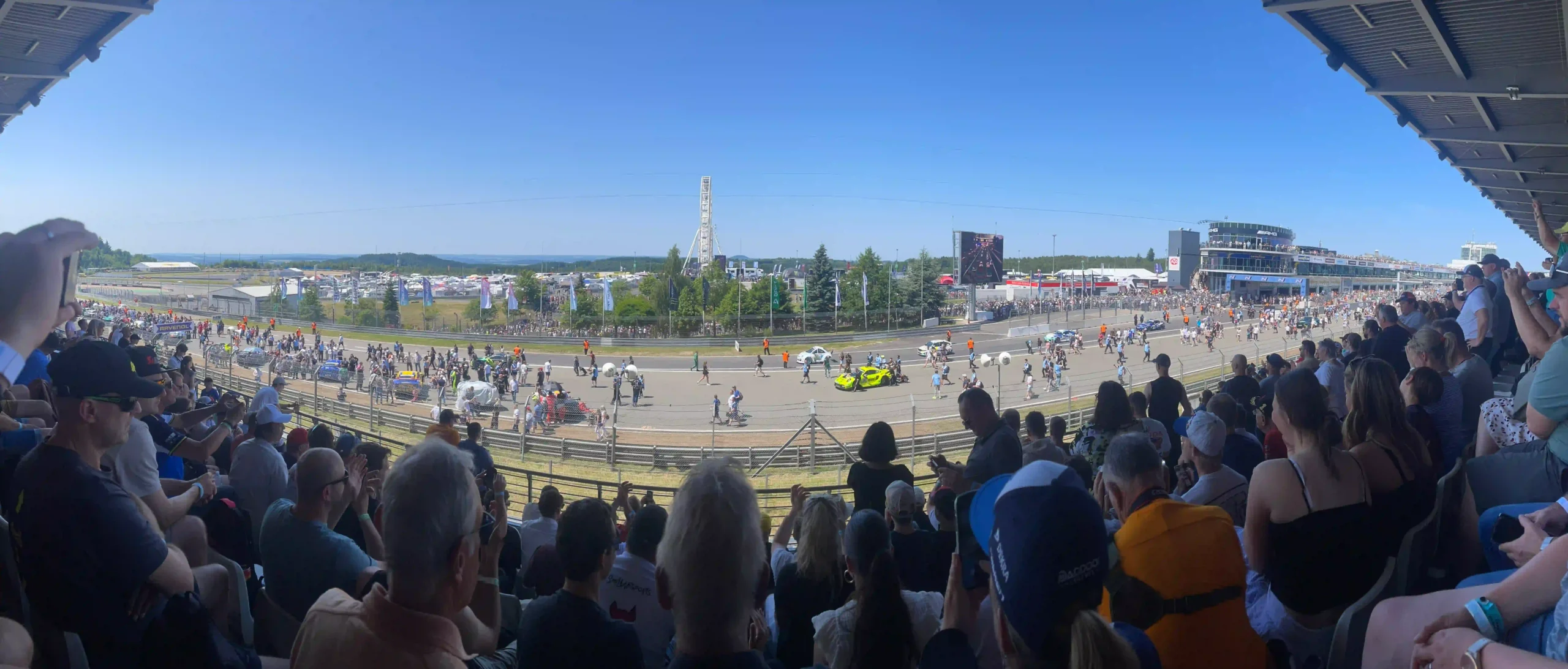
For viewers coming from Formula 1, NASCAR or endurance racing, the DTM weekend has its own rhythm. The important point is that Saturday and Sunday each carry major championship weight. There is not one qualifying session that sets a single long race. Instead, each race receives its own qualifying session.
Practice: build the car for a short, intense race
Friday is where engineers and drivers learn the tyre window and refine the setup. Teams do not have unlimited time. They need enough information to prepare for a short qualifying session and a race that can be decided by small margins. Long-run work matters, but so does a single-lap balance that lets the driver attack immediately in qualifying.
Qualifying: small margins, direct consequences
Saturday morning sets the Race 1 grid; Sunday morning sets the Race 2 grid. That structure rewards teams that can repeatedly hit the tyre window rather than produce one excellent lap all weekend. It also creates an important mental reset. A driver who makes a mistake on Saturday still has another independent qualifying opportunity on Sunday.
For fans trying to understand the timing screen, focus on sector consistency rather than only the final best lap. One purple sector followed by a poor final sector may indicate traffic or an overheated tyre. A driver who strings together three stable sectors is usually closer to the actual limit of the car.
Race: track position and pit execution become decisive
Once the field launches, the Nürburgring Sprint track rewards drivers who can protect the car while staying close enough to pressure the car ahead. The first lap is especially important because a compressed field can create contact. If a driver loses front bodywork or suffers tyre damage, a 60-minute race leaves less recovery time than an endurance event.
Pit execution is another major separator. Modern DTM racing has developed into a championship where teams can gain or lose places during a tightly timed stop. A clean stop is not simply mechanical housekeeping; it is part of the strategy. If you are new to race timing, our race timing guide explains gaps, intervals and why a one-second loss can have a larger consequence after traffic is factored in.
Points: why this weekend feels bigger than one round
Because two races are held, a driver can leave the weekend with a very different championship picture from the one they brought into it. DTM also awards qualifying points, so Saturday and Sunday mornings can matter before the races even begin. The exact value of every position is best followed through the official championship table, but the larger lesson is straightforward: there are four separate opportunities across qualifying and racing for the order to shift.
That pressure only increases because the Nürburgring is race weekend six of eight. After Sunday, the series moves to the Sachsenring and then Hockenheim. For a simple explanation of how season points turn race results into a title fight, see how racing championships are scored.
Support Races and Fan Programme at Nürburgring DTM 2026
The official DTM event page lists ADAC GT4 Germany, Porsche Sixt Carrera Cup Deutschland and the BMW M2 Cup as major support categories. That matters for anyone attending in person because the track is active far beyond the six DTM championship sessions.
ADAC GT4 Germany
GT4 is designed around less powerful customer racing cars than GT3 and mixes young drivers with ambitious amateur racers. The series runs two races of roughly one hour during a DTM weekend, with two drivers sharing each car and a driver change around the middle of the race. For spectators, it creates a useful comparison with DTM: similar manufacturer shapes, different performance level and a different race structure.
Porsche Sixt Carrera Cup Deutschland
The German Porsche one-make cup is another high-value support category because identical machinery puts the emphasis heavily on driver execution and team setup. The 2026 event page says the series contests two races at a DTM weekend, each lasting a little over 30 minutes. Those short races make good viewing between DTM sessions because the field tends to remain closely matched.
BMW M2 Cup
The BMW M2 Cup returned in 2026 with the BMW M2 Racing and is positioned as a development category. One driver races each car, and the format includes practice, qualifying and two short sprint races. From a fan perspective, the series fills the weekend with additional competitive track time rather than exhibition-only running.
Pit walk, fan zone and autograph sessions
DTM’s Nürburgring event page also lists pit walks on Saturday and Sunday, a DTM Fan Zone, ADAC Members’ Lounge, autograph sessions and other on-site activities. The pit walk is especially useful for spectators who want to see how compact a modern GT paddock operation really is. The cars look large on television, but the pit boxes reveal how tightly teams organize wheels, tools and personnel around them.
Fans attending should always treat the on-site programme as more detailed than the broadcast schedule. A television guide is built around the sessions that decide the DTM championship; a ticket-holder can spend almost the entire day moving between support races, paddock activity, fan events and the main DTM sessions.
Why the Nürburgring Round Matters to the 2026 Championship
The season calendar tells the story. The Nürburgring is not the midpoint; it is the start of the closing phase. Eight weekends make up the 2026 championship, and this is number six. After it, the remaining opportunities are the Sachsenring and the traditional Hockenheim finale.
That position on the calendar changes decision-making. Earlier in the year, a driver may accept a conservative result because there is plenty of time to recover. In August, the value of a lost top-five finish is greater. The title contenders know how many races remain and can measure risk against a shrinking number of points-paying opportunities.
The short Nürburgring Sprint lap can also punish a driver who starts in traffic. Passing a car is only half the problem; following closely enough to attempt the move can cost tyre performance and aero efficiency. Even GT3 cars with less extreme aerodynamics than modern Formula 1 machinery are affected by disturbed air, especially through faster direction changes.
Race control can reshape that equation. A caution compresses gaps and erases a carefully built advantage, while a poorly timed incident can place one group of drivers on the right side of pit timing and another on the wrong side. Our motorsport crash-cause guide explains why starts, traffic and braking zones are common incident points.
For readers following Nürburgring motorsport more broadly, World of Speed has also covered major Nürburgring stories including Max Verstappen leading at the Nürburgring 24 Hour and the follow-up on Verstappen losing a likely Nürburgring victory. Those are different competitions, but they underline how many very different forms of racing use the Nürburgring complex.
Practical Viewing Guide: The Sessions Worth Waking Up For
If you are in the United States, the central problem is not access but timing. European race weekends can push qualifying into the middle of the night for East Coast viewers and even earlier for the West Coast. The Nürburgring DTM weekend is slightly friendlier because both races sit at 7:30 a.m. ET.
If you only have two hours each day
Watch the race live. Race 1 and Race 2 are the championship events that matter most, and both begin at the same time. Join 15 to 20 minutes early if the broadcaster provides a pre-race segment. That gives enough time to understand the grid, weather and any overnight penalties.
If you want the complete competitive story
Add qualifying. Even if you watch it on replay, qualifying tells you which teams have one-lap speed and which drivers are beginning the race out of position. In DTM, that information is especially valuable because there is fresh qualifying each day.
If you want engineering context
Watch Friday practice. It is the least dramatic session but often the most educational. Look for long runs, traffic management and whether the same cars are consistently fast rather than simply producing one headline lap. Practice also gives commentators time to explain technical issues without a constant battle for position on screen.
Do not ignore the weather forecast or race-control messages. The Eifel has a reputation for changing conditions, and a short shower can turn a standard slick-tyre race into a strategic scramble. When visibility, surface grip or debris changes, flags and Safety Car procedures become part of the contest rather than background rules.
Nürburgring DTM 2026 FAQs
Conclusion: Nürburgring Is Where the 2026 DTM Run-In Gets Serious
The Nürburgring DTM 2026 weekend is easy to summarize but much harder to predict. The dates are August 14–16. The two races are Saturday and Sunday. Both are scheduled for 1:30 p.m. local German time, or 7:30 a.m. ET. ProSieben leads German television coverage, with Joyn, ran.de and the official DTM YouTube channel supplying major streaming options.
What makes the event worth watching is the championship position. Races 11 and 12 arrive with only four races left afterward. The short 3.629-km Sprint track compresses the field, qualifying is repeated each morning, and every pit-stop or traffic mistake has the potential to cost several positions.
For U.S. fans, the simplest plan is to treat 7:30 a.m. ET as the appointment time on both Saturday and Sunday. Watch qualifying on replay if the 3 a.m. window is too early, then join the race knowing exactly how the grid was formed. If you want the complete experience, Friday practice adds the setup and tyre story that usually explains why certain cars suddenly come alive in the race.
Most importantly, this is not a Nordschleife endurance event. It is a compact DTM sprint weekend with two independent qualifying sessions and two championship races. That distinction is what makes the Nürburgring round so intense: the lap is short, the margins are narrow and the season is running out of places to recover lost points.
Sources
Schedule, broadcast and circuit details were checked against official DTM/ADAC material and current motorsport schedule listings available on August 16, 2026.