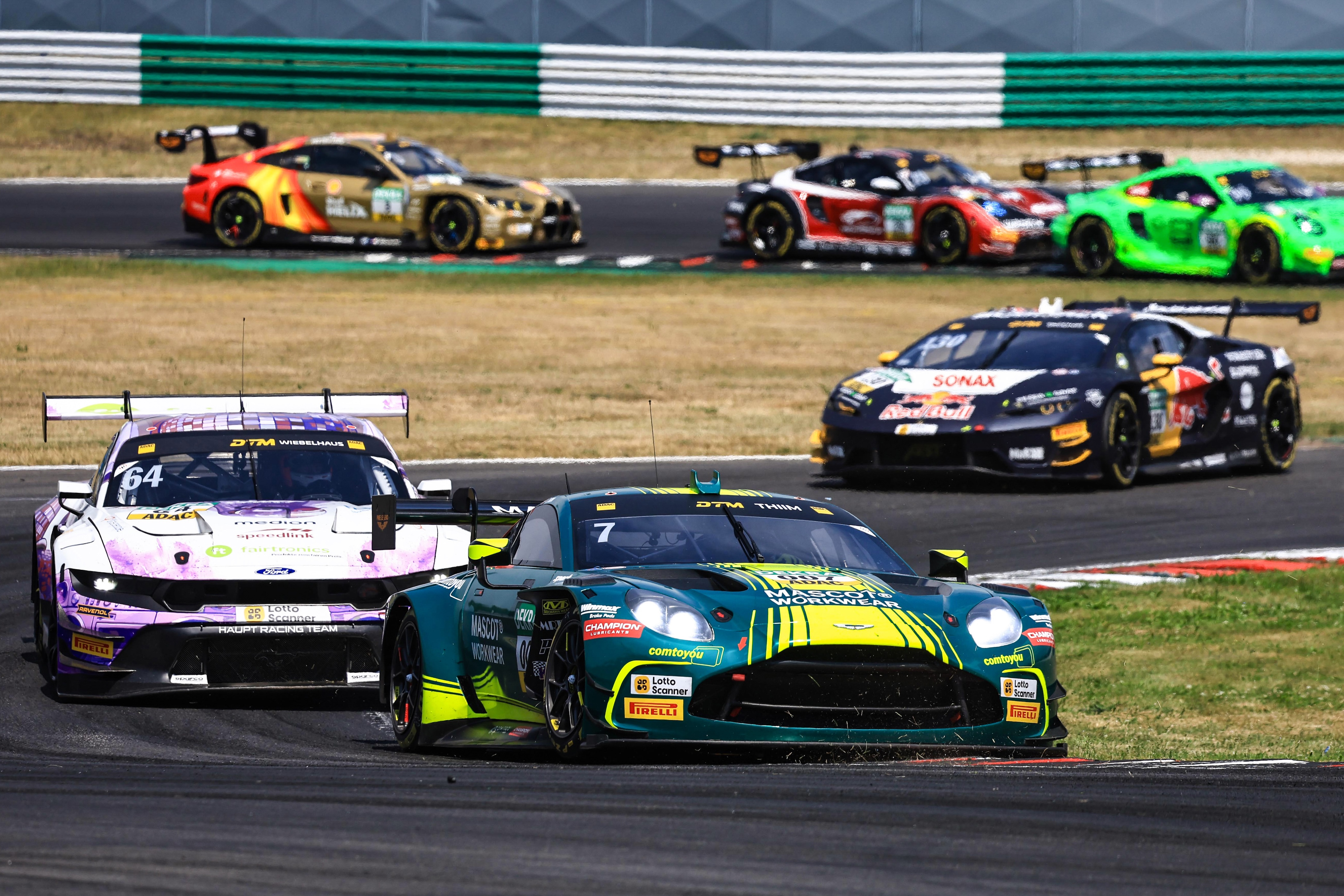
Oschersleben DTM 2026 Strategy Analysis: Pit Windows, Traffic and Track Position
A technical look at Saturday’s one-stop race, Sunday’s compressed two-stop format, cold-tire undercuts, traffic traps, shared pit stations, Safety Car scenarios and the championship battle between Nicki Thiim, Maro Engel and Lucas Auer.
The Oschersleben DTM 2026 strategy battle is not built around fuel saving or long endurance stints. It is built around seconds. A clean in-lap, a fast wheel change and the right rejoin gap can decide the race.
Motorsport Arena Oschersleben is narrow, technical and difficult for passing. The best overtaking chance comes after the roughly 700-meter main straight. Therefore, qualifying and pit-cycle track position carry unusual weight.
The weekend also creates two different tactical problems. Saturday uses one mandatory stop in a broad 20-minute window. Sunday requires two stops, with a compressed second window late in the race.
This analysis uses official DTM event information, the approved 2026 sporting regulations, the current pre-event championship position and recent Oschersleben race evidence. Predictions remain editorial analysis and may change after practice, qualifying or weather updates.
Oschersleben DTM 2026 Strategy: The Quick Answer
What is the best strategy for DTM Oschersleben?
The strongest plan starts with a front-row grid position. On Saturday, the leader should extend in clean air unless a rival threatens an undercut. Midfield drivers should stop earlier only when a clear rejoin gap exists. On Sunday, teams must separate their two cars and protect the compressed second pit window.
Oschersleben rewards track position because passing is difficult. The main straight creates the best braking opportunity, but most of the lap is a sequence of corners with one preferred line.
As a result, fresh tires do not guarantee progress. A driver can lose the undercut by rejoining behind a slower train. The tire advantage then disappears before an overtaking chance appears.
Saturday favors the driver who controls the race from the front. The broad 20-to-40-minute window lets the leader react to the nearest rival.
Sunday is less comfortable. The first stop begins after ten minutes, and the second window opens at minute 39. Consequently, pit crews and engineers must execute two separate traffic calculations.
Protect net track position
Do not trade first place for a small tire advantage unless the rejoin is clear.
Separate teammate stops
Two cars sharing one station cannot be lifted together during mandatory stops.
Traffic-free undercut
Fresh tires matter only when the out lap is fast and unobstructed.
Cold tires in a train
A slow rejoin can cost several positions and destroy the remaining tire offset.
At Oschersleben, the fastest tire strategy is often the one that puts the car in the least traffic.
World of Speed strategy verdictRace Weekend and Championship Context
When is DTM Oschersleben 2026?
The DTM visits Motorsport Arena Oschersleben from July 24 to 26, 2026. It is round five of eight and contains championship races nine and ten. Each race lasts 55 minutes plus one lap, with up to two additional Safety Car laps when required.
Oschersleben begins the second half of the 16-race championship. The strategic stakes are higher because the leading group remains tightly packed.
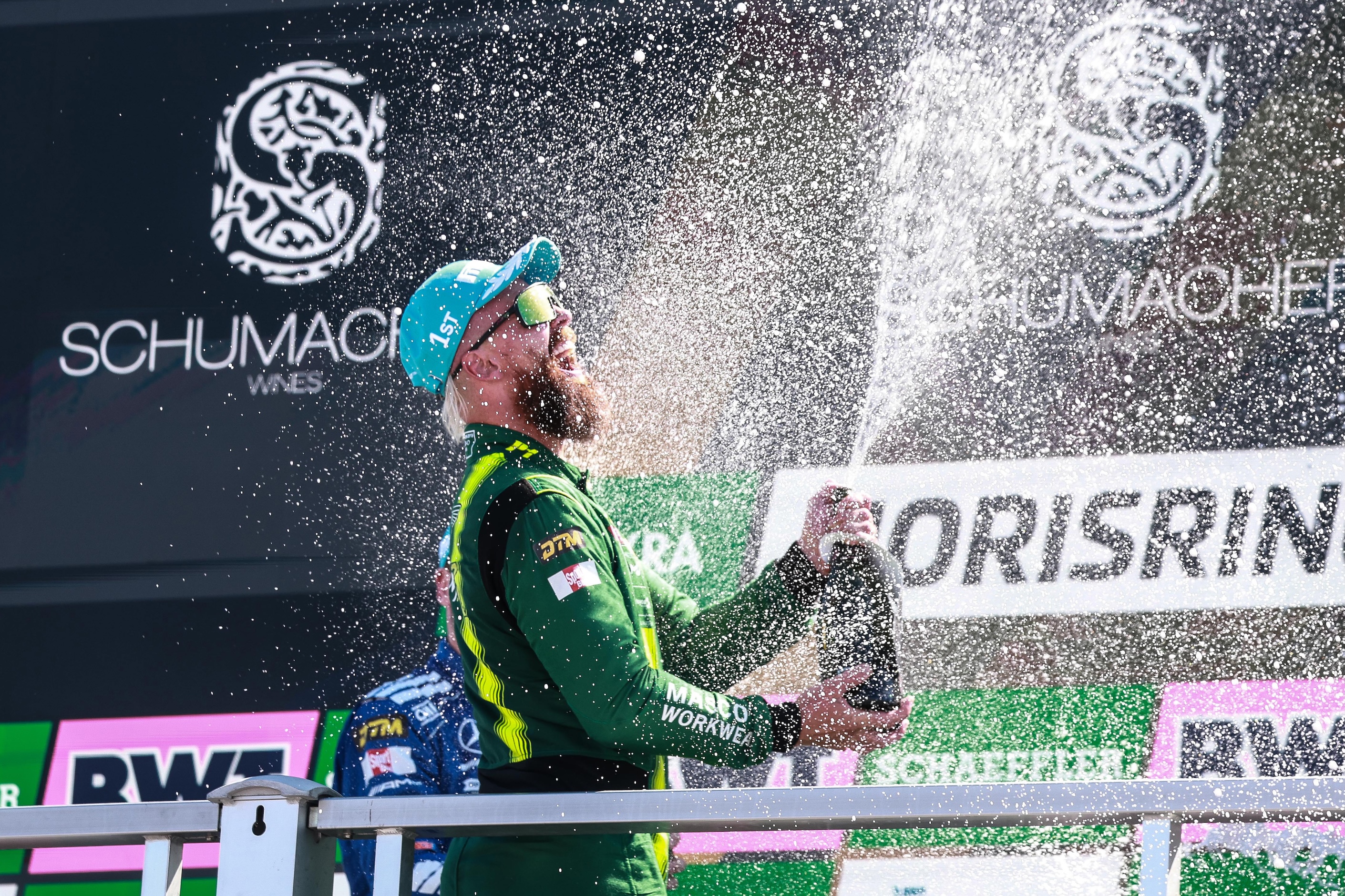
Nicki Thiim arrives with 117 points after a perfect Norisring weekend. He took two poles and two wins, scoring the maximum 56 points.
Maro Engel trails by nine points. Lucas Auer is eleven points behind according to the official DTM pre-event release.
That difference is small enough to disappear in one weekend. Qualifying awards points, while each race pays the championship’s main score.
| Position | Driver | Team / car | Points | Strategic objective |
|---|---|---|---|---|
| 1 | Nicki Thiim | Comtoyou Racing · Aston Martin Vantage GT3 | 117 | Protect the lead without surrendering qualifying aggression |
| 2 | Maro Engel | Mercedes-AMG Team Ravenol · Mercedes-AMG GT3 | 108 | Use consistency and pit timing to erase a nine-point gap |
| 3 | Lucas Auer | Mercedes-AMG Team Landgraf · Mercedes-AMG GT3 | 106 | Repeat his 2025 Oschersleben victory and control track position |
Thiim has momentum, but Oschersleben is not the Norisring. The street circuit rewarded braking confidence and straight-line execution. Oschersleben demands repeated precision through varied corner radii.
Engel has finished on the Oschersleben podium in both 2024 and 2025. Therefore, his baseline setup and race-reading experience deserve weight.
Auer won the first Oschersleben race in 2025 from pole. His victory showed the value of controlling the front and relying on a strong tire change.
What 2025 Taught Us
Auer led Race 1 from pole and controlled the pace. Lapped traffic reduced his advantage, yet his pit crew protected the lead with a strong wheel change.
Engel reached third through a clever pit strategy. That result matters because the Mercedes-AMG GT3 remains a strong all-round package at this circuit.
Ayhancan Güven won Sunday’s 2025 race through a perfectly executed strategy. The result demonstrated that the double-stop format can reward flexibility, not only starting position.
Meanwhile, Oschersleben has produced different winning methods. Jack Aitken won in 2024 after late-stop leader Marco Wittmann suffered a fuel-pressure problem. The overcut had placed Wittmann in front before reliability ended the run.
Motorsport Arena Oschersleben Track Guide
Why is Oschersleben difficult to overtake?
Oschersleben has short straights, narrow sections and a clear preferred racing line through many corners. The best passing chance comes under braking after the 700-meter main straight. Elsewhere, a following GT3 car often loses front grip and cannot complete a clean side-by-side move.
The DTM layout measures 3.667 kilometers, or about 2.278 miles. It contains 14 corners, split between seven left-hand and seven right-hand turns.
The circuit runs clockwise. The field reaches almost 250 km/h, around 155 mph, near the end of the main straight.
The following tight left is the strongest overtaking zone. Therefore, exit speed from the final corner and braking stability into Turn 1 matter throughout the race.
Turn 1 Is More Than an Overtaking Zone
Turn 1 defines the first lap and every restart. Cars arrive tightly packed, while the corner narrows the available space.
A driver can gain track position with a decisive move. However, contact or a wide exit can trigger a Safety Car and rewrite the pit windows.
The leader also controls the field by defending the inside. That defense may slow the group and help cars behind remain inside the undercut range.
The Technical Middle Sector
The middle of the lap contains corners with different radii and speeds. The car needs front-end response without becoming unstable on the rear axle.
Following another GT3 car reduces clean airflow. Consequently, the front tires can slide more and overheat during a long train.
This matters for strategy because dirty-air tire loss can make an earlier stop attractive. Yet the driver must rejoin into clean space for the move to work.
The Triple-Left and Rhythm Sections
Oschersleben rewards drivers who connect corners rather than attack each apex alone. One compromised entry can damage the next two exits.
Therefore, a car trapped behind a slower rival may lose time across an entire sequence. The gap loss can exceed the raw pace difference between the cars.
Why Qualifying Carries a Premium
Each DTM qualifying session lasts 20 minutes. Traffic management is difficult because every driver wants the same peak-grip window.
A clean qualifying lap removes strategic pressure. Starting in the front two rows allows the driver to protect track position rather than invent a recovery plan.
A midfield starter faces two problems. First, the car loses time in dirty air. Second, the pit-stop rejoin is more likely to land inside another traffic group.
World of Speed’s guides to how racing drivers qualify, pole position and grid position explain why the starting order shapes strategy.
At Oschersleben, one place gained in qualifying may be more valuable than several tenths of theoretical race pace. The circuit does not offer enough clean passing zones to recover every lost position.
2026 DTM Mandatory Pit-Stop Rules
What counts as a mandatory DTM pit stop?
The stop must begin inside the published window. Teams must remove all four wheels and fit four wheels that were not previously mounted on the car during that race. The car must use its assigned pit station, and only wheel-change work is allowed under the mandatory-stop procedure.
| Race | Required stops | Window | Main strategic effect |
|---|---|---|---|
| Saturday Race 1 | 1 | 20:00–39:59.999 | Broad reaction window for undercut, overcut and traffic release |
| Sunday Race 2 | 2 | 10:00–24:59.999 | Early first decision splits the field into different sequences |
| Sunday Race 2 | 2nd stop | 39:00–44:59.999 | Compressed late window creates queues and a short final sprint |
How the Stop Begins
The official timing line at pit entry decides whether the stop began inside the window. The car does not need to reach its pit box before the deadline.
That distinction matters near the closing time. A driver can cross the timing line legally and then continue through the pit lane to the assigned station.
Four Complete Wheels
A mandatory stop requires all four complete wheels to be removed. The replacement wheels cannot have been mounted on the car earlier in the same race.
Therefore, a team cannot rotate the same race set back onto the car. Tire-set planning begins before the start.
Six-Person Crew and Two Wheel Guns
A combined maximum of six people can perform the wheel change and related tasks. The rules allow a maximum of two active wheel guns at the same time.
The rear-wheel change must be completed before the front-wheel change begins. This sequence makes choreography more important than simply adding mechanics.
No Setup Change During the Mandatory Stop
The car’s setup settings must remain unchanged during the performance stop. Teams cannot use the stop to adjust the chassis.
No liquids can be poured into the car. The permitted non-wheel tasks are limited, including window cleaning, cooling-air intake cleaning and removing or securing damaged parts.
One Station for Two Team Cars
Teams normally use one pit-stop station for two cars. Cars scoring for the same team cannot be lifted at the same time during mandatory stops.
If that rule is broken, the stop of the car lifted first is treated as not completed. This creates a serious double-stacking restriction.
The Oschersleben Penalty
An incorrectly completed mandatory stop receives a 90-second time addition at Oschersleben. That penalty removes any realistic chance of a competitive result.
If a race is suspended and not restarted, each uncompleted stop creates a track-specific 70-second addition. Therefore, teams must understand both normal and red-flag procedures.
World of Speed’s guides to pit stops, unsafe release and double stacking provide useful background, although DTM uses its own rules.
Saturday Race 1 Strategy: The One-Stop Window
What is the best Saturday strategy at Oschersleben?
A front-running driver should stay out while maintaining clean air, then react when a direct rival pits. A midfield driver can stop near the opening of the window, but only when the projected rejoin is clear. The center of the window is safest when traffic data remains uncertain.
Early undercut phase
Drivers trapped behind slower cars can stop immediately. The move works when the fresh-tire out lap is clean.
Leaders pit early only when a rival creates a credible undercut threat.
Reaction and traffic phase
Most teams can compare real lap times, pit-stop execution and projected rejoin gaps.
This is the likely concentration point, which also increases pit-lane congestion.
Warm-tire extension
Drivers in clean air can remain on warm tires while rivals struggle on cold out laps.
The risk grows if tire degradation rises or the late rejoin lands in traffic.
Leader Strategy
The race leader has the cleanest air and the best information. Every rival’s stop provides a measured undercut time.
However, the leader cannot wait without limit. A fresh-tire rival may gain enough time over two laps to jump ahead.
The ideal response depends on the gap before the stop. A small advantage requires an immediate cover. A larger advantage allows one extra warm-tire lap.
Midfield Strategy
A midfield driver often loses more time from traffic than from tire wear. Therefore, an early stop can create a powerful offset.
The engineer must identify a genuine gap. Rejoining behind a cold-tire car or a multi-car train eliminates the benefit.
Because Oschersleben laps are short, traffic windows close quickly. One additional lap can turn open track into a queue.
Why the Center of the Window Is Popular
The middle of the window offers reduced uncertainty. Teams know the first undercut times and can estimate tire warm-up.
Yet popularity creates its own problem. Several cars may enter together, increasing queueing and unsafe-release risk.
A two-car team must also separate its stops. The faster car may receive priority, while the second car stays out to avoid waiting.
Late-Stop Overcut
The overcut uses warm old tires against cold new tires. It works best when the driver has clean air and low degradation.
Marco Wittmann’s 2024 Oschersleben race showed its potential. A late stop placed him in the lead before a fuel-pressure problem caused retirement.
The lesson is not that late always wins. The lesson is that warm-tire pace and clear air can overcome the normal fresh-rubber advantage.
The leading Mercedes-AMG or Aston Martin should target a reactive stop around the middle of the window. A midfield Porsche, BMW or Ferrari may gain more by stopping close to minute 20.
Sunday Race 2 Strategy: Two Stops and a Compressed Finish
Why is Sunday’s DTM race strategically harder?
Sunday requires two mandatory stops. The first window opens after ten minutes, while the second lasts only six minutes late in the race. Teams must manage three tire sets, two rejoin calculations and one shared pit station, all within a 55-minute sprint.
Opening Stint: Ten Minutes of Positioning
The first window opens at minute 10. That gives teams little time to build stable gaps.
A driver stuck in traffic can stop immediately. However, the field remains compact, so a clean rejoin may not exist.
The leader can continue toward the middle or end of the window. Staying out preserves track position and creates a shorter middle stint.
First-Window Options
| Plan | First stop | Middle stint | Advantages | Risks |
|---|---|---|---|---|
| Early–late | 10–14 min | Long middle stint | Escapes opening traffic and attacks with fresh tires | More tire wear before the second stop |
| Balanced | 16–20 min | Medium middle stint | Flexible traffic response and predictable tire use | Most likely pit-lane congestion |
| Late–late | 21–25 min | Shorter middle stint | Uses warm tires and protects early track position | Can lose to a strong undercut |
The Long Middle Stint
A car stopping at minute 10 may run almost 30 minutes before the second window. That is a major portion of a short DTM race.
Traffic management becomes central. The driver must preserve tire performance while still building a gap before the second stop.
A driver who stopped later has a fresher middle-stint set. That car may close rapidly before minute 39.
The Second Window Is the Pressure Point
The second window runs from minute 39 to 44:59.999. Every remaining car must pass through a six-minute channel.
That creates pit-entry traffic, shared-station conflicts and release pressure. A six-second delay can be more expensive than the tire strategy itself.
The window also creates a short final stint. Drivers can attack harder on the last set, but cold-tire mistakes become costly.
Teammate Separation
Two team cars cannot be lifted together during mandatory stops. Therefore, engineers must maintain a safe gap between teammate arrivals.
If the cars run nose to tail, the second car may stay out for another lap. That choice can create a tire advantage but also lose track position.
The leading team car normally receives priority. However, championship position and traffic can justify reversing the order.
Three-Set Tire Planning
Sunday requires one starting set and two replacement sets for the mandatory stops. Teams must choose the best set for each phase.
A strong new set can be saved for the final sprint. Alternatively, the team can use its best tires in the long middle stint, where more lap time is available.
The correct choice depends on tire degradation and passing potential. At Oschersleben, track position may make the middle stint more important than the final attack.
The “No Second Mandatory Pit Stop” Scenario
Race control can cancel the second stop if neutralization delays the first window beyond minute 25. The same can happen if the second window cannot begin before minute 44.
Teams receive a timing-screen message when this applies. Therefore, engineers must follow race-control messages rather than rely on the original schedule.
The balanced first stop should suit front-runners. Midfield cars may attack at minute 10, while two-car teams must prioritize station spacing before the compressed second window.
Undercut Versus Overcut at Oschersleben
Does the undercut work at Oschersleben?
Yes, but only with a clear pit exit. Fresh Pirelli tires can create a strong lap-time gain once they reach temperature. However, a car that rejoins in traffic may lose more time than the tires provide, especially through the narrow technical sections.
Undercut Requirements
- A clear rejoin gap of at least one useful out lap
- Fast tire warm-up without locking the fronts
- A clean release from the pit station
- No slower car blocking the technical middle sector
- Enough remaining tire life for the planned stint
The undercut is strongest when the current car is trapped. An early stop removes the dirty-air loss and uses fresh grip to create net position.
However, the first corners after pit exit are critical. Cold tires reduce braking confidence and traction.
A driver who attacks too hard may lock a front tire. That mistake can destroy the expected gain and damage the new set.
Overcut Requirements
- Clean air on the current set
- Low tire degradation
- A fast final in-lap
- Confidence that rivals will struggle on cold tires
- A clear late rejoin
The overcut works because the old tires remain warm. Oschersleben’s narrow layout can amplify this advantage when fresh-tire cars rejoin in traffic.
Yet the overcut is vulnerable to sudden degradation. A worn rear tire can reduce traction from the final corner and damage the entire lap.
The Crossover Lap
The crossover is the point where fresh-tire pace exceeds the warm-tire advantage and pit loss. Teams calculate it using live sector times.
Oschersleben makes that calculation difficult because traffic changes sector performance. A slow middle sector may reflect another car, not tire degradation.
Engineers must separate car pace from traffic loss. That is why onboard gaps and mini-sector data matter more than the headline lap time.
Cold Tires and Driver Style
Drivers who generate temperature quickly can undercut more effectively. Aggressive steering may warm the front tires, but it also increases lock-up risk.
Smoother drivers often protect the tire across a long stint. That style supports the overcut.
World of Speed’s guides to undercuts and overcuts, grip and car handling explain the underlying concepts.
Traffic, Rejoin Gaps and Net Race Position
Why does traffic matter at Oschersleben?
The circuit is short and difficult for passing, so cars remain grouped into trains. A pit stop can drop a fast driver behind slower traffic. The resulting dirty air and lost corner exits may cost more time than the fresh tires can recover.
Projected Rejoin Position
Race engineers do not ask only, “How fast are the new tires?” They ask, “Which car will we exit behind?”
The projected rejoin uses the current gap, pit-lane loss, expected stop time and traffic speed. It is the most important strategy number on this circuit.
A theoretical rejoin in 12th may be better than an actual rejoin in 10th if 12th offers clear air. Net position is about future lap time, not only the timing screen.
The Train Effect
A group of GT3 cars can run close without passing. Each car loses front grip in the wake of the car ahead.
The driver then brakes slightly earlier and carries less minimum speed. The loss continues through the next corner sequence.
As a result, one slower car can reduce the pace of five or six drivers. An early stop can break that chain.
Backmarker Traffic
The 55-minute race can produce lapped traffic. Auer’s 2025 lead shrank while he passed slower cars.
The leader must choose safe moments. A failed pass costs more than waiting one corner.
Backmarkers can also change the pit decision. A team may stop before reaching a slower group, even when the tire plan suggested another lap.
Pit-Lane Traffic
Several teams may react to the same undercut. The pit lane then becomes crowded within seconds.
A driver can lose time entering the assigned station or waiting for a safe release. The team must also avoid crossing another car in the fast lane.
Sunday increases this risk because every car needs two stops. The six-minute second window creates the highest congestion probability.
Traffic Release Strategy
Sometimes the best call is to stay out while the traffic ahead pits. The driver then inherits clean air without making a stop.
This is not a full overcut unless the extra laps create net position. However, it can improve the final in-lap and reduce pit-exit risk.
Never judge a stop only by tire age. At Oschersleben, the car’s next three traffic encounters may matter more than the age of the next tire set.
Pit Crew Execution and Shared-Station Strategy
How many mechanics work on a DTM mandatory pit stop?
A combined maximum of six people may perform the wheel change and related duties. Teams can use two active wheel guns. The rear wheels must be changed before the front wheels, and the car can only leave after all work is complete.
Why the Stop Is Harder Than It Looks
DTM does not allow four simultaneous wheel-gun operators. The crew changes the rear axle, then moves to the front.
Every handoff and movement creates risk. A dropped nut, damaged gun or slow wheel presentation can cost positions.
Air-Jack Timing
One crew member operates the air lance. The car rises only after it stops correctly at the station.
The crew must complete all work before the car lowers. Pulling the lance early can invalidate the procedure or create danger.
Rear Wheels First
The rear-wheel change must finish before the front-wheel change. This rule makes the stop a clear two-stage sequence.
A rear-wheel delay blocks the entire stop. Therefore, rear tire presentation and wheel-gun reliability are decisive.
Safe Release
Cars in the fast lane have priority over cars leaving the working lane. Teams must avoid releasing into an overlap.
A safe release can still cost time. However, an unsafe release creates a penalty and possible contact.
Shared Pit Stations
Most teams share one station between two cars. This requires strategic spacing before both windows.
Sunday is the main challenge. The second window lasts six minutes, so cars can arrive together even after engineers try to separate them.
One car may be told to slow slightly before pit entry. Yet deliberate slow driving in the fast lane is prohibited, so the team must manage the gap on track.
Pit Stop Challenge Pressure
DTM maintains a Pit Stop Challenge classification. This rewards consistent wheel-change performance across the season.
The competition adds pressure, but teams cannot sacrifice safety. A clean repeatable stop is more valuable than one spectacular time followed by an error.
Safety Car, Full Course Yellow and Red-Flag Strategy
How does Full Course Yellow affect DTM pit stops?
Pit entry closes from the “Full Course Yellow deployed” message until the green-flag message. A stop started after deployment does not count as mandatory. If FCY occurs inside a pit window, race control extends that window once by three minutes and guarantees three minutes after FCY ends.
Full Course Yellow
During FCY, all cars slow to the prescribed speed. The field’s gaps remain more stable than under a Safety Car.
However, the pit-entry closure removes the normal cheap-stop opportunity. A driver already beyond the first Safety Car line can continue, but later entries do not count.
Race control announces the revised closing time as an absolute clock time. Engineers must follow timing page messages closely.
Safety Car
Cars may enter the pit lane while the Safety Car is deployed. The field compresses, which changes track position dramatically.
Race control can postpone a pit window when Safety Car use is expected at the original opening. Therefore, teams cannot assume the published window remains unchanged.
A Safety Car also cools the tires. Drivers must rebuild pressure and temperature before attacking at Turn 1.
Race-Distance Extension
The race lasts 55 minutes plus one lap. DTM can add up to two Safety Car laps to the distance.
This creates extra tire demand after a late neutralization. A final set chosen for a short sprint may need to survive longer.
Red Flag
A stop completed on a lap later removed from scoring may be treated as not completed. Unfinished mandatory stops still apply if the race restarts.
If the race does not restart, Oschersleben applies a 70-second addition for each uncompleted stop. An incorrectly performed stop receives 90 seconds.
Turn 1 Incident Risk
The first corner is the most likely compression point. Contact there can trigger the weekend’s largest strategy swing.
Teams must prepare both an immediate neutralization plan and a normal green-flag plan. The correct call may change before the pit window opens.
World of Speed’s guides to Safety Cars, Safety Car and virtual neutralization, red flags and racing flags provide additional context.
Tire Temperature, Weather and Setup Priorities
Cold-Tire Out Laps
The first braking zone after the stop decides much of the undercut. The driver must generate grip without locking a tire.
Cold front tires create understeer. Cold rear tires reduce traction and can produce oversteer on corner exit.
Therefore, the first out lap should build temperature progressively. A dramatic slide looks fast but often loses time.
Front-Tire Management
Following traffic increases front-tire stress. The car slides across the surface when aerodynamic grip falls.
A front-limited car may need an earlier stop to escape the train. However, the setup must still warm the new front tires quickly.
Rear Traction
Rear grip matters from the final corner onto the main straight. Poor traction reduces the only major overtaking chance.
It also weakens the in-lap and overcut. Teams need a balance that protects rear tires without sacrificing rotation.
Hot Conditions
High track temperature increases degradation and may strengthen the undercut. Fresh tires can gain earlier, while old tires lose traction.
Yet hot conditions also speed tire warm-up. The out-lap becomes less vulnerable.
Cool Conditions
Cool weather can favor the overcut. Warm old tires remain effective while fresh tires take longer to reach the performance window.
The risk is that the old set never reaches stable pressure after a neutralization. Engineers must watch tire-temperature data and driver feedback.
Rain and Crossover Strategy
Changing weather can override the normal mandatory-stop plan. A switch between slicks and wet tires may be necessary outside the ideal strategic lap.
Race control can move the windows after a delayed start or neutralization. Therefore, teams must separate tire choice from mandatory-stop compliance.
World of Speed’s guides to cold tire pressure, clean and dirty air and slipstreaming explain several underlying effects.
Driver and Manufacturer Strategy Profiles
Nicki Thiim and Aston Martin
Thiim enters as championship leader after a maximum-score Norisring weekend. His Comtoyou Racing Aston Martin has shown strong qualifying and race execution.
At Oschersleben, Thiim should prioritize clean air over an aggressive early stop. Championship position allows him to cover direct rivals rather than gamble.
The main question is technical-circuit balance. The Aston Martin must remain responsive through the varied corner sequence without overheating the front tires.
Maro Engel and Mercedes-AMG
Engel is nine points behind and has recent Oschersleben podium history. He also reached third in the 2025 opener through clever pit timing.
His strategy strength is consistency. Engel rarely needs a desperate move because he maintains competitive pace across long green-flag runs.
Mercedes-AMG considers Oschersleben a strong fit for its all-round GT3 package. A front-row start would make Engel a major Race 1 favorite.
Lucas Auer and Mercedes-AMG Team Landgraf
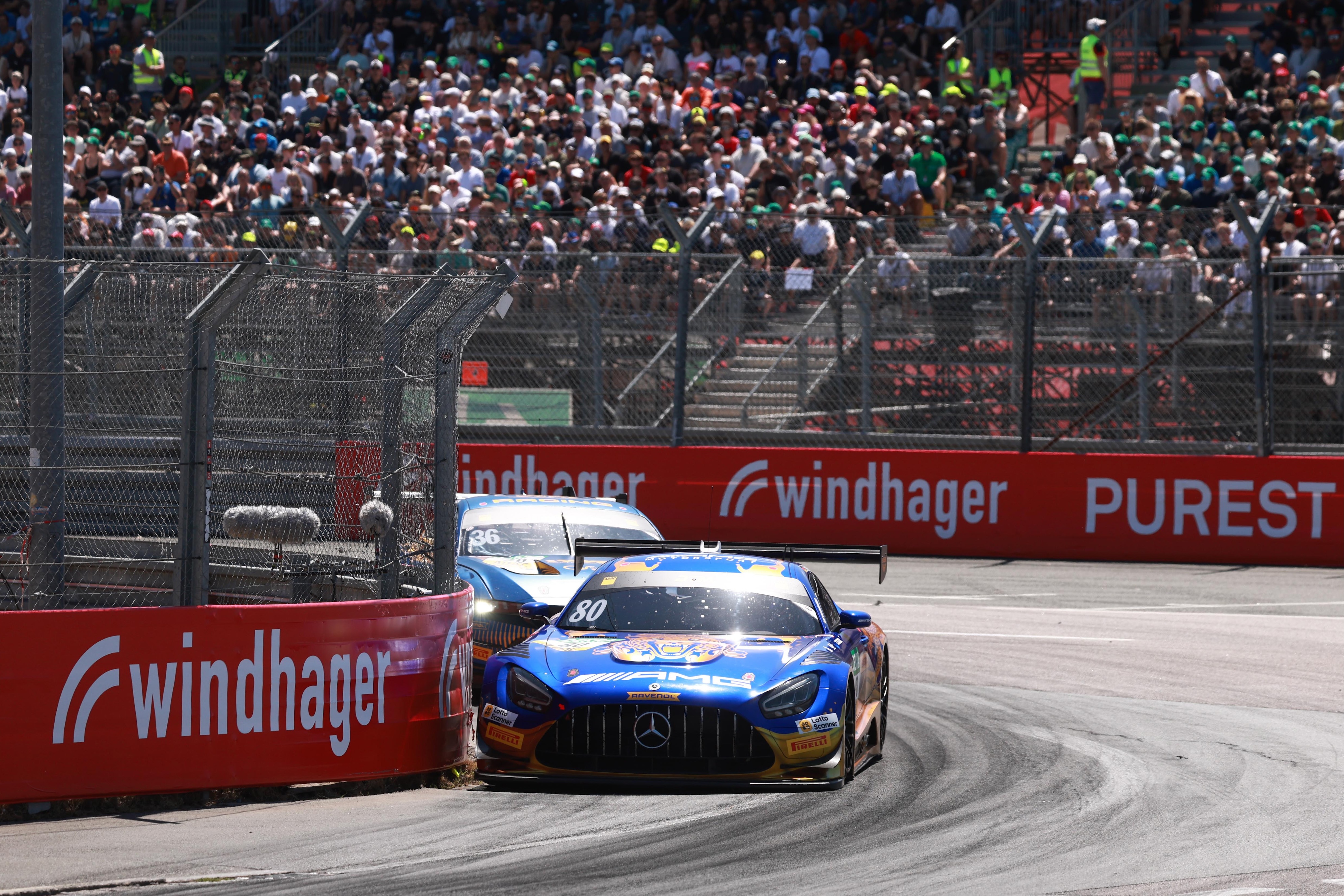
Auer won Oschersleben Race 1 in 2025 from pole. That history makes him the clearest track-position specialist among the top three.
His best plan is simple: qualify at the front, lead Turn 1 and force rivals to reveal their strategy first.
Traffic remains the threat. Auer lost much of his 2025 lead while lapping slower cars. The team must decide whether to stop before the traffic or continue through it.
Schubert Motorsport and BMW
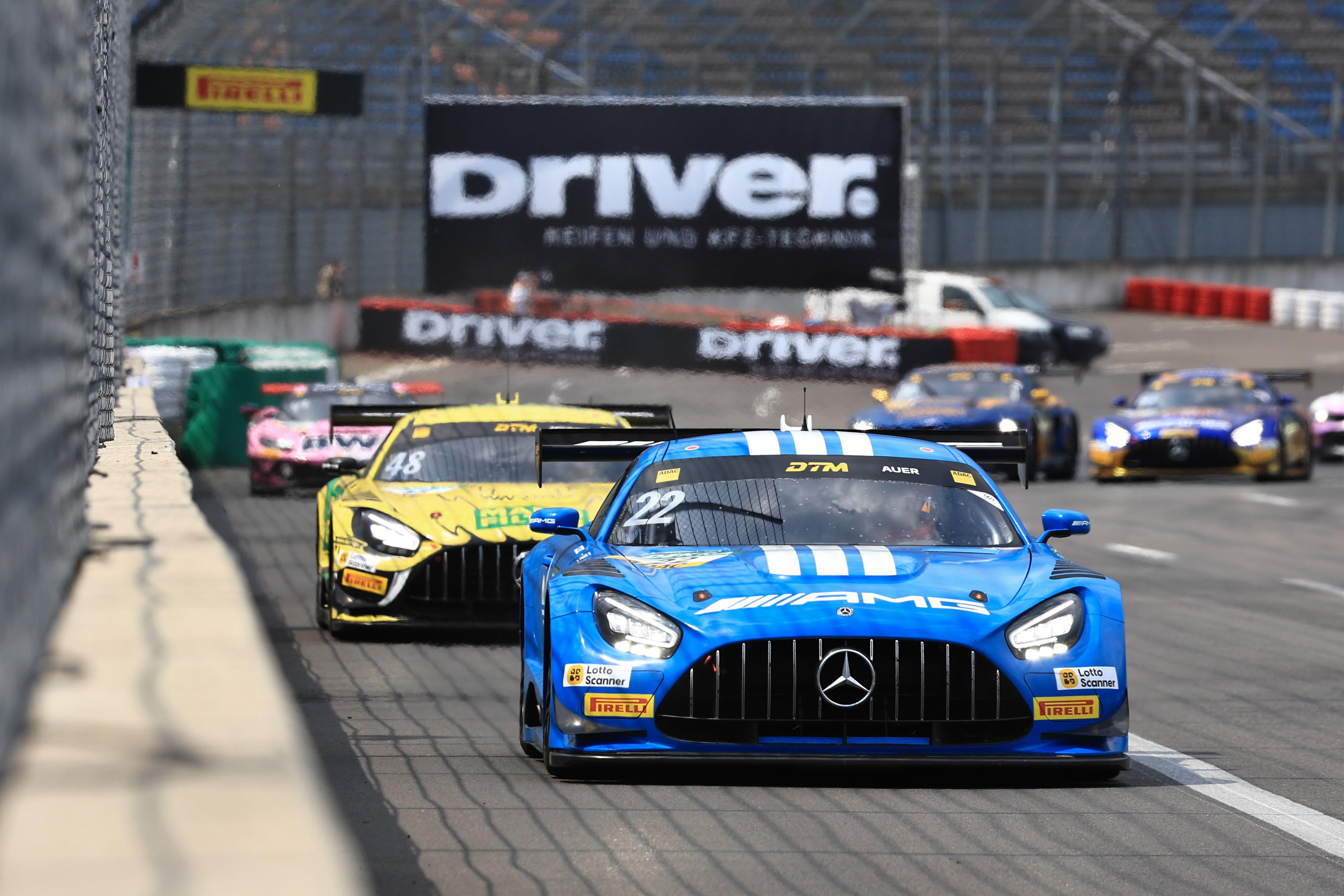
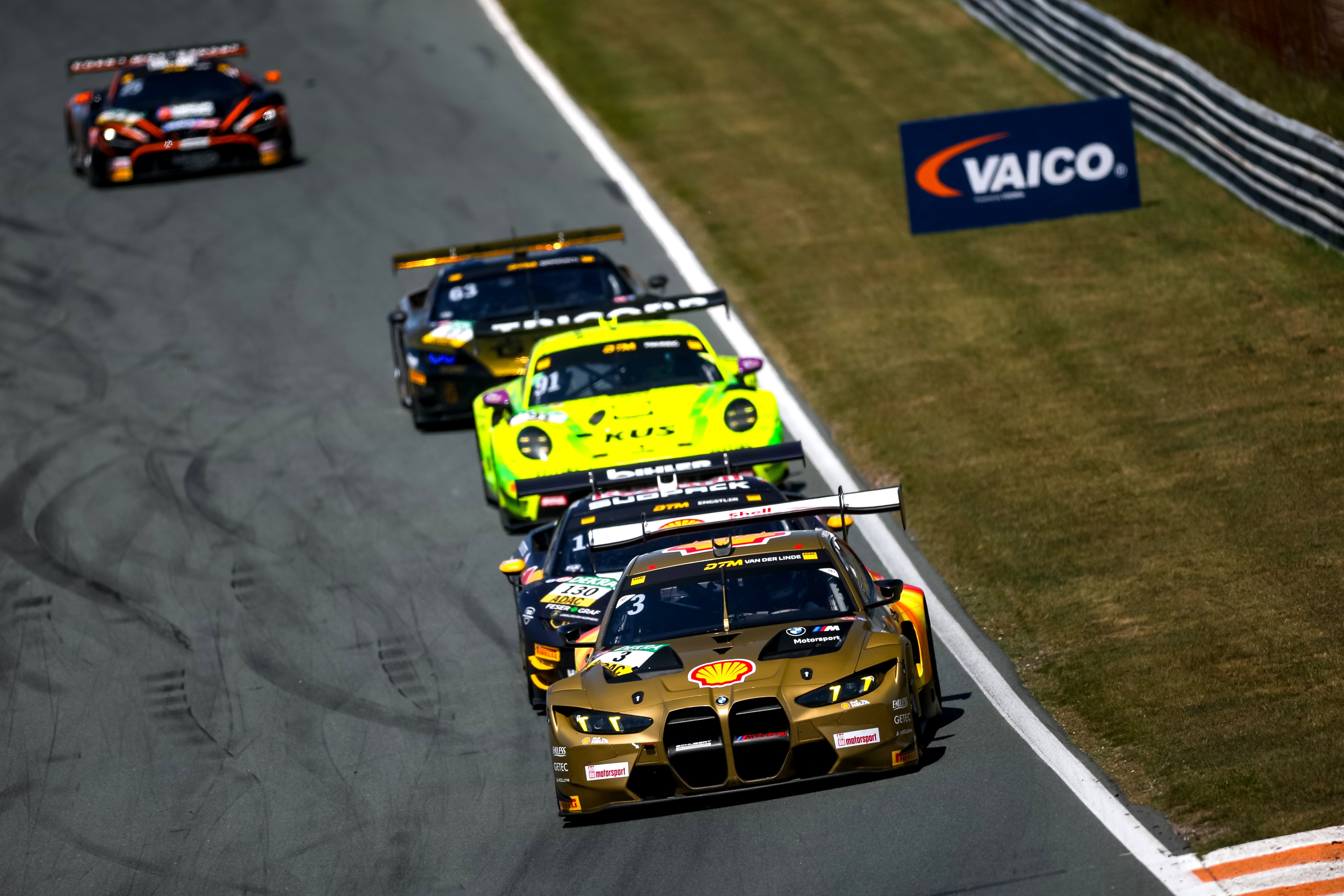
Schubert Motorsport is based only minutes from the circuit. Marco Wittmann and Kelvin van der Linde therefore arrive at the team’s home event.
The BMW M4 GT3 Evo should be strong in traction and race balance. The team also understands the local circuit and pit-lane environment.
However, home knowledge cannot overcome a poor grid position. Schubert needs both cars inside the first three rows to exploit its strategic options.
Matteo Cairoli and Ferrari
Cairoli has two 2026 victories, matching Thiim’s win total before Oschersleben. The Ferrari 296 GT3 Evo has shown strong one-lap pace and race performance.
Ferrari’s best route may be an early undercut from the second or third row. Clean air can release its pace before the leaders react.
Porsche and the 2025 Winning Reference
Ayhancan Güven won the 2025 Sunday race through a perfect strategy. Porsche therefore has recent proof that the two-stop format can suit the 911 GT3 R.
The rear-engine car can generate traction and protect the rear tires. However, cold front-tire behavior after each stop remains critical.
Ford, McLaren and the Midfield Attack
Finn Wiebelhaus finished second in the latest Norisring race and describes Oschersleben as an old-school circuit. His Ford Mustang GT3 could become an undercut threat.
McLaren has already won in 2026 through Ben Dörr. A midfield starting position may encourage another aggressive pit call.
These teams have less reason to defend. Therefore, they may open the pit windows and force the championship leaders to react.
Oschersleben DTM 2026 Strategy Predictions
Which strategy will win at Oschersleben?
Saturday should favor a front-row driver using a reactive stop near the middle of the window. Sunday should reward a balanced first stop and a clean, early move inside the second window. Mercedes-AMG has the strongest historical case, while Thiim remains the championship-form favorite.
Saturday Race 1 Winner Pick: Lucas Auer
Auer’s 2025 win provides the clearest circuit reference. His Mercedes-AMG package suits the technical layout, and he understands how to control the race from pole.
The prediction assumes a top-three grid position. From the midfield, passing difficulty would reduce his advantage.
Saturday Strategy Pick
Auer should hold the opening stint until a direct rival pits. The team can then cover the undercut within one lap.
A stop around minute 27 to 31 offers enough information without entering the latest traffic phase.
Sunday Race 2 Winner Pick: Maro Engel
Engel’s consistency and Oschersleben podium record fit the two-stop race. He is less dependent on one aggressive move.
The double-stop format rewards precise traffic calls and repeatable pit work. Those are key Mercedes-AMG Team Ravenol strengths.
Sunday Strategy Pick
Engel should target a balanced first stop around minute 17 to 19. That avoids the immediate minute-10 rush while protecting against a major undercut.
The second stop should come early inside the 39-to-45-minute window, provided the pit station is clear.
Championship Leader Forecast
Thiim is expected to leave Oschersleben still leading. However, the margin may shrink if Mercedes-AMG converts its circuit strength.
A pair of top-five results would protect Thiim’s position. A poor qualifying session could expose him to traffic in both races.
Dark Horse: Kelvin van der Linde
Schubert’s home knowledge and BMW’s race balance create a credible upset path. Van der Linde can gain through an early Saturday undercut or clean Sunday station spacing.
Largest Strategic Threat: Full Course Yellow
FCY can close pit entry and extend a window. That changes every prepared undercut and teammate sequence.
The Sunday second window is especially vulnerable because it lasts only six minutes. One neutralization can force race control to change the original plan.
| Category | Prediction | Alternative | Reason |
|---|---|---|---|
| Race 1 winner | Lucas Auer | Nicki Thiim | 2025 winner and strong track-position profile |
| Race 2 winner | Maro Engel | Matteo Cairoli | Consistent two-stop execution and circuit podium history |
| Saturday winning plan | Reactive mid-window stop | Early undercut | Protects clean air while covering the nearest rival |
| Sunday winning plan | Balanced first stop, early second stop | Early–late offset | Reduces traffic risk inside the compressed second window |
| Dark horse | Kelvin van der Linde | Finn Wiebelhaus | Schubert home race and strong traffic-management potential |
| Championship leader after round | Nicki Thiim | Maro Engel | Current nine-point cushion and strong recent form |
What Could Change the Forecast?
Qualifying can overturn every prediction. A front-row Ferrari or BMW would immediately change the favorite list.
Weather can also alter tire warm-up. Cool conditions strengthen the overcut, while heat increases fresh-tire performance.
Finally, pit-box allocation matters. Two teammates running together may force one car onto a compromised lap.
Oschersleben DTM 2026 Strategy FAQ
Conclusion: Oschersleben Is a Track-Position Race Disguised as a Pit-Stop Race
The Oschersleben DTM 2026 strategy fight begins in qualifying. A front-row start gives the driver clean air and control over the pit window.
Saturday’s one-stop race offers flexibility. The leader can react, while midfield cars can attack near minute 20.
However, the undercut only works with a clean rejoin. Traffic can remove the entire fresh-tire advantage.
The overcut remains credible because warm tires can outperform cold replacements for the first sector or lap.
Sunday creates a harder problem. Teams need two mandatory stops and must manage three race tire sets.
The first window splits the field. The second window compresses every strategy into six minutes.
Shared pit stations make teammate spacing essential. Two scoring cars cannot be lifted together.
Pit crews must change the rear wheels before the front wheels, using no more than two active guns.
A slow stop can cost multiple positions. An incorrect stop costs 90 seconds at Oschersleben.
Full Course Yellow can close pit entry and extend a window. Safety Car periods can compress the field and alter race-control timing.
Lucas Auer is the Race 1 winner pick because he won here from pole in 2025. Maro Engel is the Race 2 pick because the double-stop race rewards consistency.
Nicki Thiim should retain the championship lead. Yet Mercedes-AMG has a strong chance to reduce his advantage.
The final lesson is simple. At Oschersleben, clean air is not merely faster. It is the most valuable strategic asset on the circuit.
Sources & Verification
Event dates, circuit facts, championship gaps, 2025 winners and strategic regulations were checked against official DTM and ADAC material available on July 22, 2026. Predictions remain editorial analysis.