Sequential Gearbox Explained — F1 to Road Cars
No clutch, no H-pattern, no guessing which gear you’re in. Here’s exactly how a sequential gearbox works, why Formula 1 has used one for decades, and why almost no road car ever will.

Sequential Gearbox Explained — F1 to Road Cars
No clutch, no H-pattern — here’s how it actually works, and why F1 uses it but road cars rarely do.
Watch onboard footage from an F1 car, a MotoGP bike, or a rally stage, and you’ll notice something missing: nobody’s pumping a clutch pedal or hunting around an H-pattern gate. A flick of a paddle or a stab of a foot lever, and the next gear is simply there — faster than a road car’s automatic could ever manage, and with a mechanical bang you can hear through the exhaust.
That’s a sequential gearbox, and despite showing up in almost every category of motorsport for the last three decades, it’s one of the most misunderstood pieces of engineering in the entire sport. It isn’t an automatic. It isn’t a dual-clutch box, even though it feels similarly quick. It’s a much older, much simpler idea — and understanding it explains a lot about why race cars sound, shift, and behave the way they do.
A sequential gearbox only lets you select the next gear up or the next gear down, one at a time, using a lever or paddle instead of an H-pattern gate. Most racing versions use straight-cut “dog” teeth instead of synchromesh rings, which engage almost instantly and allow clutchless shifting once the car is rolling. That’s why Formula 1, MotoGP, and rally cars all rely on some version of this design — it’s mechanically simpler, far faster to shift, and tougher under repeated abuse than a road-car manual, at the cost of comfort, quietness, and the ability to skip gears.
What Is a Sequential Gearbox?
A sequential gearbox is a transmission that only allows the driver or rider to move to the immediately adjacent gear — one step up or one step down — rather than jumping straight to whichever ratio they want. There’s no H-shaped gate to move a lever through sideways; instead, a single lever, pedal, or pair of paddles moves in one plane, forward and back (or up and down), and an internal mechanism steps the gearbox through its ratios in strict order.
This is the defining difference from a conventional road-car manual, or “H-pattern” gearbox, where the driver can select any gear directly — first to fourth, fifth to second, whatever the moment calls for — by moving the lever through a grid. In a sequential box, if you’re in third and you want fifth, you have to pass through fourth on the way, even if it’s only for a fraction of a second.
Sequential shifting and clutchless “dog” engagement are two separate concepts that almost always travel together. Sequential describes the order gears are selected in. Dog engagement describes how the gear teeth physically lock together. Combine them, and you get the rapid-fire, clutch-optional shifting associated with race cars, motorcycles, and rally specials.
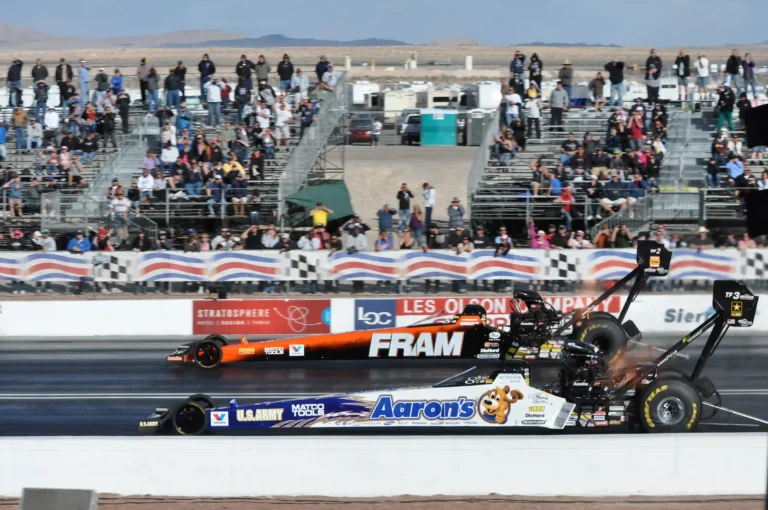
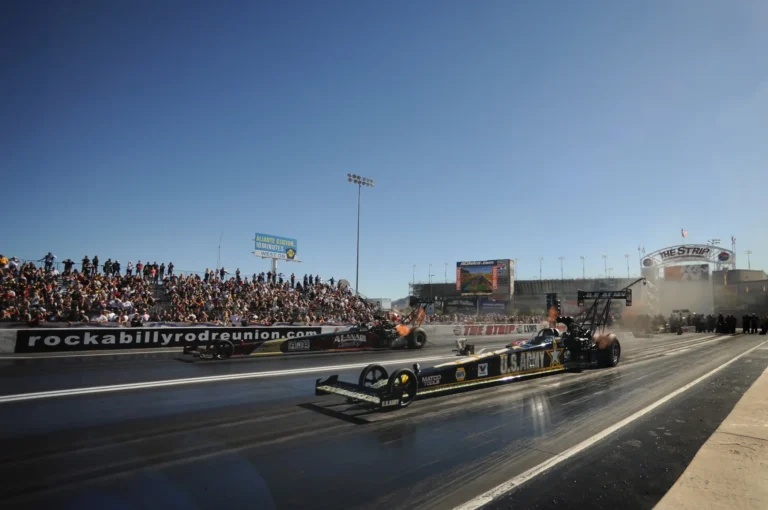
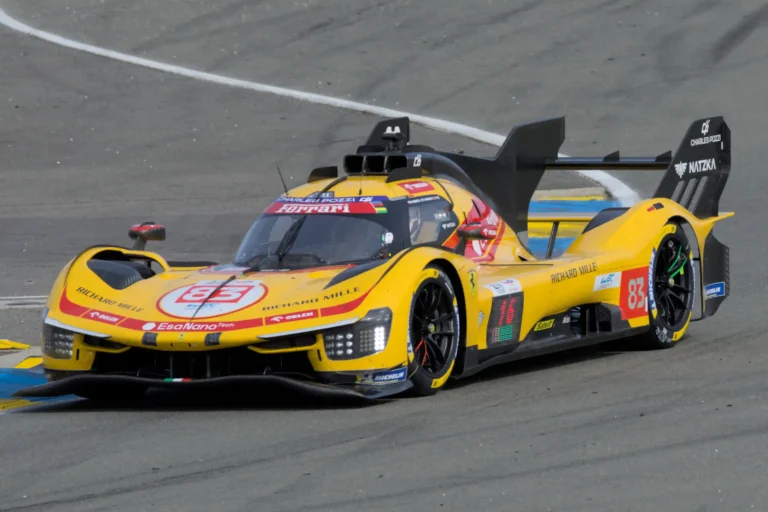
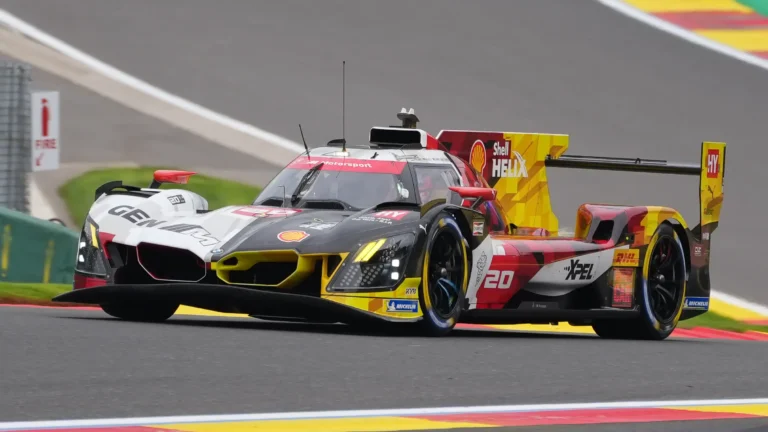
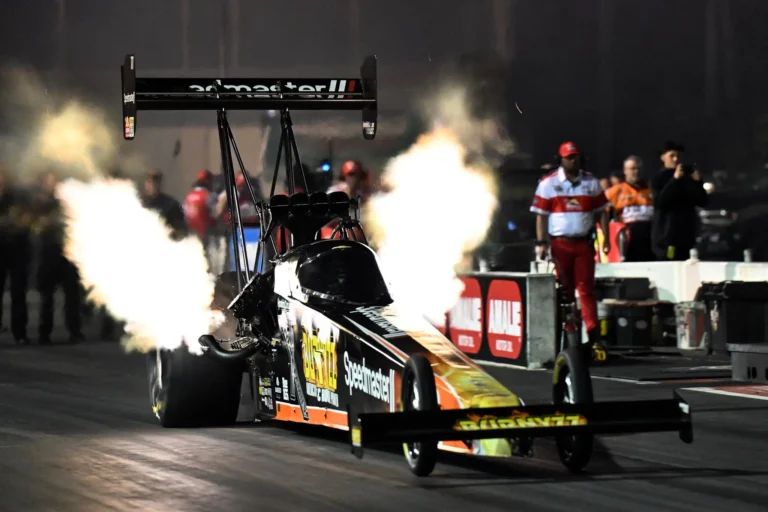
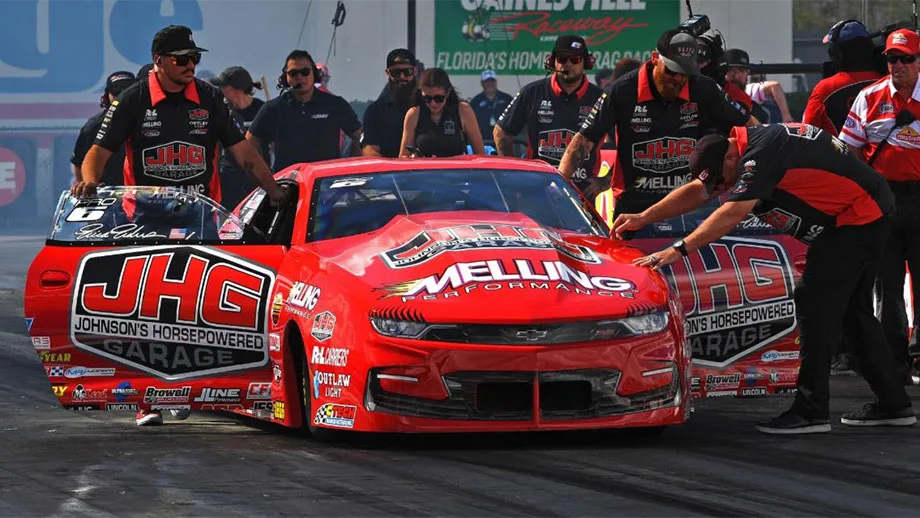
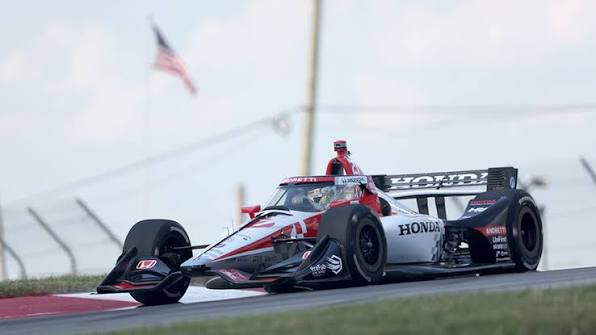
You’ll find sequential transmissions, in one form or another, across almost the entire spectrum of motorsport: Formula 1, MotoGP, World Rally Championship, NHRA drag racing, IndyCar, and GT3 endurance racing all use some version of the concept, even though the actuation method — a hand lever, a foot pedal, or electro-hydraulic paddles — varies enormously between disciplines. For a broader look at how this fits into the wider drivetrain, our Explained hub covers dozens of related mechanical concepts in plain English.
How a Sequential Gearbox Actually Works
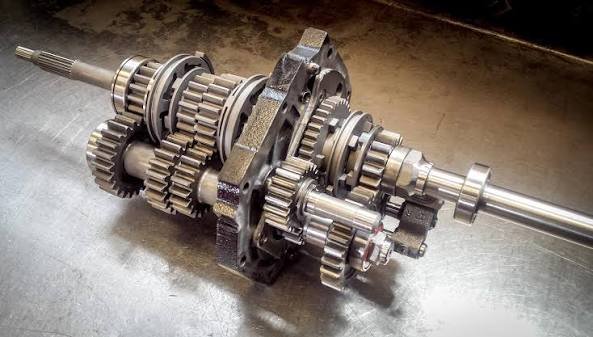
Open up a sequential gearbox and the star of the show is a component called the selector drum (sometimes called a shift drum or barrel). It’s a cylindrical shaft with a series of curved grooves cut into its surface. Selector forks — small metal arms — sit in those grooves, and each fork controls one pair of gears.
When the driver moves the shift lever or paddle, that motion rotates the drum by a fixed amount — one “click.” As the drum rotates, the curved grooves push the selector forks sideways, sliding a collar along the gearbox’s shaft. That collar carries the actual engagement teeth, known as dogs, which lock the next gear to the shaft.
Dog Engagement vs Synchromesh
A road-car manual gearbox uses synchromesh: brass or carbon rings that gently match the speed of two spinning parts before smooth-faced cone clutches let them mesh together quietly. It’s refined, but it takes a moment, and it needs the driver to depress the clutch pedal for every single shift.
A racing sequential box typically skips synchromesh entirely. Instead, straight-cut dog teeth — square-shaped projections machined onto the gear itself — simply slide into matching slots on the collar. There’s no gradual speed-matching, just a direct mechanical lock. That’s what produces the sharp “clunk” you hear on race car onboard audio, and it’s also why these gearboxes can shift so much faster: there’s nothing to wait for.
Because dog engagement doesn’t rely on friction to match speeds, the driveline can be momentarily unloaded by lifting off the throttle instead of using the clutch — which is exactly why racing sequential gearboxes can be shifted without a clutch pedal at all, once the car is already moving.
The clutch is still there in almost every case, but its job changes. Instead of being used for every gearchange, it’s typically needed only for pulling away from a standstill or selecting reverse. Everything else — upshifts and, in many systems, downshifts too — can be done clutchless, either by briefly cutting engine power electronically (as in F1) or by a practiced driver simply blipping the throttle and timing the shift by feel, as rally and race drivers have done for decades.
This is also why sequential shifting and dog engagement are described together so often, even though they’re technically separate ideas: a system built for split-second, clutchless changes needs teeth that lock instantly, and a drum-and-fork mechanism that only ever asks “next gear up, or next gear down?” For readers who want the full mechanical picture of the engines these gearboxes are bolted to, how a 4-stroke engine works is a useful companion read.
The F1 Sequential Gearbox: A Different Level Entirely
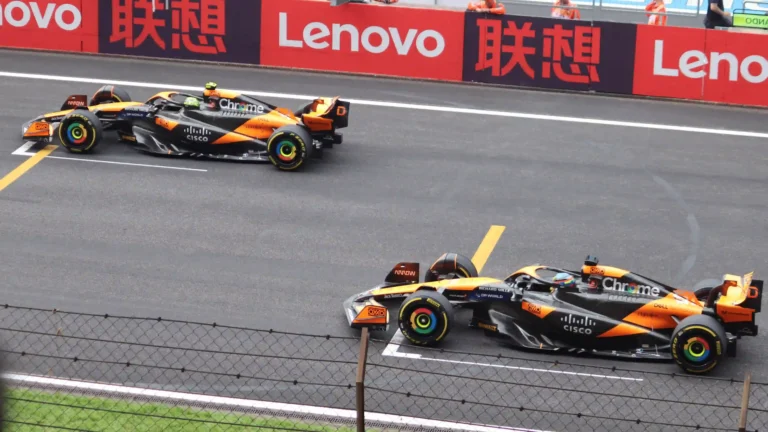
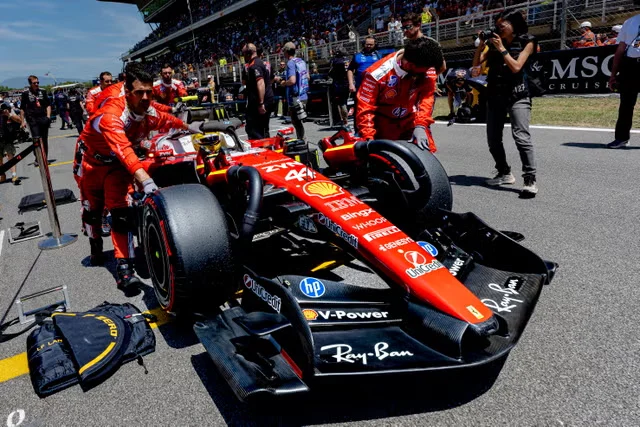
Formula 1 has run some form of sequential, paddle-operated gearbox since the early 1990s, and the modern version is one of the most tightly regulated components on the car. Since the 2014 rules overhaul, FIA technical regulations have mandated eight forward gears plus one reverse gear, with automatic shifting and continuously variable transmissions (CVTs) explicitly banned — every gearchange must be initiated by the driver, even though electronics manage the mechanical details.
Drivers change gear using paddles mounted behind the steering wheel — right paddle for upshifts, left for downshifts, in almost every modern car. Pull one, and hydraulic actuators rotate the internal selector barrel exactly as described above, engaging the next dog-toothed gear. There is no clutch pedal in the car at all; the clutch is only used via a hand-operated lever or paddle for launches out of the pit lane or grid.
Seamless-Shift Technology
Since the mid-2000s, F1 gearboxes have used what’s known as seamless-shift technology, first developed by Honda. Rather than one selector drum handling every gear, the gearbox uses two drums working together — one controlling the odd-numbered gears, the other the even-numbered ones. This lets the next gear begin engaging before the previous one has fully disengaged, largely eliminating the brief interruption in drive that older sequential boxes suffered during a shift.
The result is a gearchange that takes place in a handful of milliseconds, with almost no perceptible dip in acceleration — a dramatic improvement over the roughly 75-millisecond, torque-interrupted shifts of early-2000s paddle-shift systems. Because the FIA still classifies these as discrete, driver-initiated gear selections rather than a continuously variable system, seamless-shift gearboxes remain legal despite blurring the line the CVT ban was designed to police.
Unlike a road car, the F1 gearbox casing bolts directly between the engine and the rear suspension, acting as a load-bearing “stressed member” of the chassis. It has to survive braking, cornering, and acceleration loads as a structural part of the car, not just transmit torque — one reason why F1 gearboxes are homologated and teams are restricted to a limited allocation per season, with grid penalties for exceeding it.
Every F1 gear ratio must also be fixed before the season begins under current rules, with only one change permitted across the year — a shift from the pre-2014 era, when teams brought a truckload of alternative gear sets to each race weekend and picked ratios to suit each circuit’s top speed and corner mix. For more on how these regulations shape the wider car, see our explainers on what DRS actually does and how downforce shapes F1 cornering.
Sequential vs Manual vs Dual-Clutch (DCT)
It’s easy to lump every “fast-shifting, no-clutch-pedal” gearbox into one category, but a sequential dog-box and a dual-clutch transmission (DCT) solve the same problem in almost opposite ways.
| Feature | Manual (H-Pattern) | Sequential (Dog Box) | Dual-Clutch (DCT) |
|---|---|---|---|
| Gear selection | Any gear, any order | Next gear only, in order | Any gear, computer-selected |
| Engagement | Synchromesh (smooth) | Dog teeth (instant, abrupt) | Synchromesh-style, pre-loaded clutch packs |
| Clutch pedal | Required every shift | Usually only for pulling away | None — twin clutches automated |
| Shift speed | Slowest, driver-limited | Extremely fast, mechanically limited | Extremely fast, near-seamless |
| Durability under abuse | Moderate | Very high | High, but complex to rebuild |
| Refinement / comfort | Good | Poor — noisy, notchy at low speed | Excellent |
| Typical home | Everyday road cars | Race cars, rally, motorcycles | Performance road cars, some GT racing |
A DCT, used in road cars like many modern performance coupés and in categories such as GT3 endurance racing, has two separate clutches — one for odd gears, one for even. While you’re driving in third, the next likely gear (either second or fourth) is already pre-selected on the other clutch, ready to swap in almost instantly. It’s refined, quiet at low speed, and comfortable enough for daily use, but it’s mechanically complex and heavy compared with a dog box.
A sequential dog-box, by contrast, is mechanically simpler — often lighter, and more tolerant of being shifted hard, repeatedly, without electronic finesse. That’s precisely why it dominates in categories where weight, reliability under abuse, and outright shift speed matter more than refinement. The trade-off is exactly what you’d expect from a system with almost no cushioning between metal parts: it’s loud, it’s notchy at parking-lot speeds, and it can be genuinely unpleasant to live with every day. Our explainer on what the “S” mode on a road-car gear shifter really does covers the more common automated alternative most drivers actually encounter.
Motorcycle Sequential Gearboxes
If you’ve ever ridden a motorcycle, you’ve already used a sequential gearbox — almost every geared motorcycle sold today uses one. Instead of a hand lever, riders shift using a left-foot pedal that rocks up and down through a small range of travel, rotating an internal selector drum exactly like the mechanism described earlier in this article.
The overwhelmingly common layout is “one down, the rest up“: pressing the lever down selects first gear, and neutral sits a half-click above that. From neutral, each upward press of the lever selects second, third, fourth, and beyond, in strict sequence. You cannot skip from second directly to fourth — the drum mechanism physically won’t allow it, and the rider has to pass through third gear on the way, even if only for an instant while accelerating hard or braking down through the gears into a corner.
A handful of markets and older models use a reversed pattern, and some small-capacity commuter motorcycles place every gear “up” with no downward click at all. It’s also worth noting that most modern scooters skip sequential transmissions entirely, relying instead on a belt-driven continuously variable transmission (CVT) or a hydraulic automatic.
Grand Prix motorcycle racing pushes the concept further with quickshifters and auto-blippers — electronic sensors on the shift linkage that briefly cut ignition on an upshift or blip the throttle automatically on a downshift, letting riders change gear without touching the clutch lever at all, even mid-corner at full lean. It’s the same dog-engagement principle used in F1, just triggered by a rider’s boot instead of a steering-wheel paddle.
Road Cars With Sequential Gearboxes
Genuine sequential dog-boxes are unusual on the road — most manufacturers who want fast, clutchless shifting for a production car reach for a dual-clutch transmission instead, precisely because DCTs solve the refinement problem a dog box never really can. But a small, dedicated group of road-legal track cars use true sequential gearboxes as a deliberate part of their identity.

Ariel Atom
Certain Atom variants offer a Quaife pneumatically-actuated sequential gearbox as a factory option, giving clutchless up-and-down shifts via paddles without ever leaving the wheel.
Radical SR3 / SR1
Radical’s road-legal track cars use a six-speed sequential gearbox with paddle shifters, built around the same motorcycle-derived engineering that underpins much of the brand’s range.
Praga R1R
Praga’s street-legal version of its R1 track prototype pairs a Renault Sport-derived engine with a genuine sequential transmission, one of very few full production cars to do so.
Just as interesting is the pretender: Fiat’s Abarth 695 Biposto is often described as having a “sequential gearbox,” but enthusiasts on record note this is actually still an H-pattern manual gate fitted with dog-tooth engagement rather than a true sequential selector — a reminder that “dog box” and “sequential” aren’t automatically the same thing, even when marketing blurs the line.
Outside these specialists, almost no mainstream manufacturer fits a true sequential dog-box to a showroom car, and the reasons come down almost entirely to comfort, cost, and legal practicality — which the next section covers directly.
Can You Daily-Drive a Sequential Gearbox?
Nothing stops a sequential dog-box from being bolted into a road car and driven to the shops — it’s a mechanical possibility, and the handful of road-legal track cars above prove it can be registered and insured. Whether you’d want to is a separate question entirely.
The honest answer most owners of these cars give is that a genuine sequential gearbox is tolerable, not comfortable, for everyday use. It’s loud at a cruise, clunky pulling out of a driveway, and far less forgiving of a lazy or mistimed shift than either a synchromesh manual or a dual-clutch automatic. That’s exactly why the mainstream car industry, chasing comfort and long service intervals for millions of ordinary drivers, has almost universally chosen DCTs and torque-converter automatics instead of dog-engagement sequential boxes for road use — even in cars that want to feel fast.
Frequently Asked Questions
References
- Wikipedia — Sequential Manual Transmission, overview of dog-clutch engagement and sequential shift mechanisms across motorsport and motorcycles.
- Raceteq — The Decades-Long Evolution of the F1 Gearbox, history of seamless-shift technology and the dual-drum mechanism introduced by Honda.
- Top Gear — Ariel Atom 4RR First Drive, details on the Quaife six-speed sequential gearbox fitted to road-legal Atom variants.
- CarBuzz — Hardcore Street-Legal Track Cars, coverage of the Praga R1R and other road-legal cars using genuine sequential transmissions.
The Bottom Line on Sequential Gearboxes
A sequential gearbox isn’t complicated once you strip away the mystique: it’s a drum, a set of forks, and a row of dog teeth that only ever offer two options — the next gear up, or the next gear down. That simplicity is precisely its strength. It shifts faster than a driver ever could with an H-pattern, tolerates being worked flat-out lap after lap, and has powered nearly every serious racing category on the planet for decades, from F1’s paddle-shifted, seamless-drum masterpieces down to the foot lever on an ordinary motorcycle.
It’s also exactly why you won’t find one in your neighbour’s hatchback. The same dog-engagement toughness that shrugs off a race weekend makes for a notchy, noisy commute, and modern dual-clutch and automatic transmissions solve the “fast, clutchless shifting” problem with far more comfort for everyday driving. Sequential gearboxes remain what they’ve always been: a racer’s tool first, a road car’s option only in the rarest, most dedicated machines.