Why Is Interlagos So Good for Racing?
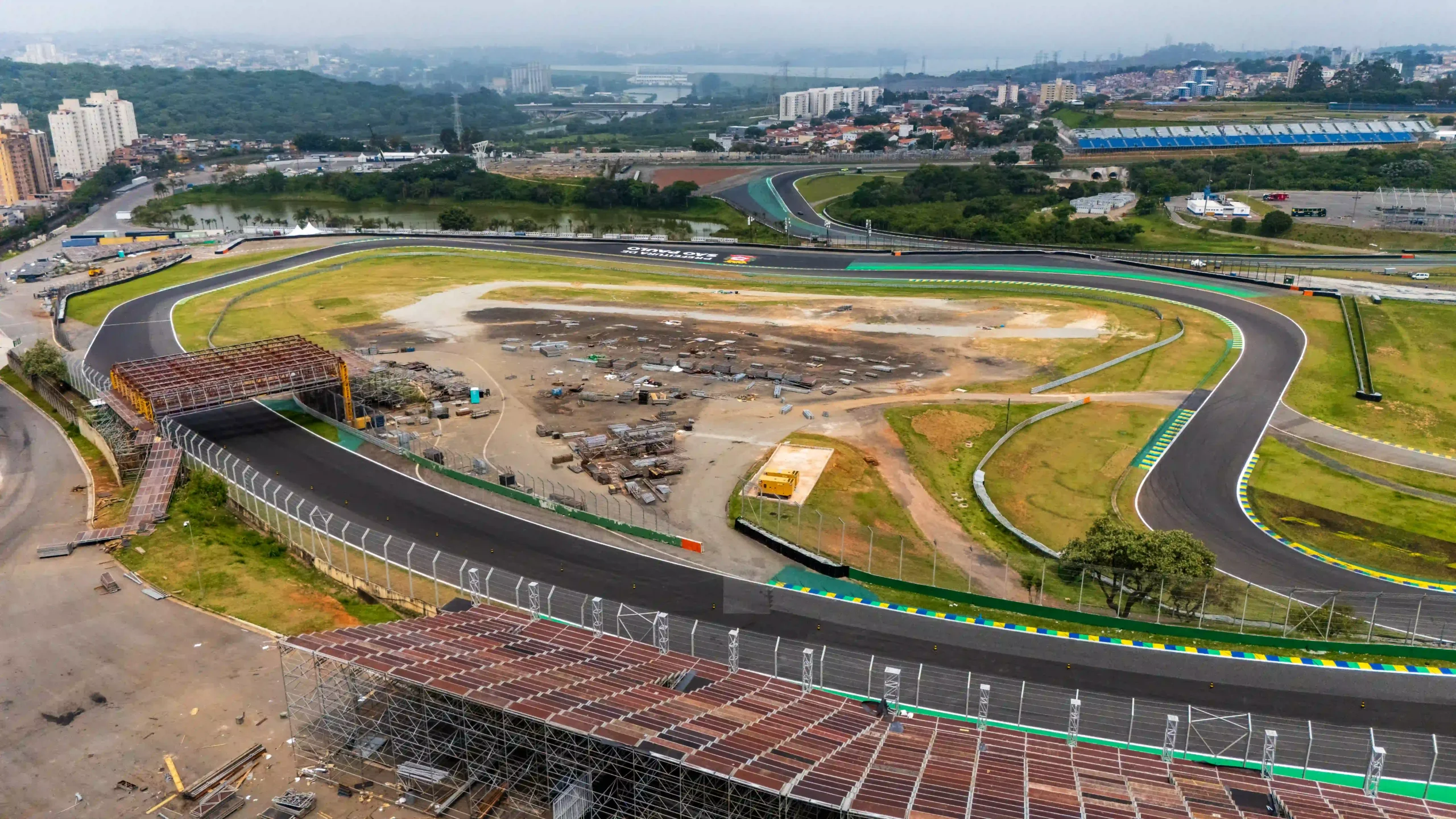
A short lap, steep elevation, two natural overtaking zones and unpredictable weather keep the field compressed. At Interlagos, a race can change before the crowd has finished reacting to the previous move.
Interlagos produces great racing because its short lap keeps cars close, while the uphill main straight and Reta Oposta create strong slipstream opportunities. Elevation, bumps, altitude and changing weather add strategic uncertainty without making overtaking depend on one artificial feature.
Interlagos creates action by connecting pressure points rather than relying on one spectacular corner.
The Autódromo José Carlos Pace measures 4.309 kilometers. It contains 15 corners and requires 71 race laps.
That makes it one of Formula 1’s shortest laps. Consequently, traffic appears quickly and gaps remain easy to understand.
The layout also descends from the start-finish area into a natural bowl. It then climbs sharply from Junção toward the line.
Therefore, elevation changes affect braking, traction and visibility. They also allow spectators to see several parts of the circuit.
The Senna S creates a natural passing zone at the beginning of the lap. Drivers arrive after a long uphill full-throttle run.
Meanwhile, Turn 4 provides another attack after the Reta Oposta. Two passing zones within the first third of the lap prevent the field from settling.
The infield then changes the challenge. Ferradura, Laranjinha, Pinheirinho and Bico de Pato reward balance and mechanical grip.
A strong car cannot simply disappear on the straights. It must also rotate through slow corners and protect its rear tires.
Moreover, Interlagos runs anti-clockwise. Drivers feel unusual neck loads while completing a physically intense race.
The venue sits near 800 meters above sea level. Thinner air reduces downforce and cooling, while the turbocharger must work harder.
Weather adds the final ingredient. Rain can arrive quickly, and the elevation allows streams to cross the racing line.
The circuit’s history proves the formula. Titles were decided there in 2007, 2008 and 2012.
Max Verstappen delivered famous wet-weather drives in 2016 and 2024. Both races showed how alternate lines can create overtaking.
The latest completed race also produced action. Lando Norris won in 2025, while Max Verstappen recovered from the pit lane to finish third.
The 2026 São Paulo Grand Prix is scheduled for November 6–8. Unlike 2025, the official schedule lists a conventional three-practice weekend.
The Short Answer: Interlagos Keeps Creating New Battles
Interlagos combines a short lap with natural elevation, strong braking zones and a technical middle sector. Cars remain close because different setups gain time in different places. Weather and Safety Cars then magnify those small performance differences.
Great racing needs more than easy overtaking.
It needs cars to approach each other, lose position and fight back. Interlagos supports that complete cycle.
One Pass Does Not End the Fight
A driver passed at Turn 1 can remain close through the Senna S.
Moreover, the Reta Oposta offers an immediate counterattack. The battle often continues for several corners.
The Infield Allows Different Cars to Recover
A low-drag car may lead on the straight.
However, a high-downforce car can regain time through the middle sector. Therefore, the race order remains unstable.
Small Gaps Become Useful Gaps
The lap is short, so one second represents a meaningful distance.
A driver does not need to recover across a seven-kilometer circuit before attacking again.
Interlagos is good for racing because the layout creates a loop of attack and response. The first pass rarely feels final, and the next chance arrives quickly.
Why Interlagos Feels Like an Old-School Circuit
Construction began in 1938, and the circuit opened in 1940. The original course was almost eight kilometers long. Formula 1 first held a World Championship race there in 1973.
Interlagos was designed before modern Formula 1 safety templates existed.
The builders used the surrounding hills rather than flattening them. As a result, the circuit feels tied to the land.
The Original Layout Was Much Longer
The first track looped around the lakes and hillside.
Its name came from the Portuguese words for “between lakes.” The modern circuit preserves only part of that route.
Formula 1 Arrived During Brazil’s Racing Boom
Emerson Fittipaldi’s success increased national interest.
He won the first World Championship race at Interlagos in 1973. He repeated the victory in 1974.
Carlos Pace Won in 1975
The local driver delivered a popular home victory.
After his death in 1977, the venue was renamed Autódromo José Carlos Pace.
The Brazilian Grand Prix Moved to Rio
Formula 1 raced at Jacarepaguá through most of the 1980s.
Interlagos returned in 1990 after a major redesign. The lap became shorter but kept its hills and anti-clockwise direction.
The Shorter Layout Improved Spectator Racing
The new course compressed the field into a natural amphitheater.
Fans could see more action, while drivers reached traffic more often. Those features still shape modern races.
How the Short Lap Produces Close Racing
A short lap reduces the time between overtaking opportunities and brings leaders into traffic earlier. Qualifying gaps are also compressed, so a small mistake can move a driver several grid positions.
Interlagos is only 4.309 kilometers long.
However, it includes a full range of speeds. That combination creates density without making the track simplistic.
Qualifying Margins Become Tiny
Every driver completes the lap in roughly seventy seconds.
Therefore, a tenth of a second represents a larger percentage of total lap time. Several cars can fit inside one small gap.
Traffic Appears During Every Session
Twenty cars share a compact circuit.
Drivers need clean air for qualifying but also want a slipstream. Finding both conditions becomes difficult.
Leaders Reach Backmarkers Quickly
A faster car can catch the rear of the field earlier than at Spa or Baku.
Consequently, blue flags and dirty air influence strategy before the race settles.
Safety Cars Compress an Already Tight Field
A neutralization removes gaps.
Since overtaking zones arrive immediately after the restart, the compressed field often produces contact or rapid position changes.
The Sprint Format Has Worked Well Here
Interlagos hosted Sprint weekends in several recent seasons.
The short lap created close qualifying and immediate racing. However, the official 2026 schedule returns to three practice sessions.
Why Interlagos’ Elevation Changes Improve the Action
The difference between the high approach to Turn 1 and the low area near Turn 5 is about 43 meters. The circuit then climbs strongly from Junção toward the start-finish line.
Interlagos is cut into a hillside.
The resulting bowl creates natural braking, traction and visibility challenges.
The Lap Falls Away After the Senna S
Drivers descend toward the Reta Oposta and Turn 4.
The downhill approach can extend braking distance. It also encourages late moves beside another car.
The Lowest Section Changes the Car’s Balance
Turns 4 and 5 sit near the bottom of the circuit.
Drivers then enter the rising infield. Gradient changes alter tire load and available traction.
Junção Begins a Long Climb
The final slow corner feeds the uphill section.
A good exit matters because the car accelerates for a long time. Therefore, rear traction becomes a passing tool.
The Uphill Straight Strengthens the Slipstream
The following car can remain sheltered behind the leader.
Meanwhile, both cars lose speed to the incline. Electrical deployment and reduced drag become important.
The Bowl Helps Fans Follow a Battle
Grandstands overlook several sections.
Spectators can watch a move develop through the infield and continue toward Turn 1. That visibility strengthens the atmosphere.
Why the Senna S Is a Great Overtaking Complex
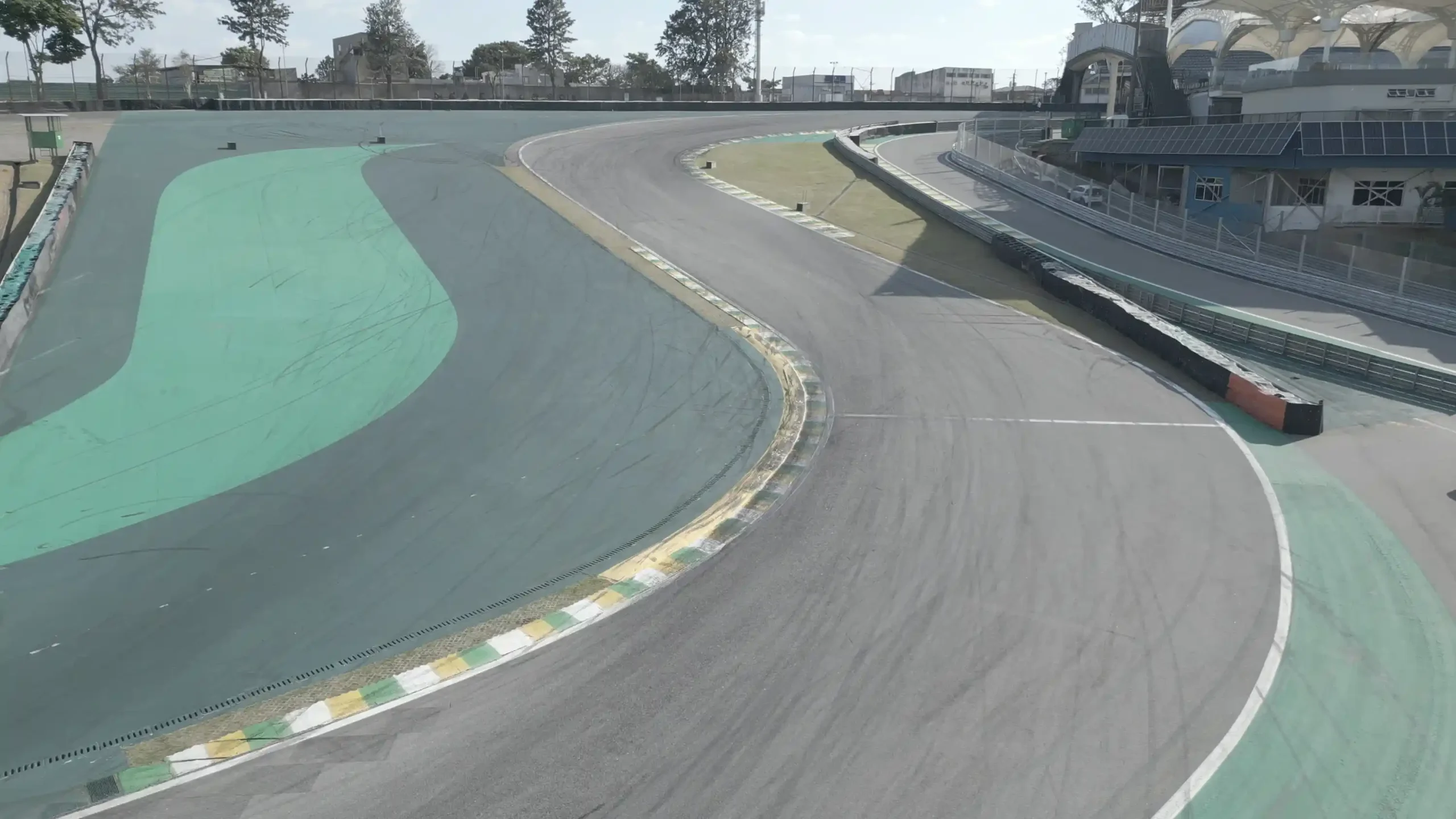
The Senna S is the opening left-right complex at Turns 1 and 2. Drivers brake downhill into the first corner, then change direction before accelerating through Curva do Sol.
The Senna S creates racing because it offers more than one usable line.
A driver can attack the inside, defend the middle or attempt a wider exit.
The Braking Zone Is Long Enough for a Real Attack
Cars arrive after the uphill main straight.
The attacker gains slipstream and electrical deployment. Therefore, the speed difference can become large before braking.
The Corner Falls Away From the Driver
Downhill braking reduces stability.
A driver who brakes too late may lock a front tire. However, the available width encourages a controlled risk.
Turn 2 Allows the Defender to Respond
Winning the first apex does not guarantee the position.
The outside car can switch back and gain a better line. Side-by-side racing often continues into Curva do Sol.
Curva do Sol Determines the Next Straight
A poor exit loses speed onto the Reta Oposta.
Consequently, a driver who completes the first pass badly may be repassed at Turn 4.
Starts and Restarts Magnify the Complex
The field arrives tightly packed.
Several cars can choose different lines. Small contact then creates Safety Cars, punctures or damaged wings.
The Name Connects the Circuit With Ayrton Senna
The complex was renamed in his honor.
Senna grew up in São Paulo and became the emotional center of Brazilian Formula 1 history.
Our guides to slipstreaming, out-braking and the racing apex explain the techniques.
Why Turn 4 Creates a Second Passing Zone
Turn 4 follows the Reta Oposta straight and requires heavy braking into a left-hander. A driver who exits Curva do Sol well can build slipstream and attack before the circuit enters the technical infield.
Many circuits provide one obvious passing opportunity per lap.
Interlagos provides two before the halfway point.
The Reta Oposta Rewards a Clean Exit
Acceleration begins at Curva do Sol.
Rear-wheel slip delays the car for the entire straight. Therefore, traction matters as much as top speed.
The Braking Area Is Wide
Drivers can approach Turn 4 side by side.
The inside line is shorter, while the outside line can support a better exit. Both options remain possible.
The Corner Leads Into a Flowing Section
A driver cannot simply stop at the apex.
The exit prepares Turn 5 and Ferradura. Poor positioning costs time through several corners.
Track Limits Add Another Decision
The outside curb and runoff tempt drivers to carry speed.
However, exceeding the allowed limits can remove a lap time or create a penalty.
Why Turn 4 Creates Midfield Battles
Cars with different strengths converge there.
A low-drag car attacks on the straight, while a high-downforce car tries to remain ahead for the infield.
Read our guides to F1 track limits and grip.
How the Technical Infield Prevents Easy Dominance
The center of the lap changes the type of racing.
Drivers leave the long straights and enter connected corners with changing camber.
Ferradura Needs High-Speed Balance
The right-hander carries significant speed.
A nervous rear forces the driver to lift. Meanwhile, understeer pushes the car toward the outside.
Laranjinha Rewards Commitment
The corner follows quickly and keeps the car loaded.
Drivers need confidence in aerodynamic balance. A correction overheats the tires and costs momentum.
Pinheirinho Demands Rotation
The speed falls in the tighter section.
Mechanical grip becomes more important. The car must change direction without locking the front tire.
Bico de Pato Is a Traction Corner
The tight right-hander resembles a duck’s bill on the circuit map.
Drivers slow sharply and rotate the car. The rear tires then control acceleration.
Different Setups Trade Time
More wing helps through Ferradura and Laranjinha.
However, it adds drag on the main straight. This tradeoff keeps cars with different strengths competitive.
Dirty Air Creates Tire Damage
A following car loses front downforce in the medium-speed corners.
The driver applies more steering and slides. Consequently, staying close for Turn 1 can damage the front tires.
Our guides to downforce, clean and dirty air and oversteer and understeer explain the balance.
Why Junção Controls the Main Straight
Junção is the final slow corner before the long uphill run. A clean exit allows early throttle and creates speed through the Subida dos Boxes, which determines whether a driver can attack or defend at Turn 1.
Junção may be the most strategically important corner on the lap.
It does not produce many direct overtakes. Instead, it creates them several seconds later.
The Corner Requires Patience
Drivers approach downhill before turning left.
Applying throttle too early creates wheelspin. That small slide costs speed for the entire climb.
The Exit Is More Valuable Than the Entry
A late apex straightens the car earlier.
Therefore, the driver can deploy power while reducing steering angle.
The Hill Magnifies Every Difference
A car with better traction carries more speed uphill.
The following driver then adds slipstream. A small exit advantage can become an overtaking opportunity.
Energy Deployment Must Be Planned
Drivers need electrical power through the long acceleration zone.
However, using too much energy can leave the car vulnerable later. Engineers balance attack and recovery.
Wet Conditions Make Junção Critical
Water can collect near the exit.
The rear tires may spin suddenly, especially on slicks. A cautious exit can still produce a faster full straight.
Why the Anti-Clockwise Layout Challenges Drivers
Yes. Interlagos runs anti-clockwise, with nine left-hand corners and six right-hand corners. The unusual direction loads the opposite side of the driver’s neck compared with most Formula 1 circuits.
Most Formula 1 circuits run clockwise.
Therefore, drivers build more race-specific strength for the usual direction.
Neck Loads Feel Different
Repeated left-hand corners push the helmet toward the right.
The muscles must resist a less familiar pattern. Fatigue can appear late in the race.
The Start-Finish Straight Curves Left
Drivers accelerate uphill while the road bends.
That geometry affects slipstream positioning and visibility before Turn 1.
Wet Lines Can Develop Differently
Rubber builds on the normal dry racing line.
In rain, drivers search for grip away from it. The anti-clockwise flow changes where those alternate lines appear.
The Physical Challenge Supports Errors
Interlagos is not the longest race in time.
However, 71 laps repeat the same unusual loads. Fatigue can reduce steering precision.
How Altitude Changes the Cars at Interlagos
Interlagos sits near 800 meters above sea level. The thinner air reduces aerodynamic load and cooling efficiency. Turbocharged engines recover much of the power loss, but the compressor works harder.
São Paulo is far lower than Mexico City.
Nevertheless, Interlagos remains one of Formula 1’s higher venues.
Less Air Density Means Less Downforce
Wings generate load by moving air.
Thinner air reduces that force. Therefore, teams may use more wing than the straight-line speed suggests.
Drag Also Falls
The car pushes through less dense air.
Consequently, a larger wing does not create the same drag penalty seen at sea level.
Cooling Becomes Less Efficient
Radiators and brake ducts receive fewer air molecules.
Teams may open bodywork or enlarge cooling exits. Those changes can reduce aerodynamic performance.
The Turbocharger Works Harder
A turbo compresses intake air to maintain engine performance.
At altitude, it must spin harder to reach the required pressure. Reliability and heat management become important.
Overtaking Performance Changes
Reduced drag can weaken the relative slipstream effect.
However, the long uphill run and electrical deployment still create meaningful speed differences.
How Teams Set Up an F1 Car for Interlagos
Teams usually choose medium-high downforce. The infield needs grip and stability, while the two long acceleration zones punish excessive drag. Altitude reduces the true aerodynamic load produced by the wings.
Interlagos demands efficiency rather than maximum wing.
Teams must protect straight-line speed without making the middle sector difficult.
Front Grip Supports the Infield
Ferradura and Laranjinha punish understeer.
A responsive front lets the driver carry speed and remain close to another car.
Rear Traction Creates Overtaking
Bico de Pato and Junção are slow exits.
A stable rear allows earlier throttle. Therefore, mechanical grip becomes a direct racing advantage.
Ride Height Must Handle Bumps
Interlagos has historically been bumpy because of the underlying ground.
A low floor improves downforce. However, bottoming can disturb the car and damage plank wear.
Curbs Require Compliance
Drivers use curbs to shorten several corners.
Suspension that is too stiff makes the car bounce. A compliant setup improves tire contact.
Brakes Need Temperature Control
Turn 1 and Turn 4 require major stops.
However, long straights cool the system. Teams must avoid both overheating and overcooling.
ERS Deployment Shapes Attack and Defense
The uphill straight uses significant electrical energy.
Drivers may save power through the infield. That stored energy then supports an attack into Turn 1.
Medium-high, adjusted for altitude and straight-line efficiency.
Needed through Ferradura, Laranjinha and changing-camber corners.
Critical from Bico de Pato and Junção onto acceleration zones.
Balanced between floor performance, bumps and plank protection.
Managed for heavy stops and thinner high-altitude air.
Saved and deployed for the uphill main straight and defense.
Read more in our guides to wing angle, car handling and ERS.
Why Tire Management Creates Different Strategies
The infield combines medium-speed lateral load with slow traction zones. Following another car also creates front-tire sliding. Warm weather can therefore raise tire temperatures even when the overall circuit load is balanced.
Interlagos does not punish one axle exclusively.
Instead, it distributes braking, cornering and traction demands across the car.
The Front Tires Work Through the Infield
Ferradura and Laranjinha require sustained steering.
Understeer creates surface heat. The driver may then lose grip in the following slow corners.
The Rear Tires Work on Corner Exit
Pinheirinho, Bico de Pato and Junção demand traction.
Wheelspin overheats the rubber and damages the uphill acceleration phase.
Traffic Changes Degradation
A car in clean air may protect its tires easily.
However, the same setup can slide behind another car. Race position therefore changes tire life.
The Short Lap Makes Two Stops Possible
A pit stop loses a significant number of track positions.
Yet fresh tires can recover quickly because the lap is short. Teams compare track position with overtaking pace.
The Undercut Can Work
Fresh tires improve the infield immediately.
If the out-lap is clear, a driver can gain several tenths. However, traffic can destroy that advantage.
The Overcut Can Also Work
A driver with healthy tires may stay out in clean air.
Meanwhile, the rival warms a new set behind traffic. Interlagos supports both strategic directions.
Why Rain Makes Interlagos So Unpredictable
São Paulo’s changeable spring weather can bring fast-moving showers during the November race period. The circuit’s elevation and exposed location make conditions vary across the lap.
Rain does not simply reduce grip at Interlagos.
It changes where the grip exists and how quickly conditions evolve.
Water Runs Down the Hills
The circuit’s gradients direct water across the asphalt.
Rivers can form near the exits of Turns 3 and 12. A safe line on one lap may become dangerous on the next.
Different Sections Can Have Different Conditions
The lap is short but spread across a natural bowl.
One sector may be wet while another begins drying. Tire decisions become difficult.
Visibility Is Poor on the Curved Straight
Spray blocks the view behind another car.
Moreover, the main straight bends left and climbs. Drivers may not see a stopped car or braking reference early enough.
The Wet Racing Line Moves
The rubbered dry line becomes slippery.
Drivers search for grip on wider or unusual routes. That creates overtaking lines that do not exist in dry conditions.
Mixed Tires Produce Large Speed Differences
Slicks are faster on a drying surface.
Intermediates remain safer in standing water. The crossover lap can create several seconds of difference.
Red Flags and Safety Cars Become Strategic Events
Heavy rain may stop the race.
A red flag can allow tire changes and remove gaps. Therefore, weather decisions affect both safety and track position.
Our guides to red flags and Safety Car and VSC rules explain the procedures.
Why Wet Drivers Can Use Several Racing Lines
Interlagos rewards creativity in the rain.
The bowl, camber and old-school surface provide several levels of grip.
The Outside Line Can Be Faster
The normal line contains polished rubber.
Drivers move outside it to find rougher asphalt. That route may create more grip despite being longer.
Camber Supports Unusual Approaches
Some corners hold the car through banking.
A driver can use that support to carry speed away from the normal apex.
Alternate Lines Improve Visibility
Following directly creates maximum spray.
Moving sideways lets the driver see the road. That visibility also opens unexpected overtaking moves.
Confidence Becomes Visible
A skilled wet-weather driver tests grip without crossing the limit.
The audience can see different lines and corrections. Consequently, the driver’s contribution feels obvious.
Why Interlagos Strategy Changes Quickly
Teams balance tire degradation, traffic and neutralization risk. The short lap makes pit-stop timing sensitive, while rain can create sudden crossover windows between slicks, intermediates and full wet tires.
Interlagos rarely allows a strategy to remain theoretical.
Traffic, incidents and weather force teams to adapt.
A Safety Car Reduces Pit-Lane Loss
The field travels slowly under neutralization.
Therefore, a pit stop costs less time relative to competitors. Drivers may gain several positions.
A Virtual Safety Car Creates Smaller Windows
The field follows a target speed rather than forming one queue.
Gaps remain more stable. However, pit timing still changes the order.
The Short Lap Punishes Hesitation
A weather decision can be wrong for only two minutes.
Yet two minutes may cover almost two laps. Several rivals can gain before the team reacts.
Traffic Can Trap Fresh Tires
A driver stops and rejoins behind slower cars.
Dirty air then overheats the front tires. The expected undercut disappears.
Track Position Becomes Powerful Late
Overtaking remains possible.
However, the defending driver can use electrical energy and cover Turn 1. Fresh tires do not guarantee a pass.
Restarts Create Immediate Pressure
The leader accelerates toward the uphill straight.
Cars behind gain slipstream. The Senna S then creates several possible lines.
Our guides to pit stops and undercut and overcut strategy explain the calculations.
Why Qualifying Is So Close at Interlagos
The lap is short, traffic is constant and track conditions change quickly. A small mistake can cost several grid positions because many cars are separated by only a few tenths.
Interlagos qualifying rewards precision and timing.
A driver may produce a clean lap yet lose positions because the track improves seconds later.
Finding Space Is Difficult
Drivers slow before beginning a lap.
However, the short circuit brings faster cars quickly. Closing speeds become dangerous.
A Slipstream Helps and Hurts
The tow improves speed on the straight.
Yet dirty air damages the infield. Drivers must choose the correct distance.
Weather Can Reverse the Session
A late shower may prevent improvement.
Therefore, teams sometimes send cars early. Others gamble on a later track.
Yellow Flags Remove the Final Attempt
A spin or crash can force drivers to slow.
Since the lap is short, there may be no time for another run.
Read our guides to how F1 qualifying works, pole position and grid position.
How Interlagos Became a Stage for Classic Formula 1 Races
The circuit creates good racing through design.
Its place near the end of many seasons added championship pressure.
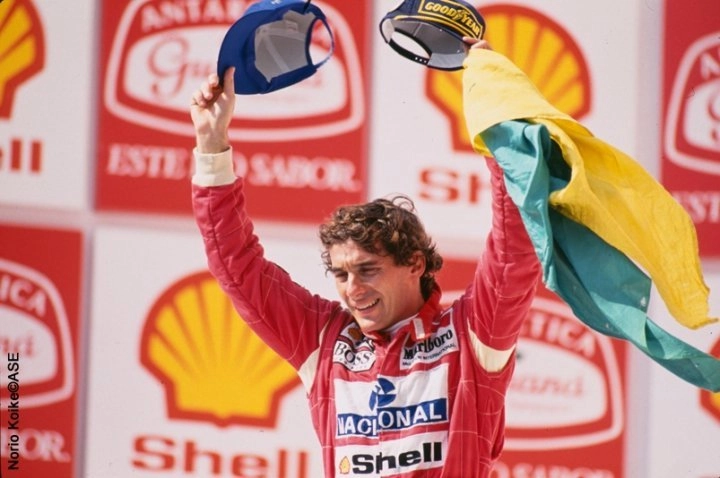
1991: Ayrton Senna Finally Won at Home
Senna had dominated qualifying at Interlagos before.
However, victory repeatedly escaped him. In 1991, he controlled the race until gearbox problems became severe.
He finished using only sixth gear and won by 2.991 seconds over Riccardo Patrese.
The physical effort left him exhausted. His radio celebration became one of Formula 1’s most emotional moments.
2007: Kimi Räikkönen Won a Three-Way Championship
Lewis Hamilton arrived with a four-point lead over Fernando Alonso.
Räikkönen began seven points behind Hamilton under the old scoring system.
Hamilton dropped down the order after an opening-lap error and gearbox problem.
Meanwhile, Ferrari managed the race. Räikkönen won ahead of Felipe Massa and took the title by one point.
2008: The Championship Changed in the Final Corner
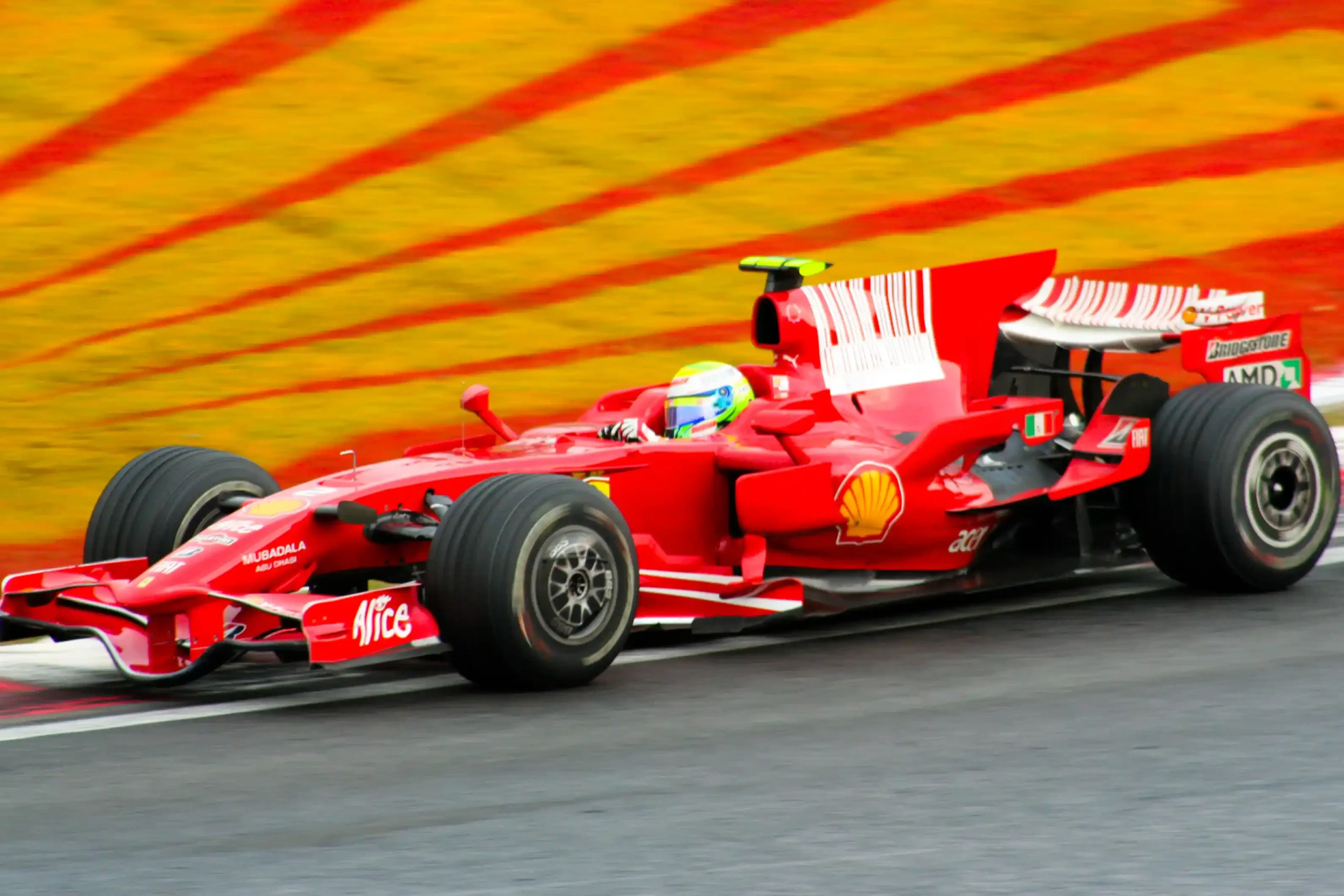
Massa won the race from pole.
He needed Hamilton to finish sixth or lower. Late rain pushed Hamilton behind Sebastian Vettel.
Massa crossed the line and his team celebrated.
However, Hamilton passed Timo Glock’s slick-shod Toyota near Junção. Fifth place secured the championship by one point.
2012: Vettel Recovered From an Opening-Lap Spin
Sebastian Vettel entered with a 13-point lead over Fernando Alonso.
Contact with Bruno Senna spun Vettel and damaged the Red Bull.
Changing weather created constant strategic pressure.
Vettel recovered from the rear to sixth. That result secured his third consecutive championship.
2016: Verstappen Found Grip Where Others Could Not
Heavy rain and poor visibility produced several interruptions.
Verstappen saved a major slide near the main straight.
A strategy change dropped him to 14th late in the race.
He then passed 11 drivers in 14 laps and finished third. His alternate wet lines became the defining image.
2024: Verstappen Won From 17th
Rain disrupted qualifying and race preparation.
Verstappen started 17th after a grid penalty. He gained six positions on the opening lap.
A red flag changed the pit-stop picture.
He then controlled the restart and won by 19.477 seconds. Alpine completed a surprise double podium.
Why These Races Share a Pattern
None was created by one isolated factor.
Weather, elevation, overtaking and strategy worked together. Interlagos gave drivers several ways to recover.
Why Brazilian Fans Change the Atmosphere
Fans can see several sections from the circuit’s natural bowl, while the close grandstands amplify noise. Brazil’s strong Formula 1 history and the memory of Senna, Fittipaldi, Pace, Piquet and Massa add emotion.
Interlagos feels compact beyond the track itself.
Grandstands sit close to the racing line, while the paddock and city surround the venue.
The Crowd Can Follow Developing Battles
Many seats overlook more than one section.
Fans see cars fight through the infield before appearing on the straight. The reaction builds rather than resets.
Brazil Has Deep Formula 1 History
Emerson Fittipaldi became the country’s first champion.
Nelson Piquet won three titles. Ayrton Senna then became a national sporting symbol.
Home Drivers Create Additional Energy
Felipe Massa’s 2006 and 2008 victories produced enormous celebrations.
Gabriel Bortoleto returned a Brazilian driver to the grid in 2025. Home support remains central to the event.
The Noise Reaches the Drivers
Engines and helmets reduce outside sound.
However, drivers still describe hearing the crowd in slower sections. That reaction makes the race feel personal.
The Contract Runs Through 2030
Formula 1 extended the São Paulo Grand Prix agreement in 2023.
The deal keeps Interlagos on the calendar through the 2030 season.
What Happened at the 2025 São Paulo Grand Prix?
Lando Norris won from pole for McLaren. Kimi Antonelli finished second for Mercedes, while Max Verstappen recovered from a pit-lane start to take third for Red Bull Racing.
The latest completed São Paulo Grand Prix took place on November 9, 2025.
Norris completed 71 laps in 1:32:01.596.
The Opening Lap Brought Out the Safety Car
Gabriel Bortoleto crashed during his home race.
The incident compressed the field and created an immediate restart challenge.
Three Cars Met at Turn 1
Oscar Piastri locked up and hit Kimi Antonelli.
The contact pushed Antonelli into Charles Leclerc. The Ferrari retired, while Piastri received a ten-second penalty.
Verstappen Recovered From the Pit Lane
Red Bull changed his setup and power-unit components after qualifying.
Verstappen also recovered from an early puncture. He used several tire strategies and reached the podium.
Antonelli Defended Second Place
Verstappen closed rapidly on soft tires.
However, Antonelli protected the position through the final laps and finished 0.362 seconds ahead.
The Race Showed Interlagos’ Complete Range
Norris controlled from the front.
Meanwhile, incidents, recovery drives and close defense shaped the podium behind him.
| 2025 São Paulo GP Detail | Result |
|---|---|
| Race winner | Lando Norris, McLaren |
| Second place | Kimi Antonelli, Mercedes |
| Third place | Max Verstappen, Red Bull Racing |
| Race time | 1:32:01.596 |
| Winning margin | 10.388 seconds |
| Verstappen’s start | Pit lane |
| Race laps | 71 |
What Is Current for the 2026 São Paulo Grand Prix?
The 2026 São Paulo Grand Prix runs from November 6–8. The race starts Sunday at 5:00 p.m. local time, which is 3:00 p.m. Eastern Time.
As of July 24, 2026, the Interlagos race remains upcoming.
Therefore, the 2025 event is the latest completed São Paulo Grand Prix.
The 2026 Weekend Uses Three Practice Sessions
The official schedule lists Practice 1 and Practice 2 on Friday.
Practice 3 and qualifying follow on Saturday. Unlike 2025, no Sprint appears on the 2026 schedule.
Official 2026 Session Times
| Session | São Paulo Time | Eastern Time |
|---|---|---|
| Practice 1 | Friday, Nov. 6 — 3:30 p.m. | Friday, Nov. 6 — 1:30 p.m. ET |
| Practice 2 | Friday, Nov. 6 — 7:00 p.m. | Friday, Nov. 6 — 5:00 p.m. ET |
| Practice 3 | Saturday, Nov. 7 — 2:30 p.m. | Saturday, Nov. 7 — 12:30 p.m. ET |
| Qualifying | Saturday, Nov. 7 — 6:00 p.m. | Saturday, Nov. 7 — 4:00 p.m. ET |
| Grand Prix | Sunday, Nov. 8 — 5:00 p.m. | Sunday, Nov. 8 — 3:00 p.m. ET |
The Official Circuit Figures Remain Familiar
The 2026 event page lists a 4.309-kilometer lap.
The race covers 71 laps and 305.879 kilometers. Valtteri Bottas’ 1:10.540 from 2018 remains the listed race-lap record.
The 2026 Cars Add New Variables
The current generation uses active aerodynamics and greater electrical power.
Interlagos rewards energy deployment on the uphill straight. However, the infield still demands mechanical grip and balance.
Overtake Mode Replaces DRS
Eligible following cars receive additional electrical deployment.
The system can strengthen attacks toward Turn 1 and Turn 4. Drivers still need traction and braking control.
Current status: No 2026 São Paulo Grand Prix result existed when this article was updated. The race is scheduled for November 8.
Is Interlagos Better for Racing Than Suzuka, Monaco or Silverstone?
Each circuit creates a different type of contest.
Interlagos stands out because overtaking and technical challenge exist together.
Interlagos vs. Suzuka
Suzuka offers greater high-speed rhythm and a more demanding qualifying lap.
Interlagos creates stronger passing zones, shorter gaps and more strategic traffic. It usually produces more direct race action.
Interlagos vs. Monaco
Monaco punishes mistakes with barriers and makes track position dominant.
Interlagos allows drivers to pass, recover and counterattack. The race can change without a pit-stop-only solution.
Interlagos vs. Silverstone
Silverstone uses wide high-speed corners and several straights.
Interlagos is shorter and more compact. Weather and elevation create greater strategic compression.
Why Interlagos Does Not Need to Be the “Best”
No single circuit can provide every form of racing.
However, Interlagos combines more useful ingredients than most. That consistency explains its reputation.
Common Myths About Racing at Interlagos
“Interlagos Is Exciting Only When It Rains”
False. Rain increases uncertainty, but the dry layout still provides two strong passing zones.
The short lap and setup tradeoffs also create close racing.
“The Circuit Is Too Short for Modern F1”
False. The short lap compresses qualifying and increases traffic.
It still contains high-speed, medium-speed and slow corners.
“Turn 1 Is the Only Overtaking Place”
False. Turn 4 is a major opportunity after the Reta Oposta.
The Hairpin-style infield corners can also support opportunistic moves.
“Altitude Is Too Low to Matter”
False. Interlagos is far below Mexico City but still near 800 meters.
Air density affects downforce, drag and cooling.
“Anti-Clockwise Direction Is Only a Map Detail”
False. It changes neck loading and driver preparation.
The curved uphill straight also affects slipstream positioning.
“A Fast Straight-Line Car Will Always Win”
False. The technical infield demands balance and tire control.
A low-drag car can lose everything before Junção.
Why Is Interlagos So Good for Racing? FAQs
Why is Interlagos so good for racing?
Its short lap, elevation, two strong passing zones and changing weather keep cars close. Different setups also gain time in different parts of the circuit.
Where are the best overtaking places at Interlagos?
The Senna S at Turn 1 is the main passing zone. Turn 4 at Descida do Lago is the next strongest opportunity.
How does altitude affect Formula 1 cars at Interlagos?
The circuit sits near 800 meters above sea level. Thinner air reduces downforce and cooling efficiency while lowering aerodynamic drag.
Why is rain so important at Interlagos?
Elevation creates water streams and changing grip. Conditions can also differ across the circuit, making tire timing and visibility difficult.
Conclusion: Interlagos Creates Racing Through Connection
Understanding why Interlagos is so good for racing begins with the short lap.
The Autódromo José Carlos Pace measures only 4.309 kilometers.
However, it contains 15 corners and a complete range of speeds.
That density keeps the field close.
Qualifying gaps remain small.
Leaders reach traffic quickly.
Safety Cars compress an already compact race.
Consequently, drivers never wait long for the next opportunity.
The Senna S provides the first major passing zone.
Cars arrive after a long uphill acceleration run.
Slipstream and electrical deployment create a speed difference.
Then the downhill braking zone allows several lines.
Turn 2 keeps the battle alive.
Curva do Sol decides the exit.
A driver passed at Turn 1 can respond at Turn 4.
That second opportunity is essential.
It prevents one defensive move from ending the contest.
The technical infield then changes the car advantage.
Ferradura and Laranjinha need aerodynamic balance.
Pinheirinho and Bico de Pato demand rotation and traction.
Junção rewards patience on exit.
Therefore, a straight-line car cannot dominate every section.
A high-downforce car also cannot ignore drag.
Different strengths remain competitive within one lap.
The elevation adds another layer.
The circuit drops about 43 meters toward the low section.
It then climbs sharply from Junção to the finish line.
Gradients change braking and traction.
They also build the uphill slipstream toward Turn 1.
Altitude influences the cars as well.
Interlagos sits near 800 meters above sea level.
Thinner air reduces downforce and cooling.
Teams use wing and bodywork choices to recover performance.
The turbocharger works harder to maintain pressure.
Mechanical grip remains vital through the slow corners.
The anti-clockwise direction challenges drivers physically.
Nine left-hand turns create unusual neck loading.
Seventy-one laps repeat that strain.
Fatigue can reduce precision late in the race.
Weather turns those features into uncertainty.
Rain runs down the hills and across the track.
Grip can change between one sector and another.
Drivers search for alternate lines away from polished rubber.
Those lines create passing opportunities that do not exist in the dry.
Strategy becomes a moving target.
A short lap punishes a delayed tire decision.
A Safety Car can reduce pit-lane loss.
A red flag can erase a lead.
Fresh tires can become trapped behind traffic.
Therefore, no team can rely on one fixed plan.
Interlagos history proves the design works.
Ayrton Senna won emotionally in 1991 despite gearbox trouble.
Kimi Räikkönen took the 2007 championship by one point.
Lewis Hamilton secured the 2008 title in the final corners.
Sebastian Vettel recovered from an opening-lap spin in 2012.
Max Verstappen produced a wet-weather masterclass in 2016.
He then won from 17th in the rain in 2024.
The 2025 race added another recovery story.
Lando Norris won from pole.
Kimi Antonelli defended second place.
Max Verstappen reached third after starting from the pit lane.
Those races were different.
However, each used the same Interlagos ingredients.
The short lap kept competitors connected.
The overtaking zones allowed recovery.
The infield rewarded car balance.
Weather and strategy changed the order.
The crowd made every moment louder.
The 2026 São Paulo Grand Prix will return from November 6–8.
The weekend uses three practice sessions rather than a Sprint.
The cars and regulations may change.
Yet the circuit’s racing logic remains intact.
Interlagos does not manufacture action through one gimmick.
It creates a chain of opportunities.
A traction gain becomes a slipstream.
A slipstream becomes a braking attack.
A pass becomes a counterattack.
A rain shower becomes a strategic decision.
That constant connection is why Interlagos remains one of Formula 1’s best racing circuits.
Sources and Fact-Checking
This article was checked against official Formula 1 and FIA information available on July 24, 2026. This is a static source list and contains no interactive verification feature.