Why Is Singapore One of the Hardest F1 Races?
The speed is lower than Monza or Spa, yet the workload is relentless. Heat, humidity, barriers, tire stress and almost two hours of concentration turn Marina Bay into Formula 1’s toughest endurance test.
Singapore is one of F1’s hardest races because drivers face extreme heat, high humidity, 19 corners, repeated braking and close concrete walls. Cockpit temperatures can exceed 60°C, while drivers may lose up to 3 kg during a race that often lasts close to two hours.
Marina Bay is slow by Formula 1 standards, but it never gives the driver a break.
The Marina Bay Street Circuit measures 4.927 kilometers. It contains 19 corners and requires 62 race laps.
Therefore, drivers complete well over 1,100 cornering events during a full Grand Prix. Each one needs a braking point, steering input and controlled exit.
Meanwhile, Singapore’s tropical climate creates a different challenge. Humidity can approach 90 percent.
Official Formula 1 material says cockpit temperatures can exceed 60°C, or 140°F. Drivers sit inside several layers of fire-resistant clothing.
Moreover, the race takes place at night. Floodlights improve visibility, but they do not remove the heat stored in the streets.
Drivers can lose as much as 3 kilograms, or 6.6 pounds, through fluid loss. That dehydration affects strength, reaction time and judgment.
The walls create a mental test as well. A small lock-up or delayed steering correction can break the suspension.
However, Marina Bay is not difficult only for the person in the cockpit. Cars struggle with traction, brakes, cooling and rear-tire temperature.
The 2023 redesign reduced the corner count from 23 to 19. The new layout improved flow and lowered lap times.
Nevertheless, the physical challenge remained severe. Singapore still has the second-slowest average speed after Monaco.
The latest completed event reinforced its reputation. George Russell won the 2025 Singapore Grand Prix from pole in 1:40:22.367.
That race was shorter than many older Singapore Grands Prix. Yet the FIA still declared the weekend Formula 1’s first official heat-hazard event.
The 2026 Singapore Grand Prix is scheduled for October 9–11. It will also feature a Sprint weekend for the first time at Marina Bay.
The Short Answer: Singapore Combines Every Form of Fatigue
Singapore combines thermal stress, dehydration, repeated braking, high steering workload and constant danger from nearby barriers. The long race also gives fatigue time to build, so small physical losses can become major driving errors late in the evening.
Most difficult circuits have one dominant challenge. Singapore layers several together.
Heat increases heart rate. Humidity slows sweat evaporation. Meanwhile, 19 corners keep the upper body working.
The barriers then punish any decline in concentration. Therefore, physical and mental fatigue cannot be separated.
Why Low Average Speed Does Not Make Singapore Easy
High speed creates large aerodynamic forces. However, lower speed creates less cooling airflow.
Furthermore, Marina Bay’s stop-start rhythm means the driver is always doing something. There are few long straights for physical recovery.
Why the Final 15 Laps Matter Most
Early in the race, drivers still have strength and clear concentration.
Later, the same steering and braking actions require more effort. Therefore, the walls appear to close in as fatigue rises.
Singapore is an endurance race hidden inside a street-circuit sprint. The car is rarely at maximum speed, yet the driver remains near maximum workload for the entire evening.
How Hot Is the Singapore Grand Prix?
Formula 1 reports that cockpit temperatures can exceed 60°C, or 140°F. Drivers also face very high humidity while wearing fireproof overalls, underwear, gloves, boots, a balaclava and a helmet.
The official air temperature tells only part of the story.
Heat enters the cockpit from the power unit, electronics, hydraulic lines and hot bodywork. The driver also produces heat through constant physical effort.
The Cockpit Traps Heat
An F1 cockpit is narrow and surrounded by carbon-fiber structure.
Airflow around the driver is limited. Consequently, sweat becomes the main cooling tool.
Fireproof Clothing Adds Insulation
Drivers cannot wear light sports clothing. Safety requires several fire-resistant layers.
The equipment protects against flames. However, it also slows heat transfer from the skin.
The Night Start Does Not Mean Cool Conditions
Singapore’s streets absorb heat during the day.
After sunset, the air remains warm and humid. Therefore, the race can feel hotter than the temperature shown on television.
Why Heat Affects Driving Performance
Rising core temperature increases cardiovascular strain.
Moreover, the brain must maintain judgment while the body tries to cool itself. This competition for resources makes errors more likely.
Why Teams Use Heat Acclimation
Drivers often train in hot rooms or saunas before Singapore.
The goal is not to make heat comfortable. Instead, acclimation improves sweating response and tolerance.
Formula 1’s guide to the event described months of targeted fitness, diet and hydration work before the race.
Why Humidity Makes the Heat More Dangerous
Sweat cools the body when it evaporates. Singapore’s humid air is already rich in moisture, so evaporation becomes less effective. Drivers continue losing fluid even though the cooling benefit falls.
Humidity changes how the body responds to heat.
In dry air, sweat evaporates quickly. In Singapore, it often remains on the skin and clothing.
The Driver Loses Fluid Without Equal Cooling
The body keeps producing sweat because core temperature remains high.
However, evaporation slows. Consequently, dehydration and overheating can develop together.
Why Three Kilograms Matters
Three kilograms equals about 6.6 pounds.
Most of that short-term weight change is fluid. Losing it reduces blood volume and makes the heart work harder.
Why Drinking During the Race Is Not a Complete Solution
The onboard drinks bottle has limited capacity.
Furthermore, the fluid warms quickly inside the car. Drivers cannot replace every drop they lose during the race.
Hydration Begins Before Race Day
Teams monitor fluid and electrolyte intake throughout the weekend.
Drivers also avoid arriving at the grid already dehydrated. Therefore, preparation begins several days earlier.
Why Electrolytes Matter
Sweat contains sodium and other minerals.
Replacing only water can leave the body chemically unbalanced. Sports drinks and planned meals support fluid retention.
Why Singapore Is a Full-Body Fitness Test
Formula 1 fitness is not based only on strength.
Drivers need cardiovascular endurance, neck stability, shoulder strength and fine motor control.
Braking Loads the Core and Legs
Marina Bay contains repeated braking events.
Each stop requires firm pedal pressure while the body moves forward under deceleration. The core must stabilize the torso.
Steering Loads the Arms and Shoulders
The driver changes direction 19 times per lap.
Moreover, bumps and curbs feed movement back through the steering wheel. Upper-body fatigue grows with every lap.
The Neck Never Fully Rests
Lateral forces pull the helmet sideways through corners.
Braking then pushes the head forward. Therefore, neck muscles work in several directions.
Breathing Becomes Part of Performance
A driver who holds their breath under braking wastes energy.
Controlled breathing supports heart rate and concentration. However, heat makes that control harder.
Why Singapore Training Looks Different
Drivers combine cycling or running with heat exposure.
They also perform reaction work after fatigue. The goal is to preserve accuracy when the body is tired.
Our guides to G-force in F1 and F1 versus fighter-jet G-force explain the physical loads.
Why Marina Bay Is Mentally Exhausting
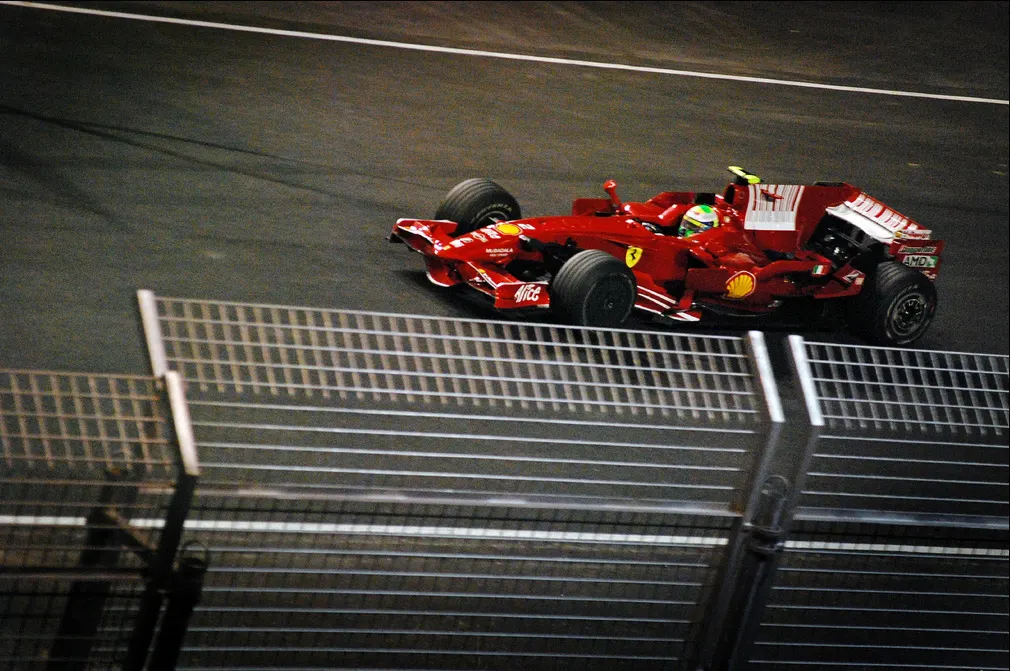
The driver must remember 19 corners, changing braking references, tire condition, energy use and race instructions while avoiding concrete walls. Heat and dehydration make this information harder to process late in the race.
A street circuit offers fewer visual escape points than a permanent track.
Fencing, walls and buildings fill the driver’s view. Therefore, the lap can feel faster and more confined.
Every Corner Requires a Precise Reference
Drivers use boards, painted lines and barrier openings to judge braking.
However, lighting and shadows can change those references. A locked tire may also force a new line.
The Driver Must Manage Multiple Systems
Modern F1 drivers adjust brake balance, differential settings and energy deployment.
Meanwhile, the engineer provides strategy information. The mental workload never stops.
Traffic Adds Uncertainty
Marina Bay has a narrow racing line.
A backmarker can disturb the approach to several connected corners. Consequently, one lost rhythm may cost a full second.
Late-Race Errors Are Common
George Russell’s final-lap crash in 2023 remains a clear example.
He touched the wall while fighting for a podium. The mistake came after nearly two hours of pressure.
Why Confidence Can Disappear Quickly
A small brush with a barrier may not damage the car.
However, it can make the driver cautious at the next corner. That hesitation then costs tire temperature and lap time.
How the Marina Bay Layout Creates Constant Work
The current Marina Bay Street Circuit has 19 corners. A 2023 redesign removed four turns from the former waterfront section and created a longer straight, reducing the total from 23.
The current layout measures 4.927 kilometers.
Drivers complete 62 laps for a race distance of 305.337 kilometers.
The 2023 Redesign Changed the Rhythm
Construction around the waterfront removed the old Turns 16 through 19.
A longer straight replaced them. As a result, lap times fell and another passing chance appeared.
Why 19 Corners Still Feel Relentless
Several turns arrive in quick sequences.
The driver completes one steering movement while preparing the next braking point. Therefore, there is little mental reset.
The Surface Is Not Uniform
Marina Bay uses public roads and purpose-built sections.
Grip changes between surfaces. Bumps also move as roads are repaired between events.
The Track Evolves Rapidly
Public roads begin the weekend with limited racing rubber.
Each session adds grip to the main line. Meanwhile, off-line areas remain dusty and slippery.
Why the Final Sector Is Important
The closing corners determine the run to the start-finish line.
A poor exit can expose the driver at Turn 1. Moreover, tire overheating often appears late in the lap.
| Marina Bay Section | Main Challenge | Why It Is Difficult |
|---|---|---|
| Turns 1–3 | Opening complex | Heavy braking, changing direction and first-lap traffic. |
| Turn 5 exit | Traction | Exit speed determines the run toward the next passing zone. |
| Turn 7 | Overtaking | One of the strongest braking opportunities on the lap. |
| Memorial area | Precision | Walls and surface changes reduce margin for error. |
| Anderson Bridge | Narrow road | The bridge compresses the racing line and limits passing. |
| Esplanade section | Heat and bumps | Repeated slow corners punish rear tires and traction. |
| Final sector | Rhythm | Small errors damage the lap and the following straight. |
Why the Concrete Barriers Increase the Difficulty
Runoff gives a driver time to correct a mistake.
Marina Bay often replaces that runoff with concrete. Therefore, the penalty arrives immediately.
The Fastest Line Uses Every Centimeter
Drivers place the tires close to the wall on entry and exit.
Leaving a safety margin costs lap time. However, removing the margin increases crash risk.
Barriers Make Overtaking More Difficult
The attacker cannot run far outside the normal line.
Moreover, dust and tire marbles reduce grip away from the racing path. Space exists, but usable space is limited.
Suspension Damage Can End the Race
A light impact may bend a steering arm or wheel rim.
The driver may continue briefly before the damage becomes serious. Consequently, teams monitor steering position and tire pressure closely.
Why Yellow Flags Can Multiply
A stopped car is difficult to move quickly from a narrow section.
Marshals may need a Virtual Safety Car or full Safety Car. Barrier repairs can also require a red flag.
Read our guides to racing crashes and tire marbles.
Why Singapore Requires a High-Downforce Setup
Marina Bay has many slow and medium-speed corners but few long straights. Teams therefore use large wing levels to improve braking stability, corner grip and traction, accepting extra aerodynamic drag.
Singapore sits near Monaco at the high-downforce end of the calendar.
The car needs grip more often than maximum speed. Therefore, teams choose large front and rear wing levels.
Mechanical Grip Matters at Low Speed
Aerodynamic downforce falls as speed decreases.
Suspension geometry, differential settings and tire grip become more important. The car must rotate without sliding.
Traction Determines Straight-Line Speed
A driver cannot use engine power if the rear tires spin.
Therefore, the best straight-line gain often begins with a clean slow-corner exit.
Ride Height Must Handle Bumps
Running the floor close to the road improves aerodynamics.
However, bumps can make the car bottom out. Engineers must protect the floor without sacrificing too much load.
Steering Lock and Rotation Matter
Several corners require large steering angles.
The front tires must respond while the rear remains stable. Understeer forces the driver toward the outside wall.
Why a Stable Car Beats a Peakier Car
A nervous car may produce one brilliant qualifying lap.
However, the race demands predictable behavior for 62 laps. Stability protects both tires and concentration.
Very high to improve corner grip and braking stability.
Critical because many corners are too slow for maximum aero load.
Raised enough to survive bumps without losing floor control.
Rear-tire grip controls acceleration from repeated slow corners.
Bodywork openings balance temperature against aerodynamic loss.
Predictable balance allows precise wall-to-wall placement.
Our guides to downforce, wing angle and car handling explain these choices.
Why Cooling the Car Is Complicated
Drivers are not the only parts of the package affected by heat.
Brakes, electronics, power-unit components and tires all need controlled temperatures.
Low Average Speed Reduces Airflow
Cooling systems work best when air passes through ducts and radiators.
Marina Bay has many slow corners. Consequently, the car receives less continuous airflow than at Monza.
Opening Bodywork Adds Drag
Teams can enlarge cooling exits around the sidepods and engine cover.
However, disturbed airflow reduces aerodynamic efficiency. Engineers must decide how much performance to sacrifice for reliability.
Brake Temperatures Rise Repeatedly
The circuit contains many braking events but limited recovery time.
Brake ducts need enough capacity to control heat. Yet larger ducts also create aerodynamic drag.
Following Another Car Makes Cooling Harder
Dirty air reduces both downforce and cooling flow.
The driver may need to leave a gap to protect temperatures. That choice makes overtaking even harder.
Why the 2026 Cars Add New Questions
The 2026 regulations place greater emphasis on electrical energy.
Singapore’s stop-start lap demands repeated deployment and recovery. Thermal management therefore remains central to reliability.
Read more about clean and dirty air and ERS in Formula 1.
Why Rear-Tire Overheating Is a Major Problem
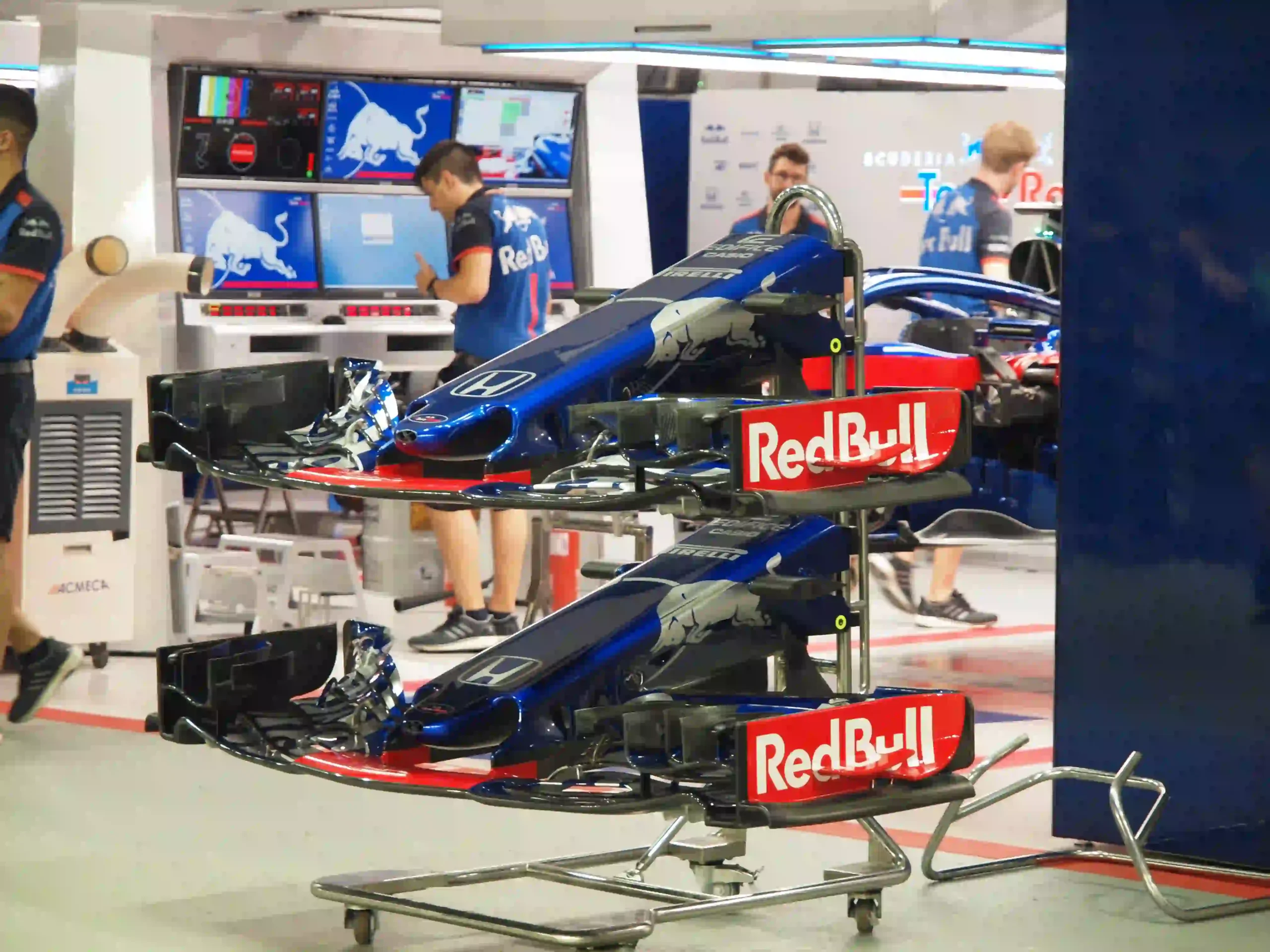
Repeated slow-corner acceleration makes the rear tires slip and deform. High track temperatures and limited cooling straights then trap that heat, reducing grip and increasing degradation.
Singapore loads the tires differently from a fast circuit.
There are fewer long, sustained high-speed corners. Instead, the rear tires repeatedly transfer power to the road.
Wheelspin Creates Surface Heat
A small slide may look harmless.
However, 62 laps of small slides raise temperature and wear. The driver must control throttle carefully.
Dirty Air Increases Sliding
A following car loses front grip.
The driver then applies more steering and waits longer for rotation. Consequently, the rear tires work harder on exit.
Marbles Narrow the Racing Line
Worn rubber collects away from the normal path.
An overtaking driver must brake on that debris. Therefore, a bold move carries extra lock-up risk.
Track Evolution Can Change the Balance
More rubber improves grip during the weekend.
However, rain can wash the surface clean. Teams may begin a session with very different conditions.
Why Tire Management Can Slow the Whole Field
The leader can reduce pace to protect rear tires.
Following cars may remain trapped because overtaking is difficult. A controlled train then develops.
Why Qualifying Is So Important in Singapore
Starting near the front gives a driver clean air and control over strategy. Overtaking is difficult, while traffic overheats tires and brakes. Pole position therefore has value beyond the first corner.
The last three completed Singapore Grands Prix were won from pole.
Carlos Sainz did it in 2023, Lando Norris in 2024 and George Russell in 2025.
Clean Air Protects the Car
The leading driver receives the best cooling flow.
Moreover, the front tires create full downforce without another car’s wake. This helps both pace and temperature.
Traffic Can Ruin a Flying Lap
Drivers need space before beginning a qualifying lap.
However, 20 cars share a short, narrow circuit. Slow preparation laps can create dangerous closing speeds.
Track Evolution Rewards Late Running
The road gains grip throughout each session.
Therefore, the final lap often offers the best conditions. A red flag can remove that opportunity instantly.
One Error Can End the Weekend
A wall strike in Q1 may require major repairs.
Even if the driver continues, damaged suspension can compromise the race setup.
Our guides to how F1 qualifying works, pole position and grid position explain the stakes.
Where Can Drivers Overtake at Marina Bay?
Overtaking is difficult, but it is not impossible.
The 2023 layout change added a longer flat-out section and improved one passing route.
Turn 1 Rewards a Strong Launch
The start creates the largest speed differences.
A driver can attack under braking. However, the following Turns 2 and 3 make the exit complicated.
Turn 7 Is a Major Braking Opportunity
The approach allows the attacker to build speed.
The inside line is clear, although the defender can brake late. Contact risk rises when both drivers refuse to yield.
The New Waterfront Straight Helps
The 2023 redesign removed four slow corners.
The longer straight lets a following car gain more speed before braking. Nevertheless, track position remains powerful.
Why Overtake Mode Matters in 2026
Overtake Mode replaced DRS under the 2026 rules.
Eligible following cars receive extra electrical deployment. The system helps close a gap, but the attacker still needs braking space.
Why Better Tires Do Not Guarantee a Pass
A faster car may remain trapped behind a slower rival.
Dirty air and off-line debris reduce the usable advantage. Therefore, pit strategy often creates positions more safely.
How Strategy Works at the Singapore Grand Prix
Strategy revolves around track position, tire temperature and neutralization risk.
The fastest theoretical plan may fail if the driver rejoins behind traffic.
The Undercut Can Be Powerful
A driver pits first and uses fresh tires to gain lap time.
However, the out-lap must be clear. Cold tires and traffic can remove the advantage.
The Overcut Can Work in Clean Air
The driver staying out keeps warm tires.
If the rival struggles after the stop, one extra fast lap can reverse the order.
A Safety Car Changes Pit-Lane Loss
The field slows under neutralization.
Therefore, a pit stop costs less relative time. Teams often extend stints while waiting for that opportunity.
Why Waiting Can Become a Trap
The Safety Car never appeared in 2024 or 2025.
Drivers who waited too long lost tire performance without receiving the expected cheap stop.
Track Position Can Beat Fresh Tires
A leading driver may manage pace while protecting the inside line.
The following car then overheats its tires. Consequently, an aggressive stop is not always enough.
Our guides to pit stops and undercut and overcut strategy explain these choices.
Why Safety Cars Became Part of Singapore’s Reputation
Close walls, limited runoff and narrow recovery roads make stopped cars difficult to remove. Incidents can block the racing line or require barrier repairs, so neutralization is often the safest response.
Every Singapore Grand Prix from 2008 through 2023 featured at least one Safety Car.
That streak became part of race strategy. Teams often planned around an intervention rather than treating it as a surprise.
The 2024 Race Broke the Streak
Lando Norris won the first Safety Car-free Singapore Grand Prix.
Formula 1 also reported no yellow flag during the race. The clean evening changed historical strategy assumptions.
2025 Made It Two Consecutive Races
George Russell’s victory also ran without a Safety Car.
Therefore, teams can no longer assume a neutralization will rescue a difficult strategy.
Why the Risk Still Exists
The barriers did not move far away.
A single crash can still block a narrow section. Tropical rain also creates standing-water and visibility concerns.
Virtual Safety Cars Add Another Variable
A stopped car may not require a full Safety Car.
The VSC reduces speed while preserving gaps. However, it still changes pit-stop mathematics.
Read our guide to Safety Car and VSC rules.
The 2025 Heat-Hazard Declaration Changed Driver Cooling
The FIA declared the 2025 Singapore Grand Prix Formula 1’s first official heat-hazard weekend. Cars had to carry the Driver Cooling System, which circulates chilled fluid through tubing in a fireproof vest.
The rule followed the extreme conditions of the 2023 Qatar Grand Prix.
Under the 2025 framework, a heat hazard could be declared when forecasts predicted at least 31°C during a Sprint or Grand Prix.
How the Driver Cooling System Works
A pump moves chilled fluid through fine tubes in a vest.
The system lowers heat around the torso. However, comfort and performance depend on fit and reliability.
Why Some Drivers Had Concerns
The vest adds another layer inside an already tight cockpit.
Moreover, the cooling medium warms during a long race. A failed system can become uncomfortable.
Why the Rule Still Matters
Heat stress affects safety, not only comfort.
A driver with reduced concentration is more likely to make an error beside a wall. Therefore, cooling supports the entire race.
What Happened After 2025?
The FIA and teams continued evaluating the system for 2026.
Further design changes and driver feedback remained part of the discussion. Singapore will remain a key test of any cooling solution.
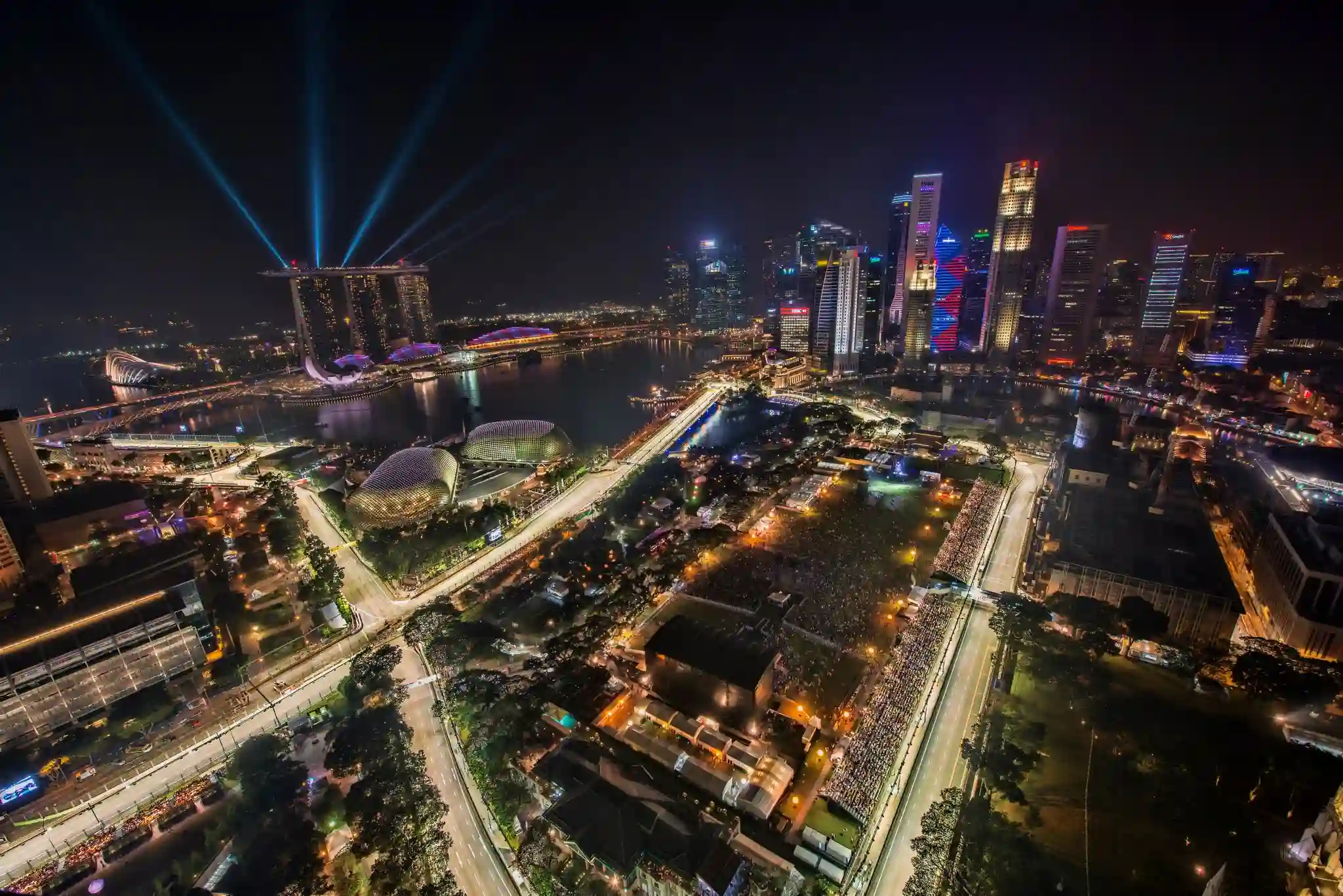
How Singapore Became Formula 1’s Original Night Race
Singapore joined the Formula 1 calendar in 2008 and hosted the championship’s first race under floodlights. Fernando Alonso won the inaugural event for Renault.
The first Marina Bay race created an immediate visual identity.
Cars raced beside illuminated skyscrapers, historic buildings and the Singapore Flyer.
The 2008 Race Was Historic and Controversial
Fernando Alonso started 15th and won.
However, the result later became connected to the Crashgate scandal after teammate Nelson Piquet Jr deliberately crashed.
Why Night Racing Worked
The schedule created a prime international television window.
Teams also remained on European time during the weekend. Drivers often slept through much of the local day.
Artificial Light Changes Perception
Floodlights create strong contrast and reflections.
Drivers can see the track clearly, yet shadows and painted lines still affect depth perception.
The City Became Part of the Circuit
Marina Bay passes landmarks rather than hiding behind permanent grandstands.
The result is a race with a recognizable sense of place. That atmosphere helped other night events follow.
Why Singapore Remains on the Calendar
Formula 1 extended the event agreement through 2028.
Moreover, Singapore Airlines’ title sponsorship also runs through 2028. The race remains a major sporting and tourism event.
What Is New for the 2026 Singapore Grand Prix?
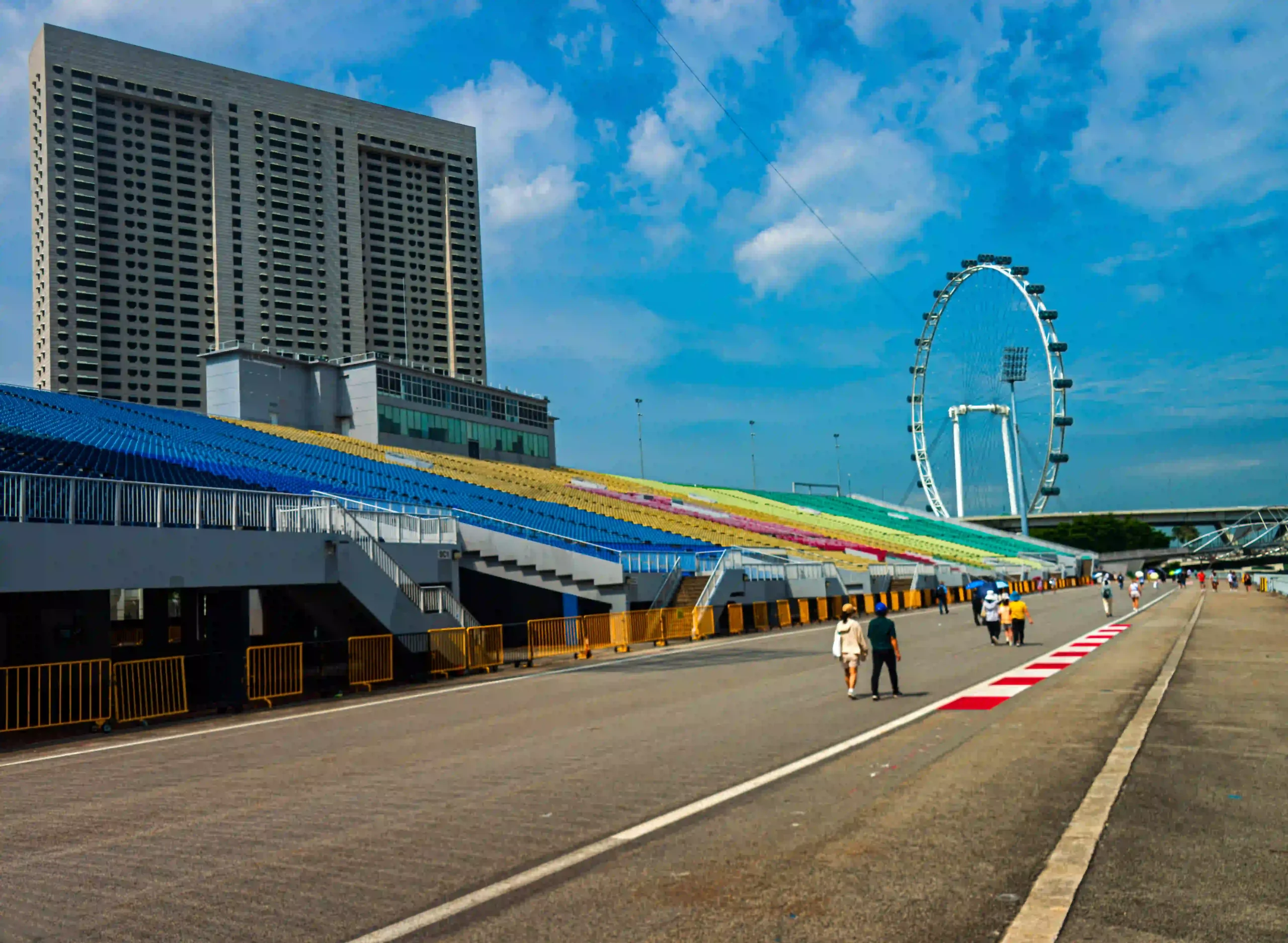
The 2026 Singapore Grand Prix weekend runs from October 9–11. The race starts Sunday at 8:00 p.m. local time, which is 8:00 a.m. Eastern Time.
As of July 24, 2026, the event remains upcoming.
Therefore, the latest completed Singapore Grand Prix is the 2025 race won by George Russell.
Singapore Adds a Sprint Weekend
The 2026 schedule includes Sprint Qualifying on Friday and a Sprint on Saturday.
That reduces normal practice time. Consequently, teams must solve cooling, setup and tire questions more quickly.
Why Less Practice Makes Marina Bay Harder
Track evolution is rapid on a street circuit.
A driver also needs confidence beside the barriers. Limited practice gives less time to build both setup and rhythm.
Official 2026 Session Times
| Session | Singapore Time | Eastern Time |
|---|---|---|
| Practice 1 | Friday, Oct. 9 — 8:30 a.m. | Thursday, Oct. 8 — 8:30 p.m. ET |
| Sprint Qualifying | Friday, Oct. 9 — 12:30 p.m. | Friday, Oct. 9 — 12:30 a.m. ET |
| Sprint | Saturday, Oct. 10 — 9:00 a.m. | Friday, Oct. 9 — 9:00 p.m. ET |
| Grand Prix Qualifying | Saturday, Oct. 10 — 1:00 p.m. | Saturday, Oct. 10 — 1:00 a.m. ET |
| Grand Prix | Sunday, Oct. 11 — 8:00 p.m. | Sunday, Oct. 11 — 8:00 a.m. ET |
The Current Circuit Figures
The 2026 event page lists a 4.927-kilometer circuit and 62 laps.
The race distance is 305.337 kilometers. Lewis Hamilton’s 1:33.808 from 2025 is the listed fastest race lap.
Why the 2026 Cars May Change the Challenge
The new generation is smaller and uses active aerodynamics.
However, Marina Bay remains narrow and slow. Mechanical grip, cooling and driver endurance will still decide performance.
The Latest Completed Race: 2025
Russell converted pole into victory for Mercedes.
Max Verstappen finished second, while Lando Norris took third. McLaren also secured the Teams’ Championship that evening.
Current status: No 2026 Singapore race result existed when this article was updated. Any later result should replace the 2025 recap after the October 11 Grand Prix.
Is Singapore Harder Than Monaco or Qatar?
Each event creates a different form of difficulty.
Therefore, there is no single objective answer for every driver.
Singapore vs. Monaco
Monaco is narrower and more difficult for overtaking.
However, Singapore is hotter, longer and more physically demanding. Marina Bay also contains more sustained braking and traction work.
Singapore vs. Qatar
Qatar combines heat with high-speed lateral forces.
Singapore uses lower speeds but adds walls, bumps and constant steering. Many drivers describe these two races as the calendar’s top physical tests.
Why Singapore Often Feels Harder Mentally
Qatar offers more runoff and open sight lines.
Marina Bay places concrete beside the racing line. Therefore, fatigue carries an immediate mechanical consequence.
Why Monaco Still Demands More Precision
Monaco has less road width and fewer overtaking opportunities.
However, its cooler conditions reduce the thermal load. Singapore combines precision with tropical endurance.
Common Myths About Singapore Grand Prix Difficulty
“A Night Race Must Be Cooler”
False. Singapore remains hot and humid after sunset.
Moreover, the streets and car components release stored heat throughout the race.
“Slow Corners Make the Race Easy”
False. Slow corners require braking, steering and traction work.
They also reduce cooling airflow and increase rear-tire stress.
“The 2023 Layout Change Removed the Challenge”
False. Four corners disappeared, and lap times improved.
However, 19 corners, heat and walls still create an extreme test.
“Drivers Replace All Lost Fluid During the Race”
False. The onboard bottle cannot replace several kilograms of sweat.
Hydration before and after the race remains essential.
“A Safety Car Is Guaranteed”
False. Every race through 2023 had one.
However, the 2024 and 2025 races both ran without a Safety Car.
“High Downforce Solves the Setup”
False. More wing helps cornering but adds drag and heat sensitivity.
Teams must still balance bumps, traction, cooling and tire life.
Why Is Singapore One of the Hardest F1 Races? FAQs
Why is Singapore one of the hardest F1 races?
It combines extreme heat, humidity, 19 corners, repeated braking and close walls. Drivers must maintain strength and concentration for a long night race.
How hot does an F1 cockpit get in Singapore?
Official Formula 1 material says cockpit temperatures can exceed 60°C, or 140°F.
How much weight can a driver lose during the Singapore Grand Prix?
A driver can lose as much as 3 kilograms, or about 6.6 pounds, mainly through fluid loss.
Why is qualifying so important in Singapore?
Overtaking is difficult, while clean air protects tires and cooling. Starting near the front also gives a team more control over strategy.
Conclusion: Singapore Is Formula 1’s Complete Endurance Test
Understanding why Singapore is one of the hardest F1 races begins with the climate.
Cockpit temperatures can exceed 60°C.
Humidity can approach 90 percent.
Therefore, the body loses fluid faster than it can cool itself.
Drivers may finish several kilograms lighter.
That loss affects heart rate, strength and concentration.
However, heat is only the first layer.
The Marina Bay Street Circuit contains 19 corners.
A full race covers 62 laps and 305.337 kilometers.
Consequently, the driver performs more than 1,100 cornering sequences.
Each one requires braking, steering and throttle control.
The barriers make every sequence more serious.
A small mistake can bend suspension or end the race.
Furthermore, the street surface changes throughout the weekend.
Bumps, painted lines and surface joins alter grip.
Off-line marbles reduce overtaking space.
The car also faces a difficult night.
Low average speed limits cooling airflow.
Repeated braking raises component temperatures.
Slow-corner exits overheat the rear tires.
Teams respond with high downforce and careful mechanical setup.
Yet maximum wing is not a complete solution.
Engineers must protect cooling, ride height and straight-line performance.
Qualifying then becomes central to the result.
The winners in 2023, 2024 and 2025 all started from pole.
Clean air protects the car and gives the leader strategic control.
Safety Car history adds another complication.
Every Singapore race through 2023 featured a Safety Car.
However, 2024 and 2025 produced none.
Teams can no longer build an entire plan around guaranteed neutralization.
The 2025 heat-hazard declaration showed how seriously Formula 1 treats the conditions.
Cars carried the new Driver Cooling System for the first time under an official declaration.
That system supports safety as much as comfort.
A cooler driver can preserve decision-making beside the walls.
History also gives Singapore a special place in Formula 1.
The 2008 event became the championship’s first night race.
Its floodlit city setting changed how a Grand Prix could look.
The 2026 weekend will add a new challenge.
Singapore will host a Sprint format from October 9–11.
Less practice means less time to solve setup and cooling.
Drivers must also learn the track quickly on changing grip.
That combination explains the reputation.
Singapore is not the fastest race.
It may not be the narrowest race either.
Instead, it combines heat, duration, workload and danger better than almost any other venue.
The driver must remain physically strong, mentally precise and technically disciplined.
The car must remain cool, balanced and gentle on its tires.
When either side weakens, Marina Bay exposes it.
That is why Singapore remains one of the hardest F1 races.
Sources and Fact-Checking
This article was checked against official Formula 1 and FIA material available on July 24, 2026. This is a static source list and contains no interactive verification feature.