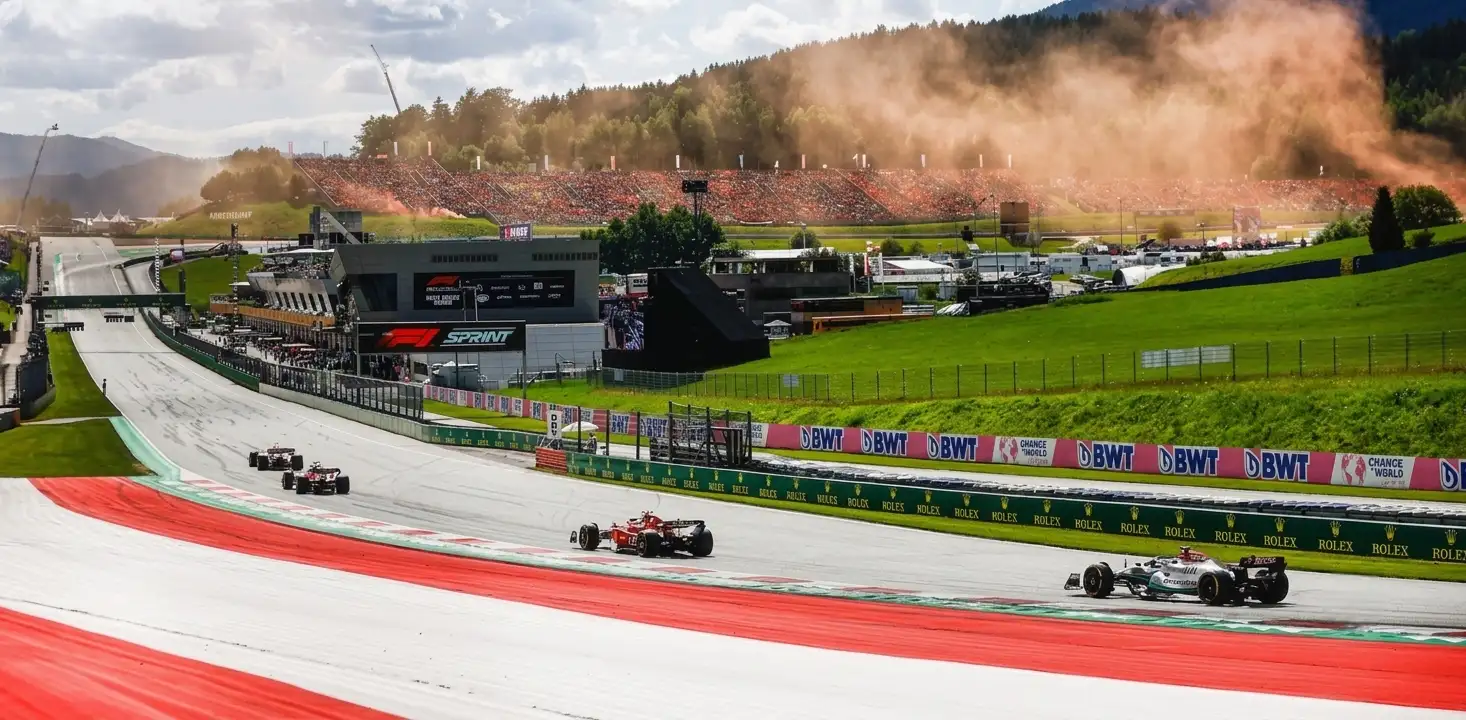
Austrian Grand Prix 2026:
Full Schedule, Start Times, Live Stream & Race Preview
The 2026 Austrian Grand Prix takes place June 26–28 at the Red Bull Ring in Spielberg. Race starts Sunday at 15:00 CEST (9:00 AM ET). Full session timetable, global TV guide, circuit breakdown and everything that matters heading into Round 8.
Austrian GP 2026:
Schedule, TV & Start Times
Race start: Sunday June 28 · 15:00 CEST · 9:00 AM ET. Full schedule, TV channels and race preview.
The 2026 Austrian Grand Prix — officially the Formula 1 Lenovo Austrian Grand Prix 2026 — runs June 26–28 at the Red Bull Ring in Spielberg, Austria. It is Round 8 of 24 in the 2026 F1 World Championship. The race starts Sunday, June 28, at 15:00 CEST local time and runs for 71 laps around the 4.318 km Styrian mountain circuit. There is no sprint weekend format this year; the schedule follows the traditional three-practice, one-qualifying structure.
This weekend carries enormous championship weight. Lewis Hamilton arrives in Austria with momentum after claiming his first victory for Ferrari in Spain — a record-breaking win that moved the seven-time champion to within 41 points of championship leader Kimi Antonelli. Meanwhile, Red Bull race at home with a significant update package and genuine pressure to perform in front of their own fans. This guide covers everything: the full session timetable, every broadcast option, the Red Bull Ring circuit, the key race storylines and the championship picture entering Round 8.
Austrian Grand Prix 2026 — Full Weekend Schedule
The 2026 Austrian Grand Prix follows the standard three-session weekend format, not a sprint weekend. This means three practice sessions — two on Friday, one on Saturday morning — before qualifying on Saturday afternoon and the Grand Prix on Sunday. There is no sprint race. Therefore, Friday matters more for teams to gather data, and Saturday qualifying becomes the key session of the weekend. Here is the complete timetable for all F1 sessions.
All session times are confirmed from official FIA and circuit scheduling. The formation lap begins approximately five minutes before the listed start time. The race runs for a maximum of 71 laps or two hours, whichever comes first.
The Red Bull Ring weekend also features Formula 2 (practice, qualifying, sprint, and feature race) and Formula 3 sessions across the three days, as well as the Porsche Supercup on Sunday before the Grand Prix. The F2 standings have Gabriele Mini leading ahead of Red Bull junior Nikola Tsolov by just six points. Full 2026 F1 calendar — all 24 race weekends.
Austrian GP 2026 Start Times — Global Time Zone Converter
The Austrian Grand Prix race start is 15:00 CEST (Central European Summer Time, UTC+2). Here is when every major session starts in key time zones around the world, so you can plan your viewing without having to calculate the difference yourself.
| Session | CEST (Austria) | BST (UK) | ET (US East) | PT (US West) | IST (India) | AEST (AUS E) |
|---|---|---|---|---|---|---|
| FP1 — Friday | 13:30 | 12:30 | 07:30 AM | 04:30 AM | 17:00 | 21:30 |
| FP2 — Friday | 17:00 | 16:00 | 11:00 AM | 08:00 AM | 20:30 | 01:00 Sat |
| FP3 — Saturday | 12:30 | 11:30 | 06:30 AM | 03:30 AM | 16:00 | 20:30 |
| Qualifying — Saturday | 16:00 | 15:00 | 10:00 AM | 07:00 AM | 19:30 | 00:00 Sun |
| 🏁 Race — Sunday | 15:00 | 14:00 | 09:00 AM | 06:00 AM | 18:30 | 23:00 |
The race start of 9:00 AM ET on the US East Coast is an unusually civilised viewing hour for North American fans — a Sunday morning start makes the Austrian GP one of the easiest European races to watch live from the Americas without setting an alarm in the middle of the night.
How to Watch the Austrian Grand Prix 2026 Live — Every Broadcast Option
The 2026 Austrian Grand Prix is broadcast differently depending on where in the world you are watching from. Two major broadcast changes define the 2026 season: Apple TV has replaced ESPN as the exclusive US broadcaster, and Sky Sports continues its UK and Ireland exclusivity. Furthermore, Apple has confirmed that the entire Austrian GP weekend — all sessions including the race — will be available free in the US via the Apple TV app, without a paid subscription. This is the first complete free race weekend Apple has offered since taking over US rights.
Apple confirmed on June 18, 2026 that the full Austrian GP weekend — FP1, FP2, FP3, qualifying and the race — streams for free in the United States. You do not need an Apple TV subscription. Just download the Apple TV app, find Formula 1, and watch live. This is a first for Apple since taking over exclusive US F1 rights in 2026 and is designed to bring new fans into the sport.
Regular Apple TV subscribers already have full-season access at no extra cost. New subscribers get a 7-day free trial, and recent Apple device buyers may qualify for up to three months free.
Other Regional Broadcasters
Broadcast arrangements vary by territory. ORF carries the race in Austria. Canal+ and TF1 share French rights. Viaplay covers Scandinavia and the Netherlands. DAZN carries F1 in Germany, Spain, Italy, and Japan. For the most accurate broadcast information in your country, the official Formula 1 broadcast guide lists every rights holder globally.
Red Bull Ring — Circuit Guide & Key Facts
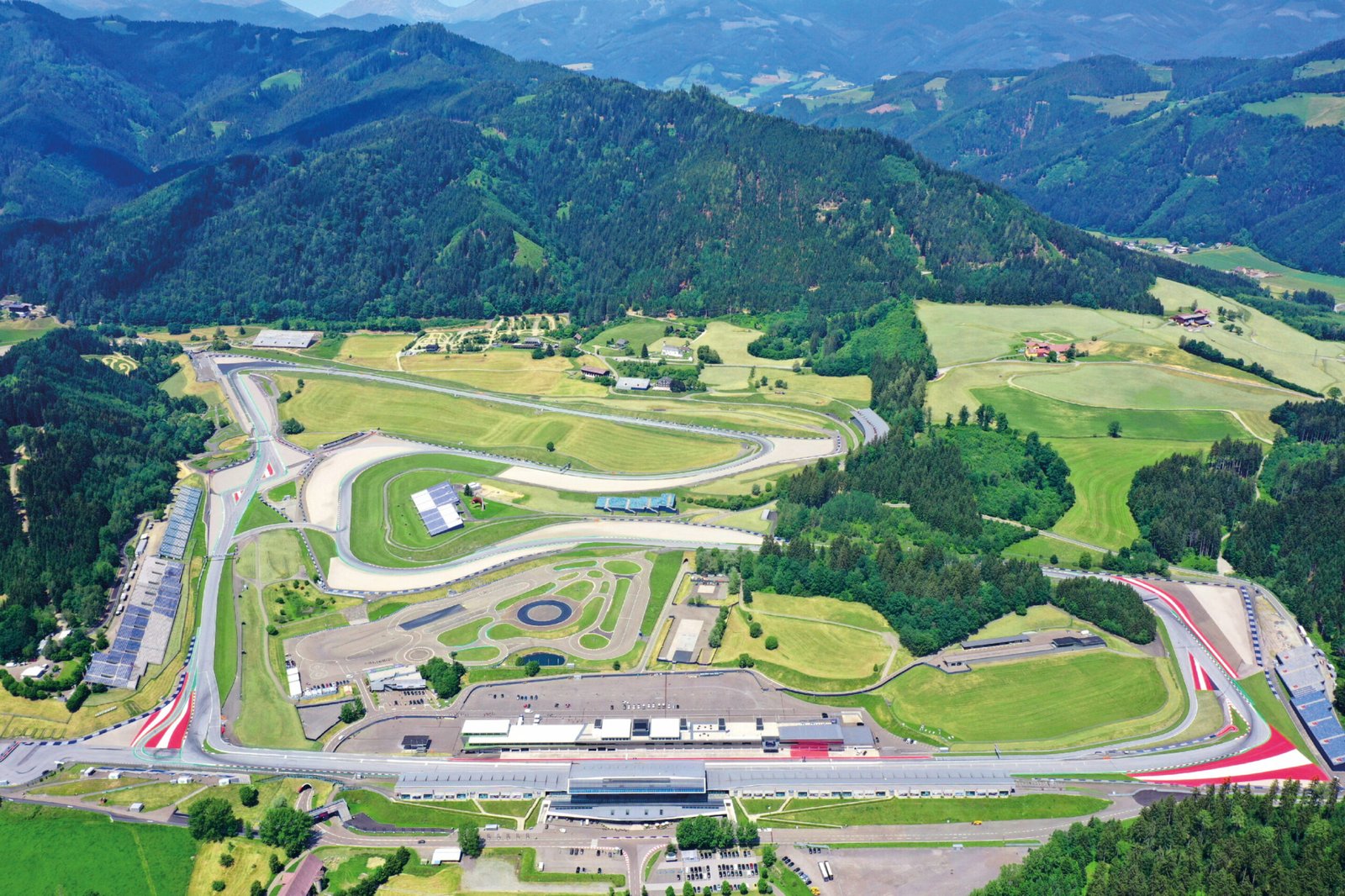
The Red Bull Ring is one of the most distinctive venues on the Formula 1 calendar. It sits in a natural bowl carved into the Styrian Alps near Spielberg — the mountains providing a breathtaking backdrop that no other F1 circuit can match. At just 4.318 kilometres, it is one of the shortest laps in the championship. Moreover, its elevation changes are significant, with a maximum uphill gradient of 12% and a downhill of 9.3%, creating aerodynamic challenges that don’t appear on flat circuits.
The circuit officially has 10 corners, but only seven require significant braking. As a result, it is a high-speed, power-sensitive track that rewards engine performance on its three long straights. However, the three consecutive DRS zones — stretching from the pit straight all the way to Turn 4 — create some of the best overtaking opportunities of the entire season. Turn 3, at the top of the steep uphill climb from Turn 2, has produced some of the most controversial and memorable moments in recent F1 history.
Circuit length: 4.318 km (2.683 miles) · Race laps: 71 · Total race distance: 306.452 km · Corners: 10 · DRS zones: 3 · Lap record: 1:04.314 — Max Verstappen (Red Bull RB20), set during qualifying at the 2024 Austrian Grand Prix · 2025 pole position: Lando Norris, 1:03.xxx · Altitude: approx. 660 metres above sea level · Max gradient (uphill): 12% · Max gradient (downhill): 9.3%
The altitude at Spielberg — around 660 metres — reduces air density compared to sea-level circuits. This affects engine breathing and tyre behaviour in ways that require specific calibration. Furthermore, Styrian weather is famously unpredictable, meaning that teams often need to prepare wet-weather strategies even when the forecast shows sunshine at the start of the weekend. The 2021 race — run as a double-header during the COVID era — produced completely different weather conditions across two consecutive weekends at the same venue. Why downforce matters — and how altitude changes the equation.
Austrian GP 2026 Race Preview — Five Storylines to Watch
1. Hamilton Carries Ferrari Momentum Into Red Bull’s Backyard
Lewis Hamilton arrived at the 2026 Austrian Grand Prix with something he hadn’t possessed for a long time: genuine race-winning momentum. His victory in Spain at the Circuit de Barcelona-Catalunya — his first win for Ferrari and a record-extending achievement at 41 — transformed the championship picture. Consequently, he enters Austria only 41 points behind Antonelli and with his Ferrari clearly competitive on the mixed-speed circuits that make up the European summer swing.
Moreover, the Red Bull Ring’s characteristics suit Hamilton well. He has won here previously and understands how to manage the three-stop strategy questions the short lap typically raises. Furthermore, the track’s emphasis on traction out of the slow corners — particularly Turns 2 and 3 — tends to favour cars with clean rear-end behaviour. Ferrari’s 2026 car has shown exactly that trait. Therefore, Hamilton arrives as a genuine victory contender rather than a supporter of the narrative. Lewis Hamilton wins his first Ferrari race in Spain — full report.
2. Red Bull at Home — Can Mekies’ Updates Deliver?
The Red Bull Ring is Red Bull Racing’s home circuit in the most literal sense — the team and the circuit share ownership under the same brand. However, 2026 has been a difficult season for the four-time consecutive constructors’ champions. Red Bull team principal Laurent Mekies acknowledged after Barcelona that the result was “a reality check” — the team finished fourth with Verstappen unable to challenge the podium on a medium-to-high-speed circuit with long straights.
However, Mekies confirmed that Red Bull is bringing a significant upgrade package to Austria specifically. He has described the aim as getting the car “on a diet” — reducing drag to improve straight-line performance, which has been one of their weaknesses relative to Mercedes and Ferrari in 2026. Meanwhile, Verstappen remains hungry for a home result. He has won this race four times and knows this circuit as well as any driver on the grid. Red Bull Racing — team history and 2026 season analysis.
3. Antonelli’s First Test After Barcelona DNF
Kimi Antonelli still leads the championship on 131 points. Nevertheless, the Barcelona weekend offered the first real glimpse of adversity for the 19-year-old: a technical failure on his Mercedes forced him into retirement while Antonelli was running competitively. As a result, Hamilton gained 25 points on him in a single afternoon — a sobering first major setback after what had been an almost flawless start to 2026.
Austria, therefore, arrives as a character test. Does Antonelli respond to the first crack in his title campaign with the same composure he has shown all season? The Red Bull Ring has three DRS zones that reward pure pace over a single lap, and Mercedes has demonstrated that pace consistently throughout 2026. Therefore, Antonelli should qualify well here. However, the race will test whether the team’s strategy and reliability hold up after the Spanish failure. Full 2026 F1 championship standings — updated after each race.
4. Tyre Strategy — One Stop or Two?
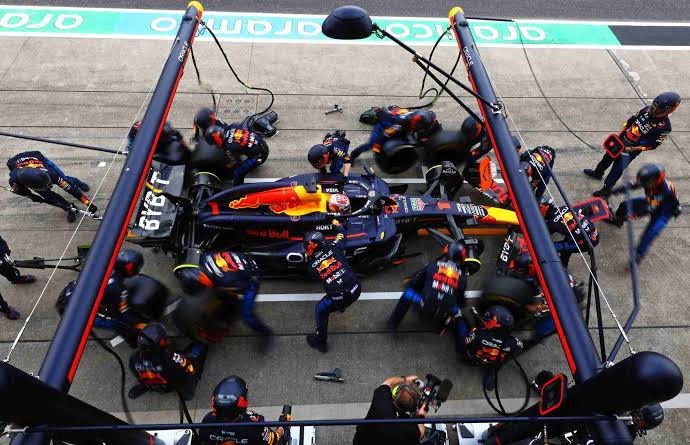
The Red Bull Ring’s short lap creates an interesting strategic puzzle. On one hand, the track is relatively easy on tyres due to its predominantly low-grip, high-speed corners. On the other hand, the race distance of 306 km still requires a mandatory two-compound rule, meaning a one-stop strategy is theoretically possible if the tyres allow it. Historically, most Austrian GPs have seen a single pit stop prove the dominant strategy, but the 2024 race — where Verstappen and Norris tangled — showed how rapidly the strategic picture can change under a Safety Car.
Furthermore, the Pirelli tyre range for Austria typically leans toward the harder compounds, given the lack of sustained high-load corners. Teams will make compound choices on Friday based on FP1 and FP2 data, but the weather — always unpredictable in Styria — can completely rewrite those plans. How pit stop strategy works in Formula 1.
5. McLaren’s Bounce-Back After Austria Struggles
McLaren has been competitive in 2026 at circuits that suit their car’s aerodynamic characteristics. However, the Red Bull Ring represents a potential weak spot. Short laps and heavy dependence on power unit output can expose the areas where Mercedes and Ferrari have advantages over the McLaren-Mercedes package in the current regulations. Consequently, Norris and Piastri face a challenging weekend at a circuit where neither has a strong recent record relative to their season form.
That said, McLaren brought consistent development to their 2026 car. Moreover, Norris took pole position here in 2025, demonstrating the package can perform at Spielberg when set up correctly. Therefore, the team will be working to replicate that Saturday form, even if the race pace may be harder to sustain against Antonelli and Hamilton in a straight fight. The undercut and overcut — how McLaren uses strategy to compensate for pace gaps.
2026 F1 Championship Standings — Entering Austria
The Spanish Grand Prix reshuffled the championship picture substantially. Hamilton’s win for Ferrari, combined with Antonelli’s retirement from a technical failure, handed the Briton his largest haul of points yet and brought the top two much closer together. Furthermore, George Russell’s strong run maintained Mercedes’ constructors’ lead. Here is the standings picture entering Austria.
Standings entered as reported post-Spanish GP · Verify final figures at worldofspeed.org/f1/formula-1-standings/
Hamilton is 41 points behind with 17 rounds still to go. In 2026 terms, that’s less than two race weekends’ worth of points. The Austrian GP is the moment to see if Spain was a one-race exception or the start of something bigger.
— Race analysis perspective, World of SpeedAustrian Grand Prix History — Legends, Records & Memorable Moments
The Austrian Grand Prix has one of the most fascinating histories in Formula 1. Moreover, its story involves two entirely different circuits on the same piece of Austrian land. The original Österreichring — opened in 1969 — was a sweeping, ultra-fast mountain circuit running through the Styrian hills at speeds that made it one of the most awe-inspiring venues in the sport. Furthermore, Jochen Rindt, Austria’s first and still only Formula 1 World Champion, raced there. The track hosted Grands Prix from 1970 to 1987 before mounting safety concerns led to its closure.
After a nine-year absence, the circuit returned in 1997 as the A1-Ring — significantly shorter and redesigned by Hermann Tilke, the architect who would go on to design most of F1’s modern circuits. However, that version hosted only seven Grands Prix before Red Bull founder Dietrich Mateschitz purchased the facility in 2004 and began a total renovation. The circuit reopened in 2011 and returned to the F1 calendar in 2014 as the Red Bull Ring, where it has remained ever since. Additionally, the current hosting contract runs until 2041, securing this iconic venue’s place on the calendar for decades to come.
Recent Austrian GP Winners (Modern Red Bull Ring Era)
| Year | Winner | Team | Note |
|---|---|---|---|
| 2025 | Lando Norris | McLaren | Took pole and won from the front |
| 2024 | George Russell | Mercedes | Verstappen and Norris collide while leading |
| 2023 | Max Verstappen | Red Bull Racing | Led from pole to chequered flag |
| 2022 | Charles Leclerc | Ferrari | Dominant Ferrari victory in early-season form |
| 2021 | Max Verstappen | Red Bull Racing | Grand Chelem — pole, win, fastest lap, every lap led |
| 2020 | Valtteri Bottas | Mercedes | Race opened season after COVID delay |
| 2019 | Max Verstappen | Red Bull Racing | Controversial Turn 3 pass on Leclerc on last lap |
The pattern is clear: Max Verstappen has dominated the modern Austrian GP era, winning four times in Spielberg. Furthermore, Turn 3 has been central to the drama in multiple editions — collisions, controversial passes, and last-lap battles have all unfolded at the top of that steep climb. Moreover, the 2024 race became one of the most dramatic afternoons in recent F1 history when Verstappen and Norris crashed while fighting for the lead, handing George Russell a surprise victory for Mercedes.
Consequently, the Red Bull Ring’s reputation for unpredictability is well earned. As a result, whoever leads into Austria with the fastest car is never guaranteed to leave with the trophy. The greatest Formula 1 drivers of all time — where does Verstappen rank?
Max Verstappen: 4 wins (2018, 2019, 2021, 2023) — the most of any active driver. Lewis Hamilton: 1 win. Charles Leclerc: 1 win. Lando Norris: 1 win (2025). George Russell: 1 win (2024). Verstappen has been the dominant force here in the modern era; however, his 2026 Red Bull package will need to perform significantly better than it did in Spain to challenge for pole position. Max Verstappen’s F1 career — from Red Bull junior to four-time champion.
Frequently Asked Questions — Austrian Grand Prix 2026
- Wikipedia — 2026 Austrian Grand Prix (official schedule, format confirmation)
- Formula1.com — Official Austrian GP 2026 race page
- RedBullRing.com — Official venue, circuit length and format
- Sky Sports — UK schedule, broadcast times and session guide
- ESPN — US schedule, Apple TV broadcast details, standings
- AutoRacing1 — Apple TV free weekend announcement (June 18, 2026)
- GPBlog — Full 2026 Austrian GP schedule and Red Bull upgrade news
- FormulaOneHistory.com — Circuit guide, championship context, DRS zones
The bottom line heading into Austria
The Austrian Grand Prix 2026 arrives at exactly the right moment. Hamilton’s Spanish win broke a long drought and inserted genuine tension into a championship that, until Barcelona, had been looking increasingly like Antonelli’s to lose. Therefore, Red Bull Ring becomes the first real test of how the top teams respond to a reshuffled competitive order.
Red Bull bringing a major update to their home race adds further intrigue. If those upgrades close the gap to Mercedes and Ferrari, Verstappen becomes a genuine podium contender rather than a fourth-place regular. Meanwhile, McLaren need to recover from their Monaco and Spain relative disappointments. Furthermore, the Styrian weather can always throw a wildcard into any race — sudden rain at a circuit with three DRS zones and heavy braking at Turn 3 would make Sunday afternoon very interesting indeed.
This page will be updated with qualifying results, race day analysis and the Austrian GP final classification as each session completes across June 26–28. Bookmark it, check back on Saturday evening for the grid, and Sunday afternoon for the race result and championship shift.