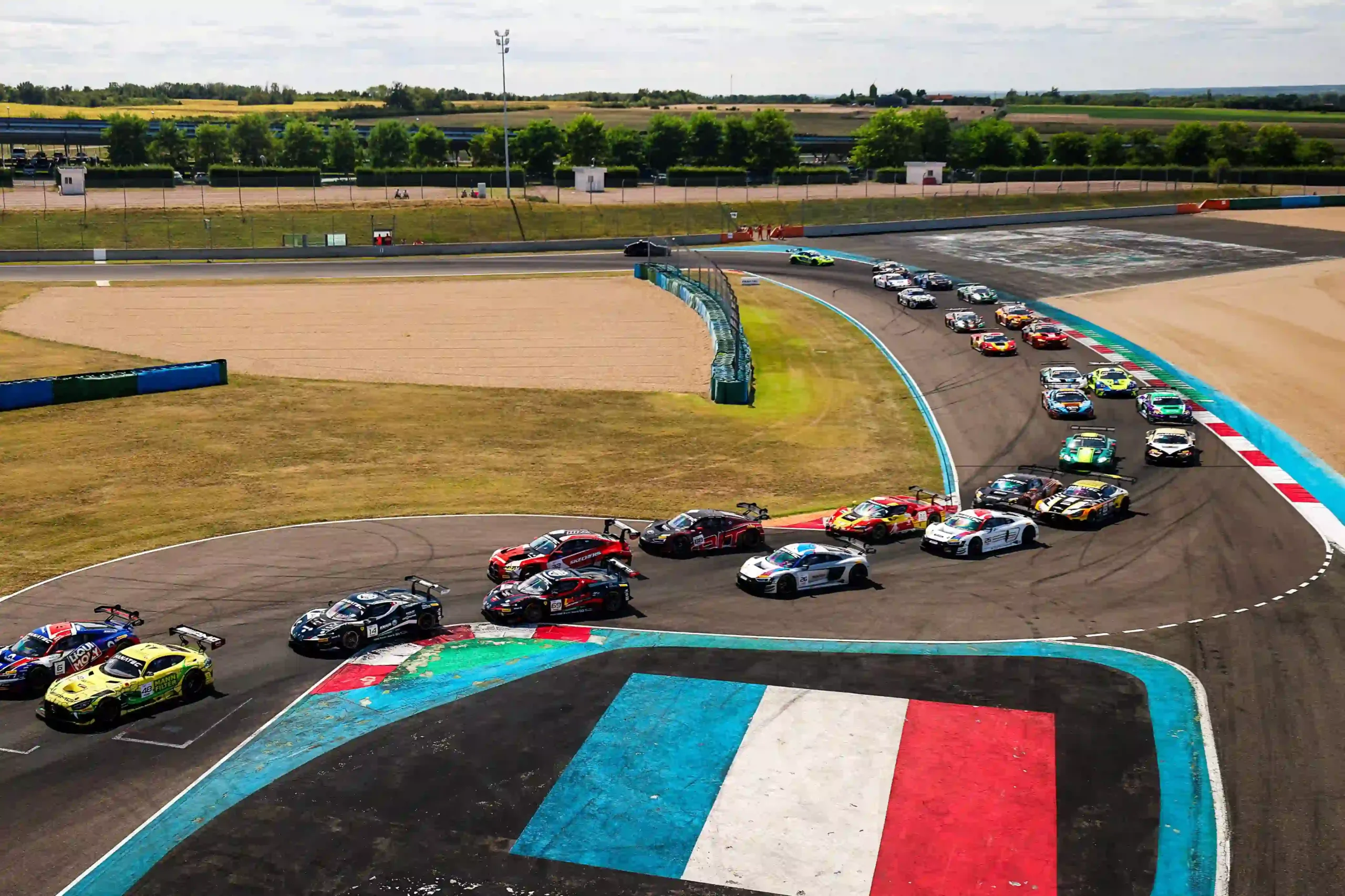
Magny-Cours GT World Challenge Europe 2026 Preview: Contenders, Track Guide & Predictions
A verified reconstruction of the pre-race picture: the 45-car field, championship leaders, strongest manufacturer packages, French home hopes, class favorites, circuit demands and balanced predictions made without using the final race results.
The Magny-Cours GT World Challenge Europe 2026 preview began with one clear favorite and a long list of credible challengers. Charles Weerts and Kelvin van der Linde arrived with the #32 Team WRT BMW after sweeping both Misano races. Their 46.5 Sprint Cup points gave them a 14-point lead over Winward Racing’s Lucas Auer and Maro Engel, but a record 45-car field made control of the French weekend far from guaranteed.
Magny-Cours rewards precision more than raw aggression. The Adelaide hairpin provides a genuine passing chance, yet the rest of the 4.411-kilometre lap punishes a car that is unstable under braking, reluctant to rotate or slow to generate traction. With separate qualifying sessions for the two races, a team needed two complete performances rather than one lucky grid position.
Team WRT’s Weerts and van der Linde were the strongest pre-race pick after their Misano double. Winward Racing, Lionspeed GP, Mercedes-AMG Team Verstappen Racing and AF Corse formed the next group, while Garage 59, Boutsen VDS and Rutronik Racing offered realistic dark-horse potential.
The Magny-Cours weekend has now concluded. This article is intentionally presented as an archived pre-race preview based on official information available before competition. The predictions below have not been rewritten using hindsight, and the final results are not used to make the analysis appear more accurate.
Magny-Cours GT World Challenge Europe 2026 Preview at a Glance
Magny-Cours was the sixth event on the combined GT World Challenge Europe calendar and the third Sprint Cup meeting of 2026. The championship had already visited Brands Hatch and Misano for short-format racing, while Paul Ricard, Monza and the CrowdStrike 24 Hours of Spa had shaped the Endurance Cup and overall title picture.
The French event was officially promoted with a record 45-car Sprint Cup entry. The published list divided the field into 14 Pro cars, 12 Silver Cup cars, eight Gold Cup cars and 11 Bronze Cup cars. That class variety mattered because every driver competed on the same track at the same time. A Pro crew chasing the overall lead could lose seconds behind a separate class battle, while an ambitious Silver entry could qualify high enough to interfere directly with the expected podium contenders.
Saturday’s first race was scheduled for 9:05 p.m. local time, or 3:05 p.m. Eastern Time. Sunday’s second race was set for 3:30 p.m. local time, or 9:30 a.m. ET. The evening-to-afternoon contrast meant teams could not assume that one setup direction would remain ideal across the whole weekend.
The opening race would begin as the circuit cooled and daylight faded. The Sunday race would place the same cars on a warmer afternoon surface. Tire pressure growth, brake temperature and mechanical balance could therefore move between sessions even if the Balance of Performance remained unchanged.
Team WRT BMW
Weerts and van der Linde arrived with two straight wins and the strongest points position.
Winward Mercedes
Auer and Engel carried proven Magny-Cours speed and a 32.5-point Sprint total.
Lionspeed Porsche
Feller and Buus combined Brands Hatch victory with the team’s headline Spa triumph.
AF Corse Ferrari
Neubauer and Leclerc had already won at Brands Hatch and suited the French spotlight.
Pre-Race Form Guide: Why Team WRT Started as Favorite
The most persuasive form line belonged to Charles Weerts and Kelvin van der Linde. They finished third and sixth at Brands Hatch, collecting enough points to remain connected to the early leaders, then transformed the championship at Misano. The #32 BMW won Race 1 and Race 2, giving Team WRT a clean sweep under the Italian lights.
Those results lifted the pair to 46.5 Sprint Cup points. Auer and Engel held second on 32.5, while Feller and Buus sat third on 30.5. The advantage was meaningful but not comfortable. Two Sprint races offered qualifying points and race points, so one poor grid and one incident could reduce a double-digit lead quickly.
| Pre-race rank | Drivers | Car / team | Points | 2026 Sprint evidence | Preview tier |
|---|---|---|---|---|---|
| 1 | Charles Weerts / Kelvin van der Linde | #32 Team WRT BMW M4 GT3 EVO | 46.5 | Third at Brands Hatch; won both Misano races | Favorite |
| 2 | Lucas Auer / Maro Engel | #48 Winward Mercedes-AMG GT3 EVO | 32.5 | Brands Hatch podium; two Misano podiums | Major contender |
| 3 | Ricardo Feller / Bastian Buus | #80 Lionspeed Porsche 911 GT3 R EVO | 30.5 | Brands Hatch Race 2 winner; Misano podium | Major contender |
| 4 | Dani Juncadella / Jules Gounon | #3 Mercedes-AMG Team Verstappen Racing | 25* | Race 2 runner-up at Brands; Misano pace and pole form | Major contender |
| 5 | Thomas Neubauer / Arthur Leclerc | #50 AF Corse Ferrari 296 GT3 EVO | 21.5 | Won opening Brands Hatch race | High-upside pick |
*The official pre-event standings credited Juncadella with 25 points from the opening meetings. The Magny-Cours entry paired him with Jules Gounon, so the crew’s competitive potential was stronger than a simple shared-points reading suggested.
WRT also had the strongest historical argument
Magny-Cours had repeatedly rewarded Team WRT. Charles Weerts won the first race in 2024 with Dries Vanthoor and had already won at the circuit in 2022. Even before the 2026 weekend, the event history showed that WRT understood how to qualify, execute the driver change and control traffic on this layout.
That did not mean the BMW was automatically the fastest car. Balance of Performance, tire preparation and changing conditions could move the order. The reason WRT deserved favorite status was broader: current form, championship position, circuit history and operational strength all pointed in the same direction.
They entered Magny-Cours after winning both Misano races, led the Sprint Cup by 14 points and represented a Team WRT operation with multiple victories at the French circuit. No rival combined stronger recent form with a better Magny-Cours record.
Leading Magny-Cours Contenders and Teams to Watch
Team WRT #32 BMW: the benchmark crew
Weerts and van der Linde formed the most complete pre-race package. The BMW M4 GT3 EVO is stable under braking, predictable over a stint and effective when the car must change direction without excessive rear movement. Those qualities fit Magny-Cours, where a driver needs confidence through fast transitions but also enough rotation for Adelaide and Château d’Eau.
The strategic advantage was equally important. WRT fielded four BMWs across Pro and Silver, giving the team a broad data set. The #31 of Amaury Cordeel and Jordan Pepper, the #46 of Valentino Rossi and Max Hesse, and the Silver-leading #30 of Matisse Lismont and Ignacio Montenegro could test different setup directions. A multi-car organization still has to separate useful information from noise, but WRT’s experience made that a strength rather than a distraction.
Winward Racing #48 Mercedes-AMG: proven at this circuit
Auer and Engel were the clearest threat to WRT in the standings. Their 32.5 points came from consistency rather than one isolated result. They reached the podium at Brands Hatch and added two more podium finishes at Misano. More importantly for this preview, the same pairing won Race 2 at Magny-Cours in 2024.
The Mercedes-AMG GT3 EVO traditionally gives drivers a secure braking platform. At Adelaide, that helps a car attack from a long way back without becoming unstable as the load transfers forward. The trade-off can be rotation in the tightest corners, so setup work needed to keep the front axle responsive without creating a nervous rear.
Mercedes-AMG Team Verstappen Racing #3: Gounon increased the ceiling
Dani Juncadella and Jules Gounon brought two highly experienced factory-level drivers to the #3 entry. The team had already shown speed at Brands Hatch and Misano, while Gounon’s one-lap pace made the short qualifying sessions especially relevant. The official event preview listed Verstappen Racing among the principal threats to WRT.
The main question was execution. The crew had the speed to start on the first two rows, but Magny-Cours often punishes even small delays in the driver-change phase. A clean pit sequence could turn the Mercedes into a winner; a slow belt change could bury it behind several cars in a field this large.
Lionspeed GP #80 Porsche: the momentum contender
Feller and Buus won the second race at Brands Hatch, finished on the Misano podium and arrived only two points behind Auer and Engel in the Sprint standings. Their team had also won the CrowdStrike 24 Hours of Spa with the #80 Porsche. An endurance victory does not directly predict a one-hour sprint, but it proves the organization can operate under extreme pressure.
The Porsche 911 GT3 R EVO had another useful reference. In 2025, Porsche finished second in Race 1 at Magny-Cours and remained competitive across the weekend. The rear-engined layout can produce excellent traction from slow corners, which matters after Adelaide and Château d’Eau. The challenge is maintaining front confidence through the quicker changes of direction.
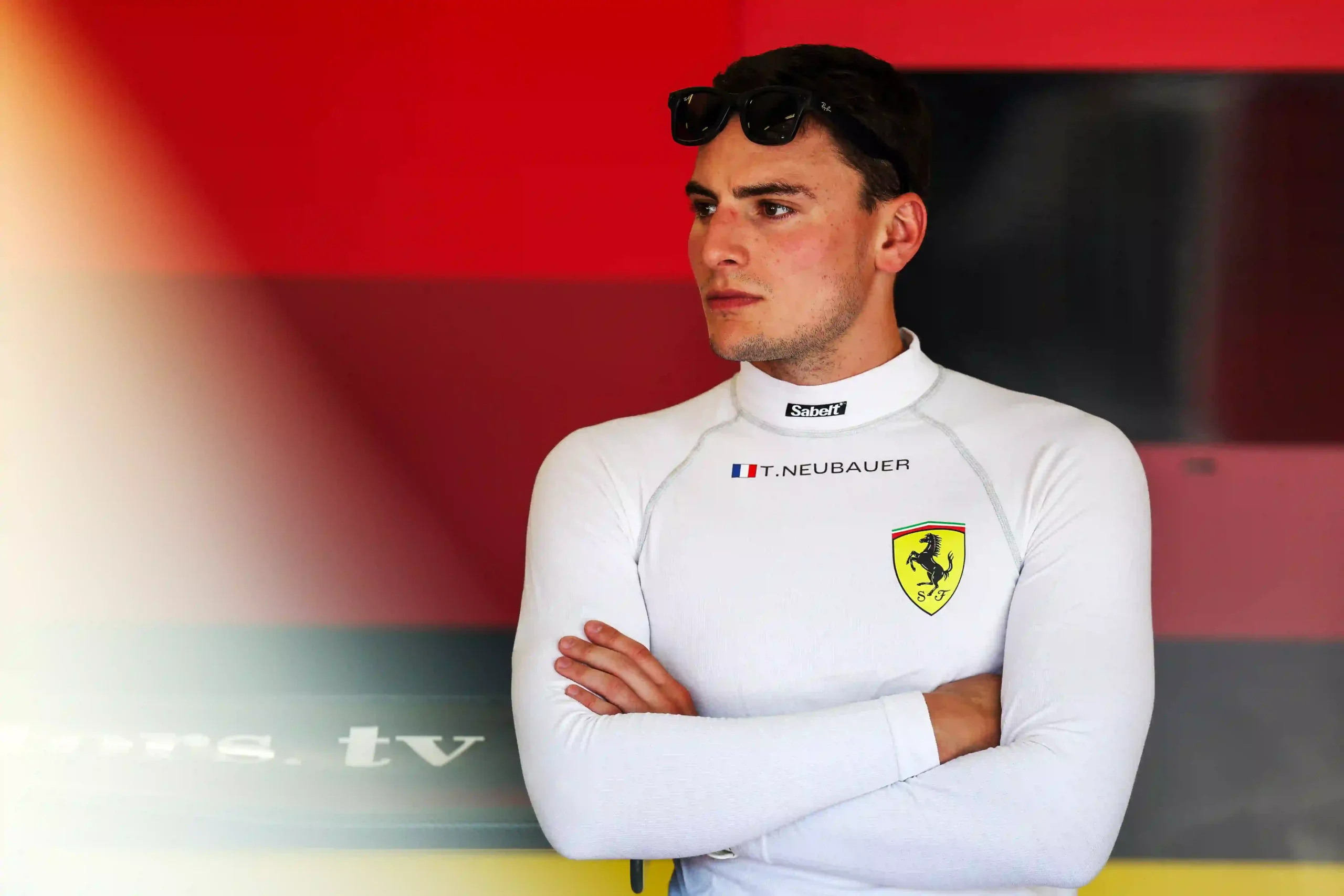
AF Corse #50 Ferrari: home support and a real winning record
Thomas Neubauer and Arthur Leclerc were not speculative outsiders. They won Race 1 at Brands Hatch and entered Magny-Cours fifth in the Sprint standings on 21.5 points. Neubauer carried the French home interest, while Leclerc had adapted quickly to GT competition after moving from single-seaters.
The Ferrari 296 GT3 EVO offered strong braking performance and a balanced aerodynamic platform. At its best, it could link Magny-Cours’ medium-speed corners cleanly while remaining sharp enough for qualifying. The concern was consistency: the crew’s Misano weekend had not matched the level shown in Britain.
Team WRT #46 BMW: Rossi and Hesse had qualifying upside
Valentino Rossi and Max Hesse had already shown that the #46 could qualify at the front, with Rossi taking a maiden pole at Misano. That mattered because a strong qualifying performance can transform a Sprint Cup weekend. Starting near the front reduces exposure to opening-lap contact and gives the team more freedom around the pit window.
The #46 was harder to select as an outright favorite because its race results had been less consistent than the #32. Still, Hesse’s GT pace and Rossi’s growing confidence made the car a legitimate podium possibility rather than a marketing-only storyline.
Magny-Cours Dark Horses: Cars That Could Break the Expected Order
Garage 59 #59 McLaren
Marvin Kirchhöfer had a direct Magny-Cours reference: he won Race 2 in 2025 with Benjamin Goethe. For 2026 he shared the #59 McLaren with Dean MacDonald. The McLaren 720S GT3 EVO can be particularly strong in high-speed direction changes, and Kirchhöfer’s knowledge of the circuit reduced the preparation risk.
The reason to label Garage 59 a dark horse rather than a favorite was championship form. The team had shown pace without matching WRT’s scoring consistency. In a clean qualifying session, however, the #59 had the driver quality to start near the front and control a one-hour race.
Boutsen VDS #2 Porsche
Dorian Boccolacci returned to a circuit where he had strong local support, joined by Alessio Picariello in the #2 Porsche. The car had finished second in Brands Hatch Race 1 earlier in the season with Boccolacci and Morris Schuring. Picariello added proven Porsche experience, creating a pairing capable of immediate pace.
The key was tire preparation. Porsche crews had to generate front-tire confidence quickly in the short qualifying format. If the #2 reached that window, Boccolacci’s braking confidence made Adelaide a genuine attacking weapon.
Rutronik Racing #96 Lamborghini Temerario GT3
Luca Engstler and Patric Niederhauser brought unusually relevant Magny-Cours history. Engstler won Race 1 in 2025, while Niederhauser finished second in the same race. For 2026 they shared the new Lamborghini Temerario GT3.
The car’s relative newness created uncertainty. A new platform can have speed without the setup library that established GT3 models possess. Yet the driver pairing knew what the circuit required, and the official entry gave Lamborghini a high-quality Pro crew. That made the #96 one of the most interesting unknowns.
Eastalent Racing #84 Audi
Christopher Haase and Simon Reicher represented a mature Audi R8 LMS GT3 EVO II package. The model no longer carried the novelty of newer GT3 cars, but it remained predictable, efficient and understood. Haase’s experience could be valuable if conditions changed or the race became fragmented by safety cars.
Emil Frey Racing Ferraris
The #14 of Matteo Cairoli and Konsta Lappalainen, plus the #69 of Thierry Vermeulen and Ben Green, gave Ferrari a second line of attack beyond AF Corse. Neither crew began the weekend as the obvious headline pick, but both combined professional drivers with a current-generation Ferrari capable of qualifying inside the top 10.
A 45-car Sprint grid does not require a dark horse to be the fastest car all weekend. It only needs one clean qualifying lap, a disciplined first stint and a sharper pit stop than the crews around it.
Magny-Cours Track Guide for GT3 Cars
The official Grand Prix circuit measures 4,411 metres, uses 17 turns and varies from 10 to 18 metres in width. Magny-Cours is remembered internationally for hosting the Formula 1 French Grand Prix from 1991 through 2008, but its modern GT3 challenge is not defined by history alone. It is a compact engineering test that exposes weak braking stability, slow rotation and poor traction.
The circuit’s current form reflects decades of development. The modern venue opened in 1989, the first Formula 1 race followed in 1991, and the Grand Prix layout was modified around Château d’Eau and Lycée in 2003 to improve safety and overtaking. A complete resurfacing in 2020 and later homologation work around Adelaide and the pit chicane further shaped the track teams faced in 2026.
Grande Courbe and Estoril
The first part of the lap demands aerodynamic confidence. A driver must commit without sliding the rear tire, because hesitation through the opening sequence damages speed all the way toward Adelaide.
Adelaide hairpin
The longest braking event creates the clearest overtaking chance. Stability, ABS management, front-tire bite and exit traction all matter within the same corner.
Nürburgring and Imola
These changes of direction reward a car that responds quickly without becoming nervous. Excess understeer forces the driver to wait; excess rotation overheats the rear tires.
Château d’Eau and Lycée
Slow-corner rotation and traction decide the run toward the final chicane and main straight. A small exit error can become a defensive problem at Adelaide on the following lap.
Where was the best overtaking opportunity?
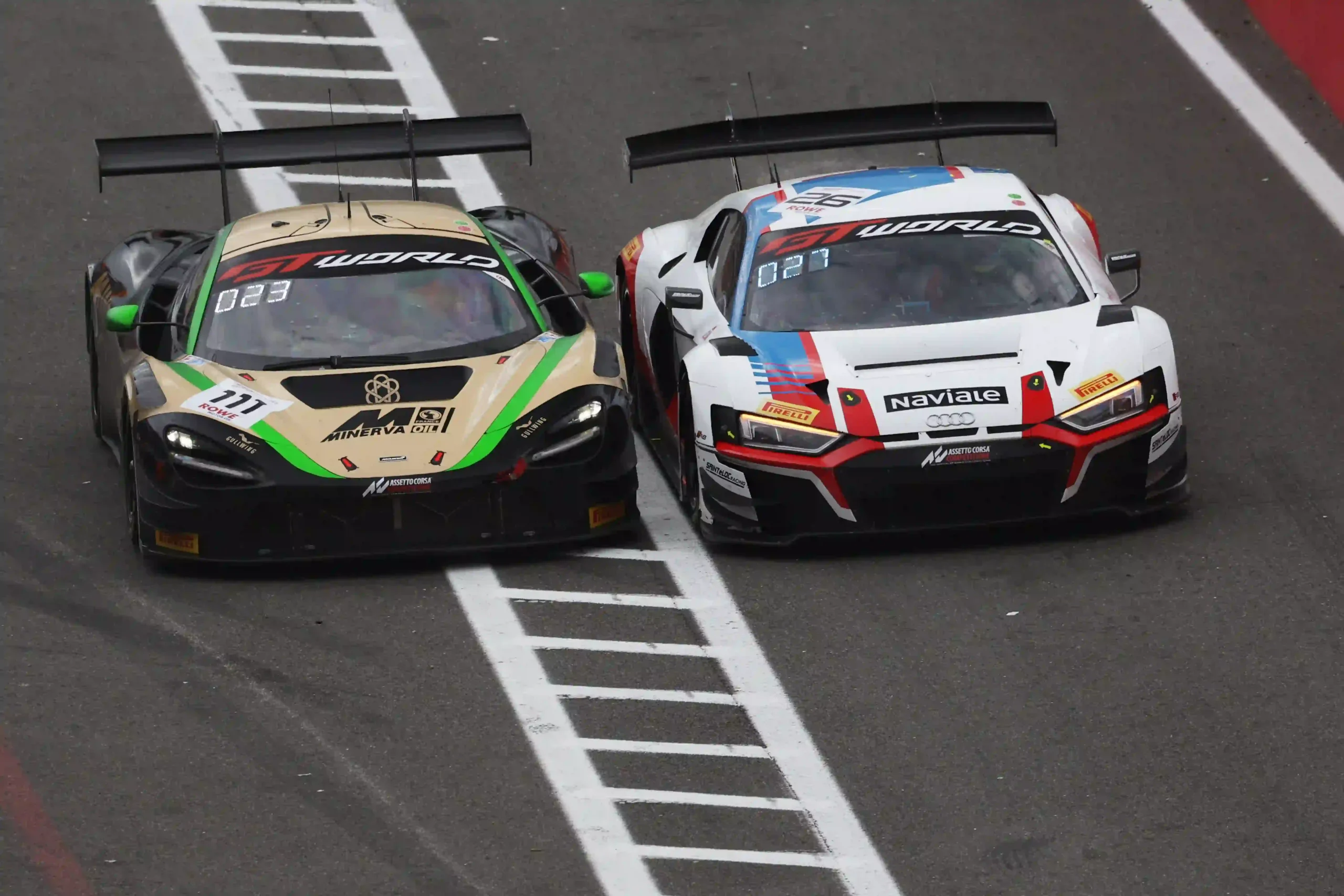
Adelaide was the obvious answer. The approach followed a long acceleration phase, giving a faster car a slipstream before the circuit’s heaviest braking point. The inside line was available, but a successful move required more than arriving late. A driver had to keep the car within the track, rotate it at low speed and avoid sacrificing the exit.
The final sector could also create passes indirectly. A driver who forced a rival into a defensive line through Château d’Eau or Lycée could gain a better exit and attack into the next major braking zone. In GT3 racing, the move often begins one or two corners before the actual overtake.
Why qualifying carried extra value
Overtaking was possible, but the size of the field changed the risk calculation. A car starting 12th might not be only a few seconds behind the pole sitter; it could be surrounded by separate Pro, Gold and Silver fights. Every defensive battle cost time, and every extra car increased the chance of first-lap contact.
Clean air also improved the pit strategy. A leading car could choose whether to stop early or extend the stint. A car trapped in traffic had fewer options because an early stop might release it behind another group, while a late stop could waste laps behind a slower rival.
What setup worked best at Magny-Cours?
No single manufacturer had a guaranteed advantage, but the ideal setup combined four qualities:
- Stable braking: essential for Adelaide and the final chicane.
- Responsive front axle: needed for the quick changes of direction.
- Controlled rear rotation: enough to turn at low speed without overheating the rear tires.
- Strong traction: crucial when accelerating from Adelaide, Château d’Eau and the final sector.
Teams could not maximize all four without compromise. More front response may make the rear nervous. Greater rear stability may create understeer. The fastest car was likely to be the one that gave both drivers confidence, not the one with the most aggressive theoretical balance.
Magny-Cours GT3 Race Strategy: Qualifying, Pit Stops and Tire Management
Split qualifying reduced traffic but increased pressure
The 2026 format divided qualifying into Group A and Group B. Silver and Bronze Cup cars ran together, while Pro and Gold Cup entries used the other group. Each driver had only a short session to establish a representative lap, and the combined order set the grid.
Removing half the field from each segment reduced the worst traffic, but it also created a sharper time limit. A driver could not spend several laps building confidence. Tire preparation, track position and the timing of the final attempt had to be correct immediately.
Two races meant two separate chances—and two separate failure points
Race 1 and Race 2 used different qualifying sessions. A poor Saturday result did not automatically ruin Sunday, but it also meant the leading crew had to repeat the job. One driver could qualify the car on the front row for Race 1 and the other could place it in traffic for Race 2.
This format rewards balanced pairings. A team with one exceptional qualifier and one weaker qualifier may win one race but struggle across the weekend. The best title crews need both drivers to operate close to the front.
The driver change could decide more than the opening stint
Every one-hour race included a mandatory driver change during a regulated pit window. Teams practiced the sequence because a few seconds could move a car several positions. The incoming driver had to stop precisely, release the belts and exit without blocking the teammate. The outgoing driver had to enter, adjust the seat or inserts, connect belts and prepare to leave while the crew completed its work.
A strong pit stop could undercut a rival even if the cars were evenly matched on track. A weak stop could remove a crew from podium contention without any obvious mechanical failure. This is why experienced organizations such as WRT and Winward carried an advantage that lap-time tables did not fully show.
Race 1’s night conditions changed tire behavior
Saturday’s 9:05 p.m. local start meant the track would cool through the race. Lower surface temperature can slow front-tire warm-up and reduce pressure growth. A car that felt sharp in afternoon qualifying might become reluctant to turn on the opening laps.
The lower sun and headlights also changed visual references. Drivers had to judge traffic while reflections moved across windscreens and mirrors. The effect is manageable for professionals, but it increases the value of predictable handling.
Race 2 demanded a fresh plan
Sunday afternoon was likely to produce a warmer surface and faster pressure growth. Teams could not simply repeat Saturday’s starting pressures or mechanical balance. A car that protected its rear tires at night might generate too much movement in the warmer race, while an aggressive setup could overheat the rear axle during a long defensive stint.
Qualifying position
Clean air and reduced opening-lap risk were worth more than a minor long-run advantage.
Driver-change execution
A precise stop could gain positions without requiring an on-track pass.
Track temperature
The night and afternoon races were likely to demand different pressure and balance choices.
A safety car would compress the field and reduce the value of an early gap. With 45 cars and multiple classes, neutralization was a realistic possibility, but it could not be treated as guaranteed.
Silver, Gold and Bronze Cup Contenders
Silver Cup: Team WRT entered with a clear advantage
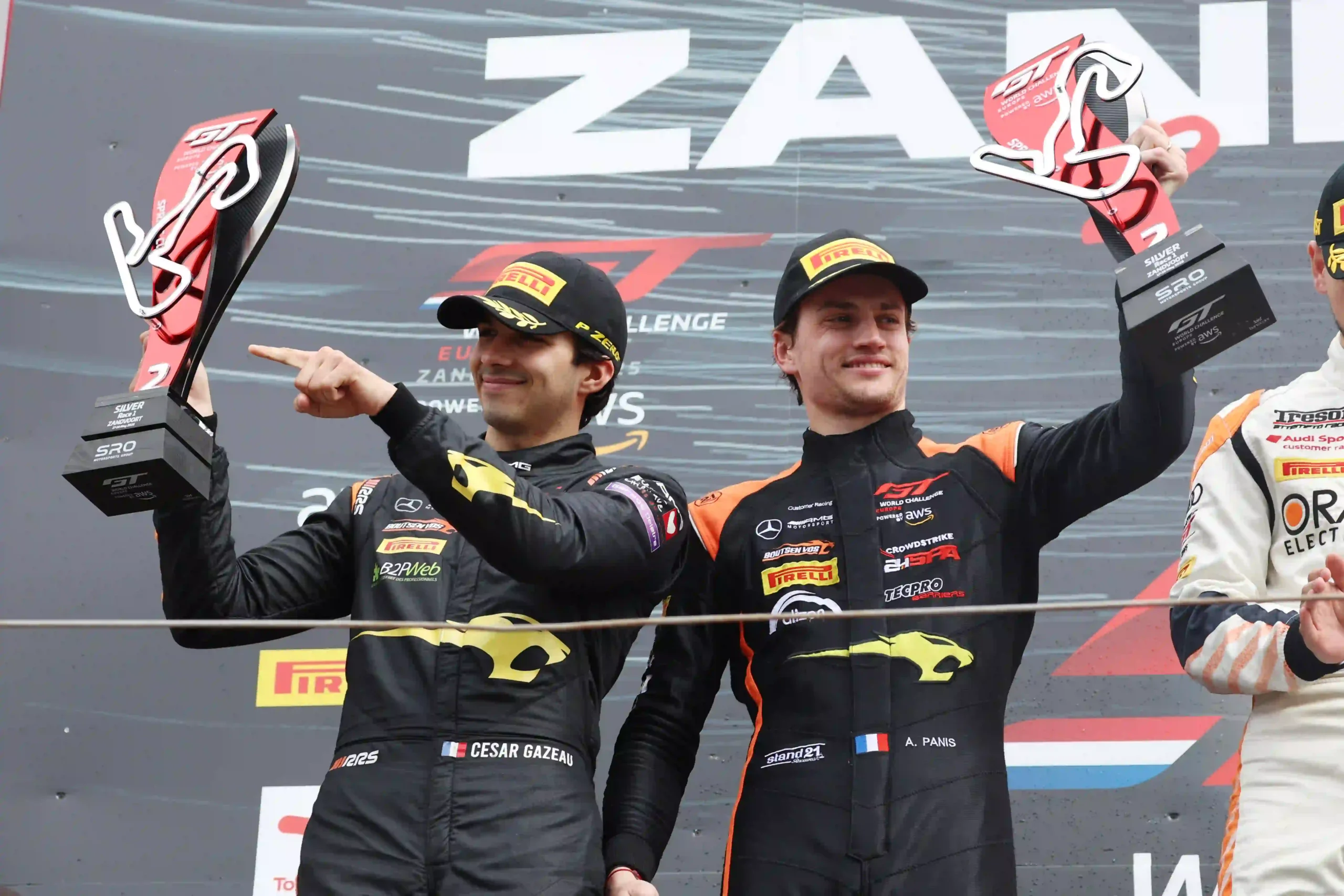
Matisse Lismont and Ignacio Montenegro led the Silver Cup on 56.5 points. Jamie Day and Mateo Villagomez followed on 41, while Aurélien Panis and Anthony Bartone held third with 35. The #30 WRT BMW had combined pace with consistency, making it the logical class favorite.
The Silver battle also carried overall significance. A fast Silver car could qualify among the Pro entries and finish inside the top 10. That created a strategic complication for the overall contenders: they could not assume every non-Pro car would be easy to pass.
Silver prediction: #30 Team WRT BMW over the #34 Walkenhorst Aston Martin and #6 GetSpeed Mercedes-AMG. The WRT crew’s points lead and multi-car data made it the safest selection, while Panis offered the strongest French class threat.
Gold Cup: AF Corse led a close four-team fight
AF Corse entered as the Gold Cup teams’ leader on 44 points, only 1.5 ahead of CSA Racing. Garage 59 had 36 and Tresor Attempto Racing 35. The small gaps meant Magny-Cours could change the order dramatically.
Tommaso Mosca and Matias Zagazeta shared AF Corse’s #51 Ferrari and headed the drivers’ classification. CSA Racing brought two McLarens with French interest, while Garage 59’s #58 paired Thomas Fleming and Louis Prette. Tresor Attempto’s #99 Audi added Dylan Pereira and Alex Aka.
Gold prediction: #51 AF Corse Ferrari, narrowly over #555 CSA Racing McLaren. AF Corse’s lead and Ferrari’s braking strength made the #51 the balanced pick, but CSA’s local knowledge and McLaren platform kept the contest open.
Bronze Cup: Winward’s Mercedes set the standard
Rinat Salikhov and Marvin Dienst led the Bronze drivers’ standings on 28.5 points, with Winward Racing heading the teams’ table. The class contained 11 cars, including Mercedes-AMG, Porsche, Ferrari, Audi, Aston Martin and BMW machinery.
The Bronze Cup is particularly sensitive to traffic and pit execution because each pairing combines different experience levels. A professional driver can recover time, but the amateur driver’s confidence and consistency often determine whether the car remains in contention.
Bronze prediction: #87 Winward Mercedes-AMG. The championship lead and the team’s overall Sprint strength made Salikhov and Dienst the most defensible choice. The #74 Kessel Ferrari of Dustin Blattner and Dennis Marschall was the strongest alternative based on wider 2026 form.
The quickest Silver, Gold and Bronze cars were not isolated from the Pro battle. They could start between overall contenders, influence pit release gaps and force leaders to spend valuable laps overtaking.
Which Manufacturer Package Suited Magny-Cours Best?
Balance of Performance prevents a simple answer, and track conditions can move the competitive window. Still, the pre-race evidence suggested four manufacturer packages deserved the closest attention.
The percentages are analytical confidence ratings, not measured performance figures or official probabilities.
BMW
BMW held the strongest combination of leading car, multi-entry data and circuit history. The M4 GT3 EVO did not need to dominate every corner. Its value came from giving drivers a predictable platform across qualifying, traffic and a full stint.
Mercedes-AMG
Mercedes had two headline Pro crews in Winward and Verstappen Racing, plus strong class entries. The car’s braking stability was a natural asset at Adelaide, and its team depth increased the chance that at least one Mercedes would find the ideal setup window.
Porsche
Lionspeed’s momentum and the quality of Boutsen VDS made Porsche difficult to ignore. Traction from the slow corners could protect position even if the car did not top every sector. The main qualifying question was front-tire confidence through the faster direction changes.
Ferrari
AF Corse had already proved the 296 GT3 EVO could win in Sprint competition. The Ferrari’s balanced aero and braking package suited a lap that mixes commitment with low-speed rotation. The challenge was converting one-lap speed into two consistently clean races.
McLaren, Aston Martin, Audi and Lamborghini
McLaren had strong historical evidence from Garage 59’s 2025 victory. Aston Martin offered experienced drivers and a stable platform, Audi brought a deeply understood package, and Lamborghini’s new Temerario added intrigue. None was the safest manufacturer pick, but each had at least one crew capable of reaching the podium if the leading group stumbled.
Magny-Cours 2026 Predictions: Race Winners, Podiums and Surprise Picks
Predictions in a 45-car GT3 field must remain conditional. Balance of Performance, qualifying traffic, penalties, weather and safety cars can overturn a rational form guide. The selections below represent the strongest pre-race cases rather than guaranteed outcomes.
Race 1 prediction: Team WRT controls the night race
The combination of Misano momentum, championship control and WRT’s circuit history made the #32 the best Race 1 pick.
The 2024 Magny-Cours winners had the braking stability and race execution to pressure WRT.
Gounon’s qualifying speed gave the #3 a realistic front-row and podium path.
Race 1 winner prediction: Charles Weerts and Kelvin van der Linde. The night conditions favored an experienced crew with a stable baseline and an organization capable of adjusting tire pressures accurately after evening practice.
Race 2 prediction: Lionspeed turns Porsche traction into victory
The warmer Sunday race could reward Porsche traction and the crew’s proven Sprint pace.
A fresh qualifying session offered the Brands Hatch winners a realistic rebound opportunity.
Kirchhöfer’s 2025 win and McLaren’s circuit suitability made this the strongest surprise podium call.
Race 2 winner prediction: Ricardo Feller and Bastian Buus. Their Brands Hatch victory, Misano podium and Lionspeed’s Spa momentum suggested the Porsche team could capitalize if Sunday qualifying placed it in clean air.
Qualifying predictions
- Race 1 pole: Jules Gounon, #3 Mercedes-AMG Team Verstappen Racing.
- Race 2 pole: Kelvin van der Linde, #32 Team WRT BMW.
- Best non-Pro qualifier: Matisse Lismont or Ignacio Montenegro in the #30 Silver Cup BMW.
Class winner predictions
Team WRT BMW
Lismont and Montenegro entered with the class lead and the strongest supporting data set.
AF Corse Ferrari
Mosca and Zagazeta led the class and had a package suited to qualifying.
Winward Mercedes-AMG
Salikhov and Dienst carried the points lead and one of the paddock’s strongest pit crews.
Best dark-horse prediction
The #59 Garage 59 McLaren was the preferred dark horse. Kirchhöfer’s 2025 Magny-Cours win provided a direct reference, while MacDonald added speed to a car that had already shown it could run near the front at Brands Hatch.
Most likely championship outcome
Team WRT was more likely to leave Magny-Cours with the Sprint lead than to lose it. The safest forecast was not necessarily a double win; it was two strong points finishes. A pair of top-five results would force Auer and Engel, Feller and Buus, and the #3 Mercedes crew to produce near-perfect weekends.
Overall winner confidence: medium. Championship-leader-retention confidence: high. Class predictions: medium-high for Silver, medium for Gold and Bronze because traffic and driver-change execution create greater variance.
Magny-Cours GT World Challenge Europe 2026 Preview FAQ
Final Takeaway: WRT Was the Favorite, but Magny-Cours Offered No Safe Prediction
The Magny-Cours GT World Challenge Europe 2026 preview pointed first toward Team WRT. Weerts and van der Linde held the championship lead, had just swept Misano and represented an organization with a long record of success at the French circuit.
Yet the evidence also showed why a clean WRT double could never be assumed. Auer and Engel had already won at Magny-Cours, Feller and Buus carried Porsche momentum, Gounon and Juncadella offered front-row speed, and Neubauer and Leclerc had proved the AF Corse Ferrari could win a Sprint race.
The deeper prediction was that qualifying and the driver change would matter more than headline top speed. Magny-Cours rewards a car that is stable under braking, responsive through fast transitions and controlled on traction. Across two separate grids and two different track-temperature windows, the crew that repeated those qualities was always more likely to win than the car that produced one spectacular lap.
Sources & Official References
- GT World Challenge Europe — official 45-car Magny-Cours event preview
- GT World Challenge Europe — official event page, timetable and race history
- GT World Challenge Europe — official 2026 entry list
- GT World Challenge Europe — pre-event Sprint Cup drivers’ standings
- GT World Challenge Europe — Silver Cup standings
- GT World Challenge Europe — Gold Cup teams’ standings
- GT World Challenge Europe — Bronze Cup teams’ standings
- GT World Challenge Europe — 2026 Brands Hatch results
- GT World Challenge Europe — 2026 season results, including the Misano double
- GT World Challenge Europe — 2025 Magny-Cours results
- Circuit de Nevers Magny-Cours — official Grand Prix track specifications
- Circuit de Nevers Magny-Cours — official circuit history
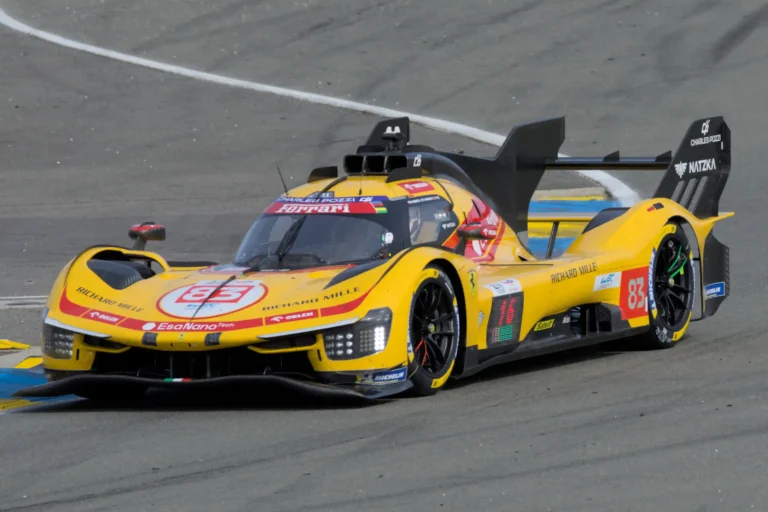
Predictions are analytical judgments based on verified pre-event form, standings, entry information, circuit history and car characteristics. They are not guarantees. Archive photographs are from prior GT World Challenge Magny-Cours coverage and are used as relevant historical illustrations; none are presented as photographs from the 2026 race weekend.