Nashville INDYCAR 2026 Strategy Analysis: Two Stops, Three Stops & Caution Timing
A realistic breakdown of the 300-lap race, including why two or three stops cannot cover the full distance, when those labels become relevant after a reset, and how fuel saving, fresh tires, pit timing and yellow flags can decide the Music City Grand Prix.
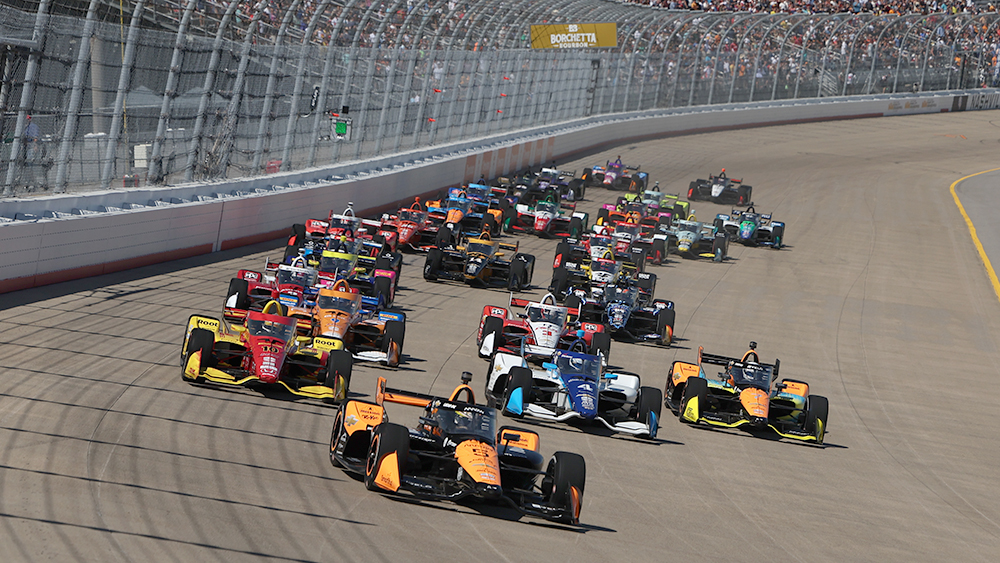
Nashville INDYCAR 2026 strategy starts with one important correction. The 300-lap race cannot realistically be completed with only two or three pit stops. Two stops would demand three 100-lap stints. Three stops would require four 75-lap stints. Those numbers do not match the demands of a 399-mile short-oval race.
However, two-stop and three-stop language still matters after a caution resets the race. Once the field reaches the middle stages, teams may face a real choice between two longer remaining stops or three shorter, faster stints. Therefore, this analysis treats those strategies in the correct context rather than presenting an impossible full-race plan.
The current competitive picture is also clear. Kyle Kirkwood starts from pole after a 196.852-mph qualifying average. Josef Newgarden starts second, with Scott McLaughlin and championship leader Alex Palou on Row 2. The race length has increased from 225 laps in 2025 to 300 laps in 2026, so every team must build more flexibility into its fuel and tire plan.
The First Strategy Fact: This Is Not a Full-Race Two-Stop Contest
Can Nashville INDYCAR 2026 be run with two stops?
Not over the complete 300-lap distance. Two stops create three 100-lap stints. Three stops create four 75-lap stints. The realistic baseline is at least five stops, while a sixth stop may become attractive when tire loss, traffic or caution timing favors fresh rubber.
The official INDYCAR preview says the 25 percent race-distance increase will require at least one additional pit stop. Last year’s 225-lap Nashville race developed into a four-stop contest. Therefore, adding 75 laps points toward a five-stop baseline before cautions or tire gambles alter the plan.
This distinction matters because fans often hear strategists say, “We can make it on two stops.” That statement usually refers to the distance remaining, not the entire race. A team may reach Lap 135 under caution and calculate that two more stops can reach Lap 300. Another team may choose three more stops to run harder and use fresher tires.
Consequently, the decisive Nashville INDYCAR 2026 strategy debate will probably begin after the first major reset. The opening 100 laps are about staying on the lead lap, protecting the right-front tire, and avoiding a badly timed green-flag stop. The final 150 to 180 laps are where the two-stop versus three-stop branch becomes meaningful.
A “two-stop plan” after Lap 120 is very different from a two-stop plan at the green flag. This article uses the first meaning whenever it discusses two or three stops.
Why the longer distance changes the race
The 2025 event covered 225 laps. The 2026 race covers 300. That extra 75 laps is nearly one-third of last year’s distance, and it changes more than the final fuel calculation.
First, teams must expose their cars to another pit cycle. That creates another chance for a slow tire change, a pit-lane penalty, or a caution at the wrong moment. Moreover, drivers must manage cockpit heat, traffic and tire condition for roughly 100 extra miles.
Second, the race is long enough for different philosophies to converge. A conservative team may save fuel early, then attack late. An aggressive team may use short stints, gain track position, and hope a caution protects the extra stop. Neither approach works without flexibility.
Finally, the longer event reduces the value of an early lead. Kirkwood and Newgarden start at the front, but leading the first 40 laps does not guarantee control after five or six pit cycles. Execution matters more than one burst of speed.
Two Stops, Three Stops and the Realistic Five-Stop Baseline
The table below uses basic lap division. It does not claim a fixed team fuel number. Instead, it shows why some plans are impossible at the start and practical after the race has been shortened by distance and caution laps.
| Plan | Stops | Stints | Average stint | Strategic meaning |
|---|---|---|---|---|
| Full-race two-stop | 2 | 3 | 100 laps | Not a realistic 300-lap plan |
| Full-race three-stop | 3 | 4 | 75 laps | Still too long for the expected race shape |
| Full-race five-stop | 5 | 6 | 50 laps | Logical starting baseline |
| Full-race six-stop | 6 | 7 | 42.9 laps | Aggressive tire and pace option |
| Two stops after Lap 120 | 2 remaining | 3 | 60 laps | Needs saving, cautions or a stretched final stint |
| Three stops after Lap 120 | 3 remaining | 4 | 45 laps | Faster, more flexible, but adds pit risk |
| Two stops after Lap 150 | 2 remaining | 3 | 50 laps | Very credible with normal saving |
| Three stops after Lap 150 | 3 remaining | 4 | 37.5 laps | Maximum attack and fresh-tire potential |
These are average stint lengths. Actual windows change with caution laps, fuel saved in traffic, pit-lane timing, tire wear and the final-practice data available to each team.
The five-stop baseline
A five-stop plan divides the race into six stints averaging 50 laps. That aligns with the official expectation of at least one more stop than the four-stop 2025 race. It also leaves enough flexibility to move a stop forward when a caution appears.
However, “five stops” does not mean five fixed laps written on a card. The first stop could arrive early under yellow. The second may be delayed to rebuild the fuel number. Later, a team may short-fill the car or change only the tires needed to protect track position.
The strongest five-stop plan keeps the car inside a broad window. Engineers prefer several acceptable laps rather than one exact target. Therefore, a driver may be told to save fuel for ten laps, then push once the pit gap opens.
The six-stop attack
Six stops create shorter average stints. That can help a car with strong pit crews and excellent restart speed. Fresh tires also make traffic easier to handle, especially when the high lane loses grip.
Yet the extra stop carries a large cost. A green-flag stop can drop a car one or more laps behind the leader until the cycle completes. If a caution appears immediately afterward, the aggressive car may become trapped while rivals pit under yellow.
Therefore, the six-stop route works best when tire falloff is meaningful and the race stays green through the stop cycle. It can also work when a caution makes the extra stop cheap. The same strategy can look brilliant or disastrous within one lap.
When a two-stop finish becomes attractive
A two-stop finish becomes realistic after the race crosses roughly the halfway point. At Lap 150, three equal stints require 50 laps each. Caution periods can reduce that demand further.
The advantage is obvious: one fewer visit to pit lane than the aggressive three-stop finish. The driver avoids another chance for a slow stop and keeps track position. In addition, a late yellow can erase the time lost while saving fuel.
The weakness is pace. A driver may need to lift earlier before corner entry and use less throttle while following another car. That saves fuel but can overheat the car and reduce control in dirty air. The team must judge whether the saved stop is worth the slower laps.
When a three-stop finish becomes faster
Three stops from the midpoint divide the final 150 laps into shorter runs. That allows the driver to attack and reduces the need for extreme saving. It also creates more opportunities to adjust the car with front-wing changes.
Fresh tires can be decisive after a long green run. The driver can pass cars that are defending on older rubber. However, the team must recover the time spent entering pit lane, stopping, and accelerating back to speed.
A three-stop finish is strongest when the car has clear pace and the pit crew is reliable. It is weaker when passing stalls or a caution rewards the cars that stayed out. Therefore, the faster theoretical plan is not always the best race plan.
Caution Timing: The Variable That Can Rewrite Every Pit Window
How do caution flags change Nashville INDYCAR strategy?
A caution reduces fuel use and may allow a cheaper pit stop. It can also trap cars that stopped under green moments earlier. The most valuable caution often appears near the end of a fuel window, when teams can pit without sacrificing much remaining fuel.
Nashville’s concrete oval produces high speeds, close traffic and narrow margins. The 2025 race showed how incidents can create multiple leaders and different tire plans. Therefore, every strategist must prepare for the race to split into separate groups.
Scenario 1: A caution before the first green-flag window
An early caution gives teams a chance to top off. Most leaders will pit if the fuel gained creates a useful extension. However, a driver at the back may stay out to gain track position.
This first gamble rarely decides the race by itself. Yet it can change the sequence of later stops. Cars that pit early may reach the next window several laps later than cars that stayed out. As a result, the field begins to separate into strategy lanes.
Scenario 2: A caution during the green-flag cycle
This is the dangerous one. Cars that already stopped may be running behind the pace car on a different lap. Cars that stayed out may pit under yellow and return with a large advantage.
Timing matters down to seconds. A strategist watches the gap to the leader, the location of the pace car, and whether pit lane is open. A driver who misses pit entry before the yellow may lose the best opportunity of the race.
Meanwhile, a driver who stopped one lap earlier can become the leader once the cycle resolves. That outcome depends on lap status and the exact order when the caution begins. Therefore, strategy software helps, but the pit stand still needs quick judgment.
Scenario 3: A caution just after a team commits to three stops
Suppose one team pits early for fresh tires and begins an aggressive three-stop finish. A caution appears two laps later. The rivals pit under yellow and lose less time.
The aggressive team has fresh tires, but it may be behind many cars. It also used one of its planned stops without gaining the expected green-flag lap-time advantage. Consequently, the team may need another caution or a strong restart to recover.
Scenario 4: A late caution with 25 to 40 laps remaining
This creates the hardest decision. The leaders can stay out and protect track position. Cars behind can pit for tires and attack on the restart.
At Nashville, the correct answer depends on lane grip. Fresh tires are valuable only when the driver can use them. If the lower lane remains dominant and traffic blocks progress, staying out may win. If the upper groove is active, new tires can produce a major charge.
The number of restart laps also matters. With five laps left, track position usually carries greater value. With 30 laps left, tire condition becomes more important. Therefore, the same crew may make opposite calls depending on the lap count.
| Caution phase | Likely leader call | Likely midfield call | Main risk |
|---|---|---|---|
| Laps 1–40 | Top off if useful | Stay out for position or pit early | Creating an awkward later window |
| Laps 40–90 | Pit near fuel limit | Split the strategy | Getting trapped during a cycle |
| Laps 90–150 | Reset the race | Choose two or three remaining stops | Committing before tire behavior is clear |
| Laps 150–230 | Protect track position | Use fresh tires to attack | Another yellow reversing the advantage |
| After Lap 250 | Usually stay out near the front | Pit if buried in traffic | Not enough laps to use new tires |
The best Nashville strategy is not the plan with the fewest stops. It is the plan that keeps the car on the lead lap, near the front, and flexible when the yellow light appears.
World of Speed strategy assessmentTire Wear, Fuel Saving and the Undercut on a Concrete Oval
Qualifying took place in punishing heat. INDYCAR reported 94-degree air and a 130-degree track. That matters because a hot concrete surface can change grip, pressure growth and tire balance.
Kirkwood’s pole speed confirms that Andretti Global has short-run pace. Newgarden, McLaughlin, Palou, Dixon and Rossi also start inside the first three rows. However, the fastest two-lap car may not have the most stable 50-lap balance.
Right-front tire management
The right-front tire carries heavy load through Nashville’s long corners. A car that begins neutral can develop understeer as the stint progresses. The driver then adds steering angle, which creates more heat and wear.
Teams can protect the tire by reducing entry speed and avoiding long periods in turbulent air. Yet that approach costs lap time. Therefore, drivers must decide when to attack and when to settle into a fuel-saving rhythm.
Primary and alternate tire context
The 2025 Nashville race used a special oval tire format. The official postrace report noted that drivers had to use at least one primary set and two alternate sets. It also described the 225-lap event as a four-stop race.
That history shows how strongly tire selection can shape Nashville. However, this analysis does not assume the 2026 event uses the identical mandate without an event-specific confirmation. The reliable conclusion is broader: teams must preserve enough usable sets for the final stage and avoid wasting their best rubber during a poorly timed caution.

The green-flag undercut
An undercut means stopping before a rival and using fresh tires to gain time. On a road course, the advantage may appear within one lap. On an oval, the calculation also includes lap status.
A car entering pit lane slows dramatically while the leader continues near racing speed. The stopped car may lose a lap before returning. Therefore, the undercut only works cleanly when the full cycle remains green and the fresh-tire pace recovers the time.
Traffic can destroy the plan. A driver may exit behind slower cars and lose the tire advantage. Consequently, the strategist must check the rejoin gap before calling the stop.
The Nashville overcut
The overcut means staying out longer than a rival. It can work when the driver still has pace and clean air. It can also work when a caution appears before the later stop.
However, old tires create a sharp risk. A driver may lose several seconds while fighting the car. The team can gain track position from the caution gamble, but it can also lose the position naturally before the yellow appears.
The best overcut candidates are drivers with stable cars and excellent fuel economy. Palou and Dixon have repeatedly shown that skill across many race types. At Nashville, their challenge is maintaining enough speed while the Penske and Andretti cars attack.
Fuel saving in traffic
A driver saves fuel by lifting before the corner and using the draft. The car ahead breaks the air, so the following car needs less throttle to maintain speed. This can extend a stint without a large lap-time penalty.
Yet traffic also raises temperatures and reduces front grip. Therefore, the ideal position is close enough to gain the tow but far enough to keep the front tires and cooling systems under control.
The hybrid system adds another tool. Drivers can deploy energy to complete a pass or defend on a restart. However, fuel still determines the basic stint length. Hybrid deployment cannot replace the gasoline needed to complete another 40 or 50 laps.
How the Front-Runners May Approach the Nashville Strategy
Kyle Kirkwood: Control the pace without becoming the fuel target
Kirkwood starts from pole after averaging 196.852 mph over two laps. He also led the opening practice, so the No. 27 Honda has shown speed in both major Saturday sessions.
The pole sitter’s challenge is strategic exposure. The leader cannot use another car’s draft and may burn more fuel. Meanwhile, the cars behind can save while matching the pace.
Andretti Global may avoid leading every early lap if the fuel penalty becomes large. However, surrendering control creates traffic risk. Kirkwood’s best plan is likely a measured pace that keeps Newgarden behind without stretching the first stint unnecessarily.
Josef Newgarden: The strongest long-race reference
Newgarden starts second after a 196.642-mph average. He won the 2025 race and has dominated recent oval competition. Therefore, Team Penske has both current speed and a proven Nashville reference.
The No. 2 team can pressure Kirkwood without forcing an immediate pass. Newgarden may save fuel in the draft and wait for the first pit cycle. If his crew gains time on pit lane, he can take control without using the tires in traffic.
Newgarden also excels on restarts. That makes a late tire decision especially important. Team Penske may protect track position near the end because its driver can defend effectively on older tires.
Scott McLaughlin: A flexible second Penske attack
McLaughlin starts third. That position allows Team Penske to split strategies. One car can stop early while the other stays out.
This two-car flexibility is valuable during a green-flag window. If a caution helps one strategy, Penske may still have a car in the correct group. Moreover, McLaughlin has shown strong Nashville race performance in recent seasons.
Alex Palou: Championship control favors flexibility
Palou starts fourth and enters the weekend with a 56-point championship lead over Kirkwood. He is guaranteed to retain the lead after Nashville, assuming the field competes as expected. Therefore, he does not need a reckless strategy.
However, Palou is not racing only for points protection. He finished second at Nashville last year and starts near the front again. Chip Ganassi Racing can use fuel saving to create a later pit window, then attack if the caution sequence becomes favorable.
Scott Dixon: The classic caution-timing threat
Dixon starts fifth. He owns three Nashville oval victories and has built a career around fuel economy and strategic timing. A long 300-lap race increases the value of those skills.
Dixon’s route may involve staying out longer than the leaders. That gives him a chance to catch a caution. The risk is losing too much time on worn tires before the yellow arrives.
Alexander Rossi: A strong Row 3 position for an alternate sequence
Rossi starts sixth. He can follow the leading strategy or become the first front-running car to stop. An early undercut may be useful if the car protects its tires well.
However, Row 3 also provides valuable track position. ECR may prefer to remain in the lead group and react rather than force the first move. The final practice will help determine whether the car needs shorter stints.
David Malukas: Medical status and last-place start change the equation
Malukas did not attempt qualifying after a heavy practice crash. INDYCAR reported that he was taken to a local hospital for further testing, and his race status remained undecided after qualifying. The No. 12 car is listed at the back of the 25-car field.
If cleared to race, Malukas has little reason to copy the leaders. Team Penske can use an early off-sequence stop, seek clean air, and gamble on caution timing. Starting last increases risk, but it also creates strategic freedom.
Midfield sleepers: Why track position can appear suddenly
Nashville’s long race can reward cars that remain clean and on the lead lap. A midfield driver may spend 150 laps outside the top 10, then cycle forward through one well-timed yellow.
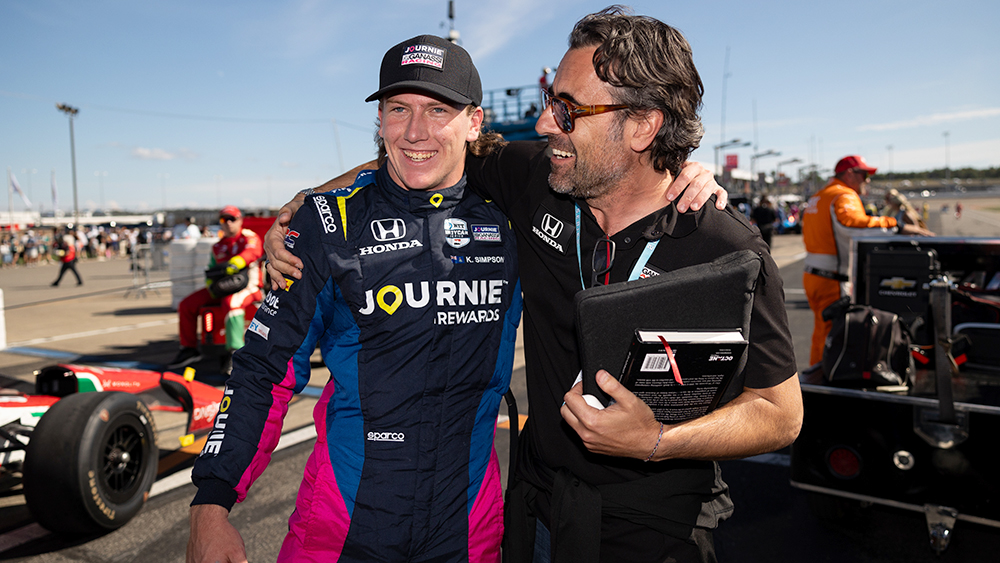
The 2025 event produced a major recovery for Conor Daly and a strong oval result for Kyffin Simpson. Those examples show why teams should not abandon a conservative plan too early.
Race-Winning Strategy Prediction
What is the best strategy for Nashville INDYCAR 2026?
Start with a five-stop baseline, maintain enough fuel flexibility to reach a broad pit window, and prepare to convert to two or three remaining stops after the midpoint. The winning team should prioritize lead-lap status and restart position over chasing the fewest possible stops.
Our primary prediction is a five-stop foundation with at least one window moved by a caution. The race is too long for a fixed plan. Therefore, the winner will probably complete one stop earlier or later than the original model.
The most likely decisive moment arrives between Laps 120 and 190. A caution in that range can turn the remaining race into a real two-stop versus three-stop contest. Leaders may choose two longer runs. Cars behind may select three shorter runs and attack with tires.
Track position should carry the greatest value after Lap 250. At that point, a leader may stay out under yellow even when cars behind fit fresh tires. The choice depends on the number of restart laps and whether the upper lane supports passing.
Five stops, flexible middle stint
The car stays near the front, uses caution laps to save fuel, and avoids an unnecessary late stop. This plan fits Kirkwood, Newgarden, McLaughlin and Palou.
Six stops or an off-sequence reset
A midfield car stops early for clean air, runs hard on fresh tires, and needs the race to stay green through the cycle. This route can create a surprise top five.
World of Speed strategic picks
Newgarden receives the narrow strategic edge because he starts second, won the 2025 race, and drives for a team that can split plans with McLaughlin. Kirkwood has the fastest car over two qualifying laps. However, the pole sitter must solve the fuel penalty of leading.
Palou and Dixon are the strongest caution-timing threats. Both can create an overcut with fuel economy. If the race stays green, their pace must match Penske and Andretti. If yellow flags break the race into pieces, Ganassi’s flexibility becomes more dangerous.
How Fans Can Read the Strategy During the Race
- Watch the laps since the last stop. A leader near 45 to 55 green laps is approaching a likely decision window.
- Check who is saving in the draft. A car sitting second or third may be preparing to extend the stint.
- Track lap status during green stops. A fast car one lap down may simply be waiting for the cycle to complete.
- Count the usable tire sets. A team that saves better rubber for the final 60 laps has more late options.
- Note the caution lap. The remaining distance determines whether the race becomes a two-stop or three-stop finish.
The television leaderboard may not show the true leader during a green-flag cycle. Therefore, timing gaps and pit-stop history matter. A driver shown 15th can be the effective leader after the remaining cars stop.
For more background, World of Speed explains how pit stops work in racing, how safety-car periods change gaps, and how race timing works.
Nashville INDYCAR 2026 Strategy FAQ
Conclusion: Flexibility Will Beat a Perfect Spreadsheet
Nashville INDYCAR 2026 strategy is not a simple full-race choice between two and three stops. The 300-lap distance points toward at least five stops. A sixth becomes possible when tire pace or a favorable caution makes the extra visit worthwhile.
The real two-stop versus three-stop fight begins after the race has been shortened by distance. Around the midpoint, teams can choose longer fuel-saving runs or shorter attacking stints. The correct choice will depend on lap status, tire behavior, traffic and the timing of the next yellow.
Kirkwood owns the best starting position. Newgarden carries the strongest Nashville and oval record. Palou and Dixon bring elite fuel strategy. McLaughlin gives Penske another front-running option. Consequently, the winning team will need speed and judgment.
The final answer may arrive under caution. A yellow before a pit window can save a race. A yellow after a green stop can ruin it. Therefore, watch the timing screen, count the laps since each stop, and remember that the car leading during a cycle is not always the car controlling the race.
Sources & Verification
Race distance, track specifications, start time, qualifying order, current driver status and historical strategy references were checked against official INDYCAR material. Article status: prepared after qualifying and before the scheduled final practice on July 18, 2026.