Mid-Ohio INDYCAR 2026 Race Results: Winner, Podium & Full Classification
Pato O’Ward leads an Arrow McLaren one-two after a caution-free 90-lap race. Full 25-car classification, fastest lap, strategy, podium analysis and updated championship standings.
O’Ward wins ahead of Lundgaard and Kirkwood. Full classification, race analysis and points update.
Pato O’Ward won the 2026 Honda Indy 200 at Mid-Ohio, defeating Arrow McLaren teammate Christian Lundgaard by 0.9877 seconds after 90 caution-free laps. Kyle Kirkwood completed the podium for Andretti Global, finishing 2.247 seconds behind the winner.
The race turned on lap 42. Lundgaard ran wide exiting the Keyhole at Turn 2, allowing O’Ward to draw alongside on the run to Turn 4. The teammates made light contact before O’Ward secured the preferred line into Turn 5 and took a lead he would not surrender.
O’Ward’s victory was his first of the 2026 season, his 10th career INDYCAR win and his second Mid-Ohio success in three years. It also produced the first one-two finish in Arrow McLaren’s INDYCAR history.
This report uses the official INDYCAR race report, event data and championship standings, supported by the published final classification and fastest-lap table. It covers every starter, the qualifying context, pit-stop sequence, midfield gains, fastest lap and championship implications with seven races remaining.
Who Won the Mid-Ohio INDYCAR Race in 2026?
Pato O’Ward won by 0.9877 seconds over Christian Lundgaard.
O’Ward completed all 90 laps in 1 hour, 43 minutes and 23.504 seconds. Lundgaard finished second, while Kyle Kirkwood charged from 10th on the grid to third.
The result gave Arrow McLaren its first INDYCAR one-two and moved O’Ward to fifth in the championship on 310 points.
O’Ward did not control the event from the start. Lundgaard had qualified on pole and led the opening phase, while O’Ward ran close enough to pressure his teammate without damaging his tyres or compromising fuel mileage. That discipline mattered because Mid-Ohio offers limited clean passing opportunities when two cars have similar pace.
The decisive opening appeared when Lundgaard ran wide at the exit of Turn 2 on lap 42. O’Ward accelerated alongside toward Turn 4, stayed committed through contact and completed the pass into Turn 5. From that point, Arrow McLaren had to manage a race between its two cars without allowing the battle to open the door for Kirkwood.
O’Ward also handled the final pit cycle with precision. He remained on track two laps longer than Lundgaard, using clear air and the remaining fuel to build enough margin for the final stop. Once the cycle completed, he returned with the lead intact.

The win ended a 15-race drought dating to Toronto in 2025. It was also O’Ward’s second victory at Mid-Ohio in three years, strengthening his reputation on a circuit where confidence through the Keyhole, the Esses and the elevation changes can separate the leading cars.
For the event build-up, see the Honda Indy 200 at Mid-Ohio 2026 guide, the Mid-Ohio test report and the analysis of Pato O’Ward’s championship position before the race.
Mid-Ohio INDYCAR 2026 Full Classification
The final classification shows 24 drivers completing all 90 laps. Rookie Dennis Hauger finished one lap down in 25th. There were no caution periods, which meant the field could not recover lost time through a restart or strategic reset.
| Pos | Driver | Team | Engine | Laps | Time / Gap | Start |
|---|---|---|---|---|---|---|
| 1 | Pato O’Ward Winner | Arrow McLaren | Chevrolet | 90 | 1:43:23.504 | 2 |
| 2 | Christian Lundgaard Podium | Arrow McLaren | Chevrolet | 90 | +0.9877 | 1 |
| 3 | Kyle Kirkwood Podium | Andretti Global | Honda | 90 | +2.247 | 10 |
| 4 | Rinus VeeKay | Juncos Hollinger Racing | Chevrolet | 90 | +2.793 | 6 |
| 5 | Alex Palou | Chip Ganassi Racing | Honda | 90 | +7.546 | 8 |
| 6 | Will Power | Andretti Global | Honda | 90 | +10.958 | 3 |
| 7 | Christian Rasmussen | Ed Carpenter Racing | Chevrolet | 90 | +15.841 | 5 |
| 8 | David Malukas | Team Penske | Chevrolet | 90 | +16.511 | 4 |
| 9 | Josef Newgarden Fastest lap | Team Penske | Chevrolet | 90 | +21.067 | 9 |
| 10 | Nolan Siegel | Arrow McLaren | Chevrolet | 90 | +25.626 | 14 |
| 11 | Caio Collet | A.J. Foyt Enterprises | Chevrolet | 90 | +26.609 | 11 |
| 12 | Graham Rahal | Rahal Letterman Lanigan | Honda | 90 | +30.792 | 12 |
| 13 | Felix Rosenqvist | Meyer Shank Racing | Honda | 90 | +31.356 | 13 |
| 14 | Marcus Armstrong | Meyer Shank Racing | Honda | 90 | +36.343 | 24 |
| 15 | Kyffin Simpson | Chip Ganassi Racing | Honda | 90 | +37.054 | 18 |
| 16 | Scott McLaughlin | Team Penske | Chevrolet | 90 | +39.824 | 23 |
| 17 | Scott Dixon | Chip Ganassi Racing | Honda | 90 | +42.775 | 22 |
| 18 | Louis Foster | Rahal Letterman Lanigan | Honda | 90 | +51.165 | 17 |
| 19 | Santino Ferrucci | A.J. Foyt Enterprises | Chevrolet | 90 | +56.653 | 21 |
| 20 | Alexander Rossi | Ed Carpenter Racing | Chevrolet | 90 | +1:00.432 | 16 |
| 21 | Marcus Ericsson | Andretti Global | Honda | 90 | +1:01.073 | 7 |
| 22 | Sting Ray Robb | Juncos Hollinger Racing | Chevrolet | 90 | +1:05.211 | 20 |
| 23 | Romain Grosjean | Dale Coyne Racing | Honda | 90 | +1:06.429 | 19 |
| 24 | Mick Schumacher | Rahal Letterman Lanigan | Honda | 90 | +1:07.421 | 15 |
| 25 | Dennis Hauger | Dale Coyne Racing | Honda | 89 | 1 lap | 25 |
Josef Newgarden set the fastest lap: 1:06.530 on lap 54. Rinus VeeKay was next at 1:06.700, while Will Power recorded a 1:06.740 on the final lap.
The classification underlines how compressed the front remained. The top four were separated by less than three seconds, and fifth-placed Palou was only 7.546 seconds behind O’Ward. In a race without cautions, that is a remarkably tight lead group after more than 203 miles.
The deeper field spread was equally revealing. Twenty-four cars remained on the lead lap, but many were unable to close the gaps created by qualifying position, traffic and pit-lane timing. The absence of yellow flags rewarded the drivers who maintained pace through every stint rather than those hoping for an alternate restart sequence.
Readers unfamiliar with how official timing gaps are produced can consult how race timing works and how laps are counted.
Mid-Ohio Race Recap: How O’Ward Beat Lundgaard
Lundgaard leads from pole
Lundgaard started from pole after producing a 1:04.8396 qualifying lap, only 0.0253 seconds faster than O’Ward. The Arrow McLaren front-row sweep placed the team in control of the opening strategy, but it also created the risk of an internal fight at a circuit where contact can quickly damage the front wing or suspension.
The first stint remained controlled. Lundgaard protected the lead while O’Ward stayed within strategic range. Power, Malukas and Rasmussen formed the next group, with Kirkwood trying to recover from 10th.
Because the race stayed green, every driver had to create track position through pace and pit timing. There was no Safety Car to compress the field, and no opportunity to make a cheap stop under caution. That placed more value on in-laps, out-laps and the ability to use fresh tyres immediately.
The first pit cycle keeps Arrow McLaren together
The leading teammates remained closely matched through the opening stops. Lundgaard retained the effective lead, but O’Ward continued to apply pressure rather than dropping back to save fuel aggressively. The Mexican’s car appeared particularly strong through the medium-speed sections, allowing him to stay close enough to attack if Lundgaard made even a small error.
Kirkwood advanced steadily. Starting 10th meant he could not rely on a single overtake; he needed a clean series of laps and efficient stops. By the final third, he had reached the podium fight and was close enough to punish either Arrow McLaren driver if their battle became costly.
Lap 42: the race-winning move
The Keyhole is one of Mid-Ohio’s most important corners because it opens onto the longest acceleration zone. Lundgaard ran wide at the exit on lap 42, losing momentum. O’Ward immediately drew alongside and carried the overlap toward Turn 4.
The cars touched lightly as both drivers committed to the same piece of road. O’Ward held position on the preferred side for Turn 5 and completed the pass. The move was forceful but controlled: enough commitment to take the lead, without the level of contact that would have ended Arrow McLaren’s chance of a one-two.
O’Ward did not wait for a conventional braking-zone pass. He converted one compromised exit into a side-by-side attack through Mid-Ohio’s fastest sequence.
The final pit sequence secures the victory
Lundgaard stopped first during the final cycle, attempting to use fresh tyres to undercut his teammate. O’Ward stayed out for two additional laps. That decision required accurate fuel numbers and competitive pace on older tyres.
The extra laps worked. O’Ward produced enough speed in clear air to preserve his lead after stopping. Lundgaard remained close, but no late caution arrived to create a restart. The winner managed the gap through the final stint and crossed the line 0.9877 seconds ahead.
Kirkwood finished another 1.259 seconds behind Lundgaard. VeeKay was only 0.546 seconds behind Kirkwood, leaving the podium positions under pressure until the final lap.

No caution means no escape from earlier losses
A caution-free race creates a clean competitive picture. Drivers who lost time in traffic could not regain it when the field bunched up. Drivers who qualified poorly had to pass on track or use a better pit sequence.
That is why Kirkwood’s seven-position gain and Armstrong’s 10-position recovery stand out. Both advances required sustained pace over the full distance. Conversely, Ericsson’s fall from seventh to 21st and Schumacher’s drop from 15th to 24th could not be repaired through a timely yellow.
Mid-Ohio 2026 Podium Analysis
Pato O’Ward
Started second, passed Lundgaard on lap 42 and used a two-lap overcut in the final pit cycle.
Christian Lundgaard
Converted pole into second place and completed Arrow McLaren’s first one-two finish.
Kyle Kirkwood
Recovered from 10th and finished within 2.247 seconds of the winner.
O’Ward: pressure, precision and clean-air pace
O’Ward’s victory combined three separate strengths. He kept the leader under pressure without overheating the tyres, reacted instantly to Lundgaard’s error and delivered the lap time needed for the final overcut.
The win also arrived at an important point in his season. Palou, Kirkwood, Lundgaard and Malukas had built a points advantage, leaving O’Ward in need of victories rather than modest top-five finishes. Mid-Ohio reduced his deficit and restored Arrow McLaren as a race-winning threat.
Lundgaard: a strong result despite losing the lead
Lundgaard’s second place should not be judged solely by the lap-42 mistake. He took pole, led much of the race and remained within one second at the finish. His result lifted him to third in the championship, one point ahead of Malukas.

Arrow McLaren’s management of the contest also deserves credit. The teammates were allowed to race, and the team avoided an instruction that would have reduced the sporting value of the event. The contact remained minor, and both cars reached the podium.
Kirkwood: the strongest recovery among the leaders
Kirkwood started 10th and finished third, a seven-position improvement. The Andretti driver combined direct overtakes with efficient pit work and strong final-stint pace. He left Mid-Ohio second in the championship, 56 points behind Palou.
The podium limited the damage caused by Palou’s fifth place. It also kept Kirkwood ahead of Lundgaard in the standings despite Arrow McLaren’s maximum result.
Top-10 Finishers and Midfield Winners
Rinus VeeKay finishes within one second of the podium
VeeKay delivered one of Juncos Hollinger Racing’s strongest road-course results, rising from sixth to fourth. His best lap of 1:06.700 was the second-fastest of the race, showing that the result was supported by genuine pace.
He finished only 0.546 seconds behind Kirkwood. A caution or slightly different pit-lane sequence could have placed him on the podium, but fourth remained an important result for both driver and team.
Palou protects the championship lead
Palou started eighth and finished fifth. It was not the dominant Ganassi performance seen at several earlier rounds, yet the result still delivered enough points to preserve a 56-point championship lead.
The Spaniard’s season has been built on limiting damage when a victory is unavailable. Mid-Ohio followed that pattern: avoid incidents, gain three places and leave with the title advantage intact.
Power, Rasmussen and Malukas complete the next group
Power finished sixth after starting third. Rasmussen was seventh and Malukas eighth, both losing two or four positions relative to the grid. Newgarden followed in ninth but set the fastest race lap, demonstrating that outright pace was not enough to overcome his strategic position.
Siegel completed the top 10 from 14th, giving Arrow McLaren all three cars inside the first 10. That team-wide result was nearly as significant as the one-two because it showed depth beyond the two lead entries.
Armstrong makes the biggest gain
Armstrong advanced from 24th to 14th, the largest improvement in the field. McLaughlin gained seven positions from 23rd to 16th, and Dixon recovered five places from 22nd to 17th.
Those results did not produce major points, but they reveal how much passing and strategic work was required in a race without cautions. The three drivers could not rely on a reset; every place came through pace, tyre life or pit execution.
For broader context on the current grid, see the INDYCAR drivers guide and the overview of how INDYCAR racing works.
Mid-Ohio Strategy Analysis
Mid-Ohio’s caution-free race placed the entire strategic burden on pace, fuel and tyre timing. There was no opportunity to stop under yellow, no restart lottery and no alternate finish created by a late caution.
Clean air
O’Ward used two extra laps before his final stop to produce the margin needed to stay ahead.
Traffic
A fast car could lose several seconds behind slower traffic because Mid-Ohio offers few easy passing zones.
No cautions
Every pit stop was made at full racing speed, increasing the cost of a slow in-lap or delayed tyre warm-up.
Why O’Ward’s overcut worked
The undercut normally gives the stopping driver fresh tyres first. Lundgaard attempted to use that advantage in the final cycle. O’Ward’s response was to extend rather than copy the stop.
An overcut succeeds only when the driver staying out can maintain strong lap times and avoid traffic. O’Ward had enough tyre life and clear road to do both. His two additional laps were faster, in total, than Lundgaard’s early out-lap benefit.
That choice also required confidence in fuel consumption. Staying out too long could have forced O’Ward to save aggressively after the stop, leaving him vulnerable in the final laps. Arrow McLaren’s calculations allowed him to run the required pace without creating that weakness.
Tyre management through Mid-Ohio’s loaded corners
Mid-Ohio combines braking, elevation and long loaded corners. The front tyres work hard through the Esses, while rear traction matters at the Keyhole and the final corner. A driver who attacks too aggressively early in a stint can lose the grip needed during the pit-window crossover.
O’Ward and Lundgaard remained closely matched because both protected the tyres. Kirkwood’s recovery also depended on maintaining performance while passing slower cars. A driver who overheated the tyres during one battle could lose multiple positions later.
Hybrid deployment and acceleration zones
The INDYCAR hybrid system adds another layer to overtaking and defending. Deployment can improve acceleration out of the Keyhole and toward Turn 4, while regeneration affects braking balance and energy availability.
The technical development is covered in the 2026 INDYCAR hybrid-system update and the analysis of future INDYCAR engine and hybrid development.
Why track position remained decisive
Mid-Ohio does not offer the repeated long straights found at some road courses. The Keyhole exit is the primary passing setup, and Turn 4 is the main braking opportunity. A driver behind a similarly paced car may spend several laps waiting for an error.
That explains the importance of O’Ward’s lap-42 reaction. Once Lundgaard ran wide, the opportunity had to be used immediately. Waiting another lap might have allowed the leader to restore tyre temperature, deployment and defensive positioning.
For the fundamentals behind the passing zones, see what downforce is, how slipstreaming works and how racing pit stops shape strategy.
Mid-Ohio Sports Car Course: Why the Track Shaped the Result
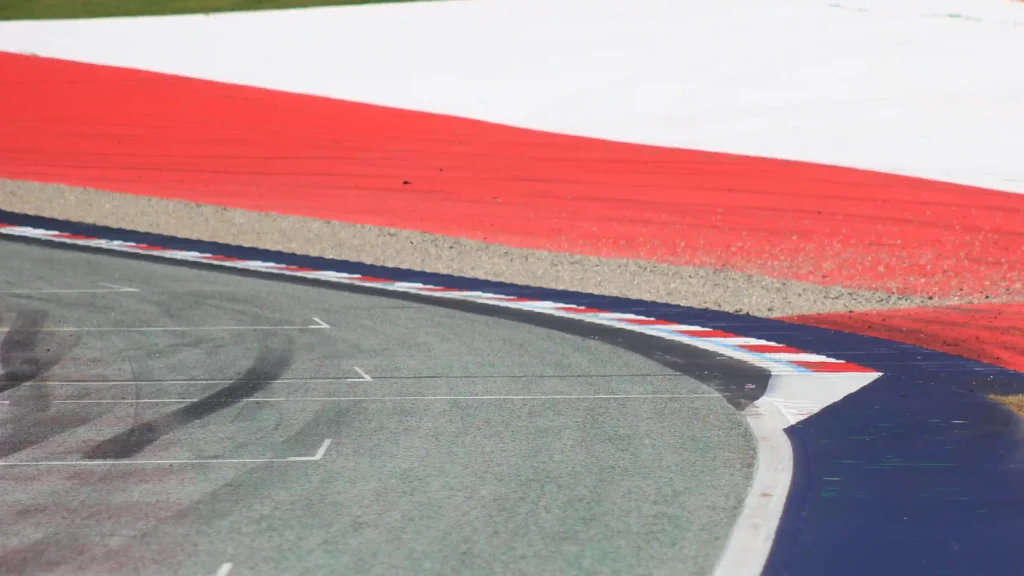
The Mid-Ohio INDYCAR layout measures 2.258 miles and contains 13 turns. The 90-lap race distance was 203.22 miles. The circuit’s compact layout, elevation changes and limited overtaking zones reward qualifying and punish small mistakes.

The Keyhole creates the race’s most important run
Turn 2, commonly called the Keyhole, is a long right-hander that leads onto the circuit’s longest acceleration zone. A clean exit lets a trailing driver use the draft and hybrid deployment before braking for Turn 4.
Lundgaard’s wide exit on lap 42 therefore had a larger effect than a similar mistake in a short corner. O’Ward gained overlap before Turn 4 and kept it through the next sequence.
The Esses reward confidence and punish dirty air
The middle section changes direction quickly. A car following closely can lose front grip in the wake, making it difficult to remain near enough for the next attack. Drivers must balance proximity with tyre temperature and aerodynamic stability.
Kirkwood’s climb from 10th showed how effective a well-balanced car can be through this section. Ericsson’s fall from seventh to 21st showed the opposite: once a driver loses rhythm or track position, recovery is difficult without a caution.
Qualifying is important, but not absolute
Lundgaard and O’Ward converted the front row into first and second, yet Kirkwood reached the podium from 10th and Armstrong gained 10 places. That contrast shows that qualifying remains valuable without making the race predetermined.
The process of setting the grid is explained in how racing drivers qualify. Mid-Ohio’s front-row result is also covered by the official weekend reporting and the site’s INDYCAR coverage.
INDYCAR Championship Standings After Mid-Ohio
Palou remained the championship leader after finishing fifth. Kirkwood’s podium moved him to 348 points, while Lundgaard’s runner-up result raised him to 339. Malukas sits one point behind Lundgaard, and O’Ward climbed to fifth on 310.
| Pos | Driver | Points | Gap to Leader | Mid-Ohio Result |
|---|---|---|---|---|
| 1 | Alex Palou | 404 | Leader | P5 |
| 2 | Kyle Kirkwood | 348 | −56 | P3 |
| 3 | Christian Lundgaard | 339 | −65 | P2 |
| 4 | David Malukas | 338 | −66 | P8 |
| 5 | Pato O’Ward | 310 | −94 | P1 |
| 6 | Josef Newgarden | 270 | −134 | P9 |
| 7 | Felix Rosenqvist | 265 | −139 | P13 |
| 8 | Scott McLaughlin | 262 | −142 | P16 |
| 9 | Scott Dixon | 224 | −180 | P17 |
| 10 | Marcus Ericsson | 222 | −182 | P21 |
Palou limits the damage
Fifth was not a headline result, but Palou’s 404-point total still gave him a 56-point advantage. With seven races remaining, that margin is strong without being secure. A retirement can erase most of it in one afternoon.
The Ganassi driver’s priority is consistency. Mid-Ohio showed why: his closest rivals occupied the podium, yet he still left with more than a full race win’s advantage over Kirkwood.
Kirkwood and Lundgaard close the gap
Kirkwood scored heavily from 10th, and Lundgaard added another podium after pole. They are separated by nine points. Malukas is only one point behind Lundgaard, creating a three-driver fight for second.
O’Ward remains 94 points behind Palou. The Mid-Ohio win keeps his title challenge alive, but he needs more victories and lower scores from the leader. The next seven races leave enough points available, though the margin for error is small.
The broader scoring system is explained in how racing championships are scored. The remaining dates are listed in the 2026 INDYCAR schedule.
Team and Engine Performance
Arrow McLaren delivers its strongest complete result
The one-two finish was the obvious headline, but Siegel’s 10th place completed an excellent team score. All three Arrow McLaren cars finished in the top 10, and the team controlled both qualifying and the race.
O’Ward and Lundgaard showed similar pace without being forced into a rigid order. The team’s final-stop decisions allowed the contest to remain sporting while still protecting the one-two.
Andretti places two cars in the top six
Kirkwood’s third and Power’s sixth gave Andretti two strong finishes. Ericsson’s fall to 21st prevented a larger team score, but Kirkwood’s recovery kept him second in the championship.
Chevrolet edges the top-10 count
Chevrolet-powered cars occupied first, second, fourth, seventh, eighth, ninth and 10th—seven of the first 10 positions. Honda took third, fifth and sixth.
The engine split did not produce a simple speed hierarchy. Newgarden set the fastest lap for Chevrolet, while Kirkwood and Palou kept Honda firmly in the podium and championship picture.
Juncos Hollinger and VeeKay maximize the opportunity
VeeKay’s fourth place was one of the event’s standout results. He finished within three seconds of the winner and less than a second from the podium. That performance placed Juncos Hollinger inside a fight dominated by larger teams.
What Comes Next After Mid-Ohio?
The championship moves to Nashville Superspeedway on July 19. The transition from a technical road course to a high-speed oval changes the competitive demands completely.
Palou must protect a 56-point lead, while Kirkwood, Lundgaard, Malukas and O’Ward need to reduce the deficit. Oval traffic, pit-lane timing and caution periods can create much larger swings than a clean road-course race.
O’Ward’s confidence will be high after Mid-Ohio, but Arrow McLaren must translate road-course execution into oval speed. Team Penske will also expect a stronger result after Newgarden, Malukas and McLaughlin finished eighth, ninth and 16th.
The upcoming race is covered in the next INDYCAR round preview. Readers comparing the machinery can also see INDYCAR versus Formula 1.
Mid-Ohio INDYCAR 2026 Results FAQ
Conclusion: O’Ward Turns Mid-Ohio Into an Arrow McLaren Statement
A victory built without cautions or shortcuts
O’Ward’s Mid-Ohio win came in the cleanest competitive conditions. There was no caution to reset the order, no late restart and no strategic lottery. He had to stay close to Lundgaard, take the lap-42 opportunity and execute the final overcut.
Lundgaard’s second place completed Arrow McLaren’s first INDYCAR one-two, while Kirkwood’s recovery from 10th produced an equally impressive podium. VeeKay finished close enough to show that the front three could not relax, and Palou protected his championship lead with fifth.
The full classification also rewards the less visible performances: Armstrong gained 10 positions, McLaughlin gained seven and Newgarden set the fastest lap. In a caution-free race, those gains were earned without help from field compression.
Mid-Ohio did not overturn the championship, but it changed the momentum. Palou remains firmly in control, yet O’Ward, Kirkwood and Lundgaard leave Ohio with evidence that the leader can be beaten. Seven races remain, and the next test comes on the Nashville oval.
Official Sources and Image Licenses
Winner, podium, winning move, caution-free status and championship context.
Race date, circuit length, turn count, lap total and official documents.
Driver points and gaps after Round 11.
Front-row times and Arrow McLaren qualifying performance.
Finishing positions, starting spots, lap totals, teams, engines and gaps.
Newgarden’s 1:06.530 and the complete lap-time order.
Licensed archive photograph from Mid-Ohio qualifying in 2024.
Licensed portrait of the 2026 race winner.
Licensed archive photograph of the Mid-Ohio runner-up.
Licensed archive photograph of the venue.
Public-domain circuit-layout illustration.