Portland INDYCAR 2026 Strategy Analysis: Pit Windows, Fuel Saving & Cautions
Why Alex Palou’s one-lap overcut mattered, how Firestone tire choice shaped the 110-lap race, where the real pit windows opened, and why one two-lap caution barely interrupted a strategic chess match.
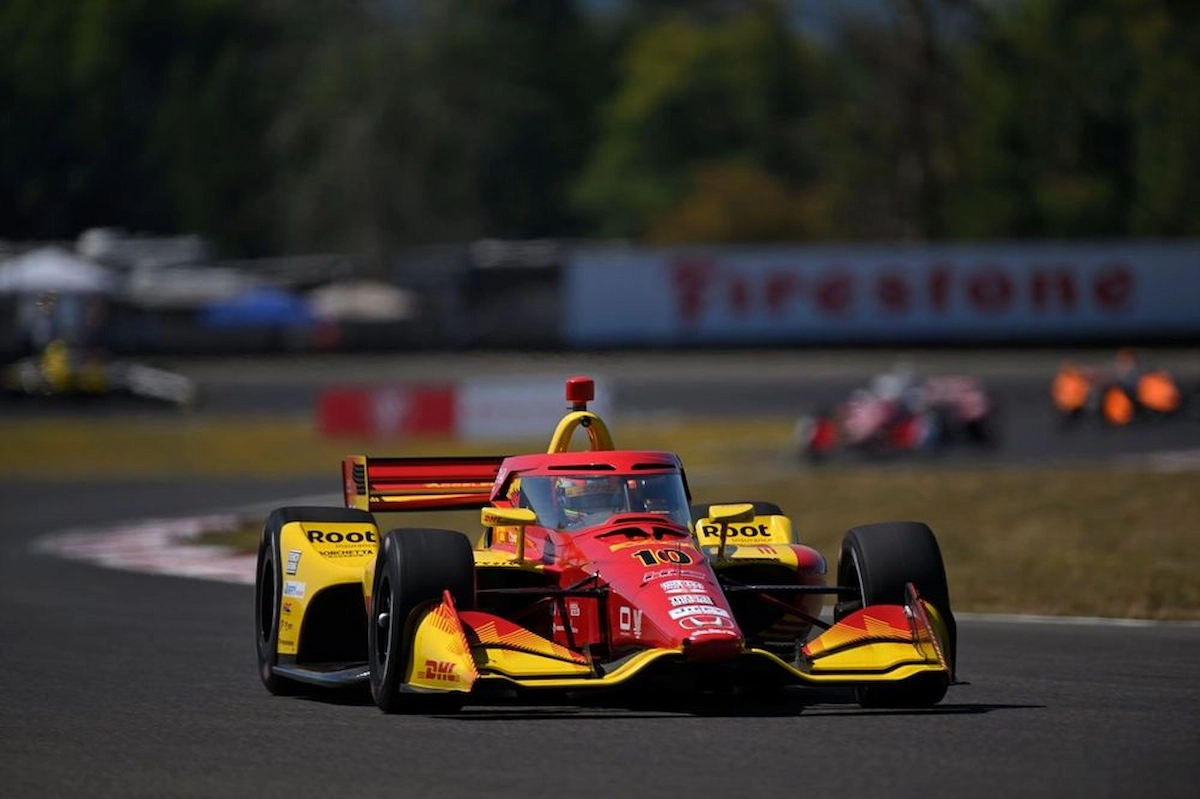
The 2026 Portland IndyCar race was not won by waiting for a lucky yellow. It was won by reading tire life, controlling the gaps and executing the pit cycle almost perfectly. Alex Palou started second, ran behind pole-sitter Felix Rosenqvist through the opening stint, then used a one-lap overcut at the first green-flag stop to take control.
From there, the race became a lesson in how Portland rewards drivers who can protect tires without giving away lap time. Official INDYCAR reporting described the 110-lap event as a “chess match” of tire strategy and management. That description fits. There was only one caution period, lasting two laps, so the leaders had very little free strategic help. Most of the result was built under green.
What actually decided the 2026 Portland IndyCar race?
Alex Palou won the 2026 OnlyBulls Grand Prix of Portland for Chip Ganassi Racing, beating Felix Rosenqvist by 4.1167 seconds. Will Power finished third in his Andretti Global Honda, Rinus VeeKay was fourth for Juncos Hollinger Racing, and Kyle Kirkwood completed the top five. INDYCAR reported that Palou led a race-high 60 laps and earned his sixth victory of the 2026 season.
The track itself is important to understanding the strategy. Portland International Raceway is listed by INDYCAR at 1.967 miles for event distance calculations, while its course description calls the natural road course 1.964 miles and 12 turns. The race distance was 110 laps, or 216.04 miles. That is long enough to make a simple two-stint sprint impossible, yet short enough that every extra lap on a tire set can influence which compound a team can use later.
Rosenqvist started from pole after a 58.4828-second lap in the Firestone Fast Six. Palou qualified only 0.0184 seconds slower, while Power started third. That tiny qualifying spread mattered because the top three all chose the same opening compound: the slower but more durable Firestone primary tire.
That choice told us the front-row teams were thinking about race shape rather than launch grip. Instead of using the quicker alternate immediately and accepting early degradation, the leaders wanted a stable first stint. Rosenqvist led the first 30 laps. Then the decisive sequence began.
Rosenqvist and Power stopped on Lap 31. Palou stayed out one more lap, pushed hard on clear track, stopped on Lap 32 and emerged ahead. That was the key overcut of the race.
Portland is often discussed as an undercut circuit because fresh alternate tires can produce a big early-lap gain. Yet the 2026 race showed why that assumption is too simple. If an older tire still has life, the driver has clean air, and pit exit costs the rival time, the overcut can be stronger. Palou had all three conditions at once.
Once he got ahead, he did not need to win every lap. He needed to control the life of each set and prevent Rosenqvist from creating a compound advantage at the end. That is the central theme of this strategy analysis.
Portland IndyCar 2026 pit windows explained
A pit window is not simply “the lap when everyone must stop.” It is the range of laps in which a stop makes the remaining race distance workable. At Portland, teams balance three things: fuel reach, tire life and the traffic they will rejoin into. A driver can be inside the fuel window but still delay a stop because track position makes the overcut attractive.
The first 2026 lead-group window centered around Lap 31. Rosenqvist and Power stopped at the end of Lap 31. Palou stopped at the end of Lap 32. That tells us the opening primary stint had reached a natural strategic break point. It does not mean every car had identical fuel remaining. It means the leading strategies had reached the point where tire performance, fuel margin and later stint length all lined up.
First window: why Lap 31 versus Lap 32 changed the lead
Rosenqvist and Power came in first. In many races that would protect them from an undercut threat behind. Here, however, Palou was the car directly behind Rosenqvist and had enough tire performance to stay out. His extra lap was exceptionally fast. Rosenqvist also acknowledged that he lost time launching from his pit box. Those small pieces combined: Palou’s in-lap plus Rosenqvist’s pit-exit loss turned second place into the effective race lead.
This is an important point for understanding overcut and undercut strategy. The basic concept applies across open-wheel racing even though tire rules, refueling rules and pit-lane procedures differ between IndyCar and Formula 1. You are comparing the time value of an extra lap on old tires with the time value of an early lap on fresh tires.
Second window: Palou stopped earlier than Rosenqvist
Palou’s second stop came at the end of Lap 56. He switched from alternate tires to scuffed primaries. Rosenqvist stayed out until the end of Lap 59 and moved from primaries to alternates. That three-lap offset created the most interesting part of the middle race because the two leaders were no longer on the same compound.
Rosenqvist’s fresh alternates gave him a pace weapon. By Lap 80, INDYCAR reported that he had reduced Palou’s advantage to within one second. In other words, the later second stop bought Rosenqvist a shorter and more aggressive alternate stint. Palou’s earlier stop bought track position and a more predictable run on the durable primary.
Final window: protect the finish, not just the next five laps
Palou made his final stop at the end of Lap 82 and stayed on scuffed primary tires. That left 28 laps to the finish. The choice was conservative in compound terms but strong in race-control terms. A durable tire made it easier to manage the run home without the steep performance drop that could come from pushing alternates too hard.
Power’s final stop was planned for the end of Lap 86, but he did not hear the call from strategist Ron Ruzewski. He stayed out, encountered traffic, then stopped on Lap 87. That single-lap delay cost more than one lap of time because it changed the traffic picture. Power later said he believed the alternate tires waiting in his pit could have given him a better shot at Rosenqvist.
At Portland, the pit window is only half the decision. The other half is where you will rejoin — and whether your next tire has enough clean air to use its advantage.
How fuel saving affects IndyCar strategy at Portland
Fuel saving in IndyCar is often misunderstood as simply driving slowly. The useful version is much more subtle. A driver lifts slightly before a major braking zone, lets the car coast, then uses braking and throttle in a way that reduces fuel burn without destroying corner exit speed. The team watches the target lap number and constantly updates the driver on whether the car is ahead or behind the required fuel number.
At Portland, those savings can change the race because the circuit has several heavy braking events and long enough acceleration zones to make lift-and-coast worthwhile. The best-known example is the run to the Festival Curves at the end of the front straight. A small early lift there can reduce consumption while keeping most of the lap time, especially if the driver is already tucked behind another car.
The goal is not always to eliminate a pit stop. In a 110-lap race, the more realistic benefit is often to extend a stint by one or two laps. That can be enough to clear traffic, reach a favorable tire window, or stay out while a rival pits. Palou’s Lap 32 first stop is a perfect illustration of why one additional lap can matter, even when both cars are ultimately following similar overall stop counts.
Extend the window
One extra lap can create an overcut, avoid a traffic group, or give the strategist more time to see whether a yellow is developing.
Shorten the final fill
If a car has saved earlier, a later stop may require less fuel. Less stationary time can help defend position during a close pit cycle.
Create caution flexibility
A car with fuel margin can stay out when others must pit. That option becomes especially valuable when a yellow lands near a normal window.
Can a driver save fuel without losing the race?
Yes, especially when running in another car’s aerodynamic wake. The trailing car may need less throttle to maintain speed on the straight. However, there is a trade-off. Following closely can raise tire temperatures and reduce front grip in corners. Therefore, the ideal fuel-saving position is close enough to gain a tow but not so close that the front tires overheat.
Teams also decide where on the track to save. Saving in a corner that controls a long straight can be expensive because a weak exit costs speed for several seconds. Saving before a heavy braking zone is usually more efficient. The driver gives away less lap time because the car needed to slow there anyway.
This is why fuel strategy and tire strategy cannot be separated. A driver who is asked to hit a demanding fuel number may also protect rear tires by reducing aggressive throttle application. Conversely, a driver chasing an undercut may be told to abandon saving for one lap and use everything. The strategy is dynamic rather than fixed.
For a broader explanation of the process, see our guide to how pit stops work in racing and our explainer on race timing. Both concepts matter at Portland because an apparently small fuel or timing gain can become a position once the pit cycle closes.
How did cautions change the 2026 Portland strategy?
The 2026 Portland race had only one caution period, and INDYCAR’s race report says it lasted two laps. That made the event unusually clean from a strategic standpoint. There was no sequence of repeated yellows to reset the field, hand somebody a free stop, or erase a five-second advantage.
When a race stays green, the strategist can work with relatively stable equations. Tire degradation matters more. Pit-lane execution matters more. The exact out-lap and in-lap matter more. That environment strongly favored Palou because his pace and tire preservation allowed Ganassi to choose the timing rather than react desperately.
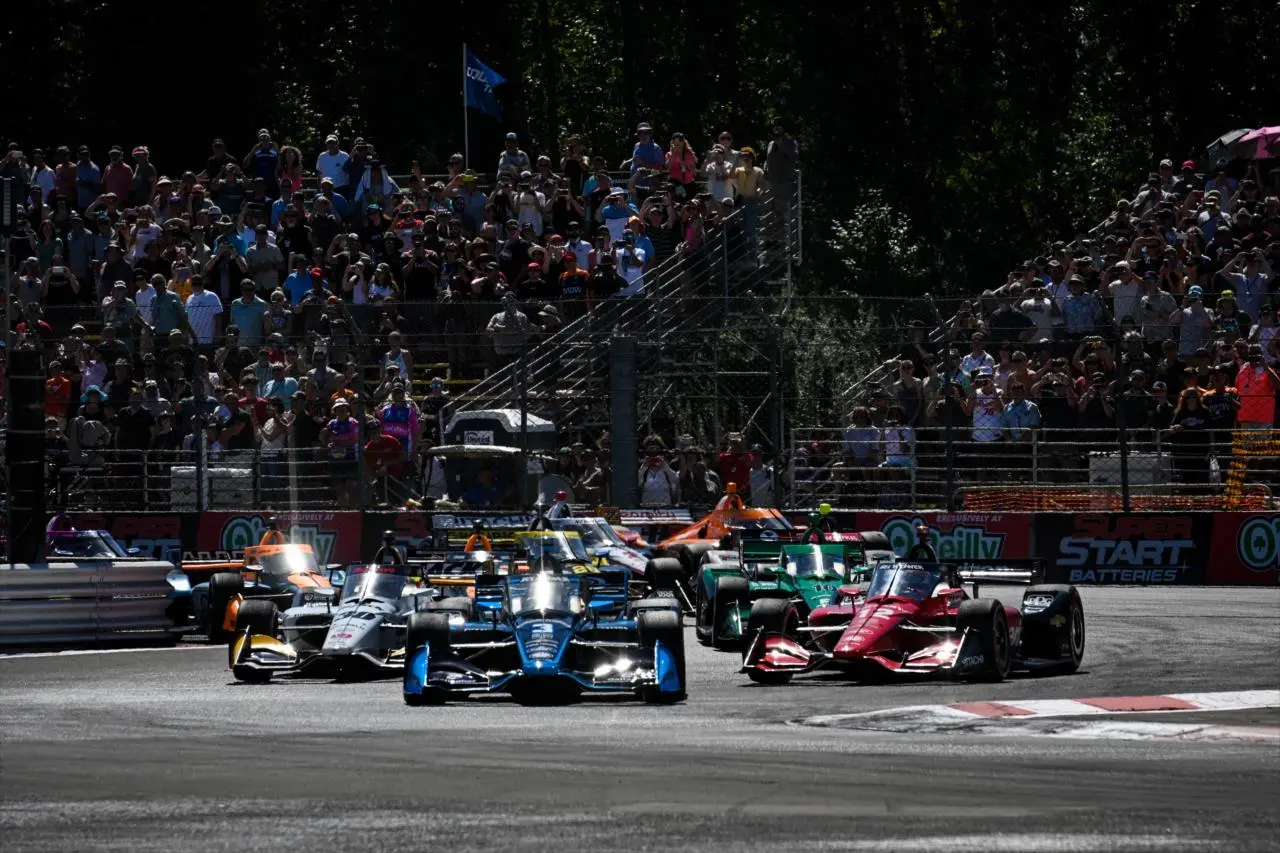
Portland can easily produce a very different race. The Festival Curves compress the field into a tight right-left sequence at the start and on restarts. Cars arrive with cold tires, high fuel load and limited space. A single contact can trigger a full-course yellow at precisely the moment teams are approaching a fuel window.
What happens if a caution appears inside the pit window?
The order can flip. Cars that stopped just before the yellow may gain because they have already paid the green-flag time loss of entering pit lane. Cars that were planning to stop one lap later can be trapped behind the pace car or forced into a different sequence. The exact effect depends on when pit lane opens, where each car is on track and which cars have already crossed timing lines.
That is why strategists sometimes “cover” a rival by stopping on the same lap. If the lead car pits and the second-place car stays out, the second car is accepting both opportunity and risk. A yellow could make that decision brilliant. Staying green could leave the driver exposed to a tire disadvantage.
Why a two-lap yellow still matters
Even a short caution reduces fuel consumption and removes several racing laps from a tire stint. That can expand a later window. Drivers can also cool brakes, reset energy management and prepare tires for the restart. Yet the field bunches together, so any time gap built before the yellow disappears.
In 2026, the limited caution running meant the race never became primarily a lottery. The top three remained defined by pace, pit timing and compound usage. That is one reason the first-stop overcut is so important in reviewing the result: there was no later yellow that wiped out its strategic value.
If a yellow arrives near a planned stop, do not judge a strategy by the pit lap alone. Ask whether the car had already committed, whether pit lane was open, how much fuel it had saved, and what compound remained available.
Readers who want the general race-control vocabulary can also use our guides to racing flags and safety-car and caution procedures.
Portland IndyCar 2026 tire strategy: primary vs alternate
The top three starters all began on Firestone primaries. That was a significant strategic vote. The primary is the more durable race tire, while the alternate offers more grip but typically has a shorter performance window. At Portland, where tire drop-off can make an overcut or undercut powerful, the timing of the alternate stint matters as much as the raw pace advantage.
Rosenqvist, Palou and Power used the opening primary stint to establish the race. Rosenqvist controlled the lead through Lap 30. When he and Power stopped on Lap 31, they stayed on primary tires. Palou stopped one lap later and switched to alternates. That gave him both track position and a faster compound for the next phase.
Palou stopped again at the end of Lap 56 and moved to scuffed primaries. Rosenqvist waited until Lap 59 and switched to alternates. This created opposite performance curves. Palou had the durable tire and track position. Rosenqvist had the faster tire and a later start to his stint.
The effect became obvious by Lap 80, when Rosenqvist had closed to within a second. The alternate’s early and mid-stint grip was strong enough to bring the pole-sitter back into the fight. However, traffic then helped Palou. Louis Foster’s car sat between the leaders, and Palou’s gap grew again.
Traffic is often the hidden fourth tire compound in road-course racing. A theoretical five-tenths-per-lap advantage is worthless if the driver cannot use it. Portland has sections where passing is possible, but overtaking a car that is only slightly slower can still take several corners or multiple laps. That delay changes the effective value of a tire set.
Why did Palou finish on scuffed primaries?
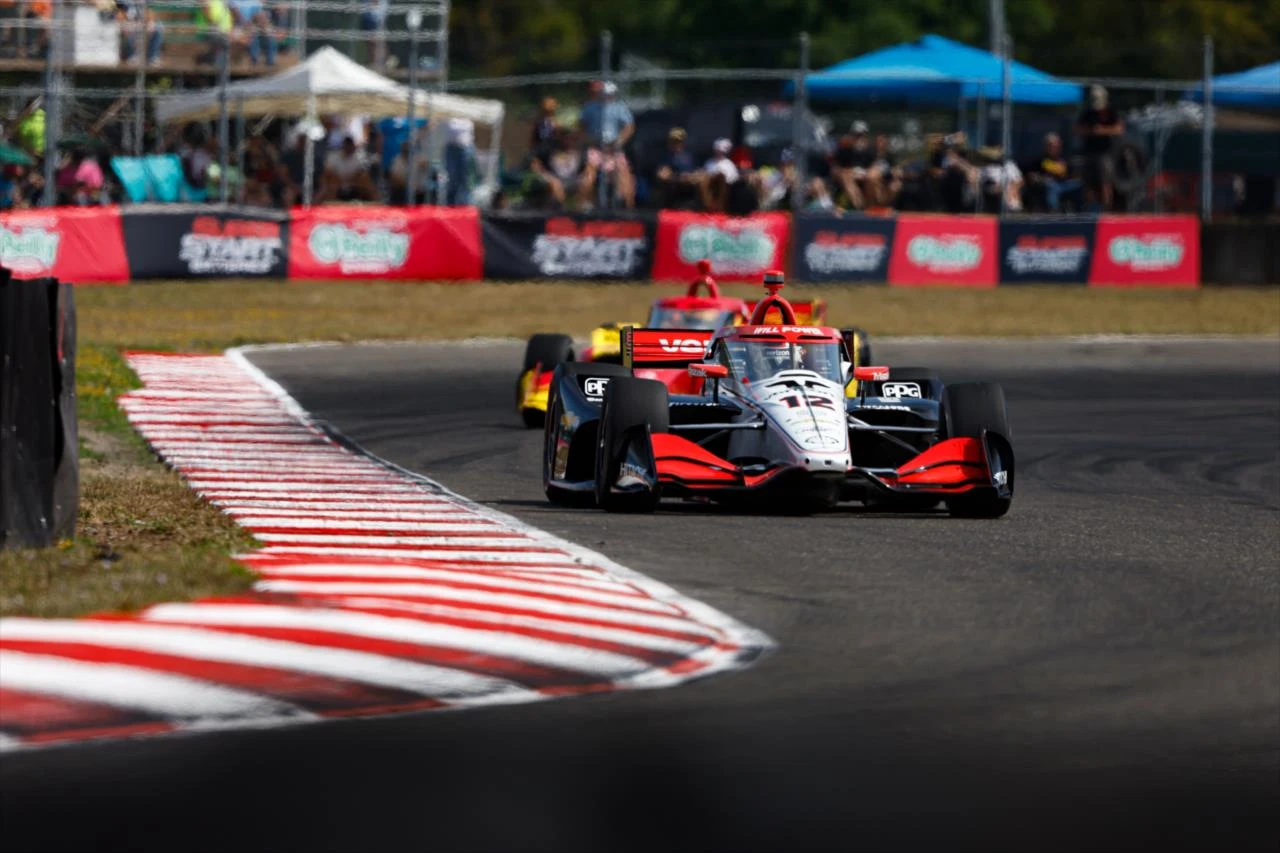
A scuffed tire has already gone through a short heat cycle. Teams may prefer that condition when they want more predictable warm-up or when a brand-new set’s behavior is less desirable for the planned stint. Palou’s final stop at Lap 82 left 28 laps. The durable primary gave him a stable platform to defend the lead without relying on the alternate’s short-lived peak.
Power, by contrast, had alternates waiting for his final stop. His strategy aimed to attack late. That made the missed Lap 86 call more painful. A fresh alternate is most valuable when the driver can immediately exploit it. Losing a lap in traffic reduces the number of laps available to cash in that advantage.
What the 2026 race teaches about Portland tire planning
First, do not assume the alternate must be used at the start. Second, the overcut can work if the primary remains healthy. Third, a later alternate stint can be a powerful chase strategy. Finally, the tire choice only works if pit timing creates clear track.
That is why race engineers spend so much of Friday and Saturday comparing long runs rather than simply chasing the fastest practice lap. Marcus Armstrong led second practice after using alternates, which showed the compound’s outright speed. Yet Sunday required a different skill: choosing when to spend that speed.
The five strategic decisions that shaped Portland 2026
1. The leaders started on primaries
Rosenqvist, Palou and Power all chose the durable tire. That removed the temptation to win the first ten laps at the expense of the next twenty. It also made their first pit timing more flexible because they were not racing a rapidly fading alternate.
2. Palou committed to the one-lap overcut
This was the cleanest decisive call. He did not stay out for five laps and hope. He stayed out exactly long enough to use clear track and a still-healthy tire. His fast in-lap, combined with Rosenqvist’s slower launch from the pit box, changed the order.
3. Ganassi split the middle stint differently from Rosenqvist
Palou stopped on Lap 56 for scuffed primaries. Rosenqvist stopped on Lap 59 for alternates. That turned a conventional follow-the-leader race into a compound-offset fight. Rosenqvist’s speed later proved the alternate decision was genuinely threatening, even though it did not ultimately win.
4. Palou controlled the traffic phase
When Rosenqvist closed near Lap 80, the gap alone did not tell the full story. Foster’s car became part of the battle. Palou managed to keep that car between himself and Rosenqvist long enough to restore breathing room. Strategy is partly choosing tires and fuel; it is also placing your car in traffic more effectively than the rival.
5. Power’s missed pit call removed his late attack
Power had an alternate set waiting. The plan was clearly designed to give him speed in the closing stint. But he did not hear the call to stop at the end of Lap 86. He remained out for another lap and got held behind Scott Dixon and Sting Ray Robb before pitting on Lap 87. Power said afterward that he believed the alternate could have given him a better opportunity to attack Rosenqvist.
| Driver | Key confirmed stop | Tire move | Strategic effect |
|---|---|---|---|
| Alex Palou | Lap 32 | Primary → Alternate | One-lap overcut gained effective lead |
| Alex Palou | Lap 56 | Alternate → Scuffed Primary | Protected track position and tire life |
| Alex Palou | Lap 82 | Scuffed Primary | Set up 28-lap run to finish |
| Felix Rosenqvist | Lap 31 | Stayed Primary | Lost lead during overcut cycle |
| Felix Rosenqvist | Lap 59 | Primary → Alternate | Created late-middle-stint attack |
| Will Power | Lap 87 | To Alternate | One lap later than planned; traffic cost attack time |
The lesson is not that every Portland race should copy Palou’s sequence. The lesson is that each stint must create the next option. His opening primary stint made the overcut possible. The alternate middle stint gave pace after he gained the lead. The scuffed primary phases gave him control when tire preservation mattered more than peak grip.
For readers comparing categories, our IndyCar vs F1 guide explains why the presence of refueling changes strategy so dramatically, while our downforce explainer helps explain why traffic can reduce the value of a fresh tire on a road course.
What was the best strategy for Portland IndyCar 2026?
The winning Portland IndyCar 2026 strategy was a three-stop-style sequence built around tire flexibility, not extreme fuel saving. Palou opened on the primary tire, overcut Rosenqvist by stopping one lap later on Lap 32, used alternates in the second stint, returned to scuffed primaries on Lap 56, and made his final stop on Lap 82. With only one two-lap caution, green-flag pace and tire management decided the race more than yellow-flag luck.
That answer should not be interpreted as a universal formula. A future Portland race with more cautions could reward a completely different stop pattern. The correct plan always depends on tire degradation, fuel numbers, traffic, caution timing and which sets remain available.
What should fans watch in future Portland strategy battles?
Watch the gap between cars before the first stop. If the trailing driver suddenly drops back by a second or two, the team may be creating space for a clean pit entry or preparing to push. If the gap closes sharply, an undercut may be coming. If the leader stays out while a rival pits, listen for whether the broadcaster mentions fuel targets or tire condition.
Next, watch the compound. A driver leaving pit lane on alternates should usually have a pace advantage early in the stint. If that car is immediately trapped behind traffic, the strategic value is being wasted. A primary-tire runner, by contrast, may accept slower early laps in exchange for consistency later.
Finally, pay attention to who has already made the “expensive” stop before a caution. A yellow can convert a losing strategy into a winning one in seconds. This was not the story of 2026 because the race had so little caution running. In a more interrupted edition, the same Portland pit windows could produce a completely different order.
If you are following the wider series, use our IndyCar schedule, IndyCar drivers guide, and our coverage of the 2026 Mid-Ohio IndyCar round for context on how road-course strategy changes from venue to venue.
Portland IndyCar strategy FAQ
Conclusion: Portland 2026 rewarded control, not gambling
Portland’s 2026 IndyCar race was a rare strategy study because so little of it was distorted by caution periods. Rosenqvist had the pole and led the first 30 laps. Palou took the race away with a one-lap overcut, then protected that gain through smart compound choices, tire preservation and clean execution.
Rosenqvist’s late-middle-stint alternate run showed that the race was never comfortable. He closed to within a second by Lap 80. Power also had a potential late attack available on alternates, but a missed radio call delayed his final stop and cost him the clean opportunity he needed.
The biggest lesson is simple: at Portland, a strategy does not need to be wildly different to be decisive. One lap longer before a stop, one cleaner pit exit, one better traffic gap or one more usable lap on the faster tire can decide the order. In 2026, Palou and Chip Ganassi Racing connected those details better than anyone else.