Brickyard 400 2026 Preview: Favorites, Track Guide & Predictions
A pre-green-flag look at the favorites, practice speed, starting grid, Indianapolis track demands, sleepers, strategy and our projected top 10.
Archive note: This preview preserves the information available before the July 26, 2026 race. The predictions below are based on practice, qualifying, historical form and official pre-race projections rather than the completed race result.
The Brickyard 400 2026 preview presented one of the most intriguing form-versus-track-position battles of the Cup season. Toyota swept the top five in Friday practice, but Chevrolet answered by placing six cars inside the qualifying top 10.
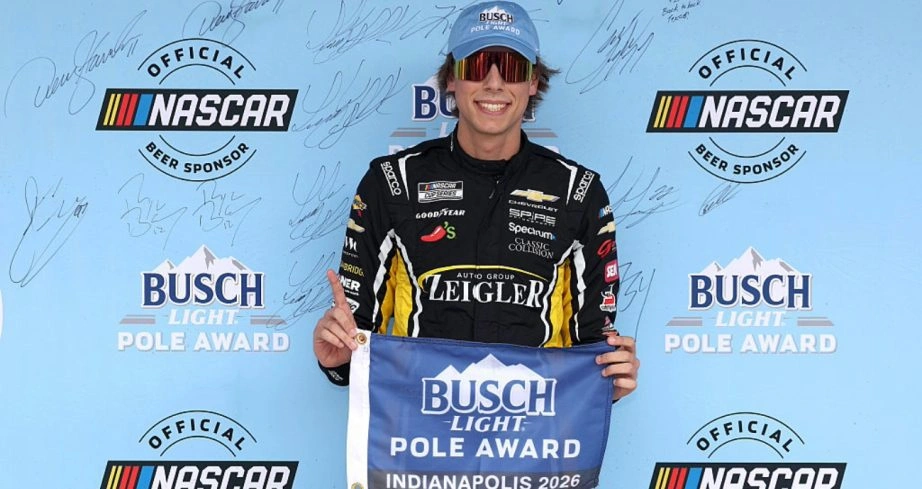
Christopher Bell led practice at 183.512 mph. One day later, Carson Hocevar won the pole at 186.598 mph and led a Spire Motorsports front-row sweep with Daniel Suárez.
NASCAR Racing Insights projected Denny Hamlin to win. Kyle Larson, Tyler Reddick, Ryan Blaney and Ty Gibbs completed its projected top five.
Denny Hamlin was the official Racing Insights projection. Our pre-race analyst pick also favors Hamlin because he combined a fifth-place start, top-five practice speed and a strong high-speed oval profile.
Brickyard 400 2026 Race Snapshot
Racing Insights P1
Fifth on the grid and fifth in the practice order.
183.512 mph
Toyota swept the first five practice positions.
186.598 mph
Spire Motorsports swept the front row.
The 2026 Brickyard 400 was scheduled for Sunday at 2 p.m. ET on TNT Sports, truTV and HBO Max. IMS Radio Network and SiriusXM NASCAR Radio carried audio coverage.
The race distance remained the classic 160 laps and 400 miles. Stage breaks came at laps 50 and 100, leaving a 60-lap final stage.
Thirty-nine cars were entered. Only three drivers in the field had previously won a Cup race on the Indianapolis oval: Brad Keselowski, Larson and defending winner Wallace.
Brickyard 400 2026 Favorites
| Driver | Rating | Start | Practice | Why the case worked |
|---|---|---|---|---|
| Denny Hamlin | A+ | 5th | 5th in practice | Racing Insights projected winner; elite high-speed oval profile |
| Kyle Larson | A+ | 10th | 6th in practice | 2024 Brickyard winner; ability to advance in traffic |
| Tyler Reddick | A | 3rd | 8th in practice | Front-row-adjacent track position; 2024 runner-up |
| Christopher Bell | A | Outside top 10 | 1st | Fastest single-lap practice car; Toyota pace |
| Ty Gibbs | A | 4th | 3rd | Practice speed plus premium starting position |
| Carson Hocevar | A- | 1st | 7th | Pole position and Spire qualifying sweep |
| Bubba Wallace | B+ | 29th | 20th | Defending winner but deep starting spot after practice scrape |
| Ryan Blaney | B+ | 13th | 9th | Best Ford qualifier; 2024 third-place finish |
Denny Hamlin: the most complete favorite
Hamlin entered Indianapolis as the Cup points leader and qualified fifth at 185.835 mph. He also ended Friday practice fifth, giving the No. 11 Toyota a balanced weekend profile.
More importantly, NASCAR Racing Insights projected Hamlin to finish first. That model placed him ahead of Larson and Reddick, two drivers with recent Indianapolis podium history.
Hamlin also carried a powerful personal incentive. Indianapolis remained the major crown-jewel victory missing from his résumé, and NASCAR’s pre-race coverage highlighted his chance to complete a Crown Jewel Grand Slam.
The track rewards drivers who can combine raw pace with disciplined strategy. Hamlin’s experience made him the safest pick among the favorites.
Kyle Larson: the proven Indianapolis closer
Larson won the 2024 Brickyard 400 when NASCAR returned to the oval configuration. He then finished second to Wallace in 2025.
That gave him top-two finishes in both oval races since the return. Few current drivers could match that recent record.
Larson qualified 10th at 185.315 mph. That was not ideal, but it was close enough to the front to keep strategy flexible.
His 2024 victory also showed that passing is possible with a truly strong car. Larson advanced from 12th to first over the closing 32 laps that year.
Tyler Reddick: front-row territory with proven form
Reddick qualified third at 186.077 mph. That position immediately reduced the amount of dirty air he would need to fight.
He finished second at Indianapolis in 2024 and entered 2026 with two top 10s in three prior oval starts at the track.
Racing Insights projected him third. His combination of qualifying speed and recent record made him one of the easiest top-five selections.
Christopher Bell: the practice benchmark
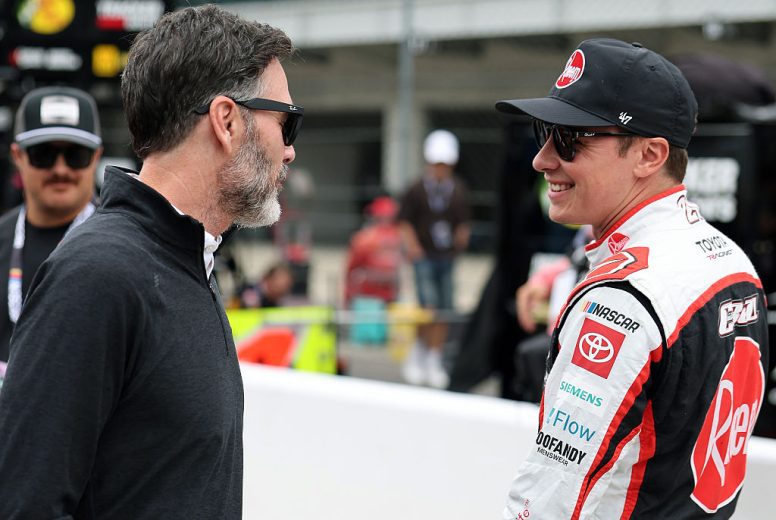
Bell led Friday’s 50-minute Cup practice with a lap at 183.512 mph. The No. 20 Toyota immediately confirmed the high-speed strength Joe Gibbs Racing brought to Indiana.
Bell also arrived with an 8.0 average finish in his first three Indianapolis oval starts, according to NASCAR’s fantasy analysis. That was his best average at any active oval with multiple starts.
His main concern was track position. The practice leader did not qualify inside the first 10, so he faced more traffic than Hamlin, Gibbs or Reddick.
Ty Gibbs: practice speed plus fourth on the grid
Gibbs ranked third in practice and qualified fourth at 185.966 mph. Few drivers combined both sessions more cleanly.
He also carried an active four-race top-10 streak into Indianapolis. That form made the No. 54 Toyota a credible contender rather than a speculative pick.
Carson Hocevar: pole position changes the conversation
Hocevar’s pole lap was 186.598 mph. He beat teammate Suárez by 0.056 second and gave Spire Motorsports a front-row lockout.
Hocevar had finished 10th and 12th in his previous Indianapolis oval attempts. Those results suggested he understood the track well enough to use clean air effectively.
The question was race execution across 400 miles. Pole speed creates opportunity, but Indianapolis punishes inexperienced mistakes harder than most tracks.
What Practice Told Us
| Rank | Driver | Make | Speed / rank | Practice note |
|---|---|---|---|---|
| 1 | Christopher Bell | Toyota | 183.512 mph | Fastest overall |
| 2 | John Hunter Nemechek | Toyota | 183.180 mph | Second-fastest |
| 3 | Ty Gibbs | Toyota | Top five | JGR |
| 4 | Erik Jones | Toyota | Top five | Legacy Motor Club |
| 5 | Denny Hamlin | Toyota | Top five | Cup points leader |
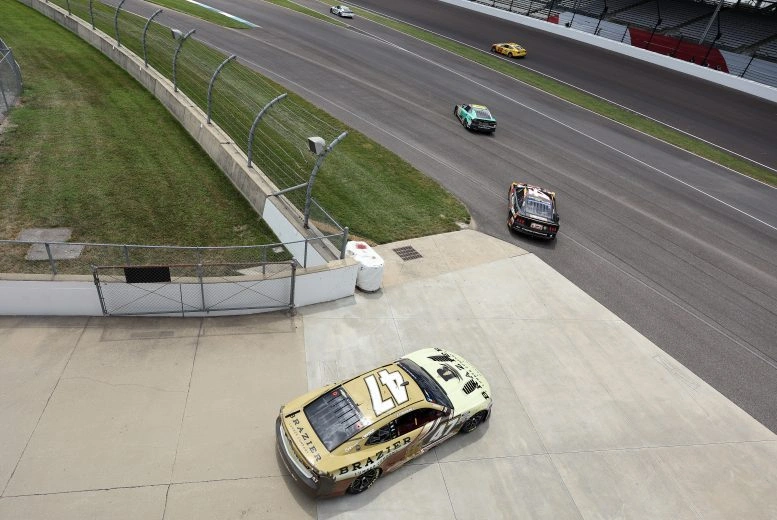
Practice produced the clearest manufacturer story of the weekend. Toyota occupied every position from first through fifth.
Bell led at 183.512 mph, while Nemechek followed at 183.180. Gibbs, Jones and Hamlin completed the sweep.
That result supported the pre-weekend expectation that Toyota would be strong on a high-speed, low-banked oval. However, practice speed did not guarantee clean air on Sunday.
Bell was fast, but track position remained the complication
Indianapolis is not a place where a team can casually give away ten positions. The flat corners narrow the preferred line and make aero wake a serious problem.
Bell’s practice pace gave him a car capable of winning. His Sunday path still depended on gaining track position without damaging the car or losing time in traffic.
Wallace’s wall contact changed his weekend
Defending winner Wallace scraped the outside retaining wall in Turn 1 during practice. His 23XI Racing crew repaired the right-side damage and returned him to the track.
Wallace ended practice 20th and later qualified 29th. His Indianapolis history remained excellent, but the weekend forced him into a recovery role.
Austin Cindric’s electrical trouble lowered his ceiling
Cindric lost power and spent time in the garage during practice. The team addressed an electrical problem, but the issue returned late in the session.
NASCAR’s early fantasy analysis had viewed him as a sleeper. After the weekend developed, that case became much harder to support.
Qualifying Changed the Favorite Board
| Pos. | Driver | Make | Speed | Pre-race meaning |
|---|---|---|---|---|
| 1 | Carson Hocevar | Chevrolet | 186.598 mph | Pole |
| 2 | Daniel Suárez | Chevrolet | 186.382 mph | +0.056 sec. |
| 3 | Tyler Reddick | Toyota | 186.077 mph | Row 2 |
| 4 | Ty Gibbs | Toyota | 185.966 mph | Row 2 |
| 5 | Denny Hamlin | Toyota | 185.835 mph | Projected winner |
| 6 | Michael McDowell | Chevrolet | 185.762 mph | Spire: all 3 in top 6 |
| 7 | Corey Heim | Toyota | 185.456 mph | First Brickyard start |
| 8 | Alex Bowman | Chevrolet | 185.368 mph | Hendrick |
| 9 | AJ Allmendinger | Chevrolet | 185.345 mph | Kaulig |
| 10 | Kyle Larson | Chevrolet | 185.315 mph | 2024 winner |
Qualifying flipped the manufacturer story. Chevrolet placed six cars in the top 10 after Toyota had swept the first five practice spots.
Hocevar’s pole was his second of the season and third of his Cup career. Suárez made it an all-Spire front row.
McDowell qualified sixth, meaning all three Spire cars started within the first three rows. That was one of the strongest organizational qualifying performances of the season.
Why Hocevar’s pole mattered more at Indianapolis
At a high-downforce track with relatively flat corners, clean air affects front grip and corner entry. Starting first gives the leader control of the preferred line before Turn 1.
It also gives the pole team first access to a premium pit stall. A clean stop can preserve track position that might take dozens of laps to regain on track.
Reddick, Gibbs and Hamlin kept Toyota in the first three rows
Toyota did not reproduce its practice sweep in qualifying. However, Reddick, Gibbs and Hamlin still started third, fourth and fifth.
That kept three major Toyota favorites within immediate striking distance of the Spire Chevrolets.
Larson in 10th was not a crisis
Larson’s history proved that he could pass at Indianapolis when his car had enough speed. Starting 10th still kept him in the main strategic group.
The bigger risk came from pit-cycle timing. A poorly timed caution could trap a midfield car behind several slower machines.
Brickyard 400 Track Guide
| Track detail | 2026 Brickyard specification |
|---|---|
| Track | Indianapolis Motor Speedway |
| Location | Speedway, Indiana |
| Configuration | 2.5-mile rectangular oval |
| Corner banking | About 9.2 degrees |
| Straightaway banking | 0 degrees |
| Frontstretch | Approx. 3,330 feet |
| Backstretch | Approx. 3,300 feet |
| Race distance | 160 laps / 400 miles |
| Stage ends | Laps 50, 100 and 160 |
| 2026 purse | $11,233,037 |
A 2.5-mile rectangle, not a conventional oval
Indianapolis Motor Speedway uses four distinct corners linked by two long straightaways and two short chutes. That geometry makes the track feel different from a traditional two-turn oval.
The turns carry only about 9.2 degrees of banking. The straightaways are flat.
Because banking offers limited help, drivers must slow the car aggressively for corner entry. They then need a clean launch to maximize the long straight that follows.
Turn 1 is the biggest restart opportunity
The long frontstretch allows the pack to build speed before the first braking zone. On restarts, drivers can draft, fan out and challenge before the field narrows.
That opportunity comes with risk. A driver who enters too deep can wash up the track, lose the preferred line or create multi-car contact.
Turns 2 and 4 determine straightaway speed
Corner exit matters everywhere, but it is especially valuable at Indianapolis. A poor exit can cost speed for several seconds down the next straight.
That makes rear grip and throttle application critical. A car that rotates too slowly forces the driver to wait before returning to full power.
The short chutes make all four corners independent
The short straights between Turns 1 and 2 and between Turns 3 and 4 separate the corners. Drivers cannot treat each end of the track as one continuous arc.
They must brake, rotate, accelerate, settle the car and repeat the process. Small setup weaknesses appear four times per lap.
Dirty air can erase a faster car’s advantage
A trailing car loses aerodynamic load when it follows closely through the corner. That can increase understeer and make the front tires slide.
As a result, a faster car may struggle to complete a pass unless it creates a large run on the straight or capitalizes on a restart.
Indianapolis is less about producing one spectacular corner and more about repeating four precise corners for 160 laps without losing track position.
What Strategy Was Most Likely to Win?
| Factor | Importance | Why it mattered |
|---|---|---|
| Track position | Critical | Passing becomes difficult in dirty air; qualifying and pit timing carry extra value. |
| Restarts | High leverage | Turn 1 compresses the field and creates one of the best passing chances. |
| Pit-road execution | Critical | A slow stop can erase several rows of track position that are difficult to recover. |
| Fuel windows | Strategic | Long green runs can force teams to choose between stage points and track position. |
| Clean air | Major advantage | Front-running cars can protect corner entry and reduce aero disturbance. |
| Mistake tolerance | Very low | Flat corners and narrow preferred lines punish small errors. |
Track position came before almost everything
NASCAR’s updated fantasy analysis described track position as being of the utmost importance after qualifying. That assessment matched the physical layout.
The leading car gets cleaner air and can defend the preferred line. A midfield car may have more raw speed but fewer opportunities to use it.
Teams could trade stage points for race position
Stage 1 ended at Lap 50 and Stage 2 at Lap 100. Teams did not need to follow identical pit cycles around those breaks.
A crew chief could pit before a stage ended, sacrifice points and gain track position when others stopped later. That decision depended on championship needs and confidence in the car.
Green-flag stops required clean entry and exit
The Indianapolis pit lane is long, and the speed difference between the racing surface and pit road is large. A mistake can erase more time than a normal on-track pass gains.
Drivers also need to avoid speeding at pit entry and through timing zones. A penalty can turn a winning car into a midfield car immediately.
Restarts created both opportunity and danger
A restart can give a second-row driver a chance to attack the leader before Turn 1. It can also create three-wide traffic where the preferred groove disappears.
For Hocevar, Suárez, Reddick and Gibbs, controlling early restarts was a major path to keeping the race in their hands.
Warm race-day conditions could change the balance
NASCAR’s fantasy update noted that race day was expected to be significantly warmer than the earlier sessions. That mattered because hotter asphalt normally reduces grip.
A car that was neutral in cooler qualifying conditions could become tight or loose over a long run. Teams needed adjustment range rather than a single perfect setup.
Brickyard 400 Sleepers and Dark Horses
| Driver | Start zone | Make | Sleeper case |
|---|---|---|---|
| Corey Heim | 7th | Toyota | Excellent grid spot; limited Brickyard experience raises uncertainty |
| Chase Briscoe | Midfield | Toyota | Hoosier-state motivation plus JGR speed |
| Michael McDowell | 6th | Chevrolet | Track position and all-Spire top-six qualifying strength |
| Chris Buescher | Midfield | Ford | Racing Insights projected ninth |
| Brad Keselowski | Midfield | Ford | 2018 Brickyard winner and veteran strategy value |
Corey Heim: the grid position nobody could ignore
Heim qualified seventh at 185.456 mph. That immediately placed him in clean-air territory despite limited Cup experience at Indianapolis.
As a part-time driver, he carried less historical data than the major favorites. However, a top-seven start reduced the need to force passes early.
Chase Briscoe: a home-state driver in a fast Toyota
Briscoe arrived in Indiana with recent momentum and the benefit of Joe Gibbs Racing’s practice speed. NASCAR’s fantasy update kept him in its post-qualifying starting five.
He did not have the same grid advantage as Reddick or Gibbs. Still, his team strength made him a credible top-10 candidate.
Michael McDowell: qualifying created real upside
McDowell qualified sixth and completed Spire’s remarkable top-six sweep across all three cars. Starting that close to the front gave him strategic flexibility.
He did not carry the same Indianapolis record as Larson or Wallace. Yet track position can turn a solid car into a much stronger result.
Chris Buescher: projection value without hype
Racing Insights projected Buescher ninth. That put him inside the model’s top 10 despite less pre-race attention.
Ford lacked Toyota’s practice depth and Chevrolet’s qualifying headline. Buescher represented a measured way to back the manufacturer.
Brad Keselowski: experience still matters here
Keselowski won the 2018 Brickyard 400 and entered 2026 as one of only three former oval winners in the field.
His recent season form was less convincing. However, Indianapolis often rewards veteran judgment when strategy becomes complicated.
Why the Brickyard 400 Is a NASCAR Crown Jewel
NASCAR first raced at Indianapolis Motor Speedway in 1994. Jeff Gordon won the inaugural event and began a record-setting relationship with the track.
Gordon eventually won the Brickyard 400 five times. Jimmie Johnson won four, Kevin Harvick three, while Tony Stewart, Kyle Busch and Dale Jarrett each won twice.
Those six drivers accounted for 18 of the first 29 Brickyard editions. That concentration of champions helped build the event’s reputation as a race that rewards complete teams.
The oval returned in 2024
NASCAR used the Indianapolis road course from 2021 through 2023. The Cup Series returned to the 2.5-mile oval in 2024.
Larson won that return race. Wallace followed with victory in 2025, holding off Larson in two overtimes.
Winning here can define a career
Nine of the first 29 Brickyard winners went on to win the Cup championship in the same season. The list includes Gordon, Jarrett, Labonte, Stewart, Johnson and Kyle Busch.
That does not mean Indianapolis predicts the championship. It does show how often elite teams have succeeded at the Speedway.
The kiss of the bricks remains the celebration
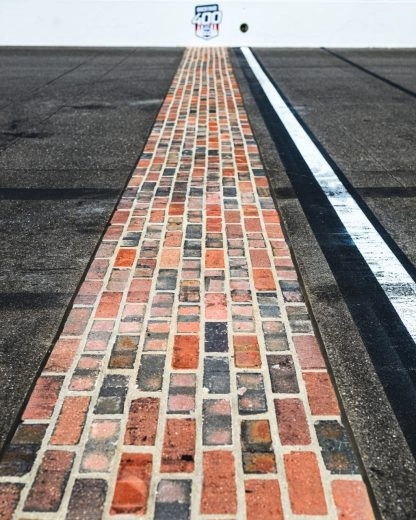
Winners and their teams traditionally kneel at the start-finish line and kiss the Yard of Bricks. The surviving strip recalls the millions of bricks that once paved the entire Speedway.
For NASCAR drivers, that photo is one of the sport’s most recognizable victory images. It gives the Brickyard a ceremony that no other Cup oval can duplicate.
Brickyard 400 2026 Predictions
Denny Hamlin is the pick. He combined a fifth-place start, top-five practice result, championship-level form and the same No. 1 projection from NASCAR Racing Insights.
| Predicted finish | Driver | Reason |
|---|---|---|
| 1 | Denny Hamlin | Best blend of grid position, Toyota speed and official projection |
| 2 | Kyle Larson | Proven winner with enough speed to move forward |
| 3 | Tyler Reddick | Starts third and owns excellent modern Brickyard form |
| 4 | Christopher Bell | Fastest in practice; risk is starting outside the first rows |
| 5 | Ty Gibbs | Fourth on grid with JGR practice pace |
| 6 | Carson Hocevar | Pole keeps him in clean air, but 400 miles demands flawless execution |
| 7 | Ryan Blaney | Best Ford combination of pace, experience and recent form |
| 8 | Chase Briscoe | Toyota strength and home-state upside |
| 9 | William Byron | Hendrick strategy depth can recover track position |
| 10 | Bubba Wallace | Defending winner can rebound, but 29th is a steep starting handicap |
Why Hamlin over Larson?
Larson had the stronger recent Indianapolis résumé. Hamlin had the cleaner 2026 weekend combination.
Starting fifth kept him within two rows of the lead, and Toyota’s practice sweep suggested strong race pace. Racing Insights also chose him first.
Larson remained the most dangerous alternative because of his 2024 win and 2025 runner-up finish. A late restart would make the No. 5 particularly threatening.
Why Reddick stays in the top three
Reddick started third and had already finished second at Indianapolis in 2024. That is exactly the type of track-position-plus-history profile this race rewards.
Even if Hamlin or Larson had slightly more upside, Reddick carried fewer early traffic problems.
Bell is the biggest mover candidate
Bell’s practice-leading speed gave him top-three potential. The issue was how much traffic he would need to clear before reaching the leaders.
If the No. 20 gained positions through the first pit cycle, he could become a winning threat. If he remained buried in dirty air, a top five was more realistic.
Hocevar could control the first part of the race
The pole made Hocevar impossible to dismiss. He owned the preferred starting spot and showed enough prior Indianapolis consistency to use it.
Still, 160 laps create many opportunities for a veteran team to beat a young polesitter through pit timing and adjustments.
Wallace was the hardest champion to place
Wallace had arguably the strongest active Indianapolis consistency. NASCAR’s fantasy analysis noted four consecutive top 10s on the oval entering the weekend.
However, the combination of a practice wall scrape, 20th-place practice rank and 29th starting spot created a difficult recovery path. We kept him 10th rather than treating the defending winner as a top-five favorite.
Brickyard 400 2026 Preview FAQ
Conclusion: Track Position Made a Wide-Open Brickyard Feel Narrow
The Brickyard 400 2026 preview began with Toyota’s practice dominance and ended qualifying with Chevrolet controlling the front row.
Bell owned the fastest practice lap. Hocevar owned the pole. Hamlin owned the strongest official projection.
That split made Indianapolis especially difficult to call. The fastest practice car did not have the best starting position, while the polesitter did not carry the strongest long-term résumé.
Larson brought the most convincing recent track history. Reddick and Gibbs combined fast Toyotas with premium grid spots. Blaney remained Ford’s clearest threat.
Our pre-race pick was Hamlin because his profile had the fewest weaknesses. Fifth on the grid, fifth in practice and first in Racing Insights created the cleanest route to a crown-jewel victory.
Indianapolis still had the power to overturn every forecast. One slow stop, one mistimed caution or one poor restart could move a contender from clean air to the middle of the pack. That low margin for error is exactly why winning at the Brickyard carries so much weight.
Sources & Official References
- NASCAR — 2026 Brickyard 400 race facts and pre-race preview
- NASCAR — official Indianapolis Cup practice recap
- NASCAR — official qualifying recap and starting lineup
- NASCAR Racing Insights — pre-race projected results
Predictions are presented as an archived pre-race assessment. The article intentionally uses information available before the July 26 green flag and does not use the completed race result to alter its forecast.