Iowa NASCAR 2026 Strategy Analysis: Tyres, Fuel and Pit Timing
Why Iowa can turn from a tire-management race into a fuel-mileage race in minutes — and how two tires, four tires, green-flag stops and caution timing reshape 350 laps on a 0.875-mile oval.
Iowa NASCAR 2026 strategy is not built around one magic pit window. Iowa Speedway is too short, too sensitive to track position and too vulnerable to caution timing for that. The winning crew chief must constantly choose between three forms of value: fresh tires, fuel range and position on the track.
The last two Cup races prove why. Ryan Blaney won the 2024 Iowa Corn 350 after a decisive two-tire call gave him the lead under the final caution. One year later, William Byron won by stretching a fuel run far beyond the track’s normal range because repeated yellows let him conserve. Those outcomes were completely different, yet both were logical responses to Iowa’s strategic geometry.
For 2026, NASCAR and Goodyear added another layer by holding a two-day tire test at Iowa with Austin Dillon, Noah Gragson and Tyler Reddick. Reddick specifically discussed the goal of softer tires, greater wear and more degradation. Therefore, any serious Iowa analysis has to treat tire life as an active variable, not background noise.
Quick Answer: What Is the NASCAR Strategy at Iowa Speedway?
Track position is the currency that connects every Iowa strategy decision. Fresh tires can create speed, but a short 0.875-mile lap makes green-flag pit loss expensive. Fuel saving can extend a run, but only if cautions cooperate. The best call is the one that protects position while keeping enough tire and fuel to attack late.
Iowa does not behave like a classic half-mile bullring. It is longer, faster and progressively banked, yet it still compresses the field quickly. That combination means leaders catch traffic early. It also means a driver can lose a lap during a poorly timed green-flag stop faster than at a bigger intermediate oval.
The official NASCAR track profile lists Iowa at 0.875 miles, with 12 to 14 degrees of banking in the turns, 10 degrees on the frontstretch and four degrees on the backstretch. The Cup race distance is 350 laps, or 306.25 miles. If you want the basic mechanics behind lap accounting, World of Speed’s guide to how laps are counted in racing explains why short-track pit cycles develop so quickly.
That is why Iowa is a crew-chief race as much as a driver race. The driver must protect the right-front, communicate balance and execute restarts. Meanwhile, the pit box must estimate tire falloff, fuel burn, likely caution frequency and the cost of surrendering position. World of Speed’s broader guide to how car racing works gives useful context for how these decisions interact across a full event.
Iowa NASCAR 2026 Tire Strategy: Wear, Falloff and Two-Tire Calls
The 2026 tire story started months before race weekend. NASCAR announced a two-day Goodyear test at Iowa in May with one team from each manufacturer: Austin Dillon for Chevrolet, Noah Gragson for Ford and Tyler Reddick for Toyota. Reddick said he hoped the final combination would continue the trend toward a softer tire that wears more and creates more degradation.
That goal matters because degradation creates strategic separation. If a tire loses meaningful lap time over a run, four fresh tires become a weapon. However, if the falloff is modest, two tires can be enough to gain track position without surrendering too much pace. Iowa’s short lap then magnifies the value of that position.
We already saw that exact tradeoff in the inaugural 2024 Cup race. Under the final caution, crew chief Jonathan Hassler called for two tires on Ryan Blaney’s No. 12 Ford. Blaney gained the lead and then controlled the final 88 laps. William Byron, by contrast, had four fresh tires after the late stop and still finished second. The result showed that at Iowa, track position can outweigh the theoretical grip advantage of four new tires when the leading car is already strong.
Blaney’s win was not simply about taking fewer tires. The call worked because the No. 12 had race-winning pace, the stop put him in clean air, and he could manage the remaining tire life while defending the preferred line.
Two tires are not automatically the correct Iowa call. They become attractive when four conditions line up. First, the car must already have reasonable balance. Second, the remaining tire pair cannot be near the end of its safe performance life. Third, the restart must be close enough to the finish that clean air matters more than long-run degradation. Finally, passing must be difficult enough that position protects the slower tire combination.
Four tires become more attractive in the opposite situation. A driver buried in traffic has less to lose. A long run ahead gives the new set time to pay back the pit-road positions. Moreover, a car that is tight in dirty air may need the mechanical grip of four fresh tires to rotate and make passes. This is where understanding what grip means in racing becomes useful, because the strategic value of a tire is really the value of the grip it restores.
Why Iowa’s Right-Front Tire Deserves Attention
Iowa’s history includes a warning about loading and heat. During the 2024 Cup practice, five drivers experienced flat tires. Christopher Bell and Austin Cindric were among those forced into backup cars. NASCAR reported that the track had gained grip and practice lap times were nearly a second quicker than the earlier tire test.
The danger was not limited to Cup practice. The 2024 Xfinity event produced multiple right-front failures, and several cars hit the wall. That weekend was influenced by fresh asphalt in parts of the lower and middle grooves. The surface created speed, but it also created a new load profile that teams had to understand quickly.
The 2026 Goodyear test indicates that tire behavior remained a major development priority. Softer compounds can improve racing because they create falloff. Yet teams still need safe pressure, camber and loading choices. A crew that chases one-lap speed too aggressively can pay for it later in a long green run.
Driver technique matters as well. A driver who over-slides the front tires or attacks the same loaded line every lap may generate extra heat. Meanwhile, a patient driver can protect the tire for 10 or 15 laps and attack later. For a deeper mechanical view, World of Speed’s car handling guide explains why a tight or loose balance changes the way each tire is stressed.
Fresh Tires vs. Clean Air
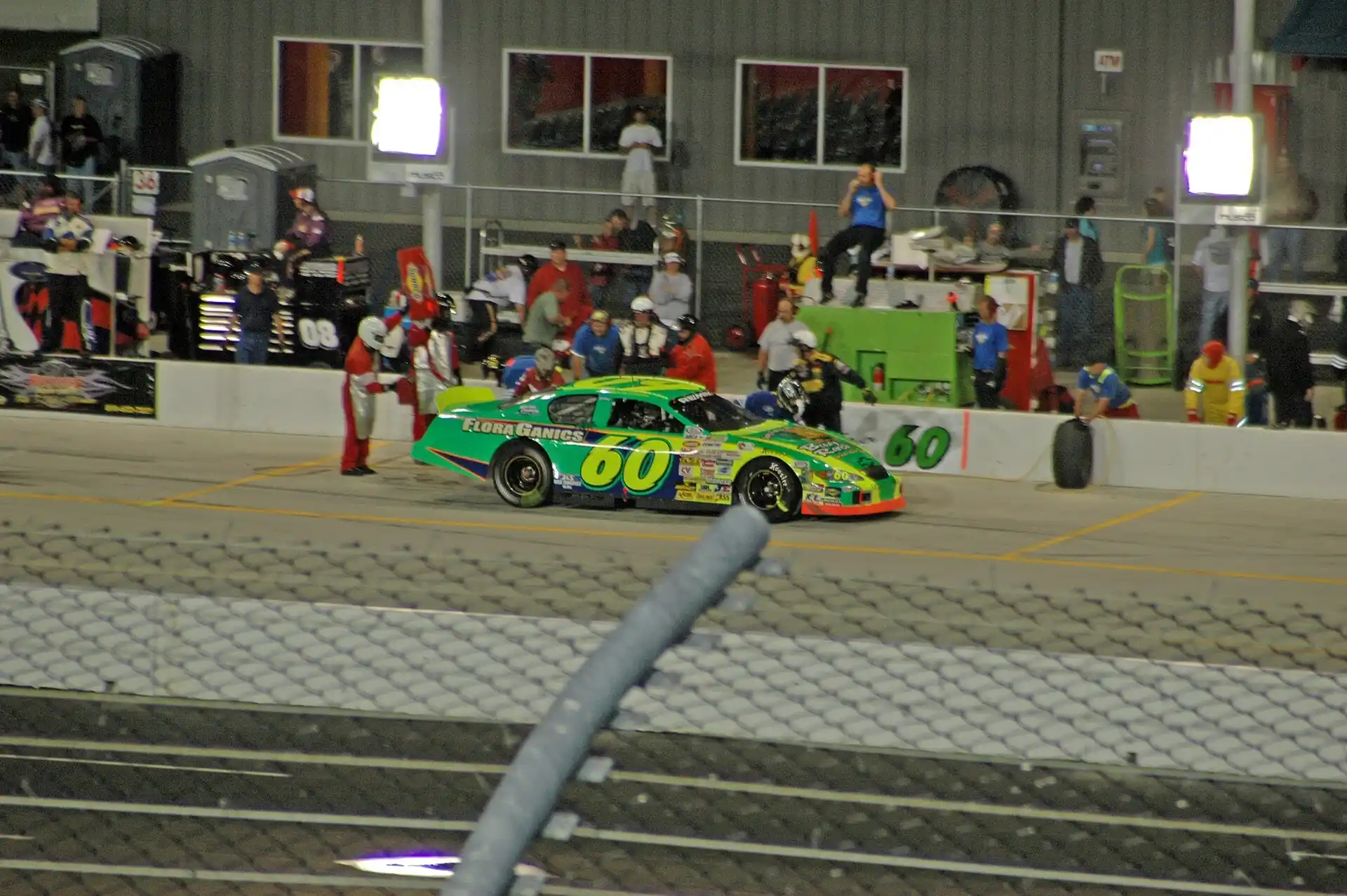
This is the central Iowa debate. A fresh set gives the driver entry confidence and center-corner grip. Clean air gives the leader control of line choice. Therefore, the crew chief has to estimate how many seconds a tire set is worth and compare that with how many positions will be surrendered on pit road.
If passing is easy, the answer leans toward tires. If passing is difficult, the answer leans toward track position. The ideal call can also change as rubber builds and the upper groove becomes usable. A race that begins as a bottom-lane track-position contest can become a more open tire race later in the afternoon.
That changing balance is one reason Iowa rewards adaptable teams. The crew chief cannot rely on a pre-race spreadsheet alone. Lap-time falloff, driver comments and traffic behavior must update the model continuously. World of Speed’s article on how race timing works helps explain how teams use time gaps and lap trends to judge whether a fresh-tire offset is paying off.
Iowa NASCAR 2026 Fuel Strategy: Why the 2025 Race Changed the Playbook
If 2024 was Iowa’s tire-and-track-position lesson, 2025 was its fuel lesson. NASCAR’s official race recap described the normal fuel window at Iowa as roughly 100 laps. William Byron then stretched his final run to 144 laps and won. That sounds impossible until the caution pattern is considered.
Repeated cautions reduce fuel burn because the field spends laps at pace-car speed. Drivers can also lift earlier, avoid aggressive throttle application and use drafting opportunities where available. Consequently, a fuel target that looks unrealistic under green can become possible after several yellow-flag periods.
Byron’s 2025 victory is a perfect example of why a crew chief should not define a fuel window as a fixed number. The correct model is a range that changes with every caution lap. Each yellow adds a small amount of future possibility. After enough yellows, the strategy can cross from “must pit” to “maybe make it.”
A normal green-flag estimate is only a starting point. Caution laps, throttle saving, traffic, restart count and the driver’s ability to lift-and-coast can all extend the final range.
How Teams Save Fuel at Iowa
The simplest technique is lifting earlier before corner entry. The driver gives up a small amount of lap time, but fuel burn drops. Short shifting is not relevant in the same way as on a road course because Cup cars remain in a narrow gear-use pattern on an oval. Instead, the driver mainly controls throttle duration and acceleration intensity.
Another tool is traffic. A car following another car can sometimes use slightly less throttle on the straight because the air resistance is reduced. The gain is not enormous, but a fuel-mileage race is often decided by tiny margins. Even a few hundredths of a gallon saved over repeated laps can change the final call.
The challenge is that Iowa punishes excessive saving. If a driver slows too much, faster cars arrive. Once track position is lost, the team may not regain it without another caution. Therefore, the driver must save enough to hit the target while protecting the lane and maintaining a minimum pace.
That tension separates strong fuel-mileage teams from desperate ones. A strong team begins saving early and gradually. A desperate team waits too long, then forces the driver to make dramatic pace reductions. The first method hides the fuel target. The second announces it to the entire field.
When Fuel Becomes More Important Than Tires
Fuel takes priority when a caution-heavy race pushes the remaining distance close to the extended window. If a team believes it can finish without another stop, pitting for tires may become strategically expensive. Fresh tires are valuable, but they are worthless if the stop gives away 15 positions and the race stays green.
That is exactly why the 2025 race produced different strategies among the leading cars. Byron, Chase Briscoe, Brad Keselowski and Ryan Blaney arrived at the finish through different tactical routes. The race showed that Iowa does not demand one universal strategy. It rewards the team that correctly reads how the race is evolving.
For broader championship context, fuel gambles also depend on risk tolerance. A driver secure in points can chase a win. A driver near the postseason cut line may protect stage points and a top-10 finish. World of Speed’s NASCAR points standings 2026 page is useful for understanding why two teams can face the same fuel number and make opposite decisions.
Iowa NASCAR Pit Timing: Why One Lap Can Change Everything
Pit timing is unusually sensitive at Iowa because the lap is short. On a two-mile oval, a green-flag stop costs time but the field takes longer to circulate. At Iowa, leaders complete a lap quickly. Therefore, a car on pit road can lose track position before the service is even complete.
This makes the undercut powerful but dangerous. A crew can short-pit, install fresh tires and use the grip advantage to run faster laps while rivals stay out. If the race remains green, those faster laps can cycle the car forward. However, if a caution appears before the rest of the lead group pits, the early stopper may be trapped a lap down or deep in the order.
That basic mechanism is explained in World of Speed’s guide to how pit stops work in racing. Iowa simply compresses the time scale. The same strategic idea that takes several laps to unfold at a larger track can become decisive in one or two laps here.
Short-Pitting for Tire Advantage
Short-pitting means stopping earlier than the cars around you to gain a fresh-tire pace advantage. It works best when tire falloff is significant and green-flag running is stable. The crew chief wants the driver to exit pit road into clean enough traffic to use the new tires immediately.
The worst short-pit scenario is heavy traffic followed by a caution. The driver pays the pit loss but cannot exploit the tire. Then the yellow freezes the field before rivals stop under green. The strategy that looked aggressive becomes a major track-position loss.
Therefore, teams monitor more than fuel and tire wear before short-pitting. They look at accident probability, traffic density, lapped cars, weather and the behavior of drivers around the cutoff. A car with obvious tire trouble may increase the chance of a yellow and make an early stop less attractive.
Staying Out to Protect Track Position
The opposite call is staying out longer. This is attractive when passing is difficult or when a crew chief suspects a caution is coming. The car gives up lap time on older tires but maintains position. If the yellow arrives, the driver can pit with the field and erase much of the tire disadvantage.
Staying out also helps a team control lane choice. Iowa restarts can be physical because the field compresses quickly into Turn 1. Being first or second gives a driver cleaner air and fewer unpredictable cars ahead. That can be worth more than a small lap-time advantage on fresh rubber.
This is where the concept of grid and lane position matters. World of Speed’s explainer on grid position in racing is written broadly enough to show why starting or restarting ahead changes the tactical problem, even though NASCAR restart rules differ from Formula 1.
Two Tires, Four Tires or Fuel Only?
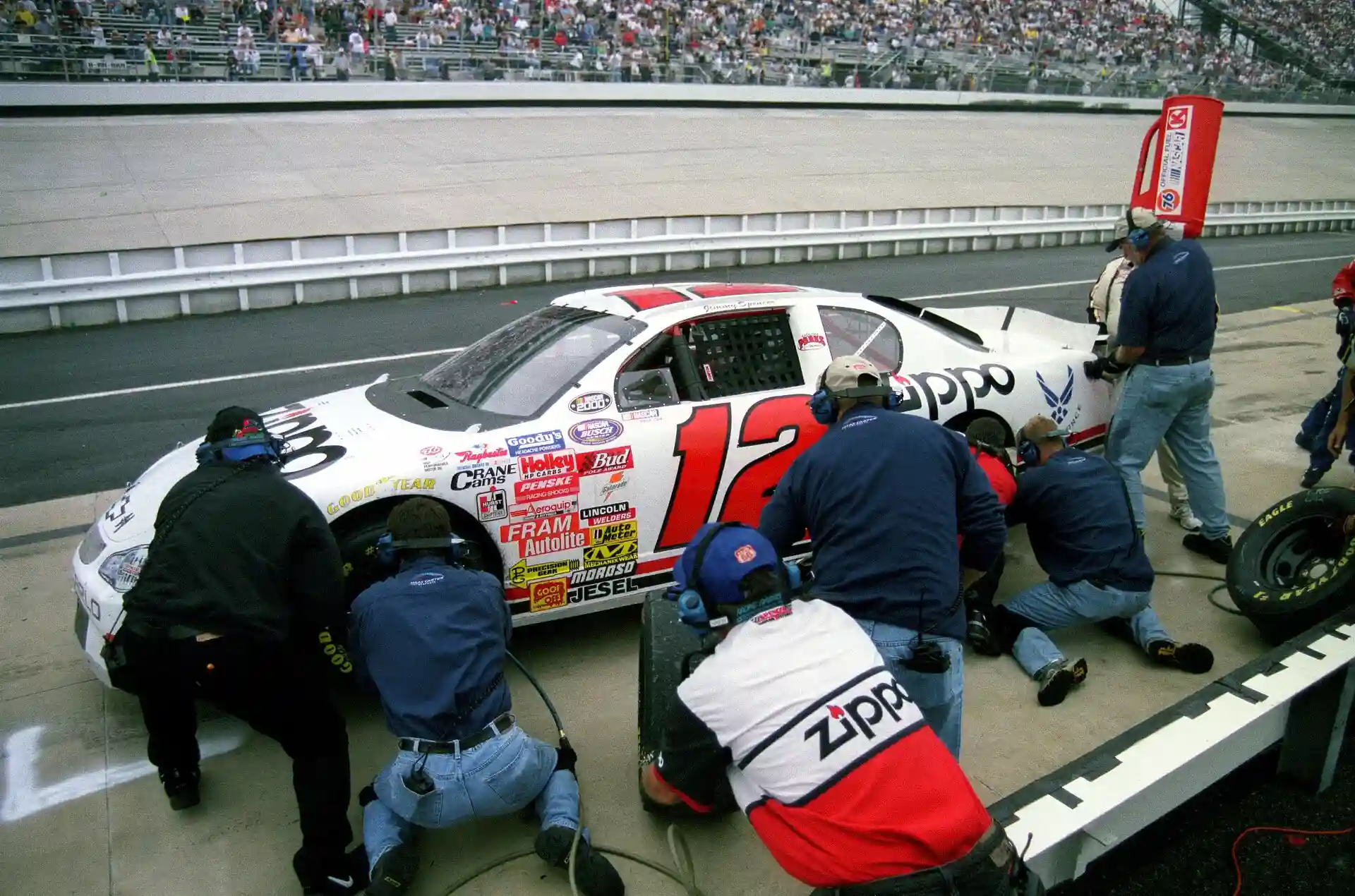
A two-tire stop is the classic track-position compromise. It is faster than four tires and restores some grip. The 2024 Iowa winner is the strongest evidence that the call can work. However, it is most effective when the car remains balanced on the older pair.
Four tires are the high-performance choice. They are best when tire falloff is meaningful, when the next run should be long, or when the driver already needs to pass several cars. The extra pit time is accepted because the team expects to recover positions on track.
Fuel only is the most extreme call. It can gain enormous position under a late caution, but the driver restarts on old tires against cars with fresh rubber. If degradation is high, the advantage may disappear in a few laps. If degradation is low and clean air is strong, the gamble can survive.
The crew chief’s job is to compare time. How many seconds will four tires save over the next 20 laps? How many seconds will they cost on pit road? How hard is passing? How many cars will the stop lose? The answer is never simply “new tires are faster.”
Cautions, Stage Breaks and the Iowa Strategy Reset
Cautions are not just interruptions at Iowa. They are strategy events. A yellow flag reduces fuel consumption, bunches the field, creates a cheaper pit opportunity and resets the importance of restart lanes. Consequently, one caution can change all three strategic pillars at once.
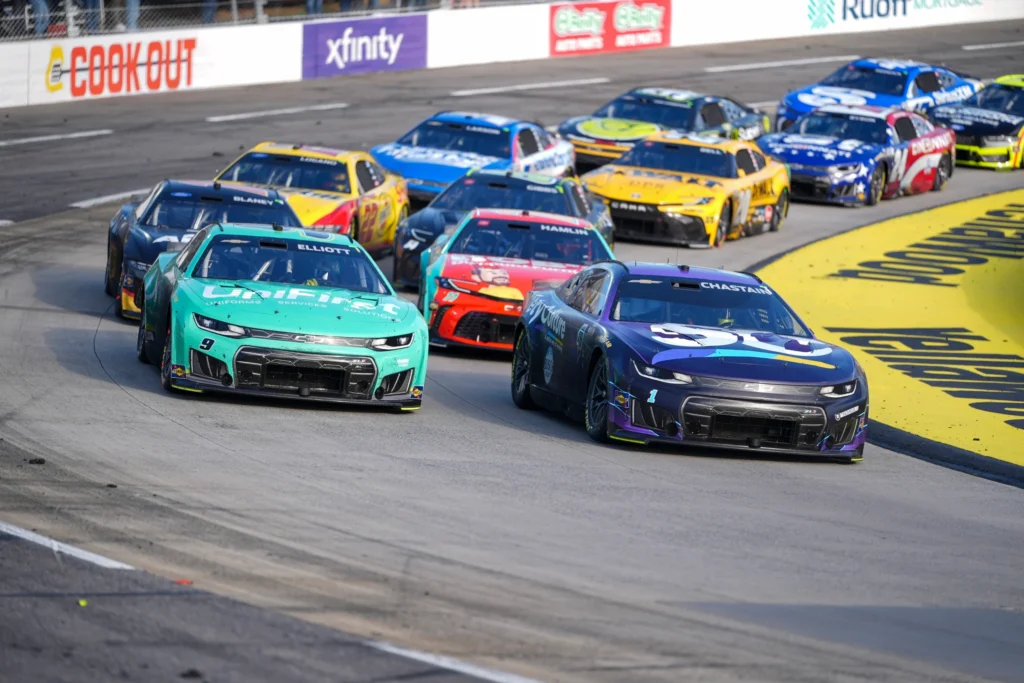
The scheduled stage breaks create predictable yellow-flag opportunities. Iowa’s Cup race is structured around Stage 1 ending at Lap 70, Stage 2 ending at Lap 210 and the finish at Lap 350. Teams can plan around those fixed breaks. Unscheduled cautions are the real disruptors.
If a caution falls just after leaders make green-flag stops, cars that remained on track may gain a major advantage. If it falls just before the fuel window opens, the entire field may pit together. If it falls late, crew chiefs face the classic choice between tires and position.
For readers who want a clear explanation of race-control signals, World of Speed’s racing flags guide covers the basic meaning of yellow, green and red conditions. Iowa strategy is especially sensitive to the yellow because the short lap magnifies the timing difference between cars that have pitted and cars that have not.
Why Late Cautions Favor Bold Calls
Late cautions compress the remaining distance. That makes tire life less important and track position more important. A team may take two tires because it only needs 20 competitive laps. Another team may stay out entirely because it believes clean air will protect old rubber.
However, the same call becomes dangerous if repeated cautions extend the race. Each restart adds tire heat and creates more laps. A strategy designed for a 15-lap sprint can become a 35-lap survival run. Therefore, crew chiefs have to consider the probability of another yellow, not just the scheduled distance.
Restart aggression also creates new accident risk. Drivers know that passing opportunities are limited. They may dive three-wide into Turn 1 or use the higher lane aggressively. That can create the very caution that destroys another team’s fuel calculation.
World of Speed’s archive guide to handling a short-oval race car adds useful context here. Short-track success depends on rotation, drive off the corner and consistency. Those traits become even more valuable on a restart when every car is close together.
Track Position: The Variable That Connects Tires, Fuel and Pit Timing
Every Iowa strategy eventually returns to track position. A team pits for tires because it believes the tire gain can recover positions. A team saves fuel because it wants to avoid surrendering positions. A team short-pits because it wants to gain positions through lap-time offset. The objective is the same even when the tools are different.
Track position matters because passing is not guaranteed. Progressive banking gives drivers options, but the preferred groove can still dominate during parts of the race. Dirty air can also make a car tighter, which increases front-tire stress and makes the next pass harder.
This creates a feedback loop. A driver falls into traffic, the car becomes tighter, the right-front works harder and tire life declines. The crew then considers pitting early for grip. Yet that stop may lose another lap if the caution comes at the wrong time. One poor position can create several strategic problems.
Aerodynamic load is part of that story. World of Speed’s explanation of downforce shows why airflow changes grip at speed. Iowa is not an aero-dominated superspeedway, but the Next Gen car still reacts to traffic and airflow through the corners.
Because of that, the leader has options that fifth place does not. The leader chooses the line, controls clean air and can often manage tire pace. A fifth-place car may have to push harder just to maintain position. Therefore, a crew can justify a conservative pit call if it protects the front row.
Four Iowa NASCAR 2026 Strategy Scenarios
Scenario 1: Long Green-Flag Run
A long green run puts tire degradation and fuel range at the center. Teams with good long-run balance can extend the stint. Others may short-pit to gain pace. The undercut becomes powerful, but a badly timed caution remains the major threat.
In this scenario, four tires are more valuable because the new set has enough laps to repay the pit-road time. Drivers who protect the right-front early can also attack later in the stint.
Scenario 2: Caution-Heavy Middle Stage
Repeated yellows reduce fuel burn and create cheap pit opportunities. Teams can take tires without losing a full green-flag lap, while fuel targets begin to stretch. This is the pattern that can transform a normal 100-lap window into something much longer.
Byron’s 2025 win is the key historical reference. Once cautions expanded his possible range, staying out became a winning option rather than a desperate gamble.
Scenario 3: Late Yellow With 25–40 Laps Remaining
This is the classic Iowa two-tire decision. Four tires offer maximum grip. Two tires offer position. Staying out offers maximum position but minimum tire recovery. The correct choice depends on how much the tires have fallen off and how difficult overtaking has become.
Blaney’s 2024 victory shows why two tires can be the sweet spot when the car is already strong enough to defend.
Scenario 4: Green-White-Checkered Chaos
Fuel becomes less relevant unless a team is already at the absolute limit. Restart lane, tire temperature and position become everything. A car on four fresh tires may attack aggressively, but a leader on two tires can still win if clean air and lane control are strong enough.
At this point, the strategy model becomes less about averages and more about execution. One missed shift, slow launch or wheel-spin moment can erase the best pit call.
These scenarios also explain why Iowa cannot be analyzed only through average finish or raw speed. Strategy can create results that look surprising if the underlying pit sequence is ignored. For comparison with another 2026 NASCAR strategy environment, World of Speed’s Brickyard 400 strategy analysis shows how fuel, cautions and track position interact on a completely different oval.
What the Crew Chief Is Watching During an Iowa Run
A modern NASCAR pit box receives more information than the television broadcast can show. The crew chief is watching lap-time falloff, throttle traces, fuel estimates, tire temperatures, driver comments, traffic density and the gaps to cars on alternative strategies.
The driver may report that the car is tight after 20 laps. That information changes the tire model. If the right-front is losing grip quickly, the team may shorten the run. However, if everyone else is slowing at the same rate, staying out may still be correct.
Fuel calculations also move constantly. A caution adds slow laps. A long green run removes margin. The crew may ask the driver to save before the television audience realizes fuel is a concern. Therefore, radio communication is one of the earliest clues that the strategic picture has changed.
Pit-road timing is equally dynamic. The crew chief tracks the cars just ahead and behind. If a rival pits, the team must decide whether to cover that move. Waiting can preserve flexibility, but it may allow the rival to use fresh tires for an undercut.
This is why race strategy is not one decision. It is a chain of linked decisions. One choice changes the next fuel target, tire age and position. World of Speed’s guide to how racing championships are scored adds another layer because stage points and season position can change how much risk a team is willing to accept.
Which Driver Traits Matter Most for Iowa Strategy?
A driver does not choose the fuel cell size or pit-stop time alone, but the driver can make strategy possible. Tire management begins with feel. The best drivers sense when the right-front is beginning to slide and adjust before the lap time collapses.
Fuel saving also requires discipline. Lifting early feels wrong when competitors are close behind. Yet a smooth driver can hit the fuel number without losing an entire lane. This makes communication essential. The crew chief needs accurate feedback, and the driver needs a believable target.
Restarts are the final skill. A two-tire strategy is useless if the driver loses four positions on the restart. Iowa compresses the field, so launch quality and lane choice matter immediately. The driver must balance aggression with tire temperature and avoid wheelspin.
Oval experience can help because the rhythm is repetitive. Small mistakes compound every 24 seconds or so. World of Speed’s NASCAR explainer on how fast NASCAR cars go provides useful background on why even a short oval produces significant cornering loads and rapid decision cycles.
Drivers with strong short-track technique can also use the brake pedal to help rotation. That may reduce steering input and protect the front tire. However, overusing the rear brakes can create a loose entry. As a result, setup and technique remain connected throughout the stint.
What Iowa’s First Two Cup Races Teach Us
| Year | Winner | Defining Strategy | Key Lesson |
|---|---|---|---|
| 2024 | Ryan Blaney | Two tires under final caution | Track position can beat four fresh tires when the leading car has strong pace. |
| 2025 | William Byron | Extended fuel run to 144 laps | Cautions can stretch a roughly 100-lap fuel window far beyond normal expectations. |
| 2026 setup | Goodyear test | Softer, higher-wear direction discussed | Tire degradation remains a deliberate strategic variable entering the event. |
The remarkable part is not that Iowa produced two different strategies. Most races do. The remarkable part is how clearly each race highlighted a different strategic pillar. The first Cup event was a tire-and-position lesson. The second was a caution-and-fuel lesson.
That gives 2026 teams a wider decision tree. They know two tires can win. They know extreme fuel saving can win. They also know the tire can become a safety and performance concern if loads are not managed correctly. Therefore, the winning call may be less about discovering a new idea and more about recognizing which historical lesson applies to the current race.
Fans tracking the broader season can pair this analysis with World of Speed’s how to watch NASCAR guide and the site’s who won the NASCAR race today page for live weekend context and post-race follow-up.
Iowa NASCAR 2026 Strategy FAQ
Conclusion: Iowa Rewards the Team That Reads the Race Fastest
Iowa NASCAR 2026 strategy comes down to flexibility. Tire wear matters, but clean air can beat fresh rubber. Fuel range matters, but a caution can add dozens of laps to the effective window. Pit timing matters, but one yellow flag can reverse the value of an early stop.
The track’s short length makes every decision arrive faster. Leaders reach traffic quickly. Green-flag stops cycle rapidly. Restart opportunities compress the field. Therefore, the crew chief has less time to recover from a wrong call than at many larger ovals.
The strongest historical lesson is simple. In 2024, two tires and track position won. In 2025, fuel conservation won. For 2026, Goodyear’s dedicated test and the discussion around softer, higher-degradation tires add another variable. A winning team must know when to prioritize grip, when to protect position and when to stretch the tank.
That is what makes Iowa more interesting than its 0.875-mile length suggests. It is not only a short-track driving contest. It is a live strategy problem in which tires, fuel, cautions and pit timing constantly rewrite one another.