NHRA Northwest Nationals 2026 Top Fuel Qualifying Results
Josh Hart used the final session to take the No. 1 spot with a 3.685, edging Billy Torrence by seven thousandths and earning the only first-round bye in Seattle’s 15-car field.
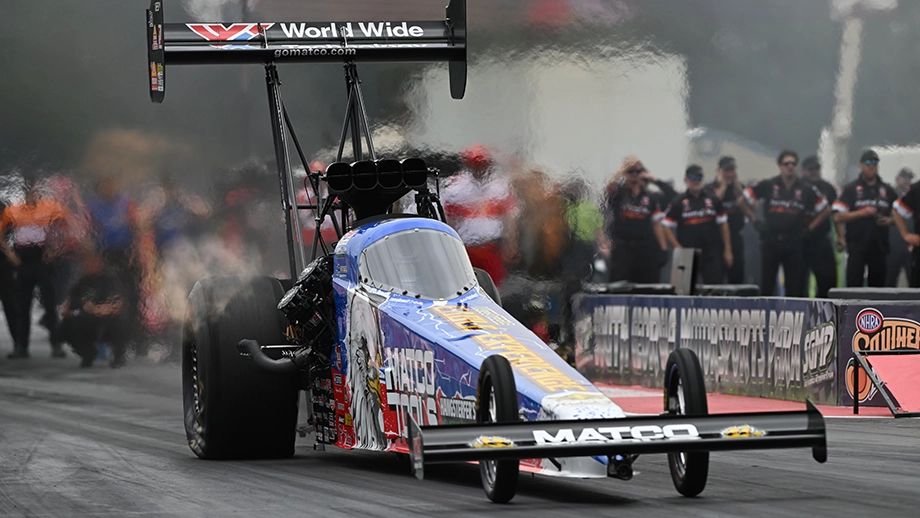
The NHRA Northwest Nationals 2026 Top Fuel qualifying results changed dramatically during Saturday’s final session. Josh Hart moved to No. 1 with a 3.685-second pass at 335.40 mph, earning his second low-qualifier award of the season.
Billy Torrence finished second after a 3.692 at 338.17 mph. Doug Kalitta jumped from 11th to third with a 3.703, while points leader Shawn Langdon held fourth with his 3.707 from Q3.
Friday leader Jasmine Salinas fell outside the top eight as the weather cooled and the track improved. Nine drivers ran in the 3.70s during Q3 alone, compared with only two across Friday’s two sessions.
Josh Hart qualified No. 1 with a 3.685 at 335.40 mph. His Q4 run beat Torrence’s 3.692 by .007 second and gave Hart a first-round bye because the field contained 15 cars.
Final Top Fuel Qualifying Order: Top Eight
| Pos. | Driver | ET | MPH | Session | Qualifying note |
|---|---|---|---|---|---|
| 1 | Josh Hart | 3.685 | 335.40 | Q4 | No. 1; first-round bye |
| 2 | Billy Torrence | 3.692 | 338.17 | Q4 | Seven thousandths behind Hart |
| 3 | Doug Kalitta | 3.703 | 336.57 | Q4 | Jumped from No. 11 during the session |
| 4 | Shawn Langdon | 3.707 | 334.48 | Q3 | Held provisional No. 1 after Q3 |
| 5 | Leah Pruett | 3.710 | 332.18 | Q4 | Top-five start and one bonus point |
| 6 | Clay Millican | 3.719 | 336.74 | Q3 | Won the 3.719 tie on speed |
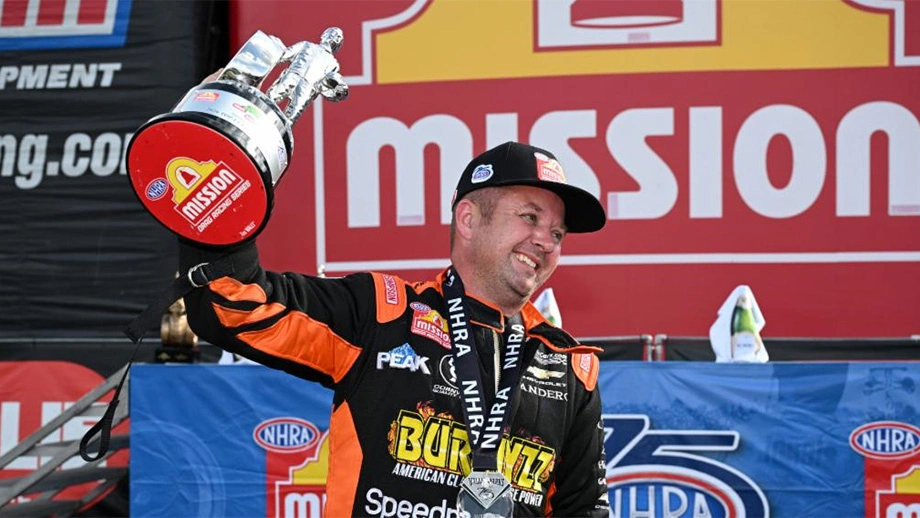
| 7 | Antron Brown | 3.730 | 332.59 | Q4 | Mission Challenge winner |
| 8 | Maddi Gordon | 3.731 | 337.92 | Q3 | Quickest rookie in the field |
Hart’s margin over Torrence was only seven thousandths. However, the difference carried more value than a normal low-qualifier award because Seattle had an odd-numbered field.
The No. 1 position placed Hart alone on one side of the opening round. Therefore, he could make a scheduled bye run while every other qualified driver faced an opponent.
Torrence recorded the fastest speed among the top eight at 338.17 mph. Gordon was close behind at 337.92, while Kalitta reached 336.57.
Millican and Hart had already demonstrated how speed can settle a tie. Both ran 3.719 in Q3, but Millican’s 336.74 mph placed him ahead of Hart’s 335.07 at that stage.
How Josh Hart Took the No. 1 Position
Hart entered Q4 with genuine progress but without the leading number. His 3.719 in Q3 had been his best qualifying elapsed time since the season opener.
Millican matched that elapsed time and ran faster, so Hart remained behind him. Meanwhile, Langdon held the provisional pole at 3.707 after Torrence’s 3.706 was removed.
Q4 changed the order in several stages. Kalitta first moved from No. 11 into the provisional lead with a 3.703. Torrence then ran 3.692, which looked strong enough to finish the session on top.
Hart answered with a 3.685 at 335.40 mph. The run was seven thousandths quicker than Torrence and eighteen thousandths quicker than Kalitta.
Why the run mattered to Hart’s season
Hart had opened 2026 by qualifying No. 1 and winning Gainesville in his John Force Racing debut. However, his results became uneven after the opener.
Before Seattle, the team had reached only one semifinal since Gainesville. Consequently, the pole represented more than a single fast run. It showed the Speedmaster dragster had regained a competitive window.
Hart described the result as necessary for a team that had continued working without receiving the expected returns. His comments emphasized mechanical discipline and confidence that the performance would eventually appear.
The first-round bye was a major reward
NHRA normally pairs a 16-car professional field in eight first-round races. Seattle contained 15 Top Fuel entries, leaving one driver unpaired.
The bye went to the No. 1 qualifier. Hart still needed to stage and make an official attempt, but he did not need to defeat another driver to reach the quarterfinals.
3.685 seconds at 335.40 mph. The pass delivered Hart’s second No. 1 qualifier of 2026 and the second low-qualifier award of his Top Fuel career.
Friday Qualifying: Langdon Led Q1, Salinas Led Q2
Q1 results and early baselines
| Pos. | Driver | ET | Q1 note |
|---|---|---|---|
| 1 | Shawn Langdon | 3.823 | Q1 leader |
| 2 | Shawn Reed | 3.837 | Strong local opening run |
| 3 | Leah Pruett | 3.841 | Early top-three baseline |
| 4 | Tony Stewart | 3.847 | Clean first-session pass |
| 5 | Antron Brown | 3.871 | Inside the quick half |
| 6 | Justin Ashley | 3.882 | Complete opening run |
| 7 | Will Smith | 3.893 | Straight down the groove |
| 8 | Clay Millican | 4.069 | Held the final top-half spot |
Langdon opened with a 3.823 to lead the first session. Reed followed with a 3.837 in front of his Pacific Northwest supporters.
Pruett and Stewart placed third and fourth. Brown, Ashley, Smith and Millican completed the top half after Q1.
The track temperature measured 129 degrees during the early session, while the adjusted altitude was 2,318 feet. Those conditions limited how aggressively the crew chiefs could apply power.
Several teams made incomplete runs. Kalitta, for example, slowed to 6.174 after losing the clean acceleration needed for a representative number.
Q2 results: Salinas skipped Q1 and led the day
| Pos. | Driver | ET | Friday status |
|---|---|---|---|
| 1 | Jasmine Salinas | 3.794 | Skipped Q1, then took the Friday lead |
| 2 | Antron Brown | 3.798 | Four thousandths from No. 1 |
| 3 | Doug Kalitta | 3.802 | Close third after Friday |
| 4 | Leah Pruett | 3.819 | Improved but dropped one position |
| 5 | Tony Stewart | 3.822 | Improved but dropped one position |
| 6 | Shawn Langdon | 3.823 | Q1 time remained his Friday best |
| 7 | Shawn Reed | 3.837 | Q1 time remained his Friday best |
| 8 | Maddi Gordon | 3.839 | Closed the Friday quick half |
Salinas did not make a Q1 attempt. Nevertheless, she opened Q2 with a 3.794 and remained first through the session.
Brown came within .004 second at 3.798. Kalitta recovered from his Q1 problem with a 3.802, placing three drivers inside eight thousandths.
Pruett and Stewart both improved. However, faster runs around them meant each dropped one position in the order.
Langdon and Reed failed to improve, but their opening numbers remained sixth and seventh. Gordon’s 3.839 completed the Friday top eight.
Why Friday’s order did not predict the pole
The event returned to two qualifying sessions on Friday and two on Saturday. Both Friday sessions occurred before the early-evening sunset rather than under a fully cooled night track.
Salinas’ 3.794 was impressive for the conditions. Still, the crews expected Saturday’s weather to create a much quicker track.
That prediction proved correct. The eventual No. 1 time was more than one tenth quicker than the Friday leader.
Q3 Results: Cooler Air Transformed the Field
| Driver | ET | MPH / status | Q3 significance |
|---|---|---|---|
| Justin Ashley | 3.752 | 333.25 | First driver to displace Friday’s 3.794 |
| Josh Hart | 3.719 | 335.07 | Best qualifying ET since Gainesville |
| Clay Millican | 3.719 | 336.74 | Took position from Hart on speed |
| Billy Torrence | 3.706 | Timing-system DQ | Run removed after a timing issue |
| Shawn Langdon | 3.707 | 334.48 | Inherited provisional No. 1 |
| Jasmine Salinas | 3.741 | — | Beat Pruett in the Mission Challenge |
| Leah Pruett | 3.762 | — | Strong side-by-side Challenge pass |
| Maddi Gordon | 3.731 | 337.92 | Moved into the final top eight |
Q3 began with air temperatures near 66 degrees and a track temperature near 94 degrees. The adjusted altitude fell close to 1,272 feet.
The lower track temperature improved grip, while the denser air improved engine performance. As a result, the Friday order began changing almost immediately.
Ashley ran 3.752 and removed Salinas from the top. Hart then lowered the target to 3.719.
Millican matched Hart exactly at 3.719. Because the elapsed times were equal, speed became the tiebreaker. Millican’s 336.74 placed him ahead of Hart’s 335.07.
Torrence appeared to settle the session with a 3.706. However, the number was removed after officials identified a timing-system issue.
Once Torrence’s run was removed, Langdon’s 3.707 became the provisional No. 1. Gordon also made an important move with a 3.731 at 337.92 mph.
Nine drivers reached the 3.70s
Only Salinas and Brown had run in the 3.70s during Friday. Nine drivers reached that range in Q3.
The increase showed how sensitive a 12,000-horsepower dragster is to weather and surface temperature. A setup that looked conservative Friday could become aggressive Saturday without a major visual change.
Friday established who could make a clean run. Saturday revealed who could turn improved air and grip into a genuine pole attempt.
Why Billy Torrence’s 3.706 Was Disqualified
Torrence’s Q3 pass originally displayed a 3.706. That number would have placed the Capco dragster first at the end of the session.
However, the official detailed result showed an impossible finish-line reading. The timing system displayed 99.999 seconds and 1.00 mph despite normal incremental numbers earlier in the run.
Officials therefore removed the elapsed time. Langdon’s 3.707 became the official provisional leader.
The ruling did not end Torrence’s qualifying challenge. Instead, the Capco team returned in Q4 and ran an even quicker 3.692 at 338.17 mph.
That response was one of the strongest performances of the weekend. Torrence replaced a disputed number with a faster, fully accepted result.
The 3.706 did not remain in the qualifying record. Torrence’s official best became his Q4 pass of 3.692 at 338.17 mph.
Q4 Results: Three Drivers Took Turns at the Top
Kalitta’s move from 11th to third
Kalitta entered the late part of Q4 outside the preferred half of the ladder. His team had worked through a timing-controller issue that limited earlier attempts.
The 3.703 temporarily put him first and eventually secured third. That position paired him with Reed in the opening round.
Torrence set the session’s speed standard
Torrence’s 338.17 mph was the fastest speed among the official top eight. It also showed the Capco dragster remained strong beyond the early incrementals.
Hart won the elapsed-time contest, but Torrence’s speed made the gap appear even smaller. Both cars entered eliminations with credible winning performance.
Langdon and Pruett completed the top five
Langdon did not improve on his 3.707, yet the run remained good enough for fourth. Pruett’s 3.710 at 332.18 secured fifth.
Those positions created difficult opening assignments. Langdon drew Ashley, while Pruett drew Smith.
Top Fuel Mission #2Fast2Tasty Challenge Results
| Round | Winner | Opponent | Result | Race note |
|---|---|---|---|---|
| Semifinal | Antron Brown | Doug Kalitta | 4.08 to 6.05 | Both pedaled; Brown advanced |
| Semifinal | Jasmine Salinas | Leah Pruett | 3.741 to 3.762 | Salinas earned final-round lane choice |
| Final | Antron Brown | Jasmine Salinas | 3.730 at 332.59 | Salinas lifted after losing traction |
Brown and Kalitta met in a Sonoma semifinal rematch. Both drivers lost traction and pedaled, with Brown advancing 4.08 to 6.05.
Salinas repeated her Sonoma win over Pruett. Her 3.741 defeated Pruett’s 3.762 and gave Salinas final-round lane choice.
Brown won the final with a 3.730 at 332.59 mph after Salinas lost traction and lifted. It was Brown’s first Mission Challenge victory of the season.
The Challenge results also counted as qualifying runs. Brown’s final therefore placed him seventh in the official order.
How Track Conditions Changed the Qualifying Results
| Session | Air temperature | Track temperature | Adjusted altitude | Performance effect |
|---|---|---|---|---|
| Q1 | 81°F | 129°F | 2,318 ft | Warm surface limited the quickest combinations |
| Q3 | 66–67°F | 94–100°F | 1,272 ft | Nine drivers reached the 3.70s |
| Q4 | Cool Saturday air | Improving | Lower than Friday | Hart, Torrence and Kalitta reshuffled the top three |
Track temperature controlled early traction
The Q1 track temperature reached 129 degrees. A hotter surface generally provides a narrower tuning window for a nitro dragster.
The crew chief must reduce the risk of overpowering the tire. However, removing too much clutch or fuel can leave valuable elapsed time on the track.
Cooler air increased available power
Saturday’s cooler air contained more oxygen than Friday’s warmer air. More oxygen allowed the engines to burn more fuel efficiently and produce stronger acceleration.
The improved adjusted altitude reflected that change. Q3 began near 1,272 feet, more than 1,000 feet better than the Q1 figure.
The combination created a field-wide improvement
Better air alone can make the tire problem worse because the engine produces more power. Better grip alone can still leave the engine short of oxygen.
Saturday supplied both. Therefore, crew chiefs could apply more power while retaining enough traction to complete the run.
Pacific Raceways Top Fuel Starting Ladder
| Higher qualifier | Opponent | Matchup context |
|---|---|---|
| No. 1 Josh Hart | Bye | Hart advanced without an opponent in the 15-car field |
| No. 2 Billy Torrence | No. 15 Krista Baldwin | Capco versus Baldwin’s Ron Smith-owned entry |
| No. 3 Doug Kalitta | No. 14 Shawn Reed | Reigning champion versus the local favorite |
| No. 4 Shawn Langdon | No. 13 Justin Ashley | Points leader versus a leading starting-line specialist |
| No. 5 Leah Pruett | No. 12 Will Smith | TSR’s higher qualifier against the Bluebird Turf entry |
| No. 6 Clay Millican | No. 11 Jasmine Salinas | Millican’s speed against Friday’s leader |
| No. 7 Antron Brown | No. 10 Tony Schumacher | Four-time champion versus eight-time champion |
| No. 8 Maddi Gordon | No. 9 Tony Stewart | Rookie winner against the team owner and champion |
Hart received the only bye
The odd field made the No. 1 position unusually valuable. Hart did not face a first-round opponent.
He still needed to make a legal staging procedure and run. However, an opponent could not defeat him through reaction time or elapsed time.
The middle pairings were extremely strong
Langdon’s fourth position produced a race against Ashley, one of the quickest starting-line drivers in the category.
Brown and Schumacher brought 12 combined championships to the No. 7 versus No. 10 pairing. Gordon and Stewart formed another major matchup at the center of the bracket.
Friday leader Salinas started 11th
Salinas had led Friday and reached the Mission Challenge final. Nevertheless, the rapid Saturday field placed her 11th and paired her with Millican.
The change illustrated the difference between provisional and final qualifying. A Friday lead carries attention and bonus value, but only the best accepted number after Q4 sets Sunday’s ladder.
What the Qualifying Results Revealed
Hart had the best single run
The pole belongs to the quickest accepted elapsed time, and Hart delivered it. His 3.685 also came at the most valuable moment, after Torrence had raised the target.
Torrence had the strongest finish-line speed
Torrence’s 338.17 mph suggested his engine continued pulling hard through the final portion of the course. That trait can matter when two cars make similar early runs.
Kalitta solved problems before eliminations
Kalitta’s third position was not built through four smooth sessions. Instead, the team solved a controller problem and made the required run late.
That recovery demonstrated the depth of the reigning champion’s operation. A difficult Friday did not prevent a top-three start.
Langdon protected a strong position without Q4 improvement
Langdon’s 3.707 remained fourth after Q4. The run showed that a strong Q3 pass could survive even as several rivals improved.
However, fourth placed the points leader in a difficult first-round race. Qualifying well does not always create an easy opponent in a deep field.
Gordon’s 337.92 mph made her a serious threat
Gordon finished eighth in elapsed time but second among the top eight in speed. Her 3.731 showed the rookie’s dragster possessed strong top-end power.
That performance created a close matchup with Stewart rather than a typical top-half-versus-lower-half advantage.
The field was faster than the Friday picture suggested
Salinas’ Friday lead was credible and deserved. Yet Saturday showed that the true ceiling was much lower than 3.794.
Hart ultimately improved the leading time by .109 second. In Top Fuel, that is a major change rather than a minor session adjustment.
Top Fuel Qualifying Results FAQ
Conclusion: Hart Won a Qualifying Battle Decided in Q4
The NHRA Northwest Nationals 2026 Top Fuel qualifying results were not settled until the final session. Hart, Torrence and Kalitta each produced a run capable of leading the field.
Hart finished first at 3.685. Torrence followed at 3.692 and recorded the quickest speed among the leading eight. Kalitta recovered from earlier technical problems to qualify third.
Langdon and Pruett completed the top five, while Millican, Brown and Gordon filled the remaining top-half positions. Salinas moved from Friday leader to the lower half as Saturday conditions accelerated the entire category.
The 15-car entry added extra value to Hart’s pole. His Q4 performance delivered both the low-qualifier award and the only first-round bye at Pacific Raceways.
Sources & Official References
- NHRA — Saturday qualifying notes, Q3 and Q4 progression and final top eight
- NHRA — Hart pole report, official speeds and Mission Challenge results
- NHRA — Friday Q1 and Q2 qualifying results
- NHRA — official event results, detailed timing and ladders
All elapsed times, speeds, weather figures, qualifying positions and first-round pairings are based on official NHRA race coverage and event timing. The performance interpretation is independent World of Speed analysis.