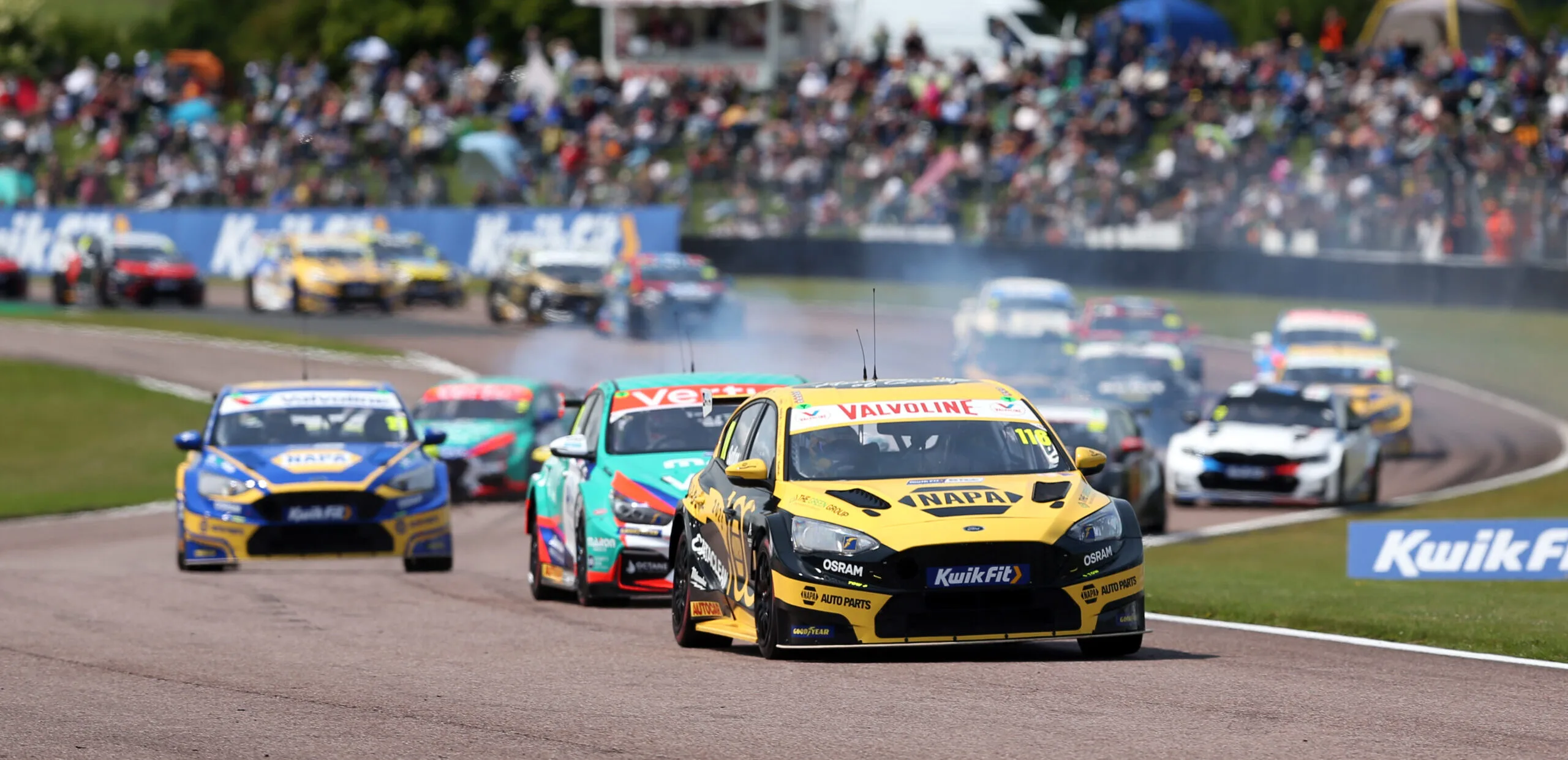
Thruxton BTCC 2026 Strategy Analysis: Hard Tyres, Turbo Boost & Race Position
A race-by-race analysis of Goodyear hard-tyre management, the exact TOCA Turbo Boost scale, Saturday’s Race to Pole, Sunday grid sequencing, slipstream tactics and the championship pressure facing Ash Sutton, Tom Ingram and their rivals.
The Thruxton BTCC 2026 strategy is built around three limits. Every Sunday race uses the Goodyear hard tyre. TOCA Turbo Boost changes with championship or race position. Meanwhile, the circuit’s speed makes track position valuable but never completely secure.
Thruxton hosts Rounds 13, 14 and 15 on July 25–26. The championship resumes after a seven-week summer break with Ash Sutton 48 points ahead of Tom Ingram. Dan Cammish and Charles Rainford remain close enough to punish any mistake.
This analysis uses the official 2026 sporting regulations, current standings and the published Thruxton timetable. Forecasts are editorial judgments. Weather, scrutineering bulletins and the final grid can still change the competitive picture.
Thruxton BTCC 2026 Strategy: The Quick Answer
What will decide Thruxton BTCC 2026?
Hard-tyre temperature, TOCA Turbo Boost deployment, slipstream timing and position before the final chicane should decide Thruxton. Leaders must protect tyre life with little boost. Midfield drivers receive more boost, but dirty air raises tyre load. The fastest car may not win unless it controls the tow and restarts.
Thruxton removes the usual Sunday compound gamble. Every dry race must be completed on hard Goodyears. Therefore, strategy shifts away from choosing soft, medium or hard tyres and toward extracting different phases from the same compound.
The opening laps reward drivers who create heat quickly. The middle phase rewards smooth steering and stable balance. Finally, the closing laps reward anyone who preserved front grip while saving enough boost opportunities to attack.
Turbo Boost adds the second layer. Sutton leads the championship and receives only one second per qualifying lap. He also receives one boosted lap in Race 1. Drivers from eighth downward receive 20 seconds per qualifying lap and ten boosted race laps at Thruxton.
However, more boost does not guarantee an easy pass. A driver must remain close through Church and Brooklands, then position the car for the Club Chicane. Losing the tow by half a second can waste the extra power.
The third layer is the new 2026 weekend. Saturday qualifying sets the grid for a 12-lap Qualifying Race. That race then sets the grid for Sunday’s opener. Consequently, one poor Saturday session can affect two starts and four scoring opportunities.
At Thruxton, speed creates opportunity. Position converts that opportunity into points.
World of Speed strategy deskWhy the 2026 Weekend Format Changes Thruxton Strategy
How does the 2026 BTCC weekend format work?
Saturday contains one 40-minute practice, two 15-minute qualifying groups and a 12-lap Qualifying Race. That race sets Sunday’s Race 1 grid. Race 1 results set Race 2, while Race 2 results feed a partial reverse-grid draw for Race 3.
BTCC weekends no longer begin with two separate practice sessions. Thruxton offers one 50-minute timetable block, from 10:25 to 11:15 a.m. British Summer Time. Teams must complete installation work, qualifying preparation and long-run checks inside that compact window.
Official qualifying starts at 2:00 p.m. BST. The field is divided into two 15-minute groups. The group containing the fastest overall lap forms the odd-numbered side of the Qualifying Race grid. The other group supplies the even positions.
That arrangement creates a tactical problem. A driver cannot simply target first place in the group. The overall fastest group matters because it controls which side of the grid receives pole, third, fifth and the remaining odd positions.
The 12-lap Qualifying Race starts at 3:05 p.m. BST. It pays points to the first 15 drivers, from ten points for first to one point for 15th. However, there are no bonus points for fastest lap, leading or securing the Sunday pole.
More importantly, the result sets Race 1. Damage or a penalty on Saturday can force a title contender toward the back for Sunday’s first full-points race. Therefore, the Race to Pole is not a disposable sprint.
Weekend Sequence in Eastern Time
| Session | Local time | Eastern Time | Distance | Strategic purpose |
|---|---|---|---|---|
| BTCC Free Practice | Sat. 10:25–11:15 BST | 5:25–6:15 a.m. ET | 50 minutes | Tyre pressures, tow runs and setup validation |
| Official Qualifying | Sat. 2:00–2:35 p.m. BST | 9:00–9:35 a.m. ET | Two 15-minute groups | Sets Qualifying Race grid |
| Qualifying Race | Sat. 3:05 p.m. BST | 10:05 a.m. ET | 12 laps | Scores points and sets Race 1 |
| Race 1 | Sun. 11:45 a.m. BST | 6:45 a.m. ET | 16 laps | Full points; sets Race 2 |
| Race 2 | Sun. 2:40 p.m. BST | 9:40 a.m. ET | 16 laps | Full points; controls reverse-grid draw |
| Race 3 | Sun. 5:30 p.m. BST | 12:30 p.m. ET | 16 laps | Partial reverse grid and final points haul |
Sunday’s three races are equal in scheduled distance. However, their strategic value is not equal. Race 1 rewards Saturday execution. Race 2 changes boost by Race 1 finishing order. Race 3 combines another boost reset with the reverse-grid draw.
World of Speed explains how racing drivers qualify, what pole position means and why grid position matters.
Thruxton Circuit Demands: Why Small Errors Become Large Losses
Why is Thruxton the fastest BTCC circuit?
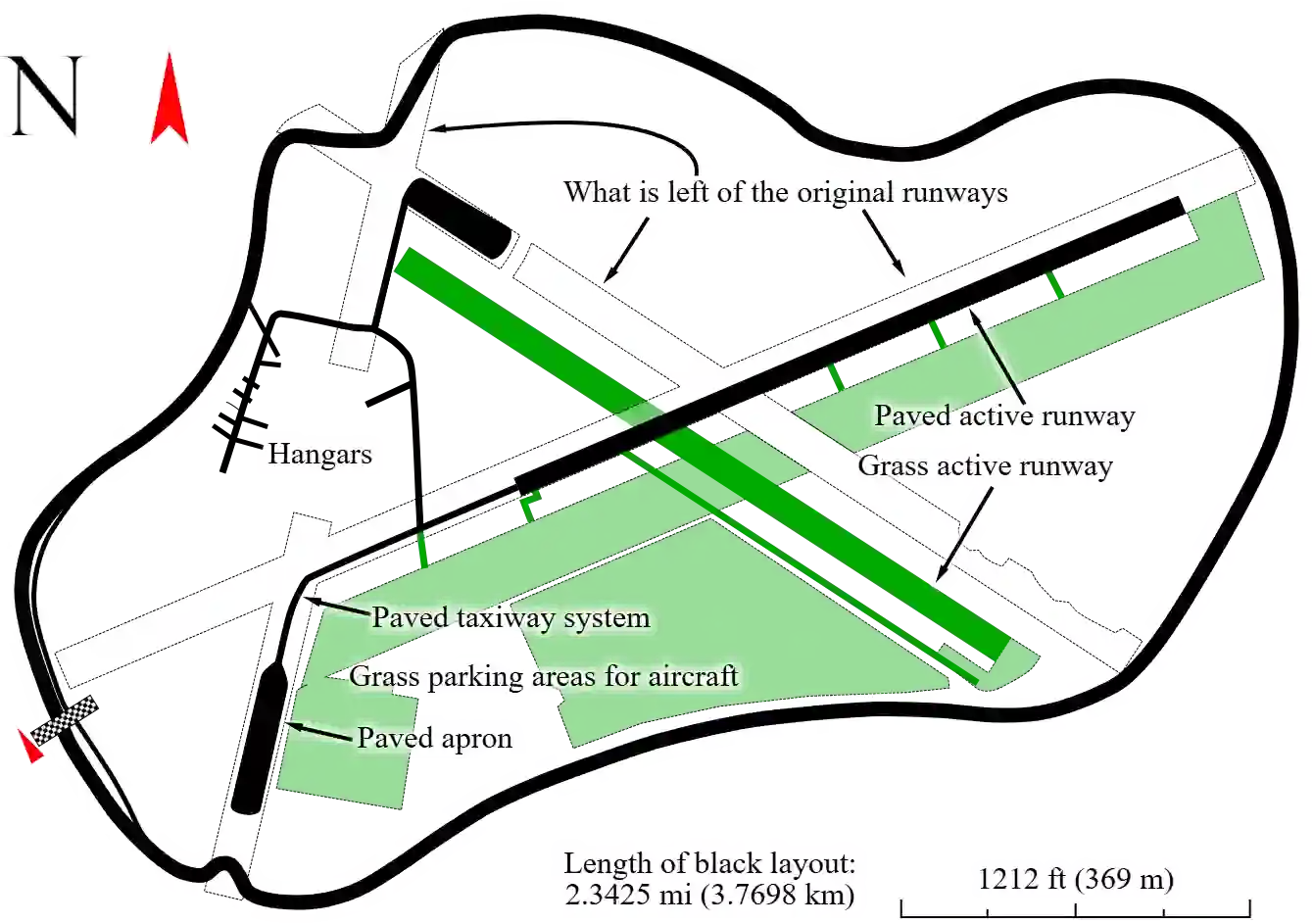
Thruxton uses the perimeter roads of a former airfield and links long, flowing corners with few heavy braking zones. BTCC lists it as the circuit with the championship’s highest average speed. Ash Sutton’s 2025 race record averages 112.71 mph.
The lap begins at Allard, a fast right-hand bend that immediately tests commitment. Campbell, Cobb and Segrave form the Complex, where drivers must slow the car while keeping enough momentum for the long acceleration phase.
Noble and Goodwood then build lateral load. Church is the defining corner. Drivers carry enormous speed through a section where confidence, tyre condition and aerodynamic stability are inseparable.
Brooklands leads toward the Club Chicane. This is the clearest conventional passing zone because cars finally brake hard. However, the move often begins much earlier through the slipstream.
Allard: The First Temperature Test
Allard arrives before the hard tyre has reached its ideal window. A driver who attacks too aggressively can slide the front and raise surface temperature without properly heating the carcass.
Therefore, the first lap is about controlled load. Smooth steering produces useful energy. A correction or lockup creates a flat spot that can last the entire 16-lap race.
The Complex: Position Before Speed
Campbell, Cobb and Segrave provide one of the few opportunities to change direction at lower speed. Drivers can use a late brake or switchback here, especially after a start or restart.
Yet the exit matters more than a desperate apex. A poor Segrave exit leaves the car vulnerable through the long high-speed run. The following driver can use both tow and turbo boost.
Church: The Corner That Exposes Tyre Management
Church is not where most passes are completed. It is where the next pass is prepared or lost. A driver with front understeer must lift earlier and loses momentum toward Brooklands.
Clean air helps because the car retains front-end response. In traffic, the following car loses aerodynamic load and asks more from the tyre. That extra steering angle creates heat and wear.
Club Chicane: The Final Decision Point
The chicane is the main braking opportunity. Drivers can attack from the tow, defend the inside or attempt a switchback on exit.
However, aggressive kerb use can unsettle the car. Goodyear’s hard tyre can tolerate Thruxton’s load, but a harsh impact still damages balance and risks a puncture.
For technical background, read World of Speed’s guides to downforce, slipstreaming and racing grip.
Hard-Tyre Strategy: The Same Compound Creates Different Races
Why are hard tyres mandatory at Thruxton?
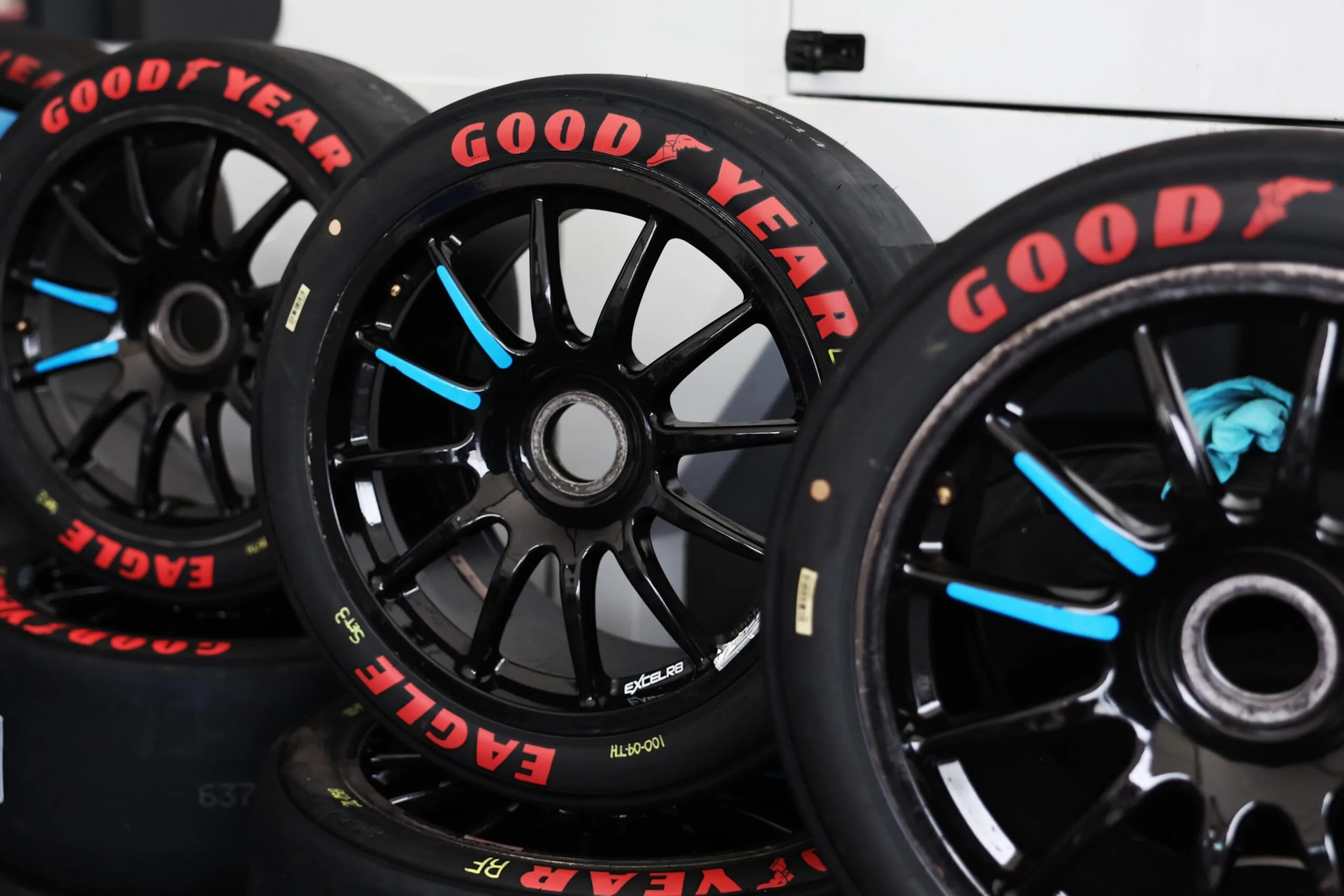
Thruxton combines high average speed, an abrasive surface, aggressive kerbs and sustained corner loads. The 2026 BTCC regulations therefore allocate 16 new hard tyres and require the hard compound in every Sunday race. Four new medium tyres may be used in qualifying only.
The regulation removes the soft-versus-hard drama seen elsewhere. Still, it does not remove tyre strategy. Teams must choose which hard sets to scrub, which to preserve and how to distribute heat cycles across Saturday and Sunday.
The official allocation lists four new medium tyres and 16 new hard tyres for Thruxton. The table also permits specific medium and hard carryover sets. Medium tyres can appear in qualifying but cannot be used in the Qualifying Race.
| Tyre item | 2026 Thruxton allocation | Permitted use | Strategic effect |
|---|---|---|---|
| New medium tyres | 4 tyres / one set | Qualifying only | Faster warm-up may improve grid position |
| New hard tyres | 16 tyres / four sets | Practice, Qualifying Race and all Sunday races | Set management matters across four races |
| Carryover tyres | Specified medium and hard sets | According to scrutineering allocation | Useful for practice and preparation laps |
| Wet tyres | Regulated separately | Adverse weather | Removes dry hard-tyre requirement while conditions remain wet |
Medium Tyres Can Win Saturday Before the Race Begins
The medium set creates a clear qualifying opportunity. It should reach temperature more quickly and may provide stronger initial grip. However, every driver receives the same basic opportunity, so execution matters.
Teams must decide when to use the medium set inside a short group session. Running too early risks missing track evolution. Waiting too long risks traffic, a red flag or a poorly timed tow.
The qualifying race then returns everyone to hard tyres. Therefore, a medium-assisted front row does not guarantee Saturday victory. The driver must immediately adapt to lower initial grip and a different balance.
Hard-Tyre Warm-Up Is a Race-Position Problem
Cold hard tyres reduce front bite into the Complex and braking confidence at the chicane. A driver who loses one place on lap one may then become trapped in a slipstream train.
Consequently, setup cannot focus only on late-race consistency. Engineers need enough mechanical grip to survive the opening tour without overheating the tyre once the race settles.
Why the Front Axle Needs Protection
Thruxton’s long right-hand load places severe demand on the outside tyres. Front-wheel-drive cars also ask the front axle to steer, accelerate and manage much of the braking.
Too much understeer increases steering angle. That scrubs the tyre and raises temperature. The lap time may remain acceptable for several laps, then fall quickly once the front surface loses support.
Rear-wheel-drive BMWs distribute acceleration differently. However, they still need front stability at high speed. A loose rear can force corrective steering and damage all four tyres.
Scrubbed Versus Fresh Hard Tyres
A lightly scrubbed set may offer more predictable opening behavior. The first heat cycle removes some initial movement and helps the driver trust the tyre.
Fresh tyres retain maximum life. Yet their first laps can feel less settled. Teams will use practice to decide which sets suit the Qualifying Race and each Sunday contest.
Safety Cars Change the Temperature Window
A safety car reduces load and cools the hard compound. Pressure drops, braking response changes and the restart becomes a fresh warm-up phase.
Drivers cannot use TOCA Turbo Boost while the safety car is deployed or on the first racing lap after it withdraws. Therefore, the restart is decided by tyre preparation, positioning and throttle control rather than extra power.
The fastest opening setup is not automatically the best Thruxton setup. The target is a hard tyre that reaches temperature quickly, remains stable through Church and still turns into the chicane on lap 16.
TOCA Turbo Boost: The Exact Thruxton Allocation
How does TOCA Turbo Boost work at Thruxton?
Championship position sets boost for qualifying, the Qualifying Race and Race 1. At Thruxton, first place receives one second per qualifying lap and one boosted race lap. Eighth place and lower receive 20 seconds per qualifying lap and ten boosted race laps.
TOCA Turbo Boost temporarily increases available performance through the regulated turbo system. Its purpose is to reduce the advantage held by leading drivers without adding success ballast.
The 2026 system separates qualifying use from race use. In qualifying and the Qualifying Race, position controls available seconds per lap. In Sunday races, position controls how many laps include boost.
Thruxton is classified as an A circuit. Only Brands Hatch Indy, Knockhill and Silverstone are B circuits. Therefore, the lower A-circuit lap allowances apply in Hampshire.
| Championship or prior-race position | Minimum deployment speed | Qualifying / Qualifying Race | Thruxton race laps with TTB | Current example for Race 1 |
|---|---|---|---|---|
| 1st | 140 km/h | 1 sec per lap | 1 lap | Ash Sutton |
| 2nd | 135 km/h | 3 sec per lap | 2 laps | Tom Ingram |
| 3rd | 130 km/h | 5 sec per lap | 3 laps | Dan Cammish |
| 4th | 125 km/h | 7 sec per lap | 4 laps | Charles Rainford |
| 5th | 120 km/h | 9 sec per lap | 5 laps | Ricky Collard |
| 6th | 115 km/h | 11 sec per lap | 6 laps | Daryl De Leon |
| 7th | 110 km/h | 15 sec per lap | 8 laps | Mikey Doble |
| 8th or lower | 105 km/h | 20 sec per lap | 10 laps | Josh Cook and lower |
Race 1 uses the championship order shown before Thruxton. Race 2 uses the Race 1 finishing order. Race 3 uses the Race 2 finishing order. Judicial changes can alter the official allocation.
Why More Seconds Per Lap Matter in Qualifying
Sutton receives only one second of boost on each qualifying lap. Ingram receives three seconds, while Cammish receives five. Rainford receives seven and drivers from eighth downward receive 20.
That difference can help a driver recover speed after the Complex or build momentum before the chicane. However, a poorly timed activation can be wasted while following traffic.
The minimum deployment speed also matters. Sutton must reach 140 km/h before activation. Eighth-place drivers can deploy at 105 km/h, allowing them to access the power earlier on corner exit.
Why Boost Laps Must Be Chosen, Not Merely Used
Drivers from eighth downward receive ten boosted laps in a 16-lap Thruxton race. They still need to choose six laps without it. The correct decision depends on position, traffic and the remaining opportunities.
A driver in clean air may avoid using boost until a rival closes. Another may use it immediately after the restricted opening lap to pass before a train forms.
Saving all available laps for the end can backfire. A safety car may remove several green laps, or the driver may become trapped behind a slower car while unused boost remains.
When Boost Cannot Be Used
The regulations prohibit TTB on the first racing lap. It is also unavailable under the safety car and on the first racing lap after the safety car withdraws.
Race Control can suspend it at other times. Therefore, a strategy based on a precise remaining-lap count must include caution scenarios.
Best Thruxton Deployment Zones
The strongest deployment usually combines corner exit with a tow. The driver wants extra acceleration while the car ahead reduces drag.
The run from the Complex toward the fast back section offers momentum value. The approach toward Club Chicane offers the clearest passing reward. However, deploying too early can leave the driver exposed on the final straight.
Defensive boost is equally important. A leader may activate to break the tow before the following car reaches a useful passing distance.
Use power inside the tow
Extra boost becomes more effective when aerodynamic drag has already fallen behind another car.
Break the train early
A clean exit and one well-timed deployment can move the leader outside chicane range.
Keep one late response
A final boosted lap can protect a podium, but only if earlier traffic has not already cost the position.
Race Position: Why the Best Strategic Place Is Usually the Front
Why is track position important at Thruxton?
Clean air protects front grip through Thruxton’s loaded corners. A leader can also control when the tow forms and defend the final chicane. More boost helps midfield drivers, but traffic increases tyre temperature and contact risk. Each finish also determines the next grid.
Thruxton appears to offer easy passing because the tow is powerful. In reality, many cars can form one long train. The first driver controls the pace, while the cars behind fight for the same braking space.
A leader with low boost can survive by making no mistakes. Strong exits deny the chasing car a clean overlap. Accurate chicane defence then forces the rival onto a slower line.
Meanwhile, a midfield driver with ten boost laps may spend those laps defending rather than attacking. The allocation creates potential, but position determines how that potential is used.
Clean Air Protects the Hard Tyre
Following closely reduces front aerodynamic load. The driver adds steering angle to maintain the same line. That action increases tyre scrub and heat.
Therefore, running second can be harder on tyres than leading. The chasing driver must decide whether to attack immediately or drop back enough to recover front grip.
The Tow Can Become a Trap
A tow increases speed, but it also shortens the braking decision. Several cars can arrive at the chicane together. The driver on the outside may have nowhere to complete the move.
Experienced Thruxton racers often prepare passes over multiple corners. They position the car for a better exit rather than forcing the first available gap.
Every Finish Builds the Next Race
Race 1 finishing order becomes the Race 2 grid. Race 2 finishing order then feeds the Race 3 reverse-grid draw.
This can create a temptation to think about future position. Yet deliberately surrendering places costs championship points and may not produce the expected reverse-grid result.
The draw selects a number from sixth to 12th. That car starts Race 3 on pole, and the positions ahead are reversed. A driver cannot know whether sixth, eighth or 12th will become the best outcome.
Contact Is Strategically Expensive
Touring-car racing allows close competition, but damage raises drag and alters balance. A bent front corner can destroy the hard tyre through Church.
A penalty also affects the next grid. Therefore, a marginal pass in Race 1 can cost two races rather than one.
World of Speed’s explainers cover clean and dirty air, understeer and oversteer and brake balance. The series differs, but the vehicle dynamics apply.
Saturday Race to Pole Strategy
What is the best Thruxton Qualifying Race strategy?
Use the medium tyre and a planned tow to secure the best possible qualifying grid, then prioritize a clean hard-tyre opening lap in the 12-lap race. Drivers should attack before a train forms, but avoid damage because the finishing order becomes Sunday’s Race 1 grid.
The Race to Pole begins in qualifying. Teams need a gap large enough for clean air but small enough to receive a tow. At Thruxton, that balance may be worth more than a small setup change.
Sutton faces the least boost but carries strong qualifying skill. Ingram and Cammish receive more seconds per lap, giving them a meaningful straight-line tool. Rainford receives seven seconds and has shown front-running pace in the WSR BMW.
The medium tyre should improve warm-up. However, drivers get only one set. A lockup or traffic-ruined run wastes the weekend’s most valuable qualifying rubber.
Qualifying Group Strategy
Drivers are split according to practice order. Odd and even practice finishers enter different groups. Therefore, finishing practice first is not the only goal. Teams also watch which rivals enter each session.
The group with the fastest overall lap receives the odd side of the Qualifying Race grid. Teammates can help by creating a disciplined tow, but they must avoid slowing each other through the Complex.
Qualifying Race Opening Lap
The hard tyre replaces the medium. Boost cannot be used on the first racing lap. Starts and tyre preparation therefore matter more than power allocation.
The pole-sitter must lead into the Complex and avoid giving a tow. The second row can attack while front tyres remain cool, but contact carries a large Sunday penalty.
Points Versus Pole
The Qualifying Race winner receives ten points and Race 1 pole. Second receives nine points and the outside front-row start. Both outcomes are valuable.
A championship leader may accept second rather than force a dangerous final-lap move. A lower-ranked driver can justify more risk because the extra point and pole position could transform Sunday.
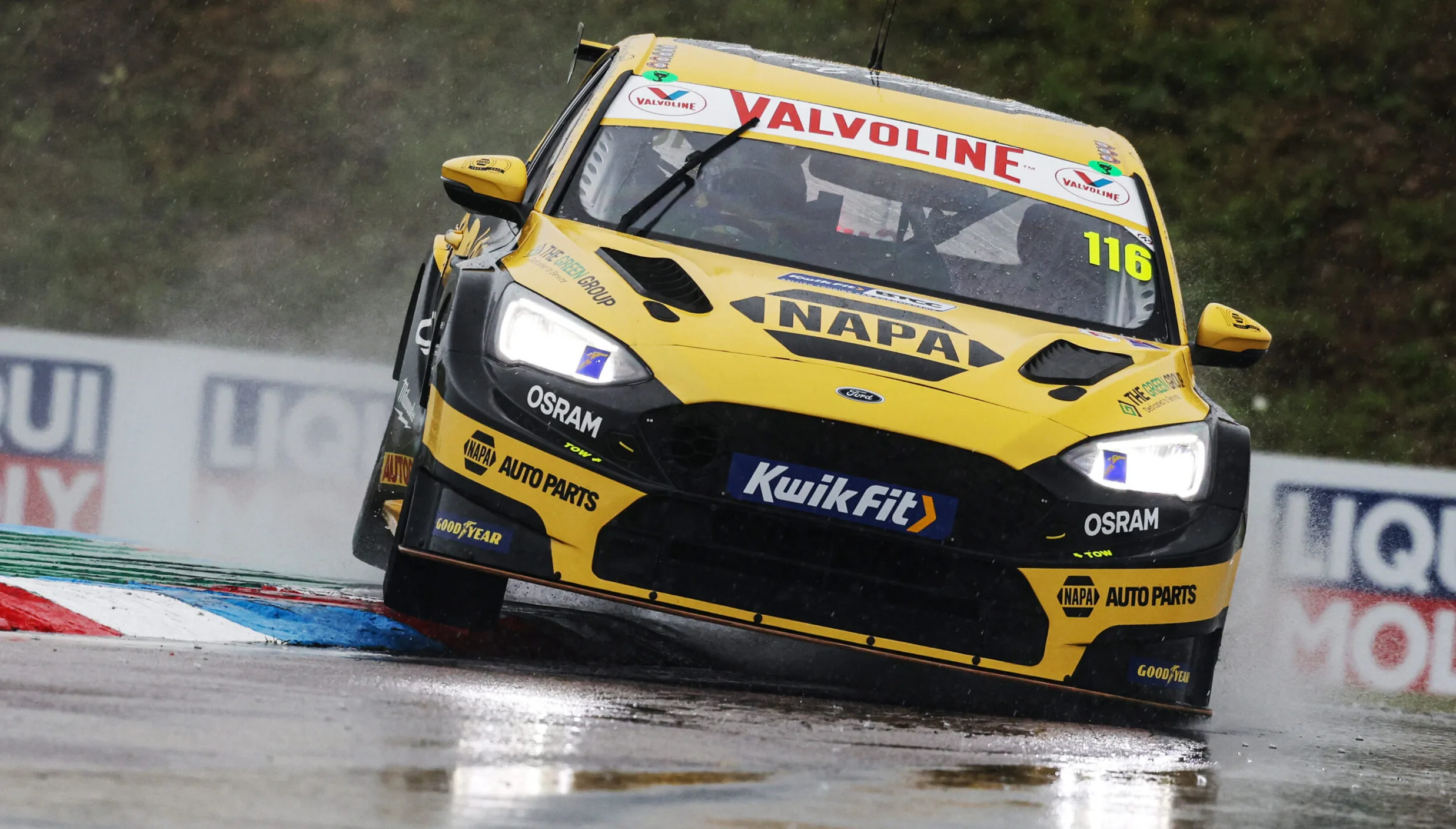
Ingram and Cammish have the strongest boost-assisted qualifying case. Sutton remains a pole threat through execution. Rainford is the leading BMW alternative. The safest Race to Pole target is a front-row finish without contact.
Race 1 Strategy: Championship Order Controls the Boost
Race 1 uses championship order for its TTB allocation. Sutton receives one boosted lap. Ingram receives two, Cammish three and Rainford four. Josh Cook, eighth in the standings, receives ten.
That creates two different races. The title leaders need track position and clean execution. Drivers from eighth downward can plan repeated attacks.
Sutton’s Strategy
Sutton must convert Saturday into a front-row start. From the lead, he can use clean air and defend the chicane. From the midfield, one boosted lap offers little recovery room.
His best deployment may be defensive. Using the only boosted lap to break Ingram’s tow could protect several championship points.
Ingram and Cammish
Ingram has two boosted laps and Cammish has three. Their advantage is small enough that every activation must have a clear purpose.
An early use can seize the lead before tyres settle. A late use can create the decisive chicane attack. Holding one lap for defence remains sensible.
Cook’s Ten-Lap Opportunity
Cook begins the event eighth in points and receives the maximum ten Race 1 boost laps. He is also the most successful modern Thruxton driver with ten wins.
However, qualifying remains critical. Starting 14th with ten boost laps is less useful than starting fifth with the same allocation. Traffic can consume the tyre advantage before the car reaches the front.
Race 1 Strategic Prediction
The strongest combination belongs to a driver who qualifies near the front but sits lower in the championship. Rainford has four boosted laps and a competitive BMW. Cook has ten but may need more grid recovery.
Ingram receives enough boost to attack Sutton without sacrificing title discipline. Therefore, he is the narrow Race 1 strategy favorite if he starts on the first two rows.
Race 2 Strategy: The Winner Loses Boost, the Chasers Gain It
How does Race 1 position affect Race 2 strategy?
Race 2 starts in Race 1 finishing order, but boost also resets from that result. The Race 1 winner receives one boosted lap. Eighth place and lower receive ten. Therefore, the leader gains track position while the midfield gains power.
Race 2 is the purest track-position-versus-boost contest. The winner starts from pole but carries the smallest TTB allowance. The driver in eighth starts further back but receives ten boosted laps.
At many circuits, the extra boost could create immediate movement. Thruxton’s trains make the process slower. A driver must clear one rival without losing contact with the next.
Leader’s Defensive Plan
The pole-sitter needs a strong first lap because TTB is unavailable. Clean air then allows the leader to protect the front tyres and build a gap before rivals begin deploying.
The single boosted lap should be held for the most dangerous phase. That may be after a rival closes or during the final green lap.
Second Through Seventh
These drivers receive progressively more opportunities. The second-place starter has two boosted laps, while seventh receives eight.
Seventh may be the most strategically powerful starting place. The driver remains close enough to the lead group and receives almost the maximum allocation.
Eighth and Lower
Maximum boost creates a recovery route. Still, the driver must protect the hard tyre while following multiple cars. Repeated attacks can overheat the front axle.
A calm first half may be faster than ten consecutive boosted laps. Saving three or four activations for the final phase can catch rivals with worn tyres.
Race 2 and the Reverse-Grid Draw
The Race 2 result also determines the Race 3 draw. Numbers from sixth to 12th enter the bowl. The selected finisher starts Race 3 on pole.
Drivers will know this possibility, but calculating a preferred finishing place remains dangerous. Sixth scores ten points, while 12th scores four. Surrendering positions for a random draw is rarely justified.
The smarter approach is to maximize Race 2, then accept the reverse-grid outcome. Championship campaigns are usually lost through unnecessary risk rather than a poor draw.
Race 3 Strategy: Reverse Grid, Fresh Boost Order and Late-Day Tyres
How does the reverse grid change Thruxton strategy?
The Race 3 pole is drawn from Race 2 positions six through 12. Cars ahead of the selected number are reversed. Boost still follows the Race 2 result, so a driver starting near the front may also carry a larger allocation than the Race 2 winner.
Race 3 creates the weekend’s widest strategy range. A driver can start on pole after finishing between sixth and 12th. That same driver may have between six and ten boosted laps.
The Race 2 winner usually starts behind the reversed group and receives one boosted lap. Therefore, even the fastest driver faces a difficult recovery.
Reverse-Grid Pole Strategy
The pole-sitter should use clean air to protect tyres and prevent a tow. The opening lap is critical because no driver can activate TTB.
Once boost becomes available, the leader may need defensive deployments. Allowing second place within chicane range can begin a chain reaction through the field.
Fast Car Starting Behind
A title contender starting eighth or ninth must avoid contact. Passing one car per lap can be enough. A desperate three-wide move through the Complex can end the entire weekend.
The driver should target exits and complete moves at the chicane. Hard-tyre preservation matters because Race 3 often runs on the most heavily used track surface and the warmest late-afternoon conditions.
Late Safety Car
A late safety car removes the leader’s gap and cools the hard tyres. TTB remains unavailable on the first racing lap after the restart.
That creates a pure grip contest. The driver who prepared the tyre best can attack before boost returns. However, weaving or an incorrect restart can attract a penalty.
Race 3 Strategic Forecast
The reverse-grid pole sitter becomes the favorite if the car has strong straight-line speed. Rainford, Cook, Shedden, Doble or another driver from the sixth-to-12th group could control the race.
Sutton and Ingram should prioritize points rather than a low-percentage win. A top-five finish from behind the reverse group may be more valuable than contact while chasing first.
Safety Cars, Restarts and Wet-Weather Scenarios
A safety car changes every core Thruxton variable. It compresses track position, cools the tyre and removes boost deployment.
The leader loses the gap but keeps first position. The chasing driver gains proximity but cannot use TTB on the first green lap. Therefore, restart grip decides the first attack.
Tyre Preparation Behind the Safety Car
Drivers need heat in the brakes and tyres without breaching restart rules. Smooth acceleration and controlled braking build temperature more safely than dramatic steering inputs.
Cold fronts create understeer into the Complex. Cold rears can produce oversteer as power arrives. Either problem can trigger contact in a tightly packed field.
Boost Strategy After the Restricted Lap
Boost returns after the first racing lap following the safety car. Drivers should anticipate where the field will be when activation becomes legal.
A car already alongside at the chicane may not need boost immediately. A driver trapped in a train should use the first legal deployment to prevent the gap from reopening.
Wet Weather
A reliable race-day forecast is not available at publication time. If rain arrives, grooved wet tyres replace the dry hard requirement while conditions demand them.
Thruxton becomes extremely difficult in standing water. The 2025 qualifying session showed how quickly cars can lose control at Goodwood and Village.
Wet conditions also reduce the value of a conventional tow because visibility deteriorates. Drivers may leave a larger gap, which changes boost timing and braking confidence.
World of Speed covers racing flags, safety-car procedure and how race laps are counted.
Championship Contenders and Their Thruxton Strategy
Who leads the BTCC before Thruxton?
Ash Sutton leads with 220 points after five wins and nine podiums in 12 races. Tom Ingram is second with 172, Dan Cammish has 160 and Charles Rainford has 137. The 48-point lead gives Sutton security but also the smallest initial boost allocation.
| Position | Driver | Team / car | Points | Race 1 TTB laps | Thruxton strategic need |
|---|---|---|---|---|---|
| 1 | Ash Sutton | NAPA Racing UK Ford Focus | 220 | 1 | Qualify at the front and control clean air |
| 2 | Tom Ingram | Team VERTU Hyundai | 172 | 2 | Use modest boost edge without overworking tyres |
| 3 | Dan Cammish | NAPA Racing UK Ford Focus | 160 | 3 | Convert qualifying pace into a Saturday win |
| 4 | Charles Rainford | WSR BMW 330i M Sport | 137 | 4 | Exploit BMW speed and recent winning momentum |
| 5 | Ricky Collard | Team VERTU Hyundai | 124 | 5 | Stay in the tow and attack the chicane |
| 6 | Daryl De Leon | WSR BMW 330i M Sport | 113 | 6 | Turn extra boost into a first victory challenge |
| 7 | Mikey Doble | Power Maxed Racing Audi | 110 | 8 | Use one of the strongest allocations near the lead group |
| 8 | Josh Cook | Speedworks Corolla Racing Toyota | 105 | 10 | Combine maximum boost with ten-win circuit knowledge |
Ash Sutton: Track Position Above Everything
Sutton won five of the first 12 races and built a 48-point lead. He also set the current Thruxton race record, 1:15.254 at 112.71 mph, during his 2025 Race 2 victory.
His weakness is the regulation rather than the car. One second per qualifying lap and one Race 1 boost lap leave little recovery power. Sutton must make Saturday count.
A front-row start lets him use racecraft and clean air. A grid position outside the top six creates the weekend’s hardest title-leader scenario.
Tom Ingram: The Balanced Threat
Ingram reduced the championship gap at Oulton Park with three podiums. He also won the 2025 Thruxton opener and finished second in the next two races.
Two Race 1 boost laps are not a major advantage, but they give him one offensive and one defensive option. His Hyundai also performed strongly at Thruxton last season.

Dan Cammish: Saturday Specialist
Cammish enters third with 160 points. He won the Oulton Park Qualifying Race and Race 1, showing how Saturday track position can become Sunday points.
Five seconds of TTB per qualifying lap also improves his Thruxton case. A clean medium-tyre run could put him ahead of both title rivals.
Charles Rainford: The Momentum Driver
Rainford won at Snetterton and Oulton Park. His WSR BMW offers straight-line efficiency and rear-wheel-drive traction.
Seven seconds per qualifying lap and four Race 1 boost laps create a strong middle ground. He is close enough to the front to avoid heavy traffic but receives more power than the top three.
Josh Cook: Maximum Boost and Maximum Circuit Knowledge
Cook has ten modern-era Thruxton victories, more than any other driver. He enters eighth, which gives him the maximum qualifying and Race 1 allocation.
His challenge is the new Toyota package and team execution. If Cook starts in the first three rows, he becomes a genuine Race 1 favorite.
New Faces Add Strategic Uncertainty
WSR expands to three BMWs as Lewis Gilbert makes his BTCC debut. The 22-year-old moves from single-seaters and begins at the fastest circuit on the calendar.
Speedworks Corolla Racing also changes its lineup. Ryan Bensley replaces Max Buxton for the remainder of the season and joins Cook in the Toyota squad.
Both newcomers receive favorable TTB treatment because they sit outside the top seven. However, boost cannot replace touring-car experience in traffic.
Lessons From the 2025 Thruxton Races
The 2025 weekend provides three useful strategy cases. Ingram won Race 1 after taking control from Sutton. Sutton answered in Race 2 with a record lap. Daniel Rowbottom then won the reverse-grid finale.
Race 1: Position Can Survive a Safety Car
Ingram won after a race containing a six-lap safety-car period. Sutton initially fought for the lead but later lost power and slipped behind Cammish and Cook.
The lesson is reliability and restart position. A fast car still needs full performance after the caution. Meanwhile, Cook recovered from 14th to third following a major qualifying crash.
Race 2: Opening-Lap Commitment Can Decide the Race
Sutton started fourth and reached the lead during a remarkable opening lap. He then controlled the race and set the 1:15.254 record.
That drive showed the value of attacking before the field forms a stable train. It also showed that a driver can overcome modest boost through positioning and confidence.
Race 3: Reverse Grid Rewards Complete Execution
Rowbottom won the final race, with Ingram and Cammish completing the podium. Sutton finished fifth.
The leading title drivers accepted strong points while the reverse-grid starter converted position. The same pattern may return in 2026, although TTB and the new Saturday race alter the route.
Thruxton BTCC 2026 Strategic Predictions
Prediction 1: The Qualifying Race Winner Will Start Sunday With Less Than Five Race 1 Boost Laps
The likely Saturday favorites sit inside the championship top four. Their cars have shown pace, but their Race 1 boost remains restricted.
Therefore, the Sunday opener should become a defence against faster-boosted challengers rather than a simple repeat of Saturday.
Prediction 2: At Least One Driver From Eighth or Lower Will Reach a Sunday Podium
Maximum TTB means ten boosted laps. Cook is the strongest candidate because of his Thruxton record. Shedden, Moffat or Taylor-Smith can also benefit.
Prediction 3: A Safety-Car Restart Will Decide One Race
Cold hard tyres and prohibited first-restart-lap boost create a unique opportunity. The driver who prepares grip best can gain positions before the electronic advantage returns.
Prediction 4: Race 2 Seventh Place Will Be Strategically Powerful
The seventh starter receives eight boosted laps while remaining close to the lead group. That combination can be stronger than maximum boost from deeper in the field.
Prediction 5: Sutton Will Retain the Championship Lead
A 48-point advantage offers protection. Even with limited TTB, Sutton’s qualifying speed and Thruxton record should produce enough points.
However, Ingram can reduce the margin. His 2025 results and balanced boost allocation make him the strongest overall weekend prediction.
Tom Ingram
Strong 2025 Thruxton form, consistent Oulton Park momentum and enough TTB to attack without starting deep in the standings.
Josh Cook
Ten Thruxton wins and the maximum initial boost allocation make qualifying the only major missing piece.
Dan Cammish
Five seconds of boost per qualifying lap and proven Race to Pole execution at Oulton Park.
Charles Rainford
Two 2026 victories, four Race 1 boost laps and a car suited to straight-line efficiency.
Thruxton BTCC 2026 Strategy FAQ
Conclusion: Thruxton Rewards the Driver Who Links Four Strategies Together
The Thruxton BTCC 2026 Strategy cannot be reduced to tyre saving or turbo boost alone. The winning driver must connect hard-tyre temperature, boost deployment, slipstream position and the grid sequence across four races.
The hard tyre removes the usual compound choice. However, it increases the value of preparation, heat cycles and balance. A car that protects front grip through Church should remain strong at the chicane.
TOCA Turbo Boost gives the midfield a real weapon. Sutton receives one Race 1 boost lap, while Cook and every driver from eighth downward receive ten.
Still, extra power needs track position. A car trapped in dirty air can overheat its front tyres before the driver completes a pass.
Saturday now matters more than ever. Medium-tyre qualifying sets the Qualifying Race grid, and the 12-lap result becomes the Sunday Race 1 order.
Race 2 then resets boost from the first result. Race 3 adds a reverse-grid draw and another new allocation.
Sutton remains the championship favorite because of his 48-point lead and record pace. Ingram is the strongest Thruxton weekend prediction after three podiums at Oulton Park and excellent 2025 form here.
Cammish can control Saturday, while Rainford offers the best BMW challenge. Cook remains the specialist capable of turning maximum boost into a surprise victory.
The decisive moment may arrive after a safety car. Hard tyres cool, boost remains unavailable for the first restart lap and every car enters the chicane together.
At that point, the driver with the smoothest preparation and clearest positioning will have the advantage. Thruxton is the fastest circuit, but its 2026 winner may be the driver who thinks furthest ahead.
Sources & Publication Notes
Event dates, circuit records, standings, tyre rules, TOCA Turbo Boost allocations and race format were checked against official BTCC material available on July 21, 2026. Strategic forecasts are editorial analysis. Weather and late regulatory bulletins should be reviewed during race week.
- BTCC — official Thruxton circuit profile, timetable, records and 2026 race distances
- BTCC — official 2026 key rules covering weekend format, tyres, grids and TOCA Turbo Boost
- BTCC — full 2026 Sporting Regulations and exact tyre and TTB allocation tables
- BTCC — official drivers’ standings before Thruxton