What Is Fuel Strategy in NASCAR? A Beginner’s Guide
Races are won and lost on fuel as much as speed. Here’s how NASCAR fuel strategy works — fuel windows, fuel saving, the pit-stop gamble and the jargon — explained simply for new fans.
What Is Fuel Strategy in NASCAR?
Fuel windows, fuel saving, and the pit-stop gamble — explained simply for new fans.
If you’ve watched a NASCAR race and heard commentators talking about drivers “saving fuel,” “stretching a run,” or “coming up short,” you’ve been watching fuel strategy — one of the most important and misunderstood parts of the sport. It’s the reason a slower car can sometimes win, and the reason a dominant leader occasionally coasts to a heartbreaking stop on the final lap.
This beginner-friendly guide explains exactly what fuel strategy is, how it works, and why it matters — no prior knowledge assumed. By the end you’ll understand fuel windows, fuel saving, pit-stop gambles and all the jargon, and you’ll watch the end of a NASCAR race with completely new eyes.
What Is Fuel Strategy in NASCAR?
In the simplest terms: fuel strategy is the plan a NASCAR team uses to decide when to pit for fuel, how much to add, and how hard the driver can push without running out before the finish. A race car can only carry a limited amount of fuel, and it burns through it at a predictable rate. The strategy is all about managing that limited fuel to reach the end of the race in the best possible position.
Here’s why it matters so much. A NASCAR Cup Series race is far longer than a single tank of fuel can cover, so every car must stop to refuel several times. The timing of those stops — and how the driver manages fuel between them — can be the difference between winning and finishing tenth. Get it right and you can beat faster cars. Get it wrong and you either run dry on track or waste time making an extra stop nobody else needed.
Fuel strategy is the art of finishing the race using the fewest, best-timed pit stops possible — ideally getting to the checkered flag without running out of fuel, and without stopping more often than your rivals.
The Basics: Fuel Cells, Burn Rate & Fuel Windows
To understand strategy, you first need three simple concepts. Together they tell a team exactly how far a car can go before it must stop.
1. The fuel cell (how much it holds)
Every NASCAR Cup car carries its fuel in a fuel cell — a tough, puncture-resistant tank holding roughly 18 gallons. That’s a fixed amount. No car can carry more, so the strategy always starts from that ceiling: about 18 gallons to work with between stops.
2. Fuel mileage (how far it goes)
The critical number is fuel mileage — how many laps the car can complete on a full cell. This varies by track. On a big, fast superspeedway the engine drinks fuel quickly; on a short track with lots of braking and acceleration, the numbers differ again. Teams calculate their car’s miles per gallon constantly during a race, updating the estimate every lap based on how the driver is running.
3. The fuel window (when they must stop)
Put those together and you get the fuel window — the range of laps within which a car has to pit for fuel or risk running dry. If a car can run 50 laps on a tank and there are 40 laps left, it’s “in the window” and can make it to the finish. If there are 55 laps left, it can’t — the driver either has to save fuel or make another stop.
| Concept | What it means | Why it matters |
|---|---|---|
| Fuel cell | The tank (~18 gallons) | Fixed ceiling on how far you can go |
| Fuel mileage | Laps per tank / miles per gallon | Changes by track and driving style |
| Fuel window | Lap range you must pit within | Defines the whole strategy |
| Fuel run | The stint between fuel stops | Longer runs = fewer stops |
Fuel Saving: Going Slower to Win
Here’s where it gets interesting. Sometimes a driver is a lap or two short of making it to the finish on their current fuel. Rather than making a time-costly extra stop, they can try to save fuel — deliberately using less of it so the tank stretches further. This is one of the most important and underrated skills in NASCAR.
How drivers save fuel
- Lifting early: easing off the throttle before a corner instead of braking hard and accelerating.
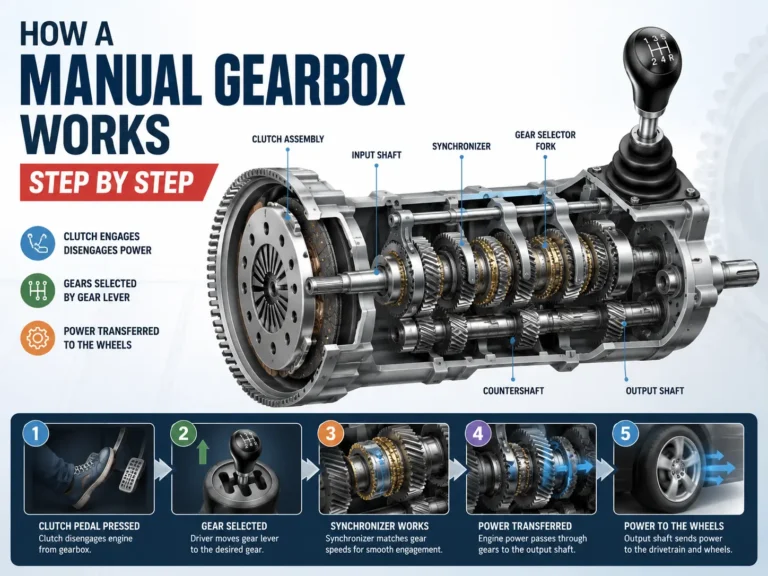
- Short-shifting: changing up to a higher gear sooner to keep engine revs — and fuel burn — lower.
- Drafting: tucking in behind another car to reduce air resistance, which lets the engine work less hard. Our guide to the slipstream explains exactly how this works.
- Coasting: lifting off the throttle on straights and letting momentum carry the car.
Saving fuel almost always means going slower. So the strategist faces a constant balancing act: save enough fuel to reach the finish without stopping, but not so much that rivals who did stop come charging back and pass you anyway. The perfect fuel-save run finishes with the tank running dry on the cool-down lap — not a drop wasted, not a drop short.
You’ll often hear a driver’s team on the radio giving a fuel-saving number — asking them to save, say, “a lap and a half” of fuel over a stint. The driver then has to hit that target while losing as little track position as possible. It’s a genuine skill, and some drivers are famously better at it than others.
Pit Stops & the Role of Cautions
Fuel strategy doesn’t happen in isolation — it’s tangled up with pit stops, tyres and, above all, caution periods. Understanding how they interact is the key to understanding why strategies unfold the way they do.
The full stop vs the splash
A normal green-flag pit stop involves fuel and four fresh tyres, taking a well-drilled crew around 11 seconds or so. But late in a race, a team that only needs a little fuel to reach the finish might take a “splash and go” — a quick stop for fuel only, no tyres, to minimise time lost. The trade-off is old tyres versus track position, and it’s one of the classic strategic calls.
Why cautions are everything
When a crash or debris brings out a caution (the NASCAR equivalent of a safety car), the field slows down and bunches up behind the pace car. This is golden for fuel strategy, because a car uses far less fuel running slowly under caution than at racing speed. A perfectly timed yellow flag can turn an impossible fuel situation into an easy one — suddenly the car that was two laps short can make it to the finish comfortably.
When a caution comes out late in a race, every team faces the same decision in seconds. Pit for fresh fuel and tyres — losing track position but guaranteeing you’ll finish — or stay out, keep your position, and gamble that you have enough fuel (and that another caution might come to help). Get that call right and you win. Get it wrong and you either run dry on the last lap or get swamped by cars on fresh tyres. This single decision decides more NASCAR races than raw speed does.
The Great Fuel-Mileage Gambles
The most dramatic moments in NASCAR often come from fuel-mileage gambles — when a team decides to try to reach the finish on less fuel than seems possible, betting everything on making it. When it works, it’s spectacular; when it fails, it’s agonising.
These gambles are why fuel strategy makes NASCAR so unpredictable. A dominant car doesn’t always win — the team that reads the fuel situation best, times its final stop perfectly, and has a driver who can save fuel under pressure often beats a faster rival. It’s a chess match layered on top of a race, and it’s a huge part of why the closing laps are so tense. For how these decisions feed into the bigger picture, see our guide to how pit stops work.
NASCAR Fuel Strategy Jargon, Decoded
Commentators throw these terms around constantly. Here’s a plain-English glossary so you’ll never be lost again.
| Term | What it means |
|---|---|
| Fuel window | The lap range in which a car must pit for fuel to reach the finish. |
| Fuel run | The stint of laps a car completes between fuel stops. |
| Splash and go | A quick pit stop for a small amount of fuel only, no tyres. |
| Saving fuel / lifting | Driving to use less fuel, usually by easing off the throttle earlier. |
| Short-pitting | Pitting earlier than rivals to gain fresh fuel/tyres and track position. |
| Stretching a run | Trying to go longer on a tank than normal to change the strategy. |
| Coming up short | Running out of fuel before the finish — the failed gamble. |
| Track position | Where you are in the running order; often worth more than fresh tyres late on. |
| Cycle / pit cycle | The sequence of everyone making their stops; positions “cycle” as they do. |
| In the window | Having enough fuel to reach the finish from the current point. |
The best way to learn fuel strategy is to listen to a driver’s in-car radio (available on the NASCAR app and some broadcasts). You’ll hear the crew chief calling fuel numbers, telling the driver how much to save, and making the pit-or-stay call in real time. It turns the abstract into something you can follow lap by lap.
Frequently Asked Questions
Now you’ll never watch the end of a race the same way
Fuel strategy is the hidden game running underneath every NASCAR race. Once you understand fuel windows, fuel saving, the splash-and-go and the pit-or-stay gamble, the closing laps transform from a simple sprint into a tense strategic puzzle — where the fastest car doesn’t always win, and a well-timed decision on the pit wall can beat raw speed every time.
Next time you watch, listen for the phrases: “he’s saving fuel,” “they’re a lap short,” “splash and go,” “can he make it?” You’ll now know exactly what they mean — and you’ll understand why a NASCAR crew chief’s hardest decisions often have nothing to do with how fast the car can go, and everything to do with how far it can go on what’s left in the tank.
Want to keep learning? Our companion guides on how pit stops work, what a caution is, and how the draft works will round out your understanding of race-day strategy.